What Are Alliums In Cooking: Flavor Guide
In American cooking, alliums are aromatic plants in the onion family. Common culinary alliums include onions, garlic, shallots, scallions, leeks, chives, and ramps. They add sharpness, sweetness, heat, and savory depth to foods such as burgers, soups, chili, pasta, eggs, salads, and roasted vegetables.
Most alliums have edible bulbs, stems, leaves, or flowers. Their flavor comes from sulfur compounds. These compounds create the sharp bite of a raw onion and the strong aroma of chopped garlic. Heat changes those compounds, so alliums can taste mild and sweet after cooking.

What does “allium” mean in cooking?
“Allium” is the name of a plant genus in the amaryllis family, Amaryllidaceae. The genus includes hundreds of species. Many are grown as food, while others are grown only as ornamental garden plants.
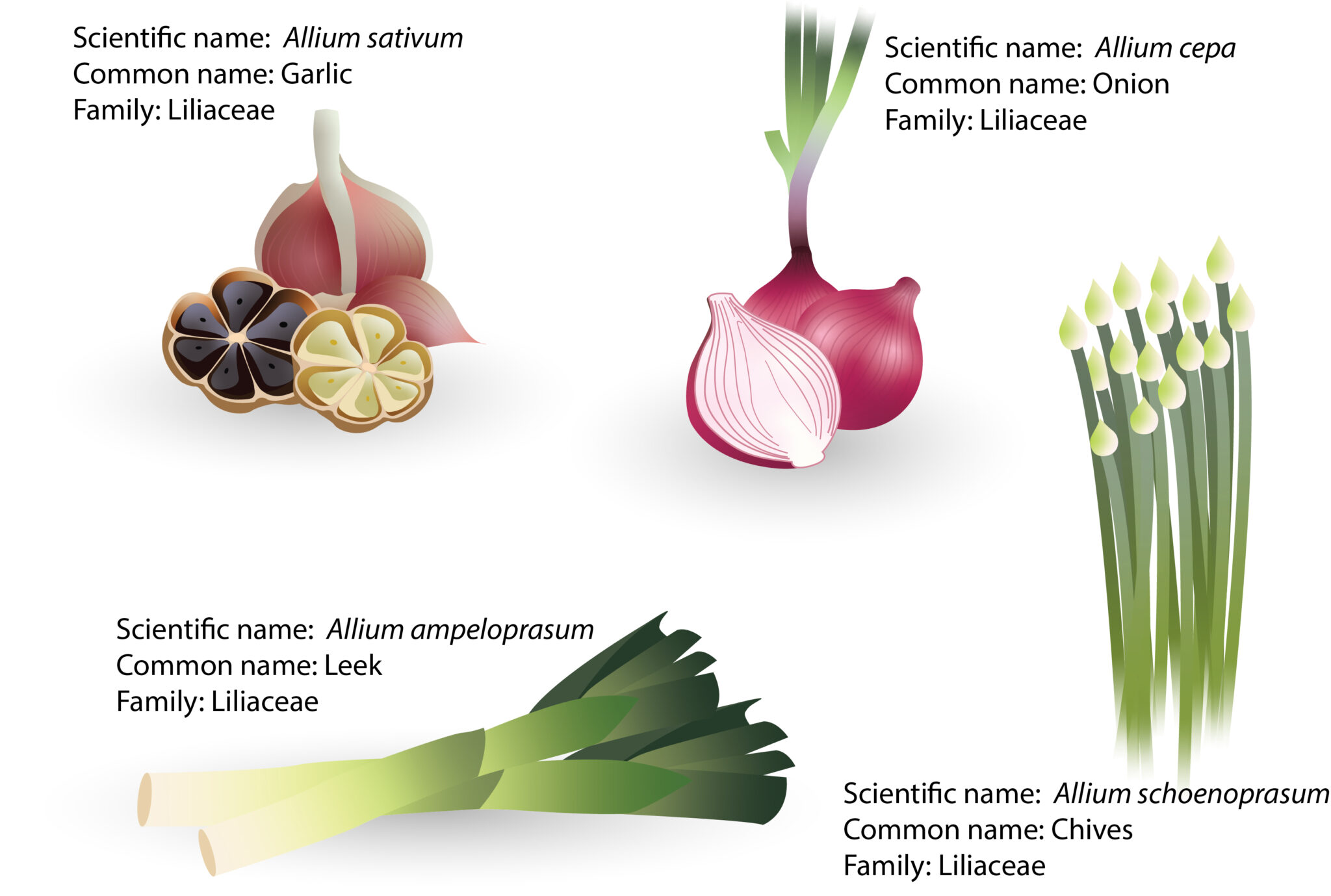
In the kitchen, the word usually refers to edible members of the onion family. The best-known examples are:
- Yellow, white, and red onions
- Garlic
- Shallots
- Scallions, also called green onions
- Leeks
- Chives
- Ramps
- Garlic scapes
- Pearl onions
- Cipollini onions
- Vidalia onions and other sweet onions
Alliums are not one flavor or one plant part. A leek tastes softer than a raw onion. Chives taste mild and fresh. Garlic can taste hot when raw but rich and sweet when roasted.
The U.S. Department of Agriculture lists many of these foods separately in its FoodData Central database because their nutrients and edible parts differ. Botanically, however, they share the same plant genus or close family relationship.
Allium versus onion family
In everyday cooking, “allium” and “onion family” often mean nearly the same thing. Botanically, the terms are not always used with perfect precision.
An allium is a member of the Allium genus. The onion family is a broader cooking term for plants related to onions. For most recipes, this difference does not change how you use the ingredient.
Are tomatoes, celery, and fennel alliums?
No. Tomatoes, celery, and fennel are not alliums.
They can play a similar role in a dish because they add aroma and flavor, but they belong to different plant groups:
- Tomatoes belong to the nightshade family.
- Celery belongs to the carrot family.
- Fennel belongs to the carrot family.
- Ginger belongs to the ginger family.
- Asafoetida is a resin used in some cuisines as an onion and garlic substitute, but it is not an allium.
This distinction matters most when you need an onion-free recipe, are managing an allergy, or are following a low-FODMAP diet.
Common types of alliums and how they taste
Each allium has a different balance of heat, sweetness, aroma, and texture. The table below can help you choose the right one.
| Allium | Edible parts | Raw flavor | Best cooking uses |
|---|---|---|---|
| Yellow onion | Bulb | Sharp and savory | Soups, sauces, burgers, roasting |
| White onion | Bulb | Crisp and strong | Salsa, tacos, salads, cooking |
| Red onion | Bulb | Sharp and slightly sweet | Salads, pickling, sandwiches |
| Sweet onion | Bulb | Mild and sweet | Grilling, roasting, onion rings |
| Garlic | Cloves | Hot and intense | Sauces, marinades, roasting, bread |
| Shallot | Bulb | Mild, sweet, and delicate | Vinaigrettes, pan sauces, roasting |
| Scallion | Green and white parts | Fresh and mild | Garnishes, stir-fries, eggs, dips |
| Leek | White and light-green stalk | Mild and buttery | Soups, braises, gratins |
| Chives | Hollow green stems | Mild onion flavor | Potatoes, eggs, sour cream, soups |
| Ramps | Leaves and bulbs | Strong garlic-onion flavor | Pesto, compound butter, sautéed dishes |
| Garlic scape | Curled flower stem | Fresh garlic flavor | Stir-fries, pesto, grilling |
Onions
Onions are the most common allium in American kitchens. Yellow onions are a flexible choice for cooked dishes because they become sweet and tender as they brown. White onions stay crisp and sharp, while red onions add color and a mild bite to salads and sandwiches.
Sweet onions, such as Vidalia onions, usually taste less sharp when raw. Their mild flavor makes them useful for grilling, roasting, and eating in sandwiches.
Garlic
Garlic grows as a bulb made of separate cloves. The papery outer skin protects the cloves.
Fresh garlic can taste hot, bitter, or sharp. Cooking softens the flavor. Slow roasting can make garlic creamy and sweet. Minced garlic releases more aroma than sliced garlic because cutting breaks more cells.
Do not brown minced garlic too quickly. Small pieces can burn before the rest of the dish is ready. Burned garlic often tastes bitter.
Shallots
Shallots are small bulbs with a mild onion flavor and a garlic-like sweetness. They work well when a dish needs onion flavor without the stronger bite of a full onion.
Use shallots in vinaigrettes, pan sauces, mushroom dishes, roasted vegetables, and seafood recipes. They can be sliced and fried, but thin shallot pieces can burn quickly.
Scallions and green onions
In most U.S. grocery stores, scallions and green onions refer to the same type of allium. The white base has more onion flavor. The green tops taste fresh and mild.
Use the white part early in cooking. Add the green part near the end or use it as a garnish. Some recipes call for both parts at different times.
Leeks
Leeks have long, layered stalks. The white and light-green parts are tender and mild. The dark-green tops are tougher but can flavor stock.
Leeks often hold soil between their layers. Slice them, then rinse them well in cold water. If you wash a whole leek without separating the layers, grit may remain inside.
Chives
Chives are thin, hollow green stems. They have a mild onion taste and a soft texture. Their flavor fades with long cooking, so add them near the end.
Chives are useful in baked potatoes, scrambled eggs, cream sauces, soups, compound butter, and herb dips. Their purple flowers are also edible when grown for culinary use.
Ramps
Ramps are wild alliums with broad leaves and a small bulb. They have a strong garlic-and-onion flavor. In the United States, ramps are seasonal and often appear at farmers markets in spring.
Buy ramps from a trusted seller. Do not eat a wild plant unless you can identify it with certainty. Some poisonous plants can resemble edible wild greens.

How do alliums create flavor?
Alliums create their strongest flavor when their cells are cut, crushed, or chewed. Cutting allows enzymes and sulfur-containing compounds to react. The result is the sharp aroma linked with onions and garlic.
Cooking changes this reaction. Heat softens the raw bite and develops sweeter flavors. Browning also creates new savory aromas through caramelization and the Maillard reaction.
The cut size changes the final result:
- Whole cloves or large pieces: Mild flavor and slower release
- Sliced pieces: Moderate flavor with some texture
- Minced pieces: Strong aroma and fast cooking
- Puréed pieces: Very intense flavor that spreads through a dish
The cooking method matters too:
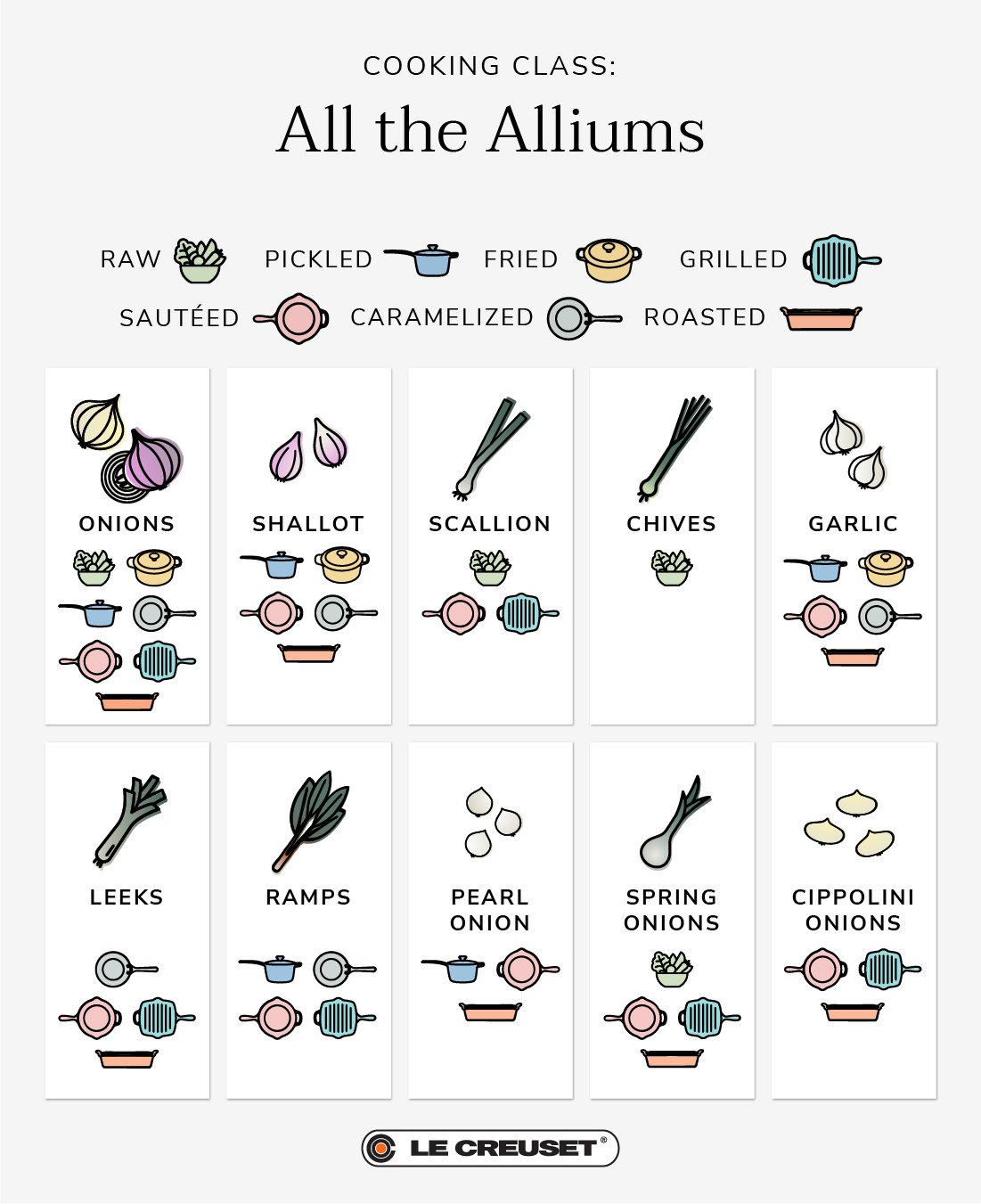
- Raw: Sharp, crisp, and bright
- Sweated: Soft and aromatic without much color
- Sautéed: Tender with a deeper flavor
- Caramelized: Brown, sweet, and concentrated
- Roasted: Soft, mellow, and rich
- Grilled: Smoky and slightly sweet
- Pickled: Tangy, crisp, and bright
Why onions make you cry
When you cut an onion, damaged cells release compounds that react with enzymes. This creates a volatile substance that reaches the eyes. The eyes respond by making tears.
A sharp knife can reduce cell damage and may lessen the effect. Chilling an onion before cutting can also slow the chemical reaction for a short time. These methods may help, but they do not prevent tears for everyone.
Why garlic changes color
Garlic can turn blue or green when its compounds react with acids, minerals, age, or storage conditions. This can happen in pickles, sauces, or other acidic foods.
The color change does not always mean the garlic has spoiled. Check the smell, texture, and storage history. Discard garlic that has mold, slime, a rotten odor, or other clear signs of spoilage.
How to use alliums in cooking
Use alliums to build flavor at the start of a dish, add freshness at the end, or provide contrast through pickling. The best choice depends on the texture and flavor you want.
Start with a flavor base
Many American recipes begin by cooking chopped onion, celery, and bell pepper together. This mixture is often called the mirepoix-style base when it includes onion and celery. Other cuisines use their own combinations of onion, garlic, scallion, leek, or shallot.
To build a simple flavor base:
- Heat oil or butter over medium heat.
- Add chopped onion, leek, shallot, or the white part of a scallion.
- Add a small pinch of salt.
- Cook until the allium softens.
- Add garlic later if the recipe includes it.
- Continue with the other ingredients.
Adding garlic after the onion softens helps keep it from burning. The exact order can change with the recipe, but garlic usually needs less cooking time than onion.
Choose the right allium for the dish
Use a strong allium when the dish has bold flavors. Chili, braised meat, and tomato sauce can handle yellow onion or a generous amount of garlic.
Use a mild allium when the dish is delicate. Shallots work well in vinaigrettes and pan sauces. Chives and scallions suit eggs, potatoes, fish, and creamy foods.
Use a sweet or browned allium when you want richness. Yellow onions, sweet onions, and leeks can develop deep flavor when cooked slowly.
Add fresh alliums at the end
Fresh scallions, chives, and tender leek greens can brighten heavy foods. Add them after cooking or just before serving.
This works because short cooking preserves their green color, crisp texture, and fresh aroma. Long cooking makes them softer and less fragrant.
Use alliums raw with care
Raw onion and garlic can overpower a dish. To reduce the bite of sliced onion, rinse it under cold water or soak it briefly in cold water. Pickling is another way to soften the sharp flavor.
Raw garlic is much stronger than cooked garlic. Start with a small amount in dressings, dips, and sauces. You can add more, but you cannot easily remove it.
Roast, grill, or fry them
Roasting brings out sweetness in garlic, onions, and leeks. Grill slices of onion or whole scallions for smoky edges. Fry thin slices of shallot or onion for a crisp topping, but watch them closely because they can go from golden to burned quickly.
Alliums contain water, so crowded pans can steam them instead of browning them. Leave space between pieces when browning matters.

What can replace an allium?
The best substitute depends on the allium and the recipe. No replacement copies every part of its flavor.
| If a recipe calls for | Possible substitute | Main difference |
|---|---|---|
| Yellow onion | White onion or sweet onion | Flavor may be sharper or milder |
| Shallot | A small amount of onion | Less delicate and less sweet |
| Garlic | Garlic powder | Less fresh and less complex |
| Scallion | Chives | Softer flavor and less crunch |
| Leek | Yellow onion | Stronger flavor and firmer texture |
| Chives | Scallion greens | More onion flavor and more moisture |
For a dish that needs texture, use another fresh vegetable rather than a dried seasoning. For example, finely chopped celery, bell pepper, or radish may add crunch, though none has the same flavor as an allium.
Onion-free and garlic-free cooking
If you avoid onions and garlic, read ingredient labels carefully. Allium ingredients may appear as onion powder, garlic powder, dehydrated onion, scallion, leek, shallot, chive, or “natural flavors.”
Some people avoid alliums for personal preference. Others limit them because of digestive symptoms. A low-FODMAP diet may restrict certain alliums because they contain fructans, a type of fermentable carbohydrate. The amount tolerated varies by person and serving size.
For medical dietary restrictions, use guidance from a qualified health professional. A recipe substitute may change more than flavor; it may also change the food’s fiber, carbohydrate, and allergen profile.
How to store and prepare alliums
Good storage helps alliums keep their flavor and texture.
Storage basics
- Store dry onions and shallots in a cool, dry, well-ventilated place.
- Keep whole garlic bulbs dry and away from strong heat.
- Refrigerate cut onions and peeled garlic in a sealed container.
- Store scallions and chives in the refrigerator.
- Keep leeks refrigerated and use them while their leaves remain firm.
- Follow the package date and discard produce with mold, slime, or a rotten smell.
Do not store dry onions in a sealed plastic bag if moisture can build up. Moisture can encourage decay.
Preparation basics
Remove the dry outer skin from onions, garlic, and shallots. Cut away the root end when needed. For onions, leaving the root end attached while making the first cuts can make chopping easier.
For leeks, trim the root and dark, tough leaves. Slice the tender parts, separate the layers, and rinse away soil. Dry them before sautéing so they brown instead of steaming.
For garlic, remove the papery skin. A garlic press makes a fine paste, while a knife gives more control over size and texture.
Signs of good quality
Choose alliums that feel firm for their size. Avoid bulbs with soft spots, wet skin, mold, or a sour or rotten smell.
Green onions should have firm white bases and crisp green leaves. Leeks should feel solid, not limp. Fresh herbs such as chives should look green and moist without black or slimy areas.

Are alliums safe to eat?
Most grocery-store alliums are safe when handled and prepared as food. Safety concerns usually involve plant identification, spoilage, pets, or individual dietary needs.
Avoid unidentified wild alliums
Some wild plants resemble onions, garlic, or ramps. Do not eat a wild plant based only on smell or a picture. Use reliable regional identification and follow local harvesting rules.
A plant that belongs to the Allium genus may be edible, but not every plant sold or grown near edible alliums should be assumed safe. Ornamental plants can be mislabeled, treated with chemicals, or unsuitable for eating.
Keep alliums away from pets
Onions, garlic, leeks, chives, and related plants can harm dogs and cats. The American Society for the Prevention of Cruelty to Animals lists these foods as toxic to pets. Risk depends on the animal, amount, and form, including raw, cooked, dried, or powdered products.
Do not feed pets table scraps containing alliums. If a pet eats onion, garlic, or another suspected toxic allium, contact a veterinarian or an animal poison service promptly.
Consider allergies and digestive reactions
True food allergies to onion or garlic can occur, though they are not the same as intolerance or digestive sensitivity. A person with symptoms after eating an allium should discuss them with a qualified health professional.
Do not remove major food groups from a child’s or adult’s diet without a sound reason. A food diary and professional assessment can help separate an allergy, intolerance, and unrelated digestive problem.
Common mistakes when cooking alliums
Small changes can prevent bitter, watery, or uneven results.
Burning garlic
Garlic burns quickly when minced. Add it after harder vegetables have softened, lower the heat, and stir often.
Crowding the pan
A crowded pan traps steam. Use a wider pan, cook in batches, or accept a softer result instead of a browned one.
Washing only the outside of leeks
Soil can sit between leek layers. Slice the leek first, then rinse and drain it well.
Using too much raw onion
Raw onion grows stronger as it sits in a dish. Start with less than you think you need. You can add more later.
Treating every allium as interchangeable
A cup of sliced leek does not taste like a cup of minced garlic. Substitutions change strength, moisture, sweetness, and texture. Adjust the amount and cooking time.
Confusing spoilage with natural color change
Blue or green garlic can result from a harmless chemical reaction. Mold, slime, soft rot, or a bad smell is a stronger reason to discard it.
Frequently asked questions about alliums
Is garlic an allium?
Yes. Garlic is an edible member of the Allium genus. Its cloves are used raw, cooked, dried, fermented, roasted, and preserved.
Are scallions and green onions the same thing?
In most U.S. grocery stores, scallions and green onions are the same or very similar. Recipes may use the terms interchangeably. The white part has a stronger onion flavor, while the green part is milder.
Are onions and garlic related?
Yes. Both are alliums and share many flavor compounds. They are related, but they are different plants with different textures, strengths, and cooking uses.
Are alliums vegetables?
Culinary alliums are generally used as vegetables, herbs, or seasonings. Their botanical classification varies by plant part and species, but that distinction does not affect normal recipe use.
Can you eat ornamental alliums?
Do not assume ornamental alliums are safe to eat. Some may be edible species, but they may have been treated with pesticides or grown for decoration rather than food. Eat only plants clearly identified and sold for culinary use.
Are alliums gluten-free?
Plain onions, garlic, leeks, shallots, scallions, chives, and ramps do not naturally contain gluten. Packaged products with onion or garlic flavoring can contain other ingredients, so check the label when gluten avoidance is medically necessary.
What is the strongest-tasting allium?
Raw garlic, raw onion, and ramps can all taste strong. Strength depends on the variety, age, cut size, serving amount, and cooking method. Cooking usually makes their flavor softer and sweeter.
Key takeaways
- Alliums are plants in the onion family, especially onions, garlic, shallots, scallions, leeks, chives, and ramps.
- Cutting alliums releases sulfur compounds that create their sharp aroma and flavor.
- Cooking can make alliums mild, sweet, rich, smoky, or tender.
- Use onions and leeks for a cooked base, garlic for strong aroma, shallots for delicate sauces, and chives or scallions for fresh flavor.
- Wash leeks well, store cut alliums in the refrigerator, and discard produce with mold, slime, or rot.
- Keep onions, garlic, leeks, and chives away from dogs and cats.
- Do not eat unidentified wild plants or assume ornamental alliums are safe.
Conclusion
Alliums are the flavor builders behind many American dishes. Onions provide body, garlic adds intensity, leeks bring soft sweetness, shallots suit delicate sauces, and scallions and chives add fresh color at the end.
The simple rule is to match the allium to the result you want. Choose strong alliums for bold dishes, mild alliums for delicate foods, and fresh green alliums when a meal needs brightness. Start with a small amount, control the heat, and adjust as the flavor develops.

Hi, I’m Mary, the founder of KitchenClue.com. I’m deeply passionate about everything that makes a kitchen smarter, easier, and more enjoyable. I share hands-on insights and practical expertise on kitchen gear that truly helps in daily cooking. Along with my dedicated research team, we study products carefully, and our writers create honest, well-tested reviews using trusted, authentic sources—so you can choose kitchen tools with total confidence.