5 Best 2.2 Cu Ft Microwave Ovens In 2026
If you’re hunting for the perfect countertop microwave that gives you plenty of space without taking over your entire kitchen, you’ve landed in the right place. A 2.2 cubic foot microwave sits in that sweet spot where size meets practicality. It’s big enough to handle family meals and large containers, yet compact enough to fit most kitchen layouts without problems.
I’ve spent time researching the top models that deliver real performance, reliability, and value. In this guide, I’ll walk you through five standout options that should be on your radar. Each one brings something different to the table, so let’s dive in and find the right match for your cooking needs.
Best 2.2 Cu Ft Microwave Ovens List
Why Size Matters: Understanding the 2.2 Cu Ft Advantage
Before we jump into the specific models, let’s talk about why this size category matters. A 2.2 cubic foot microwave is considered a large capacity unit. To put that in perspective, most small microwaves max out around 0.7 to 1.0 cubic feet. The jump to 2.2 cubic feet gives you real benefits in everyday cooking.
With this size, you can fit larger casserole dishes, pizza boxes, and wide plates. You get faster cooking times on bulky items because the microwaves distribute more evenly. Families definitely appreciate the extra space since you can reheat multiple plates at once. Office workers love having room for large portions. Even people who live alone enjoy the flexibility to cook bigger batches and store leftovers.
The sweet spot of 2.2 cubic feet also keeps you from going overboard with energy consumption like you would with a 3+ cubic foot unit. You get the space advantage without the price tag and electricity demands of massive commercial-style microwaves.
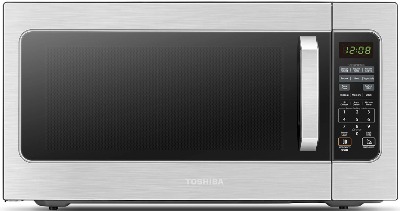
1. Toshiba ML-EM62P(SS) Large Countertop Microwave
Product Overview
The Toshiba ML-EM62P stands out as a seriously capable microwave that combines thoughtful design with smart technology. This stainless steel unit brings 1200 watts of power into your kitchen with solid construction that feels quality right out of the box. The 2.2 cubic foot capacity comes paired with a 16.5-inch turntable that remembers its position, which sounds like a small detail but makes a real difference in convenience.
Best Use Cases
This model works great for busy families who need reliability. It’s perfect for people who reheat often and appreciate having preset cooking functions. If you like automatic defrosting without guessing, this one delivers. Small business owners using a microwave in a break room would find this dependable too.
Key Features Explained Simply
The smart sensor cooking technology automatically adjusts power and time based on what you’re heating. You don’t have to think too hard—just select your food type and hit the button. The six quick menus cover common items like popcorn, pizza, beverages, and frozen dinners. The auto defrost function uses sensor technology to figure out the right timing so your meat thaws evenly without cooking the edges.
The position memory turntable is genuinely handy. It stops spinning at the exact same spot every time, so you can easily grab your food without wrestling with a hot dish at an awkward angle. The ECO mode cuts energy use when you’re running light cooking tasks. The mute option silences the beeps if you’re heating something late at night and don’t want to disturb anyone.
Real-Life Usage Insight
When you fire up this microwave, heating happens quickly and evenly. The sensor cooking works well for reheating leftovers—it stops before things dry out, which is the constant battle with microwaves. The turntable runs quiet, and the control panel responds immediately to your input. Defrosting chicken or fish goes faster and more reliably than guessing. The stainless steel finish resists fingerprints better than regular metal, making cleanup simple.
One thing that stands out is the build quality. The door closes solidly, and the interior feels sturdy. You won’t find cheap plastic rattling around inside. The warranty covers parts and labor for several years, which shows the manufacturer believes in their product.
Pros and Cons
Pros:
- Smart sensor cooking removes guesswork
- Powerful 1200-watt performance heats faster than lower-wattage units
- Six auto-cook menus for common foods
- Position memory turntable is really convenient
- Quiet operation
- Stainless steel resists fingerprints and looks sharp
- Solid build quality throughout
- ECO mode saves energy on small tasks
Cons:
- Price sits on the higher side of this market
- Control panel takes a few uses to master all features
- Turntable is 16.5 inches, which works for most dishes but might be tight for oversized platters
- Some users report sensor cooking occasionally underestimates thick items
Performance Discussion
This microwave handles everyday heating jobs with confidence. Defrosting two pounds of ground beef takes about twelve minutes versus the thirty or forty minutes you’d spend at room temperature. Large pasta dishes heat throughout without creating cold spots. The power delivery feels consistent—things don’t cook unevenly like some budget units.
Temperature-wise, it gets hot enough to properly warm up foods without running excessively long cycles. The watts-per-cubic-foot ratio is solid, meaning heating efficiency is good. You’re not wasting energy or time watching stuff spin endlessly. Beverages heat to a good drinking temperature without boiling over like they do in some narrow-cavity microwaves.
Ease of Use
The digital display is bright and easy to read. The buttons are logically arranged so you’re not hunting for functions. The sensor cooking works intuitively—pick a food category and let it work. The six menus make sense: popcorn, frozen dinners, pizza, beverages, and a couple others cover what most people actually cook. If you prefer manual settings, everything is there, but most folks use the automatic functions.
Starting a cycle is straightforward. Stop a cycle and open the door without drama. No quirky beeping patterns or confusing sequences. This is a microwave that doesn’t make you feel like you need an engineering degree.
Value for Money
This lands in the upper-middle price range for 2.2 cubic foot microwaves. You’re paying for the sensor cooking, smart features, and build quality. If you value reliability and want something that will last years without problems, the investment makes sense. If you’re comparing it to basic models that cost significantly less, you’re paying extra for convenience and performance.
The smart sensor cooking alone justifies some of the cost since it delivers better results and reduces reheating mistakes. The position memory and ECO mode are genuinely useful features, not gimmicks. For families that use microwaves multiple times daily, this delivers better value than it might appear.
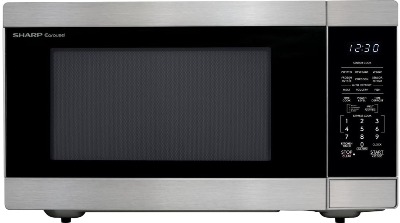
2. SHARP Countertop Microwave Oven
Product Overview
The SHARP microwave brings straightforward reliability in a clean stainless steel design. It delivers 1200 watts of power and 2.2 cubic feet of cooking space with a removable 16.5-inch carousel turntable. This model focuses on doing the job well without overcomplicating things.
Best Use Cases
This works perfectly for people who want a no-frills microwave that heats reliably. College students moving into dorms would appreciate the simplicity. People with small kitchens love the compact footprint. It’s excellent for anyone who just needs basic reheating without fancy programs. Business kitchens and shared office spaces benefit from straightforward operation.
Key Features Explained Simply
The 1200-watt power gives you solid heating speed. The carousel turntable is removable, which is fantastic for cleaning since you can take it out and wash it thoroughly. That’s way better than some models where the turntable is stuck in place. The stainless steel cabinet looks professional and fits with modern kitchen designs.
This model keeps the control panel simple. You’ll find basic cooking functions without overwhelming options. No confusing menus or complicated sensor settings. Just straightforward, traditional microwave operation that anyone can figure out.
Real-Life Usage Insight
This microwave heats things fast. The 1200 watts means defrosting and cooking cycles move along quickly. The removable turntable is brilliant for cleaning—you don’t have to strain reaching into tight spaces. Just pop it out, wash it, and slide it back in. The interior cavity is spacious and doesn’t have awkward design features that trap debris.
Using it day-to-day feels effortless. Turn it on, set the time, and walk away. No learning curve, no settings to second-guess. The door opens smoothly and closes securely. The stainless steel exterior handles daily use without showing every fingerprint.
Pros and Cons
Pros:
- Simple, intuitive controls everyone understands
- 1200 watts delivers fast heating
- Removable turntable makes cleaning easy
- Stainless steel finish looks great
- Compact design fits various kitchen spaces
- Lower price point than complex models
- Reliable performance without bells and whistles
- Solid construction throughout
Cons:
- No sensor cooking or auto-programs
- Manual timing means you need to pay attention
- No special features like position memory
- Turntable is removable but not motorized smoothly
- Limited warranty compared to premium brands
- No defrost programs, just manual settings
- Fewer convenience features overall
Performance Discussion
Heating is straightforward and effective. A cup of water comes to a boil quickly. Large containers heat evenly because of the adequate wattage and turntable design. The power output is consistent—you get reliable results whether it’s your first use or your thousandth.
Defrosting requires manual timing since there’s no automatic sensor, but if you know your food and trust your instincts, it works fine. Cooking frozen vegetables to the right tenderness comes down to experience with this unit, not built-in programs.
The turntable rotates steadily. It doesn’t wobble or create hot spots from uneven rotation. Build quality means the motor will likely outlast the warranty period, which is a good sign.
Ease of Use
This is the simplest microwave to use on this list. The control panel shows time entry, a start button, and a stop button. Optional features like defrost exist, but you’re not drowning in options. Anyone from a young teenager to an elderly person can operate this without confusion.
Cleaning is faster since you remove the turntable. Wiping down the interior doesn’t involve working around a permanently mounted turntable. For people who value straightforward operation, this delivers exactly what they want.
Value for Money
SHARP positions this below the Toshiba but still at a premium compared to absolute budget microwaves. You’re paying for the stainless steel, the removable turntable convenience, and reliable 1200-watt performance. You’re not paying for smart features you won’t use.
For apartments, dorms, or anyone who prefers simplicity, this is actually excellent value. The straightforward design means fewer things can break. The removable turntable adds real convenience that lasts for years of use.
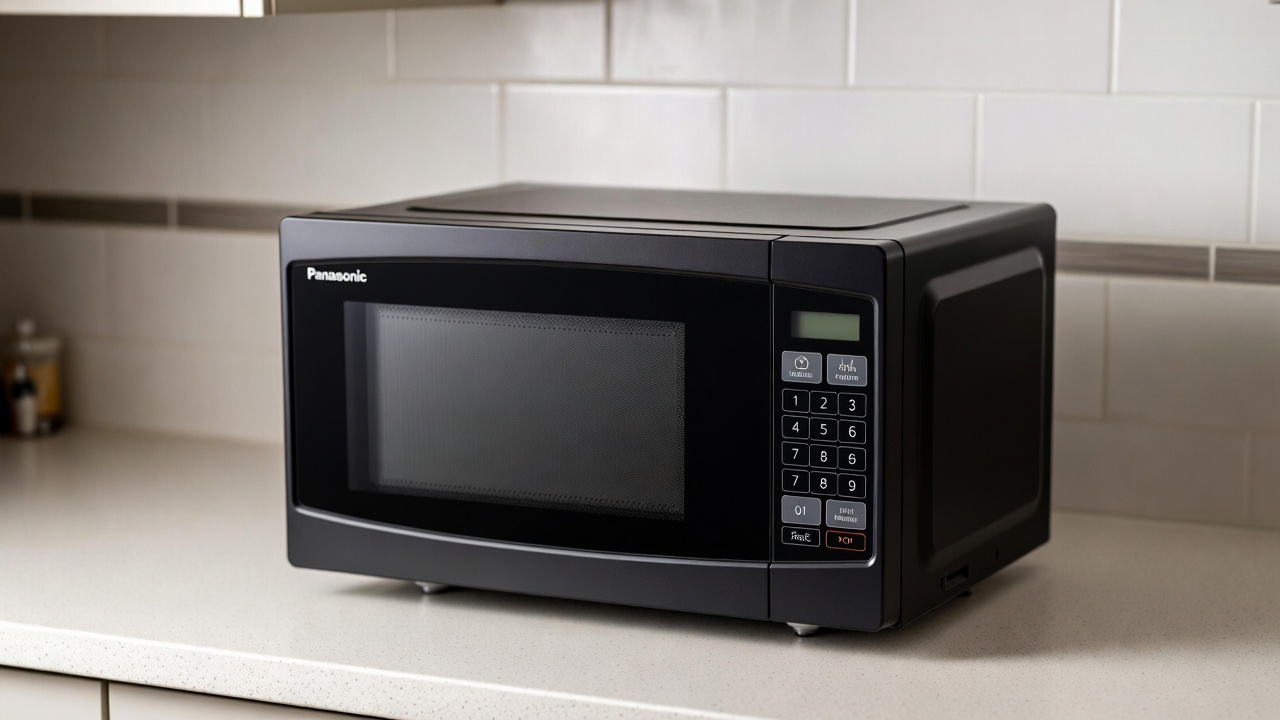
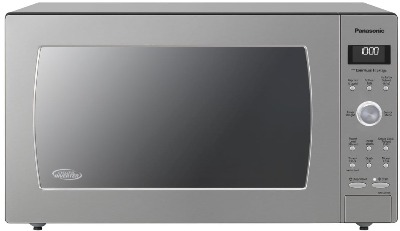
3. Panasonic Microwave Oven with Cyclonic Wave Inverter Technology
Product Overview
The Panasonic NN-SD975S brings advanced Japanese engineering into your kitchen. This is the most tech-forward option in this roundup. The 1250 watts of power surpass other models here, and the Cyclonic Wave Inverter Technology distributes heat in a revolutionary way. The 2.2 cubic foot capacity pairs with a brilliant stainless steel finish and the Genius Sensor One-Touch cooking system.
Best Use Cases
This appeals to cooking enthusiasts who appreciate technology and consistency. People who cook fresh ingredients benefit from precise heat distribution. Anyone who dislikes having to guess cooking times loves the sensor cooking. Families that value even heating for sensitive foods like fish and delicate vegetables will notice the difference. People willing to invest in quality for better results find tremendous value here.
Key Features Explained Simply
The Cyclonic Wave Inverter Technology is the star here. Instead of cycling power on and off like traditional microwaves, this technology delivers more consistent, steady heat. Think of it like the difference between a dimmer light and a flickering one. Steady power means fewer cold spots and more even cooking throughout the dish.
The Genius Sensor One-Touch Cooking takes the guesswork out. Press the button once, and the microwave figures out everything. The 1250 watts gives more power than most competitors, which translates to faster heating and more efficient cooking. This stainless steel cabinet offers beautiful aesthetics alongside function.
Real-Life Usage Insight
When you use this microwave, you immediately notice smoother operation. Foods cook more evenly because the heat delivery is continuous rather than pulsing. Reheating yesterday’s pasta comes out perfectly—not cold in the middle and scalding on the edges like cheap microwaves. Fresh vegetables cook just right without becoming soggy.
The sensor cooking deserves special attention. It adjusts power throughout the cycle, not just checking at the end. This means your food never becomes overcooked. The Genius system learns what you’re heating and makes smart adjustments in real-time. It’s genuinely impressive in practice.
The higher wattage means heating cycles are noticeably faster than 1200-watt units. Large volumes of liquid come to a boil quicker. Thawing frozen items happens on a shorter timeline. For busy people, this saves real time across dozens of weekly uses.
Pros and Cons
Pros:
- Cyclonic Wave Inverter creates remarkably even heating
- 1250 watts is the highest power on this list
- Genius Sensor One-Touch cooking is intuitive and effective
- Stainless steel finish is beautiful and durable
- Superior heat distribution means better food quality
- Faster cooking times than lower-wattage competitors
- Advanced technology actually improves results
- Excellent for precise cooking tasks
- Japanese engineering reputation for reliability
Cons:
- Price is the highest of these five models
- Advanced features may overwhelm people wanting simplicity
- Learning the sensor settings takes a bit of time
- The technology is more complex, meaning more to potentially fix
- Warranty information is less straightforward than some brands
- Turntable is integrated, not removable
- Takes up counter space due to design
- Some users prefer traditional microwave simplicity
Performance Discussion
Heating performance is excellent across every scenario. A cup of coffee reheats to perfect drinking temperature—not hot at the edges and cold in the middle. A large casserole dish cooks evenly throughout. Defrosting chicken breasts happens remarkably evenly without cooked edges.
The inverter technology really shines with delicate foods. Fish fillets cook gently rather than becoming rubbery. Egg-based dishes don’t overcook and become rubbery. These might sound like small things, but anyone who cooks regularly notices the difference immediately.
The 1250 watts combines with the inverter technology to deliver superior results. You’re getting more raw power, plus smarter power delivery. That combination is hard to beat for overall performance.
Ease of Use
The Genius Sensor system is designed for one-touch operation. Pick your food type, press the button once, and the microwave does the math. The learning curve is minimal—most people figure it out on the first try.
If you want manual control, everything is available. You can override the sensor settings and dial in exact times and power levels. This flexibility means it works whether you want fully automatic or complete manual control.
The control interface is logically organized. Buttons are where you’d expect them. The display is clear and readable from across the kitchen. Starting and stopping cycles is completely straightforward.
Value for Money
This is the premium option, and the price reflects that. You’re investing in superior technology, higher wattage, and better heating distribution. If you cook frequently and care about food quality, this investment pays dividends every single day.
The technology isn’t just marketing fluff—it genuinely delivers better results. The 1250 watts mean faster cooking across all tasks. The inverter technology means better food quality. These aren’t abstract improvements; they’re tangible and noticeable.
For someone upgrading from a cheap microwave, the jump in performance is significant. For someone comparing directly with the Toshiba, you’re paying extra for the inverter technology and higher wattage, which is worth considering based on your cooking style.
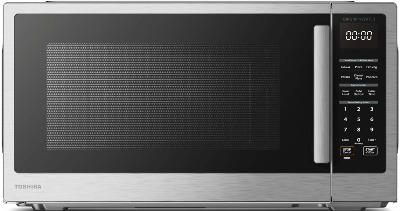
4. TOSHIBA ML4-EM22PAIT(SS) Countertop Microwave Oven
Product Overview
This Toshiba model offers an interesting choice in the 2.2 cubic foot category. Delivering 1200 watts with sensor cooking technology, it’s specifically designed with large families in mind. The Origin Inverter technology, 16.5-inch removable turntable, and solid stainless steel construction make this a well-rounded option that doesn’t break the bank.
Best Use Cases
Large families cooking multiple portions benefit greatly from this unit. People who want sensor cooking without paying premium prices find good value here. Anyone with a tight budget but who still wants quality features appreciates this balance. It’s excellent for households that reheat and defrost frequently.
Key Features Explained Simply
The Origin Inverter technology, while different from Panasonic’s system, still improves heat distribution compared to traditional cycling. It’s not as advanced as the Cyclonic Wave system, but it’s still better than basic microwaves. The sensor cooking works automatically like the Toshiba ML-EM62P, adjusting time and power based on food type.
The six auto menus cover standard cooking and reheating needs. The child lock protects young kids from accidentally running the microwave. The removable turntable makes cleaning simpler—you can pop it out and wash it thoroughly. Sensor cook technology removes manual guesswork from common tasks.
Real-Life Usage Insight
This microwave performs reliably in daily use. The sensor cooking works well for reheating, reducing the common problem of dried-out leftovers. The 1200 watts gives good heating speed without excessive power draw. The removable turntable is genuinely convenient for cleaning and maintenance.
Using the auto menus takes the thinking out of common tasks. Defrosting ground beef for dinner works smoothly. Reheating pizza comes out hot without becoming rubbery. Beverages heat to the right temperature without exploding. The experience is straightforward and predictable.
The Origin Inverter creates noticeably steadier heating than budget microwaves, though it’s not quite at the Cyclonic Wave level. The result is better food quality than you’d get from a basic unit at a lower price.
Pros and Cons
Pros:
- Good value—sensor cooking at mid-range pricing
- 1200 watts delivers solid heating speed
- Origin Inverter improves heat distribution
- Six auto-cook menus handle common tasks
- Removable turntable for easy cleaning
- Child lock protects young kids
- Reliable Toshiba brand quality
- Good balance of features and price
- Stainless steel looks professional
Cons:
- No position memory turntable like the EM62P
- Origin Inverter is less advanced than Cyclonic Wave technology
- Not the highest wattage option
- Fewer features than premium models
- Manual control takes some practice
- No ECO mode for energy saving
- Warranty is standard, not exceptional
- Turntable is removable but requires more effort to reinstall
Performance Discussion
Heating is consistent and reliable. Foods cook evenly across the 2.2 cubic foot cavity. The sensor technology works well for reheating without overcooking. Defrosting operates faster than older manual-timer microwaves.
The Origin Inverter provides noticeably better heat distribution than straight on-off cycling. You’ll see fewer cold spots in large dishes. Cooking times are predictable and consistent. The 1200 watts pair well with the inverter technology for balanced performance.
Temperature control is effective across different food types. Heavy items like frozen stews thaw and heat thoroughly. Delicate foods heat gently enough to avoid overcooking. The overall performance puts this in the solid middle-to-upper range for microwaves.
Ease of Use
The control panel is straightforward and intuitive. The six auto-menus cover what most families cook regularly. The sensor cooking button is obvious and easy to use. Manual controls are available for precise timing if needed.
The removable turntable operation is simple, though it takes slightly more effort to reinstall than some competitors. Children can learn to use this safely with the child lock engaged. Cleaning is faster due to the removable design.
Starting cycles and opening the door work smoothly. The display is clear and easy to read. This isn’t the simplest microwave, but it’s definitely not complicated.
Value for Money
This sits at a good mid-range price point. You’re getting sensor cooking and inverter technology without paying premium prices. The removable turntable adds practical value. The Toshiba brand reputation for reliability justifies the price over the absolute cheapest options.
For a large family on a moderate budget, this offers excellent value. You get more features than basic models while keeping costs reasonable. The sensor cooking saves you from mistakes that waste food and cause frustration.
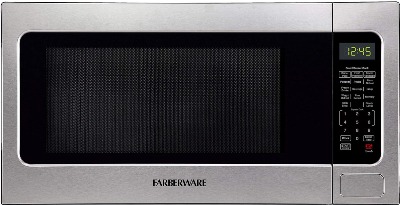
5. Farberware 2.2 Cu. Ft. Countertop Microwave Oven
Product Overview
Farberware delivers a solid 2.2 cubic foot microwave with 1100 watts of power and smart sensor auto-cook settings. This stainless steel option includes a defrost function, easy-clean interior design, and a child safety lock. It’s positioned as an accessible choice for households looking for dependable performance without excessive complexity.
Best Use Cases
Budget-conscious shoppers who still want quality appreciate this model. First-time microwave buyers benefit from the straightforward design. People in apartments or small spaces like the compact efficiency. Anyone who wants reliable reheating without confusion finds this perfect. Small households that don’t need premium features do great with this unit.
Key Features Explained Simply
The smart sensor auto-cook settings work similarly to other sensor systems—they adjust power and time based on what you’re heating. You pick a food type, and the microwave handles the details. The defrost function lets you thaw items without manual monitoring. The child safety lock prevents young kids from using it unsupervised.
The easy-clean interior design means fewer crevices for food splatters to hide. The stainless steel finish looks good and wipes clean quickly. The 1100 watts is slightly lower than most competitors, but it’s still sufficient for most cooking tasks. The overall design focuses on value and reliability.
Real-Life Usage Insight
Operating this microwave is simple and stress-free. The sensor cooking works reliably for everyday tasks. The defrost function handles common items like ground beef and chicken without requiring you to monitor progress. Reheating leftovers is quick and effective.
The 1100 watts mean heating takes slightly longer than 1200-watt units, but the difference is measured in seconds for most tasks. A cup of water still boils, just not at super-lightning speed. For regular use, this power level is completely adequate.
The easy-clean interior design is genuinely appreciated once you start using it. Less stuff sticks to walls and ceiling. What does splatter wipes off easily. Maintenance is faster than microwaves with complex interior geometry.
The stainless steel finish resists fingerprints and looks clean longer between wipes. This practical feature matters when you’re using the microwave multiple times daily.
Pros and Cons
Pros:
- Most affordable option on this list
- 1100 watts is still solid for 2.2 cu ft
- Smart sensor auto-cook removes guesswork
- Defrost function is useful
- Child safety lock is important for families with kids
- Easy-clean interior design saves maintenance time
- Stainless steel finish looks professional
- Reliable brand with decent warranty
- Good value for the price
- Compact and efficient design
Cons:
- 1100 watts is the lowest power here
- Heating takes slightly longer than higher-wattage models
- No inverter technology
- Fewer auto-cook presets than some competitors
- No position memory or special features
- Turntable is integrated, not removable
- Limited advanced capabilities
- Not ideal if you frequently defrost large items
- Manual mode requires more attention than some sensors
- Design is more basic overall
Performance Discussion
Heating is reliable and consistent. Vegetables cook through evenly. Beverages heat to proper drinking temperature. Defrosting works acceptably, though it takes a bit longer than higher-wattage units.
The 1100 watts in a 2.2 cubic foot cavity still provides good watts-per-cubic-foot ratio. This means heating is efficient and relatively fast. You’re not waiting forever for things to cook or reheat.
The sensor technology works effectively for the food types it covers. Reheating comes out well. Defrosting is successful, just not the fastest. Overall performance is solid for typical household needs.
Temperature evenness is decent. The turntable rotation helps prevent cold spots. You might notice occasional uneven spots in very large dishes, but for normal portions, it’s fine.
Ease of Use
This is genuinely simple to operate. The buttons are few and logically placed. The display shows time clearly. The sensor cooking is obvious—pick your food, press go, walk away.
The defrost function is straightforward. Manual mode is available if you want to set exact times and power levels. Kids can learn to use it safely with the lock engaged.
Everything about the interface is designed to be approachable. Older users don’t find it confusing. Young kids can learn quickly. Most people figure out all functions within the first few uses.
Value for Money
This is the budget option, and honestly, it delivers good value. You’re getting 2.2 cubic feet, sensor cooking, defrost, and a nice stainless steel finish at the lowest price point. The savings compared to premium models are significant.
If you don’t need inverter technology, fancy features, or the highest wattage, this is perfectly sensible. The smart sensor cooking still eliminates most reheating mistakes. The defrost function still saves time compared to thawing at room temperature.
For your first microwave, a college dorm, or a tight budget situation, the value proposition is strong. You’re not sacrificing essential functions for the lower price.
Comparison Insights: Putting Them Side by Side
Let’s get specific about how these five options compare in key areas.
Power and Heating Speed: The Panasonic wins at 1250 watts, with Toshiba and SHARP at 1200 watts, Farberware at 1100 watts. Real-world difference? Panasonic boils water fastest. Farberware takes slightly longer. The gap is seconds for most tasks, so this matters mainly for high-volume cooking.
Sensor Technology: Toshiba EM62P and EM4 both use smart sensor cooking. SHARP has no sensor and requires manual timing. Panasonic uses advanced Genius Sensor technology. Farberware has smart sensor auto-cook. For removing reheating guesswork, all except SHARP handle that excellently.
Heat Distribution: Panasonic’s Cyclonic Wave Inverter is the most advanced. Toshiba and Farberware use basic inverter technology. SHARP uses none. This impacts food quality, with Panasonic delivering the most even results.
Turntable Design: Toshiba EM62P has position memory, which is genuinely convenient. SHARP and Toshiba EM4 have removable turntables for easy cleaning. Panasonic and Farberware have integrated turntables. Your preference here depends on whether you value memory convenience or cleaning ease.
Features and Complexity: Panasonic is most feature-rich. Toshiba models are mid-range. SHARP is simplest. Farberware is straightforward but not as basic as SHARP. Choose based on whether you want all the bells or simple operation.
Stainless Steel Quality: All five use genuine stainless steel that resists fingerprints and looks professional. Quality levels are similar across the board.
Price Positioning: Panasonic is premium. Toshiba EM62P is upper-mid. SHARP and Toshiba EM4 are mid-range. Farberware is budget-friendly. Your budget determines much of this decision.
Warranty and Support: Toshiba generally offers strong warranty terms. Panasonic provides good coverage. SHARP is decent. Farberware offers basic warranty. Longer warranty protection is valuable insurance.
Buying Guide: How to Choose What’s Right for You
Picking the right microwave comes down to matching features to your actual needs. Don’t get seduced by features you’ll never use, but do invest in things that matter to your cooking style.
Step 1: Assess Your Cooking Patterns
Do you primarily reheat leftovers? Do you cook fresh ingredients? Do you defrost frequently? Do you heat liquids? Most of us do all these things, but some matter more than others. Heavy reheating users benefit from sensor technology. Fresh cooking enthusiasts appreciate even heat distribution.
Step 2: Consider Your Kitchen Space
All five models have similar footprints, so space isn’t a huge differentiator. Check your available counter space and ensure the microwave fits comfortably. Measure twice before buying.
Step 3: Evaluate Your Technical Comfort
Are you someone who likes pushing buttons and exploring features? Or do you want something that works the same way every time without complexity? Panasonic and Toshiba models appeal to tech-forward people. SHARP appeals to simplicity seekers.
Step 4: Think About Cleaning Convenience
Do you value quick, easy cleaning? The removable turntable models (SHARP, Toshiba EM4) make maintenance faster. The easy-clean interior (Farberware) reduces buildup. If you hate kitchen maintenance, consider these factors.
Step 5: Set Your Budget Realistically
Can you afford the premium investment for Panasonic, or is a mid-range or budget option more realistic? Be honest about what you can spend. None of these models are terrible values, but they represent different price points.
Step 6: Prioritize Your Must-Haves
Make a list of features that actually matter to you. Sensor cooking? Position memory? Inverter technology? Removable turntable? Child lock? Write down your top three must-haves. The best microwave for you delivers on those specifically.
Step 7: Read Owner Feedback Specifically
Look for reviews that mention the specific features you care about. Someone saying “sensor cooking is amazing” matters if you care about that. If you don’t use sensor cooking, that review doesn’t help you.
Step 8: Check Warranty Details
Read the fine print on warranty coverage. What does the manufacturer cover? How long does coverage last? Is in-home service included? Good warranty protection becomes valuable if something fails down the line.
Who Should Buy These Products: Honest Recommendations
The Panasonic NN-SD975S is for you if: You cook regularly and care about food quality. You appreciate technology and understand how inverter technology improves results. You’re willing to invest in performance. You want the absolute best heating consistency available at this size.
The Toshiba EM62P(SS) is for you if: You want smart sensor cooking without paying for the premium Panasonic. You appreciate convenient features like position memory. You have a moderate budget but don’t want to sacrifice quality. You’re willing to pay more for reliability.
The SHARP is for you if: You hate complicated controls and just want a straightforward microwave. You don’t care about fancy features. You value simplicity and reliability. You have a moderate budget and prefer straightforward operation.
The Toshiba EM4-EM22PAIT(SS) is for you if: You have a large family that uses a microwave multiple times daily. You want sensor cooking without premium pricing. You appreciate the removable turntable for cleaning. You want a solid mid-range option.
The Farberware is for you if: You have a tight budget but still want quality. You want a dependable microwave without extra features. You prioritize simplicity and value. You’re a light-to-moderate microwave user.
Common Mistakes to Avoid When Buying a 2.2 Cu Ft Microwave
Mistake 1: Prioritizing Features You Don’t Use
Don’t pay for inverter technology if you only heat water and leftovers. Don’t choose position memory if you’re fine with the turntable stopping anywhere. Identify what you actually use, not what sounds impressive.
Mistake 2: Underestimating the Importance of Wattage
The difference between 1100 and 1250 watts is real. If you defrost frequently or heat large quantities, higher wattage matters. Don’t dismiss it as marketing nonsense.
Mistake 3: Ignoring Interior Design
Some microwaves have awkward interior geometry that traps splatters. Others are designed for easy cleaning. If you clean your microwave regularly (and you should), interior design matters. Easy-clean designs save frustration.
Mistake 4: Overlooking the Turntable Quality
A turntable that wobbles or doesn’t rotate smoothly ruins the experience. Watch videos or read reviews specifically about turntable quality. A smooth, quiet turntable is worth the investment.
Mistake 5: Not Checking Warranty Terms
Some warranties are genuinely excellent. Others are basically useless. Read the fine print before buying. Excellent warranty protection is worth paying extra for.
Mistake 6: Choosing Based on Appearance Alone
Yes, stainless steel looks good, but does it match your needs? Don’t buy a Panasonic because of technology you won’t understand if a simpler SHARP matches your needs perfectly.
Mistake 7: Neglecting the Control Panel
A complicated control panel you hate using becomes annoying after the first week. Look for logical button placement and clear displays. Take time testing the interface before committing.
Mistake 8: Forgetting About Noise Levels
Some microwaves are noticeably quieter than others. If you use it early mornings or late nights, a quiet unit matters more. Read reviews mentioning noise specifically.
Mistake 9: Buying Without Measuring Your Space
Even though all these models are similar sizes, slight variations exist. Measure your available counter space. Ensure proper clearance for the door to open fully.
Mistake 10: Ignoring Real-World Feedback
Online reviews sometimes emphasize unusual situations. Look for patterns in feedback. If multiple people mention the same problem, that’s real. If one person complains about something unusual, maybe it’s not typical.
Final Verdict: The Best Choice Depends on You
After reviewing these five microwaves extensively, here’s the honest truth: they’re all good options. None of them are lemons or terrible purchases. They represent different points on the spectrum of features, wattage, technology, and price.
If you want the absolute best performance and don’t mind paying premium prices: The Panasonic NN-SD975S delivers superior heating technology and the highest power. The Cyclonic Wave Inverter genuinely makes food come out better. For someone who cooks frequently or cares deeply about food quality, this is the choice.
If you want sensor cooking and solid features at reasonable pricing: The Toshiba EM62P offers excellent balance. Sensor cooking removes reheating guesswork. Position memory is genuinely convenient. The build quality is excellent. This works wonderfully for most families.
If you want simplicity and just need a reliable microwave: The SHARP delivers straightforward operation that anyone can understand. No confusing menus or overlapping features. Just a solid microwave that heats food reliably.
If you have a large family and want sensor cooking at mid-range pricing: The Toshiba EM4 offers good features without breaking the budget. The removable turntable makes cleaning easier. The Origin Inverter improves heating consistency.
If you have a tight budget but want quality: The Farberware delivers amazing value. Sensor cooking at this price point is genuinely impressive. The easy-clean interior saves maintenance time. For budget-conscious shoppers, this is an excellent option.
The best microwave is the one that matches your specific cooking needs, budget, and preferences. These five options ensure you can find something in that sweet spot of 2.2 cubic feet that works for your kitchen.
Take time to consider what features matter to you most. Think about how you actually use a microwave, not how someone else uses theirs. Match your needs to the right option, and you’ll be happy with your purchase for years to come.
Frequently Asked Questions About 2.2 Cu Ft Microwaves
How much bigger is 2.2 cu ft compared to standard microwaves?
A 2.2 cubic foot microwave is roughly double to triple the size of small microwaves you might see in dorms or offices. You can fit larger plates, casserole dishes, and pizza boxes. The space makes a real difference in daily usability.
Do I really need 1200+ watts, or is lower wattage okay?
Lower wattage still works, but it’s slower. The difference between 1100 and 1250 watts is noticeable when defrosting or heating large quantities. For light use, 1100 watts is fine. For frequent use, higher wattage saves time daily.
Is sensor cooking worth the extra cost?
Yes, if you reheat frequently. Sensor cooking removes the guesswork of manual timing. You spend less time fixing undercooked or overcooked leftovers. For families eating from containers multiple times weekly, sensor cooking provides genuine convenience.
Should I prioritize a removable turntable?
If you clean your microwave regularly, yes. If you rarely clean it, not really. The difference is mainly convenience—removable turntables are faster to clean thoroughly.
How much counter space do these need?
A 2.2 cubic foot microwave typically measures about 22-25 inches wide, 16-18 inches deep, and 12-14 inches tall. Measure your available space, then compare. Most kitchens can accommodate these without problems.
What about the warranty?
Most manufacturers offer one to two years of parts and labor coverage. Some offer extended warranties for additional cost. Longer warranty protection is valuable insurance against defects.
Can I use these on older kitchen circuits?
Modern microwaves draw significant current. If your kitchen has older wiring, check with an electrician. Most homes can handle it, but it’s worth verifying before purchasing.
How loud are they?
All modern microwaves operate at relatively quiet levels. The motor and turntable create slight noise, but nothing disturbing. They’re quieter than older models from decades past.
Do these save money compared to traditional ovens?
Yes, significantly. Microwaves use less energy than ovens for most tasks. Reheating in a microwave costs pennies compared to preheating and running an oven.
How long should a 2.2 cu ft microwave last?
With proper care, five to ten years is realistic. The motor and magnetron determine longevity. Quality models last longer than cheap ones. Proper maintenance extends lifespan.
The Bottom Line
Finding the best 2.2 cu ft microwave means matching your specific needs to the right option. Each of these five models delivers reliable performance, spacious capacity, and quality construction. The difference comes in features, wattage, technology, and price.
The Panasonic delivers the best technology for food quality enthusiasts. The Toshiba models offer excellent balance of features and pricing. The SHARP provides straightforward simplicity. The Farberware offers budget-friendly value without sacrificing quality.
All five are solid purchases that will serve your kitchen well for years. Take time to identify your priorities, check your budget, and choose accordingly. With any of these options, you’re getting a dependable microwave that’s a step above basic budget models.
Your kitchen deserves a microwave that works reliably and delivers the features that matter to you. These five options ensure you can find exactly that in the 2.2 cubic foot category. Happy cooking and reheating!

Hi, I’m Mary, the founder of KitchenClue.com. I’m deeply passionate about everything that makes a kitchen smarter, easier, and more enjoyable. I share hands-on insights and practical expertise on kitchen gear that truly helps in daily cooking. Along with my dedicated research team, we study products carefully, and our writers create honest, well-tested reviews using trusted, authentic sources—so you can choose kitchen tools with total confidence.