Le Creuset 7.25 Quart Round Dutch Oven: Review & Guide
Introduction
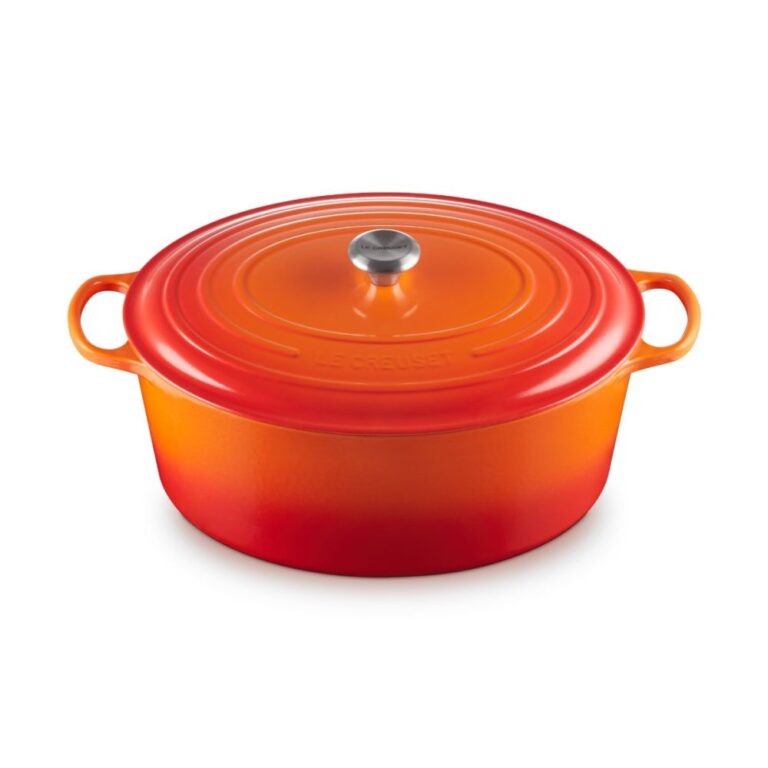
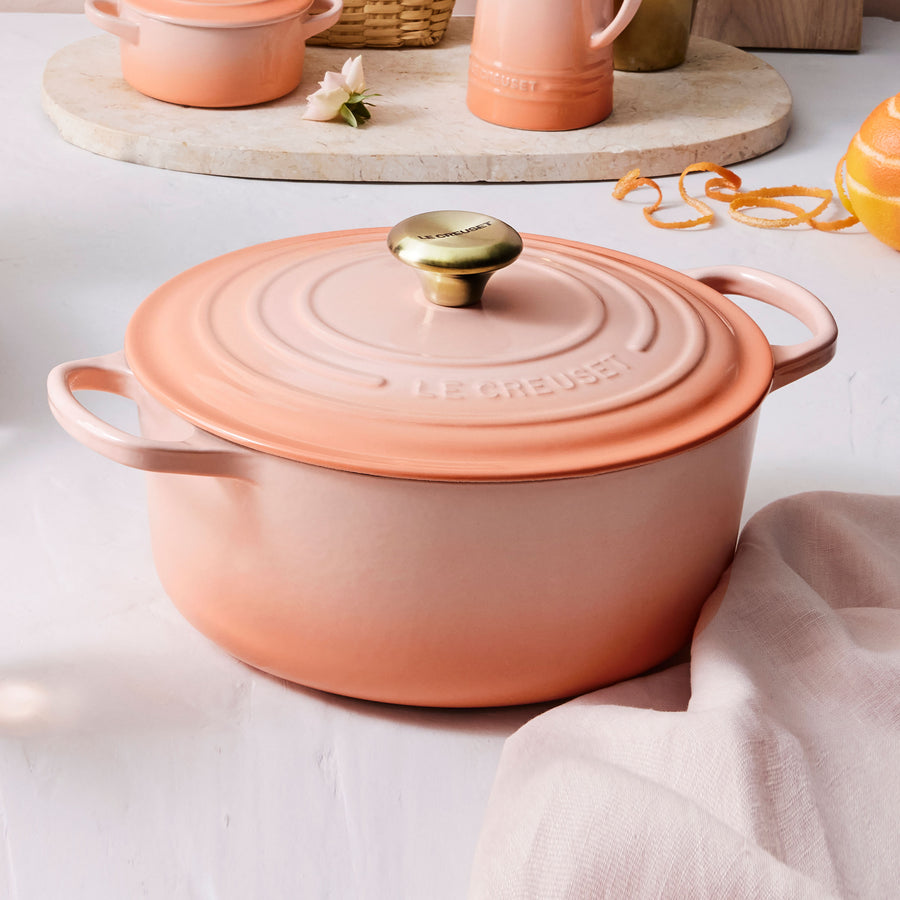
The Le Creuset 7.25 quart round Dutch oven is a large enameled cast-iron pot made for American home kitchens. Its capacity suits family meals, holiday cooking, batch soups, large roasts, and bread baking. It works on gas, electric, glass, and induction cooktops, and it can move from the stovetop to the oven.
For most U.S. households, this size offers more cooking room than the popular 5.5-quart model. The trade-off is simple: it weighs more, takes up more cabinet space, and may be too large for small meals.

What Is the Le Creuset 7.25 Quart Round Dutch Oven?
The Le Creuset 7.25 quart round Dutch oven is an enameled cast-iron casserole with a matching lid. It combines the heat retention of cast iron with a smooth enamel cooking surface.
The pot is designed for:
- Soups, stews, and chili
- Braised beef, pork, and poultry
- Large batches of beans or pasta sauce
- No-knead bread
- Roasted vegetables
- One-pot meals
- Deep frying in small batches
- Slow cooking in the oven
Le Creuset sells this model in several colors. The exact color, knob type, and included accessories can vary by retailer and product version.
Key specifications
| Feature | Le Creuset 7.25-quart round Dutch oven |
|---|---|
| Product type | Enameled cast-iron Dutch oven |
| Capacity | 7.25 U.S. quarts |
| Shape | Round |
| Cooking surface | Smooth enamel |
| Cooktop use | Gas, electric, ceramic, and induction |
| Oven use | Yes; follow the current care guide and knob limit |
| Lid | Tight-fitting cast-iron lid |
| Dishwasher use | Generally dishwasher safe, although hand washing helps protect the finish |
| Interior color | Usually light-colored enamel, depending on the model |
| Best use | Large family meals and batch cooking |
The listed capacity is the total internal volume. It does not mean you should fill the pot to the rim. Leave room for stirring, bubbling, and safe handling.
How Much Food Does a 7.25-Quart Dutch Oven Make?
A 7.25-quart Dutch oven usually suits six to eight servings, depending on the recipe. It can make more servings when the food includes broth, beans, vegetables, or another filling ingredient.
Approximate examples include:
| Dish | Typical batch |
|---|---|
| Soup or stew | 6–10 servings |
| Chili | 8–12 servings |
| Braised short ribs | A large family meal |
| Pulled pork | One large roast, depending on shape |
| Tomato sauce | Several quarts |
| No-knead bread | One large loaf |
| Dried beans | A large batch with room for expansion |
These figures are estimates, not fixed limits. A tall roast may use more space than a wide stew. A recipe with foaming liquid may also need more headroom.
For a couple or a small household, the 7.25-quart model can feel oversized for everyday cooking. For a family, meal prep, or holiday use, the extra room can prevent crowding.

Is the 7.25-Quart Size Right for Your Kitchen?
The 7.25-quart model is a good fit when you cook large meals or want one pot for both daily cooking and entertaining. It is less suitable if you have limited storage or often cook for one or two people.
Choose this size if you:
- Cook for four or more people
- Make large batches for leftovers
– Prepare whole chickens or large roasts - Bake large round loaves
- Host holiday meals
- Want room to brown food in batches
- Use a large oven and have strong storage shelves
Consider a smaller Dutch oven if you:
- Usually cook for one to three people
- Have limited cabinet space
- Prefer lighter cookware
- Make small portions of soup or sauce
- Find heavy cookware difficult to lift safely
The 5.5-quart round Dutch oven is often more practical for everyday meals. The 7.25-quart model gives you more capacity, but it is not automatically better. The right size depends on the amount of food you cook and the space available in your kitchen.
7.25 quarts compared with common sizes
| Size | Best for | Main advantage | Main drawback |
|---|---|---|---|
| 3.5–4.5 quarts | One to three people | Easier to lift and store | Limited room |
| 5.5 quarts | Everyday family meals | Balanced size | May crowd large recipes |
| 7.25 quarts | Large meals and batch cooking | High capacity | Heavy and bulky |
| 9 quarts or more | Large gatherings | Maximum cooking room | Greater weight and storage needs |
A useful rule is to buy based on your normal cooking pattern, not your largest occasional recipe.
Cooking Performance: What Enameled Cast Iron Does Well
The Le Creuset 7.25 quart round Dutch oven holds heat well because cast iron warms slowly and stays hot. This helps with browning, braising, and steady simmering.
The enamel coating adds several practical benefits. It creates a smooth surface that does not need seasoning, and it allows acidic foods such as tomatoes, wine, and citrus-based sauces to cook in the pot.
The light interior found on many versions also makes it easier to see browning and fond. Fond is the layer of browned food left on the bottom after searing. Adding liquid and scraping it up can build flavor in a sauce or braise.
Heat management matters
Cast iron holds heat for a long time. Use low or medium heat for most cooking. High heat can cause food to burn, especially when the pot is empty or contains little oil.
For better results:
- Warm the pot gradually.
- Add oil after the surface has heated.
- Dry meat before searing it.
- Avoid crowding the cooking surface.
- Lower the heat once food has browned.
- Let the pot cool before washing it.
The pot does not heat as quickly or evenly as a thin aluminum pan. Its strength is heat retention, not rapid temperature changes.

Stovetop, Oven, and Induction Compatibility
The Le Creuset 7.25-quart round Dutch oven is designed for use on common U.S. cooking surfaces, including gas, electric, ceramic-glass, and induction cooktops.
On a glass cooktop, lift the pot rather than sliding it. A full cast-iron pot is heavy, and dragging it may scratch the surface.
On induction, place the pot carefully on the burner. The base must sit flat and match the burner size as closely as practical. Because cast iron retains heat, reduce the burner setting after the pot reaches temperature.
The Dutch oven can also go into the oven. Le Creuset’s current care instructions should control the maximum temperature for the exact lid knob and product version. Many current Le Creuset cast-iron pieces are rated for oven temperatures up to 500°F, but the knob material and model details matter.
Safe oven-use habits
- Check the knob’s temperature rating before high-heat cooking.
- Use thick, dry oven mitts.
- Remember that the handles and lid knob become hot.
- Place the hot pot on a heat-safe surface.
- Do not move a full pot alone if it feels unstable.
- Leave space around the pot when removing it from the oven.
Never assume that a cold-water rinse is safe for a hot Dutch oven. A sharp temperature change can stress the enamel.
Cleaning and Care
The enamel surface does not require seasoning. This makes the Le Creuset 7.25 quart round Dutch oven easier to maintain than bare cast iron.
For normal cleaning:
- Let the pot cool.
- Add warm water and mild dish soap.
- Clean with a soft sponge or nylon brush.
- Rinse well.
- Dry the pot and lid completely.
- Store the lid slightly open if moisture tends to collect inside.
Avoid steel wool, harsh scouring pads, oven cleaner, and abrasive powders. These can dull or damage the enamel over time.
For stuck food, soak the pot in warm soapy water. A paste made from baking soda and water can help with stubborn residue. Do not use force before softening the food.
Dishwasher cleaning may be allowed by the manufacturer, but repeated cycles can dull the enamel and affect the appearance of exterior colors. Hand washing is the gentler choice for a premium enameled pot.
What about stains?
Light-colored enamel can develop brown marks, dull areas, or heat stains. These marks do not always mean the pot is unsafe or damaged.
To address discoloration:
- Soak the pot first.
- Use a mild enamel-safe cleaner.
- Follow the cleaner’s directions.
- Rinse completely.
- Stop if the enamel begins to look scratched or rough.
Do not use metal tools to scrape food from the surface.

Common Problems and How to Avoid Them
Most problems come from excess heat, sudden temperature changes, or rough cleaning.
Food burns on the bottom
Likely causes:
- Heat is too high.
- The pot was preheated while empty.
- The food was not stirred.
- The recipe did not contain enough liquid.
What to do: Lower the heat, add liquid when appropriate, and soak the pot after it cools. Do not scrape aggressively with a metal utensil.
Food sticks during searing
Some sticking is normal when meat first touches the pot. It often releases after the surface browns.
To reduce sticking:
- Dry the meat well.
- Preheat gradually.
- Use enough cooking oil.
- Avoid moving the meat too soon.
- Do not overcrowd the pot.
The enamel shows a chip
A chip on the cooking surface is different from a stain. Stop using the pot for food if the interior enamel has chipped, cracked, or flaked. Contact Le Creuset or the retailer about warranty or replacement options.
Small marks on the outer enamel may be cosmetic, but sharp edges and spreading cracks deserve attention.
The lid is hard to lift
Steam and pressure can make a lid feel stuck. Turn off the heat and let the pot rest. Use a dry mitt and lift the lid away from your face. Do not force it with a knife or other tool.
A Dutch oven is not a pressure cooker. Do not lock the lid or try to create pressure inside it.
Weight, Storage, and Handling
A 7.25-quart cast-iron Dutch oven is heavy even before food is added. The pot, lid, and meal together may be difficult for some people to lift safely.
Think about these practical limits before buying:
- Can your shelf support the weight?
- Can you lift the full pot from the oven?
- Is the oven rack strong and positioned safely?
- Do the handles fit your oven mitts?
- Do you have room to wash and dry the pot?
Store the pot on a low, sturdy shelf when possible. Avoid placing it on a high shelf where lifting a full or awkward pot could cause injury.
For oven cooking, slide the rack out before lifting the pot. This gives you more control and reduces the chance of hitting the oven door or rack.
Le Creuset 7.25 Quart vs. Other Dutch Ovens
The Le Creuset model competes with other enameled cast-iron Dutch ovens from brands such as Staub, Lodge, and other cookware makers.
The key differences are usually:
- Price
- Interior color and shape
- Lid design
- Handle size
- Weight
- Warranty terms
- Available colors
- Retailer support
- Enamel finish and long-term appearance
Le Creuset’s main practical advantage is its established product range, broad color selection, and documented care guidance. That does not prove that it will cook better than every competing Dutch oven.
A less expensive enameled Dutch oven may perform well for the same recipes. The Le Creuset becomes easier to justify when you value its design, finish, color options, long-term service, or brand warranty and are willing to pay more.
When comparing models, do not compare capacity alone. Check the empty weight, interior diameter, lid knob rating, warranty, and return policy.
Buying Advice for U.S. Shoppers
The safest way to buy this model is to confirm the exact product listing before checkout. Retailers may use similar names for different sizes, shapes, colors, or seasonal versions.
Check:
- The capacity is listed as 7.25 U.S. quarts.
- The shape is round, not oval.
- The lid is included.
- The retailer lists the exact color and knob.
- The product is new or clearly identified as used.
- The warranty terms apply in the United States.
- The return policy covers cookware that has been handled but not damaged.
- The price is not based on an outdated or incomplete listing.
Le Creuset prices change by color, retailer, promotion, and availability. A temporary sale does not necessarily indicate a different construction or cooking performance.
Buy from Le Creuset, an authorized retailer, or a seller with clear product authentication and return terms. Be cautious with listings that use stock photos, omit the model number, or offer a new pot at an unusually low price.

Frequently Asked Questions
Is the Le Creuset 7.25-quart Dutch oven too big for everyday use?
It may be too large for one or two people, but it works well for families and meal prep. The main issue is not cooking quality. It is the extra weight, storage space, and minimum batch size that many recipes require.
Can the Le Creuset 7.25-quart Dutch oven go in the dishwasher?
Many Le Creuset enameled cast-iron products are dishwasher safe. However, hand washing is better for preserving the finish and exterior color. Always follow the care instructions for the exact model.
Can I use metal utensils in it?
Le Creuset generally recommends using tools that will not damage the enamel. Wood, silicone, and heat-safe plastic utensils are safer choices. Avoid sharp metal tools that can scratch or chip the cooking surface.
Can I bake bread in the 7.25-quart Dutch oven?
Yes. Its covered design can help retain steam during the early stage of baking. Check the recipe’s temperature and the lid knob’s rating before placing the pot in a very hot oven.
Does the Dutch oven need seasoning?
No. The enamel coating does not require the seasoning process used for bare cast iron. You should still wash and dry the pot well after use.
How long can a Le Creuset Dutch oven last?
The pot may last for many years when used and cleaned correctly. Longevity depends on heat control, impact, cleaning methods, and whether the enamel remains intact. A chipped cooking surface should not be treated as normal wear.
Final Recommendation
The Le Creuset 7.25 quart round Dutch oven is best for U.S. cooks who make large meals, batch recipes, braises, soups, stews, and rustic bread. Its enameled cast iron holds heat well and works across common cooktops, including induction.
Choose it when the extra capacity will be used often. Choose a 5.5-quart model or another smaller pot if you cook small portions, have limited storage, or want cookware that is easier to lift.
Before buying, confirm the current model details, knob rating, warranty, price, and retailer return policy. After purchase, use moderate heat, avoid thermal shock, and handle the full pot with care.
Research Basis
Product features and care guidance should be confirmed against the current U.S. product page and care instructions because model details can change.

Hi, I’m Mary, the founder of KitchenClue.com. I’m deeply passionate about everything that makes a kitchen smarter, easier, and more enjoyable. I share hands-on insights and practical expertise on kitchen gear that truly helps in daily cooking. Along with my dedicated research team, we study products carefully, and our writers create honest, well-tested reviews using trusted, authentic sources—so you can choose kitchen tools with total confidence.