Le Creuset Beef Bourguignon Recipe: Easy French Classic
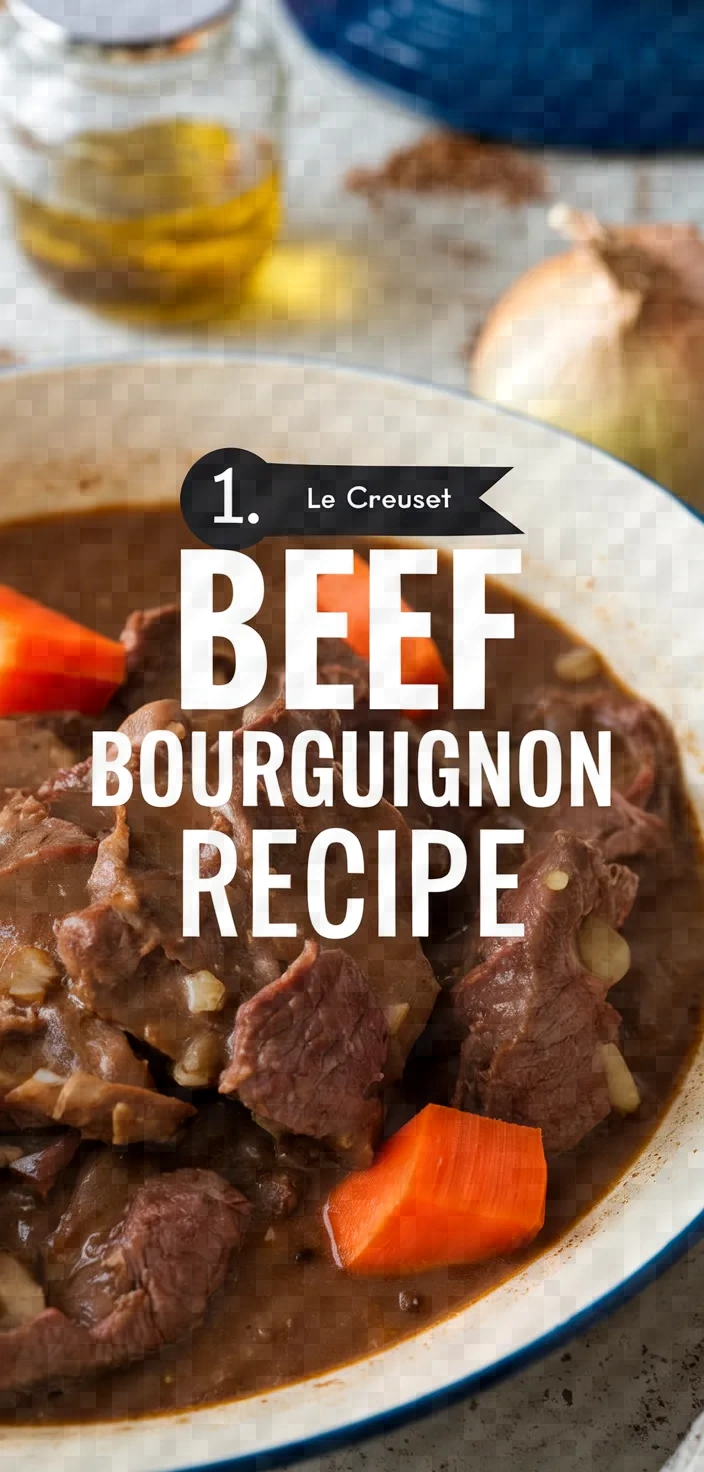
This Le Creuset beef bourguignon recipe makes tender beef, crisp bacon, rich red wine sauce, and soft vegetables in one heavy Dutch oven. It is designed for a 5½- to 7¼-quart Le Creuset enameled cast-iron Dutch oven and serves 6 to 8 people.
The best result comes from three key steps: dry and brown the beef in batches, reduce the wine before braising, and cook the stew slowly at 325°F until the beef is fork-tender.

Le Creuset Beef Bourguignon at a Glance
Beef bourguignon is a slow French-style beef stew. It uses tough beef cuts, bacon, red wine, stock, onions, carrots, herbs, and mushrooms. Long, gentle cooking changes the beef’s firm connective tissue into a soft, rich texture.
A Le Creuset Dutch oven works well because its heavy cast iron holds heat for steady browning and slow cooking. The enamel coating also makes it suitable for wine-based sauces.
Recipe details
| Item | Amount |
|---|---|
| Prep time | 35 minutes |
| Cook time | 3 to 3½ hours |
| Servings | 6 to 8 |
| Dutch oven size | 5½ to 7¼ quarts |
| Oven temperature | 325°F |
| Best beef cut | Boneless beef chuck roast |
| Cooking method | Stovetop and oven |
This recipe is not an official Le Creuset recipe. It is a practical Dutch oven version of classic beef bourguignon.

Ingredients
Use well-marbled beef chuck for the most tender result. Chuck has enough fat and connective tissue to stay moist during a long braise.
For the beef stew
- 3 pounds boneless beef chuck roast, cut into 2-inch pieces
- 6 ounces thick-cut bacon, cut into small pieces
- 1 medium yellow onion, diced
- 2 medium carrots, cut into ½-inch pieces
- 4 garlic cloves, minced
- 2 tablespoons all-purpose flour
- 2 cups dry red wine
- 2 cups low-sodium beef stock
- 2 tablespoons tomato paste
- 2 teaspoons kosher salt, plus more as needed
- 1 teaspoon freshly ground black pepper
- 2 bay leaves
- 4 to 5 fresh thyme sprigs
- 1 tablespoon Worcestershire sauce, optional
For the mushrooms and pearl onions
- 12 ounces cremini or button mushrooms, halved or quartered
- 1½ cups frozen pearl onions
- 1 tablespoon unsalted butter
- 1 tablespoon olive oil
- ¼ teaspoon kosher salt
To finish
- 2 tablespoons chopped fresh parsley
- Mashed potatoes, egg noodles, rice, or crusty bread for serving
Choosing the wine
Choose a dry red wine that you would enjoy drinking. Pinot Noir, Merlot, Cabernet Sauvignon, or a dry red blend can work well.
Avoid sweet red wine. Sweet wine can make the sauce taste heavy and unbalanced. You also do not need an expensive bottle; the wine should be clean and pleasant, but it does not need to be a premium vintage.

How to Make Le Creuset Beef Bourguignon
The cooking process has four important stages: brown the bacon and beef, build the sauce, braise the beef, and add the mushrooms near the end.
1. Prepare the beef
Place the beef on a large plate or baking sheet. Pat every piece very dry with paper towels.
Season the beef with 1½ teaspoons of kosher salt and the black pepper. Let it sit at room temperature for about 20 to 30 minutes while you prepare the other ingredients.
Dry beef browns more easily. Wet beef releases steam, which can leave the surface gray instead of deeply browned.
2. Brown the bacon
Place the Le Creuset Dutch oven over medium heat. Add the bacon and cook for 5 to 8 minutes, stirring often, until the fat renders and the bacon is lightly crisp.
Use a slotted spoon to transfer the bacon to a bowl. Leave about 2 tablespoons of bacon fat in the pot. If the pot has much more fat, carefully remove some.
3. Sear the beef in batches
Increase the heat to medium-high. Add the beef in a single layer.
Sear the beef for about 2 to 3 minutes per side. Turn the pieces so several sides become deeply brown. Transfer the browned beef to the bowl with the bacon.
Do not crowd the pot. Crowding lowers the temperature and causes the beef to steam. For 3 pounds of beef, you will likely need three batches.
Add a small amount of oil only if the pot looks dry. Le Creuset cast iron stores heat well, so adjust the burner if the browned bits begin to burn.
4. Cook the vegetables
Reduce the heat to medium. Add the onion and carrots to the pot.
Cook for 5 to 7 minutes, stirring and scraping the browned bits from the bottom. Add the garlic and cook for 30 seconds.
Stir in the tomato paste. Cook for about 1 minute. The paste should darken slightly, but it should not scorch.
5. Add flour and wine
Sprinkle the flour over the vegetables. Stir for 1 minute to coat the vegetables and cook out the raw flour taste.
Pour in the red wine slowly. Scrape the bottom of the pot with a wooden spoon to loosen the browned bits.
Bring the wine to a gentle simmer. Cook for 5 to 8 minutes, or until it reduces slightly. This step concentrates the wine and gives the sauce a fuller flavor.
6. Build the braising liquid
Return the beef and bacon to the Dutch oven. Add the beef stock, bay leaves, thyme, and Worcestershire sauce if using.
The liquid should come about halfway to two-thirds up the beef. The meat does not need to be fully covered.
Bring the liquid to a gentle simmer on the stovetop. Avoid a hard boil. A strong boil can make the beef fibers tighten and may cause the sauce to reduce too quickly.
7. Braise in the oven
Cover the Dutch oven with its lid. Place it in a preheated 325°F oven.
Cook for 2½ to 3 hours. Stir once or twice during cooking if convenient. The beef is ready when a fork slides into it with little resistance.
If the sauce boils rapidly in the oven, lower the temperature to 300°F. If the beef is still firm after 3 hours, continue cooking in 20- to 30-minute stages.
8. Cook the mushrooms and pearl onions
While the beef cooks, heat the butter and olive oil in a large skillet over medium-high heat.
Add the mushrooms and pearl onions. Season with the remaining ¼ teaspoon of salt. Cook for 8 to 12 minutes, stirring now and then, until the mushrooms brown and the onions are tender.
Cooking these ingredients separately keeps the mushrooms from becoming soft and watery in the braising liquid.
9. Combine and finish
Remove the Dutch oven from the oven. Discard the bay leaves and thyme stems.
Stir in the mushrooms and pearl onions. Taste the sauce and add salt or pepper if needed.
If the sauce seems thin, place the uncovered Dutch oven over medium-low heat for 5 to 10 minutes. Stir gently as it reduces.
Finish with chopped parsley. Serve the stew hot over mashed potatoes, egg noodles, rice, or with crusty bread.

How to Get Tender Beef and a Rich Sauce
Tender beef depends more on time and temperature than on the name of the recipe. Use moderate oven heat and cook until the beef gives way easily when tested with a fork.
Brown the beef well
Brown color creates much of the stew’s deep flavor. Use a wide pot surface and cook the beef in batches.
The beef should develop a dark brown crust. If liquid collects in the pot, let it cook away before turning the meat.
Keep the braise gentle
The liquid should show small, slow bubbles. A hard boil is too hot for a long braise.
A gentle braise protects the texture of the beef. It also reduces the chance of a scorched sauce, especially in an enameled cast-iron pot.
Do not add too much liquid
Braising is not the same as boiling. The stock and wine should partially surround the beef, not completely drown it.
Too much liquid can make the finished sauce thin. You can reduce the sauce later, but starting with the right amount gives better control.
Add mushrooms near the end
Mushrooms release water as they cook. Adding them at the start can dilute the sauce and soften their texture.
Brown them in a skillet and add them after the beef is tender. This gives them better color and a more distinct flavor.

Stovetop-Only Method
You can make this beef bourguignon entirely on the stovetop if your oven is occupied.
After adding the stock and wine, bring the stew to a gentle simmer. Cover the Dutch oven and cook over low heat for about 2½ to 3½ hours.
Check the pot every 30 minutes. The liquid should barely simmer. Stir from the bottom to prevent sticking, and add a small amount of stock if the sauce becomes too thick before the beef is tender.
A stovetop braise may cook less evenly than an oven braise because the heat comes from one direction. Use the lowest setting that maintains a gentle simmer.

Make-Ahead, Storage, and Reheating
Beef bourguignon often tastes better the next day because the sauce has more time to blend.
Cool the stew promptly after cooking. Transfer it to shallow containers if needed, then refrigerate it within 2 hours. If the surrounding temperature is above 90°F, refrigerate it within 1 hour, following U.S. Department of Agriculture food-safety guidance.
Store the stew in the refrigerator for 3 to 4 days. For longer storage, freeze it in airtight containers for about 2 to 3 months for best quality.
Reheating on the stovetop
Place the stew in the Dutch oven or a saucepan. Warm it over medium-low heat, stirring from time to time.
Add a splash of stock or water if the sauce is too thick. Heat until the center reaches 165°F, measured with a food thermometer.
Reheating from frozen
Thaw the stew in the refrigerator overnight when possible. Reheat it gently on the stovetop.
You can also reheat it from frozen in a covered pot over low heat, but it will take longer and needs frequent stirring as it loosens.

Common Problems and Fixes
The beef is still tough
The beef likely needs more time. Tough beef in a braise is often undercooked, not ruined.
Cover the pot and continue cooking in 20-minute stages. Test a large piece with a fork rather than relying only on the clock.
The sauce tastes bitter
Bitterness can come from burnt tomato paste, scorched fond, or overly reduced wine.
If the bottom of the pot burned, do not scrape the black material into the sauce. Transfer the stew to a clean pot, leaving the burnt layer behind. Add a little stock and adjust the seasoning.
The sauce is too thin
Remove the lid and simmer the stew over medium-low heat for 5 to 15 minutes. Stir often.
You can also mix 1 teaspoon of cornstarch with 1 tablespoon of cold water. Stir it into the simmering sauce and cook for 1 to 2 minutes. Add more only if needed.
The sauce is too salty
Add unsalted stock or a small amount of water. You can also increase the unsalted vegetables or serve the stew with plain mashed potatoes.
Do not add more wine late in the cooking process unless you simmer it long enough to cook off its raw flavor.
The beef did not brown
The beef may have been wet, the pot may have been crowded, or the heat may have been too low.
Pat the beef dry, work in smaller batches, and wait for the fat to become hot before adding each batch.
The enamel has stuck-on food
Let the Dutch oven cool first. Soak it in warm water with dish soap, then clean it with a soft sponge.
Avoid steel wool, metal scouring pads, and sudden temperature changes. Do not pour cold water into a very hot enameled Dutch oven.

Ingredient Substitutions
You can adjust the recipe, but each substitution changes the final result.
- Beef chuck: Use boneless short ribs or brisket cut into large pieces. Cooking time may vary.
- Bacon: Use pancetta, salt pork, or omit it and begin with olive oil.
- Red wine: Replace it with additional beef stock. The sauce will be less complex but still flavorful.
- Pearl onions: Use frozen cipollini onions or diced yellow onion.
- Cremini mushrooms: White button mushrooms, baby bella mushrooms, or shiitake mushrooms can work.
- All-purpose flour: Omit it for a looser sauce, or use a gluten-free flour blend labeled for thickening.
- Beef stock: Use low-sodium stock so you can control the salt.
Do not use a wine that tastes spoiled or strongly sweet. Cooking does not reliably correct poor-quality wine.

What to Serve With Beef Bourguignon
Choose a plain side that can absorb the sauce.
Good options include:
- Creamy mashed potatoes
- Buttered egg noodles
- Steamed rice
- Roasted potatoes
- Crusty French bread
- Simple green beans
- A crisp green salad
Avoid heavily seasoned sides. The stew already has a rich, concentrated sauce, so a mild starch and fresh vegetable provide better balance.

Frequently Asked Questions
Can I use a Le Creuset braiser instead of a Dutch oven?
Yes, if the braiser is large enough to hold the beef in a shallow layer and has a tight-fitting lid. A 3½- to 5-quart braiser may work for a smaller batch. Do not crowd the beef during browning.
Do I need to marinate the beef overnight?
No. An overnight marinade can add flavor, but it is not required for tender beef. Slow cooking at a gentle temperature is the main factor in tenderness.
Should I leave the lid on while cooking beef bourguignon?
Keep the lid on during the oven braise. It holds in moisture and helps the beef cook evenly. Remove the lid near the end only if the sauce needs to reduce.
Can I make beef bourguignon without alcohol?
Yes. Replace the wine with an equal amount of unsalted beef stock. Add 1 to 2 tablespoons of balsamic vinegar or red wine vinegar only if the sauce needs brightness, and add it gradually.
Why is my beef bourguignon greasy?
Bacon and beef can release a large amount of fat. Skim excess fat from the surface before serving. Chilling the stew also makes the hardened fat easy to remove.
Final Takeaway
For a reliable Le Creuset beef bourguignon recipe, use beef chuck, dry and sear it in batches, reduce the red wine, and braise the stew at 325°F until fork-tender. Add browned mushrooms and pearl onions near the end for better texture.
Let the finished stew rest for 10 to 15 minutes before serving. For the fullest flavor, make it one day ahead, refrigerate it safely, remove excess fat, and reheat it gently.

Hi, I’m Mary, the founder of KitchenClue.com. I’m deeply passionate about everything that makes a kitchen smarter, easier, and more enjoyable. I share hands-on insights and practical expertise on kitchen gear that truly helps in daily cooking. Along with my dedicated research team, we study products carefully, and our writers create honest, well-tested reviews using trusted, authentic sources—so you can choose kitchen tools with total confidence.