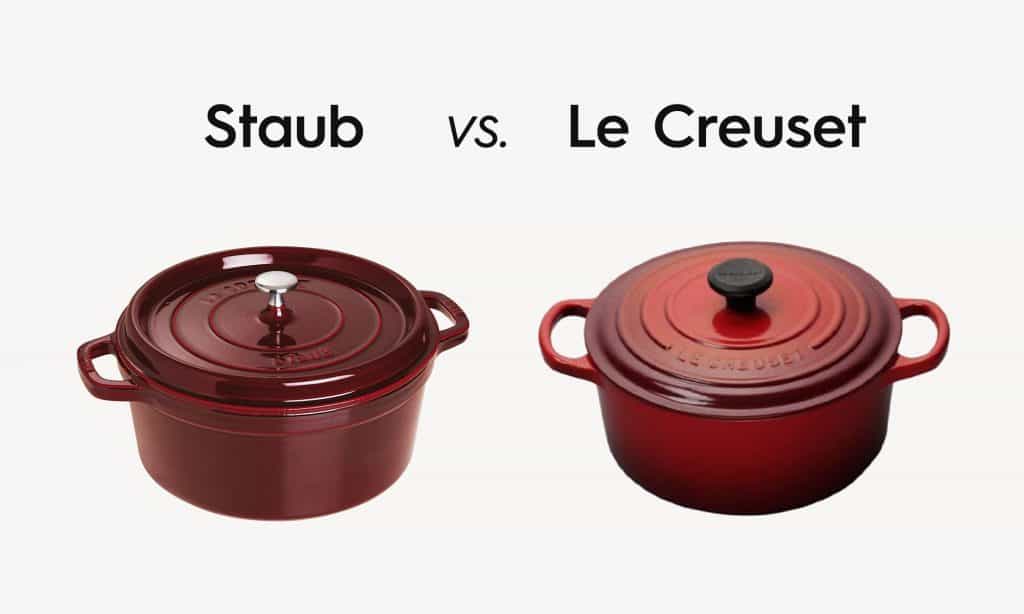
Is Staub Or Le Creuset Better: Which Dutch Oven Wins
For most U.S. home cooks, Le Creuset is the better all-purpose choice, while Staub is better for cooks who value dark interiors, strong browning, and tight-lid braising. Both brands make high-quality enameled cast iron. Neither is the clear winner for every kitchen.
The best choice depends on what you cook, how much you value easy food-color checks, your preferred design, and the exact model and size. Le Creuset often feels more versatile and easier to monitor. Staub often feels more focused on braises, roasts, and deep browning.
Both brands sell cookware at a premium price. The right pan should fit your cooking habits, stove, oven, storage space, and budget—not just the brand name.

Staub vs. Le Creuset: The Short Answer
Choose Le Creuset if you want a lighter interior, broad color choices, easy food monitoring, and a versatile Dutch oven for daily use.
Choose Staub if you want a dark interior, a tightly fitting lid, strong heat retention, and a pot designed for braising and slow cooking.
Here is the practical comparison:
| Feature | Staub | Le Creuset |
|---|---|---|
| Main cooking strength | Browning, braising, roasting | General-purpose cooking |
| Interior | Usually matte black enamel | Usually light-colored enamel |
| Lid design | Heavy lid with self-basting bumps on many models | Tight-fitting lid; design varies by model |
| Food visibility | Dark surface can make color harder to judge | Light surface makes browning easier to see |
| Exterior colors | Many colors, often muted or classic | Many colors, including bold and classic shades |
| Weight | Heavy | Heavy, with some lighter options |
| Cleaning | Enamel is easier than raw cast iron, but dark marks can show | Enamel is easy to clean, with stains easier to see |
| Best for | Braises, roasts, stews, searing | Soups, bread, braises, sauces, everyday use |
| Warranty | Limited lifetime terms may apply | Limited lifetime terms may apply |
| Best buying rule | Compare the exact model and lid | Compare the exact model and lid |
These differences are tendencies, not guarantees. A Staub cocotte and a Le Creuset Dutch oven can perform very similarly when both are the same size and used on the same stovetop.
What Both Brands Do Well
Staub and Le Creuset both make enameled cast iron cookware. This material combines the heat retention of cast iron with a glass-like enamel surface.
The enamel helps protect the iron from rust. It also means you do not need to season the cooking surface like a traditional bare cast-iron skillet. Both brands’ enameled cookware can handle many cooking tasks, such as:
- Searing meat
- Browning vegetables
- Making soup
- Cooking beans
- Baking bread
- Braising tough cuts
- Simmering sauces
- Roasting poultry
- Cooking on gas, electric, and many induction stoves
Cast iron heats more slowly than thin stainless steel or aluminum. Once hot, however, it holds heat well. That makes it useful when you want steady cooking rather than fast temperature changes.
Both brands also make cookware that can move from the stovetop to the oven. The safe temperature depends on the exact model, lid, knob, and manufacturer instructions. Plastic or phenolic knobs may have a lower oven limit than metal knobs.
Do not place a hot enameled pot under cold water. Sudden temperature changes can stress the enamel. Let the pan cool first, then wash it with warm water and mild dish soap.

Interior Color: The Most Useful Daily Difference
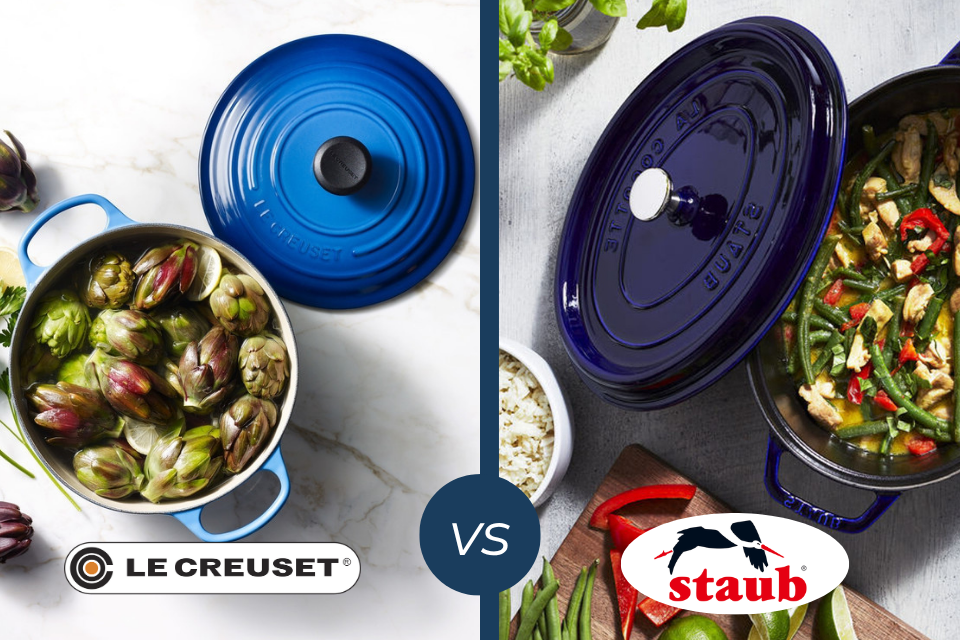
The interior color may affect your cooking more than the brand logo. Le Creuset typically uses a light-colored enamel interior, while many Staub cocottes use a matte black enamel interior.
A light surface makes it easier to see:
- When onions turn golden
- Whether fond is getting too dark
- How much liquid remains
- Whether a sauce has reduced
- Whether milk or cream is scorching
- How browned meat is becoming
This is especially useful for new cooks. The pale interior acts like a built-in cooking monitor.
Staub’s dark interior has a different benefit. It hides some stains and gives the pot a subdued look. Many cooks also like the texture of the matte enamel for searing. However, dark cookware can make it harder to judge the exact shade of browned food.
The difference is not simply “light is better” or “dark is better.” It depends on your habits.
Choose a light interior if you often cook sauces, caramelized onions, roux, risotto, or delicate foods. Choose a dark interior if you mostly sear meat, make stews, roast vegetables, or prefer a low-glare cooking surface.
Lid Design and Braising Performance
Staub’s lid design is one of its main selling points. Many Staub lids have small raised bumps on the inside. These bumps help condensation collect and fall back over the food during covered cooking.
This design supports moist cooking. It can be useful for:
- Pot roast
- Short ribs
- Chicken thighs
- Pulled pork
- Beans
- Long-cooked vegetables
Le Creuset lids also seal well and help retain moisture. Some Le Creuset lids have a smooth interior rather than Staub-style bumps. In normal home cooking, both can produce tender braises when the lid fits well and the heat is controlled.
The lid should not be the only factor in your decision. A good braise depends on more than lid shape. You also need enough liquid, a stable simmer, the right cooking time, and a cut of meat suited to slow cooking.
Staub lids often feel heavier and may sit very securely. That can help retain moisture, but it also adds weight when you lift the lid. Le Creuset lids are also heavy, though the feel varies by model and size.
Cooking Performance: Is One Brand Better?
There is no strong general reason to expect Staub or Le Creuset to produce better food in every recipe. Both use thick cast iron and enamel. The exact result depends on pan size, burner strength, heat level, ingredients, and technique.
Searing
Both brands can sear meat well after proper preheating. Enameled cast iron does not need to be heated as aggressively as bare cast iron. Medium or medium-low heat is often enough.
Staub’s dark surface may appeal to cooks who want a pan built around browning. Le Creuset’s light surface makes it easier to watch the fond develop. Neither pan removes the need to dry meat, avoid crowding, and wait before turning food.
Simmering
Both brands hold heat well. This helps with soups, chili, beans, and tomato sauces.
The main challenge is control. Cast iron stays hot for a long time. If a sauce boils too hard, lowering the burner may not cool the pot quickly. Use a low setting and allow time for the pan to respond.
Baking Bread
Both brands can work well for Dutch oven bread, provided the exact pot and lid are approved for the recipe’s oven temperature. Check the manufacturer’s instructions first.
The pot’s shape matters. A wide round Dutch oven can support a large loaf, while a smaller or oval model may suit a different dough size. The knob’s heat limit matters too.
Stovetop-to-Oven Cooking
Both brands are strong choices for recipes that begin with browning and finish in the oven. Examples include:
- Beef stew
- Braised chicken
- Baked pasta
- No-knead bread
- Lamb shanks
- Casseroles
Use oven mitts even when the pot has cooled slightly. Cast iron stays hot longer than most cookware.
Weight, Shape, and Usability
Both Staub and Le Creuset cookware can be heavy. A large Dutch oven filled with soup may be difficult to lift safely, even for a strong cook.
Before buying, consider:
- Your hand strength
- Cabinet height
- Sink size
- Storage shelf strength
- Distance from stove to oven
- Whether you cook for one, two, or a large household
A 5.5- to 6-quart Dutch oven is a common size for many U.S. households. It can handle soups, stews, bread, and many whole cuts of meat. A smaller 3.5- to 4-quart pot may suit one or two people. A 7- to 9-quart pot may help with large meals but can be harder to lift and clean.
Capacity labels are not always directly comparable. Check the stated volume, interior width, height, and total weight. A wide pot may be better for browning several pieces of meat. A taller pot may hold more liquid while using less counter space.
Shape can matter as much as capacity. Round pots work well on round burners. Oval pots can fit long cuts, such as whole chickens or pork loins, but may heat less evenly on a small round burner.

Cleaning, Stains, and Long-Term Care
Enameled cast iron is easier to care for than bare cast iron, but it is not damage-proof.
For routine cleaning:
- Let the cookware cool before washing.
- Add warm water and mild dish soap.
- Use a soft sponge or nylon brush.
- Soak stuck food instead of scraping hard.
- Dry the pot before storing it.
- Keep the lid slightly open if moisture remains inside.
Avoid metal tools that can chip or scratch the enamel. Avoid heating an empty pot for a long time. Do not drag the cookware across a glass cooktop.
Both brands may list their enameled cookware as dishwasher safe, depending on the product. Hand washing is usually kinder to the finish and may help preserve the appearance. A dishwasher can also leave water spots or wear decorative details over time.
For stubborn food, add water and a small amount of baking soda. Simmer gently for a short time, let the pot cool, and clean with a soft tool. Do not use harsh abrasive powders unless the manufacturer specifically allows them.
A dark Staub interior may hide some food stains, but residue can still remain. A light Le Creuset interior can show stains more clearly, which may help you see when cleaning is needed.
Durability and Enamel Damage
The cast-iron body of both brands can last for many years. The enamel is the part that needs the most care.
Common causes of damage include:
- Dropping the lid
- Hitting the rim against a hard surface
- Thermal shock from hot-to-cold changes
- Using metal utensils roughly
- Heating the pot while empty
- Sliding it across a smooth cooktop
- Stacking cookware without protection
Small cosmetic marks do not always mean the pot is unsafe. However, deep chips, exposed iron, cracks, or flaking enamel need more caution. Stop using cookware if the cooking surface is shedding material or if the pot has a structural crack.
Warranty coverage depends on the product, purchase channel, region, and type of damage. Manufacturing defects may be treated differently from damage caused by misuse or normal wear. Keep your receipt and check the current U.S. warranty terms before relying on coverage.
Neither brand should be treated as unbreakable. A premium price can buy careful design and quality control, but it cannot prevent damage from a fall or sudden temperature shock.

Price and Value: Which One Is Worth It?
Staub and Le Creuset are both expensive compared with many other enameled cast-iron brands. Their value comes from long service life, strong heat retention, repair or warranty policies where applicable, and design preferences.
The highest price does not always mean better cooking results. A less expensive enameled Dutch oven may also make good soup, stew, bread, and braises.
Compare value using these questions:
- Is the pot the right size for your usual meals?
- Is the weight manageable?
- Does the lid fit securely?
- Is the oven rating suitable for your recipes?
- Does the warranty apply in the United States?
- Can you inspect the cookware for chips before use?
- Is the sale price from an authorized seller?
- Will you use the pot at least several times each month?
A sale can change the better buy. If a Staub and Le Creuset pot are close in price, choose based on interior and lid preferences. If one is much cheaper, the lower-priced option may offer better value when the size, materials, and warranty are comparable.
Be cautious with unusually low prices from unknown websites. A discount does not prove that a product is counterfeit, but buyers should verify the seller, return policy, model name, and warranty.
Which Is Better for Different Types of Cooks?
Choose Le Creuset when:
- You are buying your first premium Dutch oven.
- You want to see browning and sauce color clearly.
- You cook soups, sauces, stews, and bread.
- You prefer many bright color options.
- You want a lighter interior for easier visual control.
- You plan to use one pot for many kinds of food.
Choose Staub when:
- You often make braises and slow-cooked meals.
- You prefer a dark cooking surface.
- You like a heavy, secure lid.
- You value moisture retention during covered cooking.
- You prefer restrained or darker color options.
- You are comfortable judging browning on a dark surface.
Consider another brand when:
- The weight is a serious concern.
- Your budget is limited.
- You need a pot with a very high oven rating.
- You want a lightweight aluminum Dutch oven.
- You need a nonstick surface.
- You want a pot that can tolerate rough handling.
A cheaper enameled cast-iron pot may meet your needs. A stainless-steel Dutch oven may be easier to lift. A raw cast-iron pot may cost less and tolerate higher heat, but it needs seasoning and different care.

A Practical Buying Checklist
Use this checklist before you buy either brand:
Select the capacity.
Match the pot to your normal meal size, not an occasional holiday meal.Check the total weight.
Include the lid. A full pot can become very heavy.Measure your burner and storage space.
Make sure the base sits securely and the pot fits your cabinet or oven.Confirm the oven limit.
Check the pot, lid, and knob as separate parts when the instructions require it.Choose the interior you prefer.
Light enamel shows food color well. Dark enamel offers a different look and can hide some stains.Inspect the rim and cooking surface.
Avoid chips, cracks, and rough areas.Check return and warranty terms.
This matters more with premium cookware.Compare the exact model.
A brand-level comparison can hide major differences in shape, lid, weight, and knob material.Buy from a reliable seller.
Keep proof of purchase.Plan safe handling.
Use two hands for large pots and protect your stovetop from sliding cookware.
Common Mistakes to Avoid
Buying by brand alone
A brand name does not tell you whether the pot is the right size or weight. Compare the exact product.
Choosing a pot that is too large
A large Dutch oven can be useful, but it may heat slowly and become hard to lift. A smaller pot that you use often may provide better value.
Preheating an empty enamel pot on high
High heat can stress enamel and create hot spots. Start with low or medium heat and add oil or food when appropriate.
Using cold water on hot cookware
This creates a fast temperature change. Let the cookware cool first.
Assuming all knobs have the same oven limit
Knob materials differ. Check the manufacturer’s instructions for your model.
Using metal utensils aggressively
A metal spoon may not cause instant damage, but hard scraping can mark the enamel. Use wood, silicone, or other suitable tools.
Expecting the pot to be nonstick
Enameled cast iron is not the same as nonstick cookware. Preheat carefully, use enough fat, and avoid moving food before it releases.

Frequently Asked Questions
Is Staub higher quality than Le Creuset?
Neither brand is clearly higher quality in every category. Both make premium enameled cast-iron cookware. Staub may appeal more to cooks who prefer a dark interior and heavy lid. Le Creuset may appeal more to cooks who want easy visual control and broad everyday use.
Does food taste better in Staub or Le Creuset?
The cookware alone does not guarantee better flavor. Both can support excellent browning, simmering, and braising. Ingredients, heat control, seasoning, and cooking time usually have a greater effect.
Which brand is easier to clean?
Both are easier to clean than bare cast iron because the cooking surface is enameled. Le Creuset’s light interior makes residue and stains easier to see. Staub’s dark interior may hide marks but can require closer inspection.
Is Staub or Le Creuset better for bread?
Both can work well for Dutch oven bread when the exact model is safe for the recipe’s oven temperature. Check the lid and knob rating before baking at high heat.
Which Dutch oven should a beginner buy?
A beginner may find Le Creuset’s light interior easier for learning because it makes browning and sauce color clear. A beginner who mainly cooks braises and stews may prefer Staub’s dark interior and secure lid.
Can Staub and Le Creuset go in the dishwasher?
Some enameled models are listed as dishwasher safe, but the current product instructions control. Hand washing is usually the gentler choice for preserving the finish and decorative parts.
Final Verdict
Le Creuset is the better overall choice for most U.S. home cooks. Its light interior makes cooking easier to monitor, and its Dutch ovens suit a wide range of recipes.
Staub is the better choice for cooks who prioritize braising, strong browning, a dark interior, and a heavy lid that helps retain moisture.
If you are comparing two similar models at similar prices, choose the interior and weight you will enjoy using. If one is on a substantial sale, compare the exact capacity, oven limit, lid, warranty, and seller before deciding.
For most buyers, the best Dutch oven is not the one with the strongest reputation. It is the one you can lift, clean, store, and use often.
Product information to verify before purchase
- Le Creuset U.S. Cookware
- Staub U.S. Cookware
- Le Creuset Care and Use Information
- Staub Care and Use Information

Hi, I’m Mary, the founder of KitchenClue.com. I’m deeply passionate about everything that makes a kitchen smarter, easier, and more enjoyable. I share hands-on insights and practical expertise on kitchen gear that truly helps in daily cooking. Along with my dedicated research team, we study products carefully, and our writers create honest, well-tested reviews using trusted, authentic sources—so you can choose kitchen tools with total confidence.