Le Creuset Why Is It So Good: Honest Review
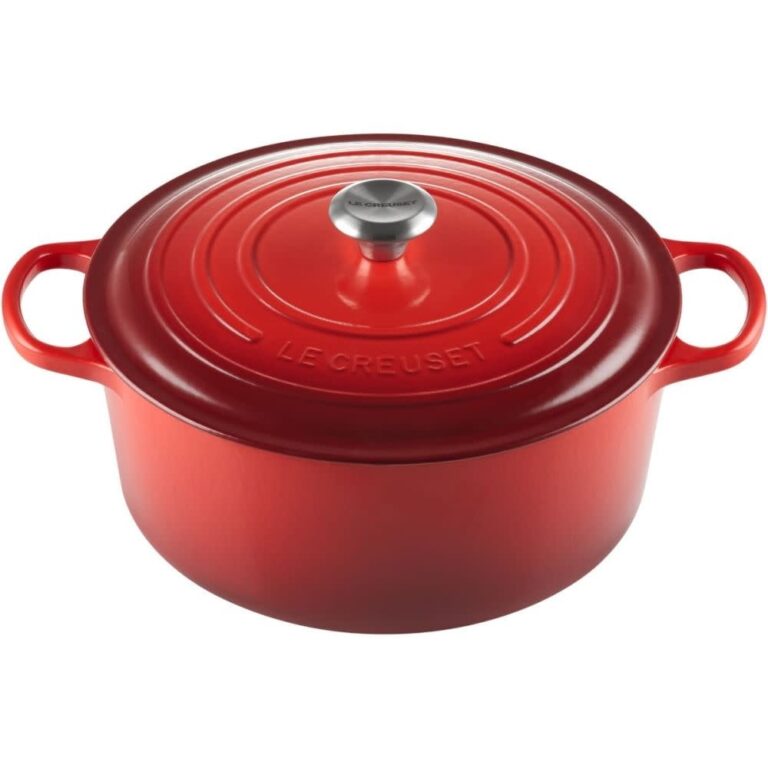
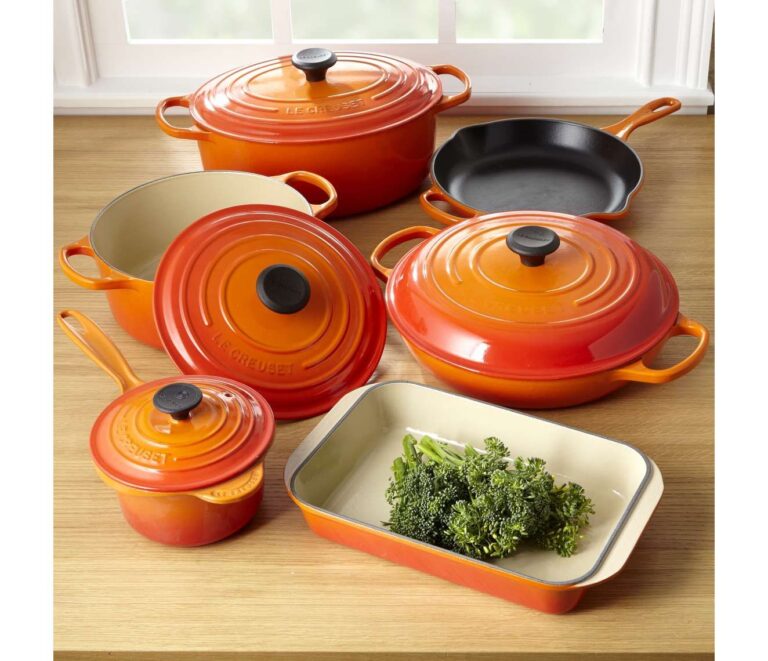
Le Creuset is so good because it combines heavy cast iron, a durable enamel coating, strong heat retention, and thoughtful design. In U.S. kitchens, its enameled Dutch ovens are valued for slow cooking, baking, frying, roasting, and serving food at the table.
That does not mean every Le Creuset product is the best choice for every cook. The cookware is heavy and costly. Its main advantage is long-term performance: one well-cared-for Dutch oven can handle many cooking tasks for years without needing seasoning.

What Makes Le Creuset Cookware Different?
Le Creuset is best known for enameled cast iron. This material has two key parts:
- Cast iron: A thick metal body that heats slowly and holds heat well.
- Enamel: A glass-like coating fused to the iron that protects it from rust and creates a nonreactive cooking surface.
The enamel means you do not need to season the cooking surface as you would with bare cast iron. It also allows you to cook acidic foods, such as tomato sauce, wine-based dishes, and citrus marinades, without the same concerns that apply to poorly seasoned bare iron.
Le Creuset’s enameled cast iron is made in France, according to the company’s product information. Its cookware is sold in the United States through the brand’s website, outlet stores, department stores, specialty retailers, and other authorized sellers.
The brand also makes stoneware, stainless steel, nonstick cookware, carbon steel, and kitchen tools. However, when most people ask, “Why is Le Creuset so good?” they usually mean the classic enameled Dutch oven.
The basic material advantage
Cast iron spreads heat more slowly than thin aluminum or copper. Yet it stores a large amount of heat once it becomes hot. This makes it useful for recipes that need steady heat, such as:
- Braised beef
- Chili
- Beans
- Soups and stews
- No-knead bread
- Roast chicken
- Fried foods
- Slow-cooked vegetables
The enamel does not make cast iron heat faster. Instead, it makes cast iron easier to use for more foods and easier to maintain.
Why the cooking surface matters
Bare cast iron can react with moisture and acidic foods if it is not seasoned and dried well. Enameled cast iron avoids much of that maintenance. The smooth surface also makes it easier to see browning, sauce color, and stuck food.
Enamel is not indestructible, though. Metal tools, sudden temperature changes, abrasive cleaners, and overheating can damage it. Good results depend on using the pan within those limits.
Why Does Le Creuset Cook Food Well?
Le Creuset performs well because its thick walls and tight-fitting lid help control heat and moisture. The cookware does not create heat on its own, but it helps the cooking process stay stable.
Strong heat retention
When a cold ingredient enters a hot pan, the food can lower the pan’s temperature. A thick cast-iron vessel loses heat more slowly than a thin pan. That helps meat brown and lets a stew return to a simmer with less fluctuation.
This is especially useful when cooking large amounts of food. A lightweight pot may cool quickly when you add a full batch of vegetables or meat. A heavy Dutch oven usually maintains more heat, provided it was preheated correctly.
Moisture stays in the pot
The lid helps reduce evaporation. Many Le Creuset lids have raised or shaped areas that help condensation fall back toward the food. This supports moist cooking for braises, stews, and pot roasts.
The effect is simple: liquid turns into steam, the steam cools against the lid, and water returns to the pot. It does not replace proper liquid levels or cooking time, but it can help prevent food from drying out.
Even cooking at moderate heat
Cast iron works best with moderate, steady heat. Once the pan is hot, you often do not need a high burner setting. Lower heat can reduce scorching and help protect the enamel.
On an electric or induction cooktop, move the pan rather than dragging it. Le Creuset is compatible with induction in many models, but the specific product instructions should always be checked before use.

Is Le Creuset Better Than Other Dutch Ovens?
Le Creuset is not automatically better in every test. Its main strengths are build quality, enamel finish, design, color choices, long-term brand support, and a well-established manufacturing tradition. Its main weakness is price.
A less expensive enameled Dutch oven may also retain heat well and produce excellent food. Recipe results often depend more on heat control, cooking technique, and the recipe itself than on the logo on the lid.
| Feature | Le Creuset enameled cast iron | Less expensive enameled cast iron | Bare cast iron |
|---|---|---|---|
| Heat retention | High | Often high | High |
| Seasoning required | No | No | Yes |
| Acidic foods | Generally suitable | Generally suitable | Can be more demanding |
| Weight | Heavy | Heavy | Heavy |
| Price | Usually high | Often lower | Often lower |
| Rust protection | Enamel protects iron | Enamel protects iron | Requires care |
| Surface repair | Enamel cannot be re-seasoned like bare iron | Same limitation | Can often be re-seasoned |
The table shows the key point: Le Creuset’s premium price does not buy a completely different law of physics. It buys a combination of materials, finish, design, quality control, warranty terms, brand support, and appearance.
Where Le Creuset may have an edge
The advantages may matter if you want:
- A pot that moves from stovetop to oven
- A smooth enamel surface for acidic recipes
- A lid with a strong fit
- A wide range of colors and shapes
- Cookware that can also be used for serving
- A long-standing U.S. replacement and support network
These are practical benefits, but their value depends on how often you cook and how much you care about finish, design, and long-term ownership.
Where another brand may be the better choice
A lower-priced Dutch oven may suit you better if:
- You are testing whether you like cast-iron cooking
- You cook only a few stews each year
- You have a small budget
- You do not care about color or presentation
- You need a lighter pot
- You are worried about scratching or chipping an expensive finish
A good budget pot can still make excellent soup, bread, beans, and braised meat.
Why Is Le Creuset So Expensive?
Le Creuset costs more because the product combines heavy materials, enamel finishing, manufacturing, design, distribution, and brand support. The exact price varies by size, shape, color, collection, and retailer.
The price is not justified by cooking performance alone. In many dishes, an affordable enameled Dutch oven can produce similar results. Le Creuset becomes easier to justify when you value long service life, appearance, brand support, and frequent use.
Think of it as a cost-per-use decision. This is a hypothetical example:
- A $400 Dutch oven used twice a week for 10 years equals about 1,040 uses.
- The cookware cost would be about $0.38 per use before considering energy, ingredients, or repairs.
- A $100 Dutch oven used 20 times may cost $5 per use.
This calculation does not prove that the expensive product is better. It shows why frequent cooks may view the higher purchase price differently from occasional cooks.
The cost of replacement
Enameled cast iron can last for many years, but enamel damage can limit the product’s usefulness. A chipped cooking surface is not the same as normal discoloration. If the enamel is badly chipped inside the pot, contact the manufacturer before continuing to use it.
Le Creuset offers limited lifetime warranties for some cookware products in the United States. Warranty terms vary by product and may exclude normal wear, misuse, accidents, commercial use, or cosmetic changes. Check the warranty for the exact item and purchase region.

Is Le Creuset Easy to Use and Clean?
Le Creuset is fairly easy to clean when you use moderate heat and avoid sudden temperature changes. The enamel surface does not need seasoning, but it still needs careful handling.
Basic cleaning method
- Let the cookware cool before washing it.
- Add warm water and mild dish soap.
- Soak stuck food if needed.
- Use a soft sponge or a nonabrasive brush.
- Rinse and dry the pot fully.
- Store it with room for air to move around the lid and rim.
For stubborn residue, add water and a small amount of baking soda. Simmer the mixture gently, let the pot cool, and wash it with a soft sponge. Do not use a harsh abrasive pad unless the product instructions specifically allow it.
Some Le Creuset cookware is dishwasher safe, but repeated dishwasher use can dull the exterior enamel and affect the appearance of light-colored finishes. Hand washing is usually the better choice for preserving the finish.
What to avoid
Avoid these common mistakes:
- Heating an empty pot on high
- Pouring cold water into a hot pot
- Sliding the cookware across a glass cooktop
- Using metal utensils aggressively
- Cutting food inside the pot
- Using abrasive powders on the enamel
- Placing a hot pot on a cold, wet, or fragile surface
- Using the cookware under a broiler unless the product instructions permit it
The most serious mistake is thermal shock. Enamel can crack when a very hot pot meets cold water or a cold surface. Let the pot cool naturally before washing it.
Can Le Creuset Go in the Oven?
Most Le Creuset cast-iron cookware is designed for oven use, but the safe temperature depends on the model and lid hardware. The cookware body may tolerate a higher temperature than a lid knob or handle.
Before using a product in the oven, check:
- The exact model
- The lid knob material
- The stated maximum temperature
- Whether the lid is included in the rating
- Whether the item is being used under a broiler
- Whether the cookware is going into a preheated oven
Use thick, dry oven mitts. Cast iron stays hot for a long time, and the handles can become dangerously hot even when the pot looks cool.
Le Creuset’s care guidance also recommends gradual heating. On the stovetop, begin with low or medium heat and raise it only when needed. High heat is rarely necessary after the pan has warmed.

What Are the Main Disadvantages of Le Creuset?
The main disadvantages are weight, cost, slow heating, and the risk of enamel damage.
It is heavy
A large Dutch oven can be difficult to lift when full of soup or stew. This matters for people with limited grip strength, small sinks, or tight storage space.
If weight is a concern, consider a smaller pot, a shallow braiser, or a lighter material such as stainless steel or aluminum. The best cookware is the one you can safely lift and use.
It heats slowly
Cast iron takes time to warm. This is useful for steady cooking but inconvenient when you need quick temperature changes. Thin stainless steel or aluminum cookware may respond faster.
Do not solve slow heating by turning the burner to maximum. That can cause hot spots, scorch food, and stress the enamel.
The enamel can chip
Enamel is a glass-based surface. It is hard, but it can chip from impact. A chip on the outside may be cosmetic. A chip on the interior cooking surface deserves more caution.
Do not use a chipped pot for food until the manufacturer gives clear guidance. Do not try to repair cooking-surface enamel with household paint or glue.
It is not naturally nonstick
Le Creuset enamel is smooth, but it is not the same as a modern nonstick coating. Eggs, fish, and delicate foods may stick if the pan is cold, dry, or overheated.
For best results:
- Preheat gently.
- Add enough fat for the recipe.
- Let food brown before trying to move it.
- Use moderate heat.
- Deglaze stuck browned bits with liquid rather than scraping forcefully.
Which Le Creuset Product Should You Buy?
Choose the product based on the food you cook, the number of people you serve, and how much weight you can manage.
Choose a round Dutch oven if you want one versatile pot
A round Dutch oven is useful for soups, stews, bread, braises, pasta sauces, and many one-pot meals. It is the most flexible starting point for many home cooks.
A common size for a family kitchen is around 5 to 6 quarts, but the right size depends on your household and storage space. Smaller households may prefer about 3.5 to 4.5 quarts. Larger batches may need 7 quarts or more.
Choose a shallow braiser for wide foods
A braiser has a broad cooking surface and lower sides. It works well for:
- Chicken thighs
- Pork chops
- Roasted vegetables
- Casseroles
- Short braises
- Dishes that need space for browning
Its wider shape can be easier to use on the stovetop, but it may not replace a deep soup pot.
Choose stoneware for baking and serving
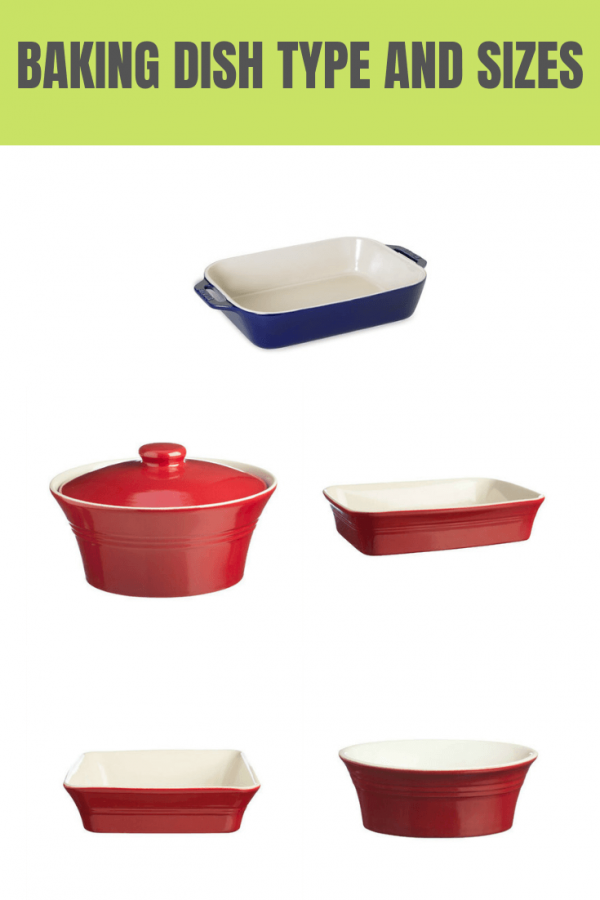
Le Creuset stoneware is aimed at baking, reheating, and serving rather than stovetop cooking. Do not assume that every Le Creuset item can be used on a burner. Read the instructions for the exact dish.

Is Le Creuset Worth It?
Le Creuset is worth it for a frequent cook who will use the cookware often, wants enameled cast iron, and values durable design and appearance. It is less compelling for someone who cooks rarely or mainly wants basic heat retention at the lowest cost.
Use this simple decision guide:
| Your priority | Likely best choice |
|---|---|
| Long-term daily or weekly use | Le Creuset may be worth considering |
| Lowest purchase price | A reputable budget Dutch oven |
| Fast heating and low weight | Stainless steel or aluminum |
| High-heat searing without enamel concerns | Bare cast iron or carbon steel |
| Acidic stews with little maintenance | Enameled cast iron |
| Small meals and easy lifting | A smaller pot or lighter cookware |
The strongest reason to buy Le Creuset is not that it makes every recipe taste better. The stronger case is that it makes a wide range of cooking tasks practical in one durable vessel.
Common Questions About Le Creuset
Does Le Creuset make food taste better?
Le Creuset does not add flavor by itself. Its heat retention, stable temperature, and tight lid can support good browning and moist cooking. The final result still depends on ingredients, heat control, seasoning, and cooking time.
Is Le Creuset better than Staub?
Neither brand is automatically better for every cook. Both make premium enameled cast-iron cookware. Compare the exact shape, lid design, weight, interior finish, handles, price, and warranty rather than relying only on brand reputation.
Can I use Le Creuset on an induction stove?
Many Le Creuset cast-iron products work on induction cooktops. Check the exact product before buying or using it. Also lift the cookware instead of dragging it across a glass induction surface.
Why did my Le Creuset enamel turn brown?
Brown marks often come from cooked-on oil or food residue. A gentle soak and a baking-soda cleaning method may help. Avoid aggressive abrasives. If the surface is chipped, cracked, or flaking rather than merely stained, stop using it and contact Le Creuset.
Can I put Le Creuset in the dishwasher?
Some Le Creuset products are dishwasher safe, but hand washing is usually better for preserving the finish and reducing dullness. Always follow the care instructions for the exact product.
Is a Le Creuset Dutch oven good for bread?
An enameled Dutch oven can work well for many covered bread recipes because it retains heat and traps steam. Confirm the oven temperature rating for the pot and knob. Never preheat an empty pot beyond the manufacturer’s limits.
Final Verdict: Why Is Le Creuset So Good?
Le Creuset is good because it makes enameled cast iron dependable and versatile. The heavy body holds heat, the enamel reduces maintenance, the lid supports moist cooking, and the cookware can move from many stovetops to the oven and table.
Its limits matter just as much. It is heavy, expensive, slow to heat, and vulnerable to enamel damage from misuse. A less expensive Dutch oven can often deliver similar cooking results.
Buy Le Creuset when you want a long-term cooking tool and expect to use it often. If your main goal is affordable heat retention, compare reputable alternatives before paying the premium.

Sources and Further Reading
- Le Creuset USA: Cast Iron Care and Use
- Le Creuset USA: Warranty Information
- Le Creuset USA: Cast Iron Cookware
- U.S. Department of Energy: Induction Cooking
- Lodge Cast Iron: Enameled Cast Iron Care

Hi, I’m Mary, the founder of KitchenClue.com. I’m deeply passionate about everything that makes a kitchen smarter, easier, and more enjoyable. I share hands-on insights and practical expertise on kitchen gear that truly helps in daily cooking. Along with my dedicated research team, we study products carefully, and our writers create honest, well-tested reviews using trusted, authentic sources—so you can choose kitchen tools with total confidence.