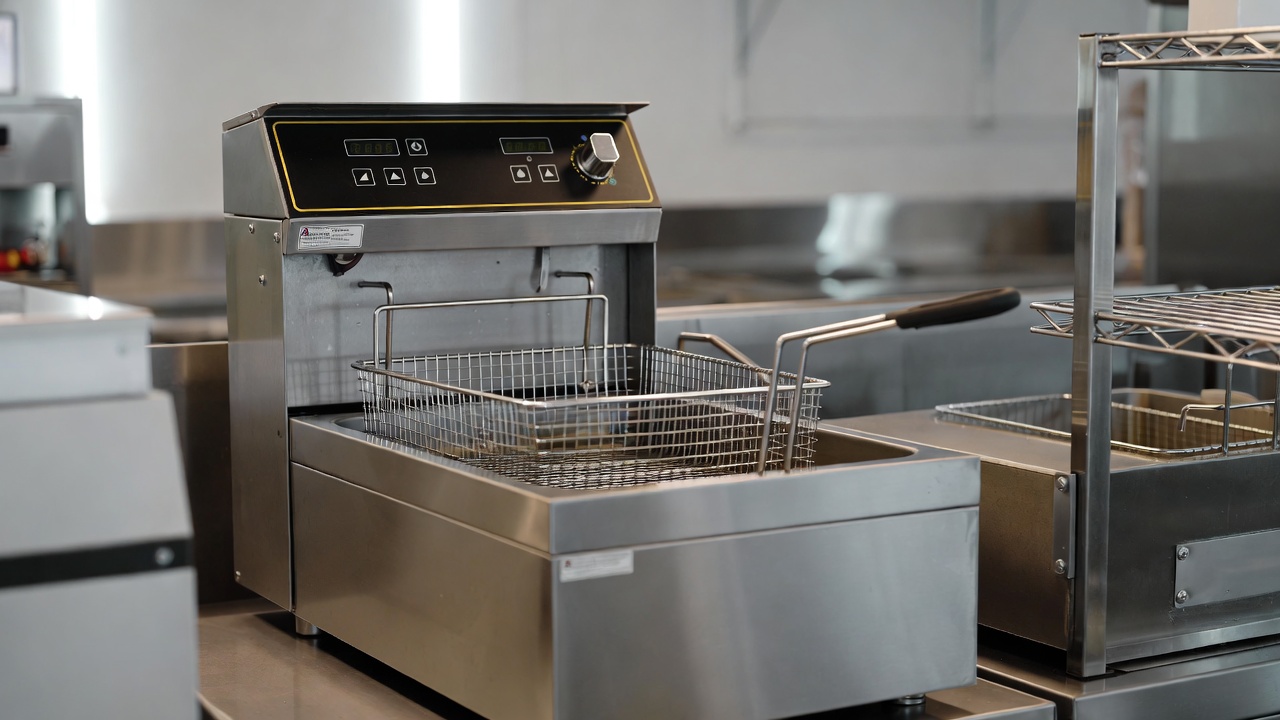
5 Best Commercial Deep Fryer In 2026
Running a busy restaurant kitchen or food service operation demands reliable equipment that can handle high-volume frying without breaking down. A quality commercial deep fryer becomes the workhorse of any kitchen, churning out crispy french fries, golden chicken wings, and perfectly fried appetizers day after day.
Finding the right deep fryer for your business can feel overwhelming with so many options on the market. You need equipment that delivers consistent results, maintains proper oil temperature, and stands up to constant use. This comprehensive guide walks you through the top commercial deep fryers available today, breaking down their features, performance, and real-world capabilities.
Why Invest in a Quality Commercial Deep Fryer?
The difference between a budget deep fryer and a commercial-grade unit becomes obvious after just a few weeks of heavy use. Professional fryers offer precise temperature control, faster recovery times, and durable construction that withstands the demands of a busy kitchen.
Temperature consistency makes or breaks fried food quality. When you drop a basket of frozen fries into oil, the temperature naturally drops. High-quality fryers recover quickly, bringing the oil back to optimal temperature in seconds rather than minutes. This quick recovery prevents soggy, oil-soaked food and keeps your operation running smoothly during peak hours.
Capacity matters just as much as performance. A fryer that’s too small creates bottlenecks in your kitchen, while an oversized unit wastes energy and oil. Most commercial operations find the sweet spot between 6 and 22 liters, depending on volume needs.
Top 5 Commercial Deep Fryers Reviewed
1. HTTSICHI Commercial Deep Fryer – 22L Capacity
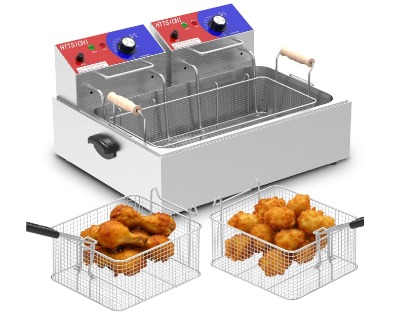
The HTTSICHI stands out as a powerhouse option for high-volume operations. This unit brings serious capacity to your kitchen with its 22-liter oil reservoir and comes complete with three separate frying baskets, including one large 10-liter basket.
Product Description
Built from heavy-duty stainless steel, this fryer handles the punishment of daily commercial use. The adjustable temperature control lets you dial in precise heat levels for different foods, from delicate fish to hearty chicken pieces. The countertop design fits standard kitchen setups without requiring special installation or modifications.
The three-basket system gives you flexibility to fry multiple items simultaneously. You can dedicate one basket to fries, another to chicken, and keep the third ready for specialty items. This setup eliminates cross-contamination of flavors and speeds up order fulfillment during rush periods.
Pros
- Massive 22-liter capacity handles large batches
- Three separate baskets allow simultaneous cooking
- Stainless steel construction resists rust and corrosion
- Adjustable temperature accommodates various food types
- Countertop design saves floor space
- Built for restaurant-level durability
Cons
- Large footprint requires adequate counter space
- Higher oil volume means increased operating costs
- Heavier unit makes relocation more difficult
- May exceed needs for smaller operations
This fryer works best for established restaurants, catering companies, and food trucks with consistent high-volume demands. The investment pays off when you need to crank out hundreds of orders without pause.
2. VEVOR Commercial Deep Fryer – Dual Tank System
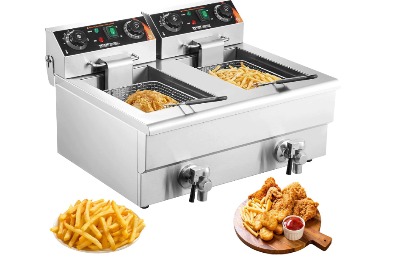
VEVOR brings a clever dual-tank design that effectively gives you two fryers in one unit. Each 11.6-quart tank operates independently with its own heating element, delivering 3000 watts of combined power.
Product Description
The split-tank configuration lets you maintain different oil types or temperatures simultaneously. Run peanut oil in one tank for asian dishes while keeping vegetable oil in the other for general frying. Each tank includes its own drain valve, making oil changes quick and mess-free.
Built-in timers help staff maintain consistency across shifts. Set the timer for your signature wings, and the unit alerts you when they’re done. Temperature controls operate independently for each tank, offering precise heat management from 140°F to 392°F.
The double-basket system comes included, with each basket sized perfectly for its respective tank. Stainless steel handles stay cool during operation, protecting your staff from burns.
Pros
- Dual tanks enable simultaneous different cooking
- Individual drain valves simplify maintenance
- 3000 watts of total power heats quickly
- Built-in timers improve cooking consistency
- Independent temperature controls for each tank
- Cool-touch handles enhance safety
- Compact footprint considering dual capacity
Cons
- Smaller individual tank capacity than single large units
- Two tanks to clean and maintain
- Power draw may require dedicated circuit
- Learning curve for staff managing two tanks
This dual-tank setup shines in diverse menus where you’re frying different items throughout the day. Sports bars, diners, and casual restaurants find this configuration particularly useful.
3. CROSSON 6L Electric Countertop Deep Fryer
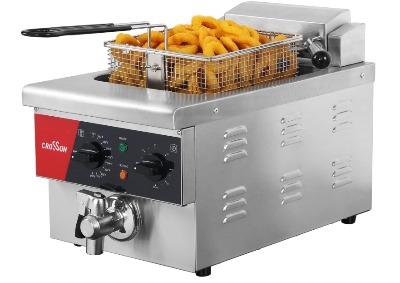
The CROSSON offers a more compact solution without sacrificing commercial-grade features. This 6-liter unit packs a 1800-watt punch in a space-saving design that fits smaller kitchens or dedicated fry stations.
Product Description
Running on standard 120V power, this fryer plugs into regular outlets without requiring special electrical work. The 6-liter capacity handles moderate volumes while keeping oil costs manageable. A built-in drain makes oil changes straightforward, and the included basket comes with a hook for safe draining.
The integrated timer removes guesswork from frying. Dial in your desired cooking time, and the unit signals when food reaches perfect doneness. The included lid contains splatter during cooking and retains heat when the fryer sits idle between orders.
Temperature control spans from warm-hold settings up to high-heat searing. The stainless steel construction throughout ensures long-term durability and easy cleaning. Extra-large viewing window lets you monitor food without lifting the lid.
Pros
- Compact 6-liter size fits tight spaces
- Standard 120V operation works anywhere
- Built-in drain valve simplifies maintenance
- Integrated timer ensures consistent results
- Lid included for splatter control
- 1800 watts provides strong heating power
- Affordable price point for smaller operations
Cons
- Limited capacity for high-volume needs
- Single basket restricts batch cooking
- Smaller oil volume means faster temperature drops
- May require more frequent oil changes with heavy use
Small restaurants, food stalls, and low-volume operations appreciate the CROSSON’s balance of features and footprint. The unit performs well when you need quality results without industrial capacity.
4. Commercial Deep Fryer with Basket – Dual Capacity System
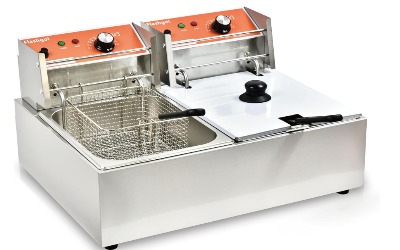
This versatile fryer offers a unique adjustable capacity system, letting you choose between 6-liter and 12-liter operation modes. The flexibility helps operations with fluctuating volumes adapt to busy and slow periods.
Product Description
The dual fry basket system comes standard, giving you options for batch cooking different items. Each basket features comfortable handles that stay cool during operation. The adjustable temperature control offers precise heat management, while an integrated timer helps maintain consistency.
Stainless steel construction extends throughout the unit, from the fry pot to the exterior housing. The included lid locks in heat and controls splatter. This fryer works across multiple settings – restaurants, home use, outdoor catering, and even camping setups where portable frying capability proves valuable.
The 17.5-pound total weight keeps the unit stable during operation while remaining portable enough for transport. Dual baskets plus machine configuration gives you maximum flexibility for different cooking scenarios.
Pros
- Flexible 6L to 12L capacity accommodates varying needs
- Double basket system enables simultaneous cooking
- Portable at 17.5 pounds total weight
- Works for commercial and outdoor use
- Adjustable temperature and timer included
- Lid controls splatter and retains heat
- Versatile across different settings
Cons
- Mid-range capacity may not suit large restaurants
- Lighter construction than heavy-duty alternatives
- Requires careful capacity selection for efficiency
- May need support equipment for high-volume service
This fryer appeals to mobile operations, catering services, and restaurants with seasonal volume changes. The portability and flexibility make it adaptable to various situations.
5. ROVSUN 22.8QT Commercial Deep Fryer
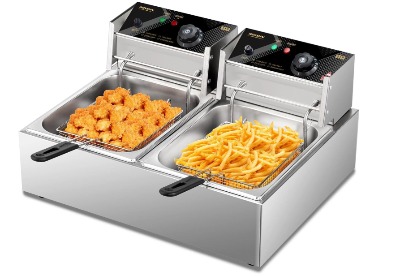
ROVSUN delivers serious capacity with this 22.8-quart (21.8-liter) double fryer system. The 3400-watt heating element brings professional power to high-volume operations.
Product Description
Two separate 11.4-quart tanks operate independently, each with dedicated temperature controls. The split configuration lets you maintain different oil temperatures or separate food types to prevent flavor transfer. Stainless steel construction throughout ensures durability under constant commercial use.
Both tanks come with fitted baskets and lids. The lids prove essential during busy service, controlling oil splatter and maintaining temperature between batches. Large-capacity baskets handle substantial portions of fries, chicken, donuts, or other fried items.
Temperature controls offer wide-range adjustment to handle everything from low-temperature fish frying to high-heat french fries. The countertop design fits standard kitchen layouts, while the substantial footprint provides stability during operation.
Front-mounted controls keep temperature and power switches easily accessible. The unit’s design considers workflow efficiency, placing drains and controls where staff can reach them comfortably.
Pros
- Substantial 22.8-quart total capacity
- 3400 watts delivers powerful heating
- Dual-tank configuration provides flexibility
- Independent temperature controls for each side
- Baskets and lids included
- Heavy-duty stainless steel construction
- Suitable for high-volume production
Cons
- Large footprint demands significant counter space
- High power draw may require electrical upgrades
- Substantial oil volume increases operating costs
- Weight makes repositioning difficult
Busy restaurants, institutional kitchens, and catering operations benefit most from the ROVSUN’s capacity and power. The dual-tank setup handles diverse menus while maintaining production speed.
Key Features to Consider When Buying
Oil Capacity and Tank Configuration
Oil capacity directly impacts how much food you can fry before quality suffers. Small batches in large oil volumes maintain temperature better, producing crispier results. Single large tanks work well for operations with consistent menu items. Dual-tank systems suit diverse menus where you’re frying different items throughout service.
Calculate your peak-hour needs. If you’re pushing 50 orders of fries per hour, a 6-liter fryer won’t keep pace. Conversely, a 22-liter unit wastes energy and oil if you’re only doing a dozen orders daily.
Power and Heating Performance
Wattage determines how quickly your fryer heats oil and recovers temperature after dropping food. Look for at least 1800 watts for small operations. High-volume kitchens need 3000+ watts to maintain consistent temperature during continuous use.
Electric fryers offer precise temperature control and work anywhere with adequate power. They heat evenly and maintain consistent temperatures better than gas alternatives. The tradeoff comes in operating costs – electric power typically runs higher than gas in most regions.
Temperature Control Accuracy
Precise temperature control separates great fried food from mediocre results. Digital controls offer exact temperature settings, while analog dials provide a traditional interface some cooks prefer. Look for units with a range spanning 140°F to 390°F to handle various foods.
Built-in thermostats protect against overheating. Quality units maintain temperature within a few degrees of your setting, even during heavy use. This consistency ensures every batch comes out the same, building customer satisfaction and reducing waste.
Construction Quality and Materials
Stainless steel construction remains the gold standard for commercial fryers. This material resists corrosion from oil and cleaning chemicals while offering easy maintenance. Welded construction outlasts riveted or screwed assemblies.
Tank thickness matters for heat retention. Thicker tanks hold temperature more consistently and resist warping over time. Check seams and joints for quality welds without gaps that could trap food particles or become weak points.
Safety Features
Built-in timers prevent overcooking and reduce fire risk. Cool-touch handles protect staff from burns during busy service. Lids control splatter and prevent oil fires from spreading.
Temperature limit switches shut down heating elements if oil gets dangerously hot. This failsafe protects your investment and prevents kitchen fires. Stable bases prevent tipping, especially important in busy kitchens where accidents happen.
Drainage Systems
Easy oil drainage saves time and reduces mess during maintenance. Built-in drain valves let you empty oil without lifting heavy pots. Some units include drain tubes that direct oil into collection containers.
Front-mounted drains offer easier access than rear-mounted alternatives. Ball valves provide reliable shutoff and resist clogging better than other valve types. Consider how you’ll dispose of used oil when evaluating drainage features.
Maintenance and Cleaning Requirements
Daily cleaning keeps fryers running efficiently and extends their lifespan. Smooth interior surfaces without crevices clean faster and more thoroughly. Removable parts like baskets and heating elements simplify deep cleaning.
Stainless steel wipes clean easily and resists staining from oil. Look for designs that let you access all interior surfaces without disassembling major components. Some units include removable fry pots that simplify cleaning considerably.
Fryer Size Guide for Different Operations
Small Cafes and Food Stalls
Operations serving 20-50 customers daily need 6-8 liter capacity. This size handles appetizers, small sides, and limited fried entrees without excess oil waste. Single-basket units work fine when you’re not running multiple items simultaneously.
Power requirements stay modest, typically running on standard 120V outlets. This plug-and-play capability matters in temporary setups or locations with limited electrical infrastructure.
Medium Restaurants and Diners
Restaurants serving 100-200 daily customers require 10-15 liter capacity or dual smaller tanks. This volume maintains quality through lunch and dinner rushes without constant recovery pauses.
Dual-tank systems excel here, letting you dedicate one side to fries while keeping the other available for proteins and appetizers. Independent temperature controls accommodate different cooking requirements across your menu.
High-Volume and Institutional Kitchens
Operations feeding 300+ people daily need 20+ liter capacity or multiple fryer units. School cafeterias, hospital kitchens, and busy restaurants fall into this category.
Multiple smaller fryers often outperform single large units. This redundancy keeps you operational if one unit needs maintenance. You can also dedicate specific fryers to specific menu items, improving consistency and workflow.
Oil Types and Their Impact on Performance
Different oils offer distinct advantages for commercial frying. Peanut oil handles high temperatures well and imparts a pleasant flavor. Vegetable oil provides neutral taste and works across diverse menu items. Canola oil offers a balance of health benefits and performance.
Oil capacity affects operating costs significantly. A 22-liter fryer costs substantially more to fill than a 6-liter unit. Factor oil prices into your equipment decision, especially if you’re doing high-volume frying that requires frequent changes.
Proper oil maintenance extends its useful life. Filter oil daily to remove food particles that accelerate breakdown. Monitor oil quality using test strips or visual inspection. Fresh oil produces better-tasting food and maintains temperature more consistently.
Energy Efficiency and Operating Costs
Electric fryers convert electricity directly to heat with minimal waste. Insulated tanks retain heat better, reducing energy consumption during slower periods. Look for units with energy-saving features like standby modes that maintain lower temperatures between service periods.
Calculate total operating costs including electricity, oil, and maintenance. A cheaper fryer with poor insulation may cost more long-term than a quality unit with better efficiency. Track your actual usage for a few weeks to understand true operating expenses.
Proper temperature management saves money. Running oil hotter than necessary wastes energy and breaks down oil faster. Match temperature to your food requirements rather than defaulting to maximum heat.
Installation and Setup Considerations
Most countertop fryers require only adequate space and appropriate electrical service. Verify your electrical capacity before purchasing high-wattage units. A 3400-watt fryer draws significant amperage that may require a dedicated circuit.
Allow adequate ventilation around your fryer. Hot oil produces vapors that need to dissipate. Inadequate airflow creates uncomfortable working conditions and may trigger smoke detectors.
Position fryers away from flammable materials and high-traffic areas. Staff need safe access for loading baskets and draining oil. Consider workflow patterns when selecting placement – you want fried items reaching plates quickly without crossing multiple work zones.
Common Mistakes to Avoid
Overcrowding baskets drops oil temperature dramatically, producing soggy food. Follow manufacturer guidelines for maximum batch sizes. Running multiple smaller batches produces better results than cramming everything into one load.
Neglecting regular cleaning degrades performance and shortens equipment life. Oil buildup on heating elements reduces efficiency and creates fire hazards. Establish daily cleaning protocols that staff follow consistently.
Using the wrong oil type for your menu creates problems. Some oils break down quickly at high temperatures, while others impart unwanted flavors. Match oil selection to your primary menu items and typical cooking temperatures.
Ignoring temperature recovery between batches compromises quality. Let the oil return to target temperature before dropping the next batch. This patience produces consistently good results rather than alternating great and mediocre food.
Maintaining Your Commercial Deep Fryer
Daily maintenance keeps your fryer running efficiently. Wipe down exterior surfaces to prevent buildup. Check oil quality and filter if needed. Empty crumb trays that collect food debris.
Deep clean your fryer weekly using manufacturer-recommended cleaning products. Drain all oil and scrub interior surfaces thoroughly. Inspect heating elements for damage or excessive buildup. Check electrical connections for signs of wear or corrosion.
Schedule professional servicing annually. Technicians can spot developing problems before they cause breakdowns. Regular maintenance catches issues early when repairs cost less and prevent mid-service failures that impact your business.
Making Your Final Decision
Your ideal commercial deep fryer balances capacity, features, and budget. High-volume operations justify investing in larger, more powerful units. Smaller establishments do better with appropriately sized equipment that doesn’t waste resources.
Consider your menu diversity when evaluating single versus dual-tank configurations. Operations frying multiple different items simultaneously benefit from split designs. Simpler menus work fine with single large tanks.
Read user reviews from similar operations. A fryer that works well in a chicken restaurant might not suit a seafood establishment. Real-world feedback from comparable businesses provides valuable insights beyond manufacturer specifications.
Test equipment when possible before committing to purchase. Some suppliers offer demonstration units or trial periods. Hands-on experience reveals operational quirks that don’t show up in spec sheets.
Conclusion
The right commercial deep fryer transforms your kitchen operations, delivering consistent quality while standing up to demanding daily use. The five units reviewed here represent different approaches to commercial frying, each excelling in specific scenarios.
Large operations benefit from the capacity and power of units like the HTTSICHI 22L or ROVSUN 22.8QT. These workhorses handle high-volume demands without breaking stride. The VEVOR dual-tank system offers flexibility for diverse menus, while the CROSSON 6L provides compact capability for space-limited kitchens.
Match your equipment to your actual needs rather than buying the biggest fryer available. An appropriately sized fryer runs more efficiently, costs less to operate, and produces better results than an oversized unit running half-empty.
Quality construction, precise temperature control, and thoughtful safety features separate commercial-grade equipment from consumer alternatives. The investment pays dividends in food quality, operational efficiency, and equipment longevity.
Take time to evaluate your specific requirements, considering peak volume, menu diversity, and available space. The perfect commercial deep fryer exists for your operation – finding it requires understanding both your needs and the equipment capabilities available in today’s market.

Hi, I’m Mary, the founder of KitchenClue.com. I’m deeply passionate about everything that makes a kitchen smarter, easier, and more enjoyable. I share hands-on insights and practical expertise on kitchen gear that truly helps in daily cooking. Along with my dedicated research team, we study products carefully, and our writers create honest, well-tested reviews using trusted, authentic sources—so you can choose kitchen tools with total confidence.