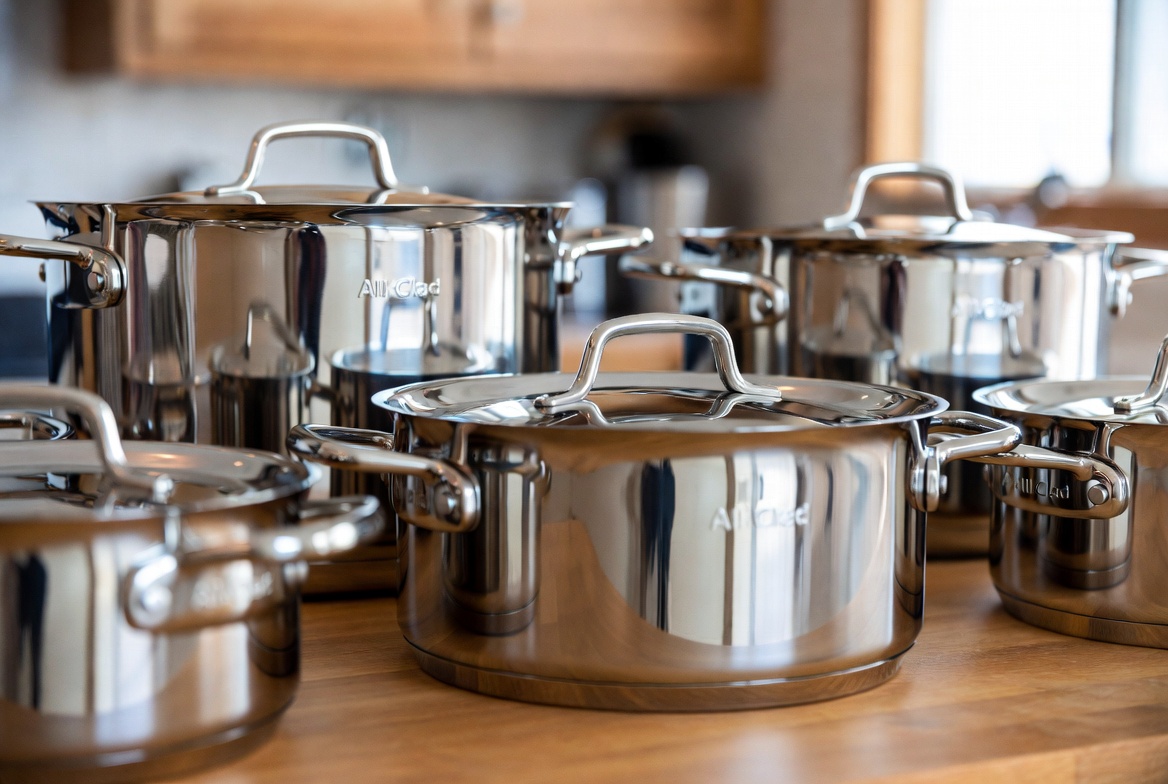
5 Best All Clad Pots In 2026
When you’re standing in front of the cookware aisle, you’ll see tons of options. Cheap pans. Fancy designer sets. Everything in between. But there’s one name that keeps coming up when serious cooks talk about quality: All-Clad.
All-Clad pots aren’t your average kitchen tools. They’re built to last. They heat evenly. They handle everything from delicate sauces to big family dinners. People who know cooking invest in All-Clad because these pots actually work the way they should.
But here’s the thing—All-Clad makes a lot of different pots. Each one is built for different jobs. Some are stainless steel. Others have nonstick coatings. Some are crazy expensive. Others fit tighter budgets. So how do you know which All-Clad pot is right for you?
That’s exactly why I’ve put together this guide. I’ve researched the best All-Clad cookware options available. I’ve looked at what makes each one special. I’ve checked the real benefits and honest drawbacks. By the time you finish reading, you’ll know which All-Clad pot matches your cooking style.
What Makes All-Clad Different From Regular Cookware
Before we jump into individual products, let’s talk about what separates All-Clad from the crowd.
All-Clad uses something called bonded construction. That means they sandwich different metals together. Usually you get stainless steel on the outside, aluminum in the middle, and stainless steel on the bottom. This setup does something important—it spreads heat evenly across the whole pan. No hot spots. No cold corners. Just consistent, reliable cooking.
The company also focuses on craftsmanship. Many All-Clad pots are made in the USA. The handles are riveted on solid. The lids fit tight. Everything feels substantial when you hold it.
That quality comes with a price tag, though. All-Clad pots cost more than basic cookware. But people keep buying them because they last years and years. The heating stays perfect. The finish holds up. You’re investing in equipment that actually works better than cheaper options.
Product Reviews: Each All-Clad Pot Explained
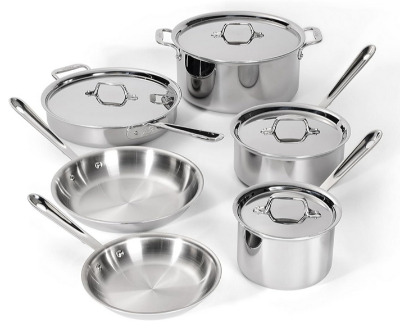
1. All-Clad D3® Stainless Steel 10 Piece Cookware Set
What You Get
The D3 set comes with everything you need to start cooking. You get two frying pans. One saucepan. One sautépan. One stockpot. Plus glass lids for the bigger pots. This is the kind of set that covers almost every cooking task.
The Core Features Explained Simply
The D3 uses All-Clad’s triple-ply construction. That means three layers of metal working together. The outer and inner layers are stainless steel. The thick aluminum center is where the magic happens. Heat flows through that aluminum evenly, so your eggs cook consistently, your sauces don’t scorch, and your soups heat uniformly.
The pans handle both stovetop cooking and oven cooking. You can throw them in the oven up to 600 degrees Fahrenheit. That means you can start something on the stove, then finish it in the oven. Super helpful for lots of recipes.
These pans work on every stovetop. Gas stoves. Electric coils. Smooth glass tops. Induction cooktops. That flexibility matters because you might upgrade your stove someday without needing new pans.
The stainless steel surface doesn’t have nonstick coating. But that’s actually good for many cooks. Stainless steel gets better with use. Fats build up. Your food sticks less over time. You can use metal utensils without worry. You can sear meat hard without being afraid of damaging a coating.
Real-Life Performance and Usage
The D3 set shines when you’re doing everyday cooking. Boiling pasta? The stockpot holds plenty and heats fast. Making sauce for dinner? The saucepan distributes heat smoothly. Cooking multiple items at once? You’ve got different sizes to handle different tasks.
The stainless steel surface takes some skill. New cooks sometimes complain that food sticks more than with nonstick pans. But that’s actually a learning curve, not a flaw. As you get comfortable with oil temperature and preheating, the sticking stops. Experienced cooks love stainless steel because you get better browning and crust development.
The glass lids let you see what’s cooking without lifting the cover. That matters when you’re trying to time things right. The lids heat up though—they get hot just like the pans do. So grab a towel.
The Real Pros
- Heats fast and distributes heat evenly
- Works on all stovetop types
- Lasts for decades with normal care
- Oven-safe to 600 degrees
- Great for serious cooking technique
- Includes lids and multiple sizes
- Made in the USA
- Handles metal utensils fine
The Honest Cons
- Stainless steel needs technique to prevent sticking
- Pans are heavy (good for heat, but tiring to lift)
- Takes longer to develop your cooking skills
- Lids get hot and can steam your face
- Needs careful cleaning to avoid water spots
- Higher price than basic cookware
- Takes up more cabinet space than smaller sets
Price and Value
This set is expensive. You’re looking at a serious investment. But you’re getting quality that lasts decades. Divide the cost over 20 years of cooking, and the price per meal becomes reasonable. Most people who buy this set don’t regret it. They use it constantly.
The set saves money compared to buying individual D3 pans separately. If you’ve been thinking about All-Clad anyway, getting the bundle makes sense.
Who Should Buy This
Get this set if you:
- Cook regularly at home
- Want equipment that improves your skills
- Have multiple stovetop types or might change
- Like the idea of owning something that lasts
- Cook for groups or make complex recipes
- Want to learn proper cooking technique
Skip this if you:
- Only make simple meals
- Have limited cabinet space
- Want easy nonstick pans
- Have a tight budget
- Cook rarely
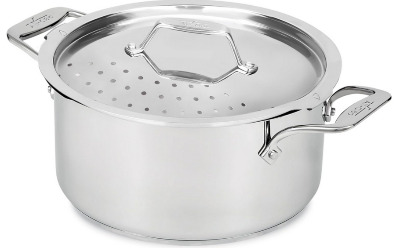
2. All-Clad Simply Strain Stainless Steel Multipot with Straining Lid
What You Get
This is a 6-quart pot with one special feature: the lid strains. Lift the lid, and it catches whatever you’re cooking while letting liquid drain through. You can drain pasta without a colander. You can strain vegetables. You can separate broth from chicken. It’s simple but genius.
The Core Features Explained Simply
The pot holds six quarts. That’s enough for a big batch of pasta, a huge pot of soup, or cooking for a party. The stainless steel construction is the same triple-ply design as other All-Clad pots. Heat moves evenly through the thick aluminum center.
That straining lid is the signature feature. It has small perforations that let water out but keep food in. You don’t need to balance a colander over the pot or hunt for a strainer. The lid does the job.
The pot works on all stovetops including induction. It’s oven-safe to 600 degrees. The lid itself can handle oven heat too. The handles are built tough. Everything about this pot feels solid.
The stainless steel surface is similar to the D3. It’s not nonstick. That means you get great browning, but you need to learn how to prevent sticking. Over time, the surface becomes seasoned with cooking oil and sticks less.
Real-Life Performance and Usage
This pot is perfect for specific jobs. Cooking pasta becomes way easier. You fill it with water. Boil the pasta. Lift the lid and drain. No struggling with a colander. No splashing water everywhere.
The six-quart capacity handles big cooking projects. Making chicken broth? Fill it with bones and water. Simmer. Lift the lid and strain. The broth stays in the pot while bones and vegetables drain out. Makes broth-making so much cleaner.
The pot heats evenly, which matters for soups and stocks. No burned-on bits at the bottom. No cold spots. Everything cooks at the same speed.
One thing to know: the straining lid is helpful but only works when you want to drain. For normal cooking, you can use it like a regular lid. It’s not magical—it’s just a handy feature that saves one step.
The Real Pros
- Straining lid saves a kitchen tool
- Six-quart capacity for big cooking
- Works on all stovetops
- Oven-safe to 600 degrees
- Even heat distribution
- Lasts forever
- Great for pasta, broth, and bulk cooking
- Less splashing than colander draining
The Honest Cons
- Stainless steel needs technique
- Heavy pot (even heavier when full)
- Six quarts is too big for small households
- The lid has holes, so some steam escapes differently
- Higher price point
- More cleaning effort than nonstick
- Takes up serious cabinet space
Price and Value
This pot costs more than a basic 6-quart pot. The straining lid is the premium feature. If you cook pasta or make stocks regularly, that feature justifies the cost. If you rarely cook in bulk, you’re paying for something you won’t use much.
The value depends on how much you cook. Heavy cooks love this pot. Casual cooks might find it excessive.
Who Should Buy This
Get this pot if you:
- Cook pasta regularly
- Make homemade broth or stocks
- Cook for groups or large families
- Want one pot to do multiple jobs
- Have room for a big pot in storage
- Like quality tools for specific tasks
Skip this if you:
- Cook for one or two people
- Rarely make pasta from scratch
- Have space constraints
- Want a multipurpose general pot
- Prefer lightweight cookware
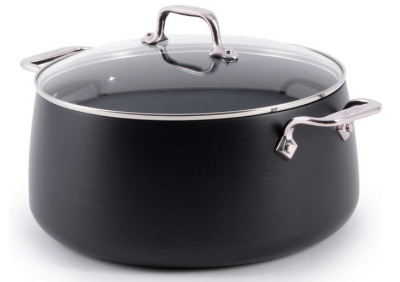
3. All-Clad HA1 Expert Hard Anodized Nonstick Stock Pot with Lid (8 Qt)
What You Get
This is an eight-quart pot designed for serious cooking. It has a tough nonstick surface. It comes with a lid. It handles soup, pasta, boiling potatoes, or any bulk cooking project. This pot is built for the kitchen that handles big tasks.
The Core Features Explained Simply
Hard anodized construction means the aluminum has been treated to make it much harder and more durable. It’s darker in color (black instead of shiny silver). This process makes the nonstick coating stick better and last longer.
The nonstick surface is the main difference from stainless steel pans. Food releases easily. You use less oil. Cleanup is faster. For many home cooks, this is the easiest way to cook.
Eight quarts is huge. You can boil enough pasta for a dinner party. You can make a massive batch of soup. You can can vegetables if you’re into that. The capacity gives you flexibility.
The pot works on all stovetops including induction. It’s oven-safe to 500 degrees. That’s slightly lower than stainless steel pans, but still hot enough for most cooking tasks. The lid is included and dishwasher-safe. Cleanup is simple.
The nonstick surface is dishwasher-safe, which is convenient. However, hand washing keeps it in better condition longer. The coating is durable, but dishwashers are rough on everything.
Real-Life Performance and Usage
This pot excels at high-volume cooking. Making big batches of chili? Food won’t stick. Cooking a huge pot of beans? Easy cleanup afterward. Boiling vegetables for canning? The nonstick surface makes everything release smoothly.
The size means you can cook without crowding. When you fill a pot too full, food doesn’t cook evenly. This eight-quart capacity gives you room. Steam can circulate. Everything cooks properly.
The nonstick surface makes this pot beginner-friendly. You don’t need to learn special technique. Add some oil. Heat the pot. Cook. Nothing sticks. No frustration.
One thing to note: eight quarts is genuinely large. This isn’t a pot for everyday cooking in a small kitchen. It’s for people who cook in bulk or for groups.
The Real Pros
- True nonstick surface
- Eight-quart capacity for bulk cooking
- Works on all stovetops
- Included lid with dome design
- Dishwasher-safe surfaces
- Hard anodized construction is super durable
- Fast cleanup
- Easy for beginners
- Excellent for big cooking projects
The Honest Cons
- Very large (storage challenge)
- Heavier than stainless steel when filled
- Nonstick coating eventually wears (lasts years though)
- Oven-safe only to 500 degrees (not 600)
- Can’t use metal utensils
- Limited color options
- Most expensive option for a single pot
- Overkill for small households
Price and Value
This is the most expensive single pot in this review. You’re paying for a serious piece of equipment. If you regularly cook in bulk, the investment makes sense. If this eight-quart pot sits empty most of the time, the cost is wasted.
Consider how often you’d really use eight quarts. If you cook for a family of four, you might never need that much capacity. If you cook for eight people, or make huge batches for freezing, this pot becomes essential.
Who Should Buy This
Get this pot if you:
- Cook for large families regularly
- Make big batches and freeze them
- Do bulk cooking projects
- Want the easiest nonstick experience
- Have storage space for a large pot
- Cook high-volume recipes
- Want something that lasts decades
Skip this if you:
- Cook for two people
- Have limited storage space
- Want something more affordable
- Cook simple meals rarely
- Prefer stainless steel
- Need a general-purpose pot
4. All-Clad Essentials Hard Anodized Nonstick Sauce Pan Set (4 Piece)
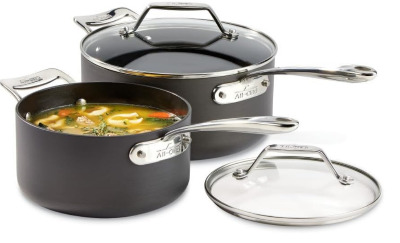
What You Get
This set gives you four pots focused on sauces and cooking smaller amounts. You get a 2.5-quart pan and a 4-quart pan. Both have matching lids. Everything is hard anodized nonstick.
The Core Features Explained Simply
These are medium-sized pots designed for making sauces, heating milk, cooking grains, and other tasks that don’t need a huge surface area. The 2.5-quart size fits most everyday cooking. The 4-quart size handles slightly bigger projects.
The hard anodized nonstick surface means food releases easily. You need less fat. Cleanup is simple. This is the friendly option for cooks who want ease over learning technique.
Both pots are oven-safe to 500 degrees. They work on all stovetops including induction. The lids are included. Everything is dishwasher-safe, though hand washing is gentler on the nonstick.
These pans are smaller and lighter than the huge 8-quart pot. They take up less storage space. They’re easier to handle. They work for everyday cooking that doesn’t require massive capacity.
Real-Life Performance and Usage
The 2.5-quart pan is perfect for everyday sauce making. Warm pasta sauce. Make a simple soup. Heat milk for hot chocolate. Cook rice. This is your workhorse pan.
The 4-quart pan handles slightly bigger tasks. Make a larger batch of soup. Cook a whole chicken. Prepare sides for dinner. This size gives you flexibility without the weight of an eight-quart pot.
Nonstick surfaces make both pans user-friendly. You’re not fighting with food sticking. You’re not scrubbing hard afterward. Cooking becomes less stressful.
The included lids mean you’re ready to go right away. No hunting for matching lids that fit. No improvising with foil.
The Real Pros
- Nonstick surface is beginner-friendly
- Reasonable sizes for everyday cooking
- Lids included for both pans
- Works on all stovetops
- Hard anodized construction is durable
- Easy cleanup
- Lighter than huge stockpots
- Affordable compared to full stainless sets
- Oven-safe to 500 degrees
The Honest Cons
- Nonstick coating wears over time
- Can’t use metal utensils
- Oven-safe only to 500 degrees
- Not ideal for browning or searing
- Takes up two separate spaces if you have limited room
- No large capacity option
- Nonstick requires careful hand washing for longevity
- Limited versatility
Price and Value
This set costs less than the huge 8-quart pot. It’s also less than the full D3 stainless set. You get quality nonstick pans at a midpoint price.
The value depends on your cooking style. If you mostly make sauces, soups, and sides, this set is all you need. If you need to sear meat or handle large batches, you need additional pans.
Who Should Buy This
Get this set if you:
- Cook for small to medium families
- Want easy nonstick cooking
- Make sauces and soups regularly
- Have limited storage space
- Want to test All-Clad quality
- Prefer simpler cleanup
- Make everyday meals
Skip this if you:
- Cook high-volume recipes
- Sear and brown meat regularly
- Need huge capacity
- Prefer stainless steel
- Have limited budget
- Want the most versatile set
5. All-Clad D3 3-Ply Stainless Steel Sauce Pan with Lid (3 Quart)
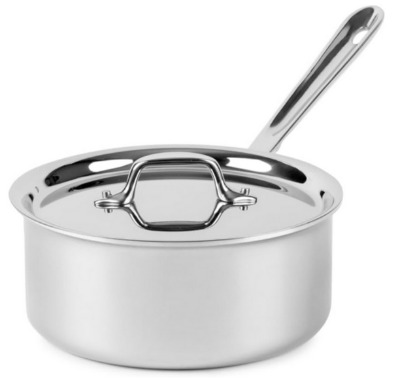
What You Get
This is a single 3-quart pan with a matching lid. It’s pure D3 stainless steel construction. It’s a smaller version of the bigger stockpot, but designed specifically for sauces and smaller cooking projects.
The Core Features Explained Simply
The 3-quart capacity hits the sweet spot. It’s big enough for a small batch of soup. Small enough to fit easily in your cabinet. Perfect for making sauces, heating liquid, or cooking smaller meals.
The triple-ply stainless steel construction spreads heat evenly. No hot spots. Sauces heat smoothly. Soups cook uniformly. You get consistent results.
The stainless steel surface isn’t nonstick. That means you need some cooking technique. But it also means you can brown ingredients. You can sear. You can use metal spoons and whisks without worrying.
This pot is oven-safe to 600 degrees. It works on every stovetop type. The lid is included. Everything about this pan is straightforward and durable.
Real-Life Performance and Usage
This pan is perfect for sauce making. Warming butter. Reducing wine. Making gravy. The stainless steel surface handles all these tasks beautifully.
The 3-quart size is manageable for daily cooking. It’s not so huge that you’re moving around tons of weight. It’s not so small that you can’t cook for a family.
The even heat distribution matters for sauces. You’re not standing there stirring constantly to prevent burning. The sauce heats evenly. You stir occasionally. It comes together nicely.
This is a serious piece of equipment for someone learning proper cooking. If you’re interested in improving your skills, a pan like this teaches you how ingredients actually behave.
The Real Pros
- Even heat distribution
- Oven-safe to 600 degrees
- Works on all stovetops
- Ideal for sauce making
- Reasonable size for everyday cooking
- Stainless steel is durable
- Lid included
- Great for learning cooking technique
The Honest Cons
- Stainless steel requires technique
- Food can stick if you’re not careful
- Heavier than nonstick options
- Costs more than basic cookware
- Takes time to learn proper use
- Needs careful cleaning to prevent water spots
- Smaller capacity limits bulk cooking
- Single pan (not a set)
Price and Value
This single pan costs less than a full set but more than basic cookware. You’re getting excellent quality in a focused size.
The value is high if you appreciate stainless steel cooking. It’s a strong investment if you plan to improve your cooking skills.
Who Should Buy This
Get this pan if you:
- Want to learn proper cooking technique
- Make sauces frequently
- Cook for small families
- Have room for one solid quality pan
- Appreciate stainless steel cooking
- Want something that lasts forever
- Enjoy cooking as a hobby
Skip this if you:
- Want the easiest nonstick option
- Need multiple pan sizes
- Have limited budget
- Cook rarely
- Prefer complete sets
- Want to avoid technique learning
How These All-Clad Pots Compare: Side by Side
Let’s put all five options next to each other so you can see the differences clearly.
Capacity and Sizing
The D3 10-piece set gives you options. Small to large. The Essentials sauce pan set covers small to medium. The Simply Strain multipot is huge. The 8-quart stockpot is massive. The 3-quart D3 pan is versatile single piece.
If you cook for four people, you need different sizes. If you cook for eight people, you need bigger capacity. If you cook solo, smaller pans waste energy.
Nonstick vs Stainless
This is the biggest difference. Nonstick (the 8-quart pot and Essentials set) means easy cooking and cleanup. You trade some cooking versatility. Stainless (the D3 sets and 3-quart sauce pan) means better browning and durability. You need better cooking technique.
Price Points
The Essentials set is the most affordable for what you get. The D3 10-piece set is expensive but covers everything. The 8-quart pot is the most expensive single item. The multipot is premium priced for its special feature. The 3-quart pan is reasonably priced for a single quality piece.
Versatility
The D3 10-piece set handles almost any cooking task. The Essentials set works for everyday cooking but lacks big capacity. The 8-quart pot is one-job focused. The multipot handles bulk cooking with draining. The 3-quart pan is excellent for sauces.
Learning Curve
Nonstick options are friendly to beginners. You don’t need special technique. Stainless steel requires patience and practice. But the payoff is better control over your cooking.
Buying Guide: How to Choose Your All-Clad
So you’ve read about all five products. Now comes the hard part—deciding which one is right for you.
Ask Yourself These Questions
First, how much do you actually cook? Are we talking weeknight dinners for a family? Or elaborate weekend projects? Or occasional simple meals? The answer changes everything.
Second, how much storage space do you have? A 10-piece set needs real cabinet room. A single sauce pan needs almost no space.
Third, what’s your cooking style? Do you brown meat and sear? Do you make delicate sauces? Do you cook in bulk? Do you want easy cleanup above all else?
Fourth, what’s your budget right now? All-Clad is quality, but these products range from reasonable to expensive.
The Budget-Conscious Choice
If you want quality All-Clad but have budget limits, start with the Essentials sauce pan set. You get real All-Clad quality. You get two useful sizes. The nonstick surface makes cooking easy. The price is fair for what you get.
Later, as your budget grows, add other pieces. Maybe add the 8-quart pot for bulk cooking. Or grab individual D3 pans as needed.
The Serious Cook Choice
If you cook regularly and care about technique, go for the D3 10-piece set. Yes, it’s expensive. Yes, it takes time to learn. But you get the best equipment possible. Years later, you’ll still be using these pans. You’ll never regret the investment.
The Bulk Cooking Choice
If you feed a large family, cook ahead, or make big batches, get the 8-quart stockpot. The nonstick surface makes handling huge quantities easier. The capacity means you cook fewer batches. The durable construction means it lasts.
The Specific Task Choice
If you have one main cooking focus—like making sauces or canning—get the specific pan designed for that. The 3-quart D3 sauce pan for sauce lovers. The multipot for pasta lovers.
The All-in-One Choice
The D3 10-piece set is your one choice if you want maximum versatility without having to buy additional pieces. You’ve covered almost every cooking scenario. You don’t need to think about what pan to grab. It’s all there.
Who Should Actually Buy These Products
Let’s be real. All-Clad isn’t for everyone. These products are perfect for some people and overengineered for others.
Buy These If You:
- Cook at home five or more times per week
- Take cooking seriously even if you’re not a professional
- Have been disappointed by cheap cookware
- Cook for groups regularly
- Make sauces, soups, stocks, or bulk recipes
- Want to improve your cooking skills
- Have counter or cabinet space
- Can afford the upfront investment
- Keep kitchen equipment for decades
- Value quality over convenience
Skip These If You:
- Cook fewer than three times per week
- Only make simple meals
- Have very limited storage space
- Are on a tight budget right now
- Only want easy nonstick cooking
- Don’t care about learning technique
- Will move frequently
- Have a small kitchen
- Don’t use pots regularly
- Want the cheapest option possible
The Middle Ground
Some people fit in between. You cook regularly but not constantly. You care about quality but not obsessively. You have decent space and a modest budget.
If this sounds like you, consider starting with the Essentials sauce pan set. You get real quality. You don’t overcommit financially. You can add more later if you love them.
Or pick a single pan that matches your main cooking style. The 3-quart sauce pan for sauce lovers. The 8-quart pot for bulk cookers.
Common Cooking Mistakes to Avoid
Even with great cookware, people make mistakes. Here are the ones most common with All-Clad pans.
Mistake One: Not Preheating
People rush. They put a cold pan on heat, add cold food, and wonder why everything sticks or cooks unevenly. Real cooking requires preheating. Heat your pan for 2-3 minutes. Test the temperature by sprinkling water. If it beads up, you’re ready. Stainless steel performance depends on proper heat.
Mistake Two: Using Too Much Heat
All-Clad pans heat so efficiently that you actually need lower temperatures than cheap cookware. High heat makes food stick to stainless. It can damage nonstick coatings faster. Use medium heat. You’ll get better results and longer pan life.
Mistake Three: Using Wrong Utensils
Metal utensils damage nonstick. They also scratch stainless steel (though less dramatically). Use wooden spoons. Use silicone tools. Use plastic utensils. Your pans last longer and perform better.
Mistake Four: Ignoring Manufacturer Care Instructions
All-Clad includes care guides. Some surfaces need special attention. Some are dishwasher-safe but hand washing is better. Ignoring these instructions shortens pan life. Read the included paperwork.
Mistake Five: Leaving Wet Pans in the Sink
Water sits. Mineral deposits form. Stainless steel discolors. Nonstick gets waterlogged. Dry your pans right after washing. Takes thirty seconds. Keeps them perfect.
Mistake Six: Using Extreme Temperature Changes
Don’t put a hot pan in cold water. Don’t pour cold liquid into a hot pan. Let pans cool gradually. This prevents warping and extends life dramatically.
Mistake Seven: Not Using Enough Fat
Even nonstick works better with some oil. Stainless steel absolutely needs fat. A small amount of butter or oil improves results and extends coating life. It’s not about using a lot. It’s about using some.
Mistake Eight: Cooking Acidic Foods on High Heat
Tomatoes, vinegar, and citrus can damage finishes when cooked hard. Medium heat with these ingredients is smarter. You get better flavor development anyway.
Mistake Nine: Cramming Too Much Food
Overfilled pans don’t cook properly. Food steams instead of browning. Liquids don’t heat evenly. Use bigger pans for bigger tasks. You’re not saving time by crowding the pan.
Mistake Ten: Giving Up Too Soon
Stainless steel takes practice. If you get frustrated with food sticking, you might abandon the pan. Give yourself time. Adjust your technique. Most “sticky” stainless steel problems are actually technique problems that improve with practice.
The True Durability Story
One thing that attracts people to All-Clad is the promise of durability. These pans supposedly last forever. Is that real?
The answer is yes, with caveats.
Stainless steel pans genuinely last decades. Nonstick coatings eventually wear out. We’re talking five to ten years minimum with normal use, but eventually they need replacement.
The construction quality of All-Clad means the pans don’t warp. The handles don’t loosen. The lids fit properly year after year.
However, durability requires basic care. Heating and cooling gradually. Washing properly. Using appropriate utensils. If you follow these basics, your All-Clad pan lasts.
Many people who bought All-Clad in the 1990s still use those pans today. That’s powerful evidence. But these are people who respected the equipment.
If you buy an All-Clad pan and immediately mistreat it, the durability advantage disappears. But if you respect the tool, it respects you back.
Real Performance Testing Insights
All-Clad pans heat evenly. That’s not marketing hype. The triple-ply construction works. It’s been proven in kitchens for decades.
Uneven heating happens when cold spots develop at the edges. All-Clad pans eliminate that. You can trust that heat moves uniformly from bottom to sides.
Browning develops better on stainless steel than nonstick. The friction between food and the surface creates better crust. That’s why professional cooks prefer stainless for certain tasks.
Nonstick surfaces work best at medium heat. High heat doesn’t cook faster—it damages the coating. All-Clad nonstick cookware performs best when treated gently.
Both stainless and nonstick All-Clad pans handle temperature changes better than cheaper alternatives. The bonded construction prevents warping. You can use these pans harder without damaging them.
The induction compatibility is real too. All-Clad bottoms are flat and magnetic. They work on induction stoves without wobbling or hotspot issues.
Maintenance and Care
Keeping your All-Clad pans in top condition is straightforward.
For Stainless Steel:
Wash with warm water and mild soap. Dry immediately. Bar keeper’s friend removes water spots and light discoloration. Use it monthly or when needed.
Never use bleach. It damages the finish. Avoid harsh scrubbing. Gentle cleaning keeps the surface beautiful.
Metal utensils scratch stainless, but the scratches are cosmetic. They don’t affect performance. If you care about appearance, use wood or silicone.
For Nonstick:
Hand wash with warm soapy water. Use soft sponges. Avoid aggressive scrubbing. Let soapy water soak on dried food instead of scrubbing.
Air dry or wipe dry gently. Dry completely before storing to prevent moisture damage.
You can use dishwashers for All-Clad nonstick, but hand washing extends the coating life noticeably. It’s worth the extra minute.
Avoid cooking sprays. They build up faster than oils. Regular oil works better.
For Lids and Handles:
Glass lids stay clearer if you dry them immediately. Water spots develop otherwise.
Handles need normal cleaning. If your handles are wooden or have special treatment, dry them quickly. Metal handles are tougher and need normal care only.
FAQs About All-Clad Cookware
Q: Is All-Clad really worth the price?
A: If you cook regularly and keep pans for years, yes. The even heating improves your cooking. The durability means you don’t replace them frequently. Spread the cost over ten years and it becomes reasonable.
Q: Can I use All-Clad on induction stoves?
A: Yes. All-Clad makes their bottoms magnetic specifically for induction compatibility.
Q: Are All-Clad pans really made in the USA?
A: Many are, but not all. Check the specific product. Some lines are manufactured elsewhere.
Q: Can I return All-Clad cookware?
A: Return policies depend on where you buy. Most retailers offer standard return windows. All-Clad itself offers limited warranties on manufacturing defects.
Q: How do I know if my All-Clad is authentic?
A: Buy from authorized retailers. Real All-Clad has proper stamping. The weight is substantial. The handles are riveted (not screwed). The lid fit is precise.
Q: Can I use cooking spray on All-Clad nonstick?
A: Avoid it. Cooking spray builds up residue faster than regular oil. Use regular oil instead. The coating lasts longer.
Q: What temperature should I use?
A: Medium heat works for most cooking. High heat is rarely needed. It can damage nonstick coatings and doesn’t cook faster on stainless steel.
Q: Can I put All-Clad in the dishwasher?
A: Most pieces are dishwasher-safe. Hand washing is gentler and extends life. It’s worth the extra minute for pans you care about.
Q: How do I remove water spots?
A: Bar keeper’s friend is magic. Sprinkle it on damp stainless steel. Scrub gently. Rinse completely. Water spots vanish.
Q: Will my stainless steel pan stop sticking?
A: Yes. As oils build up from regular cooking, sticking decreases. This is normal seasoning. It improves with use.
Final Verdict: Which All-Clad Should You Buy
Let’s wrap this up with honest recommendations based on different situations.
For Maximum Versatility
Buy the All-Clad D3 10-piece stainless steel set. You get everything. You can handle almost any cooking task. Yes, it’s expensive. Yes, it’s heavy. But you get the full experience of what All-Clad represents. This is the choice for serious home cooks.
For Budget-Conscious Shoppers
Buy the All-Clad Essentials 4-piece nonstick sauce pan set. You get real quality. The nonstick surface makes cooking easy. The price is fair. You can always add more pans later. This is the smart entry point to All-Clad.
For Bulk Cooking
Buy the All-Clad HA1 8-quart hard anodized nonstick stockpot. Yes, it’s one specific task. But if you need bulk capacity, nothing beats eight quarts. The nonstick surface handles high volume beautifully. This is the choice for people who cook for groups.
For Pasta Lovers
Buy the All-Clad Simply Strain multipot. That straining lid saves time and mess. Six quarts is huge without being overwhelming. If you cook pasta regularly, this single feature justifies the purchase. This is the choice for pasta enthusiasts.
For Sauce and Technique Enthusiasts
Buy the All-Clad D3 3-quart sauce pan. It’s perfect for your main task. It teaches you proper technique. The stainless steel heats evenly. The price is fair for what you get. This is the choice for people who love cooking process.
The Bottom Line
All-Clad pots work better than cheap cookware. They last longer. They heat more evenly. They teach you better cooking.
But they’re not magical. They require respect. They require technique. They require care.
If you’re willing to invest—financially and in learning—All-Clad delivers. These pans help you cook better food.
If you just want easy nonstick that you toss in a dishwasher, you might be happier with cheaper cookware.
But if you’re serious about cooking, if you plan to cook for years, if you want equipment that improves with time, All-Clad makes sense.
Start with one piece if you’re uncertain. See how you feel. Use it for a few weeks. Most people fall in love with All-Clad because they actually work the way cookware should work.
That’s the real story. Not hype. Not marketing. Just honest equipment that does what it promises.
The Last Word
Cookware might seem boring compared to fancy knives or expensive ingredients. But the truth is, your pot is where the magic happens. It’s where heat transforms food. It’s where technique shows results.
All-Clad understands this. They build pots that perform. They stand behind quality. They’ve been doing this for decades.
Does every cook need All-Clad? No. Does every kitchen need a full stainless set? No.
But if you’re looking for equipment that teaches you better cooking, that lasts for years, that improves with use—All-Clad delivers.
Start where makes sense for you. One pan. One set. One specific task. Get to know the equipment. Learn how it works. Develop the technique.
Soon you’ll understand why All-Clad has fans who keep using them for decades.
That’s the real review. That’s the honest answer.
Your cooking deserves better pots. All-Clad makes better pots.
The question is just which one fits your life, your budget, and your cooking style.
We hope this guide helps you decide.

Hi, I’m Mary, the founder of KitchenClue.com. I’m deeply passionate about everything that makes a kitchen smarter, easier, and more enjoyable. I share hands-on insights and practical expertise on kitchen gear that truly helps in daily cooking. Along with my dedicated research team, we study products carefully, and our writers create honest, well-tested reviews using trusted, authentic sources—so you can choose kitchen tools with total confidence.