5 Best Beginner Chef Knife In 2026
If you’re just getting into cooking, you might think a knife is just a knife. Trust me, you’d be wrong. A good chef knife changes everything in the kitchen. It makes food prep faster, safer, and honestly way more fun.
The right knife feels good in your hand. It cuts through onions and chicken without crushing them. It doesn’t slip or bind. You get better results with less effort. That’s the kind of difference a quality chef knife makes.
The problem is there are so many options out there. You’ve got German-style blades and Japanese-style blades. You’ve got stainless steel and carbon steel. The price range goes from cheap to ridiculous. So what do you actually need?
That’s where this guide comes in. I’ve put together a detailed look at five knives that work great for people just starting their cooking journey. These aren’t professional-grade tools with thousand-dollar price tags. These are real, affordable knives that real home cooks can actually use every day.
Let’s dig into each one and see what makes them worth considering.
Sunnecko 8 Inch Chef Knife – Japanese Style with Character
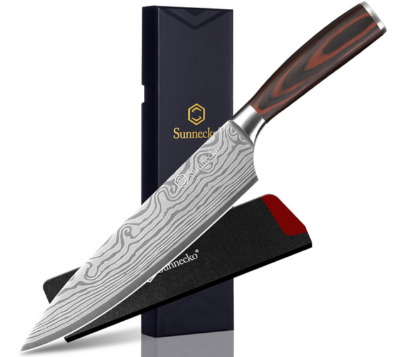
Quick Overview: The Sunnecko is a Japanese-style chef knife that brings a lot of visual appeal to your knife block. It features a hand-engraved pattern on the blade and a solid wooden handle.
What Makes It Special
The first thing you notice about the Sunnecko is how it looks. The engraved pattern on the blade isn’t just for show. These grooves actually serve a purpose. They reduce friction when you’re cutting, which means less food sticks to the blade. This is called a granton edge, and it’s a genuine feature that makes a difference in real cooking.
The blade itself is high carbon steel. High carbon steel takes a sharper edge than stainless steel and holds that edge longer. The tradeoff is that you need to hand wash it and dry it right away. It will rust if you leave it wet, but that’s something you learn to handle.
The wooden handle gives you that authentic Japanese knife feel. It’s comfortable and warm in your hand, which sounds small but matters when you’re holding something for thirty minutes while prepping vegetables.
Real-Life Usage
In actual kitchen work, this knife performs well for the price point. The Japanese blade shape—thinner and sharper—makes it excellent for precise cuts. You can slice an onion paper-thin if you want to. The blade doesn’t crush delicate items like herbs or tomatoes the way a heavier knife might.
The hand-engraved pattern is functional, not just decoration. When you’re slicing cucumber or potato, you’ll feel the difference. Food doesn’t stick to the blade as much, so you’re not constantly scraping it off. This keeps your rhythm going instead of stopping every few cuts.
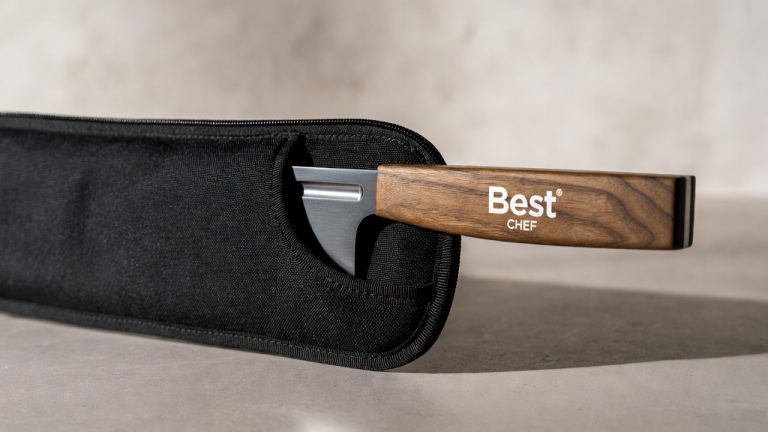
The knife comes with a sheath, which is helpful for storage and protection. The sheath is basic but gets the job done.
Pros and Cons
Pros:
- Sharp right out of the box
- Great aesthetic appeal—looks professional
- Granton edge reduces food sticking
- Lightweight and balanced
- Good for vegetable work and slicing tasks
- Comes with protective sheath
- Affordable for the quality
Cons:
- High carbon steel requires hand washing and drying
- Can rust if not maintained properly
- Requires periodic sharpening
- Not ideal for heavy-duty tasks like breaking down raw chicken
- Needs honing with a steel regularly
- Blade can chip if dropped on hard surfaces
Performance Discussion
For basic knife work, this performs like a knife that costs more. The sharpness is impressive. It cuts cleanly without much pressure needed. However, the high carbon steel does require commitment. You can’t throw it in the dishwasher and forget about it.
The balance is good. The knife doesn’t feel nose-heavy or handle-heavy. It sits naturally in your hand whether you’re using a pinch grip or a more relaxed hold.
For tough tasks, this isn’t your best choice. If you need to cut through heavy-duty items or chicken bones, you’ll feel the limitations. The blade is relatively thin, and while that’s good for precision, it’s not great for heavy work.
Ease of Use
This knife has a gentle learning curve. New cooks will appreciate the sharpness and the lightweight feel. You don’t need much force to cut, which actually makes it safer because you’re not fighting the blade.
The Japanese blade style takes a little getting used to. It’s different from what you might see in a traditional Western kitchen. But once you adjust to the angle and feel, most cooks prefer it.
Value for Money
For the price, you’re getting excellent value. You get a knife that looks great, performs well, and comes with a sheath. You’re paying for a functional tool with personality, not an overpriced brand name.
Victorinox Fibrox Pro 8 Inch – The Workhorse Standard
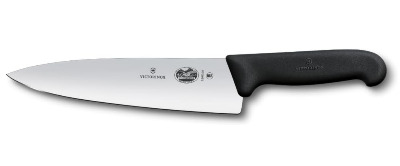
Quick Overview: The Victorinox Fibrox Pro is one of the most popular chef knives in the world. It’s a German-style blade with a sturdy build and a no-fuss design that just works.
What Makes It Special
Victorinox is a Swiss company, and they’ve been making knives forever. This knife shows that experience. There’s nothing fancy about it, but everything about it works.
The blade is made of high carbon stainless steel. This is the sweet spot for most home cooks. Stainless steel doesn’t rust, so you can throw it in the dishwasher without worry. High carbon means it takes and holds a good edge. You get the best of both worlds.
The handle is Fibrox, which is a commercial-grade synthetic material. It looks a bit like plastic, but it’s actually designed for professional kitchens. It’s grippy, durable, and won’t absorb water or odors. Your hands stay secure even when wet.
The blade itself is heavier than the Sunnecko and has a straighter spine. This is classic German knife design. It’s built for work.
Real-Life Usage
This knife is the definition of dependable. You can use it every single day for years and it will keep performing. Professional cooks and home cooks both trust this knife for a reason.
The weight and balance make it great for home cooks because you don’t have to force anything. You can use a rocking motion for herbs, or slice with a forward motion for tomatoes and onions. It’s versatile.
Because it’s stainless steel, you can be more casual about care. Wet it, use it, rinse it, and move on. You don’t need to dry it immediately. You can even put it in the dishwasher if you want, though hand washing is still better.
Pros and Cons
Pros:
- Stainless steel means no rust worries
- Excellent edge retention
- Dishwasher safe (though hand wash is better)
- Heavy enough for tough jobs but not tiring to use
- Balanced and comfortable
- Widely available and affordable
- Proven track record with professionals
- Easy maintenance
Cons:
- Less sharp right out of the box compared to high carbon knives
- Heavier than some Japanese knives, takes adjustment
- Fibrox handle isn’t as warm feeling as wood
- Not as beautiful aesthetically as premium options
- Takes longer to achieve razor sharpness
- Blade angle is more suited to experienced users
Performance Discussion
The Victorinox performs like the reliable tool it is. It won’t blow you away with magic sharpness, but it cuts smoothly and doesn’t require constant honing. The edge lasts longer than you’d expect.
For vegetables, meat, and everything in between, this knife is competent. It handles tough jobs without complaint. You can use it to break down a whole chicken or trim fat. It won’t complain.
The weight can feel heavy if you’re not used to it, but most people adjust within a few minutes. The leverage from the weight actually makes cutting easier once you’re comfortable.
Ease of Use
This knife is friendly to beginners. The weight and balance mean you don’t need perfect technique to get good results. It forgives mistakes better than thinner blades.
New cooks appreciate that this knife just works without fuss. There’s no special care required. You use it and move on.
Value for Money
The value here is incredible. You’re getting a knife that professional kitchens use every day. You can buy this and keep it for decades. The price is extremely reasonable for what you get.
imarku Japanese Chef Knife – Budget-Friendly Sharp Blade
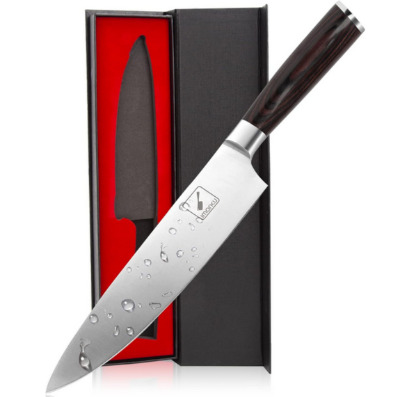
Quick Overview: The imarku brings Japanese knife style and sharp performance at a budget-friendly price. It’s made with HC steel (high carbon) and comes in a nice gift box.
What Makes It Special
The imarku focuses on giving you sharpness without the high price tag. The HC steel blade comes incredibly sharp right out of the box. This knife is all about cutting performance.
The design is pure Japanese style. The blade is thinner than Western knives and has that classic curved profile. The spine at the top of the blade is taller, which gives you knuckle clearance when you’re rocking the knife or doing the claw grip.
The handle is made with a traditional octagonal design. It’s not wood, but it feels comfortable and has character. The gift box packaging makes it feel like more of a premium product even though the price is moderate.
Real-Life Usage
When you start cutting with this knife, you immediately feel the sharpness. It glides through onions, tomatoes, and herbs with minimal effort. The HC steel delivers on performance.
The lightweight design makes this knife fun to use. You can work fast without getting tired. Professional chefs love Japanese knives for this reason—they let you develop rhythm and speed.
The thin blade means you can make precise cuts. If you want to cut an onion into uniform slices, this knife makes it easy. The precision edge is one of the standout features.
Pros and Cons
Pros:
- Extremely sharp right out of the box
- Lightweight and fast-feeling
- Good for precise vegetable work
- Great price for the quality
- Stylish design
- Comes in nice gift box
- Good knuckle clearance
- Responsive handling
Cons:
- HC steel requires hand washing and drying
- Can rust if not maintained
- Thinner blade is less forgiving on tough jobs
- Less durable than heavier knives
- Requires regular honing
- Not ideal for breaking down chicken or dense vegetables
- May feel delicate if you’re used to heavier knives
Performance Discussion
The imarku delivers sharp performance that you’d expect from knives twice the price. The HC steel holds an edge well, and the blade geometry is excellent for detail work.
However, the thinness that makes it good for vegetables becomes a limitation for tougher tasks. This isn’t a do-everything knife. This is a specialist—great for vegetables and precision work, less great for heavy jobs.
Ease of Use
Beginners often love this knife because it’s so responsive. You don’t need much pressure or skill to make clean cuts. The sharpness does the work.
The lightweight feel can actually help beginners develop better technique because they’re not relying on weight to do the cutting.
Value for Money
For the price, this knife punches above its weight. You’re getting sharpness and performance that would cost significantly more from premium brands. If you want maximum cutting performance on a budget, this delivers.
MOSFiATA 8″ Super Sharp Professional – Premium Performance Package
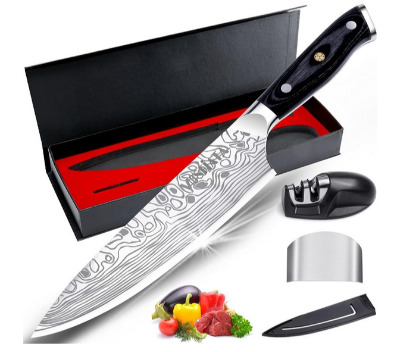
Quick Overview: The MOSFiATA is a German-style knife with extra features. It includes a finger guard, a sharpener in the package, and high-end materials. It’s positioned as the premium option in this roundup.
What Makes It Special
MOSFiATA goes all-in on the feature set. The EN1.4116 high carbon stainless steel is a premium material. The blade comes incredibly sharp and is designed to hold that edge through serious use.
The finger guard is a distinctive feature. It’s a curved guard that extends from the bolster (where the handle meets the blade). This gives your fingers extra protection while you’re working. If you’re a beginner worried about knife safety, this is a thoughtful addition.
The Micarta handle is an excellent material. It’s a composite material that’s durable, grippy, and comfortable. It feels substantial in your hand and doesn’t absorb moisture or odors.
The knife comes with a sharpener, which is honestly a great bonus. Learning to maintain your knife is important, and having a sharpener in the box removes an excuse to skip that step.
Real-Life Usage
In the kitchen, this knife feels premium. The balance is excellent. The blade is sharp enough for precision but thick enough for heavier tasks. It’s a true all-rounder.
The finger guard takes a moment to get used to, but once you do, it becomes natural. Your fingers automatically know where it is, and the protection feels real.
The Micarta handle is noticeably better than plastic. Your hand doesn’t get as fatigued during longer prep sessions. It’s the kind of upgrade that you don’t realize you want until you experience it.
Pros and Cons
Pros:
- Premium materials throughout
- Excellent edge retention
- Finger guard adds safety and protection
- Includes sharpener in the package
- Great all-around performer
- Comfortable Micarta handle
- German engineering and build quality
- Sharp out of the box
Cons:
- Higher price than the other options
- Heavier, which takes adjustment
- The finger guard might feel awkward initially
- Stainless steel means less sharp than high carbon
- Learning curve to use the included sharpener properly
- May be more knife than a true beginner needs
Performance Discussion
The MOSFiATA performs at a professional level. The EN1.4116 steel is what you’d find in quality cutlery. The blade holds an edge through weeks of regular use. Toughness and sharpness are both strong here.
For any cutting task you throw at it, this knife handles it well. It’s not specialized like the Japanese knives. It’s built to be capable at everything.
Ease of Use
Because of the weight and the finger guard, there’s a slight learning curve. New cooks need a little time to adjust. However, the quality of the tool makes that adjustment worth it.
The included sharpener means you can maintain the edge yourself. Learning to use it properly takes some practice, but it’s a valuable skill to develop.
Value for Money
The price is higher, but you’re getting premium materials and a sharpener included. If you’re committed to learning proper knife skills and want a tool that will last decades, this is worth the investment. You’re paying for quality that you’ll appreciate for years.
Mercer Culinary Ultimate White 8 Inch – Professional Grade Accessibility
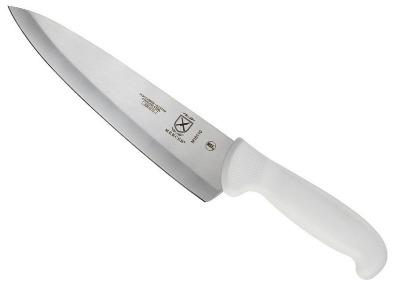
Quick Overview: The Mercer is a commercial knife brand that serves restaurants and catering companies. This is professional-grade equipment made accessible to home cooks.
What Makes It Special
Mercer is best known for making knives for professional kitchens. This knife comes from that lineage. The “Ultimate White” refers to the steel composition—it’s a high carbon stainless steel that’s been proven in professional settings.
The blade is well-designed with a shape that works for all cutting styles. The spine has a good curve, and the edge geometry is excellent. It’s built for work, not just looks.
The handle is a commercial fibrox material similar to Victorinox. It’s designed to withstand the demands of professional kitchens. It’s durable, grippy, and easy to clean.
The construction throughout is solid. Mercer doesn’t make fancy handles or engraved patterns. They make tools. This is a tool.
Real-Life Usage
Using a Mercer knife feels professional. You’re holding a tool that’s been refined through thousands of hours in commercial kitchens. Everything about it feels purposeful.
The blade is sharp and capable. It handles both precision work and heavy tasks. You can slice an onion or cut through chicken with equal competence.
The weight is moderate—heavier than Japanese knives but lighter than some German options. The balance point is ideal, right near the bolster where your hand naturally wants to guide the knife.
Pros and Cons
Pros:
- Professional-grade quality at reasonable price
- Excellent edge retention
- All-purpose performer
- Durable and built to last
- Good balance and weight
- Commercial-kitchen tested
- Easy maintenance
- Reliable performance
Cons:
- Less visually appealing than other options
- Fibrox handle isn’t as pleasant as wood or Micarta
- Takes time to achieve maximum sharpness
- Not as sharp out of the box as high carbon options
- The design is utilitarian rather than beautiful
- May feel heavy for some beginners
Performance Discussion
The Mercer performs like what it is—a professional tool adapted for home use. It doesn’t have flash, but it has substance. The blade takes and holds an edge exceptionally well.
For any task in the kitchen, this knife is capable. It’s honest about what it does and does it reliably.
Ease of Use
This is approachable for beginners. The balance and weight are forgiving. You don’t need perfect technique to get good results. The knife does much of the work for you.
The utilitarian design means you’re not distracted by aesthetics. You just use it.
Value for Money
You’re getting genuine professional-grade equipment. Many home cooks pay more for knives that don’t perform as well. This offers excellent value for those who appreciate function over form.
Comparison Insights: Putting the Knives Side by Side
When you’re deciding between these five options, a few key differences emerge.
Sharpness: The imarku and Sunnecko come out of the box sharper than the others. If maximum sharpness right now is your priority, those are your choices. The MOSFiATA and Victorinox take a little more work to get razor sharp.
Maintenance: The Sunnecko and imarku are high carbon and require hand washing and drying. If you want zero-hassle maintenance, go with the Victorinox, MOSFiATA, or Mercer.
Weight: The Japanese knives (Sunnecko and imarku) are noticeably lighter. The MOSFiATA and Mercer are heavier. The Victorinox is in the middle. This matters more than you think when you’re using a knife for thirty minutes straight.
All-Around Performance: The Victorinox and Mercer are the most versatile. They handle everything competently. The Japanese knives are specialists—great for vegetables and precision, less great for tough jobs.
Aesthetics: The Sunnecko looks the best with its engraved pattern. The MOSFiATA feels the most premium with its Micarta handle. The Victorinox and Mercer are deliberately plain.
Price: The imarku is the most affordable. The MOSFiATA is the most expensive. The others are moderate.
Safety Features: The MOSFiATA has the finger guard. The others rely on standard design. If safety is a major concern, the MOSFiATA stands out.
Longevity: All five will last many years with proper care. The stainless steel options (Victorinox, MOSFiATA, Mercer) require less maintenance and will forgive more mistakes.
Buying Guide: How to Choose Your First Chef Knife
Before you pick one of these knives, think about how you actually cook and what matters to you.
If you cook vegetables constantly: Go with a Japanese knife. The Sunnecko or imarku will make you happy. The sharpness and precision are unmatched for vegetable work.
If you want zero fuss: Get the Victorinox. Throw it in the dishwasher if you want. Don’t worry about rust. Just use it.
If you want the most cutting performance for your money: The imarku wins. You get sharpness that rivals knives three times the price.
If you want a premium experience: The MOSFiATA offers the best handle materials and the finger guard. It feels like an investment.
If you want professional-tested reliability: The Mercer is proven equipment. Many restaurants use this exact knife.
Think about your kitchen reality. How much time do you spend cooking? Are you okay with hand washing? Do you do a lot of detailed vegetable work or do you tackle tougher jobs? Your answers guide your choice.
Also consider the handle feeling. If you can test these in person, do it. The way a knife feels in your hand matters more than specs.
Who Should Buy These Products?
The Sunnecko is for: Home cooks who love Asian cuisine and spend lots of time with vegetables. People who appreciate beautiful tools and don’t mind hand washing. Cooks who want to develop cutting skills with a responsive, lightweight knife.
The Victorinox is for: Busy home cooks who want to stop thinking about their knife and start using it. People who cook everything from vegetables to meats. Anyone who wants proven reliability without fuss. Best choice for beginners who haven’t decided their cooking style yet.
The imarku is for: Budget-conscious cooks who don’t want to sacrifice sharpness. Vegetable lovers and precision-focused cutters. Cooks who enjoy maintaining their tools. People who love the Japanese aesthetic.
The MOSFiATA is for: Cooks willing to invest in quality and learn proper maintenance. People who want a premium feel in their hand. Safety-conscious cooks appreciating the finger guard. Those who value a complete package with the sharpener included.
The Mercer is for: Cooks who appreciate professional tools and practicality over looks. People who want proven, honest performance. Anyone who cooks multiple times per week and wants reliability. Those who respect function over form.
Common Mistakes to Avoid When Buying a Beginner Chef Knife
Mistake 1: Choosing by Brand Alone Big brands aren’t always the best choice. Sometimes you’re paying for name recognition rather than performance. These five options prove that smaller brands can deliver excellent results.
Mistake 2: Buying Too Large An 8-inch knife is standard, but if you have small hands, don’t force yourself to use it. Try before you buy if possible. A 6-inch knife might suit you better.
Mistake 3: Ignoring the Handle The blade gets attention, but you hold the handle. The wrong handle is torture over time. Comfort matters as much as sharpness.
Mistake 4: Going Too Cheap The absolutely cheapest knives are a waste of money. They don’t take or hold an edge. Spend at least fifty dollars. These options all meet that threshold.
Mistake 5: Overbuying Features You don’t need a knife with dimples, special coatings, and designer handles. Simplicity usually wins. All five of these options prove that simple works better than complicated.
Mistake 6: Not Learning Maintenance A great knife maintained poorly becomes a bad knife. Understand what your knife needs. Hand wash or dishwasher safe? Sharp right out of the box or requires honing? Know the answers before you buy.
Mistake 7: Choosing Based on TV or Internet Hype Professional chefs use certain knives for reasons. That doesn’t mean those are best for your home kitchen. Don’t buy based on what someone else told you to buy.
Mistake 8: Forgetting About the Sheath or Storage How will you store it safely? Most home kitchens don’t have the proper knife block. A sheath (like the Sunnecko includes) or a magnetic strip solves this problem.
Performance Comparison Table
Here’s how these five compare across key dimensions:
| Aspect | Sunnecko | Victorinox | imarku | MOSFiATA | Mercer |
|---|---|---|---|---|---|
| Out-of-Box Sharpness | Excellent | Good | Excellent | Excellent | Good |
| Edge Retention | Very Good | Excellent | Very Good | Excellent | Excellent |
| Maintenance Ease | Medium | High | Medium | High | High |
| Weight | Light | Medium | Light | Heavy | Medium |
| Best For | Vegetables | Everything | Vegetables | Everything | Everything |
| Handle Feel | Warm | Functional | Comfortable | Premium | Functional |
| Price Range | $40-60 | $50-70 | $30-50 | $100-150 | $60-90 |
| Learning Curve | Low | Very Low | Low | Medium | Very Low |
| Longevity | High | Very High | High | Very High | Very High |
| Aesthetic Appeal | High | Low | Medium | High | Low |
Final Verdict: Your Best Beginner Chef Knife
So which one should you actually buy?
If you want the single best recommendation: Get the Victorinox Fibrox Pro. It’s the safest choice. You won’t regret it. It performs, it lasts, and it doesn’t require fuss. Thousands of home cooks chose this for good reason. It’s the knife that works for almost everyone.
If you want maximum sharpness and love vegetables: Get the imarku. You’ll be impressed by the performance at this price. If you’re cool with hand washing, you get professional-level cutting ability on a budget.
If you’ll use it every single day and cook seriously: Get the MOSFiATA. The premium handle makes a difference when you cook often. The included sharpener gets you started right. The finger guard is genuine added safety. You’ll appreciate the quality every time you use it.
If you cook mostly Asian food or love precision work: Get the Sunnecko. The Japanese style is purpose-built for vegetable work. It looks beautiful. It performs better than the price suggests.
If you want professional-proven reliability: Get the Mercer. It’s honest equipment that works. Nothing fancy, everything functional. It’s used in restaurants for a reason.
Truly, you can’t go wrong with any of these five. They all work. They all cut well. They all last. The question is which one fits your cooking style, your kitchen reality, and your preferences.
A good chef knife makes cooking better. It makes prep faster and safer. It makes you want to cook. That’s the real value. Pick the one that speaks to you, and you’ll be happier in your kitchen.
FAQs About Beginner Chef Knives
Q: How often should I sharpen my chef knife? A: Depends on use. If you use it daily, every 3-6 months. Beginners should hone more often—weekly—using a honing steel to maintain the edge between sharpening sessions.
Q: What’s the difference between honing and sharpening? A: Honing realigns the edge and keeps it sharp. Sharpening removes metal to create a new edge. Hone regularly, sharpen less often.
Q: Can I put a chef knife in the dishwasher? A: Technically yes if it’s stainless steel, but hand washing is better. Dishwashers are rough on blades and can dull them faster.
Q: What’s the difference between German and Japanese knives? A: German knives are heavier and have more curve. Japanese knives are lighter and thinner. German is more forgiving; Japanese is more precise.
Q: How much should I spend on my first chef knife? A: $40-100 is a good range. Less than $40 usually means poor quality. More than $150 is overkill for beginners.
Q: What size knife do I need? A: Eight inches is standard. But if you have small hands or a small cutting board, a 6-inch knife works better. Try before you commit.
Q: Do expensive knives really cut better? A: Better materials and design do make a difference, but the relationship to price isn’t linear. These five options prove you can get excellent cutting at reasonable prices.
Q: How do I hold a chef knife correctly? A: Use a pinch grip—pinch the spine with your thumb and index finger near the bolster, wrap other fingers around the handle. This gives control and safety.
Q: What should I cut on? A: Use a wooden or plastic cutting board. Never glass or marble—they dull knives immediately. Wood is actually better for the blade than plastic.
Q: How long do chef knives last? A: With proper care, decades. These knives will easily last 20+ years. They might need professional sharpening eventually, but they’re long-term investments.
Maintenance Tips for Long Knife Life
These tips apply to all five knives. Follow them and your knife will last:
Hand wash immediately after use. Don’t leave it in the sink. Rinse under warm water and dry with a towel right away.
Store safely. Use a sheath, magnetic strip, or knife block. Don’t leave it loose in a drawer.
Use the right cutting board. Wood or plastic only. Never glass, marble, or granite.
Hone before each use. Takes 30 seconds. Just swipe each side against a honing steel a few times.
Sharpen professionally if needed. If you don’t have a sharpener, professional sharpening costs $5-10 and takes five minutes.
Don’t use it for non-food tasks. Prying lids, cutting boards, opening paint cans—all bad for knife edges.
Learn proper technique. Good cutting technique makes the knife last longer and keeps your hands safe.
Conclusion: Time to Choose
You’ve now got the information to make a smart choice. Each of these five knives is genuinely good. You’re not choosing between excellent and terrible. You’re choosing between slightly different versions of excellent.
The Victorinox wins on reliability and ease of use. The imarku wins on sharpness per dollar. The MOSFiATA wins on premium feel. The Sunnecko wins on aesthetics and vegetable work. The Mercer wins on professional heritage.
Your cooking style, your maintenance preferences, and your budget guide the decision. Pick the one that fits your reality. Get it. Use it. Maintain it.
A good knife makes cooking better. That’s not marketing talk. That’s just true. The right chef knife in your hand changes how you feel about food prep. Suddenly it’s not a chore. It’s satisfying. It’s almost meditative.
These five knives will do that for you. Pick your favorite and step into better cooking. Your kitchen and your food will thank you.
Ready to upgrade your kitchen? Choose the chef knife that fits your style and start cooking better today.

Hi, I’m Mary, the founder of KitchenClue.com. I’m deeply passionate about everything that makes a kitchen smarter, easier, and more enjoyable. I share hands-on insights and practical expertise on kitchen gear that truly helps in daily cooking. Along with my dedicated research team, we study products carefully, and our writers create honest, well-tested reviews using trusted, authentic sources—so you can choose kitchen tools with total confidence.