Le Creuset 6.75 Quart Dutch Oven: Expert Buying Guide
The Le Creuset 6.75-quart Dutch oven is a wide enameled cast-iron pot made for American home kitchens. Its broad base gives you more room to brown meat, sauté vegetables, bake bread, and cook large meals than a standard round Dutch oven. It is a strong fit for families, meal prep, and recipes that need a wide cooking surface.
The main trade-off is weight. Like other cast-iron Dutch ovens, it holds heat well but is heavy to lift, clean, and store. Before buying, check the exact product name, dimensions, knob type, color, and seller because Le Creuset may offer similar 6.75-quart models with small differences.

What Is the Le Creuset 6.75-Quart Dutch Oven?
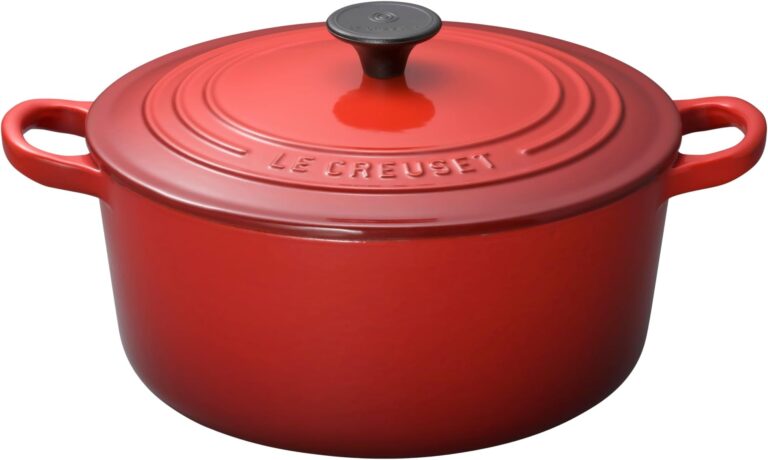
The Le Creuset 6.75-quart model is an enameled cast-iron Dutch oven. It has a cast-iron body and lid with a smooth enamel coating. The enamel helps prevent rust and means you do not need to season the cooking surface like you would with bare cast iron.
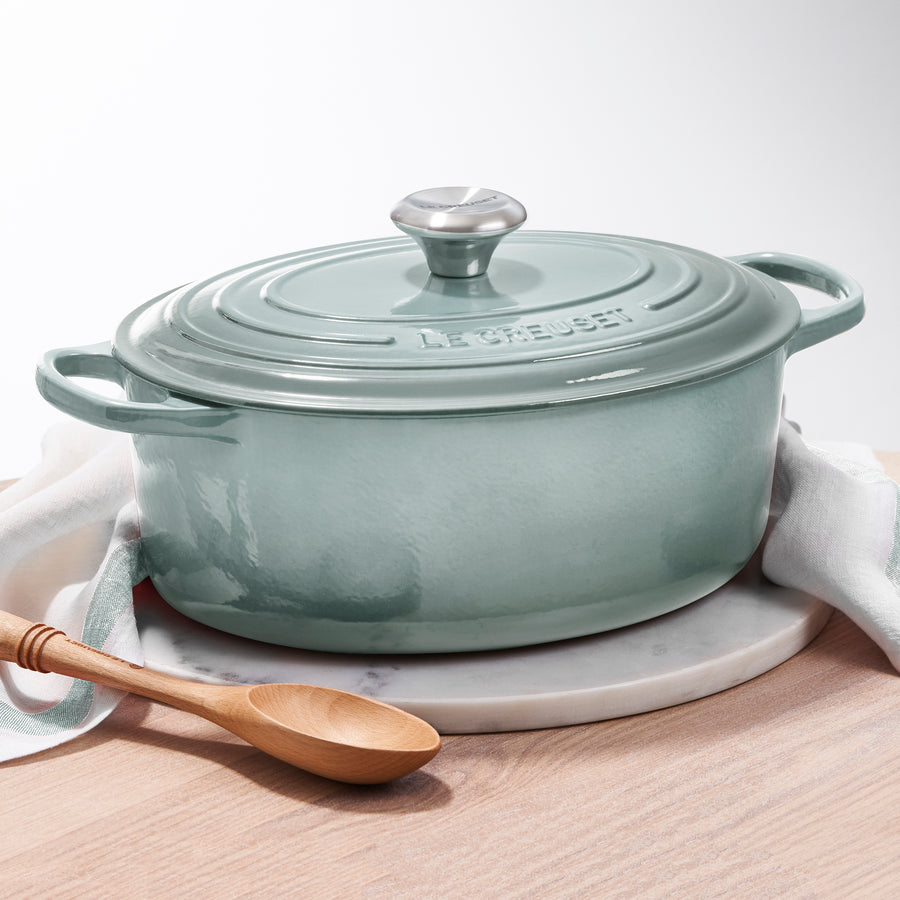
This size is often sold as the Signature Round Wide Dutch Oven in the United States. The “wide” design matters. It gives you a larger cooking area while keeping the pot lower than many deep, narrow Dutch ovens.
Key specifications
| Feature | What to expect |
|---|---|
| Capacity | 6.75 quarts, or about 6.4 liters |
| Material | Enameled cast iron |
| Shape | Wide, round cooking vessel |
| Best use | Braises, stews, soups, roasts, bread, and one-pot meals |
| Cooktop use | Gas, electric, ceramic, and induction cooktops |
| Oven use | Suitable for oven cooking within Le Creuset’s stated temperature limits |
| Cleaning | Dishwasher safe, although hand washing helps preserve appearance |
| Lid | Heavy, close-fitting cast-iron lid |
| Warranty | Le Creuset’s limited lifetime warranty may apply to eligible original purchases |
Product details can change by region, finish, lid knob, and production date. Confirm the current US listing before purchase. The Le Creuset US website is the best place to check the exact model and care instructions.
How Much Food Fits in a 6.75-Quart Dutch Oven?
A 6.75-quart Dutch oven usually works well for four to eight servings, depending on the recipe and how much room the food needs. A stew with large pieces of meat may serve fewer people than a soup or chili.
Use the size as a planning guide:
- Soup or chili: about 6 to 10 servings
- Pulled pork or pot roast: one large roast with vegetables
- Pasta sauce: a large family batch
- Braising: several chicken thighs or a medium-to-large roast
- Bread: large round loaves, if the recipe fits the pot’s diameter
- Meal prep: several portions for a family or small gathering
Do not fill the pot to the rim. Leave space for stirring and bubbling. For liquid foods, filling the pot to about two-thirds or three-quarters full is more practical.
The wide base is especially useful when a recipe starts with browning. Meat can spread across the surface instead of sitting in crowded layers. That can help improve browning, but it does not remove the need to cook in batches when the food covers the base.

Why Choose the Wide Shape?
The wide shape gives the 6.75-quart Le Creuset Dutch oven a different cooking profile from a deep 7.25-quart round Dutch oven. It offers more surface area and a lower profile.
That design helps with:
- Browning steaks, chicken, and meatballs
- Cooking onions and vegetables in one layer
- Reducing sauces
- Layering casseroles
- Serving food directly at the table
- Fitting under some oven racks more easily than a very tall pot
The trade-off is depth. A wide Dutch oven may not hold tall stacks of food as well as a deeper model. If you often cook very large batches of soup, boil bulky vegetables, or make tall loaves, a deeper pot may suit you better.
Wide versus deep Dutch ovens
| Choose the 6.75-quart wide model if you value | Choose a deeper model if you often need |
|---|---|
| A broad searing surface | More vertical space |
| Easy stirring | Tall batches of soup |
| Low, even layers | Large amounts of pasta or vegetables |
| Braised dishes with spread-out ingredients | Large whole birds or tall roasts |
| A serving pot with a lower profile | Maximum liquid capacity |
The best size depends on your cooking habits, not only the quart number. Two pots with similar capacities can feel very different on the stove.

What Can You Cook in It?
The Le Creuset 6.75-quart Dutch oven can handle most slow-cooked and one-pot recipes. Enameled cast iron spreads heat steadily and holds heat well, which makes it useful for both stovetop and oven cooking.
Good uses include:
- Braising: Brown meat, add liquid, cover, and finish at low heat.
- Stewing: Cook meat and vegetables slowly until tender.
- Soup and chili: Use the large capacity for family-size batches.
- Roasting: Cook chicken, pork, or beef with vegetables.
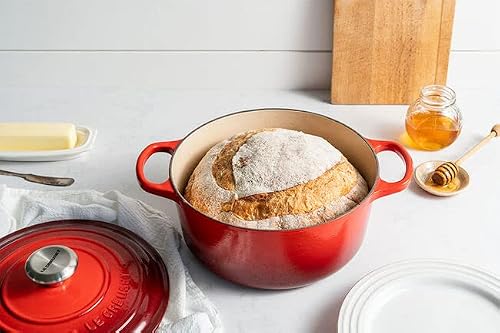
- Bread baking: Use the covered pot to trap steam during the early bake.
- Frying: The heavy walls can help hold oil temperature, but use a thermometer and safe oil practices.
- Pasta sauce: The wide surface helps reduce sauce and hold a large batch.
- Casseroles: Move the pot from the stovetop to the oven when the recipe requires it.
The pot is not a pressure cooker. Do not lock the lid or try to create pressure inside it. It is also not the right tool for dry cooking over high heat. Enameled cast iron performs best with gradual heating and moderate settings.

How to Use the Le Creuset 6.75-Quart Dutch Oven
Use moderate heat and let the pot warm slowly. Cast iron stores heat, so high heat is often unnecessary and can increase the risk of scorching or damaging the enamel.
For stovetop cooking
- Place the Dutch oven on a burner that matches its base.
- Add oil or cooking fat before heating when the recipe allows.
- Start on low or medium heat.
- Let the pot warm for a few minutes.
- Add food once the oil is ready.
- Lower the heat if food browns too fast.
- Add liquid before scraping browned bits from the base.
- Move the pot carefully because the handles and lid become hot.
On an induction cooktop, lift the pot rather than sliding it. Sliding cast iron can scratch some glass surfaces. Check the cooktop maker’s instructions for weight limits and cookware guidance.
For oven cooking
Use heat-resistant gloves when moving the pot. The lid, side handles, and knob can become very hot, even when the outside looks unchanged.
Check the exact temperature limit for your lid knob. Le Creuset’s oven limits can vary by knob material and product version. The enamel-coated cast-iron vessel itself is designed for high-heat cooking, but the lowest-rated part, often the knob, controls the safe limit for the complete pot.
How to Clean and Care for It
Clean the Dutch oven after it cools. Do not pour cold water into a very hot pot. A sudden temperature change can stress the enamel and may cause cracking or damage.
For routine cleaning:
- Let the pot cool until it is safe to handle.
- Add warm water and mild dish soap.
- Wash with a soft sponge or nylon brush.
- Rinse well.
- Dry the pot and lid before storage.
- Store the lid slightly ajar if moisture tends to collect inside.
For stuck food, soak the pot in warm, soapy water. You can also simmer water with a small amount of baking soda, then let the pot cool and scrub gently.
Avoid the following:
- Steel wool
- Harsh scouring powders
- Metal knives used to scrape the enamel
- Repeated high-heat empty preheating
- Sudden cold water in a hot pot
- Cooking sprays that leave a sticky film
- Storing the pot while damp
Le Creuset states that its enameled cast-iron cookware is dishwasher safe. However, repeated dishwasher cycles may dull the finish or affect exterior color over time. Hand washing is the better choice if appearance matters.

Is the Le Creuset 6.75-Quart Dutch Oven Safe for Induction?
Yes. Enameled cast iron is generally compatible with induction cooktops because cast iron is magnetic. The Le Creuset 6.75-quart Dutch oven is designed for use on induction, gas, electric, and ceramic cooking surfaces.
Use care on glass and ceramic cooktops:
- Lift the pot instead of dragging it.
- Keep the cooktop and pot base clean.
- Avoid dropping the pot onto the surface.
- Confirm that the burner can support the pot’s weight.
- Center the pot over the heating zone.
Induction heats the pot quickly. Start at a lower power setting than you might expect, then increase it only as needed. The heavy base will continue to release heat after you lower the setting.

Is It Worth the Price?
The Le Creuset 6.75-quart Dutch oven is worth considering when you want a long-term enameled cast-iron pot and will use its wide cooking surface often. Its value comes from the combination of cast-iron heat retention, an enamel interior, a close-fitting lid, and a design that can move from stove to oven to table.
It may not be the best value for every cook. A less expensive enameled Dutch oven can perform many of the same basic tasks. The Le Creuset version costs more, and the large size also takes up more storage space.
It is a good fit for:
- Families that cook large one-pot meals
- Cooks who sear meat before braising
- People who want one pot for stovetop and oven recipes
- Bakers who want a wide covered vessel
- Buyers who value color choices and long-term brand support
- Home cooks who can manage a heavy pot
Consider another size or type if:
- You mainly cook for one or two people
- Your cabinets cannot hold a wide pot
- You have limited strength or hand mobility
- You want a lightweight pot
- You mostly cook small portions
- You need pressure cooking
- You want a bare cast-iron pot for very high-heat outdoor use
The key question is not whether the pot is expensive. It is whether you will use a 6.75-quart wide pot often enough to justify its weight, storage needs, and cost.
Common Mistakes to Avoid
The most common mistake is using too much heat. Cast iron heats slowly but stays hot for a long time. High heat can burn food, make temperature control harder, and increase the chance of enamel damage.
Other mistakes include:
- Crowding the base: Cook meat in batches when needed.
- Preheating empty for too long: Add oil or food according to the recipe.
- Using cold water on hot enamel: Let the pot cool first.
- Dragging it on glass: Lift it to protect the cooktop.
- Ignoring the knob limit: Check the exact lid hardware before high-heat oven use.
- Filling it to the top: Leave room for bubbling and stirring.
- Using abrasive tools: Choose a soft sponge or nylon brush.
- Storing it wet: Dry both the lid and the cooking vessel.
- Lifting by the lid knob alone: Use the side handles for the pot body.
A small amount of care protects the enamel and makes the Dutch oven easier to use for many years.
Frequently Asked Questions
How many people does a 6.75-quart Le Creuset Dutch oven serve?
It commonly serves about four to eight people, depending on the recipe, portion size, and amount of liquid. Dense dishes such as braised meat may serve fewer people than soup, chili, or pasta sauce.
What is the difference between a 6.75-quart and 7.25-quart Le Creuset Dutch oven?
The 7.25-quart model usually offers more total capacity and a deeper cooking profile. The 6.75-quart wide model gives you more room across the base for browning and layering food. Choose the wide model for surface area and the larger model for extra volume.
Can the Le Creuset 6.75-quart Dutch oven go in the oven?
Yes, the Dutch oven is designed for oven use. Check the current instructions for the exact knob and lid type because the complete pot’s temperature limit depends on its lowest-rated component.
Can I use metal utensils in it?
Use wood, silicone, or other non-abrasive tools when possible. Occasional careful use of a smooth metal utensil may not cause immediate damage, but sharp edges and forceful scraping can chip or scratch the enamel.
Does it need to be seasoned?
No. The enamel coating does not require seasoning. Wash and dry the pot after use. The exposed cast-iron rim may benefit from being kept clean and dry, but do not treat the enameled cooking surface like bare cast iron.
Can I put it in the dishwasher?
Le Creuset identifies its enameled cast-iron cookware as dishwasher safe. Hand washing is still recommended for long-term appearance because dishwasher detergent and repeated cycles may dull the exterior finish.
Why is my Dutch oven food burning on the bottom?
The usual causes are excessive heat, a dry pot, long cooking without stirring, or a burner that is too large. Lower the heat, use enough liquid or fat, and match the burner to the pot’s base. If food is stuck, soak the cooled pot instead of scraping hard.
Final Recommendation
The Le Creuset 6.75-quart Dutch oven is a practical choice for US cooks who want a wide, heavy pot for family meals, braises, roasts, soups, sauces, and bread. Its broad base is its main advantage over deeper models. Its main limits are weight, storage space, and price.
Before ordering, confirm the exact model, interior color, dimensions, lid knob, oven rating, warranty terms, and return policy. If you cook large one-pot meals often and can handle cast-iron weight, the 6.75-quart wide design offers useful capacity without becoming as tall as a larger, deeper Dutch oven.

Hi, I’m Mary, the founder of KitchenClue.com. I’m deeply passionate about everything that makes a kitchen smarter, easier, and more enjoyable. I share hands-on insights and practical expertise on kitchen gear that truly helps in daily cooking. Along with my dedicated research team, we study products carefully, and our writers create honest, well-tested reviews using trusted, authentic sources—so you can choose kitchen tools with total confidence.