Le Creuset Red Tea Kettle: Stylish Kitchen Upgrade
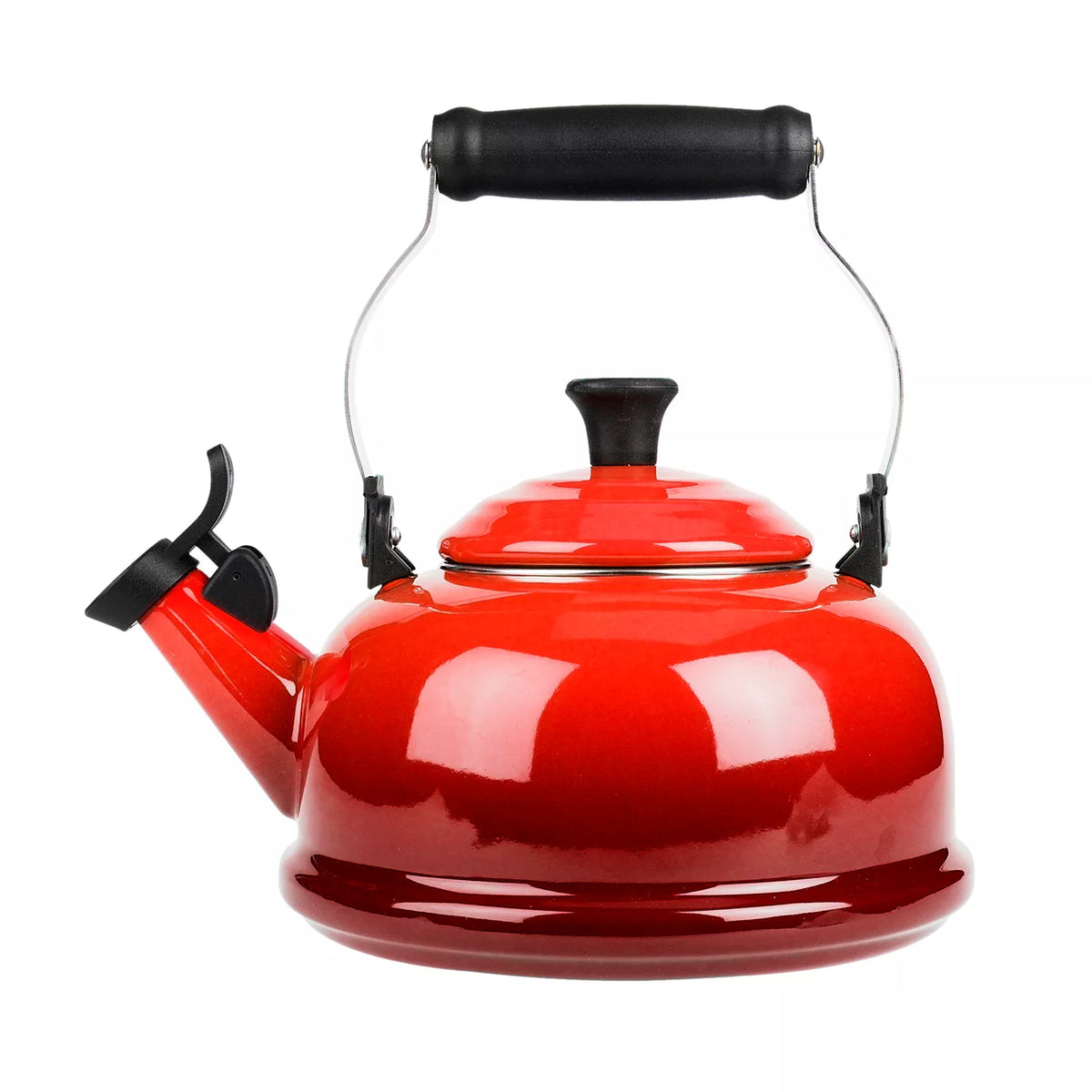
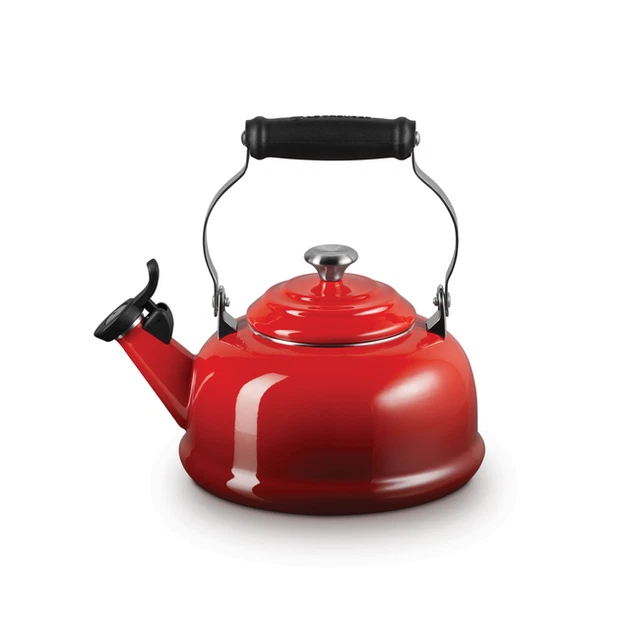
A Le Creuset red tea kettle is a stovetop kettle made for boiling water for tea, coffee, cocoa, oatmeal, and other hot drinks. In the United States, the red finish is often sold as Cerise, although color names and kettle models can vary by collection and season.
Le Creuset stovetop kettles usually have an enamel-coated steel body, a lid, a heat-safe handle, and a whistle that sounds when the water reaches a boil. They are not electric kettles, so they need a compatible cooktop and careful handling around hot steam.

What Is a Le Creuset Red Tea Kettle?
A Le Creuset red tea kettle is an enameled steel stovetop kettle. It heats water on a gas, electric, ceramic, or induction cooktop, depending on the model’s specifications.
The name “tea kettle” can cause some confusion in the United States. A tea kettle heats water. A teapot holds and steeps tea. A Le Creuset kettle is designed for heating water, not for brewing loose tea leaves inside the vessel.
Common features include:
- Enamel-coated steel construction
- A bright red or deep cherry finish
- A built-in whistle
- A removable or hinged lid
- A heat-resistant handle
- Compatibility with several cooktop types
- A shape made for pouring hot water
Le Creuset has sold several stovetop kettle styles over time. The Demi Kettle, Kone Kettle, and Classic Whistling Kettle may differ in size, handle design, lid shape, and availability. Check the model name and care guide before buying or using one.
What does “Cerise” mean?
Cerise is Le Creuset’s name for a deep cherry-red color. It is one of the brand’s best-known finishes in the United States.
A listing may say “red,” “cherry red,” or “Cerise,” even though the exact shade can vary slightly by product line and lighting. If matching other Le Creuset cookware matters, compare the item’s official color name rather than relying only on a product photo.

Le Creuset Red Kettle Sizes and Uses
The best size depends on how much water you heat at one time and how much space you have on the stove.
Le Creuset kettle models commonly appear in small and medium capacities. Exact capacities can change by model, so use the manufacturer’s listed capacity as the final reference.
| Kettle size | Best for | Main trade-off |
|---|---|---|
| About 1.25 quarts | One or two cups of tea | Heats less water at a time |
| About 1.6 quarts | Several cups or a small French press | Takes more space |
| About 1.7 quarts | Families and frequent hot-water use | Heavier when full |
A U.S. cup equals 8 fluid ounces for common kitchen measurement. A 1.25-quart kettle holds about 40 fluid ounces before allowing for safe operating space. That is enough for roughly five 8-ounce cups in a simple volume calculation, but you should not fill a kettle to the brim.
How much water should you use?
Use only the amount of water you need, while staying above the model’s minimum fill line if one is marked. Do not exceed the maximum fill line.
Filling less water can shorten heating time. Filling too much can cause bubbling water or steam to escape through the spout. Excess water may also make the kettle heavier and harder to pour.
Is a red Le Creuset kettle good for one person?
A small model is usually more practical for one person. It uses less space and may bring a single serving to a boil faster than a large kettle.
A larger model makes more sense if you prepare several mugs, fill a pour-over brewer, or need hot water for cooking. The deciding factor is not the color. It is capacity, cooktop fit, and ease of lifting when full.
Cooktop Compatibility
Most Le Creuset stovetop kettles are made for use on several common cooktops, including gas, electric, ceramic, and induction. However, compatibility is a model-specific claim. Always confirm the product page or instruction manual for the exact kettle.
Gas stoves
A gas flame should stay beneath the kettle’s base. Flames that rise up the sides can heat the handle, damage nearby parts, or discolor the exterior.
Use a burner that matches the base size. A very large burner can create unnecessary heat around the spout and handle.
Electric and ceramic cooktops
Place the kettle on a burner that matches the base. Avoid dragging it across a glass or ceramic surface. Lift it instead to reduce the risk of scratches.
A flat base helps the kettle sit securely, but a kettle may still wobble if the cooktop or base is dirty. Wipe both surfaces before use.
Induction cooktops
Induction works only when the kettle’s base contains a magnetic material and the model is labeled as induction-compatible. Do not assume that every Le Creuset kettle works on induction just because the brand makes induction cookware.
If you need a quick check, place a refrigerator magnet against the base. A magnetic response may suggest compatibility, but the manufacturer’s instructions remain the better source.

How to Use a Le Creuset Red Tea Kettle Safely
Using the kettle is simple, but hot water and steam can cause serious burns. Follow the model’s instructions and use these basic steps.
- Check the kettle. Make sure the lid, handle, spout cover, and whistle are secure.
- Add water. Use clean, cold water. Stay below the maximum fill line.
- Place the kettle on the cooktop. Center it over the burner.
- Use moderate heat. High heat is usually unnecessary and can expose the handle or enamel to excess heat.
- Watch for the whistle. When the water boils, the whistle signals that the kettle is ready.
- Turn off the burner. Do this before moving the kettle.
- Lift with care. Use a dry oven mitt or other heat-safe grip if the handle is hot.
- Pour slowly. Keep hands and face away from steam from the spout.
- Empty unused water. This helps limit mineral buildup and standing water.
Do not heat the kettle when it is empty. Do not leave it unattended on a lit burner. Never place a hot kettle under cold running water, since a sharp temperature change can stress the enamel or metal.
How do you open the whistle?
The design varies. Some kettles have a lever or cap near the handle. Others use a removable whistle cover.
Open the whistle only after removing the kettle from heat. Point the spout away from your face and hands. Steam can escape quickly, even after the burner is off.

Cleaning and Descaling a Le Creuset Kettle
Regular cleaning helps keep the enamel bright and the spout clear. Most Le Creuset stovetop kettles should be washed by hand unless the specific care instructions say otherwise.
Basic cleaning
- Let the kettle cool fully.
- Wash the inside and outside with warm water and mild dish soap.
- Use a soft sponge or cloth.
- Rinse well.
- Dry the kettle before storing it.
Avoid steel wool, harsh scouring pads, oven cleaner, and abrasive powders. These can dull the finish or scratch the enamel.
Do not soak a hot kettle in cold water. Let it reach room temperature first.
Removing mineral buildup
Hard water can leave white or chalky deposits inside a kettle. These deposits are often made of mineral scale.
A common home method is to fill the kettle with a diluted white vinegar solution, let it sit, and then rinse it well. Follow the care instructions for your exact model first. Do not heat a cleaning solution unless the manufacturer specifically permits it.
After descaling:
- Rinse the kettle several times.
- Boil fresh water once or twice.
- Discard that water.
- Check that no vinegar odor remains.
Do not mix vinegar with bleach or other cleaning products.
How often should you descale it?
The right schedule depends on local water. A household with hard water may need to descale more often than a household with soft water.
Inspect the inside every few weeks. Descale when you see visible deposits, notice a change in pouring, or hear unusual bubbling. Frequent scale can reduce the opening around the spout and affect the whistle.

Why Is My Le Creuset Kettle Not Whistling?
A kettle that does not whistle may still be heating correctly. The whistle depends on steam passing through the spout and whistle assembly at the right pressure.
Check these causes in order:
1. The water is not fully boiling
The whistle may sound only when enough steam forms. Give the water more time, or use moderate heat that matches the burner.
2. The kettle is overfilled
Too much water can interfere with the steam path. Empty some water and stay below the maximum fill line.
3. The spout or whistle has mineral scale
Scale can block the small openings that create the whistle. Let the kettle cool, then inspect and clean the area according to the care guide.
4. The whistle cap is not closed
Some models need the whistle cover to sit in a certain position. Confirm that it moves freely and closes fully.
5. The lid is not seated
A loose lid can allow steam to escape before it reaches the whistle. Check the lid after the kettle cools.
6. The burner is too small or too low
A low setting may heat the water slowly. A very small burner may not deliver enough heat to create a strong whistle.
Stop using the kettle if the spout, lid, handle, or whistle assembly is loose, cracked, or damaged. Contact Le Creuset or the seller for model-specific support rather than trying to repair a pressurized steam path yourself.

Le Creuset Red Tea Kettle vs. Electric Kettle
A stovetop Le Creuset kettle and an electric kettle serve the same basic purpose, but they fit different kitchens.
| Feature | Le Creuset stovetop kettle | Electric kettle |
|---|---|---|
| Heat source | Gas, electric, ceramic, or induction cooktop, if compatible | Electrical outlet |
| Counter space | Stored when not in use | Often stays on the counter |
| Whistle | Common on stovetop models | Usually uses an automatic shutoff |
| Temperature control | Usually not built in | Available on some models |
| Visual style | Enamel cookware finish | Plastic, steel, glass, or mixed materials |
| Portability | Limited to a cooktop | Can be used near an outlet |
| Care | Hand washing is often preferred | Requires cleaning around the heating base |
Choose the Le Creuset kettle if you want a stovetop tool that matches your cookware and has a classic whistle. Choose an electric kettle if you want automatic shutoff, faster everyday water heating, or adjustable temperature control.
Neither type is automatically better. The useful choice depends on how you heat water and whether you want a decorative cookware piece or a dedicated countertop appliance.
What to Check Before Buying a Red Le Creuset Kettle
Before buying, check the exact model rather than relying on the phrase “Le Creuset red tea kettle.”
Confirm the capacity
A small kettle may suit one or two people. A larger kettle may reduce the number of heating cycles for a family.
Confirm the color name
“Red” can refer to Cerise or another limited color. Check whether the shade matches your existing cookware.
Confirm induction compatibility
If you use induction, look for a clear induction statement from Le Creuset or an authorized seller. Do not rely only on a product image.
Check the handle design
Some handles stay above the body. Others may become warm during use. A comfortable grip matters because a full kettle can be heavy.
Inspect the lid and whistle
The lid should fit securely. The whistle should move or close as the instructions describe. If buying used, ask for clear photos of the spout, lid, base, and interior.
Consider storage
Measure the space between your cooktop and cabinets. A tall handle or lid knob may affect where you can store the kettle.
Buy from a reliable source
Le Creuset’s official U.S. site, authorized retailers, and established stores are safer choices than listings with unclear model numbers or unusually low prices. Availability, color, warranty terms, and price can change.

Common Mistakes to Avoid
A few habits can shorten the life of an enamel-coated kettle.
- Heating it empty: This can cause excessive heat and damage.
- Using maximum heat every time: Moderate heat is usually enough.
- Filling it to the brim: Water may escape through the spout.
- Pouring with the lid loose: The lid may shift or hot water may spill.
- Touching the handle without checking it: Parts can become hot during use.
- Running cold water over a hot kettle: Sudden temperature change can stress the finish.
- Using abrasive cleaners: Scratches and dull spots may result.
- Leaving water inside for long periods: Standing water can promote scale.
- Dragging it over a glass cooktop: Lift it instead.
- Ignoring a damaged whistle or handle: Replace or service the kettle before using it again.
The red enamel is durable, but it is not damage-proof. Treat the kettle like other enameled cookware.

Is a Le Creuset Red Tea Kettle Worth It?
A Le Creuset red tea kettle can be a good fit for a U.S. kitchen that uses a stovetop and values enamel cookware design. Its strongest reasons to buy are its visual style, solid construction, stovetop flexibility on compatible models, and familiar whistle function.
It may not be the best fit if you want:
- Automatic shutoff
- Precise water temperature control
- A cordless countertop design
- The lightest possible kettle
- A dishwasher-focused cleaning routine
- The lowest-cost way to boil water
The value depends on how often you use a kettle and how much you care about matching cookware. A simple electric kettle may offer more convenience. A basic stovetop kettle may cost less. The Le Creuset option makes the most sense when appearance, brand design, and stovetop use matter together.

Frequently Asked Questions
Is the Le Creuset red tea kettle electric?
No. Le Creuset red tea kettles are generally stovetop kettles. They do not plug into an outlet and do not have an electric heating base.
Can you use a Le Creuset kettle on an induction stove?
Some models are induction-compatible, but the answer depends on the exact kettle. Check the official product description or instruction manual before use.
Can you put a Le Creuset kettle in the dishwasher?
Hand washing is the safer default for enameled stovetop kettles. Dishwasher instructions can vary by model, so follow the care guide for the exact product.
Why is my kettle making a strange noise?
Mineral buildup, trapped air, excess heat, or a partly blocked whistle can change the sound. Let the kettle cool, inspect the spout and whistle, and descale it if the care guide allows. Stop use if the kettle is damaged.
Can you boil milk in a Le Creuset tea kettle?
A stovetop kettle is intended for water. Milk can scorch, foam, block the spout, and make cleaning difficult. Use a saucepan for milk instead.
Does a Le Creuset kettle keep water hot?
It may retain some heat because of its metal body, but it is not a thermos. Turn off the heat after boiling and do not leave the kettle on a hot burner.
What is the red Le Creuset color called?
The well-known red shade is often called Cerise. Product colors can change by collection and market, so confirm the name on the current U.S. listing.
Final Recommendation
Choose a Le Creuset red tea kettle if you want a stylish stovetop kettle for tea, coffee, and hot water, and you are comfortable with hand care and manual heating. Before buying, confirm the model, capacity, color name, induction rating, and care instructions.
For the safest daily use, fill it below the maximum line, heat it on moderate power, remove it before pouring, and keep the spout and whistle free of mineral scale.

Hi, I’m Mary, the founder of KitchenClue.com. I’m deeply passionate about everything that makes a kitchen smarter, easier, and more enjoyable. I share hands-on insights and practical expertise on kitchen gear that truly helps in daily cooking. Along with my dedicated research team, we study products carefully, and our writers create honest, well-tested reviews using trusted, authentic sources—so you can choose kitchen tools with total confidence.