Chipped Enamel On Le Creuset: Repair Guide & Tips
A chipped Le Creuset enamel surface is more than a cosmetic flaw when the damage is inside the pot or pan. Stop using the cookware for food if the chip exposes rough cast iron, sits on the cooking surface, or sheds flakes. Small chips on the outside may not affect cooking, but they can grow if the pot suffers more impact or sudden temperature change.
For cookware bought in the United States, the best next step is to document the damage and contact Le Creuset’s U.S. customer service before attempting a repair. Do not sand, glue, paint, or coat the chip yourself.

What Is Enamel on Le Creuset Cookware?
Le Creuset uses vitreous enamel, a glass-like coating fused to cast iron at high heat. The enamel helps protect the iron, creates a smooth cooking surface, and makes the cookware easier to clean.
Enamel is hard but brittle. It can chip if the cookware is dropped, struck against a sink, hit with another pan, or exposed to a sharp temperature change. The cast iron beneath the coating is strong, but the enamel layer can fracture.
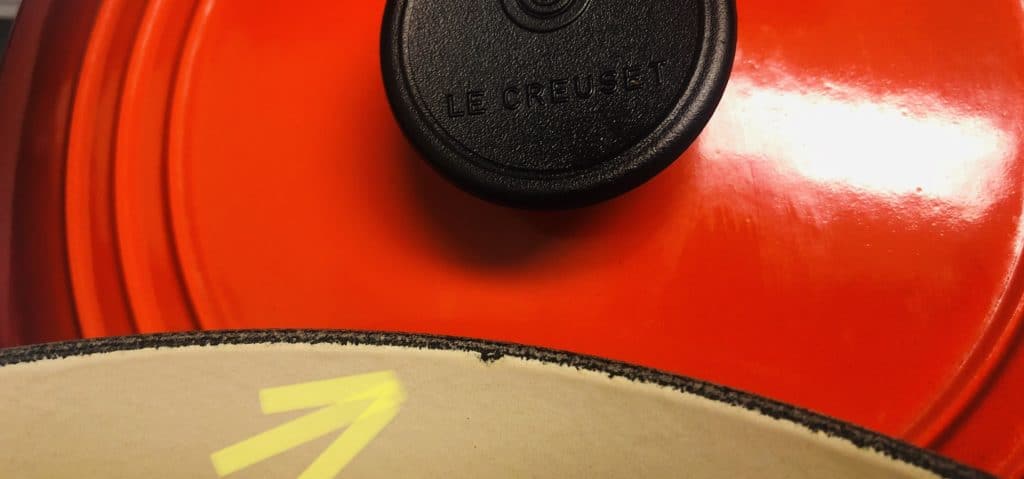
A chip may look like:
- A small missing spot in the enamel
- A rough or sharp edge
- A dark area where black cast iron is visible
- A crack that spreads from an impact point
- Loose flakes in or around the cooking surface
- A patch that feels raised or uneven
Not every mark is a chip. Light scratches, utensil marks, and stains may affect the appearance without removing the enamel.
Le Creuset’s U.S. care guidance recommends avoiding thermal shock, using suitable utensils, and handling enameled cookware with care. Its product warranty also distinguishes manufacturing defects from damage caused by misuse, accidents, or normal wear.
Is Chipped Le Creuset Enamel Safe to Use?
A chip on the inside of a Le Creuset pot or pan is a reason to stop using it for cooking. The safest choice is replacement or an assessment by Le Creuset, especially if the damaged area is on the base, sidewall, rim, or lid interior.
Use this guide to assess the location:
| Damage location | Recommended action | Reason |
|---|---|---|
| Cooking surface inside the pot | Stop using it for food | The area may shed enamel or expose iron |
| Inside wall or near the rim | Stop using it for food | Food and utensils can worsen the chip |
| Lid interior | Stop using the lid for cooking until assessed | Chips may loosen or spread with heat |
| Outside wall or base | Ask Le Creuset for guidance | It may be cosmetic, but the damage can expand |
| Small surface mark with no missing enamel | Clean gently and monitor | It may be staining or utensil marking |
A visible chip does not usually mean that the entire pan is instantly dangerous. The concern is continued use. Heat, moisture, acidic food, and repeated washing can place stress on the exposed area. Loose enamel fragments are also an avoidable contamination risk.
Do not rely on the idea that seasoning will make chipped enamel safe. Seasoning can protect exposed cast iron on bare-iron cookware, but it is not a suitable repair for damaged enameled cookware.

How to Tell a Chip From a Scratch or Stain
Clean and dry the cookware before inspecting it. A dirty or stained area can look like missing enamel.
Follow these steps:
- Let the cookware cool completely.
- Wash it with warm water, mild dish soap, and a soft sponge.
- Dry it with a clean towel.
- Shine a bright light across the damaged area.
- Run a fingernail gently across it, without scraping.
- Look for exposed dark iron, a sharp edge, or missing glass-like coating.
A stain usually changes color but leaves the surface smooth. A utensil mark may look gray or metallic but does not create a hole. A true chip has a change in surface level. It may feel rough, jagged, or hollow at the center.
Stop the inspection if the area feels sharp. Do not use a knife, steel wool, sandpaper, or metal scraper to test the damage.
Common signs of a true enamel chip
- The surface has a visible depression.
- The edge catches a fingernail.
- Black or gray metal appears under a colored enamel layer.
- A hairline crack extends from the damaged spot.
- Small flakes appear after washing.
- The damage becomes larger after cooking.
If the mark is only discoloration, use a gentle cleaning method. Do not treat a suspected chip as a stain just because it is small.
What Causes Enamel to Chip?
Most chips result from impact or thermal shock rather than ordinary cooking.
Impact damage
Common causes include:
- Dropping the pot
- Hitting the rim against a faucet or countertop
- Stacking heavy cookware without protection
- Placing a hot lid on a hard surface
- Striking the enamel with a metal tool
- Moving a heavy pot by dragging it across a cooktop
The rim is especially vulnerable because it has a narrow edge. A chip on the rim can also make the lid fit poorly.
Thermal shock
Thermal shock happens when enamel faces a rapid temperature change. Examples include:
- Moving a hot pot into cold water
- Adding cold liquid to very hot cookware
- Placing cold cookware on a hot burner
- Putting hot cookware on a cold stone or wet surface
- Heating an empty enameled pot for a long time
Le Creuset’s care instructions advise allowing cookware to cool before washing it and avoiding sudden changes in temperature.
Manufacturing defects
A chip that appears without an obvious accident may be a product defect. Take clear photos and keep the purchase details. Do not attempt a repair before contacting the manufacturer, since an alteration may affect a warranty review.

How to Clean Chipped or Damaged Le Creuset Enamel
If the damaged area is inside the cookware, do not keep cooking in it while you wait for support. You may clean it gently for inspection, but cleaning will not restore the enamel.
For safe handling:
- Allow the cookware to cool.
- Rinse away loose food with warm water.
- Use mild dish soap and a soft sponge.
- For baked-on residue, soak the pan in warm soapy water.
- Use a nylon brush if needed.
- Rinse well and dry fully.
- Photograph the area in bright light.
For stains on intact enamel, a paste made from baking soda and water may help. Apply it gently and rinse it away. Do not use abrasive powders, oven cleaner, steel wool, or harsh scouring pads on a damaged area.
Never put loose enamel flakes back into use. If pieces have fallen into food, discard the food and inspect the cookware before using it again.

Can You Repair Chipped Le Creuset Enamel?
A home repair is not a reliable or food-safe way to restore chipped Le Creuset enamel. Consumer epoxy, touch-up paint, nail polish, ceramic repair products, and high-heat coatings are not suitable substitutes for factory-fused enamel on cookware.
Do not:
- Fill the chip with glue or epoxy
- Paint the area with enamel craft paint
- Sand the edges and continue cooking
- Apply a new seasoning layer over the chip
- Fire the cookware in a home oven to “reset” the coating
- Use an aftermarket coating on a food-contact surface
Factory enamel is fused to the metal under controlled industrial conditions. A household product may soften, crack, release odors, or separate during cooking. It may also change the surface in a way that Le Creuset cannot evaluate under its warranty.
The practical repair options are limited:
- Manufacturer assessment: Contact Le Creuset U.S. with photos and purchase information.
- Warranty replacement: The claim may be considered if the damage is linked to a covered defect.
- Professional evaluation: A qualified cookware repair service may advise on non-food-contact damage, but many services cannot recreate factory enamel.
- Replacement: This is usually the appropriate option for a cooking-surface chip.

How to Make a Le Creuset Warranty Claim in the United States
Le Creuset’s U.S. warranty terms can vary by product type, purchase channel, and the cause of the damage. A warranty generally does not cover ordinary accidents, misuse, unauthorized repairs, or normal wear. The manufacturer makes the final decision after reviewing the claim.
Prepare the following:
- Your name and contact information
- Product name and size
- Color and approximate purchase date
- Store or website where you bought it
- Receipt or other proof of purchase, if available
- Clear photos of the full cookware and damaged area
- A short description of what happened
- Photos of the base mark or identifying details
Use the official Le Creuset U.S. customer service or warranty page rather than an unrelated repair site. The current U.S. warranty terms are available through Le Creuset USA’s warranty information, and care instructions are available through Le Creuset USA’s care and use guidance.
Describe the damage accurately. If the pot was dropped, say so. If the chip appeared during normal use, explain that clearly. Avoid cleaning, sanding, or altering the cookware before the company responds.
Keep the cookware until Le Creuset gives instructions. A retailer may also help if the purchase was recent, but the retailer’s return policy and the manufacturer’s warranty are separate matters.

How to Prevent More Chips
Careful handling reduces the chance of further enamel damage.
- Lift the cookware instead of sliding it.
- Use wood, silicone, or plastic tools when practical.
- Do not bang utensils against the rim.
- Let the pot cool before washing it.
- Avoid cold water in a hot pot.
- Do not drop the lid onto a counter.
- Place a cloth or pan protector between stacked pieces.
- Store lids so they cannot strike the pot.
- Use low or medium heat unless the recipe requires more.
- Avoid heating an empty enameled pot for extended periods.
- Keep cookware away from hard sink edges.
- Inspect the rim and cooking surface from time to time.
Le Creuset cast iron retains heat well. That means high heat is often unnecessary. Lower heat can reduce scorching and make temperature changes less severe.

Chipped Enamel vs. Crazing, Crackling, and Discoloration
These problems look similar but do not always have the same cause.
Crazing is a network of fine lines in the enamel. It may occur after repeated heating and cooling. If the lines are deep, flaking, or accompanied by a chip, stop using the cookware and contact Le Creuset.
Discoloration is a change in color without missing enamel. Brown, gray, or black marks can come from cooking residue or heat. Gentle cleaning may improve the appearance.
Metal transfer can look like a gray scratch. It may come from a utensil or contact with another pan. If the surface remains smooth and intact, it may not be a chip.
A crack in the cast iron is more serious than surface discoloration. Remove the cookware from service and request professional guidance.
When the diagnosis is unclear, treat the area as damaged until you receive an answer. A short pause is safer than testing the cookware with another meal.

Should You Buy a Replacement or Keep the Pot?
Replacement makes the most sense when the chip is on a food-contact surface, continues to spread, creates sharp flakes, or exposes a broad area of iron. A warranty replacement may be possible, so contact Le Creuset before discarding the cookware.
A pot with a small exterior chip may remain structurally usable, but it still deserves inspection. Keep it away from moisture, avoid further impacts, and do not use it if rust develops near the damage or if the chip reaches the interior.
Do not donate or resell cookware with an undisclosed interior chip. If you pass on damaged cookware for decorative use, clearly state that it is not suitable for cooking.
Frequently Asked Questions
Can I use Le Creuset with a small chip on the outside?
Possibly, if the chip is only on the exterior and the interior cooking surface is intact. Contact Le Creuset first, especially if the chip is on the base, rim, or near a crack. Stop using the pot if the damage spreads or exposes sharp edges.
Is exposed cast iron under chipped enamel dangerous?
Exposed cast iron can rust when it contacts water and air. The main concern is that the damage can grow, flake, or affect food contact. Do not use exposed cast iron inside an enameled cooking surface without manufacturer guidance.
Can chipped enamel cause lead or other metal contamination?
A chip does not by itself prove that harmful contamination is present. Do not make a safety judgment from color alone. If the enamel is loose, damaged, or shedding, stop using the cookware and ask Le Creuset for product-specific guidance.
Will Le Creuset replace a chipped pot?
Le Creuset may replace cookware when the damage results from a covered manufacturing defect. Accidental impact, misuse, unauthorized repair, and normal wear may not qualify. The U.S. warranty team makes the decision after reviewing the product and claim details.
Can I still use a chipped Le Creuset for decoration?
Yes, but label it clearly as decorative and not for food use. Clean it gently, keep it dry, and avoid handling sharp edges. Do not use it to store food, water, pet supplies, or anything that may contact the damaged area.
Conclusion
A chipped Le Creuset enamel surface should not be repaired with household glue, paint, epoxy, or seasoning. If the chip is inside the pot, on the cooking surface, or shedding flakes, stop using the cookware for food.
Clean it gently, photograph the damage, collect proof of purchase, and contact Le Creuset USA. Exterior-only damage may be cosmetic, but the safest decision depends on the chip’s location, depth, and whether it is spreading.

Hi, I’m Mary, the founder of KitchenClue.com. I’m deeply passionate about everything that makes a kitchen smarter, easier, and more enjoyable. I share hands-on insights and practical expertise on kitchen gear that truly helps in daily cooking. Along with my dedicated research team, we study products carefully, and our writers create honest, well-tested reviews using trusted, authentic sources—so you can choose kitchen tools with total confidence.