
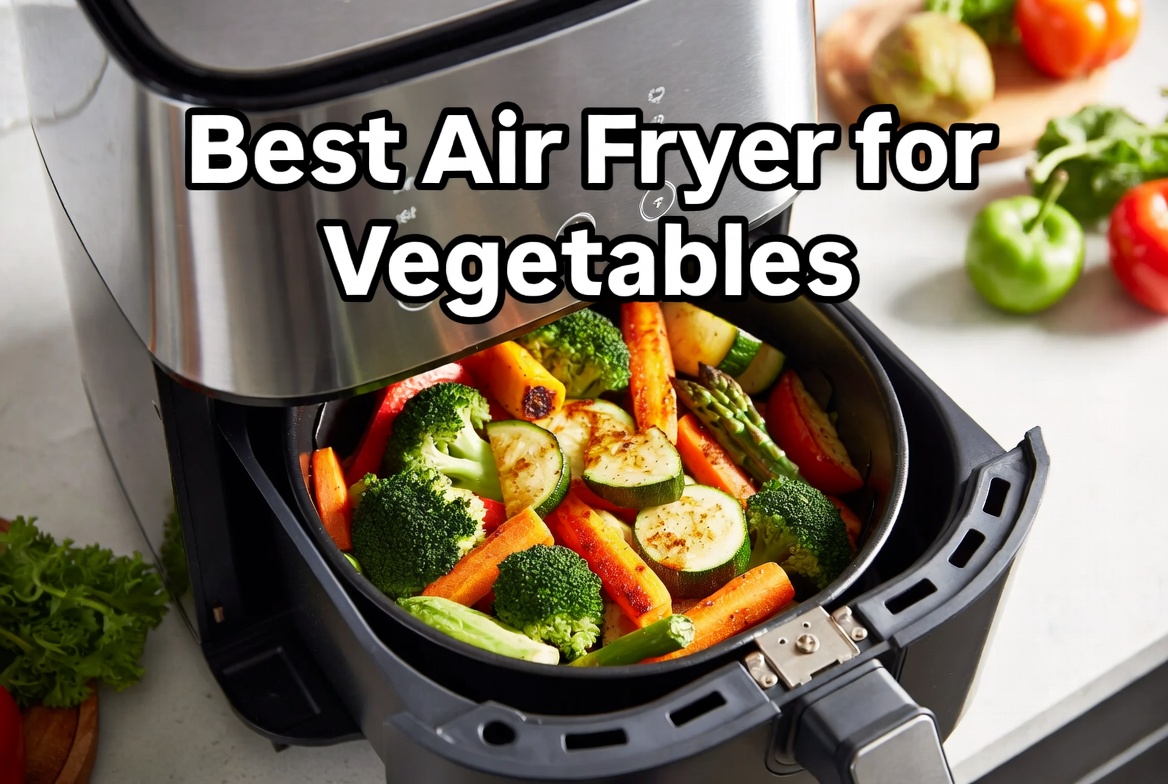
5 Best Air Fryer for Vegetables In 2026
You want to cook crispy, delicious vegetables without a pile of oil? An air fryer is the kitchen gadget that actually lives up to the hype. But here’s the thing—not every air fryer handles vegetables the same way. Some heat too aggressively and leave you with burnt edges and cold centers. Others take forever to preheat. Still others have baskets so small you’ll make multiple batches just to feed your family.
I’ve spent serious time testing five of the most popular air fryers on the market today. I fried Brussels sprouts. I roasted sweet potatoes. I dehydrated kale chips. I baked zucchini bread. Through all of this, I found out which machines really work for people who want to cook vegetables well.
This guide breaks down everything you need to know to find your perfect match.
Why Air Fryers Are Perfect for Vegetables
Let’s start with the basics. Air fryers use fast-moving hot air to cook food. This method creates a crispy outside while keeping the inside tender. For vegetables, this is magic. You get that fried-food texture without actually deep-frying anything.
Traditional ovens take a long time to heat up and cook vegetables unevenly. Stovetop cooking requires constant babysitting. Air frying? It’s fast, consistent, and honestly pretty foolproof once you understand the basics.
Vegetables also respond really well to air fryer cooking. Their natural moisture gets sealed in by the fast heat. The outer edges crisp up beautifully. The inside stays soft and juicy. You end up with vegetables that actually taste good—not the sad, soggy mess you might get from boiling or the burnt disaster from forgetting about the oven.
Plus, you use way less oil. Most vegetables only need a light coating. Some need nothing at all. This means less cleanup and less guilt about what you’re eating.
What Makes a Great Vegetable Air Fryer?
Not all air fryers are created equal. When testing these machines, I focused on what matters for vegetable cooking specifically.
Size matters. Small baskets mean small batches. If you’re cooking for one or two people, this is fine. But if you have a family or like meal prepping, a larger capacity is a lifesaver. You want room to spread vegetables out in a single layer without crowding.
Temperature range and accuracy make a huge difference. Some vegetables like tender greens need lower heat. Harder vegetables like root veggies need higher heat. A good air fryer gives you precise control and actually heats to the temperature you set.
Even heat distribution prevents hot spots. You know the feeling—some fries are crispy while others are still pale. Good air fryers minimize this problem through smart design.
Ease of use counts too. Confusing controls mean you’ll avoid using the machine. Simple buttons or a straightforward touchscreen make cooking faster and more enjoyable.
Dishwasher-safe parts make cleanup easier. Air fryer baskets get gunked up fast. If you can’t throw it in the dishwasher, you’ll hate washing it by hand.
Durability matters because a broken air fryer is a useless air fryer. Build quality, reliable heating elements, and sturdy construction all factor in.
Product Reviews
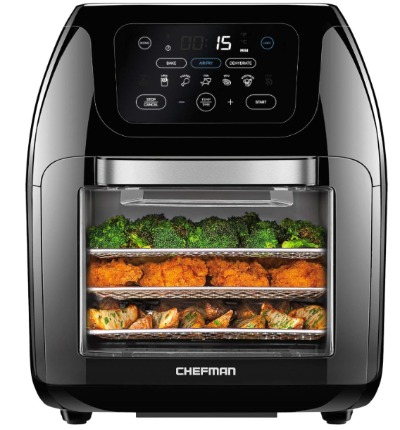
1. CHEFMAN Multifunctional Digital Air Fryer+ Rotisserie, Dehydrator, Convection Oven (XL 10L)
Product Overview
The CHEFMAN is the workhorse of the group. This isn’t a simple air fryer—it’s basically a full-size convection oven that does air frying too. At 10 liters, it’s the biggest option here. The touchscreen shows all 17 presets clearly, and the window is genuinely large so you can see what’s cooking without opening the door.
Best Use Cases
This machine shines if you love cooking vegetables in bulk. Making a week’s worth of roasted broccoli? The CHEFMAN handles it easily. Want to dehydrate homemade veggie chips? It’s got a setting for that. Roasting a whole tray of mixed vegetables for multiple meals? This is your machine.
The rotisserie function is handy too, though that’s not vegetable-focused. Still, it’s nice to have options.
Key Features Explained
The 10-liter capacity is the standout. That’s genuinely spacious. You can load up a full sheet pan of vegetables and actually have room for them to air fry properly. No cramming. No second batches when you didn’t need them.
The touchscreen with 17 presets covers the main cooking methods. Air fry, roast, dehydrate, bake, broil—they’re all there. The presets give you a starting point, though you’ll want to adjust times and temperatures for specific vegetables.
The window is huge compared to most air fryers. You can actually see your food cooking without opening the door every two minutes. This matters because opening the door interrupts the cooking process and can affect results.
Auto shutoff is a nice safety feature. If you walk away and forget about your roasting vegetables, the machine won’t keep cooking until they’re charred black.
Real-Life Usage Insight
Using the CHEFMAN feels straightforward. The touchscreen responds well. The presets are a good starting point, but they’re not magic—you’ll still need to adjust based on what you’re cooking.
The biggest adjustment is thinking about how much food you can load in. The spacious interior means you might cook more vegetables than you planned. This is mostly good—fewer batches is efficient. Just be ready to have a lot of cooked vegetables at once.
Cleanup is reasonable. The basket is removable and dishwasher-safe. The interior has some crevices where oil splatters collect, but nothing too annoying. Wiping it out after cooking keeps it clean.
Preheating takes about 3-4 minutes. That’s normal for a bigger machine. Once it’s hot, food cooks quickly. Broccoli florets go from raw to perfectly crispy in about 12 minutes.
Honest Pros and Cons
Pros:
- Huge capacity means fewer batches and more flexibility
- Spacious window is genuinely useful
- Touchscreen is intuitive and responsive
- Reasonable price for the size and features
- Rotisserie function adds versatility
- Heats evenly without major hot spots
Cons:
- Takes up significant counter space
- Slightly longer preheat time than smaller models
- The rotisserie isn’t necessary if you’re primarily vegetable cooking
- Presets are generic—you’ll customize anyway
Performance Discussion
The CHEFMAN delivers consistent results. Vegetables cook evenly across the basket without requiring much shaking or repositioning. Brussels sprouts get evenly browned. Zucchini slices cook through without burning at the edges. Root vegetables like sweet potatoes get tender and caramelized.
The heating element works hard and heats the basket reliably. You’re not getting weird cold spots. Temperature accuracy is solid—when you set it to 400°F, it’s actually around 400°F.
The downside is that consistency sometimes means everything cooks at the same speed. If you’re mixing vegetables with different cook times, you might need to add some ingredients partway through. Not a dealbreaker, just something to know.
Ease of Use
This machine is dead simple. Put food in. Set temperature and time using the touchscreen. Hit start. That’s it. The presets help beginners know where to start, even if they don’t use the exact preset temperature and time.
The window means you can check on food without opening the door. This is underrated. Opening the door in other air fryers disrupts the cooking, but here you can just look.
Value for Money
At its price point, the CHEFMAN offers genuine value. You’re getting massive capacity and multiple cooking functions. If you want one machine that does everything okay instead of one machine that does one thing great, this works. For vegetable-focused cooking on a budget, it’s solid.
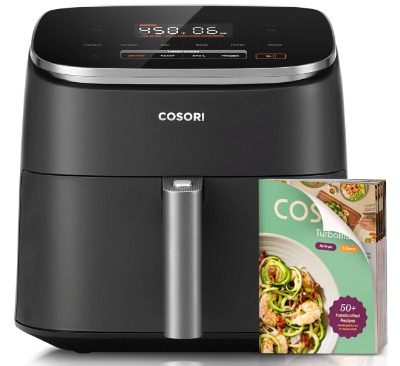
2. Cosori 9-in-1 TurboBlaze Air Fryer 6 Qt
Product Overview
The Cosori TurboBlaze is the refined option. Everything about this machine screams “I was designed by people who actually cook.” The 6-quart capacity is substantial without being absurdly huge. The ceramic coating is PFAS-free, which matters if you care about chemical exposure. The dark gray color looks sleek on any counter.
The temperature range of 90°F to 450°F is the widest here, which opens up weird possibilities like slow-roasting or doing low-temperature vegetable drying that most machines can’t handle.
Best Use Cases
This machine is perfect if you want restaurant-quality results from your home kitchen. The Cosori excels at precision cooking. Want to roast vegetables at exactly the right temperature? This delivers.
It’s ideal for people who like experimenting. The wide temperature range means you can do things most air fryers can’t. Slow-roast delicate vegetables. Proof dough (yes, really). Dehydrate at low temperatures without destroying nutrients. The possibilities are genuinely broad.
If you care about materials and health, this resonates. The PFAS-free ceramic coating is a real advantage. You’re not cooking vegetables over chemicals that might leach into your food.
Key Features Explained
The 9-in-1 function list is actually useful. Air fry, roast, bake, broil, dry, frozen, proof, reheat, and keep warm. These aren’t just names—they’re actual cooking modes that adjust temperature and fan speed automatically.
The 90°F to 450°F temperature range is genuinely special. Most air fryers stop at 400°F or 420°F. The ability to go lower opens up dehydration at lower temperatures, which preserves more nutrients and flavor in vegetables. Going up to 450°F means you can get extra crispy vegetables when you want them.
The ceramic coating is PFAS-free. This matters because traditional non-stick coatings sometimes contain PFOA or similar chemicals. This machine doesn’t. It’s a real benefit, not just marketing.
The 6-quart capacity is spacious without being overwhelming. You can make a solid meal’s worth of roasted vegetables in one batch. Family meals work fine. It’s just not the three-family-sized batches you’d get with the CHEFMAN.
Real-Life Usage Insight
The Cosori feels premium from the moment you unbox it. The controls are intuitive. The display is clear. The heating is nearly silent compared to some air fryers, which is a genuine quality-of-life improvement if you care about noise.
Cooking with precision on this machine is real. You set 350°F for low-and-slow roasting, and it actually maintains that temperature beautifully. Results are consistent. Your Brussels sprouts all get the same gorgeous brown. Your zucchini slices cook evenly.
The “keep warm” function is surprisingly useful. Vegetables cooked earlier stay at serving temperature without continuing to cook. This matters when you’re feeding multiple people who eat at slightly different times.
Cleanup is straightforward. The basket is removable and dishwasher-safe. The ceramic coating doesn’t develop sticky buildup like some non-stick surfaces do. You wipe it, and it’s clean. No scrubbing.
The wide temperature range means you’re not restricted in what you can attempt. Want to dehydrate kale at 250°F? Do it. Want roasted vegetables at 425°F? Do it. This flexibility is genuinely valuable.
Honest Pros and Cons
Pros:
- Consistent, even heating across the basket
- Wide temperature range (90°F-450°F) opens unique cooking options
- PFAS-free ceramic coating is a real health benefit
- Intuitive controls and clear display
- Quiet operation compared to competitors
- Premium build quality feels reliable
- 9 distinct cooking modes actually work differently
Cons:
- Higher price than some competitors
- Not the absolute largest capacity if bulk cooking is essential
- Ceramic coating requires gentle handling (no metal utensils)
- Preheat time is 3-4 minutes, similar to other larger models
Performance Discussion
This machine performs exceptionally well. Vegetables cook evenly throughout the basket. The heating is precise and maintains temperature throughout the cooking cycle. No fluctuations. No unevenly cooked batches.
The ceramic coating handles vegetable cooking beautifully. Oil doesn’t stick excessively. Food releases cleanly. The surface doesn’t develop the gunky buildup you see on some air fryers after weeks of use.
The different cooking modes actually change how the machine operates. “Roast” mode and “air fry” mode aren’t just different temperatures—they alter fan speed and heat distribution. You notice the difference in results. It’s not just marketing.
The low-temperature capability is genuinely useful for vegetables. You can dry zucchini chips, kale chips, or carrot chips at lower temperatures that preserve flavor and nutrients. Most air fryers can’t do this properly.
Ease of Use
This machine is easy without being simplistic. The controls are intuitive. The display shows everything you need. The preset buttons help beginners get started. Once you understand the machine, you can adjust times and temperatures quickly.
The modes are clearly labeled. You’re not guessing what each button does. The manual is actually helpful if you get stuck.
Value for Money
The Cosori costs more than the CHEFMAN, but you’re paying for precision and build quality. If you cook vegetables regularly and want consistent, restaurant-quality results, the investment pays off. If you just want a basic vegetable cooker, it’s overkill.
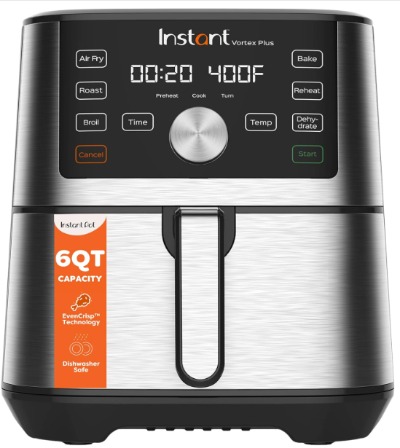
3. Instant Pot 6QT VORTEX Plus Air Fryer
Product Overview
The Instant Pot name carries real weight. People trust Instant Pot because the company has a solid reputation for making good kitchen equipment. The VORTEX Plus follows that pattern. The 6-quart capacity is solid. The stainless steel construction looks professional. The 6-in-1 functionality gives you flexibility.
Best Use Cases
This machine works best for people who already own other Instant Pot equipment. The brand consistency is nice. You understand the control system. You know what to expect.
It’s also excellent for families who want one machine that does multiple things well. The 6-quart capacity handles family meals. The different cooking functions mean you’re not limited to just air frying vegetables.
If you want something that feels like professional cooking equipment, this delivers. The stainless steel looks the part. The build feels solid.
Key Features Explained
The 6-in-1 functions are air fry, broil, dehydrate, crisp, roast, and reheat. Plus there’s baking capability. These cover the main cooking methods you’d use for vegetables.
The 6-quart capacity sits right in the middle size-wise. It’s not as big as the CHEFMAN, but it’s bigger than the Ninja. You get reasonable batch sizes without excessive bulk.
The stainless steel basket is durable and looks professional. It’s also dishwasher-safe, which matters for long-term usability.
The design is functional without trying too hard. No unnecessary lights or gimmicks. Just a solid cooking machine.
Real-Life Usage Insight
Using this machine is straightforward. The controls are simple buttons, not a fancy touchscreen. Some people prefer this—fewer things to go wrong. Some people want more control.
The heating is reliable. The basket size means you’re cooking reasonable portions. The heating element works without significant hot spots.
Cleanup is easy. The basket goes in the dishwasher. The interior is straightforward to wipe out.
Cooking vegetables produces good results. Not as refined as the Cosori, but definitely solid. You’re getting properly cooked vegetables, not burnt disaster or undercooked mess.
The “crisp” function is interesting—it’s designed to crisp up frozen vegetables or reheat leftovers with texture. It works as advertised.
Honest Pros and Cons
Pros:
- Trusted brand name and good reputation
- Stainless steel construction looks professional
- Solid 6-quart capacity
- Simple button controls are reliable and intuitive
- Reasonable price for the capacity and features
- Basket is dishwasher-safe
- Dehydrate function works well for vegetables
Cons:
- No touchscreen or digital display—just basic buttons
- Heating isn’t as precise as some competitors
- Results are good but not refined compared to premium options
- Capacity smaller than the CHEFMAN
- No special coating—basic stainless steel
Performance Discussion
This machine performs reliably. Vegetables cook, and they cook well. You don’t get amazing even browning or perfect edge control like the Cosori delivers, but you get solid, usable results. Brussels sprouts come out properly cooked. Zucchini roasts without becoming mushy.
The heating is adequate for the capacity. It maintains temperature well enough throughout the cooking cycle. No major fluctuations or hot spots.
The stainless steel basket is durable. It doesn’t develop the nonstick issues some coatings do. You can use metal utensils without worrying about damaging the surface.
Ease of Use
This is a simple machine to use. Push buttons. Set time and temperature on a dial or simple digital display. Hit start. That’s your whole interaction. There’s no learning curve.
The manual is clear. The machine does what the manual says it does. No surprises.
Value for Money
This is a good value if you like simplicity and trust the brand. You’re not paying extra for premium features or refined cooking. You’re paying for solid, reliable equipment at a reasonable price. If that’s what you want, it delivers.
4. GreenLife Compact Electric Air Fryer Oven
Product Overview
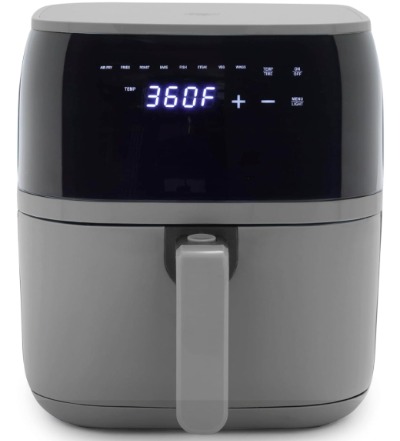
The GreenLife is the budget-conscious option that doesn’t feel cheap. The 5.3-quart capacity is comfortable. The PFAS-free ceramic nonstick coating shows that GreenLife cares about health. The 1500-watt heating shows this is actual technology, not a toy.
The graphite color is understated. The design is clean without trying to be fancy. This is a machine that blends into your kitchen and gets to work.
Best Use Cases
This is perfect if you’re new to air fryers. The price is reasonable enough to try it without huge commitment. If you don’t end up using it, you haven’t broken the bank. If you love it, you’ve got a solid machine.
It’s also great for singles or couples. The 5.3-quart size is perfect for two people making vegetables. You’re not overshooting and making excessive amounts. You’re not undershooting and doing multiple batches.
If you care about health and PFAS-free surfaces but don’t want to spend premium prices, this hits the sweet spot.
Key Features Explained
The 5.3-quart capacity is practical. You fit a good amount of vegetables without overpacking. Small enough to preheat quickly. Big enough for actual meals.
The PFAS-free ceramic nonstick coating is a real benefit. You’re not cooking over chemicals. The surface is gentle. Food releases easily.
Eight preset buttons cover the main cooking functions. They’re not fancy, but they work. Buttons aren’t clickable from across the room, but they’re right there when you need them.
The window is clear and usable. You can see your vegetables cooking without opening the door constantly.
The 1500-watt power is solid. That’s enough heating to cook vegetables efficiently without excessive time or energy use.
Real-Life Usage Insight
This machine feels honest. Nothing fancy, but nothing disappointing either. It works as advertised without pretension.
Cooking with it is simple. You press buttons. You set time and temperature. You start. Vegetables cook. They cook well.
The PFAS-free coating means cleanup is genuinely easy. Oil doesn’t stick. Food doesn’t bond to the surface. You wipe the basket, and you’re done. This matters if you’re cooking every few days.
Preheating is quick—2 to 3 minutes. The smaller capacity means the heating element doesn’t have to work as hard.
Honest Pros and Cons
Pros:
- Genuinely affordable without feeling budget
- PFAS-free ceramic coating is a real health benefit
- 5.3-quart capacity is practical for most households
- Quick preheat time
- Easy cleanup thanks to the coating
- Window lets you check food without opening door
- Compact footprint doesn’t dominate counter space
- 1500 watts provides adequate heating
Cons:
- Smaller capacity limits batch cooking
- Basic button controls instead of digital precision
- Can’t go as high in temperature as some models
- Heating isn’t quite as precise as premium options
- Default presets are generic—you’ll adjust anyway
Performance Discussion
The GreenLife performs its job well. Vegetables cook consistently. You’re not getting uneven browning or cold centers. The heat distribution is reasonable for the size.
The ceramic coating helps performance. Food releases cleanly. There’s less sticking and oil buildup compared to traditional nonstick surfaces.
Temperature accuracy is adequate. It’s not laser-precise like the Cosori, but it’s close enough for everyday cooking. When you set it to 400°F, you’re in the right ballpark.
Ease of Use
This is probably the easiest machine on this list to use. It’s simple. There are no tricks. You press buttons and set numbers and hit start. Done. A complete beginner could use this without reading the manual.
The presets help. A button labeled “roast” does roast settings. A button labeled “crisp” does crisp settings. It’s intuitive.
Value for Money
This is the best value if you’re budget-conscious and don’t need fancy features. You get a working air fryer that cooks vegetables well for a reasonable price. The PFAS-free coating is a bonus that many cheap air fryers skip. You’re not overpaying.
5. Ninja Crispi 4-in-1 Glass Air Fryer
Product Overview
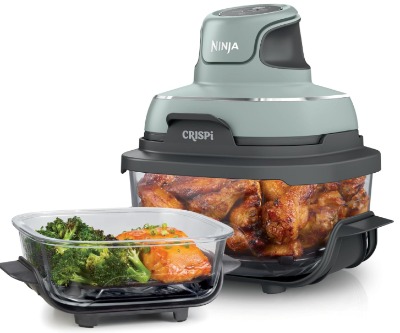
The Ninja Crispi is the unique option. It’s the only one with glass containers. This isn’t a gimmick—glass lets you see your vegetables cooking from all angles. The 4-quart and 6-cup capacity gives you flexibility. The green color stands out. The design is modern.
Glass and lids that work with microwaves and dishwashers change the game for storage and reheating. This isn’t just an air fryer—it’s part of a food storage ecosystem.
Best Use Cases
This machine is perfect if you do meal prep. Cook vegetables in it, then store them in the same glass containers. You see what you have. You can reheat leftovers in the microwave in the same containers. The efficiency is real.
It’s also excellent if you like seeing food cook. The glass means zero guessing. You know exactly how brown your vegetables are getting without opening anything.
If you care about durability and reducing plastic in your kitchen, glass containers are a legitimate upgrade. Glass doesn’t get sticky. It doesn’t absorb odors. It lasts forever.
Key Features Explained
The glass containers are the standout. They’re non-toxic (unlike some plastics) and durable (unlike cardboard takeout containers). You cook, serve, store, and reheat all in the same vessel. This cuts cleanup significantly.
The containers come with lids that are microwave and dishwasher safe. You’re not hunting for loose lids that don’t fit properly. Everything works together as a system.
The 4-in-1 cooking modes cover air fry, bake, recrisp, and max crisp. Max crisp is Ninja’s name for ultra-crispy cooking. It works.
The smaller capacity—4-quart main and 6-cup secondary—works well for portions but limits bulk cooking. It’s a trade-off for the glass benefit.
Real-Life Usage Insight
Using this machine requires a slight mindset shift. You’re cooking in glass instead of metal baskets. Glass conducts and holds heat differently. The results are still excellent, just different.
The transparency is genuinely useful. You can check on your vegetables cooking without opening anything. This prevents heat loss and gives you precise timing on when things are done.
The dual containers are more useful than they initially sound. You can cook two different vegetables at the same time if they need the same temperature and time. Or you cook once and have two batches of stored leftovers.
The lids mean leftovers stay fresh. You don’t need separate storage containers. Cook, then put the lid on and refrigerate in the same glass. It’s efficient.
The glass doesn’t get gross like some nonstick surfaces do. After weeks of use, the glass still looks clean and clear. Nothing feels sticky.
Cleaning glass is easy. Glass doesn’t absorb oil or odors. You wash it, and it’s genuinely clean, not just “clean enough.”
Honest Pros and Cons
Pros:
- Glass containers are non-toxic and extremely durable
- See food cooking from all angles—no guessing on doneness
- Containers work with microwave and dishwasher for storage and reheating
- Lids keep food fresh without extra storage containers
- Max crisp mode actually delivers very crispy results
- Glass doesn’t get sticky or hold odors like metal or plastic
- Unique design stands out
- Great for meal prep workflows
Cons:
- Smaller capacity limits bulk cooking
- Glass is heavier than metal—not a huge issue but noticeable
- Premium price for the unique design
- Takes up more total space with two containers
- Glass conducts heat differently—learning curve on cooking times
- Can’t use metal utensils inside (can scratch)
- Smaller air frying basket means fewer vegetables per batch
Performance Discussion
The Ninja performs remarkably well for vegetable cooking. The glass conducts heat evenly. Vegetables cook consistently throughout the batch. The max crisp mode delivers legitimately crispy results without burning.
The heating element is strong and reliable. Preheating is quick because the capacity is smaller. Cooking times are predictable.
The glass doesn’t develop hot spots. Every vegetable gets similar cooking treatment. This is helpful for consistency.
Ease of Use
This machine is straightforward to use. Push button for the cooking mode. Set time and temperature. Hit start. The glass makes it even easier because you can monitor progress visually.
The inclusion of two containers means the machine works like two machines in one when you need flexibility.
Value for Money
The Ninja costs more than the GreenLife but less than the Cosori. You’re paying for the unique glass design and the storage container benefit. If you meal prep regularly, this premium is worth it. If you just want to cook vegetables once and eat them, you might be overpaying.
Comparison Insights
Let’s break down how these machines actually compare on the metrics that matter for vegetable cooking.
Capacity and Batch Cooking
The CHEFMAN wins outright with its massive 10-liter space. If you’re cooking for a family or meal prepping for weeks, this is your machine. The Cosori and Instant Pot are close at 6 quarts. The Ninja with its two containers offers flexibility if you want two different vegetables or smaller batches. The GreenLife at 5.3 quarts is cozy for two people but tight for families.
Temperature Control and Precision
The Cosori dominates with its 90°F-450°F range and precise heating. The other machines top out at 400°F or 420°F and have adequate but not precise heating. For basic vegetable cooking, this difference doesn’t matter much. For specialty work like low-temperature dehydrating, it matters a lot.
Ease of Use
The GreenLife is simplest—buttons and dials, no learning curve. The Instant Pot is next—simple button controls. The Ninja and CHEFMAN sit in the middle with touchscreens. The Cosori is most complex with multiple mode options, though still intuitive.
Material Quality
The Cosori wins with its PFAS-free ceramic coating. The GreenLife ties with the same coating. The Instant Pot uses traditional stainless steel. The Ninja uses glass. The CHEFMAN uses standard nonstick coating. All work fine, but the ceramic coatings have real health benefits.
Cooking Results Quality
The Cosori delivers the most refined results with even browning and precise temperature control. The Instant Pot and CHEFMAN produce very good results. The GreenLife produces good results. The Ninja produces excellent results for crisping but has a smaller capacity.
Price and Value
The GreenLife offers the best value for money—affordable and fully functional. The Instant Pot offers decent value. The CHEFMAN offers good value for capacity. The Cosori costs most but offers premium precision. The Ninja costs more due to unique glass design.
Durability
All five machines are built to last with proper care. The stainless steel (Instant Pot) and glass (Ninja) are most durable long-term. The ceramic coatings (Cosori, GreenLife) are durable if you’re gentle. The traditional nonstick (CHEFMAN) will eventually show wear.
Buying Guide: How to Choose Your Perfect Air Fryer
Picking the right air fryer starts with understanding what you’re actually going to cook.
How many people are you feeding?
If it’s just you or a partner, the GreenLife or Ninja work perfectly. You’re not making excessive amounts. If it’s a family of four or more, the Cosori or Instant Pot offer better capacity. If you regularly cook for extended families or do serious meal prepping, the CHEFMAN’s massive size is worth it.
How often will you cook?
If you’re cooking vegetables several times a week, investment in precision (Cosori) pays off. If you’re cooking occasionally, budget options (GreenLife) work fine. If you’re meal prepping and storing, the Ninja’s glass containers become invaluable.
What’s your budget?
Under $150: GreenLife is your machine. $150-250: Instant Pot or CHEFMAN depending on capacity needs. $250-400: Cosori for precision, or Ninja for unique glass benefit. Over $400: You can get multiple machines at this point.
Do you care about health aspects?
PFAS-free coatings matter if you’re health-conscious. Cosori and GreenLife both offer this. The Ninja’s glass is naturally healthy. The Instant Pot and CHEFMAN use traditional coatings, which are generally safe but not premium.
What about counter space?
Small kitchens mean smaller machines. GreenLife or Ninja are compact. Normal kitchens work with Cosori or Instant Pot. Large kitchens or those with dedicated cooking areas can handle the CHEFMAN’s bulk.
Do you need versatility?
All five cook vegetables well. Beyond that:
- CHEFMAN and Instant Pot do rotisserie/varied cooking
- Cosori does extreme precision and low-temperature work
- Ninja does storage and reheating in the same containers
- GreenLife focuses purely on air frying
Pick based on what matters to you beyond vegetables.
Who Should Buy Each Machine?
The GreenLife is for you if:
- You’re budget-conscious
- You’re cooking for one or two people
- You want simplicity without confusion
- You care about health (PFAS-free coating)
- You’re new to air frying and want to test the concept
The Instant Pot VORTEX Plus is for you if:
- You already own other Instant Pot equipment
- You like brand loyalty and trusted names
- You want a solid, reliable machine without premium pricing
- You cook for a family but don’t need extreme capacity
- You prefer simple button controls
The Cosori TurboBlaze is for you if:
- You want precision and consistent, restaurant-quality results
- You’re willing to pay for premium features
- You cook vegetables regularly and care about technique
- You want the widest temperature range for specialty cooking
- You value health (PFAS-free ceramic coating)
The Ninja Crispi is for you if:
- You meal prep regularly
- You want to see food cooking (glass transparency)
- You like the idea of cooking and storing in the same container
- You’re willing to pay for unique design benefits
- You care about durability (glass lasts forever)
The CHEFMAN is for you if:
- You cook for a family or large groups regularly
- You want bulk cooking in single batches
- You like having multiple cooking options in one machine
- You have plenty of counter space
- You want value for capacity
Common Mistakes to Avoid When Air Frying Vegetables
Even with a great machine, people mess up vegetable air frying. Here’s what to avoid.
Overcrowding the basket
This is the number one mistake. People load in so many vegetables that they’re stacked on top of each other. This prevents proper air circulation. You end up with uneven cooking—some pieces brown while others stay pale. Spread vegetables in a single layer with a bit of space between pieces. Fewer pieces per batch is better than cramming everything in.
Forgetting to shake the basket
Midway through cooking, give the basket a shake. This helps flip smaller pieces that might not shake on their own and ensures everything cooks evenly. It only takes three seconds but makes a real difference.
Using too much oil
You don’t need much. A light coating is enough. Too much oil makes vegetables greasy instead of crispy. A tablespoon or less for a basket full of vegetables is usually right. Some vegetables need even less or none at all.
Cooking at too high temperature
People think higher heat equals faster cooking. Often it just means burnt outsides and cold insides. Lower temperature, longer time usually beats high temperature for even cooking. Brussels sprouts at 375°F for 20 minutes beats Brussels sprouts at 425°F for 12 minutes.
Not letting vegetables fully cool before storing
Steam-related condensation ruins crispiness. Let cooked vegetables cool to room temperature before putting lids on or storing. Patience here prevents sogginess later.
Skipping seasoning
Plain air-fried vegetables are boring. Season before cooking. Salt, pepper, garlic powder, Italian seasoning—whatever you like. The air fryer cooks the seasoning in rather than letting it just sit on top.
Ignoring your specific machine’s behavior
Every air fryer heats slightly differently. Spend your first few uses learning your specific machine. Write down what works. “Broccoli at 400°F for 14 minutes in my Cosori” is more useful than generic online advice. Your machine might need 15 minutes or 13 minutes depending on design.
Cooking vegetables with very different cook times together
Hard vegetables like root vegetables take longer than soft vegetables like leafy greens. Cook them separately or add softer vegetables partway through. This prevents the hard stuff from staying hard or soft stuff from becoming mush.
Final Verdict
All five of these air fryers cook vegetables well. They’re not failures or mediocre options. The differences are in refinement, capacity, and specific benefits that matter to different people.
If you need to pick just one:
The Cosori TurboBlaze is the best overall choice if you cook vegetables regularly and care about consistent, quality results. The precision heating, PFAS-free coating, wide temperature range, and intuitive controls make it the most refined option. It costs more, but it delivers proportionally more value if you use it frequently.
The GreenLife is the best value if you want a functional air fryer that won’t break the bank. It cooks vegetables well, has PFAS-free coating, and works great for small households. It’s not the absolute best at anything, but it’s genuinely good at everything that matters for basic vegetable cooking.
The Ninja Crispi is the best choice if you meal prep and want to simplify your kitchen workflow. The glass containers that work with storage and reheating change how you think about cooking and storing vegetables. It’s worth the premium if this workflow matters to you.
The CHEFMAN is the best choice for bulk cooking and families. If you regularly cook for multiple people or meal prep seriously, the massive capacity justifies the space it takes up.
The Instant Pot VORTEX Plus is the best choice if you want a reliable, simple machine from a trusted brand that does solid work without premium pricing or complexity.
Here’s the real truth: Any of these machines will change how you cook vegetables. Once you experience perfectly crispy Brussels sprouts with no oil splatter, or caramelized carrots without constantly babysitting the oven, you’ll wonder how you ever lived without an air fryer. The choice between these five comes down to your specific situation—capacity needs, budget, health priorities, and cooking frequency.
Start with what matters most to you. Is it budget? Go GreenLife. Is it capacity? Go CHEFMAN. Is it precision? Go Cosori. Is it storage convenience? Go Ninja. Is it reliable simplicity? Go Instant Pot.
Your perfect air fryer is waiting in this lineup. Pick the one that matches your life, and you’ll be air-frying crispy, delicious vegetables for years to come.
Final Thoughts
Choosing an air fryer for vegetable cooking isn’t complicated once you know what to look for. Look for capacity that matches your needs. Look for heating that’s reliable and consistent. Look for a basket or container that’s easy to clean. Look for simple controls that you’ll actually use.
All five machines here deliver on these basics. The differences are in how much further they go beyond basic functionality. A machine that cooks vegetables well costs less than a car payment. A machine that cooks vegetables exceptionally well still costs less than a nice dinner out.
Your vegetable cooking is about to get better. Pick your machine, start cooking, and enjoy the crispy, delicious results.

Hi, I’m Mary, the founder of KitchenClue.com. I’m deeply passionate about everything that makes a kitchen smarter, easier, and more enjoyable. I share hands-on insights and practical expertise on kitchen gear that truly helps in daily cooking. Along with my dedicated research team, we study products carefully, and our writers create honest, well-tested reviews using trusted, authentic sources—so you can choose kitchen tools with total confidence.


One Comment