5 Best Conical Burr Grinder In 2026
Coffee enthusiasts know that freshly ground beans make all the difference between an ordinary cup and an extraordinary brewing experience. The secret weapon? A quality conical burr grinder that transforms whole beans into consistently sized grounds, unlocking flavors you never knew existed.
The aroma of freshly ground coffee fills your kitchen each morning, signaling the start of a perfect day. Unlike blade grinders that chop beans unevenly, conical burr grinders crush beans between two cone-shaped rings, producing uniform particle sizes that extract evenly during brewing. This process preserves essential oils and aromatic compounds, delivering café-quality results in your own home.
Many coffee lovers struggle with pre-ground coffee that loses its vibrancy within hours of grinding. Whole beans maintain their freshness for weeks, but you need the right equipment to unlock their potential. We’ve tested and reviewed five outstanding conical burr grinders that cater to different needs, budgets, and brewing preferences.
Each grinder in this roundup offers unique features designed to enhance your coffee ritual. Some excel at espresso grinding with precise micro-adjustments, while others provide versatility for various brewing methods. We’ll explore what makes each model special, helping you choose the grinder that matches your coffee lifestyle.
What Makes Conical Burr Grinders Superior
The design of conical burr grinders sets them apart from other grinding methods. Two cone-shaped burrs work together, with one sitting inside the other. Beans fall through the top and get crushed into progressively smaller pieces as gravity pulls them through the narrowing gap. This gentle crushing action generates less heat than blade grinders, protecting delicate flavor compounds from thermal degradation.
Consistency represents the cornerstone of excellent coffee extraction. When grounds vary wildly in size, smaller particles over-extract and taste bitter while larger chunks under-extract and taste sour. Conical burrs produce remarkably uniform particle sizes, creating a balanced extraction that highlights the coffee’s natural sweetness and complexity.
The adjustable grind settings on these machines let you dial in the perfect texture for any brewing method. Espresso demands fine, powder-like grounds that create resistance for proper extraction. Pour-over methods require medium grounds that allow water to flow through at the right pace. French press needs coarse grounds that separate easily from the brewed coffee. A versatile conical burr grinder handles all these requirements with precision.
Noise levels matter when you’re grinding beans early in the morning or late at night. Conical burr grinders typically operate more quietly than blade grinders because the crushing action produces less vibration. The motors run at lower speeds, which also contributes to reduced heat generation and noise output.
Durability stands as another compelling advantage. Quality conical burrs, especially stainless steel models, can grind thousands of pounds of coffee before showing signs of wear. This longevity makes them a worthwhile investment for serious coffee drinkers who grind daily.
OXO Brew Conical Burr Coffee Grinder – Silver, Stainless Steel Burrs, One-Touch Automatic Smart Grind
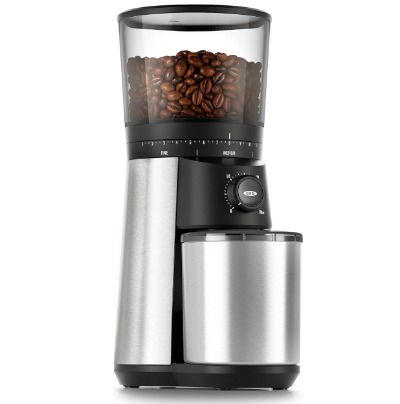
The OXO Brew brings intelligent design to your countertop with its sleek silver finish and user-friendly interface. This grinder combines professional-grade stainless steel conical burrs with thoughtful engineering that prioritizes both performance and convenience.
Stainless steel burrs form the heart of this machine, delivering consistent grinding performance across 15 grind settings. The range covers everything from ultra-fine espresso to coarse French press, with clearly marked indicators that help you find your preferred texture quickly. The burrs crush beans uniformly, ensuring even extraction regardless of your brewing method.
The one-touch automatic operation streamlines your morning routine. Simply select your desired number of cups using the intuitive interface, press the button, and walk away. The grinder automatically stops when it has produced the right amount of grounds for your brew. This smart feature eliminates guesswork and prevents waste from over-grinding.
A built-in scale measures the weight of beans before grinding, compensating for variables like bean density and moisture content. This precision ensures you get consistent results every time, even when switching between different coffee origins or roast levels. The hopper holds enough beans for multiple brewing sessions, featuring a UV-blocking tinted container that preserves freshness.
The grounds container features a static-fighting design that minimizes mess. Coffee grounds naturally carry static electricity, causing them to cling to surfaces and scatter across countertops. OXO addresses this issue with smart container engineering that reduces static buildup, keeping your workspace cleaner.
Cleanup remains straightforward thanks to removable components. The hopper, grounds container, and burrs all detach easily for thorough cleaning. Regular maintenance keeps your grinder performing optimally and prevents old coffee residue from affecting fresh batches.
Pros:
- Integrated scale provides consistent grinding results
- One-touch operation simplifies daily use
- Stainless steel burrs deliver professional-quality grinding
- Static-reducing grounds container minimizes mess
- 15 grind settings accommodate various brewing methods
- UV-blocking hopper preserves bean freshness
- Removable parts facilitate easy cleaning
Cons:
- Limited to 15 grind settings compared to some competitors
- Larger footprint requires significant counter space
- Higher price point than basic models
The OXO Brew excels for coffee lovers who value convenience without compromising quality. Its automated features suit busy mornings when you want excellent coffee without complex adjustments. The built-in scale eliminates another piece of equipment from your coffee station, streamlining your setup.
SHARDOR Professional Conical Burr Coffee Grinder
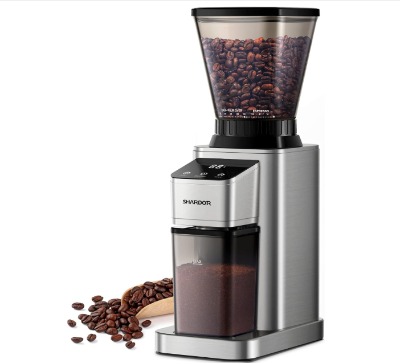
The SHARDOR Professional elevates home grinding with 48 precise grind settings and upgraded anti-static technology. This grinder targets enthusiasts who want granular control over their coffee preparation while maintaining clean, efficient operation.
Forty-eight grind settings provide exceptional versatility across the entire spectrum of brewing methods. The wide range lets you fine-tune your grind with subtle adjustments, perfecting your espresso shots or experimenting with different extraction times for pour-over coffee. Each click of the adjustment dial produces a noticeable difference in particle size, giving you the control needed to optimize any brewing technique.
Stainless steel conical burrs ensure longevity and consistent performance through thousands of grinding sessions. These professional-grade burrs crush beans evenly while generating minimal heat, preserving the aromatic oils that give coffee its complex flavor profile. The durable construction means you won’t need to replace burrs for many years, even with daily use.
The precision timer lets you program exact grinding durations, producing the same amount of coffee every time. You can set the timer anywhere from a few seconds for a single espresso shot to longer periods for brewing larger quantities. This feature brings repeatability to your coffee routine, helping you achieve consistent results.
Anti-static technology represents a significant upgrade in this model. The innovative design dramatically reduces the static electricity that causes grounds to cling to the container and surrounding surfaces. You’ll spend less time cleaning up scattered coffee particles and more time enjoying your brew.
The hopper capacity accommodates a substantial amount of whole beans, reducing the frequency of refills. A tight-sealing lid protects beans from air exposure, maintaining their freshness between grinding sessions. The transparent design lets you monitor bean levels at a glance.
A removable upper burr simplifies maintenance and deep cleaning. You can access the grinding chamber easily, removing any accumulated coffee oils or particles that might affect flavor over time. Regular cleaning becomes a quick task rather than a frustrating chore.
Pros:
- 48 grind settings offer exceptional precision and versatility
- Upgraded anti-static technology minimizes cleanup
- Precision timer enables consistent grinding amounts
- Stainless steel burrs provide professional-quality results
- Large hopper capacity reduces refill frequency
- Removable burr facilitates thorough cleaning
- Suitable for espresso, drip, French press, and more
Cons:
- Learning curve for optimizing settings across different beans
- More expensive than entry-level grinders
- May be excessive for casual coffee drinkers
The SHARDOR Professional serves coffee enthusiasts who enjoy experimenting with different brewing parameters. The extensive grind settings and precision timer make it ideal for those who want to dial in specific recipes and achieve café-quality results at home.
Aromaster Burr Coffee Grinder with 48 Grind Settings
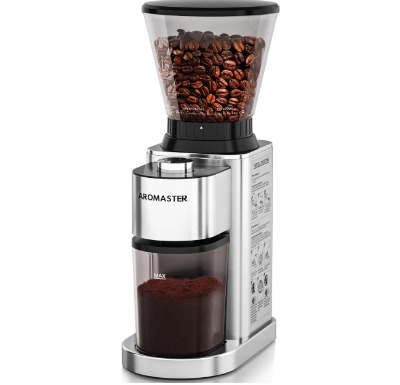
The Aromaster brings professional grinding capabilities to home kitchens with its impressive 48 grind settings and adjustable timer. This stainless steel grinder combines precision engineering with practical features that enhance your daily coffee ritual.
The extensive grind setting range accommodates every popular brewing method with remarkable granularity. From powder-fine espresso grounds to chunky French press particles, the Aromaster handles the full spectrum. The adjustment mechanism operates smoothly, providing tactile feedback as you dial in your preferred texture. This level of control helps you optimize extraction for different coffee origins and roast levels.
Conical burrs made from stainless steel deliver consistent particle distribution across all grind settings. The crushing action produces uniform grounds that extract evenly, eliminating the sour and bitter notes caused by mixed particle sizes. These durable burrs maintain their sharp edges through extended use, ensuring long-term performance.
The forty-second adjustable timer gives you precise control over grinding duration. You can program the exact amount needed for a single cup or a full pot, achieving consistency across brewing sessions. The timer display shows seconds clearly, making it easy to adjust for different quantities or brewing methods.
Anti-static features reduce the mess associated with coffee grinding. The grounds container incorporates design elements that minimize static electricity buildup, keeping more coffee in the container and less on your counter. This attention to practical details makes daily use more pleasant.
Cleaning becomes hassle-free with the included brush and removable components. The hopper, grounds container, and burr assembly all detach for thorough cleaning. The brush reaches into crevices where coffee particles accumulate, maintaining optimal hygiene and flavor purity.
The stainless steel construction provides both durability and a modern aesthetic. The metal body resists wear and damage from daily use while complementing contemporary kitchen designs. The compact footprint fits comfortably on most countertops without dominating the space.
A transparent bean hopper lets you monitor your whole bean inventory at a glance. The generous capacity holds enough beans for multiple brewing sessions, while the airtight seal preserves freshness by limiting oxygen exposure.
Pros:
- 48 grind settings enable precise adjustments
- Adjustable 40-second timer for consistent grinding
- Anti-static design minimizes cleanup
- Stainless steel construction ensures durability
- Removable parts simplify maintenance
- Included cleaning brush reaches tight spaces
- Compact footprint suits various kitchen sizes
- Transparent hopper for easy bean monitoring
Cons:
- Timer limited to 40 seconds maximum
- May require multiple cycles for large quantities
- Settings can feel overwhelming for beginners
The Aromaster suits coffee lovers who appreciate precision and want professional results without excessive complexity. The adjustable timer and extensive grind settings provide the tools needed for experimentation, while the anti-static design keeps your coffee station tidy.
Burr Coffee Grinder, Electric Conical Coffee Bean Grinder With 30 Adjustable Grind Settings
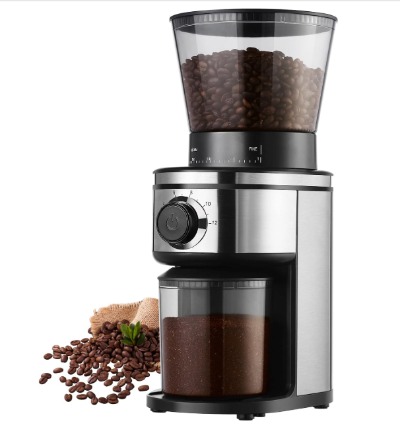
This silver and black grinder strikes a balance between versatility and simplicity with 30 adjustable grind settings and a cup selector that caters to different household sizes. The two-tone design adds visual interest while delivering reliable grinding performance.
Thirty grind settings provide substantial versatility without overwhelming users with excessive options. The range covers fine espresso grounds through coarse French press textures, with meaningful differences between each setting. This approach gives you enough control to optimize your brewing method without getting lost in minute adjustments.
The 2-12 cup selector simplifies quantity measurement, automatically grinding the right amount for your needs. Instead of timing your grind or eyeballing the grounds container, you simply select how many cups you want to brew. The grinder calculates the appropriate grinding duration, delivering consistent portions every time.
Conical burrs crush beans evenly, producing uniform particle sizes that extract properly during brewing. The electric motor drives the burrs at optimal speeds, balancing grinding efficiency with heat management. This design preserves the volatile aromatic compounds that give fresh coffee its enticing aroma and complex flavor.
The dual-color silver and black construction combines stainless steel accents with durable plastic components. This hybrid approach reduces weight and cost while maintaining structural integrity in high-stress areas. The modern styling complements various kitchen aesthetics, from traditional to contemporary.
A removable grounds container collects freshly ground coffee, with markings that indicate fill levels. The transparent design lets you see exactly how much coffee you’ve ground, preventing overflow. The container detaches easily for transfer to your brewing device or storage.
The hopper accommodates enough whole beans for several brewing sessions, featuring a lid that seals tightly to protect freshness. The transparent construction lets you check bean levels without removing the lid, maintaining the protective seal until refilling becomes necessary.
Cleanup requires minimal effort thanks to thoughtfully designed removable components. The hopper and grounds container detach for rinsing, while the burr assembly can be accessed for deeper cleaning when needed. Regular maintenance keeps your grinder operating at peak performance.
Pros:
- 30 grind settings offer good versatility
- Cup selector (2-12 cups) simplifies quantity control
- Conical burrs provide consistent grinding
- Dual-color design adds visual appeal
- Removable components facilitate easy cleaning
- Transparent containers for monitoring levels
- More affordable than premium models
- Suitable for various brewing methods
Cons:
- Fewer grind settings than top-tier models
- Plastic construction in some areas
- Cup selector may not match all brewing preferences exactly
This grinder works well for households with multiple coffee drinkers who brew different quantities throughout the day. The cup selector eliminates guesswork, while the 30 grind settings provide enough range for common brewing methods without unnecessary complexity.
Conical Burr Coffee Grinder, Electric Coffee Bean Grinder for Precise Grinding
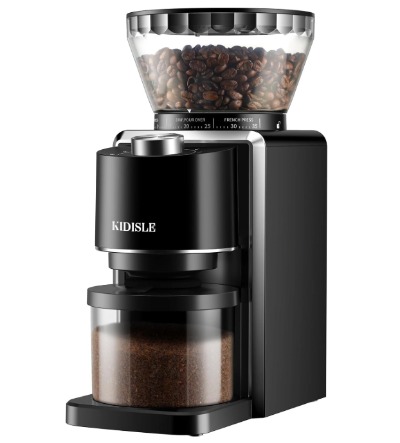
The black electric conical burr grinder delivers precise grinding with 35 settings and a convenient cup selector. Anti-static design features make this grinder a practical choice for home use, reducing the cleanup hassles that often accompany coffee grinding.
Thirty-five grind settings provide detailed control over particle size, accommodating preferences from fine espresso to coarse cold brew. The adjustment mechanism moves smoothly through the range, with distinct clicks that confirm each setting change. This tactile feedback helps you return to favorite settings reliably.
The 2-12 cup selector streamlines your grinding routine by automatically determining the appropriate amount for your chosen quantity. This feature proves especially valuable when you’re brewing different amounts throughout the day or serving multiple people. The grinder adjusts the grinding duration based on your selection, delivering consistent results.
Anti-static design elements combat the natural tendency of coffee grounds to develop static electricity during grinding. The grounds container and exit chute incorporate materials and geometries that minimize static buildup, keeping grounds where they belong instead of scattered across your counter. This practical feature makes daily use more enjoyable.
Conical burrs create uniform particle distributions through their efficient crushing action. The gradual reduction in particle size as beans move through the burr set produces consistent grounds without generating excessive heat. This temperature management preserves the delicate flavor compounds that dissipate when exposed to high heat.
The electric motor provides reliable power while operating at reasonable noise levels. The motor speed balances grinding efficiency with heat generation, ensuring your beans don’t get cooked during the grinding process. The consistent motor performance maintains grinding quality across different bean varieties and densities.
Black housing provides a neutral aesthetic that integrates seamlessly into various kitchen styles. The compact design occupies minimal counter space while maintaining stability during operation. The non-slip base keeps the grinder firmly planted, preventing movement that could cause uneven grinding or spills.
A transparent bean hopper offers visibility into your whole bean supply, helping you plan refills before running out. The hopper capacity handles multiple brewing sessions, while the secure lid prevents moisture and air from degrading bean quality.
The grounds container attaches securely during grinding and detaches easily when you’re ready to brew. Clear markings help you gauge the amount of ground coffee, preventing overfilling. The container size accommodates the maximum cup setting, eliminating the need to empty it mid-grind for larger batches.
Pros:
- 35 grind settings enable precise adjustments
- Cup selector (2-12) automates quantity control
- Anti-static design reduces cleanup
- Conical burrs ensure consistent grinding
- Compact black design fits various kitchen styles
- Transparent hopper for monitoring bean levels
- Removable grounds container for easy transfer
- Reliable motor performance across bean varieties
Cons:
- Middle-tier grind setting count compared to premium models
- Some plastic components in construction
- May lack advanced features found in higher-end grinders
This grinder suits practical coffee enthusiasts who want reliable performance and convenient features without excessive complexity. The anti-static design appeals to anyone tired of chasing scattered grounds, while the 35 settings provide enough versatility for common brewing methods.
How to Choose Your Ideal Conical Burr Grinder
Your brewing method shapes the grinder requirements more than any other factor. Espresso demands exceptional precision because small variations in particle size dramatically affect extraction pressure and shot timing. Look for grinders with at least 30-40 settings if you plan to pull espresso shots regularly. The ability to make micro-adjustments helps you dial in the perfect grind as you switch between different beans or adjust for changing humidity levels.
Drip coffee and pour-over methods require medium grounds with good consistency but tolerate slightly more variation than espresso. Grinders with 15-30 settings typically provide adequate control for these brewing styles. The key is achieving uniform particle size rather than having endless adjustment options.
French press and cold brew need coarse grounds that separate easily from the brewed coffee. Most conical burr grinders handle coarse grinding well, though some produce more consistent large particles than others. Check reviews specifically mentioning French press performance if this represents your primary brewing method.
Grind settings count indicates versatility but doesn’t guarantee quality. A grinder with 48 settings might offer superior control, but only if the burrs produce consistent results across the entire range. Some grinders with fewer settings actually deliver better grinding quality than models with more options. Focus on burr quality and grinder reviews rather than settings count alone.
Timer functions bring convenience and consistency to your grinding routine. Basic models require you to hold a button or monitor the grinding manually, while automatic timers let you set the duration and walk away. The cup selector feature simplifies this further by calculating the appropriate grinding time based on your desired quantity. Consider how these features fit your morning routine and whether the convenience justifies any price difference.
Anti-static technology significantly impacts your daily experience. Coffee grounds develop static electricity during grinding, causing them to cling to containers, scatter across counters, and generally create messes. Grinders with anti-static designs use special materials and container shapes to minimize this effect. If you value a clean coffee station, prioritize models that specifically address static issues.
Burr material affects durability and grinding quality. Stainless steel burrs resist wear and maintain their sharp edges longer than ceramic alternatives. They also handle oily beans better, as the oils don’t accumulate and gum up the works as easily. Ceramic burrs cost less but may require replacement sooner, especially with daily use.
Hopper capacity determines how often you need to refill whole beans. Larger hoppers suit households with multiple coffee drinkers or people who prefer to fill once and grind multiple times throughout the week. Smaller hoppers work fine if you only grind for one or two cups daily. Consider whether you want to store beans in the hopper or prefer to keep them in a separate airtight container and add just what you need.
Noise level matters if you grind early in the morning or late at night when others are sleeping. Conical burr grinders generally run quieter than blade grinders, but some models produce less noise than others. The motor speed and quality of construction both influence noise output. Read reviews mentioning noise if this concerns you.
Cleaning ease impacts long-term satisfaction with any grinder. Models with removable burrs and detachable components make thorough cleaning straightforward. Some grinders require disassembly for deep cleaning, while others let you access critical areas easily. Regular cleaning prevents old coffee oils from turning rancid and affecting the flavor of fresh grounds.
Budget considerations extend beyond the initial purchase price. Higher-quality grinders with durable burrs and solid construction provide better value over time, even if they cost more upfront. A budget grinder that needs replacement after a few months actually costs more than a mid-range model that serves you for several years. Balance your immediate budget constraints with long-term value.
Counter space availability influences size decisions. Some grinders feature compact footprints that fit comfortably in tight spaces, while others require more real estate. Measure your available counter area before committing to a larger model, especially if you already have other coffee equipment competing for space.
Maintenance Tips for Longevity
Regular cleaning preserves grinding performance and coffee flavor. Old coffee particles and oils accumulate in the grinding chamber and burrs, eventually affecting taste and efficiency. Clean your grinder thoroughly every few weeks, or more frequently if you grind dark, oily beans that leave more residue.
Start by unplugging the grinder and removing any remaining whole beans from the hopper. Disassemble the removable components according to your model’s instructions, typically including the hopper, grounds container, and sometimes the upper burr. Brush away loose coffee particles from all surfaces using a soft-bristled brush or the cleaning brush included with your grinder.
Wipe accessible surfaces with a slightly damp cloth, taking care not to get moisture into the motor housing or electrical components. Avoid soaking plastic or metal parts in water unless your manual specifically allows it. Dry all components completely before reassembling to prevent moisture-related issues.
The burrs themselves require periodic deep cleaning to remove accumulated oils. Some coffee enthusiasts run dedicated grinder cleaning tablets through their machines, which absorb oils and remove residue. These tablets work by grinding through just like coffee beans, carrying away buildup without requiring disassembly. Follow the tablet manufacturer’s instructions for best results.
Alternatively, you can remove the burrs completely for manual cleaning. Soak them briefly in warm soapy water if your model permits, then scrub gently with a brush to remove stubborn residue. Rinse thoroughly and dry completely before reinstalling. Check your grinder’s manual first, as some manufacturers recommend dry cleaning only.
Burr alignment affects grinding consistency. The burrs need to sit parallel to each other for uniform particle size. If you notice increasingly uneven grounds or the grinder sounds different, check that the burrs are properly seated after cleaning or reassembly. Consult your manual for specific alignment procedures if needed.
Inspect the burrs periodically for wear. Stainless steel burrs last thousands of pounds of coffee, but they eventually dull. Signs of worn burrs include decreased grinding efficiency, more dust in the grounds, or increasingly uneven particle size. Replace burrs according to your manufacturer’s recommendations or when performance noticeably declines.
Store whole beans properly to reduce grinder maintenance needs. Keep beans in an airtight container away from light, heat, and moisture. This practice preserves bean freshness and reduces the amount of chaff and debris that enters your grinder. Fresh beans also contain fewer loose particles that accumulate in the grinding chamber.
Avoid grinding flavored coffee beans in your regular grinder. The oils and flavorings used in these beans coat the burrs and grinding chamber, leaving residue that affects the taste of subsequent batches. If you enjoy both regular and flavored coffee, consider dedicating a separate grinder to flavored beans or cleaning extremely thoroughly between uses.
Run the grinder empty for a few seconds after removing beans to clear residual grounds from the chamber. This practice prevents stale coffee from mixing with fresh grinds and reduces buildup inside the grinder. Some users keep a small amount of cheap beans specifically for purging the grinder between different coffees.
Check for loose screws or components periodically. The vibration from regular use can gradually loosen fasteners. A quick inspection every few months prevents small issues from becoming bigger problems. Tighten any loose screws carefully, avoiding over-tightening that might strip threads or crack plastic components.
Maximizing Your Coffee Experience
Bean quality determines the ceiling for your coffee’s potential. The finest grinder in the world can’t compensate for stale, low-quality beans. Source fresh, whole beans from reputable roasters who provide roast dates on the packaging. Coffee reaches peak flavor a few days after roasting and maintains quality for several weeks when stored properly.
Grind immediately before brewing to capture maximum flavor and aroma. Whole beans protect the coffee’s essential oils and aromatic compounds from oxidation. Once ground, coffee begins losing these volatile elements rapidly. The difference in flavor between freshly ground coffee and pre-ground options becomes immediately apparent when you taste them side by side.
Match your grind size to your brewing method for optimal extraction. Each brewing technique requires specific particle sizes to achieve proper extraction timing. Espresso uses fine grounds that create resistance, slowing water flow for intense extraction. Pour-over methods need medium grounds that allow water to percolate at the right pace. French press uses coarse grounds that separate easily from the brewed coffee.
Experiment with minor grind adjustments to fine-tune your results. If your coffee tastes sour or weak, try grinding slightly finer to increase extraction. If it tastes bitter or harsh, coarsen the grind to reduce extraction. These small tweaks help you optimize flavor for your specific beans, water, and brewing equipment.
Water quality affects coffee flavor as much as beans and grinding. Use filtered water free from chlorine and other impurities that mask subtle coffee flavors. The ideal water temperature for most brewing methods falls between 195-205°F, hot enough to extract flavors without scalding the grounds.
Measure your coffee and water by weight rather than volume for consistency. Different beans have different densities, so a tablespoon of one coffee might weigh significantly more or less than another. A simple digital scale ensures you use the same coffee-to-water ratio every time, making it easier to replicate successful brews.
The standard ratio sits around 1:16 or 1:17 coffee to water by weight, though personal preferences vary. Start with these ratios and adjust based on your taste preferences and brewing method. Some techniques benefit from stronger ratios, while others work better with more diluted brews.
Pre-wet your grounds for most brewing methods to achieve even extraction. This step, called blooming, allows carbon dioxide trapped in the beans to escape. Pour just enough hot water to saturate the grounds, wait 30-45 seconds, then continue with your brewing process. Blooming prevents channeling and ensures water contacts all grounds evenly.
Store whole beans in an airtight container at room temperature away from light and heat sources. Avoid refrigerating or freezing beans unless you’re storing them for extended periods, as condensation can damage them. Use beans within a few weeks of the roast date for best results.
Clean your brewing equipment regularly to prevent old coffee oils from contaminating fresh brews. Residue from previous brewing sessions introduces stale, rancid flavors that overpower the fresh coffee. A quick rinse after each use and periodic deep cleaning maintain equipment in optimal condition.
Track your brewing parameters when you achieve exceptional results. Note the coffee origin, grind setting, coffee-to-water ratio, and any other variables that contributed to the success. This record helps you replicate excellent brews and provides a starting point when trying new beans.
Taste your coffee mindfully to develop your palate. Pay attention to the flavors you perceive at different temperatures as the coffee cools. Notice the body, acidity, sweetness, and any specific tasting notes. This awareness helps you make informed adjustments to your grinding and brewing techniques.
Common Grinding Mistakes to Avoid
Grinding too far in advance robs your coffee of its vibrant flavors and enticing aromas. Many coffee lovers grind an entire bag of beans at once for convenience, not realizing how quickly ground coffee deteriorates. The increased surface area exposed to oxygen accelerates oxidation, causing the grounds to lose their aromatic compounds within hours. Grind only what you need for each brewing session to preserve maximum flavor.
Using the wrong grind size for your brewing method leads to poor extraction and disappointing results. Grounds that are too fine for your brewing technique will over-extract, producing bitter, harsh-tasting coffee. Overly coarse grounds under-extract, yielding weak, sour coffee that tastes watery. Match your grind size to your brewing method and adjust based on the results you’re achieving.
Inconsistent grind size causes uneven extraction, where some particles over-extract while others under-extract. This produces coffee that tastes simultaneously bitter and sour, with muddled flavors that lack clarity. Invest in a quality conical burr grinder rather than a blade grinder to ensure uniform particle size.
Neglecting grinder maintenance allows old coffee oils and particles to build up, contaminating fresh grounds with stale, rancid flavors. These accumulated oils turn bitter over time, affecting every batch you grind. Clean your grinder regularly to maintain pure flavor and optimal performance.
Running the grinder at high speeds or for extended periods generates excessive heat that can actually cook your beans slightly during grinding. This thermal damage affects the delicate aromatic compounds that give coffee its complexity. Quality conical burr grinders operate at appropriate speeds to minimize heat generation, but grinding in short bursts with breaks between them helps if you’re processing large quantities.
Ignoring burr alignment issues leads to increasingly uneven grinding over time. If the burrs sit crooked or loose, they won’t create uniform particle sizes. Check that your burrs are properly seated and aligned, especially after cleaning or if you notice changes in grinding quality.
Using poor-quality or stale beans wastes the capabilities of your grinder. Even the finest grinding equipment can’t revive flat, lifeless beans. Start with fresh, high-quality whole beans to give your grinder something worth working with.
Failing to adjust your grind size when switching between different beans can produce inconsistent results. Different origins, roast levels, and bean ages all behave differently during grinding and extraction. What works perfectly for one coffee might need adjustment for another. Be prepared to make small changes to your grind setting when trying new beans.
Overfilling the bean hopper on some models can cause beans to stale before you use them. While the convenience of a full hopper appeals to many users, coffee begins losing freshness as soon as the bag opens. Fill your hopper with only what you’ll use within a few days, storing the rest in an airtight container.
Grinding at inconsistent settings from day to day makes it difficult to achieve reliable results. Once you find a grind setting that works well for your preferred brewing method and beans, stick with it until you have a reason to change. This consistency helps you identify when other variables in your process need adjustment.
The Science Behind Perfect Extraction
Extraction refers to the process of dissolving coffee solids into water during brewing. Proper extraction yields a balanced cup that highlights the coffee’s natural sweetness and complexity. Under-extraction produces sour, thin coffee with little body, while over-extraction creates bitter, harsh flavors that overpower subtler notes.
Particle size controls extraction by determining how easily water can access the coffee’s soluble compounds. Smaller particles have more surface area relative to their volume, allowing water to extract flavors more quickly. Larger particles have less relative surface area, slowing extraction. The ideal particle size depends on how long the water contacts the grounds during your brewing method.
Espresso brewing forces hot water through tightly packed fine grounds under pressure. The entire extraction process takes only 25-30 seconds, requiring very fine grounds to achieve sufficient extraction in this brief contact time. The high pressure helps overcome the resistance created by fine particles.
Pour-over brewing lets water flow through medium grounds by gravity alone. The total contact time spans several minutes, allowing adequate extraction without requiring the ultra-fine grind of espresso. The water flows through the grounds at a controlled pace, dissolving soluble compounds gradually.
French press brewing steeps coarse grounds in water for several minutes before separation. The extended contact time compensates for the large particle size, achieving full extraction despite the limited surface area. Coarse grounds make it easy to separate the brewed coffee from the grounds using the press’s filter screen.
Cold brew extracts coffee compounds slowly over many hours using room temperature or cold water. The extended steeping time and coarse grind size produce a smooth, low-acid concentrate. The cold water temperature slows extraction, preventing harsh flavors despite the long contact time.
The coffee brewing control chart, developed by the Specialty Coffee Association, maps extraction yield against brew strength to identify optimal brewing parameters. The sweet spot falls within specific ranges that balance proper extraction with appropriate concentration. Understanding these principles helps you adjust your grinding and brewing for better results.
Water temperature affects extraction speed and the types of compounds dissolved. Hotter water extracts faster and pulls out more compounds, including some that taste bitter. Cooler water extracts more slowly and selectively, leaving behind certain bitter compounds. Most brewing methods work best with water between 195-205°F.
Agitation during brewing influences extraction by ensuring water contacts all grounds evenly. Stirring or turbulence helps prevent channeling, where water finds easy paths through the coffee bed and leaves some grounds under-extracted. The blooming phase at the start of brewing provides gentle agitation as carbon dioxide escapes.
Coffee contains over 1,000 identifiable aromatic compounds that contribute to its complex flavor profile. These compounds extract at different rates and temperatures. Proper grinding and brewing parameters help you capture the desirable compounds while minimizing extraction of harsh, bitter elements.
The dissolved solids in your final cup include acids, sugars, oils, and other flavor compounds pulled from the ground coffee. The concentration of these solids determines the coffee’s body and intensity. Proper extraction yields around 18-22% of the coffee’s weight as dissolved solids, though the ideal percentage varies by brewing method and personal preference.
Finding Your Perfect Match
Your daily coffee habits should guide your grinder selection more than technical specifications. Someone who pulls multiple espresso shots each day needs different features than someone who brews a single pot of drip coffee each morning. Consider how you actually use coffee rather than how you imagine you might use it.
Budget-conscious buyers can find excellent value in the 30-35 setting range. These grinders provide sufficient versatility for most brewing methods without the premium price of models with 48+ settings. The key is choosing a grinder with quality burrs rather than focusing solely on settings count.
Espresso enthusiasts should prioritize fine-grinding performance and adjustment precision. Models with 40+ settings make it easier to dial in espresso, as small adjustments significantly impact shot quality. Look for grinders specifically praised for espresso performance in user reviews.
Versatile brewers who use multiple methods need a grinder that performs well across the entire grind range. Some grinders excel at fine grinding but struggle with coarse textures, or vice versa. Reviews mentioning multiple brewing methods provide insight into all-around performance.
Busy households benefit from automated features like timers and cup selectors. These conveniences streamline morning routines when multiple people need coffee quickly. The time savings add up over weeks and months of daily use.
Minimalist coffee setups pair well with compact grinders that have smaller footprints. If you’re working with limited counter space or prefer uncluttered surfaces, measure your available area and check grinder dimensions before purchasing.
Serious coffee hobbyists who enjoy experimentation will appreciate the granular control offered by 48-setting models. The ability to make minute adjustments helps you optimize extraction as you explore different beans and brewing techniques.
People sensitive to mess should prioritize anti-static designs. The frustration of constantly wiping up scattered grounds outweighs most other considerations for these users. Models specifically addressing static issues provide noticeably cleaner operation.
Those new to grinding might prefer simpler models with fewer settings initially. Starting with a straightforward grinder helps you learn the fundamentals before moving to equipment with more complex controls. You can always upgrade as your knowledge and preferences develop.
Multi-coffee-drinker households need grinders that accommodate varying quantities efficiently. Cup selectors or programmable timers help different family members grind the right amount without waste or complicated calculations.
Conclusion: Grinding Toward Better Coffee
The grinders reviewed here represent excellent options across different price points and feature sets. The OXO Brew delivers premium convenience with its integrated scale and automatic operation. The SHARDOR Professional provides maximum versatility with 48 settings and anti-static technology. The Aromaster balances precision and practicality with its adjustable timer. The 30-setting silver and black model offers straightforward operation with helpful cup selection. The 35-setting black grinder combines practical features with anti-static design.
Your perfect grinder depends on your specific needs, brewing preferences, and daily habits. Espresso lovers need fine-grind precision. Multi-method brewers want versatility across the grind range. Busy professionals value automation and convenience. Neat-freaks prioritize anti-static features. Each grinder in this roundup excels in different areas.
The investment in a quality conical burr grinder transforms your coffee experience immediately. The difference between freshly ground beans and pre-ground alternatives becomes obvious from the first cup. The aroma alone justifies the purchase, and the flavor improvements seal the deal.
Start with fresh, whole beans and grind immediately before brewing. Match your grind size to your brewing method and make small adjustments based on your results. Clean your grinder regularly to maintain optimal performance. These simple practices unlock the full potential of both your beans and your grinder.
Coffee represents one of life’s affordable luxuries. The ritual of grinding beans and brewing a perfect cup provides daily pleasure and satisfaction. A reliable conical burr grinder forms the foundation of this ritual, enabling you to extract maximum flavor from quality beans.
The grinders featured in this guide serve different needs and budgets while sharing a commitment to quality grinding performance. Any of these models will significantly improve your coffee compared to blade grinders or pre-ground options. Choose the one that matches your priorities and start enjoying the difference that freshly ground coffee makes.
Your mornings deserve better than mediocre coffee. These conical burr grinders give you the tools to create café-quality brews in your own kitchen. The consistent particle size, preserved aromatics, and optimized extraction they provide elevate every cup. Invest in one of these grinders and taste what you’ve been missing.

Hi, I’m Mary, the founder of KitchenClue.com. I’m deeply passionate about everything that makes a kitchen smarter, easier, and more enjoyable. I share hands-on insights and practical expertise on kitchen gear that truly helps in daily cooking. Along with my dedicated research team, we study products carefully, and our writers create honest, well-tested reviews using trusted, authentic sources—so you can choose kitchen tools with total confidence.