Le Creuset Vs All Clad Stainless Steel: Best Choice
For most U.S. kitchens, Le Creuset is the better choice for slow cooking, baking, and heat retention, while All-Clad stainless steel is better for fast searing, sautéing, pan sauces, and everyday versatility. They are not direct substitutes: Le Creuset mainly uses enameled cast iron, while All-Clad stainless steel cookware uses bonded metal layers.
Choose Le Creuset if you want a heavy pot that holds heat and moves from the stovetop to the oven or table. Choose All-Clad stainless steel if you want lighter pans that heat quickly, respond fast to temperature changes, and develop strong browning.
This comparison focuses on cookware commonly sold and used in the United States, including gas, electric, glass, and induction cooktops.

Le Creuset and All-Clad: What Is the Main Difference?
The main difference is the cooking material. Le Creuset enameled cast iron is thick, heavy, and slow to change temperature. All-Clad stainless steel is lighter, faster to heat, and more responsive.
Le Creuset is best known for enameled cast-iron Dutch ovens, braisers, skillets, and grill pans. Its cast-iron body stores heat well. The enamel coating creates a smooth cooking surface and helps protect the iron from rust.
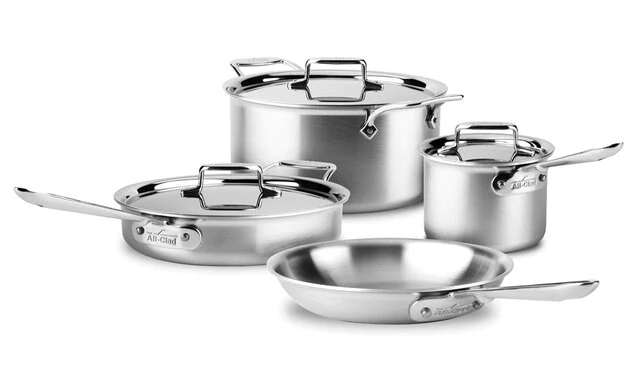
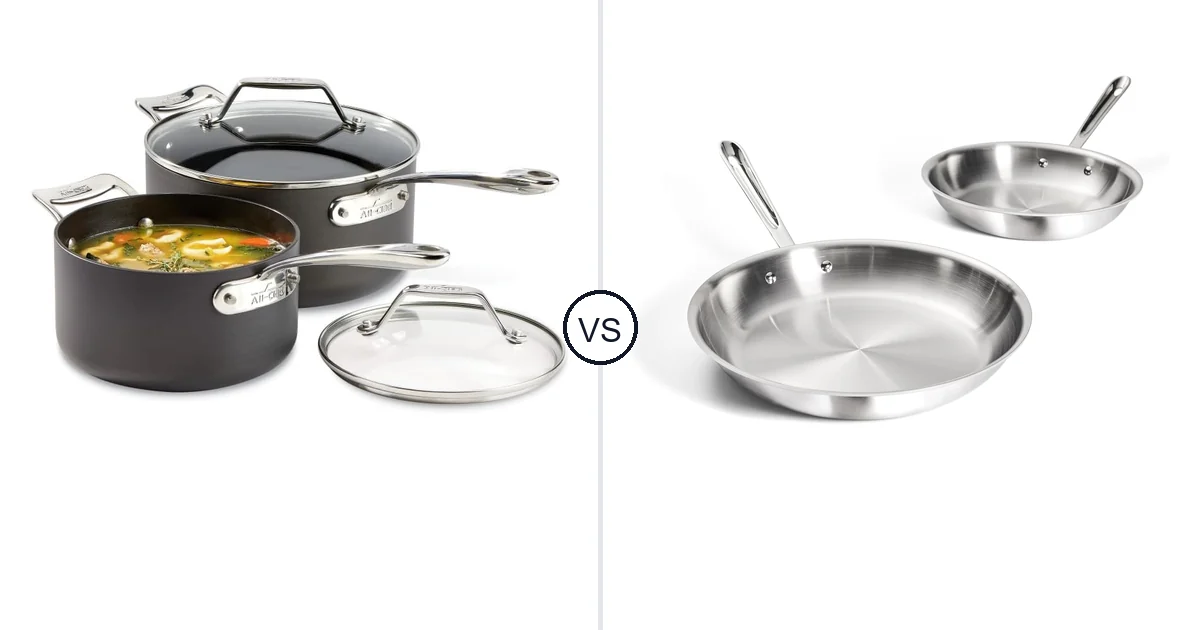
All-Clad makes several cookware lines. Its stainless-steel collections commonly use a bonded design, with stainless steel on the cooking surface and an aluminum core or aluminum layers for heat spread. The exact construction differs by collection, so buyers should check the specific product line rather than assume every All-Clad pan performs the same way.
| Feature | Le Creuset enameled cast iron | All-Clad stainless steel |
|---|---|---|
| Main strength | Heat retention | Fast, even heating |
| Best for | Braises, stews, bread, roasting | Searing, sautéing, sauces |
| Weight | Heavy | Moderate to light, depending on pan |
| Temperature response | Slow | Fast |
| Cooking surface | Enamel | Stainless steel |
| Seasoning needed | No for enamel | No |
| Browning | Strong after preheating | Strong after preheating |
| Oven use | Model and knob dependent | Model and lid dependent |
| Induction use | Usually compatible; check model | Many lines are compatible; check model |
| Common drawback | Weight and slower heating | Food can stick without proper technique |
These differences matter more than brand reputation. A Dutch oven and a frying pan solve different cooking problems, even when both come from premium cookware brands.

How the Cooking Performance Compares
Heat retention
Le Creuset has the advantage when a recipe needs steady heat. Cast iron absorbs and holds a large amount of heat. This helps when you add cold meat, stock, or vegetables to a hot pot.
That stored heat is useful for:
- Beef stew
- Chili
- Beans
- Braised short ribs
- Tomato-based sauces
- Deep frying
- No-knead bread
- Slow oven cooking
The trade-off is slower control. If an enameled cast-iron pot becomes too hot, it takes longer to cool. Use moderate heat more often than high heat.
Heat response
All-Clad stainless steel generally responds more quickly when you raise or lower the burner. Its aluminum core helps move heat across the pan, while stainless steel provides a durable cooking surface.
This makes All-Clad useful for:
- Eggs and omelets
- Pan-seared fish
- Chicken breasts
- Stir-fried vegetables
- Steak
- Pan sauces
- Deglazing
- Quick reductions
A stainless-steel pan still needs preheating. If food goes into a cold pan, it may stick or cook unevenly. If the pan is overheated, oil can smoke and delicate foods may burn.
Searing and browning
Both materials can brown food well. The result depends on pan size, heat, moisture, and crowding.
Le Creuset holds heat well when you add food. This can help when searing several pieces in batches. All-Clad heats faster and gives you quicker control between searing and sauce-making.
For either pan, pat meat dry, preheat the cookware, use enough cooking fat, and avoid crowding. Browning is a cooking method, not simply a brand feature.

Which Brand Is Better for Different Cooking Tasks?
The better option depends on what you cook most often.
| Cooking task | Better fit | Reason |
|---|---|---|
| Long braises | Le Creuset | Holds heat and works well with covered oven cooking |
| Soups and stews | Le Creuset | Large, stable cooking vessel with strong heat retention |
| Searing steak | Either | Both can brown well with proper preheating |
| Pan sauces | All-Clad | Stainless steel supports deglazing and fast heat changes |
| Eggs | All-Clad with technique | Lighter and easier to control, though sticking is possible |
| Baking bread | Le Creuset Dutch oven | Heavy lid helps retain heat and moisture |
| Pasta water | All-Clad stockpot | Usually lighter and quicker to handle |
| One-pan chicken | Either | Choose based on weight and sauce needs |
| Serving at the table | Le Creuset | Enamel and design suit table service |
| Frequent lifting | All-Clad | Usually easier on the wrists |
Le Creuset is the stronger choice for cooks who make meals that simmer for a long time. Its Dutch ovens also move easily from the stovetop to the oven, provided the specific lid, knob, and temperature limits are followed.
All-Clad is more useful for cooks who make many meals in a skillet. Stainless steel is especially helpful when you want fond—the browned bits left in a pan—to build a sauce.

Le Creuset vs All-Clad for Everyday Use
All-Clad is usually easier for quick daily cooking. Le Creuset is often more satisfying for planned meals that cook slowly.
An All-Clad skillet can handle breakfast, lunch, and dinner with less lifting. It heats quickly and can go from searing to sauce-making without changing pans. Its stainless surface also does not depend on a coating that can wear away.
Le Creuset cookware is simple to use once it is hot, but its weight changes the experience. A large Dutch oven filled with soup can be difficult to lift safely. Use both hands and keep the handles dry.
The enamel surface also deserves care. Do not drop the pot, strike the rim with metal tools, or place a hot piece directly into cold water. Sudden temperature changes can stress the enamel.
For a small household, a single All-Clad skillet may see more use than a large Dutch oven. For a household that makes soups, stews, bread, or braises each week, a Le Creuset Dutch oven may earn its space.
Cleaning and Maintenance
Neither cookware type needs seasoning when used in its standard form, but each has different care needs.
Cleaning Le Creuset
Let the cookware cool before washing it. Add warm water and mild dish soap, then use a soft sponge or nylon brush.
For stuck food, soak the pan or simmer water with a small amount of mild detergent. Avoid steel wool and harsh scouring products that can dull or damage the enamel.
Le Creuset states that many of its products are dishwasher safe, but hand washing can help preserve the finish and reduce wear on exterior enamel. Always follow the care instructions for the exact piece.
Cleaning All-Clad stainless steel
Stainless steel can develop brown, blue, or rainbow-colored marks. These are often cosmetic and may result from heat, minerals, or cooking residue.
Soak the pan first when food is stuck. A nonabrasive cleaner made for stainless steel can help with discoloration. Do not pour cold water into a very hot pan, since thermal shock can distort cookware or damage surfaces.
Some All-Clad stainless-steel products are dishwasher safe, but handles, lids, bonded bases, and finishes can differ. Check the product instructions before using a dishwasher.
A practical care rule
For both brands, avoid:
- Heating an empty pan for a long time
- Using high heat when medium heat is enough
- Cutting food inside the cookware
- Dropping heavy cookware
- Moving hot cookware with wet towels
- Using cookware with a damaged cooking surface

Durability and Longevity
Both brands can last for many years when used within their care limits, but they fail in different ways.
All-Clad stainless steel does not have a traditional nonstick coating. Small scratches usually affect appearance more than basic function. Severe warping, a loose handle, or a separated bonded layer is a different matter and should be addressed through the manufacturer’s support process.
Le Creuset enamel does not require seasoning, but the enamel can chip if the cookware is dropped or struck. A chip inside the cooking area is more serious than a small exterior mark because it can expand with repeated use.
Do not use cookware if you see a sharp, loose, or spreading chip on the cooking surface. Contact the manufacturer for model-specific guidance. Do not attempt to repair enamel at home with glue, paint, or unapproved coating.
Durability also includes practical durability. A pan that is too heavy to lift safely may be a poor fit, even if its materials are long-lasting.
Which Is Safer to Use?
Both cookware types can be safe when used as directed. The main risks involve heat, weight, handles, and damaged surfaces rather than the brand name.
Follow these precautions:
- Use oven mitts when moving either type of hot cookware.
- Keep handles away from the front edge of the stove.
- Use low or medium heat unless a recipe requires more.
- Check oven limits for the exact lid, knob, and pan.
- Never leave hot oil unattended.
- Let cookware cool before washing.
- Inspect enamel for chips and stainless steel for structural damage.
Cast iron stays hot longer, including its handles. A handle can look cool while remaining hot enough to burn skin.
Stainless steel can also become extremely hot. Its faster heat response does not make it burn-proof. Induction cooktops may heat cookware quickly, so increase temperature in small steps.

Cost and Value
The purchase price varies by size, collection, retailer, and sales period. A direct price comparison should use similar pieces, such as a 10-inch skillet against a 10-inch skillet or a 5.5-quart Dutch oven against a similar-capacity pot.
A Le Creuset Dutch oven may cost more than a basic stainless-steel pot because it combines a thick cast-iron body, enamel, finishing, and a heavy lid. All-Clad stainless steel also carries a premium because of its bonded construction and finishing.
Value depends on use:
- Le Creuset offers stronger value when you regularly braise, bake bread, make stew, or serve food from the pot.
- All-Clad offers stronger value when you cook quick meals in a skillet and want one pan for searing, sautéing, and pan sauces.
- A less expensive alternative may be enough if you rarely use cast iron or stainless steel and mainly cook with nonstick cookware.
Do not buy either brand only for its name. Match the shape, capacity, weight, and cooking method to your routine.

Le Creuset or All-Clad: Which Should You Buy?
Choose Le Creuset when:
- You want a Dutch oven for stews and braises.
- You bake bread in a covered pot.
- You value strong heat retention.
- You like cooking that moves from oven to table.
- You do not mind heavy cookware.
- You want an enameled surface that does not need seasoning.
Choose All-Clad stainless steel when:
- You want a versatile everyday skillet.
- You cook many meals in under 30 minutes.
- You make pan sauces and reductions.
- You want fast changes in cooking temperature.
- You prefer lighter cookware.
- You are comfortable learning stainless-steel preheating technique.
If your budget allows only one piece, an All-Clad stainless-steel skillet is often the more flexible first purchase for varied daily cooking. If your main goal is soup, stew, braising, or bread, a Le Creuset Dutch oven is the more suitable tool.
For many cooks, the best answer is not either-or. A stainless-steel skillet and an enameled cast-iron Dutch oven cover different jobs with little overlap.

Common Mistakes to Avoid
Using high heat with Le Creuset
High heat is rarely needed with enameled cast iron. Excess heat can scorch food and stress the enamel. Start lower and increase the heat only when needed.
Treating stainless steel like nonstick cookware
Food may stick if the pan is cold, the surface is wet, or the food is moved too soon. Preheat the pan, add oil, and let the food form a crust before turning it.
Comparing cookware by brand alone
The shape and size may matter more than the logo. A wide stainless skillet and a deep cast-iron Dutch oven are designed for different tasks.
Ignoring full-pan weight
A Dutch oven becomes much heavier when filled with liquid. Test whether you can lift and pour safely before choosing a very large model.
Assuming every piece has the same oven or dishwasher limit
Cookware lines use different lids, knobs, handles, and finishes. Read the instructions for the exact model.

Frequently Asked Questions
Is Le Creuset better than All-Clad?
Neither is better for every task. Le Creuset is better for heat retention, braising, stews, and covered oven cooking. All-Clad stainless steel is better for quick heating, sautéing, searing, and pan sauces.
Can Le Creuset replace All-Clad stainless steel?
Only for some tasks. Le Creuset can sear and sauté, but its weight and slower temperature response make it less convenient for some daily skillet work. It cannot replace the lighter handling and fast control of stainless steel in every kitchen.
Can All-Clad replace a Le Creuset Dutch oven?
A large All-Clad stainless pot can cook soups and stews, but it will not retain heat in the same way as thick cast iron. It may also behave differently for covered braises and high-heat bread baking.
Is stainless steel harder to clean than enameled cast iron?
Stainless steel may need more technique because browned food can stick. Enameled cast iron is often easier to soak and clean, but chipped enamel requires more concern than ordinary stainless discoloration.
Are both brands safe for induction cooktops?
Many Le Creuset cast-iron pieces and All-Clad stainless-steel pieces work on induction. Confirm compatibility for the exact product, especially when buying a specialty pan or a piece from an older collection.
Which is better for a beginner?
All-Clad stainless steel can be a good beginner pan if the cook learns to preheat it and control temperature. Le Creuset can be easier for one-pot meals, but its weight and heat retention require careful handling.

Final Recommendation
Buy Le Creuset for slow cooking and heat retention. Buy All-Clad stainless steel for fast, flexible stovetop cooking.
Le Creuset is the better match for Dutch-oven cooking, braises, stews, bread, and meals that benefit from steady heat. All-Clad stainless steel is the better match for searing, sautéing, sauces, and everyday skillet use.
Before buying, choose the cooking task first. Then check the exact piece’s capacity, weight, cooktop compatibility, oven limit, lid material, and care instructions. That approach will produce a better result than choosing by brand prestige alone.
Manufacturer information

Hi, I’m Mary, the founder of KitchenClue.com. I’m deeply passionate about everything that makes a kitchen smarter, easier, and more enjoyable. I share hands-on insights and practical expertise on kitchen gear that truly helps in daily cooking. Along with my dedicated research team, we study products carefully, and our writers create honest, well-tested reviews using trusted, authentic sources—so you can choose kitchen tools with total confidence.