Best Way To Clean Le Creuset: Safe, Easy Cleaning Tips
The best way to clean Le Creuset cookware is to let it cool, wash it by hand with warm water and mild dish soap, and use a soft sponge or nylon brush. For stuck food, soak the pan first. For dark marks or stains, use a gentle baking soda paste. Avoid metal scrubbers, harsh cleaners, and sudden changes in temperature.
This guide is written for home cooks in the United States who use Le Creuset enameled cast iron, stoneware, or stainless steel cookware. The exact cleaning method depends on the cookware material and the type of residue.

What You Need to Clean Le Creuset
Gather these simple supplies before you begin:
- Warm water
- Mild liquid dish soap
- A soft sponge or dishcloth
- A soft nylon brush
- Baking soda
- A wooden, silicone, or plastic utensil
- A clean towel
Do not use steel wool, metal scouring pads, oven cleaner, or abrasive powder. These tools can scratch the enamel or damage the finish.
Le Creuset cookware is made in several forms. Enameled cast iron is the most common type, but the brand also makes stoneware, stainless steel, nonstick cookware, and accessories. Always match the cleaning method to the material.
| Le Creuset material | Recommended cleaning method | Main caution |
|---|---|---|
| Enameled cast iron | Warm soapy water and a soft sponge | Avoid thermal shock and harsh abrasives |
| Black satin enamel interior | Warm water, mild soap, and a nylon brush | Do not treat it like raw cast iron |
| Stoneware | Warm soapy water and a soft sponge | Avoid sudden temperature changes |
| Stainless steel | Mild soap and a nonabrasive sponge | Clean in the direction of the grain when possible |
| Nonstick cookware | Mild soap and a soft sponge | Avoid metal utensils and abrasive tools |
Most Le Creuset enameled cookware can go in the dishwasher. However, hand washing is usually gentler and can help preserve the appearance of the enamel, exterior color, and metal parts.
How to Clean Le Creuset After Everyday Use
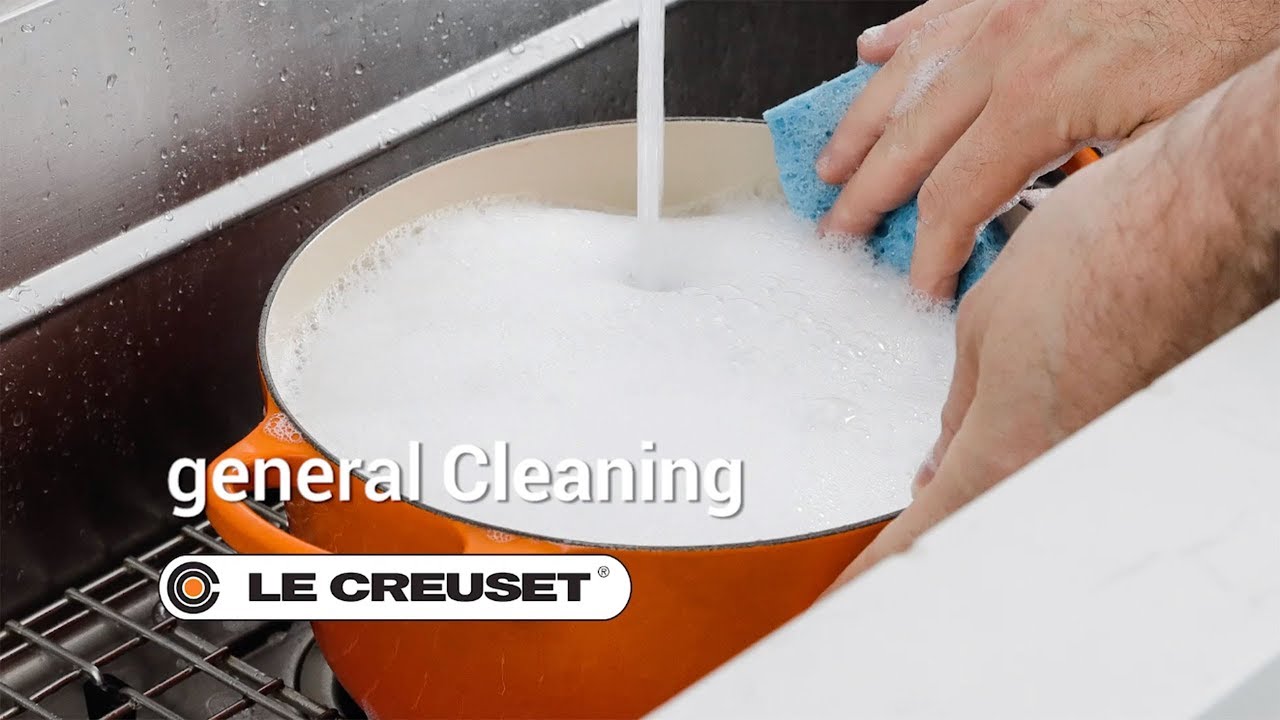
For normal food residue, hand washing with warm, soapy water is the safest routine.
Step 1: Let the cookware cool
Place the cookware on a heat-safe surface and let it cool before washing. Do not pour cold water into a hot Dutch oven, skillet, or braiser.
A rapid temperature change can stress the enamel. In severe cases, thermal shock may cause cracking or chipping.
Step 2: Remove loose food
Use a wooden, silicone, or plastic utensil to lift away food that is stuck to the bottom. Do not use a knife or metal spatula to scrape the surface.
If the food comes away easily, continue with normal washing. If it does not, leave it in place and move to a soak.
Step 3: Soak the pan
Fill the cookware with warm water and add a small amount of mild dish soap. Let it soak for 15 to 30 minutes.
A soak softens dried sauce, rice, starch, and other food residue. It also reduces the need for hard scrubbing.
Step 4: Wash with a soft tool
use a soft sponge, dishcloth, or nylon brush. Clean the bottom, sides, rim, lid, and handles.
For black satin enamel interiors, use a soft nylon brush if food remains. This surface is designed for browning, but it still needs gentle care.
Step 5: Rinse and dry
Rinse away all soap. Dry the cookware with a clean towel or place it on a drying rack.
Drying matters because water left around the rim, lid, or metal hardware can leave spots. It also helps protect exposed cast iron areas, such as some pan rims or lid edges.
Signs that the cookware is clean
Your Le Creuset is clean when:
- No food feels rough or sticky
- The surface has no greasy film
- The enamel looks even for its normal finish
- No soap remains around the rim or handles
- The cookware is fully dry before storage

How to Remove Stuck-On Food From Le Creuset
The best way to remove stuck-on food is to soften it before scrubbing. Hard scraping can damage enamel, while a soak often solves the problem with less effort.
Use a warm-water soak first
Add enough warm water to cover the stuck food. Add a little mild dish soap and let the cookware sit for at least 20 minutes.
For thick, baked-on residue, a longer soak may help. Check the pan after the first soak and remove softened food with a wooden or silicone utensil.
Simmer water for severe residue
If soaking does not work, add warm water to the pan and bring it to a gentle simmer on the stovetop. Turn off the heat and let the water cool.
Once the residue softens, wash the cookware with a soft sponge or nylon brush. Do not use this method if the cookware has a damaged surface or if the product instructions prohibit stovetop heating.
Never place cold water into a hot pan. Add water while the cookware is cool or use warm water while it is still warm but no longer hot.
Make a baking soda paste
For remaining residue:
- Sprinkle baking soda over the damp surface.
- Add a small amount of water.
- Mix until it forms a soft paste.
- Let the paste sit for 10 to 15 minutes.
- Wipe with a soft sponge.
- Rinse well and dry.
Baking soda is mildly abrasive, so use light pressure. Do not rub aggressively or combine it with a metal pad.
What if food is still stuck?
Repeat the soak rather than increasing pressure. Several gentle cycles are safer than one harsh scrub.
If the residue is burned onto the outside of the pan, use a cleaner made for enameled cookware and follow its label. Test any cleaner on a small, less visible area first.

How to Remove Brown Stains, Dark Marks, and Metal Scuffs
Le Creuset enamel can develop brown stains, dull patches, or gray metal marks over time. These marks do not always mean the cookware is damaged.
Brown or tan stains inside the pan
Brown marks may come from oil, starch, coffee-colored sauces, or repeated high-heat cooking. Start with warm soapy water.
If the marks remain, apply a baking soda paste. Let it sit briefly, then wipe gently with a soft sponge. Rinse the surface completely.
A commercial cleaner designed for enamel cookware may help with persistent discoloration. Follow the product label and avoid cleaners that contain harsh abrasives.
Gray or black marks from metal utensils
Metal tools can leave gray streaks on enamel. These are often surface marks rather than chips.
Try this process:
- Wet the area with warm water.
- Apply a small amount of baking soda.
- Rub gently with a damp soft sponge.
- Rinse and inspect the surface.
- Repeat once if needed.
Switch to wood, silicone, or plastic utensils to prevent more marks.
White mineral deposits
White spots may result from hard water or mineral residue. Wash the cookware with mild dish soap first.
If the spots remain, a small amount of diluted white vinegar may help dissolve mineral deposits. Rinse the cookware well afterward. Do not leave acidic solutions sitting in the cookware for a long time, and do not mix vinegar with bleach or other cleaners.
Discoloration on the outside
Wipe the exterior with warm water and mild soap. Use a baking soda paste only with light pressure.
Do not use oven cleaner or abrasive powders on the colored exterior. These products may dull the finish or create uneven marks.

How to Clean a Le Creuset Dutch Oven
Clean a Le Creuset Dutch oven with the same basic method: cool it, soak it, wash it with mild soap, and dry it fully.
Pay extra attention to these areas:
- The inside rim
- The underside of the lid
- The lid knob
- The space around the handles
- The bottom edge that touches the stovetop
Food and grease can collect under the lid rim. Use a soft nylon brush or cloth to reach these areas.
Cleaning the black interior
Many Le Creuset Dutch ovens have a black satin enamel interior. It is enamel, not bare cast iron.
You do not need to season a black satin enamel interior like a traditional raw cast iron pan. Wash it with warm water, mild soap, and a soft brush. Avoid metal scrubbers that can leave marks.
The black interior may develop a patina, or a darker cooking surface, over time. A patina is not automatically a sign that the pan is dirty. Remove loose food and greasy buildup, but do not try to make the cooking surface look new after every use.
Cleaning the lid
Wash the lid with warm soapy water and a soft sponge. Dry it carefully, especially around the rim and knob.
If the lid has a metal knob, check it for trapped moisture. If it has a phenolic or other heat-resistant knob, follow the care instructions for that model.

How to Clean Le Creuset Stoneware and Bakeware
Le Creuset stoneware should be cleaned with warm water, mild dish soap, and a nonabrasive sponge.
Let the dish cool before washing. Do not move hot stoneware directly into cold water or place it on a cold, wet surface.
For baked-on food, soak the dish first. Use a soft nylon brush for corners and ridges. Baking soda paste can help with light stains, but scrub gently.
Do not use stoneware if it has cracks, deep chips, or severe damage. Damaged ceramic cookware may not perform safely under heat.
Check the care instructions for the specific stoneware item before using it in a dishwasher, microwave, freezer, or oven. Different products may have different limits.

Can You Put Le Creuset in the Dishwasher?
Many Le Creuset products are dishwasher safe, but hand washing is often the better choice for routine care.
Dishwasher use can expose cookware to strong detergent, high heat, and repeated cycles. Over time, this may dull the exterior finish or affect the appearance of metal parts. It may also leave food or detergent trapped around the rim.
If you use a dishwasher:
- Remove loose food first.
- Use the cycle and detergent recommended for the product.
- Do not place cookware in the dishwasher while it is hot.
- Check the product’s care instructions.
- Dry the cookware after the cycle if water remains around the rim.
Hand wash cookware when it has stubborn residue, a delicate finish, exposed metal parts, or a design that is difficult to dry.

Cleaning Mistakes to Avoid
Avoiding a few common mistakes can prevent most cleaning damage.
Do not pour cold water into hot cookware
This is one of the most important rules. Sudden temperature changes can damage enamel through thermal shock.
Let the pan cool, or use warm water if the cookware is still warm but no longer hot.
Do not use steel wool or metal scouring pads
Metal scrubbers can scratch enamel and leave gray marks. They can also make future stains harder to remove.
Use a soft sponge or nylon brush instead.
Do not use oven cleaner
Oven cleaner is too harsh for many enameled surfaces. It may damage the color, finish, or protective coating.
Choose a cleaner labeled for enameled cookware if a mild soap and baking soda paste do not work.
Do not scrape with a knife
A knife can scratch the enamel and create a sharp damaged area. Use a wooden, silicone, or plastic tool.
Do not soak damaged cookware for long periods
A short soak is useful for food residue. Long soaking may allow water to reach damaged areas or exposed metal.
If enamel is chipped, stop using the cookware for high-heat cooking and contact Le Creuset customer service for product-specific guidance.
Do not use bleach as a routine cleaner
Bleach is not needed for normal food residue and can create unsafe fumes if mixed with other cleaners. Mild soap and proper soaking are safer choices for regular care.

What to Do if Le Creuset Enamel Is Chipped
Cleaning cannot repair chipped enamel. A stain can often be removed, but a chip is missing material.
Inspect the cookware after cleaning. If you see a chip, crack, or area where the enamel has separated, do not keep scraping it. Contact Le Creuset or the retailer for advice about the specific product and warranty.
Small stains, dull patches, and metal marks are different from chips. Run a clean fingertip lightly over the area only when the cookware is cool and dry. A rough edge or missing section needs more attention than a smooth discoloration.
Do not apply paint, craft coating, or an unapproved repair product to the cooking surface. These products are not a substitute for a factory repair or replacement.

A Simple Cleaning Schedule
Use this routine to keep Le Creuset cookware in good condition:
| When | What to do |
|---|---|
| After each use | Cool, wash with mild soap, rinse, and dry |
| When food sticks | Soak before scrubbing |
| When stains appear | Use a baking soda paste with light pressure |
| After dishwasher use | Check the rim and dry fully |
| Before storage | Make sure the pan and lid are completely dry |
| When damage appears | Stop harsh cleaning and inspect the surface |
For everyday cooking, gentle cleaning is usually enough. The goal is not to remove every sign of use. The goal is to remove food, grease, and loose residue without wearing down the finish.

Frequently Asked Questions
Can I use Bar Keepers Friend on Le Creuset?
Use caution. Some Bar Keepers Friend products are abrasive or acidic, and not all versions are suitable for every Le Creuset surface. Read the product label and Le Creuset care instructions first. A mild dish soap or baking soda paste is the safer starting point.
Should I season a Le Creuset enameled cast iron pan?
No. Enameled cast iron does not need the oil seasoning used for raw cast iron. You may lightly oil the surface for cooking, but that is different from building a seasoning layer.
Why does my Le Creuset have black marks?
Black marks may come from burned oil, food residue, or metal utensils. Try soaking first, then use a gentle baking soda paste. If the mark is smooth and the enamel is not chipped, it may be cosmetic.
Can I use a magic eraser on Le Creuset?
It is best to avoid abrasive melamine sponges on visible enamel surfaces. They can dull or alter the finish. Use a soft sponge or nylon brush instead.
How do I remove burnt oil from Le Creuset?
Let the cookware cool. Add warm water and mild dish soap, then soak it. If needed, simmer the water gently, cool the pan, and clean it with a soft brush. A baking soda paste can help with the remaining film.
Key Takeaways
- Wash Le Creuset with warm water, mild dish soap, and a soft sponge.
- Let hot cookware cool before adding water.
- Soak stuck-on food instead of scraping hard.
- Use baking soda paste for light stains and metal marks.
- Avoid steel wool, harsh abrasives, oven cleaner, and knives.
- Hand washing is usually gentler than frequent dishwasher use.
- Treat chips and cracks as damage, not as ordinary stains.
Conclusion
The best way to clean Le Creuset is gentle and consistent care. Cool the cookware, soak food residue, wash with mild soap, and use a soft tool. For stains, baking soda offers a simple next step without aggressive scrubbing.
After cleaning, dry the cookware fully and store it without trapped moisture. If the enamel is chipped or cracked, stop trying to polish the area and ask Le Creuset for product-specific guidance.
For official care instructions, check the product manual or the Le Creuset Care and Use information for your cookware type.

Hi, I’m Mary, the founder of KitchenClue.com. I’m deeply passionate about everything that makes a kitchen smarter, easier, and more enjoyable. I share hands-on insights and practical expertise on kitchen gear that truly helps in daily cooking. Along with my dedicated research team, we study products carefully, and our writers create honest, well-tested reviews using trusted, authentic sources—so you can choose kitchen tools with total confidence.