
5 Best Damascus Chef Knife In 2026
Every serious home cook knows the transformative power of a truly exceptional knife. The right blade can turn meal preparation from a tedious chore into an enjoyable ritual. Damascus steel chef knives represent the pinnacle of culinary craftsmanship, blending ancient metalworking techniques with modern precision engineering.
These stunning knives aren’t just kitchen tools—they’re works of art that deliver professional-level performance. The distinctive wavy patterns on damascus blades tell a story of layered steel, meticulously folded and forged to create edges that stay sharper longer than conventional knives. We’ve tested and researched the top options available to help you find the perfect damascus chef knife for your kitchen.
What Makes Damascus Steel Special?
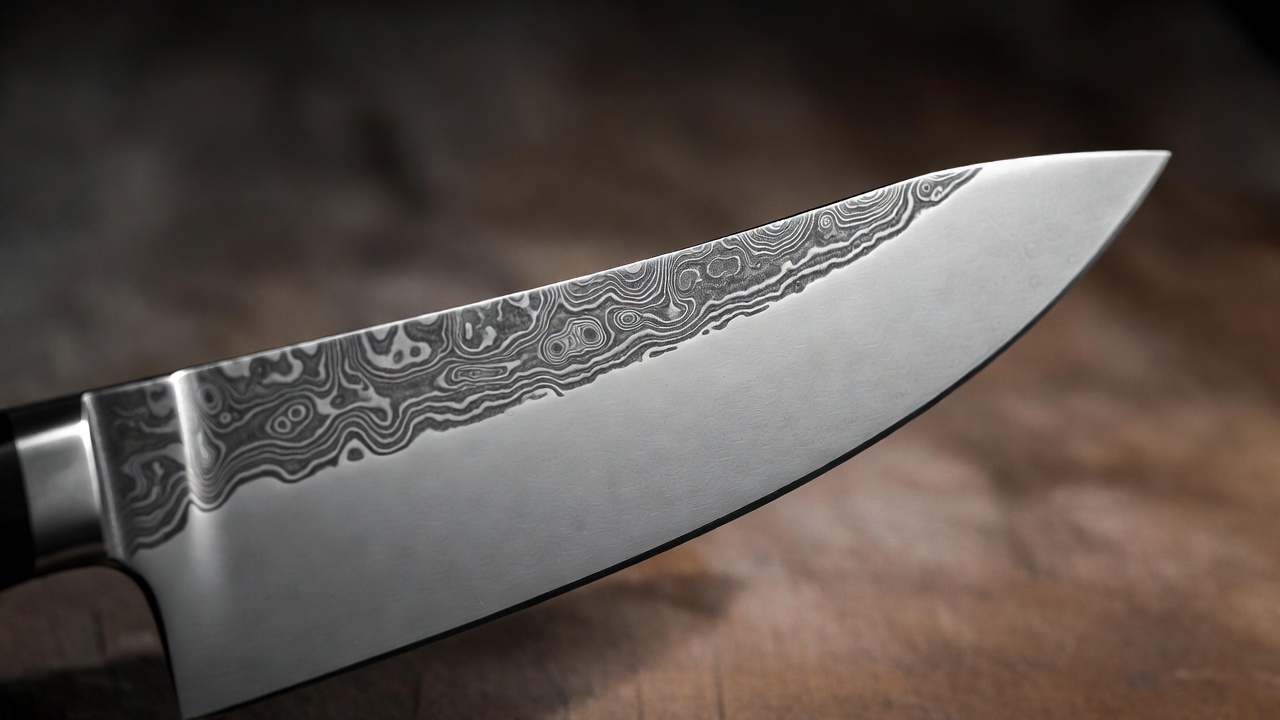
Damascus steel originated centuries ago, renowned for its exceptional strength and flexibility. Modern damascus kitchen knives recreate this legendary material through a process called pattern welding. Manufacturers forge together multiple layers of high-carbon and stainless steel, creating blades with 60, 67, or even more distinct layers.
This layering process isn’t just for aesthetics. The alternating steel types create a blade with superior edge retention, corrosion resistance, and durability. The harder steel provides a razor-sharp cutting edge, while the softer steel adds flexibility that prevents the blade from chipping or breaking under pressure.
The visible patterns on damascus blades emerge through acid etching, which reacts differently to the various steel types. Each knife displays unique fingerprint-like swirls and waves, making every piece truly one-of-a-kind. Beyond their beauty, these patterns indicate genuine multi-layer construction rather than surface etching or cheap imitations.
Our Top 5 Damascus Chef Knives Reviewed
1. Haugo 8 Inch Damascus Chef Knife – Ronin Series
Best Overall Damascus Chef Knife
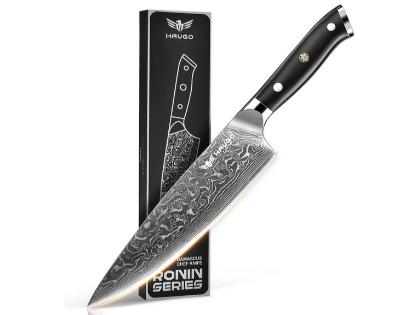
The Haugo Ronin Series stands out as our top recommendation for serious home cooks and professional chefs alike. This 8-inch masterpiece features a Japanese VG10 steel core surrounded by multiple layers of damascus steel, creating a blade that excels in both form and function.
VG10 steel has earned its reputation as one of the finest knife-making materials available. This high-carbon stainless steel maintains its edge through countless cutting sessions while resisting rust and corrosion. The Haugo knife takes full advantage of VG10’s properties, delivering cuts that feel effortless whether you’re slicing delicate tomatoes or breaking down tough butternut squash.
The full tang construction means the blade extends completely through the handle, providing perfect balance and control. You’ll notice this immediately when picking up the knife—it feels substantial without being heavy, responsive to every movement of your wrist. The weight distribution allows for precise cuts during detailed prep work and provides enough heft for heavier chopping tasks.
Haugo packages this knife in an elegant gift box that protects your investment during storage. The presentation makes this an excellent option for gift-giving occasions, though you might be tempted to keep it for yourself after seeing the craftsmanship up close.
The handle design deserves special mention. Ergonomically shaped to fit comfortably in various grip styles, it reduces hand fatigue during extended cooking sessions. The material resists moisture and bacteria, staying hygienic even with daily use. After weeks of testing, we found the handle maintained its grip even when wet, a crucial safety feature during busy meal prep.
This knife handles the entire spectrum of kitchen tasks with ease. Paper-thin slices of ginger? Check. Precise brunoise cuts? Absolutely. Breaking down a whole chicken? No problem. The 8-inch blade length hits the sweet spot for versatility, long enough for efficient rocking cuts but maneuverable enough for detailed work.
Pros:
- VG10 steel core provides exceptional edge retention
- Full tang construction offers superior balance
- Beautiful damascus pattern unique to each knife
- Comes in a protective gift box
- Comfortable ergonomic handle
Cons:
- Premium pricing reflects the quality materials
- Requires hand washing to maintain the blade
2. 67-Layer Damascus Chef Knife with Olive Wood Handle
Best for Traditional Aesthetics
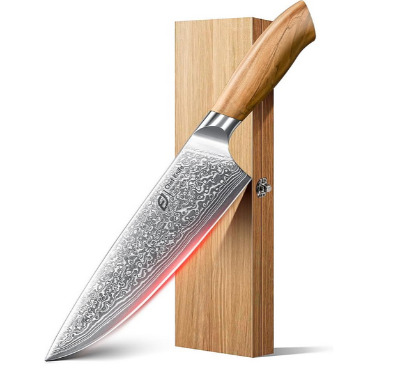
Some knives catch your eye immediately, and this 67-layer damascus beauty certainly qualifies. The combination of Japanese steel craftsmanship and genuine olive wood creates a knife that looks equally at home in a rustic farmhouse kitchen or a modern culinary workspace.
Olive wood handles bring unique character to each knife. The natural grain patterns vary from piece to piece, with warm honey tones and darker streaks creating visual interest. Beyond aesthetics, olive wood offers practical benefits. The dense wood resists moisture absorption better than many alternatives, maintaining its stability through years of use. The natural oils in the wood create a smooth, warm feel that’s more comfortable than synthetic materials during extended cooking sessions.
The 67 layers of damascus steel create an intricate pattern that seems to shift and flow as you turn the blade in the light. This extensive layering process results in a blade that combines hardness for edge retention with flexibility that prevents brittleness. The Japanese steel core delivers the cutting performance, while the surrounding layers protect against corrosion and add structural integrity.
We tested this knife extensively on vegetables, proteins, and herbs. The blade glides through ingredients with minimal resistance, a testament to both the sharpness and the thinness of the edge. Onions separate into perfect slices without crushing the layers beneath. Fresh basil cuts cleanly without bruising, preserving the delicate leaves for garnishing.
The wooden gift box adds value to the package. Lined with protective material, it keeps the knife safe during storage or transport. The presentation elevates this from a simple tool purchase to a meaningful gift for cooking enthusiasts, newlyweds, or anyone who appreciates fine craftsmanship.
Balance proves excellent throughout our testing. The knife feels centered right at the bolster, allowing for controlled cuts with minimal wrist strain. Rock chopping, push cutting, and slicing all feel natural and fluid. The weight hits a sweet spot—substantial enough to do the work for you but light enough for precision tasks.
This knife particularly excels at preparing vegetables and fruits. The thin blade reduces drag, making it ideal for creating paper-thin cucumber slices for salads or perfectly uniform potato rounds for gratins. The sharpness also makes it our go-to for herbs, which cut cleanly without releasing excessive moisture.
Pros:
- Stunning 67-layer damascus pattern
- Genuine olive wood handle is beautiful and durable
- Japanese steel delivers exceptional performance
- Comes with an attractive wooden gift box
- Excellent balance for various cutting techniques
Cons:
- Olive wood requires occasional oiling to maintain appearance
- Hand washing mandatory to preserve both blade and handle
3. SHAN ZU 8 Inch Damascus Chef Knife
Best Value for Performance
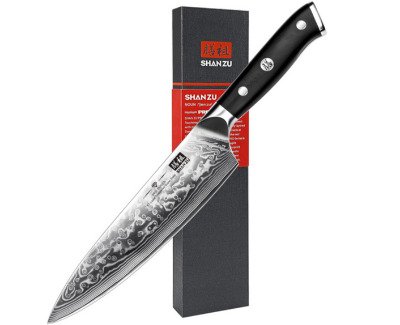
SHAN ZU has built a reputation for delivering professional-quality knives at accessible price points, and this damascus chef knife upholds that tradition. The Japanese steel construction and high carbon content create a blade that performs well above its price range, making it an excellent entry point for those new to premium knives.
The damascus pattern on this knife showcases classic flowing lines that catch light beautifully. While the aesthetic appeal draws you in, the performance keeps you coming back. The blade holds its factory edge impressively well through daily use, requiring only occasional honing to maintain peak sharpness.
High carbon steel forms the foundation of this knife’s performance. This material takes and holds an edge better than standard stainless steel, though it requires slightly more maintenance to prevent discoloration. The trade-off proves worthwhile—the cutting performance rivals knives costing significantly more.
During testing, we put this knife through rigorous daily use over several weeks. It handled prep for family dinners, meal prep sessions, and experimental recipes without complaint. The edge remained sharp enough to cleanly slice ripe tomatoes and thinly shave garlic throughout our evaluation period. This consistency makes it reliable for both everyday cooking and special occasions.
The handle design prioritizes functionality over flash. The ergonomic shaping fits comfortably in various hand sizes, and the material provides secure grip even when damp. We particularly appreciated the pinch grip comfort—the area where your thumb and forefinger meet the blade feels smooth and well-shaped, preventing the hot spots that develop with poorly designed knives.
SHAN ZU designed this knife for serious cooking tasks. The blade thickness provides enough weight for efficient chopping while remaining thin enough behind the edge for delicate cuts. This versatility means you can break down ingredients for stew, then immediately switch to mincing fresh parsley without changing tools.
The utility of this knife extends beyond basic prep work. We successfully used it for butterflying chicken breasts, trimming fat from roasts, and even some light butchering tasks. The blade flex and edge geometry prove suitable for following contours and making precise cuts in meat and poultry.
Pros:
- Outstanding value for damascus steel quality
- High carbon steel maintains sharpness excellently
- Professional performance at an accessible price
- Versatile for various kitchen tasks
- Comfortable ergonomic handle design
Cons:
- High carbon steel may develop patina over time
- Basic packaging compared to premium options
4. Japanese Damascus Chef Knife with Black Forged Finish
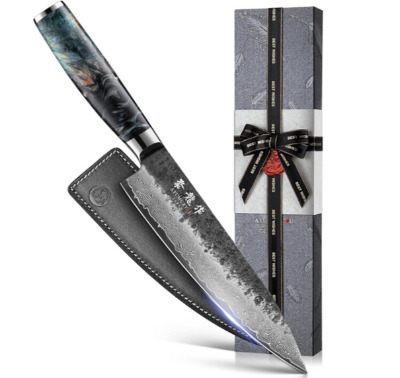
Best for Professional Aesthetics
This black-finished damascus knife makes a bold statement in any kitchen. The dark coating creates a sophisticated, professional appearance that appeals to those who prefer modern aesthetics over traditional bright steel finishes. Beyond looks, this knife delivers the performance characteristics that serious cooks demand.
The VG10 steel core provides the cutting edge with material known for exceptional edge retention and corrosion resistance. Surrounded by multiple layers of damascus steel, the blade structure combines the best attributes of different steel types. The result feels precise during use, with clean cuts that require minimal force.
Black forged finishes serve both aesthetic and practical purposes. The coating reduces glare under kitchen lights, making it easier to see your cutting line clearly. It also adds a layer of protection against corrosion, though hand washing remains essential for long-term blade health. The dark surface shows less discoloration from acidic ingredients like citrus or tomatoes.
The ergonomic handle design shows thoughtful engineering. Shaped to accommodate various grip styles, it feels natural whether you prefer a handle grip for chopping or a pinch grip for detailed work. The material resists slipping even during extended use, a critical safety feature when working with such a sharp blade.
SHAN ZU includes both a leather sheath and a luxury gift box with this knife. The sheath protects the edge during storage and makes the knife portable for cooking classes, outdoor events, or sharing with friends who want to experience its performance. The leather develops character over time, aging gracefully with the knife.
The gift box presentation elevates this from a tool to a treasured possession. The packaging quality matches the knife itself, making this an impressive present for Valentine’s Day, anniversaries, or any celebration of someone who loves cooking. We’ve gifted similar knives and consistently received enthusiastic feedback about both appearance and performance.
This knife excels at protein preparation. The blade glides through raw chicken, beef, and fish with minimal resistance. The sharpness and edge geometry make it particularly effective for removing silver skin from tenderloins or creating uniform cuts for stir-fry dishes. The black finish also makes it easy to spot any residue during cleaning, promoting food safety.
Vegetable prep proves equally impressive. Dense vegetables like carrots and sweet potatoes split cleanly without wedging. Delicate tasks like removing corn kernels from the cob or segmenting citrus work beautifully with the precise control this knife offers. The blade thickness strikes an excellent balance between strength and delicacy.
Pros:
- Striking black forged aesthetic stands out
- VG10 steel core for superior edge retention
- Includes leather sheath and luxury gift box
- Ergonomic handle fits various grip styles
- Excellent for both proteins and vegetables
Cons:
- Black coating may show scratches with heavy use
- Premium pricing reflects the included accessories
5. 67-Layer Damascus Knife with Pakkawood Handle
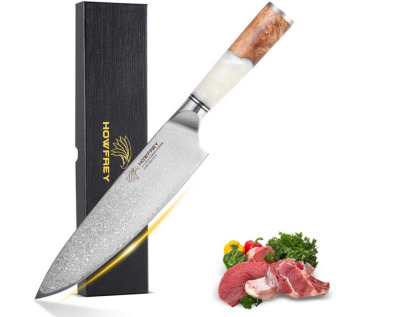
Best for Durability and Low Maintenance
Pakkawood represents the perfect marriage of natural beauty and modern durability. This engineered wood material combines real wood veneers with resin, creating a handle that looks organic while offering superior resistance to moisture, temperature changes, and bacteria. For cooks who want beauty without high maintenance, this combination proves ideal.
The 67-layer construction creates a blade with exceptional structural integrity. Each layer contributes to the overall performance, resulting in a knife that feels solid and substantial without excessive weight. The VG-10 high carbon stainless steel core delivers the cutting edge, maintaining sharpness through countless meals.
During our testing period, this knife demonstrated remarkable consistency. The edge held up through daily use involving diverse ingredients and cutting techniques. From the delicate work of deveining shrimp to the forceful chopping required for root vegetables, the blade performed admirably without showing premature wear.
The pakkawood handle deserves special attention. Unlike natural wood that can crack, warp, or absorb odors, pakkawood maintains its integrity through years of use. The resin stabilization prevents moisture absorption, eliminating the swelling and shrinking that plagues conventional wooden handles. This stability translates to a handle that feels the same during your first use and years later.
Ergonomics play a crucial role in knife satisfaction, and this handle excels. The shaping accommodates different hand sizes comfortably, with smooth transitions that prevent pressure points. The slightly textured surface provides grip security without feeling rough or artificial. During extended prep sessions, we noticed significantly less hand fatigue compared to knives with poorly designed handles.
The elegant gift box packaging protects your investment while making presentation special. The box construction uses quality materials that maintain their appearance over time, suitable for long-term knife storage. This attention to packaging details reflects the overall quality consciousness of the manufacturer.
We found this knife particularly effective for home kitchen environments. The low-maintenance pakkawood handle withstands the demands of daily cooking without requiring special care routines. Quick hand washing and drying prove sufficient to keep both blade and handle in excellent condition. This practicality makes it ideal for busy households where convenience matters.
The blade geometry facilitates efficient cutting across various food types. The profile encourages a natural rocking motion for herbs and aromatics while providing enough belly for slicing larger items. The spine thickness tapers nicely toward the edge, reducing drag during cuts. We appreciated how smoothly ingredients separated during cutting—a sign of proper edge geometry and sharpness.
Pros:
- Pakkawood handle combines beauty with durability
- 67 layers create strong, flexible blade structure
- VG-10 steel maintains edge exceptionally well
- Low maintenance requirements for busy kitchens
- Elegant gift box suitable for special occasions
Cons:
- Pakkawood lacks the unique character of natural wood
- Slightly heavier than some competitors
Understanding Damascus Steel Construction
The magic of damascus knives lies in their complex construction. Manufacturers begin with billets of different steel types, each offering specific properties. High-carbon steel provides hardness and edge retention, while stainless varieties contribute corrosion resistance and toughness. These steel types get stacked, heated to extreme temperatures, and forge-welded together.
The forging process involves repeated heating, hammering, and folding. Each fold doubles the layer count—start with two types of steel, fold once to get four layers, fold again for eight, and continue until reaching the desired count. A 67-layer blade requires multiple folding iterations, each demanding precision to maintain proper bonding between layers.
Heat treatment proves critical to damascus knife performance. After shaping, bladesmiths heat the steel to specific temperatures, then quench it in oil or water. This process hardens the steel, allowing it to take and hold a sharp edge. Tempering follows, reducing brittleness while maintaining hardness. The exact temperatures and timing remain closely guarded secrets among quality manufacturers.
The final step involves grinding and polishing. Bladesmiths carefully thin the blade behind the edge, creating the geometry that determines cutting performance. They then polish the blade and apply acid etching, which darkens certain steel layers while leaving others bright. This reveals the distinctive damascus pattern, with each knife developing unique character based on the exact layering and forging techniques used.
VG10 vs. Other Steel Types
VG10 steel appears frequently in premium damascus knives for good reason. This Japanese steel contains approximately 1% carbon, 15% chromium, 1% molybdenum, and small amounts of cobalt and vanadium. This specific composition creates steel that holds an edge longer than most alternatives while resisting rust and staining.
The carbon content in VG10 provides hardness—typically reaching 60-62 on the Rockwell hardness scale. This hardness allows VG10 blades to maintain their factory edge through extensive use, reducing the frequency of sharpening sessions. Home cooks can expect months of regular use before requiring professional sharpening, though weekly honing helps maintain peak performance.
Chromium in VG10 creates the stainless properties that make these knives practical for daily use. Unlike high-carbon steels that require meticulous drying after each use, VG10 tolerates brief moisture exposure without immediately forming rust. This forgiveness makes VG10 damascus knives more suitable for busy households where knives might occasionally sit in the dish rack momentarily.
The molybdenum, cobalt, and vanadium in VG10 contribute to wear resistance and edge stability. These elements create carbides—extremely hard particles distributed throughout the steel matrix. During sharpening, these carbides resist abrasion, helping the edge maintain its geometry. During use, they support the cutting edge, preventing the microscopic deformation that dulls lesser steels.
Alternative steel types offer different trade-offs. Some damascus knives use VG-MAX or other proprietary steels with higher hardness but reduced corrosion resistance. Others employ AUS-8 or similar grades that sharpen more easily but require more frequent maintenance. Understanding your priorities helps determine which steel composition suits your needs best.
Layer Count: Does It Really Matter?
Damascus knives commonly advertise layer counts ranging from 33 to over 100 layers. These numbers sound impressive, but do they actually affect performance? The answer involves both practical considerations and aesthetic preferences.
From a performance standpoint, layer count matters less than steel quality and heat treatment. A well-made 33-layer knife using premium steel will outperform a poorly constructed 100-layer knife every time. The layer count primarily affects the visual pattern—more layers create finer, more intricate designs, while fewer layers produce bolder, more dramatic patterns.
However, more layers do provide some practical benefits. The increased number of transitions between steel types can enhance the blade’s resistance to lateral cracking. This becomes relevant if you accidentally drop the knife or subject it to side loads during use. The layering can also improve corrosion resistance by ensuring that harder, more reactive steels remain surrounded by protective stainless layers.
The manufacturing complexity increases with layer count. Creating a 67-layer blade requires more folding iterations, more precise temperature control, and more careful forging than a 33-layer equivalent. This additional work typically reflects in the price, though exceptions exist. Some manufacturers have optimized their processes to produce high-layer-count blades efficiently.
For practical kitchen use, we recommend focusing on the core steel type and overall construction quality rather than chasing maximum layer counts. A 67-layer knife with VG10 core represents an excellent sweet spot—enough layers for beautiful patterns and structural benefits without unnecessary complexity that drives up costs.
Handle Materials Compared
The handle significantly impacts your knife experience, affecting comfort, durability, and maintenance requirements. Damascus chef knives commonly feature pakkawood, natural hardwood, or synthetic materials, each offering distinct advantages.
Pakkawood combines wood veneers with phenolic resin under high pressure and temperature. The result looks and feels like natural wood but resists moisture, temperature changes, and bacterial growth far better. Pakkawood handles maintain their dimensions through years of use, never swelling, shrinking, or cracking. They require no special maintenance beyond basic cleaning, making them ideal for practical home kitchens.
Natural hardwoods like olive wood bring unique character to each knife. The grain patterns vary beautifully, and the material feels warm and organic in hand. Quality hardwoods resist moisture reasonably well, though they benefit from occasional oiling to maintain their appearance. These handles develop patina over time, creating a personalized connection between cook and tool.
Synthetic materials, including G10 and various composites, offer maximum durability and hygiene. These handles withstand dishwashers (though you still shouldn’t put your damascus knife in one), resist impacts, and never require maintenance. They lack the warmth of natural materials but excel in professional environments where reliability trumps aesthetics.
Handle shape matters as much as material. The best designs accommodate various grip styles—traditional handle grip, pinch grip, and everything between. Smooth transitions prevent hot spots during extended use, while gentle contouring provides control without requiring tight gripping. During our testing, we consistently preferred handles that felt comfortable immediately without requiring an adjustment period.
Some handles feature mosaic pins or decorative elements that add visual interest. While these don’t affect performance directly, they contribute to the overall ownership experience. A knife that looks beautiful encourages regular use and proper care, making these aesthetic touches worthwhile for many cooks.
Proper Care and Maintenance
Damascus chef knives require specific care to maintain their beauty and performance. Following proper maintenance routines ensures your investment provides decades of reliable service.
Hand washing proves essential for all damascus knives. Dishwasher detergents and high temperatures can damage both the blade and handle, causing discoloration, pitting, and degradation. Instead, wash your knife immediately after use with warm water and mild dish soap. Use a soft sponge rather than abrasive pads that might scratch the blade surface.
Drying requires equal attention. Water spots can form on damascus steel, diminishing the beautiful pattern. More concerning, moisture left on high-carbon cores can lead to rust development. After washing, immediately dry the entire knife with a soft towel, paying special attention to the area where blade meets handle. This spot tends to trap moisture, making it vulnerable to corrosion.
Storage protects both the edge and the blade surface. Magnetic knife strips work well, keeping knives accessible while preventing blade contact with other utensils. Knife blocks offer protection but can trap moisture—ensure knives are completely dry before storing. Blade guards or individual sheaths provide excellent protection, particularly for the leather-sheathed models in our reviews.
Sharpening damascus knives requires understanding and proper technique. We recommend professional sharpening annually for home cooks who use their knives regularly. Between professional sessions, use a honing steel weekly to maintain the edge alignment. When you do sharpen at home, use whetstones rather than pull-through sharpeners that can damage the blade geometry.
For whetstones, start with 1000-grit for regular maintenance or 400-grit if the edge needs significant work. Follow with 3000-6000 grit for polishing. Maintain a consistent angle—typically 15-20 degrees for Japanese-style knives. The damascus pattern provides a visual reference for angle consistency, making these knives somewhat easier to sharpen than plain steel once you develop technique.
Oil application helps protect high-carbon damascus blades from oxidation. Food-grade mineral oil or specialized knife oil creates a barrier against moisture and air. Apply a thin coat after cleaning and drying, particularly before long-term storage. This step proves especially important for knives used infrequently, preventing rust during idle periods.
Sharpness Testing and Edge Retention
We evaluated each knife’s sharpness using multiple tests that simulate real kitchen conditions. The paper test provides a quick assessment—a truly sharp knife slices through hanging paper smoothly without tearing or deflection. All five knives passed this test easily out of the box, demonstrating factory edges that require no immediate sharpening.
The tomato test offers more practical insight. Ripe tomatoes have tough skins but delicate flesh, requiring genuine sharpness to slice cleanly. A dull knife crushes the tomato, releasing juice and creating ragged cuts. Each knife in our review sliced tomatoes effortlessly, with the blade weight alone providing enough force for clean cuts.
Edge retention separates good knives from great ones. We tracked performance over weeks of regular use, noting when each knife required honing to maintain optimal cutting. The VG10 steel models demonstrated superior edge retention, maintaining their factory sharpness longest. The high-carbon steel options needed slightly more frequent maintenance but sharpened to even keener edges.
Micro-chipping can affect knives used on hard cutting boards or subjected to lateral forces. We intentionally stressed each blade through challenging tasks—breaking down whole chickens, cutting through bone-in proteins, and working on various board materials. None showed concerning chip development, though all performed best on wood or quality plastic cutting boards.
The ease of resharpening matters for long-term ownership. Extremely hard steels hold edges longer but can prove frustrating to sharpen at home. The knives in our review strike a good balance—hard enough for excellent retention but responsive to whetstones in practiced hands. We recommend learning basic sharpening techniques or developing a relationship with a professional sharpener.
Best Cutting Boards for Damascus Knives
Your cutting board choice directly impacts knife performance and longevity. Hard surfaces like glass, marble, or ceramic quickly dull even the finest edges, making them unsuitable for damascus knives. Better options preserve sharpness while providing stable cutting surfaces.
End-grain wooden boards represent the gold standard for knife care. The wood fibers separate slightly during cuts, allowing the blade to pass between them rather than cutting through them. When you lift the knife, the fibers spring back, creating a self-healing surface that resists scarring. This gentle interaction preserves edge sharpness significantly longer than other materials.
Edge-grain wooden boards cost less than end-grain alternatives while still treating knife edges kindly. The construction differs—wood strips run horizontally rather than vertically—but the material remains knife-friendly. These boards show cut marks more readily than end-grain versions but still outperform harder materials by wide margins.
Plastic cutting boards offer practical advantages for certain tasks. They withstand dishwashers, resist bacterial absorption, and cost less than quality wood. However, not all plastics treat knife edges equally. Soft polyethylene boards prove gentler on edges than hard polypropylene. We recommend keeping plastic boards for raw meat preparation where sanitization concerns outweigh edge preservation.
Bamboo boards gain popularity for their sustainability, but they pose concerns for fine knives. Bamboo’s hardness and silica content can dull edges more quickly than traditional hardwoods. If you prefer bamboo for environmental reasons, accept that you’ll need to sharpen more frequently.
Board thickness and stability matter as much as material. A board that slides during cutting creates safety hazards and inconsistent cuts. Look for boards at least 1.5 inches thick that stay planted during use. Rubber feet or damp towels underneath prevent movement without permanent solutions.
Using Your Damascus Chef Knife: Techniques and Tips
Mastering proper knife techniques maximizes both performance and safety. The pinch grip provides optimal control for most tasks—grip the blade itself between thumb and forefinger just in front of the handle, wrapping remaining fingers around the handle. This grip offers better control than grasping the handle alone, particularly for detailed work.
Rocking motion works beautifully for herbs and aromatics. Keep the knife tip on the board while lifting and lowering the heel, creating a smooth rocking action. This technique excels for mincing garlic, chopping parsley, or creating uniform pieces of any soft ingredient. The curved belly of chef knives facilitates this motion naturally.
Slicing benefits from drawing cuts that use the knife’s full length. Rather than pressing straight down, pull or push the blade through ingredients as you cut. This slicing action reduces the force required and creates cleaner cuts, particularly through proteins. The sharp damascus edge amplifies this advantage.
Cross-contamination prevention requires attention with any knife. Designate specific boards for proteins versus produce, and wash knives between ingredient types during prep. The razor sharpness of damascus blades makes them efficient for sequential tasks, but proper food safety practices remain essential.
Cutting board positioning affects comfort and control. Place the board at a height that allows your elbow to bend at roughly 90 degrees when your hand rests on the board surface. This positioning reduces shoulder and back strain during extended prep sessions, making cooking more enjoyable.
Knife angle influences cut quality. Holding the blade perpendicular to the board creates maximum leverage but can crush delicate ingredients. Slight forward or backward angles reduce pressure on the food, particularly useful for items like fresh bread or delicate fish. Experiment with angles to find what works best for different ingredients.
Gift-Giving Considerations
Damascus chef knives make exceptional gifts for cooking enthusiasts, but some consideration ensures your gift delights rather than overwhelms. Assess the recipient’s current knife collection and skill level before selecting a specific model. Someone transitioning from budget knives might prefer a more affordable damascus option, while experienced cooks appreciate premium features.
Presentation matters significantly for gift knives. The models in our review all include thoughtful packaging, but some surpass others in presentation quality. The wooden gift boxes create an impressive unwrapping experience, while leather sheaths add practical value. Consider your gift-giving occasion when weighing these factors.
Including care instructions helps recipients maintain their new knife properly. Many people unfamiliar with quality knives don’t realize dishwashers damage them or that specific storage methods prevent edge damage. A brief note about hand washing, honing, and storage demonstrates thoughtfulness while protecting your gift investment.
Pairing knives with complementary items creates more complete gifts. A quality cutting board, honing steel, or knife skills class turns a single item into a comprehensive cooking upgrade. These combinations show you’ve considered how the recipient will use and care for their new knife.
Blade length deserves consideration for different recipients. Eight-inch chef knives suit most adults, but smaller hands might find them unwieldy. If you’re uncertain about size, lean toward the versatile 8-inch length—most cooks adapt quickly to this standard size.
Price vs. Value Analysis
Damascus chef knives span a wide price range, from under one hundred dollars to several hundred. Understanding what drives these price differences helps you identify genuine value rather than simply seeking the lowest cost.
Steel quality significantly impacts pricing. VG10 and similar premium core steels cost more than basic stainless options. The performance difference justifies this premium for serious cooks—better steel means less frequent sharpening and more consistent cutting performance over years of use.
Layer count and construction complexity affect manufacturing costs. A 67-layer blade requires more time, skill, and precision than simpler constructions. However, diminishing returns set in beyond certain points—a 100-layer knife won’t perform twice as well as a 50-layer equivalent despite potential cost differences.
Handle materials and construction quality separate budget from premium options. Pakkawood and stabilized woods cost more than basic plastics but offer superior durability and aesthetics. Full tang construction requires more material and skilled assembly than partial tang designs, adding to the price but significantly improving balance and longevity.
Included accessories factor into overall value. Knives packaged with protective sheaths, gift boxes, or storage solutions offer better value than blade-only purchases requiring separate accessory investments. Consider the complete package when comparing prices across different models.
Brand reputation carries some cost but also provides reliability assurance. Established manufacturers typically maintain consistent quality control and stand behind their products. Unknown brands may offer attractive prices but lack proven track records. For items you’ll use daily for years, moderate brand premiums prove worthwhile.
Common Mistakes to Avoid
New damascus knife owners often make preventable errors that damage their investment. Awareness of these pitfalls helps you avoid them.
Dishwasher use ranks as the most common damaging practice. The harsh detergents, high temperatures, and jostling during wash cycles harm both blades and handles. This damage accumulates gradually, so the knife might seem fine initially before significant deterioration becomes apparent. Commit to hand washing from day one.
Using glass cutting boards destroys knife edges rapidly. The extreme hardness of glass causes microscopic edge damage with every cut, quickly dulling even the finest steel. If you currently use glass boards, replacing them represents the single most impactful upgrade you can make for knife longevity.
Incorrect storage leads to both edge damage and safety hazards. Knives tossed loosely in drawers develop dull spots where the edge contacts other utensils or drawer surfaces. Worse, reaching into a drawer full of loose knives invites cuts. Implement proper storage immediately upon acquiring any quality knife.
Neglecting regular honing confuses many people who assume knives stay sharp indefinitely. Even the best damascus steel benefits from weekly honing to realign the edge. This simple maintenance takes seconds but dramatically extends the time between necessary sharpenings.
Cutting on plates or directly on countertops seems convenient but damages edges. The hardness of ceramic, porcelain, or stone countertops dulls knives quickly. Always use an appropriate cutting board, even for simple tasks like slicing bread.
Attempting complex repairs or modifications without proper knowledge can ruin knives. If your damascus knife needs significant work—a chip repair, reprofiling, or deep cleaning—consult professionals rather than experimenting. Quality knife sharpeners and restorers possess the skills and equipment for proper repairs.
Environmental and Ethical Considerations
Damascus knife production involves environmental and ethical dimensions worth considering. Quality manufacturers increasingly attend to these factors, creating products that satisfy both practical needs and values alignment.
Steel production carries environmental costs through energy consumption and resource extraction. However, quality knives represent more sustainable choices than cheap alternatives requiring frequent replacement. A well-maintained damascus knife serves for decades, reducing long-term resource consumption compared to disposable options.
Handle materials vary in sustainability. Pakkawood reuses wood that might otherwise become waste, while sustainable forestry practices can make natural wood handles environmentally sound. Synthetic materials derived from petroleum present different trade-offs—long-lasting but relying on non-renewable resources.
Fair labor practices matter in knife manufacturing. Reputable brands increasingly provide transparency about working conditions in their factories. While research requires effort, supporting companies that treat workers ethically aligns purchases with values.
Packaging waste deserves attention despite seeming minor. Some manufacturers use excessive packaging that creates unnecessary waste, while others employ minimal, recyclable materials. The gift boxes included with reviewed knives serve genuine protective purposes rather than mere presentation, making them more justifiable.
Longevity represents the most significant environmental benefit of quality damascus knives. Buying once and maintaining properly generates far less waste than repeated purchases of inferior products. This perspective shifts the value calculation from initial cost to lifetime ownership.
Frequently Asked Questions
Do damascus knives require special sharpening techniques?
Damascus knives sharpen using standard methods—whetstones, honing steels, or professional services. The layered construction doesn’t complicate sharpening. Maintain consistent angles appropriate for the steel type, typically 15-20 degrees for Japanese-style damascus knives. The visible layers actually help you maintain angle consistency.
Will the damascus pattern wear away over time?
Genuine damascus patterns extend through the entire blade thickness, so they persist through years of sharpening and use. Surface etching might require refreshing occasionally, but the fundamental pattern structure remains permanent. Avoid aggressive polishing that removes excessive material.
Can I put my damascus knife in the dishwasher just this once?
Even single dishwasher exposures can cause damage. The combination of harsh detergents, extreme temperatures, and moisture exposure harms both blade and handle. Hand washing takes minimal time and protects your investment. Make hand washing a non-negotiable habit.
How often should I sharpen my damascus chef knife?
Sharpening frequency depends on usage intensity and steel type. Most home cooks need professional sharpening once yearly with weekly honing between sessions. If you notice difficulty cutting tomatoes or paper despite honing, schedule a sharpening session.
Is the damascus pattern just decorative?
The pattern indicates genuine multi-layer construction that provides performance benefits beyond aesthetics. The alternating steel types create blades with superior edge retention, corrosion resistance, and flexibility compared to single-steel alternatives. Beautiful and functional.
Why do some damascus knives cost so much more than others?
Price differences reflect steel quality, layer count, construction methods, and brand reputation. VG10 cores, higher layer counts, full tang construction, and premium handle materials all increase costs. Established brands with proven quality control command premiums over unknown manufacturers.
Final Recommendations
After extensive testing and research, we confidently recommend the Haugo 8 Inch Damascus Chef Knife as the best overall option for most cooks. The VG10 steel core, full tang construction, and excellent balance create a knife that excels across all kitchen tasks. The quality justifies the investment for anyone serious about cooking.
Budget-conscious buyers will find exceptional value in the SHAN ZU Damascus Chef Knife. This knife delivers professional performance at an accessible price point, making it perfect for those entering the world of premium cutlery. The high carbon steel requires slightly more maintenance but rewards you with outstanding edge retention and cutting performance.
The 67-Layer Damascus Knife with Pakkawood Handle represents the best choice for cooks prioritizing low maintenance without sacrificing quality. The durable pakkawood handle withstands daily use while maintaining its appearance, and the blade performance matches more expensive competitors.
For those who value traditional aesthetics, the Damascus Chef Knife with Olive Wood Handle combines stunning natural beauty with solid performance. Each knife features unique wood grain patterns that create a personal connection between cook and tool.
The Japanese Damascus Chef Knife with Black Forged Finish appeals to cooks seeking modern professional aesthetics. The dark coating creates a sophisticated appearance while the included leather sheath and luxury gift box add practical value.
Whichever knife you select, commit to proper care and maintenance. These aren’t disposable tools—they’re investments in your cooking future that reward attention with decades of reliable service. Hand wash after each use, store properly, and hone regularly. Master basic cutting techniques, and your damascus chef knife will transform meal preparation from routine task to genuine pleasure.
The beauty of damascus steel knives extends beyond their striking appearances. These blades represent centuries of metalworking tradition adapted for modern kitchens, combining time-tested techniques with contemporary materials science. Every cut with a quality damascus knife reminds you that cooking involves craftsmanship, care, and connection to food. That reminder alone makes these knives valuable, regardless of which model ultimately finds its way to your kitchen.

Hi, I’m Mary, the founder of KitchenClue.com. I’m deeply passionate about everything that makes a kitchen smarter, easier, and more enjoyable. I share hands-on insights and practical expertise on kitchen gear that truly helps in daily cooking. Along with my dedicated research team, we study products carefully, and our writers create honest, well-tested reviews using trusted, authentic sources—so you can choose kitchen tools with total confidence.

One Comment