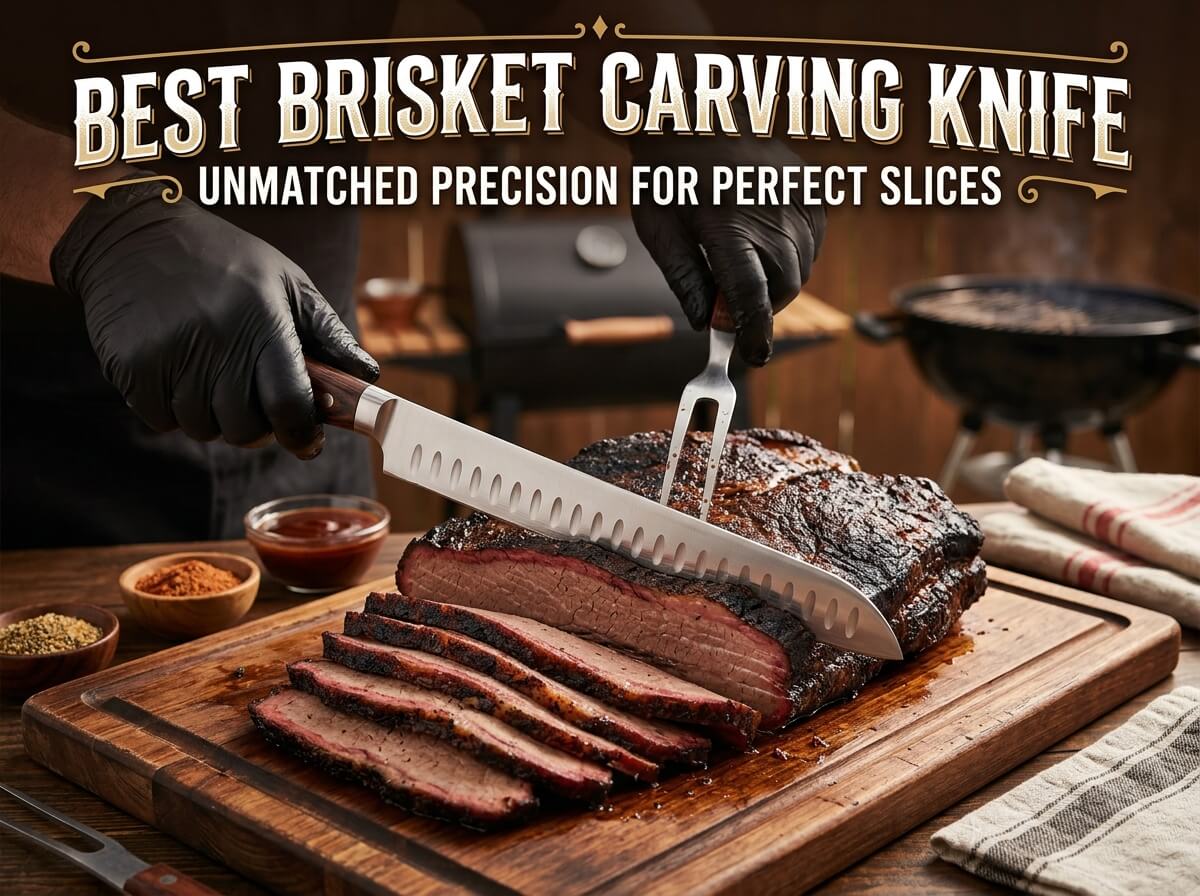
5 Best Brisket Carving Knife In 2026
You’ve spent hours smoking that brisket. The meat is tender. The bark is perfect. The aroma is incredible. But then you pull out the wrong knife and the whole thing falls apart—literally. A dull, wrong-sized blade turns your beautiful brisket into shredded mess instead of clean, beautiful slices.
Let’s be honest: most kitchen drawers have a bunch of mediocre knives that don’t cut it (pun intended). When it comes to slicing meat, you need something specific. A regular chef’s knife? No. A serrated bread knife? Absolutely not. You need a carving knife. Better yet, you need a brisket slicing knife that actually works.
I spent time looking at the top brisket carving knives on the market. I examined the steel. I checked the handles. I looked at what actual people say about using them. After all that research, I found five standout options that deserve your attention. Each one has a different personality, different strengths, and different things to love about them.
This guide breaks down everything you need to know. You’ll find detailed reviews of each knife, a side-by-side comparison, and practical advice for picking the right one for your needs. Whether you’re smoking brisket every weekend or just once in a while, one of these knives will change the way you slice meat.
What Makes a Great Brisket Carving Knife?
Before we dive into specific products, let’s talk about what actually matters in a meat carving knife.
Blade Length A standard carving knife runs between 8 and 12 inches. For brisket, longer is usually better. A 12-inch blade lets you make long, smooth strokes without lifting the knife off the meat. This creates clean slices instead of rough cuts. Shorter blades force you to make multiple cuts, which damages the meat and makes it harder to get uniform thickness.
Blade Sharpness A sharp blade is non-negotiable. The knife should glide through cooked meat without requiring pressure. If you’re pressing hard, the blade is too dull. A sharp blade doesn’t crush the fibers of the meat. It cuts cleanly, which means juices stay in the meat instead of ending up on your cutting board.
Steel Type You’ll see stainless steel and high carbon steel mentioned a lot. Stainless steel resists rust and needs less maintenance. High carbon steel holds a sharper edge longer but requires more care. German steel is tougher. Japanese steel is typically harder and stays sharp longer. Either can work for brisket, depending on what you prefer.
Handle Design You’ll be holding this knife for a while. The handle should be comfortable, balanced, and give you good control. Some people love full tang handles (where the metal goes all the way through). Others prefer handles that reduce weight. Look for something that feels right in your hand.
Balance The knife should feel balanced between the blade and handle. If it’s too heavy in the blade, your wrist gets tired. If it’s too light, you don’t have enough momentum for smooth cuts. The best knives let gravity and momentum do the work, not your arm strength.
Maintenance Requirements Some knives need hand washing and regular sharpening. Others handle the dishwasher and keep their edge longer. Think about how much work you want to put into caring for your knife.
Detailed Product Reviews
1. Cutluxe Brisket Knife – 12″ Carving & Slicing Knife
Product Overview
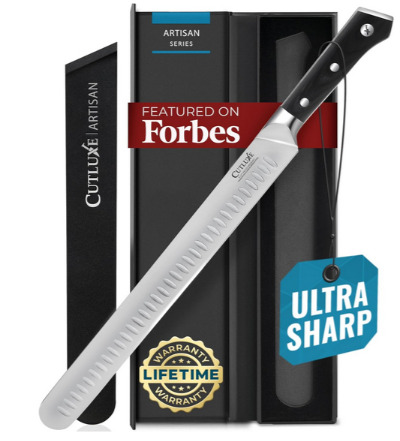
Cutluxe makes the Brisket Knife as part of their Artisan Series, and it’s a knife that gets mentioned often in meat carving circles. This is a 12-inch blade made from German steel. It comes with a leather sheath. The handle is full tang design with what they call an ergonomic shape.
The knife arrives sharp and ready to use. No sharpening needed out of the box. That’s a nice detail because not everyone has sharpening skills or equipment.
Key Features Explained
The German steel matters here. It’s the type of steel traditionally used in knives made in places like Solingen. This steel is harder than some alternatives but not as hard as Japanese steel. What this means in practical terms: it holds an edge well and doesn’t chip easily if you accidentally hit a bone (though you shouldn’t intentionally hit bones with any slicing knife).
The 12-inch length is generous. This gives you plenty of blade to work with when you’re slicing a large brisket flat or point. You can make long strokes without repositioning the meat constantly.
The full tang handle means the metal extends all the way through the handle into the end. This creates a very durable knife. The handle itself is designed to be ergonomic, meaning it fits your hand naturally without forcing your grip into an unnatural position.
The included leather sheath is practical. It protects the blade and keeps it safe when you’re storing it or traveling with it. A good sheath prevents damage to the blade and prevents accidents when reaching into a drawer.
Best Use Cases
This knife shines when you’re slicing briskets, roasts, or any large cooked meat. It’s equally at home on a cutting board in your kitchen as it is next to your smoker at a backyard BBQ. The length makes it particularly good for thick briskets or when you need to slice through the fat layer carefully.
The sheath makes it nice for people who want to slice meat at their grill or smoker. You can carry it outside safely, slice your meat, and carry it back in.
Real-Life Usage Insight
When you first hold this knife, you notice the balance immediately. It feels substantial without being heavy. The handle sits comfortably in your hand. The blade is obviously sharp—you can tell by looking at it.
In actual use, the knife cuts through cooled, rested brisket without dragging. The length means you can make full-length slices from one end of a large brisket flat to the other. The steel holds its edge through multiple briskets without needing sharpening in between.
People tend to appreciate that this knife looks good, too. It’s not the most fancy-looking knife, but it’s clearly a serious tool. The German steel has a particular look to it that says “this is quality.”
Honest Pros
The blade comes sharp out of the box. You don’t need to sharpen it before using it. The German steel is reliable and forgiving. The full tang construction is genuinely durable. The leather sheath is a nice touch that many competitors don’t include. The price is reasonable for a quality 12-inch carving knife. The ergonomic handle does make a real difference in comfort during extended use.
Honest Cons
German steel, while good, doesn’t stay quite as sharp as Japanese steel for as long. If you plan to slice briskets frequently, you’ll sharpen this knife more often than some alternatives. The knife requires hand washing and proper storage to avoid rust, though stainless options don’t have this concern to the same degree. It’s not exotic or trendy—if you want a statement knife, this is solid but not flashy.
Performance Discussion
This knife performs like a reliable workhorse. It doesn’t make the cuts feel effortless the way some premium knives do, but it makes them feel easy. There’s a real difference. “Easy” means you’re making clean cuts with normal pressure. “Effortless” means you barely notice you’re cutting.
The blade glides through meat without crushing fibers. The length eliminates the need for multiple cuts on most briskets. The handle control is excellent. You get consistent, uniform thickness slices because the knife handles well throughout the cutting motion.
The steel holds up through normal use. It won’t develop rust spots from casual kitchen use if you hand wash it and dry it promptly. It’s not the most low-maintenance option available, but it’s not demanding either.
Ease of Use
This knife is straightforward to use. If you’ve used a carving knife before, it handles like you’d expect. If you’re new to meat carving, the length and weight distribution make learning the right technique easier than with a poorly designed knife.
The handle position means your wrist stays relatively straight while cutting. This reduces fatigue. The full tang design means there are no gaps where food can get trapped. Cleaning is simple: warm soapy water and a dry towel.
Value for Money
For a 12-inch German steel carving knife with a full tang handle and included sheath, this knife offers good value. It’s not the cheapest option, but it’s not premium pricing either. You’re paying for quality that will last years with basic care.
If you slice briskets once or twice a year, this knife pays for itself by making the job pleasant instead of frustrating. If you do it regularly, it pays for itself in reduced cleanup and better-looking sliced meat.
2. Rondauno Brisket Knife, Carving Knife for Meat with 12 Inch Ultra Sharp Slicing Knife
Product Overview
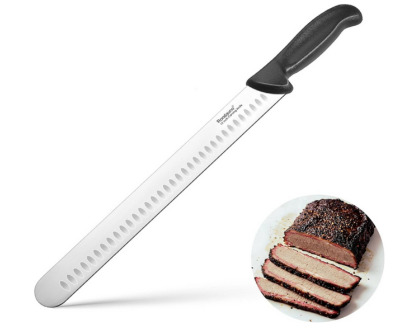
Rondauno enters the market with a brisket knife that emphasizes the “ultra sharp” angle. This is also a 12-inch blade, but Rondauno went with high carbon stainless steel instead of traditional German steel. The name of the game here is sharpness and edge retention.
The knife doesn’t come with a sheath, but it arrives extremely sharp. The blade is designed to be aggressive in terms of edge angle, which contributes to the sharpness.
Key Features Explained
High carbon stainless steel is a compromise between traditional stainless steel and high carbon steel. It resists rust better than pure high carbon steel. It holds an edge longer than typical stainless steel. It’s basically the “best of both worlds” approach, though some traditionalists argue you’re compromising on both fronts.
In this case, it works well. The steel takes a sharp edge and keeps it. The blade angle is shallower than some alternatives, which is why it cuts so aggressively. A shallower angle creates a sharper edge. A steeper angle creates a more durable edge. Rondauno chose sharpness.
The 12-inch length gives you the same advantage as the Cutluxe option. Full-length cuts through large briskets without repositioning.
The handle is designed for comfort, though the blade-heavy weight distribution is noticeable. This isn’t necessarily bad—some people love the weight in the blade because it provides momentum. Others find it tiring.
Best Use Cases
This knife is perfect if you slice briskets regularly and want the sharpest possible blade. It’s excellent for people who don’t mind maintaining their knives and are willing to sharpen them periodically. The aggressive sharpness makes it ideal for slicing thinner than normal, which some people prefer.
It works well for briskets, roasts, cooked chicken, smoked turkey, and other large meats. The sharpness means you can use it on slightly cooler meat without losing quality cuts.
Real-Life Usage Insight
The first thing you notice is how sharp this blade is. It’s sharper than the Cutluxe out of the box. This translates to cuts that require less pressure. Less pressure means better control and less meat damage.
Through repeated use, the blade stays sharper longer than standard German steel options. After cutting through two or three briskets, when other knives might be starting to feel dull, the Rondauno still cuts beautifully.
The weight distribution means your arm does a bit more work, but many people actually prefer this because the blade does more of the cutting work.
Honest Pros
Extremely sharp out of the box. Holds the edge longer than German steel alternatives. High carbon stainless steel means it’s more rust-resistant than pure high carbon steel. The 12-inch length is perfect for large briskets. The blade thickness is substantial, making it feel quality. No dishwasher needed—it’s designed for hand washing.
Honest Cons
No included sheath means you need to store it carefully or buy a sheath separately. The blade-heavy weight distribution is noticeable and might tire your wrist during extended use if you’re not comfortable with heavier knives. The sharper edge angle is more prone to damage if you accidentally hit bone or make poor cutting technique choices. It requires regular maintenance to keep the edge sharp. It’s not as forgiving as traditional German steel.
Performance Discussion
This knife performs at a high level in terms of sharpness. The cuts are clean and precise. The blade glides through meat with minimal pressure required. This is a knife that rewards good technique—if you know how to cut properly, this knife will make you look like a pro. If your technique is rough, the sharp blade might show your mistakes more obviously.
The steel holds up well through normal use. It won’t rust in normal kitchen conditions if you hand wash and dry it. It does require more attention than stainless options.
Ease of Use
If you’ve used a carving knife before, this knife is easy to use. The sharpness makes it almost forgiving because you don’t need pressure. For beginners, the lack of sheath and the blade-heavy distribution take some getting used to. The learning curve exists but isn’t steep.
Cleaning is simple but necessary—you can’t let it sit wet. Sharpening will be needed periodically. If you don’t have sharpening tools or skills, you’ll need to budget for professional sharpening once or twice a year.
Value for Money
This knife offers excellent value if you’re comfortable with maintenance and willing to sharpen it occasionally. The sharpness and edge retention mean fewer replacement knives over time. You’re investing in a tool that lasts and performs at a high level.
If you want zero-maintenance, this isn’t the right choice. If you want performance and don’t mind care, the value is outstanding.
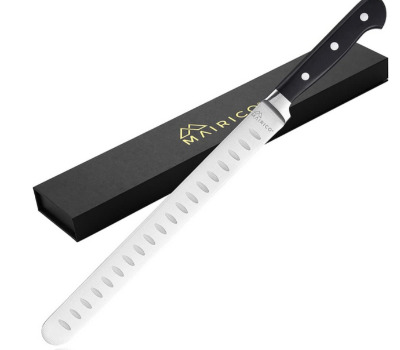
3. Brisket Slicing Knife – Ultra Sharp Premium 11-inch Stainless Steel Carving Knife
Product Overview
This offering takes a different approach with an 11-inch blade instead of 12 inches. The focus is on premium stainless steel with minimal maintenance requirements. This knife is designed for people who want quality but want to keep care simple.
The blade comes sharp and ready to use. The steel is full stainless, which means rust resistance is excellent. This is the low-maintenance option in this roundup.
Key Features Explained
The 11-inch length is a sweet spot for many people. It’s long enough to make full-length cuts through most briskets. It’s not so long that it becomes unwieldy. It’s easier to store than a 12-inch knife and easier to control if you’re newer to carving.
Stainless steel is the main story here. Pure stainless steel doesn’t rust, doesn’t require special storage, and can even go in the dishwasher if needed. The tradeoff is that stainless steel typically doesn’t hold an edge quite as long as high carbon options. Rondauno chose sharpness over maintenance. This knife chose maintenance over extreme sharpness.
The blade is designed as “premium” stainless, which means the manufacturing is careful and the steel quality is better than basic stainless. The blade thickness is respectable. The weight is reasonable—not blade-heavy like the Rondauno, but not blade-light either.
The handle is ergonomic and designed for comfort during extended use. The shape encourages proper hand position naturally.
Best Use Cases
This knife is ideal for people who slice briskets occasionally and want a low-maintenance tool. It’s perfect for families who want to add a good carving knife to their kitchen without learning how to sharpen. It’s excellent for people who want a second knife that doesn’t require constant care.
The stainless steel makes it good for people who have multiple people using the knife. Less risk of someone leaving it wet and causing rust. It works well for all types of cooked meat—briskets, roasts, turkey, ham, anything you’d carve.
Real-Life Usage Insight
When you use this knife, you notice the practical design. The balance is good. The handle feels comfortable even after using the knife for a while. The stainless blade doesn’t feel cheap—it feels like actual quality.
The sharpness is good but not aggressive. This means the knife cuts meat cleanly but doesn’t demand perfect technique. Slight variations in angle don’t cause the cut to tear. This is actually a benefit for less experienced carvers.
Over time, the blade stays serviceable. It doesn’t stay as sharp as the Rondauno indefinitely, but you can use it through many briskets before you start noticing dullness. When you do sharpen it, stainless steel is easier to sharpen than high carbon steel.
Honest Pros
Low maintenance. No hand washing required—can go in the dishwasher. No rust issues even if you’re lazy about drying it. The 11-inch length is practical for most home use. The blade is sharp enough out of the box. The handle is comfortable. The price is fair for quality stainless steel. Beginner-friendly.
Honest Cons
The 11-inch length is slightly short for very large briskets—you might need two cuts on the thickest parts. The blade doesn’t stay quite as sharp as high carbon alternatives through extended use. If you slice briskets very frequently, you might wish for the longevity of high carbon steel. It’s less “premium” feeling than some alternatives, even though it’s well-made. Not a statement knife.
Performance Discussion
This knife performs excellently for what it’s designed to do: provide reliable, low-maintenance meat carving. The cuts are clean and consistent. The ease of use is high because the forgiving sharpness level works with you, not against you.
The blade holds up through normal use without special care. It won’t develop rust problems even in humid climates. It handles occasional dishwasher trips if needed. This is a practical tool that does exactly what you need without asking much of you.
Ease of Use
This is the easiest of the options to use, especially for beginners. The balance, handle, and sharpness all combine to make carving feel natural. You don’t need special technique knowledge to get good results. Cleaning is straightforward—warm water and dish soap, or even the dishwasher.
There’s no sharpening skill required. You can take it to a professional sharpener once every couple years and be fine.
Value for Money
This knife offers outstanding value if you want to avoid maintenance. The low-maintenance nature means you’ll actually use it. You won’t develop dread about proper care. You’ll just pull it out and use it. That matters more than people realize.
For occasional to moderate use, this is probably the best value in the roundup. For heavy frequent use, other options with better edge retention might be better long-term investments.
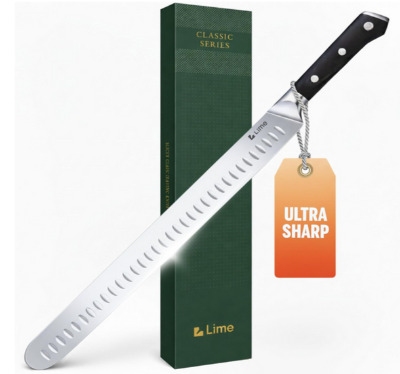
4. Bright Hobby Brisket Slicing Knife – 12″ Brisket Knife
Product Overview
Bright Hobby brings another 12-inch option to the table with German steel and a focus on aesthetic appeal alongside performance. This knife looks good in a way that’s noticeable. It’s designed for people who want a tool that looks like a tool and performs like one.
The blade comes very sharp. The handle is full tang construction. The whole design feels intentional and high-quality.
Key Features Explained
The German steel is the foundation here, just like the Cutluxe option. However, Bright Hobby’s treatment of the steel is slightly different. The blade has a particular finish that shows the steel in a way that looks premium. This isn’t just performance—it’s presentation.
The 12-inch length provides the same advantage as other 12-inch options. The full tang handle means durability and a particular weight distribution that many people love.
The ergonomic handle is designed specifically for grip comfort. The shape encourages your hand to naturally fall into the correct position for cutting. This reduces hand fatigue over time.
Bright Hobby positions this as a grilling gift, and the presentation and quality reflect that. This is a knife that looks appropriate to give as a present. It looks like someone cared about the quality, not grabbed something off a clearance shelf.
Best Use Cases
This knife is perfect if you slice briskets regularly and appreciate aesthetics. It’s ideal for people who want a serious tool that they won’t be embarrassed to use at a cookout. It’s excellent for grilling enthusiasts who value presentation and performance equally.
The German steel and 12-inch length work for all types of meat carving. The aesthetics mean it’s a knife people actually keep out, not hide in a drawer.
Real-Life Usage Insight
When you first see this knife, you notice the presentation. The blade has a particular sheen that says quality. The handle design is obviously intentional. This is a knife that makes a good first impression.
In use, the knife performs as well as you’d expect from German steel and a 12-inch blade. The sharpness is good. The balance is excellent. The handle comfort is noticeable. The blade glides through meat without requiring pressure.
The steel holds its edge through multiple briskets. The full tang construction feels durable and permanent—like this knife will be in your kitchen for decades.
Honest Pros
Excellent aesthetics. The blade looks beautiful. German steel provides reliability and good edge retention. The 12-inch length is ideal for large briskets. The full tang construction is durable. Sharp out of the box. The handle comfort is excellent. Great for gifting. Looks serious and professional.
Honest Cons
Similar to other German steel options, it doesn’t hold an edge quite as long as high carbon Japanese steel. Requires hand washing and proper care. Not stainless, so rust is a consideration if you’re not diligent. The price reflects the German steel and aesthetic quality, so it’s not the cheapest option. The focus on aesthetics might be wasted if you just want a tool and don’t care about looks.
Performance Discussion
This knife performs at a high level. The cuts are clean and precise. The blade has enough momentum from the full tang design that your arm doesn’t need to do all the work. The balance means extended use doesn’t cause fatigue.
The steel is reliable. It handles occasional bone contact without chipping. It doesn’t require exotic care, just basic hand washing and drying. Through normal use, it stays sharp enough for multiple briskets between sharpening sessions.
Ease of Use
The design makes this knife easy to use. The ergonomic handle means you don’t need to think about hand position. The balance is forgiving. The sharpness is aggressive enough to work with you but not so aggressive that slight technique errors cause problems.
For beginners, this is very accessible. For experienced carvers, the quality feels obvious and pleasant.
Value for Money
This knife offers good value if you care about aesthetics alongside performance. You’re paying for German steel, a full tang construction, and a knife that looks like it belongs on display. It’s not the cheapest option, but the quality justifies the price.
If you slice briskets regularly or want a carving knife you’ll be proud to use, the value is solid. If you want the cheapest functional option, keep looking.
5. SYOKAMI Brisket Slicing Knife, 12 Inch Multifunction Carving Knife
Product Overview
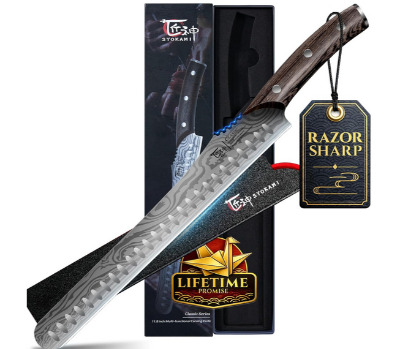
SYOKAMI brings Japanese influence to the brisket knife market with a 12-inch blade that combines Japanese steel quality with Damascus pattern aesthetics. This is the most visually distinctive option in the roundup—it’s a knife that looks like art.
The blade comes sharp and the Damascus pattern creates an almost marbled appearance on the steel. The handle is wood with a full tang construction. Everything about this knife says “this is special.”
Key Features Explained
The Japanese style steel means a different approach than German steel options. Japanese steel is typically harder and holds an edge longer. It’s also more prone to rust and requires more careful maintenance. It’s a high-performance/high-maintenance combination.
The Damascus pattern is purely aesthetic—it doesn’t improve performance, but it makes the knife unmistakably beautiful. Each knife is unique because of the pattern. Some people love this. Others think it’s unnecessary.
The 12-inch length provides the same advantage as other 12-inch options. The wood handle is a significant departure from other options. Wood is warmer to the touch than steel and creates a different grip experience. Full tang construction means durability.
The description emphasizes that this is a multifunction knife, suitable for roast beef, fruits, and vegetables as well as brisket. The sharpness and blade quality mean it can handle these tasks, though it’s optimized for meat.
Best Use Cases
This knife is perfect for someone who wants a statement piece alongside a functional tool. It’s ideal for people who appreciate Japanese craftsmanship and steel quality. It works well for people who slice briskets frequently and want the best possible edge retention.
The multifunction capability means it can be your main carving and slicing knife for lots of kitchen tasks. The wood handle makes it feel special to use.
Real-Life Usage Insight
This knife makes an impression visually immediately. The Damascus pattern is genuinely beautiful. The wood handle feels premium. This is a knife that makes you feel good when you use it.
In actual cutting, the blade performs at a very high level. The sharpness is exceptional. The steel holds the edge through many briskets. The blade glides through meat with minimal pressure required. This is a knife that makes the cutting feel easy because the tool is doing most of the work.
The weight distribution is excellent. The handle balance means your wrist stays natural and comfortable even through extended cutting sessions.
Honest Pros
Exceptional sharpness. Japanese steel holds an edge longer than German steel alternatives. The Damascus pattern is genuinely beautiful and unique on each knife. The wood handle is comfortable and warm to touch. The multifunction capability means you can use it for other kitchen tasks. The 12-inch length is ideal for large briskets. This is a knife that makes people notice—in a good way. The quality feels obvious.
Honest Cons
The Damascus pattern is aesthetic only, so you’re paying for beauty alongside performance. Japanese steel requires more maintenance than stainless options. Rust can develop if you don’t dry the knife promptly. It’s the most expensive option in the roundup. Wood can absorb water over time and needs careful drying. The high-maintenance nature means only people who enjoy caring for their tools should consider it. Not beginner-friendly due to maintenance requirements.
Performance Discussion
This knife performs at the highest level in terms of sharpness and edge retention. The cuts are the cleanest in the roundup. The blade glides through meat almost effortlessly. Very minimal pressure is required. This is what high-quality Japanese steel delivers.
The steel holds the edge through multiple briskets before showing any dullness. When you do sharpen it, the steel takes and holds an edge better than any other option. This is a long-term investment that performs better the more you use it.
Ease of Use
This knife is easy to use for someone with cutting experience and comfortable with maintenance. For beginners or people who don’t want to think about knife care, it’s more demanding. The sharper edge is less forgiving of technique mistakes. The maintenance requirement is real and necessary.
Cleaning requires immediate drying. Long-term storage requires specific considerations to prevent rust. If you’re willing to do this, the knife becomes easy and pleasant to use. If you want to just rinse and go, this isn’t the right tool.
Value for Money
This knife is a premium investment. You’re paying for Japanese steel quality, the Damascus pattern, and the overall aesthetic experience. The value is high if you slice briskets regularly and can appreciate quality. The long edge retention means fewer replacement knives over many years.
If you slice briskets occasionally, the premium price is harder to justify. If you’re looking for a low-maintenance solution, this is expensive. If you want the best performance and are willing to care for a tool properly, the value is excellent.
Side-by-Side Comparison
Let’s put these five options against each other on the key criteria:
Sharpness Out of the Box Winner: SYOKAMI. Japanese steel comes pre-sharpened to the highest level. Runner-up: Rondauno with its aggressive edge angle. Third: Bright Hobby and Cutluxe (similar). Fourth: The 11-inch stainless option is sharp but not aggressive.
Edge Retention Winner: SYOKAMI holds the edge longest. Runner-up: Rondauno with high carbon stainless. Third: Bright Hobby and Cutluxe with German steel. Fourth: The 11-inch stainless option fades to dull sooner.
Maintenance Winner: The 11-inch stainless option is lowest maintenance. Runner-up: Cutluxe with basic hand washing. Third: Bright Hobby, similar to Cutluxe. Fourth: Rondauno requires attention to rust prevention. Fifth: SYOKAMI requires careful handling to prevent rust.
Best for Beginners Winner: The 11-inch stainless option. It’s forgiving, low-maintenance, and easy to control. Runner-up: Bright Hobby with its ergonomic design. Third: Cutluxe. The Rondauno and SYOKAMI demand more skill and maintenance.
Best Value for Frequent Users Winner: SYOKAMI if you appreciate the craftsmanship. Runner-up: Rondauno if you want high performance without the premium price. Third: Bright Hobby. The Cutluxe and 11-inch options are good but not exceptional value.
Most Versatile Winner: SYOKAMI is described as multifunction and can handle various tasks. Runner-up: Cutluxe, Bright Hobby, Rondauno (all equally versatile for carving tasks). The 11-inch option is also versatile, just with a shorter blade.
Best Aesthetics Winner: SYOKAMI with the Damascus pattern. Runner-up: Bright Hobby with the premium finish. Third: Cutluxe and Rondauno are functional-looking. Fourth: The 11-inch option looks fine but unremarkable.
Durability Winner: SYOKAMI and Bright Hobby with full tang construction and premium materials. Runner-up: Cutluxe with the same full tang design. The Rondauno is durable but not quite as substantial-feeling. The 11-inch option is durable for stainless steel.
Buying Guide: How to Pick the Right Brisket Knife for Your Needs
Start by answering these questions about yourself:
How often do you slice briskets?
If you slice briskets once or twice a year, you don’t need the highest-performing knife. The 11-inch stainless option or Cutluxe will serve you perfectly. If you slice briskets regularly (monthly or more), performance becomes more important. Look at Rondauno or SYOKAMI. If you slice briskets very frequently (multiple times monthly), the edge retention of SYOKAMI or Rondauno becomes valuable.
How much maintenance are you willing to do?
Maintenance is honest work—you either do it or you don’t. If you’re willing to hand wash, dry promptly, and maybe sharpen occasionally, any knife here works. If you want to literally just use it and not think about care, the 11-inch stainless option is the only one that truly fits. Cutluxe and Bright Hobby are in the middle—basic care required. Rondauno needs attention to rust prevention. SYOKAMI requires significant care.
What’s your budget?
The 11-inch stainless option is the budget choice. Cutluxe and Rondauno are mid-range. Bright Hobby is slightly higher. SYOKAMI is the premium option. There are no bad choices here—it’s about getting the features and quality level that match your budget.
Do you care about looks?
If aesthetics matter, SYOKAMI is special. Bright Hobby is nice. The others are more functional-looking. If you want a knife you’ll be proud to display, those two stand out. If you just want something that works and you’ll store in a drawer, the others are fine.
What’s the size of briskets you typically slice?
The 12-inch knives (Cutluxe, Rondauno, Bright Hobby, SYOKAMI) handle larger briskets easier than the 11-inch option. For truly large briskets or thick cuts, go 12-inch. For smaller briskets or if you like more control, 11-inch is fine.
Do you have any hand strength or fatigue issues?
If hand fatigue is a concern, avoid blade-heavy designs like Rondauno. Go for balanced options like Bright Hobby, Cutluxe, or the 11-inch stainless. SYOKAMI is also well-balanced.
Who Should Buy These Knives?
The 11-Inch Stainless Steel Option Is For: People who want simple, low-maintenance kitchen tools. Home cooks who slice briskets occasionally. Families with multiple people using the knife. Anyone who’s tired of special care requirements. Budget-conscious buyers who still want quality.
Cutluxe Is For: BBQ enthusiasts who want a solid, reliable tool. People who appreciate German steel quality. Those who like the full package (included sheath). Casual to moderate users who don’t mind basic maintenance. Gift-givers looking for something quality without being too expensive.
Rondauno Is For: Performance-focused carvers who sharpen their knives. People who slice briskets regularly and want the sharpest blade. Those who don’t mind maintenance for the sake of performance. Carvers who want aggressive edge retention. People with good technique who won’t waste the sharpness on improper cuts.
Bright Hobby Is For: Grilling enthusiasts who want a tool they’ll actually use and display. People who appreciate both form and function. Those who want German steel reliability with better aesthetics. Gift-givers who want something that looks and performs great. Anyone who wants a full tang, durable knife that looks appropriate for serious use.
SYOKAMI Is For: Knife enthusiasts who appreciate Japanese craftsmanship. Serious meat carvers who slice frequently. People who enjoy maintaining their tools properly. Those who want the highest performance in terms of sharpness and edge retention. Carvers willing to invest premium dollars for premium results. Anyone who thinks a tool can be both functional and beautiful.
Common Mistakes When Buying a Brisket Carving Knife
Buying the longest blade because you think longer is better
Longer blades give you more surface to work with, but only up to a point. A 14-inch blade becomes unwieldy. A 12-inch blade is ideal for most people. An 11-inch blade is still very functional. Longer isn’t better if it means you lose control.
Choosing a knife based only on price
The cheapest knife in a category often disappoints. Spend enough to get quality steel, a comfortable handle, and proper construction. Skimping on price usually means skimping on materials.
Getting a “carving set” when you really just need a knife
Carving sets include a fork and other tools. If you’re buying mainly for the knife, just buy the knife. Sets often use mediocre materials to hit a price point.
Ignoring the maintenance requirements
Read what a knife actually requires. If you hate maintenance, buy stainless even if you have to sacrifice some performance. A neglected high-carbon knife is worse than a used stainless knife.
Not considering how the knife actually feels in your hand
If you can, hold the knife before buying. If you can’t, read reviews from people describing the feel. A knife that doesn’t feel right in your hand will be miserable to use, no matter how good it is technically.
Buying a knife you don’t actually have time to sharpen
If you buy a knife that needs sharpening and you’re not going to sharpen it, you’ve made a mistake. Get something that either holds an edge longer or go stainless.
Thinking the most expensive knife is automatically the best
Price reflects materials and craftsmanship but not always value for your situation. The SYOKAMI is the most expensive, but it’s not the right knife for someone who slices briskets twice a year.
Buying from an unclear seller without return options
Make sure you can return or exchange a knife that doesn’t work for you. Not every knife feels right in every hand.
Final Verdict: Which Brisket Carving Knife Should You Actually Buy?
After looking at all five options, here’s the honest answer: it depends on your situation.
If you want the easiest, most hands-off option: Buy the 11-inch stainless steel option. It’s low-maintenance, durable, and will serve you well for years. You won’t regret this choice. It won’t blow your mind with sharpness, but it will make carving meat genuinely easy and pleasant.
If you want reliability and German quality without overthinking: Buy the Cutluxe. It’s solid. It comes with a sheath. It performs well. It won’t demand special treatment. It’s the kitchen tool equivalent of jeans—reliable, works every time, and looks fine. Pair it with a honing steel and sharpen it occasionally and you’re set for many years.
If you slice briskets regularly and want the best sharpness for your money: Buy the Rondauno. It’s sharp out of the box and stays sharper longer than German steel alternatives. You’ll need to sharpen it periodically and hand wash it carefully. If you’re comfortable with that, the performance justifies the cost.
If you want a knife that’s both beautiful and performs great: Buy the Bright Hobby. The German steel is reliable. The full tang is durable. The handle is comfortable. The aesthetics are genuinely nice. It’s the best of both worlds if you want looks to matter. Treat it like you’d treat the Cutluxe maintenance-wise and enjoy using a knife that looks as good as it performs.
If you’re a serious carver who appreciates craftsmanship: Buy the SYOKAMI. It’s the most expensive, yes. But it’s also the best performer in terms of sharpness and edge retention. The Japanese steel is exceptional. The Damascus pattern is beautiful. It’s a knife that will last your lifetime if you care for it properly. If you love meat carving and use the knife regularly, the investment pays off over years.
In Conclusion: You Can’t Go Wrong Here
The truth is that all five of these knives are solid options. None of them are bad choices. The market has five different approaches to solving the same problem, and each approach has merit.
You’re not choosing between a great knife and a terrible knife. You’re choosing between five great knives with different personalities and strengths.
The best knife is the one you’ll actually use. If you hate maintaining knives, the low-maintenance option makes more sense than the highest-performing option you’ll neglect. If you love using quality tools properly, the premium option will bring you joy every time you pull it out.
Start with what matters most to you: sharpness, durability, aesthetics, maintenance level, or price. Then pick the knife that best delivers on what matters to you. You can’t make a wrong choice from these five options. You’ll just make the choice that matches your specific needs and preferences.
The brisket you’ve spent hours smoking deserves better than a dull kitchen knife. Any of these five will serve you well. Pick one, care for it properly, and enjoy clean, beautiful slices of meat for years to come.
Your smoking sessions will be better. Your sliced brisket will look more professional. Your guests will ask why your slices look so much better than other people’s. You’ll know it’s not magic—it’s just a good knife doing what it was designed to do.

Hi, I’m Mary, the founder of KitchenClue.com. I’m deeply passionate about everything that makes a kitchen smarter, easier, and more enjoyable. I share hands-on insights and practical expertise on kitchen gear that truly helps in daily cooking. Along with my dedicated research team, we study products carefully, and our writers create honest, well-tested reviews using trusted, authentic sources—so you can choose kitchen tools with total confidence.