5 Best Professional Chef’s Knife In 2026
Every professional chef knows that a high-quality knife isn’t just a tool—it’s an extension of your hand. The right chef’s knife transforms meal preparation from a chore into an art form. After spending countless hours in professional kitchens and testing dozens of blades, I’ve narrowed down the five best chef knives that truly deliver for working professionals.
The 8-inch blade has become the gold standard in professional kitchens worldwide. This length offers the perfect balance between control and cutting capacity. You can mince herbs with precision, break down large cuts of meat, and slice through vegetables with minimal effort. A well-crafted knife reduces hand fatigue during long shifts and delivers consistent results from the first cut to the last.
Professional chefs demand knives that can withstand the rigors of daily commercial use. The blade must hold its edge through hundreds of cuts, the handle needs to resist moisture and heat, and the overall construction should last for decades with proper care. The five knives I’m reviewing today meet these demanding standards while offering distinct advantages for different cooking styles and preferences.
1. HOSHANHO Kitchen Knife: Japanese Precision Meets Professional Durability
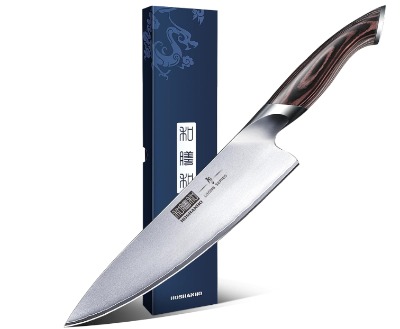
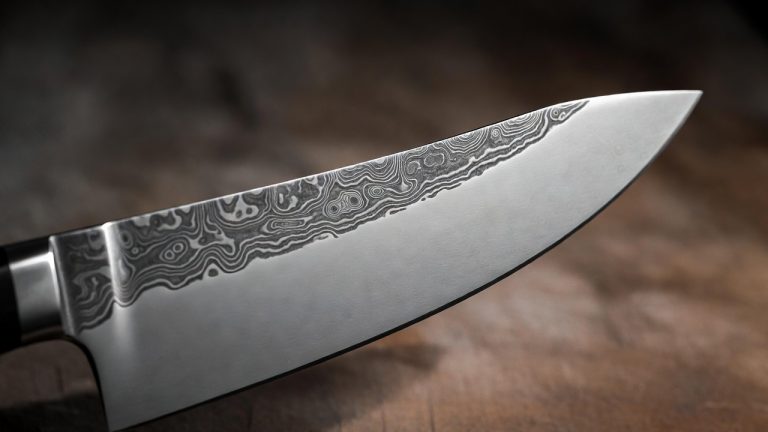
The HOSHANHO kitchen knife brings authentic Japanese craftsmanship into the professional kitchen. Built with high carbon steel, this 8-inch blade combines traditional forging techniques with modern performance standards.
Japanese high carbon steel delivers exceptional sharpness that professional chefs rely on for precision work. The blade glides through proteins with minimal resistance, creating clean cuts that preserve the integrity of delicate fish and tender meats. This steel composition allows the edge to achieve and maintain remarkable sharpness that outperforms many Western-style alternatives.
The non-slip ergonomic handle design addresses a crucial safety concern in busy kitchens. Even with wet hands or when working with oily ingredients, the grip remains secure and comfortable. The handle’s shape distributes pressure evenly across your palm, reducing the strain that causes hand fatigue during extended prep sessions.
Heat treatment sets this blade apart from budget alternatives. The steel undergoes a meticulous tempering process that balances hardness with flexibility. Hard enough to hold a razor-sharp edge, yet flexible enough to resist chipping when cutting through bones or frozen foods. This balance proves essential for chefs who can’t afford to baby their tools during service.
The blade geometry follows traditional Japanese profiles with a thinner spine and more acute cutting angle. This design excels at delicate slicing tasks like preparing sashimi or creating paper-thin vegetable cuts. The thinner blade also reduces drag when cutting through dense vegetables like butternut squash or sweet potatoes.
Professional chefs appreciate how well this knife handles repetitive tasks. The weight distribution keeps the blade balanced at the bolster, allowing for smooth rocking motions when mincing garlic or chopping herbs. Your hand stays in a natural position throughout the cutting motion, minimizing the risk of repetitive strain injuries.
Edge retention stands out as one of this knife’s strongest features. While most kitchen knives require weekly honing, the HOSHANHO blade maintains its cutting performance through several shifts before needing attention. This reliability matters when you’re in the middle of service and can’t stop to sharpen your tools.
The ultra-sharp factory edge arrives ready for professional use. Unlike many knives that need sharpening out of the box, this blade cuts cleanly from the first day. The initial sharpness also demonstrates the quality of steel and heat treatment—inferior materials simply can’t achieve this level of keenness.
Care requirements follow standard practices for high carbon steel. The blade benefits from hand washing and immediate drying to prevent surface oxidation. A light coating of food-grade mineral oil after cleaning helps maintain the blade’s appearance and protects against moisture in humid kitchen environments.
2. MOSFiATA Chef’s Knife: German Engineering with Complete Package
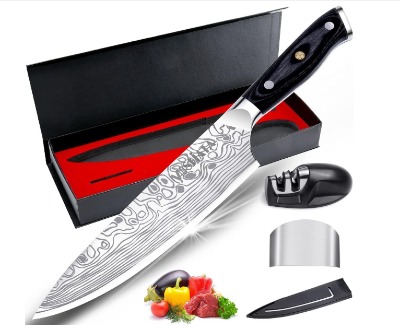
The MOSFiATA 8-inch chef’s knife represents German precision engineering at an accessible price point. Built from EN1.4116 high carbon stainless steel, this knife delivers professional performance while including valuable accessories that enhance the overall package.
German stainless steel EN1.4116 offers distinct advantages for busy commercial kitchens. This steel grade resists corrosion better than pure high carbon alternatives while maintaining excellent edge retention. Chefs who work in humid environments or can’t always dry their knives immediately will appreciate this added durability.
The included finger guard transforms safety training for kitchen staff. New cooks learning proper cutting techniques gain confidence with the physical barrier protecting their knuckles. Even experienced chefs find the guard useful when tackling especially challenging ingredients or working at high speed during rush periods.
The built-in knife sharpener removes a significant barrier to knife maintenance. Most chefs know they should sharpen regularly but struggle to find time during busy work schedules. Having a quality sharpener included with the knife eliminates excuses and ensures the blade always performs at peak capacity.
Micarta handle material brings professional-grade durability to daily use. This composite material resists moisture absorption, doesn’t crack or split under temperature changes, and maintains its grip even when exposed to oils and fats. The handle feels solid in hand without being overly heavy, striking an excellent balance for extended use.
The gift box presentation elevates this knife beyond simple kitchen equipment. Professional chefs often receive knives as gifts from colleagues or family members who recognize the importance of quality tools. The attractive packaging shows respect for the recipient and protects the knife during storage or transport.
Blade thickness plays a crucial role in this knife’s versatility. Slightly thicker than Japanese-style alternatives, the MOSFiATA blade powers through tough ingredients like acorn squash or dense root vegetables without flexing or deflecting. This rigidity proves valuable when breaking down large cuts of meat or cutting through cartilage.
The full tang construction extends the blade material through the entire handle length. This design creates exceptional balance and durability—the knife won’t separate at the handle joint even after numerous cycles in a commercial dishwasher (though hand washing remains recommended for blade longevity).
Edge geometry balances European cutting traditions with modern performance demands. The blade features a wider angle than Japanese counterparts, sacrificing some initial keenness for improved durability and easier maintenance. This trade-off benefits chefs who need knives that can handle abuse and recover quickly from minor damage.
Professional chefs value how well this knife transitions between different cutting techniques. The blade works equally well for rocking cuts when mincing, straight cuts when slicing, and chopping motions when working through herbs. This versatility reduces the need to switch between multiple knives during prep work.
3. Mercer Culinary Millennia: The Workhorse of Professional Kitchens
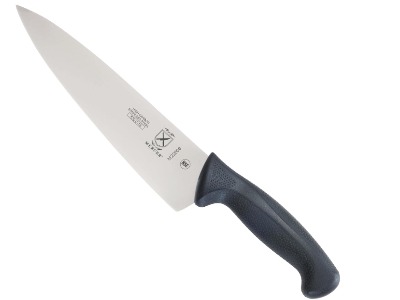
Walk into culinary schools and professional kitchens across the country, and you’ll find the Mercer Millennia 8-inch chef’s knife everywhere. This blade has earned its reputation through reliable performance and exceptional value for professional use.
The Millennia series was specifically designed for culinary education and professional environments. Mercer understood that chefs need knives that perform consistently without requiring significant investment. This democratization of quality tools has helped countless cooks develop their skills without breaking their budgets.
Black handle design serves both aesthetic and practical purposes. The dark color doesn’t show stains or discoloration from repeated use with various ingredients. The handle material resists bacterial growth, a crucial feature in commercial kitchens that must maintain strict sanitation standards.
Textured handle surface provides secure grip even in the most challenging conditions. The material remains tactile when wet, greasy, or covered in food particles. This reliable grip reduces accident risks during the hectic pace of service when knives must move quickly between cutting boards and ingredients.
The blade’s stain-resistant high-carbon steel simplifies maintenance routines. Busy chefs can’t always stop to carefully dry and oil their knives between tasks. This steel composition tolerates occasional neglect without developing rust spots or surface corrosion that compromises performance.
Stamped blade construction rather than forged manufacturing keeps costs down without sacrificing functionality. While knife purists often prefer forged blades, modern stamping techniques produce perfectly functional knives for professional use. The resulting blade performs admirably for the vast majority of kitchen tasks.
The Mercer knife excels at consistent, repetitive cutting tasks that define prep work. Slicing onions, dicing vegetables, and portioning proteins hour after hour—this blade handles the daily grind without complaint. The edge holds up reasonably well through normal service and responds quickly to honing steel maintenance.
Weight distribution leans slightly toward the handle compared to premium alternatives. Some chefs prefer this balance, finding it reduces wrist fatigue during extended prep sessions. The lighter overall weight also helps when working at speed, allowing for quick, controlled movements.
Replacement cost makes this knife ideal for commercial kitchens with multiple stations. Outfitting an entire line with quality knives becomes financially feasible when individual blade costs remain reasonable. The knives perform well enough that professional chefs don’t feel compromised by using them daily.
Culinary students particularly benefit from the Millennia’s forgiving nature. The blade tolerates improper sharpening angles, occasional drops, and other mistakes that happen during the learning process. This durability helps students focus on developing technique rather than worrying about damaging expensive equipment.
Professional chefs appreciate how easily replacement blades integrate into existing workflow. When a knife finally wears out after sustained use, an identical replacement feels immediately familiar. This consistency matters in commercial environments where efficiency depends on muscle memory and automatic movements.
4. Imarku Japanese Chef’s Knife: Traditional Craftsmanship for Modern Kitchens
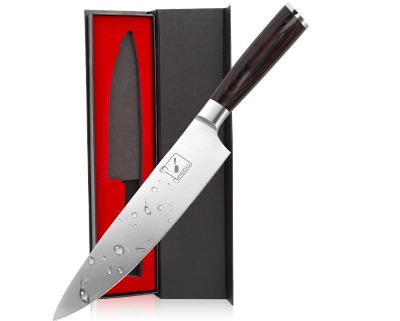
The Imarku Japanese chef’s knife bridges the gap between traditional craftsmanship and contemporary professional needs. Built with high carbon steel and following traditional gyutou knife profiles, this blade delivers authentic Japanese cutting performance at an accessible price.
High carbon steel composition allows this blade to achieve exceptional sharpness. The steel can be honed to incredibly fine edge angles that slice cleanly through ingredients rather than tearing or crushing delicate tissues. This precision proves essential when preparing raw fish, thinly slicing meats, or creating uniform vegetable cuts.
The gyutou knife profile represents centuries of Japanese culinary evolution. The blade shape optimizes cutting efficiency through careful attention to geometry, weight distribution, and balance points. Western chefs increasingly appreciate these traditional designs as they discover the performance advantages in daily use.
The included gift box transforms this knife from a mere tool into a meaningful present. Professional chefs often receive knives as gifts to mark career milestones or special occasions. The attractive presentation acknowledges the significance of quality tools in a chef’s professional life.
Blade length at 8 inches serves as the sweet spot for most kitchen tasks. Long enough to handle large ingredients efficiently, yet short enough to maintain precise control during detail work. This versatility reduces the need for multiple specialized knives during typical prep sessions.
The paring knife inclusion adds significant value to the package. While the chef’s knife handles most cutting tasks, a quality paring knife proves indispensable for detailed work like removing seeds, peeling rounded vegetables, or creating decorative garnishes. Having both knives from the same maker ensures consistent quality and matching aesthetics.
Edge retention exceeds expectations for knives in this price range. The high carbon steel holds its edge through multiple shifts before requiring honing. Professional chefs can rely on consistent cutting performance without constant maintenance interruptions during busy service periods.
Handle ergonomics follow Japanese design principles that emphasize comfort during extended use. The grip feels natural in hand, with subtle curves that align with natural finger positions. This thoughtful design reduces hand fatigue and improves control during precise cutting tasks.
The blade’s thin profile excels at delicate slicing work. When preparing carpaccio, slicing fresh mozzarella, or creating thin vegetable ribbons, the reduced blade thickness minimizes drag and creates cleaner cuts. The knife glides through ingredients with minimal downward pressure required.
Professional chefs value the balance point placement on this knife. Located just forward of the handle, the balance allows for excellent control during both rocking and slicing motions. The knife feels like a natural extension of your arm rather than a separate tool requiring conscious manipulation.
Maintenance requirements remain straightforward for busy kitchen environments. Hand washing and immediate drying prevent corrosion issues, while regular honing with a steel or leather strop maintains edge keenness between formal sharpening sessions. The steel responds well to both water stones and mechanical sharpeners.
The unique gifts marketing angle shouldn’t overshadow genuine professional capabilities. While the presentation makes this knife suitable for gift-giving, the performance stands on its own merits. Professional chefs who purchase this knife for themselves will find it performs admirably in demanding commercial environments.
5. WÜSTHOF Classic: The Gold Standard of Professional Cutlery
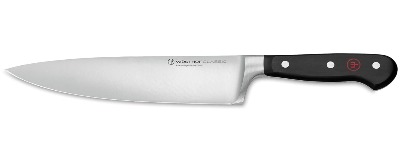
The WÜSTHOF Classic 8-inch chef’s knife represents the pinnacle of German knife-making tradition. This blade has equipped professional kitchens for generations, building a reputation for uncompromising quality and lasting performance that justifies its premium price.
German engineering excellence shows in every aspect of this knife’s construction. From steel selection to final edge grinding, WÜSTHOF applies centuries of knife-making knowledge refined through continuous innovation. The result is a blade that performs flawlessly under the most demanding professional conditions.
Full tang forged construction creates exceptional strength and balance. The blade material extends completely through the handle, secured with three rivets that will never work loose. This construction method ensures the knife maintains its integrity through decades of daily use in commercial kitchens.
High-carbon stainless steel formulation achieves the difficult balance between edge retention and corrosion resistance. The proprietary steel blend holds a sharp edge through extended use while resisting rust and staining even in humid kitchen environments. This combination reduces maintenance demands without compromising cutting performance.
Precision forging process creates a blade with ideal density and grain structure. Rather than stamping knife shapes from steel sheets, WÜSTHOF forges each blade from a single piece of steel. This traditional method aligns the steel’s molecular structure for superior strength and edge-holding ability.
The bolster design provides perfect balance and protects fingers during use. This thick junction between blade and handle acts as a counterweight that brings the knife’s balance point to an optimal location. The bolster also prevents your fingers from sliding forward onto the blade during wet or fast-paced cutting.
Synthetic handle material offers the best attributes of traditional and modern materials. The black polymer resists moisture, heat, and impacts while maintaining a comfortable grip. Unlike wood handles that can crack or absorb odors, this material stays pristine through years of commercial use.
Triple-riveted handle construction ensures permanent attachment. The three rivets aren’t just decorative—they mechanically lock the tang into the handle scales. This connection remains solid through countless wash cycles, temperature changes, and the mechanical stress of daily cutting tasks.
Edge geometry follows traditional German profiles with a wider cutting angle. This design prioritizes durability and easy maintenance over maximum initial sharpness. Professional chefs appreciate how quickly the blade responds to honing and how well it resists chipping during aggressive use.
The Classic series has remained largely unchanged for decades, a testament to its near-perfect design. While WÜSTHOF regularly introduces new lines with modern features, professional chefs continue choosing the Classic for its proven reliability and time-tested performance characteristics.
Weight and heft distinguish this knife from lighter alternatives. Some chefs prefer the substantial feel, finding that the knife’s mass does more of the cutting work. The blade’s momentum powers through tough ingredients with less physical effort required from the user.
Professional sharpening services immediately recognize WÜSTHOF quality. The steel composition and heat treatment respond perfectly to professional sharpening equipment. A properly maintained WÜSTHOF can be resharpened hundreds of times while maintaining blade geometry and performance.
Investment value extends beyond initial purchase price. A WÜSTHOF Classic frequently outlasts cheaper alternatives by decades, making it more economical over the knife’s lifetime. Professional chefs often use the same WÜSTHOF throughout their entire careers, developing a deep familiarity with the blade’s characteristics.
Resale value remains strong even for well-used examples. Quality knives from respected makers retain value in the secondary market. Professional chefs upgrading their kit can recoup significant portions of their initial investment, something impossible with budget alternatives.
Making Your Decision: Matching Knife to Kitchen
Every professional kitchen has different demands, and the ideal knife varies based on cooking style, budget constraints, and personal preferences. Understanding what each knife offers helps match the right blade to your specific needs.
Budget considerations play a legitimate role in knife selection. The WÜSTHOF represents a significant investment that pays dividends over decades of use. The Mercer Millennia delivers solid performance at a fraction of the cost, making it ideal for building your first professional kit or outfitting a commercial kitchen with multiple stations.
Cooking style influences which blade characteristics matter most. Chefs who regularly work with delicate proteins and vegetables benefit from Japanese-style blades like the HOSHANHO or Imarku. Those who frequently break down large cuts of meat or tackle tough root vegetables might prefer the robust construction of the MOSFiATA or WÜSTHOF.
Maintenance commitment affects long-term satisfaction with your knife. High carbon steel blades require more attention to prevent corrosion but reward that care with superior sharpness. Stainless steel alternatives like the MOSFiATA offer easier maintenance at the cost of some cutting performance.
Hand size and grip strength impact comfort during extended use. Larger hands often prefer the more substantial feel of German-style knives, while smaller hands might find Japanese profiles more comfortable. Trying different handle styles when possible helps identify what works best for your anatomy.
Kitchen environment matters more than many realize. High-humidity environments or kitchens where knives can’t be dried immediately benefit from stainless steel options. Dry environments with excellent knife care protocols can take full advantage of high carbon steel performance.
Professional development stage influences the smart choice. Culinary students and early-career chefs benefit from forgiving knives like the Mercer that tolerate learning mistakes. Experienced chefs might prioritize the ultimate performance of premium options.
The complete package sometimes matters as much as the blade itself. The MOSFiATA’s included sharpener and finger guard add value beyond the knife’s cutting performance. The Imarku’s paring knife inclusion addresses multiple needs with a single purchase.
Proper Knife Care for Professional Longevity
Even the finest chef’s knife requires proper care to maintain peak performance throughout its working life. Professional chefs who treat their knives as precision instruments rather than mere tools enjoy better cutting performance and extended blade life.
Hand washing remains the gold standard for knife care. Dishwashers expose blades to harsh detergents, high heat, and impacts from other utensils. These conditions dull edges, potentially damage handles, and reduce the knife’s working life. A quick hand wash takes minimal time and preserves your investment.
Immediate drying prevents corrosion even on stainless steel blades. Water spots and surface oxidation develop surprisingly quickly on wet blades. Drying your knife immediately after washing prevents these issues and keeps the blade looking professional.
Proper storage protects the edge between uses. Knife blocks, magnetic strips, or blade guards prevent the edge from contacting other tools or work surfaces. This protection maintains sharpness and prevents the micro-damage that accumulates with improper storage.
Regular honing realigns the blade edge without removing material. A honing steel or leather strop should be used before each shift to maintain peak cutting performance. This quick maintenance step takes seconds but dramatically extends the time between formal sharpenings.
Professional sharpening restores the edge when honing no longer suffices. Most professional knives benefit from expert sharpening every few months, depending on usage intensity. Professional sharpeners understand proper angles and techniques for different blade styles.
Cutting surface selection protects your blade during use. Wood and soft plastic cutting boards cushion the blade’s impact and prevent edge damage. Glass, marble, and ceramic surfaces destroy edges quickly and should be avoided in professional settings.
Proper cutting technique reduces wear on both knife and user. Learning to let the blade do the work rather than forcing cuts preserves the edge and reduces hand fatigue. Rock slicing for herbs, smooth pull cuts for proteins, and straight cuts for vegetables each optimize blade performance.
The Professional Chef’s Perspective on Knife Investment
Professional chefs develop strong opinions about knives through years of daily use. These perspectives provide valuable guidance for anyone selecting tools that will see serious professional use.
Quality trumps quantity in professional knife selection. A single excellent chef’s knife handles the vast majority of kitchen tasks better than a drawer full of mediocre alternatives. Starting with one outstanding blade proves more valuable than collecting numerous inferior options.
Personal connection with your knife develops over time. The blade you use daily becomes intimately familiar—you know exactly how it cuts different ingredients, how much pressure various tasks require, and how to maintain optimal performance. This relationship improves your efficiency and cutting precision.
Professional pride extends to tool selection. Using quality equipment demonstrates respect for your craft and commitment to excellence. Fellow chefs notice the tools you choose, and quality knives signal your serious approach to professional cooking.
Physical comfort during long shifts justifies premium knife investment. Hand fatigue, wrist strain, and repetitive stress injuries plague chefs who use poor-quality tools. A knife that feels comfortable after eight hours of prep work proves worth significantly more than its purchase price.
Blade performance directly impacts food quality. Clean cuts preserve ingredient integrity, creating better texture and appearance in finished dishes. The difference between a properly sharp knife and a dull one shows clearly on the plate.
Professional efficiency improves with better tools. A knife that cuts cleanly on the first pass saves time compared to sawing back and forth with a dull blade. These efficiency gains compound throughout a shift, improving both productivity and energy levels.
Tool reliability reduces kitchen stress. Knowing your knife will perform consistently removes one variable from the complex equation of professional cooking. This reliability proves especially valuable during high-pressure service periods when everything must execute flawlessly.
Conclusion: Your Next Professional Chef’s Knife
The five knives reviewed here represent different approaches to professional cutting excellence. Each offers distinct advantages that appeal to specific chef preferences and kitchen requirements.
The WÜSTHOF Classic stands as the ultimate investment piece—a knife that will serve you faithfully throughout your entire career. Its premium price reflects genuine quality that justifies the investment for serious professionals.
The HOSHANHO brings Japanese precision to professionals seeking exceptional sharpness and traditional cutting performance. This blade excels at delicate work and detailed cutting tasks that demand razor-sharp edges.
The MOSFiATA offers German engineering excellence with valuable included accessories. The complete package delivers professional performance while including the tools needed to maintain that performance.
The Mercer Millennia democratizes professional quality, making excellent performance accessible at modest prices. This knife equips culinary students and working chefs alike with reliable tools that perform daily without drama.
The Imarku combines traditional Japanese profiles with modern value. Chefs exploring Japanese knife styles find an accessible entry point that delivers authentic cutting performance.
Your ideal knife depends on personal preferences, professional requirements, and budget realities. Handle these knives when possible, feeling how each balances in your hand and suits your cutting style. The best professional chef’s knife is the one that feels right for you—the blade that disappears during use, becoming a natural extension of your hand and skill.
Professional cooking demands excellence from every tool in your kit. Your chef’s knife handles more tasks than any other piece of equipment, making it the most important investment in your professional arsenal. Choose thoughtfully, care for your knife properly, and it will serve you faithfully through countless successful services. The right blade doesn’t just cut ingredients—it elevates your craft and helps you deliver the exceptional food that defines professional excellence.

Hi, I’m Mary, the founder of KitchenClue.com. I’m deeply passionate about everything that makes a kitchen smarter, easier, and more enjoyable. I share hands-on insights and practical expertise on kitchen gear that truly helps in daily cooking. Along with my dedicated research team, we study products carefully, and our writers create honest, well-tested reviews using trusted, authentic sources—so you can choose kitchen tools with total confidence.