Santoku vs Chef Knife
You’re standing in the kitchen store, staring at rows of shiny knives. Two catch your eye. One looks long and curved. The other seems shorter with a flatter edge. You wonder which one belongs in your kitchen.
This happens to almost everyone who wants to upgrade their cooking game. The debate between santoku knives and chef knives has confused home cooks for years. Both look professional. Both promise to make cooking easier. But they’re quite different.
Let me break down everything you need to know about these two popular kitchen knives. By the end, you’ll know exactly which one fits your cooking style.
What Makes a Chef Knife Special
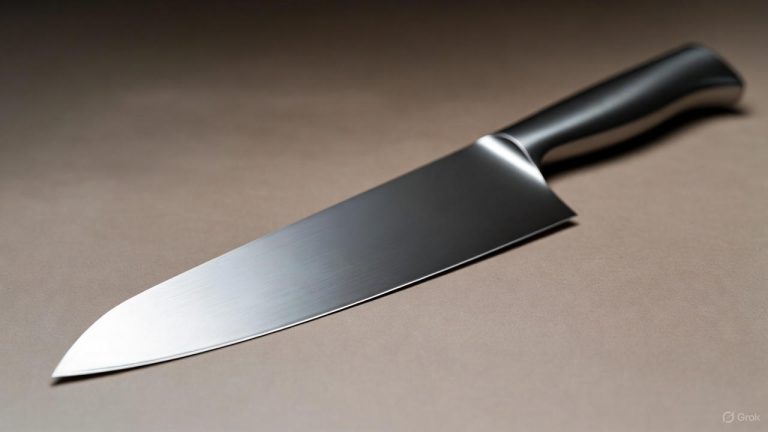
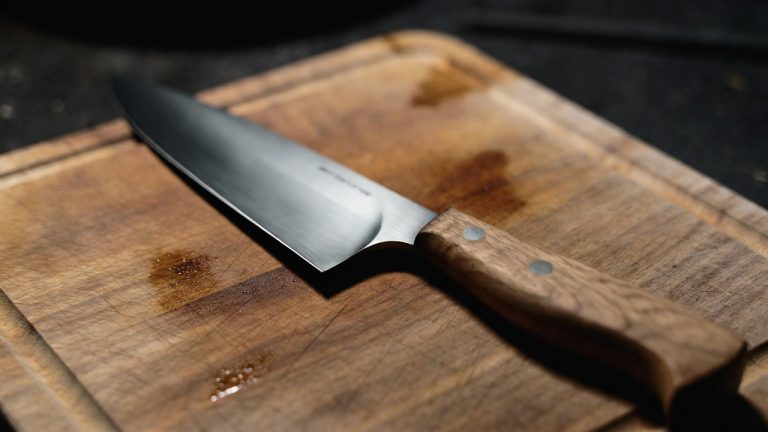
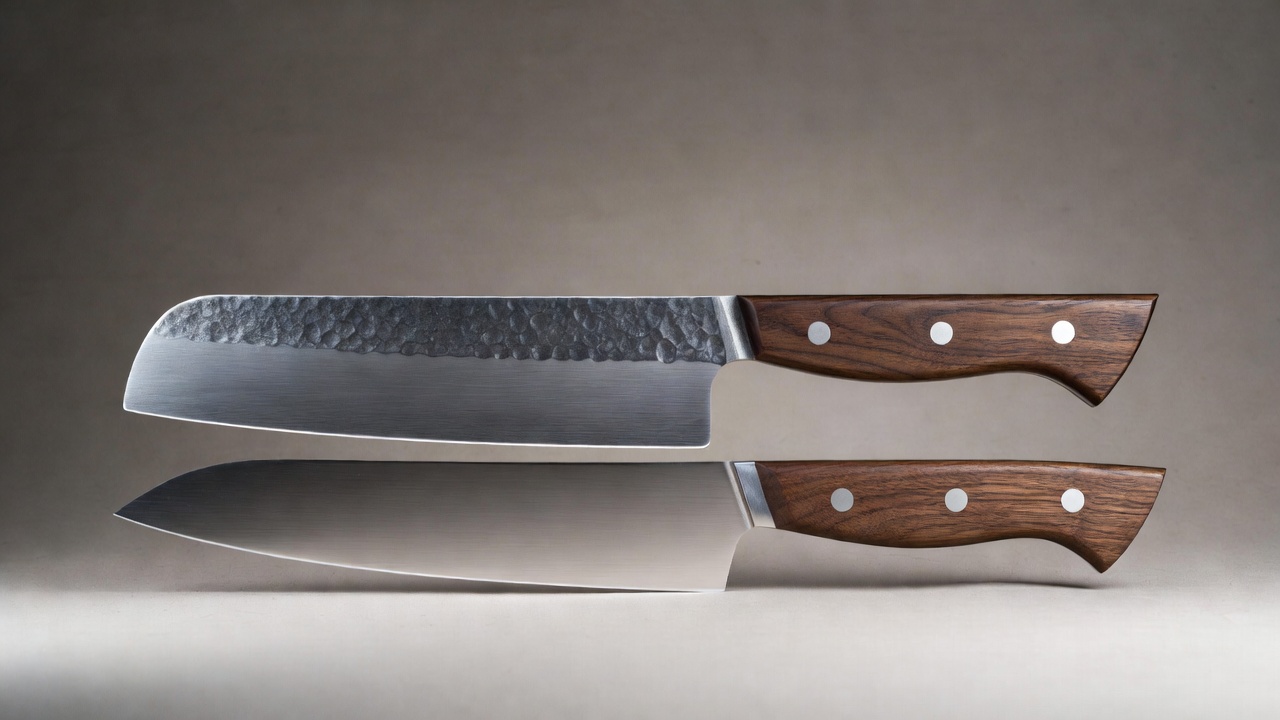
The chef knife has been the go-to blade for Western kitchens for generations. This knife typically measures 8 to 10 inches long. The blade curves upward toward the tip, creating that classic rocking motion you see on cooking shows.
The shape isn’t just for looks. That curve lets you keep the tip on your cutting board while you chop. You rock the blade back and forth, and vegetables seem to dice themselves. Professional chefs love this motion because it’s fast and rhythmic.
The blade itself tends to be heavier than other knives. This weight actually helps. When you’re breaking down a tough butternut squash or cutting through a thick piece of meat, that extra mass does some of the work for you.
Most chef knives have a pointed tip. This pointy end comes in handy when you need precision. You can use it to remove seeds from peppers, trim fat from chicken, or score meat before cooking.
The handle usually sits below the blade level. This design keeps your knuckles safe when you’re slicing against the cutting board. You can chop fast without worrying about scraping your fingers.
Getting to Know the Santoku Knife
The santoku knife comes from Japan. The name means “three virtues” or “three uses.” Those three things are slicing, dicing, and mincing. Pretty much what you do most in the kitchen.
This blade runs shorter than a chef knife. Most santoku knives measure between 5 and 7 inches. Don’t let the smaller size fool you. This compact design gives you serious control.
The blade edge looks almost flat compared to a chef knife. It still has a slight curve, but much less dramatic. Instead of rocking, you use more of an up-and-down chopping motion with a santoku.
One thing you’ll notice right away is the sheep’s foot tip. The spine of the blade curves down to meet the edge, creating a blunt, rounded tip. This design isn’t meant for piercing or detailed work. It focuses on chopping efficiency.
Many santoku knives have little divots along the blade. These are called kullens or granton edges. They create tiny air pockets that prevent food from sticking to the blade. Ever had cucumber slices glued to your knife? These dimples solve that problem.
The blade tends to be thinner and lighter than a chef knife. This makes the santoku feel nimble in your hand. You can move quickly through prep work without your arm getting tired.
How Each Knife Actually Cuts
The cutting technique differs quite a bit between these two knives.
With a chef knife, you use a rocking motion. The tip stays down on the board. You lift the handle and bring it down in a smooth arc. This works great for herbs, where you want to keep chopping in the same spot. The blade rocks through basil or parsley until it’s minced fine.
The santoku uses a different approach. You lift the entire blade off the board between cuts. It’s more of a straight up-and-down action. This works well for vegetables that you want to slice into even pieces. Think cucumbers, carrots, or onions.
For most home cooks, the santoku motion feels more natural at first. You don’t need to learn a specific rocking technique. Just lift and chop. Simple.
But that chef knife rocking motion becomes second nature with practice. Once you get it down, you can move through mincing tasks incredibly fast.
The Weight Difference Matters
A standard chef knife weighs more than a santoku. This isn’t a flaw in either design. It’s intentional.
The heavier chef knife uses gravity to your advantage. When you’re cutting through dense vegetables like sweet potatoes or hard squash, the weight helps push the blade through. You don’t need to apply as much force.
The lighter santoku requires more precision from you. Instead of letting the knife’s weight do the work, you guide it with more control. This lighter feel reduces hand fatigue during long prep sessions.
Think about what you cook most often. If you regularly break down whole chickens or cut thick-skinned produce, that extra weight helps. If you mostly slice vegetables for stir-fries or salads, lighter might feel better.
Size and Storage Considerations
The chef knife’s length gives you more blade to work with. An 8-inch or 10-inch blade can handle large ingredients in one stroke. You can slice across a big head of cabbage without needing multiple passes.
But that size comes with tradeoffs. A long blade needs more storage space. It might not fit in a standard drawer. You might need a knife block or magnetic strip.
The santoku’s compact size makes it easier to store. It fits in most kitchen drawers. This matters if you have a small kitchen or limited counter space.
The shorter blade also makes the santoku less intimidating for beginners. A big 10-inch chef knife can feel unwieldy at first. The santoku feels more manageable right out of the box.
Edge Angles and Sharpness
Here’s where things get technical, but stay with me. It matters.
Japanese santoku knives typically have a sharper edge angle. They’re often ground to 15 degrees or even less on each side. This creates an incredibly sharp edge that slices through vegetables like butter.
Western chef knives usually sit around 20 degrees per side. This makes a slightly less acute angle, but the edge stays sharp longer under heavy use.
The thinner edge on a santoku cuts beautifully. You’ll notice this especially with tomatoes or soft fruits. The blade glides through without crushing the food.
But that super-sharp, thin edge can be more delicate. It might chip if you hit a bone or use the knife on a hard cutting board. You need to treat it with a bit more care.
The chef knife’s thicker edge handles abuse better. You can use it for more rough work without worrying about damage.
Best Uses for a Chef Knife
A chef knife really shines in certain situations.
It’s perfect for rocking cuts. Mincing garlic, chopping herbs, or dicing onions all work great with that curved blade. The rocking motion becomes meditative once you get the rhythm down.
The pointed tip makes it ideal for detailed work. You can use it to remove the core from a strawberry, trim silver skin from tenderloin, or butterfly a chicken breast.
The weight helps when you’re cutting through tougher ingredients. Butternut squash, pineapple, and thick root vegetables all yield easily to a good chef knife.
It handles large ingredients well. That long blade lets you slice across big items in one smooth motion. A whole head of lettuce or a large melon is no problem.
The chef knife works great for basic butchery. Breaking down a whole chicken or trimming a roast feels natural with this knife design.
Best Uses for a Santoku Knife
The santoku excels at different tasks.
It’s a vegetable champion. The flat blade and straight cutting motion make it perfect for slicing zucchini, carrots, peppers, and pretty much any produce. Those clean, even slices happen almost automatically.
The kullens help when you’re cutting sticky foods. Potatoes, cheese, and other ingredients that normally cling to the blade slide right off.
The compact size makes it great for smaller tasks. Slicing strawberries, chopping shallots, or prepping garnishes all feel comfortable with a santoku.
The lighter weight reduces fatigue during long prep sessions. If you’re meal prepping for the week, your hand will thank you for using a santoku.
It works beautifully for fish and boneless proteins. The sharp, thin blade makes clean cuts through salmon, tuna, or chicken breasts.
The santoku handles slicing cooked meats well. That thin blade cuts through roasted chicken or steak without tearing the fibers.
Handle Design and Comfort
The handle shape affects how the knife feels during use.
Chef knives often have Western-style handles. These tend to be curved and ergonomic, molded to fit your palm. The grip feels substantial. You get a solid connection to the blade.
Many santoku knives feature Japanese-style handles. These are often straighter and lighter. The traditional D-shaped or oval design works for different grip styles.
Some modern santoku knives use Western handles now. The lines between styles have blurred as manufacturers try to appeal to everyone.
The best way to judge comfort is to hold the knife. Grip it like you would during cooking. Does it feel balanced? Does the handle fit your hand well? These questions matter more than any general rule.
Balance Point Basics
A well-balanced knife makes cooking easier. The balance point is where the knife naturally pivots in your hand.
Chef knives usually balance right at the bolster, where the blade meets the handle. This puts the weight evenly distributed. The knife feels stable during rocking cuts.
Santoku knives often balance slightly forward, closer to the blade. This makes the knife feel light in your hand while still giving you control over the edge.
To test balance, hold the knife by the handle in your normal grip. Does it feel front-heavy, back-heavy, or centered? A good balance means less strain during extended use.
Maintenance and Care
Both knives need proper care to perform their best.
Hand washing beats the dishwasher every time. The harsh detergents and high heat in dishwashers can damage the blade and handle. A quick wash with soap and water, then immediate drying, keeps your knife in top shape.
Sharpening requirements differ slightly. The santoku’s thinner edge needs more careful sharpening. You’ll want to maintain that acute angle. A whetstone works great, but you need to learn the proper technique.
Chef knives are more forgiving during sharpening. That thicker edge gives you a bit more room for error. A good honing steel helps maintain the edge between full sharpenings.
Store both knives properly. Don’t toss them in a drawer with other utensils. This dulls the blade and creates a safety hazard. Use a knife block, magnetic strip, or blade guards.
The cutting board matters too. Use wood or plastic boards. Glass, marble, or ceramic boards destroy edges fast. They’re too hard and will dull your knife quickly.
Price Ranges and Value
You can find both knife types at various price points.
Budget options start around $20 to $40. These work fine for beginners or casual cooks. They won’t have the best steel or perfect balance, but they get the job done.
Mid-range knives run from $50 to $150. This sweet spot offers good quality without breaking the bank. You’ll notice better edge retention and more comfortable handles.
High-end knives start at $150 and can go over $500. These use premium steel, expert craftsmanship, and superior materials. Professional chefs often invest in this tier.
For most home cooks, the mid-range offers the best value. You get solid performance that will last years with proper care.
Making Your Decision
So which knife should you get?
Get a chef knife if you want one versatile blade that handles everything. It works for vegetables, meat, herbs, and detailed tasks. The learning curve is worth it. Once you master the rocking motion, you’ll move through prep work quickly.
Go with a santoku if you cook a lot of Asian cuisine or focus mainly on vegetables. The lighter weight and straight cutting motion make it easy to use right away. It’s less intimidating for beginners.
Your cooking style matters most. Think about what you make regularly. Do you chop lots of herbs? Slice pounds of vegetables? Break down whole chickens? Let your actual cooking habits guide you.
Hand size and strength play a role too. A heavy 10-inch chef knife might tire out someone with smaller hands. The compact santoku could feel too small for someone with large hands.
Can You Have Both?
Here’s a secret that knife enthusiasts know. You don’t have to pick just one.
Many home cooks keep both in their kitchen. Use the chef knife for heavy-duty tasks and the santoku for precision vegetable work. They complement each other nicely.
If you’re building a knife collection, start with the one that fits your current needs. Get comfortable using it. Then add the other one later.
Having both gives you options. Some days you’ll reach for the chef knife. Other times the santoku will feel right. You’ll naturally develop preferences for different tasks.
Common Mistakes to Avoid
Don’t buy based on looks alone. A beautiful knife that doesn’t fit your hand or cooking style will sit unused in the drawer.
Avoid going too cheap on your first quality knife. A $15 knife from a discount store will frustrate you more than help. Save up for something in the mid-range.
Don’t use the wrong cutting board. Those pretty glass or marble boards will ruin your edge fast. Stick with wood or plastic.
Never leave your knife sitting in the sink. This leads to damage and dulling. Wash and dry it right after use.
Don’t ignore sharpening. A dull knife is actually more dangerous than a sharp one. You have to apply more pressure, which increases the chance of slipping.
The Real-World Test
Try this experiment if you can. Visit a kitchen store that lets you handle the knives. Hold a chef knife and a santoku. Feel the weight, check the balance, and see which one speaks to you.
Some stores even have cutting stations where you can test knives on vegetables. This hands-on experience beats any amount of online research.
Pay attention to how each knife feels. Does one seem more natural? Does your hand fit the handle comfortably? Trust your gut reaction.
Final Thoughts
Both santoku and chef knives earn their place in kitchens around the world. They each bring different strengths to your cooking.
The chef knife offers versatility, power, and a time-tested design that has served cooks for generations. It’s the workhorse that can handle almost anything you throw at it.
The santoku provides precision, control, and an effortless cutting experience that makes vegetable prep feel easy. It’s the specialist that excels at the tasks home cooks do most.
Your perfect knife depends on your unique needs. Consider what you cook, how you cook it, and what feels comfortable in your hand.
Start with one good knife. Learn to use it well. Take care of it properly. A quality knife, used with skill and maintained with care, will serve you for decades.
The best knife isn’t the one that wins comparisons on paper. It’s the one you actually reach for every time you cook. The one that makes you excited to prep ingredients. The one that feels like an extension of your hand.
So forget the pressure to make the “right” choice. Pick the knife that calls to you. Learn its quirks and strengths. Before long, you won’t remember cooking without it.
Your kitchen journey is personal. The knife you choose becomes part of that story. Make it a good one.

Hi, I’m Mary, the founder of KitchenClue.com. I’m deeply passionate about everything that makes a kitchen smarter, easier, and more enjoyable. I share hands-on insights and practical expertise on kitchen gear that truly helps in daily cooking. Along with my dedicated research team, we study products carefully, and our writers create honest, well-tested reviews using trusted, authentic sources—so you can choose kitchen tools with total confidence.