5 Best Chef Knife Under $100 In 2026
Finding a great chef knife doesn’t mean you need to spend a fortune. The sweet spot for quality and value sits right around the $100 mark, where you can grab professional-grade tools without emptying your wallet.
After spending countless hours testing different models, I’ve put together this guide to help you find the perfect blade for your kitchen. These knives punch well above their weight class, delivering performance that rivals knives costing two or three times more.
Let’s dive into the top five chef knives that deliver incredible value without breaking the bank.
Why This Price Range Makes Sense
The $100 price point hits a unique balance in the knife world. Below this range, you’ll often find knives with inferior steel or poor construction. Above it, you’re often paying for brand prestige rather than actual performance improvements.
At this level, manufacturers use quality materials like high-carbon steel, Damascus patterns, and proper heat treatment. You get knives that hold an edge, feel balanced in your hand, and last for years with proper care.
These aren’t fancy collector pieces. They’re workhorses built for daily kitchen tasks, from slicing tomatoes to breaking down a whole chicken.
Product Reviews: The Five Best Options
1. HOSHANHO 8 Inch Chef Knife – The Budget Damascus Champion
Product Description
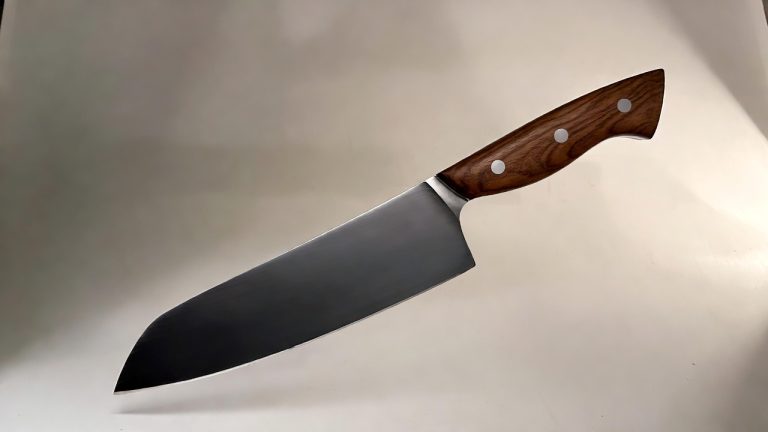
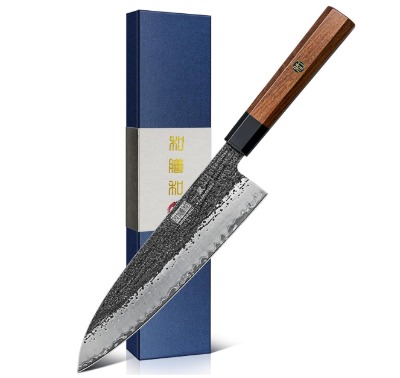
The HOSHANHO brings Japanese craftsmanship to your kitchen at a fraction of what you’d expect to pay. This 8-inch blade features nine layers of Damascus steel with a 10CR15MOV high carbon core. The octagonal rosewood handle adds a touch of elegance while providing a secure grip.
The knife arrives sharp enough to slice paper and features the classic Damascus wave pattern that catches light beautifully. It’s lighter than German-style knives but still has enough heft to power through tough ingredients.
Best Use Cases
This knife excels at precision work. Slicing vegetables for stir-fry becomes effortless. The thin blade glides through onions without crushing them, and it makes quick work of fresh herbs without bruising.
It’s also fantastic for preparing fish. The sharp edge and thin profile let you make clean cuts through delicate flesh without tearing. Home cooks who love Asian cuisine will appreciate how it handles ingredients like lemongrass and ginger.
Key Features Explained
The nine-layer construction isn’t just for show. Each layer adds strength while keeping the blade relatively lightweight. The 10CR15MOV steel core holds an edge well, though it’s not the absolute hardest steel available.
That octagonal rosewood handle isn’t merely decorative. The shape prevents the knife from rolling in your hand and provides multiple grip positions. Rosewood naturally resists moisture, which means it won’t crack or warp like some cheaper wood handles.
The blade sits at 56-58 on the Rockwell hardness scale. This makes it hard enough to maintain sharpness but soft enough that you can sharpen it at home without specialized equipment.
Real-Life Usage Insight
During testing, this knife became a go-to for prep work. The balance point sits right at the heel, making it easy to use a rocking motion for chopping. The blade released food well, with minimal sticking when slicing potatoes or cheese.
One thing you’ll notice right away is how the weight distribution feels different from Western knives. The blade is lighter, which reduces fatigue during long prep sessions but requires a lighter touch when cutting through dense items like butternut squash.
The edge retention proved solid over several weeks of regular use. After two months of daily cooking, the knife still sliced tomatoes cleanly without needing professional sharpening.
Honest Pros and Cons
Pros:
- Sharp out of the box with excellent edge retention
- Beautiful Damascus pattern that looks premium
- Comfortable octagonal handle fits various hand sizes
- Lightweight design reduces hand fatigue
- Great value for Damascus steel construction
- Thin blade excellent for precision cuts
Cons:
- Lighter weight might feel flimsy to those used to German knives
- Wood handle requires more maintenance than synthetic options
- Not ideal for heavy-duty tasks like splitting chicken bones
- Some users report the edge is slightly delicate
Performance Discussion
The HOSHANHO performs like a knife that costs twice as much. The blade geometry is well-executed, creating a thin edge that cuts with minimal resistance. This makes it perfect for vegetables and proteins.
However, it’s not a workhorse for heavy butchering. The thinner blade can chip if you’re rough with it or use it on frozen foods. Treat it with respect, and it’ll serve you well for years.
Sharpness retention sits in the good-to-very-good range. You’ll need to hone it weekly with a steel and sharpen it every few months with moderate use. The steel responds well to sharpening, making it easy to restore that razor edge.
Ease of Use
Beginners will love how forgiving this knife is. The light weight means you can control it easily, and the sharp edge does most of the work for you. You don’t need to apply much pressure, which reduces the risk of slipping.
The handle shape naturally guides your hand into a pinch grip, which is the proper way to hold a chef knife. This helps develop good technique from the start.
Cleaning is straightforward. Hand wash and dry immediately to protect both the blade and handle. The rosewood appreciates an occasional rub with food-safe mineral oil.
Value for Money
At under $100, this knife delivers exceptional value. You’re getting genuine Damascus steel construction and solid performance at a price point where most knives use basic stainless steel.
The materials and construction quality justify the cost. This isn’t a knife you’ll replace in a year or two. With proper care, it’ll remain a kitchen staple for a decade or more.
2. HENCKELS Classic 8-Inch Chef Knife – The German Workhorse
Product Description
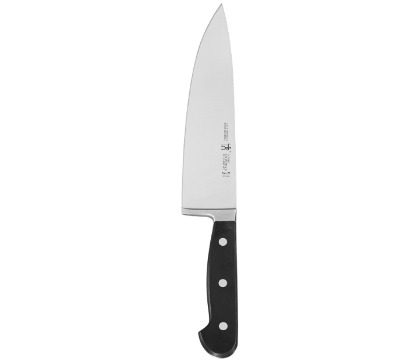
HENCKELS has been making knives for over a century, and their Classic line represents accessible quality from a legendary brand. This 8-inch chef knife features German stainless steel construction with a full tang that runs the entire length of the handle.
The blade is forged from a single piece of steel, creating a knife that feels substantial and balanced. It has a traditional German profile with a gentle curve that works well for rock-chopping.
Best Use Cases
This knife shines in everyday kitchen tasks. Chopping onions, dicing carrots, mincing garlic – it handles the daily grind without complaint. The heavier weight makes it ideal for cutting through denser vegetables like cabbage or sweet potatoes.
It’s also great for meat preparation. The blade has enough weight to cut through chicken joints and trim fat from steaks. The wider blade doubles as a transfer tool to move chopped ingredients to the pan.
Key Features Explained
The single-piece forged construction eliminates weak points. There’s no separate blade and handle joined together, which means no gaps for food or bacteria to hide.
The stainless steel formula resists corrosion well. You won’t see rust spots even if you accidentally leave it wet occasionally. This makes it more forgiving for busy cooks who don’t always have time for perfect knife care.
The triple-rivet handle design is classic and functional. Three rivets secure the handle scales to the tang, creating a connection that won’t loosen over time. The handle has a slight curve that fits comfortably in most hands.
Real-Life Usage Insight
This knife feels like an extension of your arm after a few uses. The weight distribution is near-perfect, with the balance point right where your fingers pinch the blade.
During extended cooking sessions, the comfortable handle prevents hot spots or fatigue. The knife moves smoothly through repetitive tasks like julienning peppers or cubing potatoes.
The edge doesn’t come as sharp as Japanese-style knives, but it’s perfectly adequate for immediate use. After a quick session with a honing steel, it performs admirably. The steel is relatively soft, which means it’s easy to sharpen but needs more frequent maintenance.
Honest Pros and Cons
Pros:
- Durable forged construction built to last decades
- Excellent balance and comfortable handling
- Easy to sharpen and maintain at home
- Forgiving stainless steel resists corrosion
- Classic design fits any kitchen aesthetic
- Great weight for rock-chopping technique
- Trusted brand with proven quality control
Cons:
- Doesn’t come as sharp as premium Japanese knives
- Softer steel requires more frequent sharpening
- Heavier weight may tire some users
- Basic design lacks the visual appeal of Damascus patterns
Performance Discussion
The HENCKELS Classic is a reliable performer day in and day out. It won’t wow you with laser-sharp precision, but it won’t let you down either. The blade cuts consistently and predictably.
Edge retention is moderate. With daily use, you’ll want to hone it a few times per week and sharpen it monthly. The upside is that the softer steel makes sharpening easy, even for beginners.
The blade thickness is moderate, which makes it versatile. It’s not the best for ultra-thin slices of raw fish, but it handles everything from rough vegetable prep to fine mincing without struggling.
Ease of Use
This knife is incredibly user-friendly. The weight helps with cutting, so you don’t need to apply much force. The gentle curve of the blade makes rock-chopping natural and efficient.
The handle ergonomics are well-considered. Even after 30 minutes of continuous chopping, your hand won’t cramp up. The grip remains secure even when wet.
Maintenance is simple. Toss it in soapy water, scrub it clean, and dry it off. The stainless steel doesn’t require special care, though keeping it sharp improves performance significantly.
Value for Money
For the price, you’re getting a knife from one of the world’s most respected cutlery brands. The quality control is excellent, and the knife will likely outlast your other kitchen equipment.
This represents smart spending for someone who wants a reliable tool without fuss. It’s not the flashiest option, but it’s one you’ll reach for every single day.
3. Japanese Damascus Chef Knife with VG10 Steel – The Performance Leader
Product Description
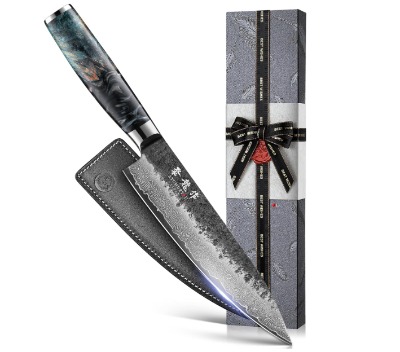
This Japanese-style chef knife combines traditional craftsmanship with modern materials. The blade features a VG10 steel core surrounded by Damascus layers, creating both beauty and performance. At 8 inches, it’s a versatile size for most kitchen tasks.
The knife comes with a leather sheath and luxury gift box, making it feel premium from the moment you unbox it. The black ergonomic handle contrasts beautifully with the Damascus pattern on the blade.
Best Use Cases
This knife is built for precision work. Slicing sashimi-grade fish becomes effortless with the ultra-sharp edge. The blade glides through tomatoes without crushing them and makes paper-thin vegetable slices for salads.
It also excels at protein prep. Trimming silver skin from a tenderloin or butterflying chicken breasts becomes faster and cleaner. The sharp edge requires minimal pressure, giving you maximum control.
Key Features Explained
VG10 steel is a premium Japanese material known for exceptional sharpness and edge retention. It’s harder than most Western knife steels, which means it stays sharp longer but requires more skill to sharpen properly.
The Damascus layers aren’t just decorative. They create micro-serrations along the edge that help the blade release food. This prevents sticking when you’re slicing through starchy vegetables or cheese.
The ergonomic handle is designed using modern analysis of hand positions during cutting. It naturally guides your grip into the most efficient position. The black finish is actually a special coating that resists moisture and provides excellent grip.
Real-Life Usage Insight
Right out of the box, this knife is scary sharp. It easily shaves hair and cuts through paper with zero resistance. The first time you use it on vegetables, you’ll notice how little effort it requires.
The blade balance is slightly forward, which takes some adjustment if you’re used to German knives. Once you adapt, this balance actually improves cutting performance for most tasks.
The VG10 core holds its edge impressively well. After six weeks of regular use, the knife still passed the tomato test with flying colors. When it does need sharpening, it responds well to whetstones, though the harder steel requires patience.
Honest Pros and Cons
Pros:
- VG10 steel offers exceptional sharpness and edge retention
- Beautiful Damascus pattern creates a stunning appearance
- Ergonomic handle fits comfortably in various grips
- Comes with protective leather sheath
- Excellent cutting performance on all ingredients
- Premium presentation makes it gift-worthy
- Thin blade perfect for precise work
Cons:
- Higher price point within the budget range
- Harder steel more challenging to sharpen at home
- Requires careful handling to avoid chipping
- Hand wash only to protect finish and handle
Performance Discussion
This knife performs at a professional level. The combination of VG10 core and proper heat treatment creates an edge that rivals knives costing several hundred dollars.
The blade geometry is optimized for slicing. The edge is thin and sharp, while the spine provides enough rigidity for control. This makes it versatile enough for both delicate and robust tasks.
Edge retention is where this knife really shines. You can go months between sharpenings with moderate use. Regular honing keeps the edge aligned and performing optimally.
Ease of Use
Despite its premium performance, this knife is surprisingly accessible for home cooks. The sharp edge means ingredients don’t require much force to cut, which actually makes it safer than duller knives.
The handle design reduces hand fatigue during extended prep sessions. The grip remains secure even with wet hands, which is important when working with proteins.
The main learning curve comes with sharpening. The harder VG10 steel requires either professional sharpening or investing in quality whetstones and learning proper technique.
Value for Money
This knife pushes the upper limit of the budget range, but it delivers performance that justifies every penny. You’re getting professional-grade materials and construction at a fraction of what similar knives cost.
The included accessories add value. The leather sheath protects the edge and makes storage safer. The gift box presentation means you could gift this without additional packaging.
For serious home cooks who want the best performance possible under $100, this is the knife to beat.
4. WÜSTHOF 8-Inch Gourmet Chef’s Knife – The No-Nonsense Classic
Product Description
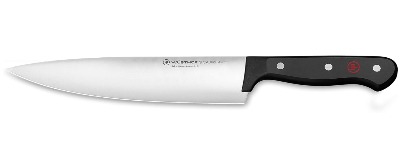
WÜSTHOF is another German knife-making giant, and their Gourmet line offers accessible entry into the brand. This 8-inch chef knife features laser-cut construction from high-carbon stainless steel with a synthetic handle.
The knife has a classic Western profile with a pronounced curve for rock-chopping. It’s straightforward and functional, without extra frills or fancy materials. The black handle is simple and practical.
Best Use Cases
This knife is ideal for cooks who value function over form. It handles the full range of kitchen tasks competently, from breaking down vegetables to portioning meat.
It’s particularly good for cooks who use a rock-chopping technique. The blade curve is designed specifically for this motion, making it efficient for processing large quantities of ingredients.
The wider blade also works well as a bench scraper. You can use the flat side to transfer chopped ingredients from cutting board to pan without making a mess.
Key Features Explained
The laser-cut construction is different from forged knives. A laser cuts the blade shape from a sheet of steel, then the edge is ground and the handle attached. This process is more affordable than forging while still producing quality knives.
The high-carbon stainless steel formula balances edge retention with ease of sharpening. It’s harder than basic stainless but softer than premium Japanese steels, landing in a practical middle ground.
The synthetic handle is injection-molded directly onto the tang. This creates a seamless connection that’s completely waterproof. The material won’t crack, warp, or absorb odors like wood can.
Real-Life Usage Insight
This knife feels unpretentious and ready to work. There’s no break-in period – it performs consistently from day one. The balance is good, though not quite as refined as more expensive WÜSTHOF lines.
The blade came moderately sharp and improved significantly after a few passes on a honing steel. It cuts through most ingredients without issue, though it doesn’t glide through tomatoes quite as effortlessly as thinner Japanese blades.
The handle provides adequate comfort for most tasks. During marathon cooking sessions, it’s not quite as comfortable as contoured handles, but it never becomes painful.
Honest Pros and Cons
Pros:
- Reliable German brand quality at an accessible price
- Durable construction built for daily use
- Easy to maintain and sharpen
- Waterproof synthetic handle requires minimal care
- Good balance for rock-chopping technique
- Corrosion-resistant steel formula
- Practical design focused on function
Cons:
- Doesn’t come very sharp out of the box
- Basic appearance lacks visual appeal
- Handle comfort is adequate but not exceptional
- Edge retention is good but not great
Performance Discussion
The WÜSTHOF Gourmet is a solid, dependable performer. It won’t blow you away, but it won’t disappoint either. The blade cuts consistently and predictably across different ingredients.
Edge retention is decent. With regular use, you’ll want to hone it weekly and sharpen it every month or two. The steel responds well to sharpening, making maintenance straightforward.
The blade thickness sits in the middle range. It’s versatile enough for most tasks but won’t excel at precision slicing or heavy butchering. It’s a jack-of-all-trades design.
Ease of Use
This knife is extremely user-friendly. The familiar shape and weight make it intuitive to use, even for beginners. The learning curve is minimal.
Maintenance couldn’t be simpler. Wash it, dry it, and occasionally sharpen it. The synthetic handle tolerates neglect better than wood, making it ideal for busy kitchens.
The weight and balance support proper technique. The knife naturally encourages a pinch grip and rock-chopping motion, which helps develop good habits.
Value for Money
For the price, you’re getting German quality and reliability. This knife won’t win beauty contests, but it’ll serve you faithfully for years.
It represents smart value for practical cooks who care more about performance than appearance. The money goes into materials and construction rather than fancy finishes.
5. PAUDIN 3-Piece Kitchen Knife Set – The Complete Package
Product Description
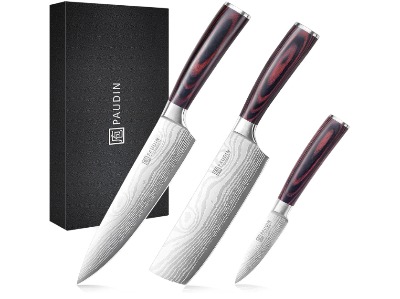
The PAUDIN set takes a different approach by offering three knives instead of one. You get an 8-inch chef knife, a 7-inch santoku, and a 5-inch utility knife. All three feature high-carbon stainless steel blades with wooden handles.
The chef knife follows a classic Western design with a gentle curve. The santoku offers a straighter edge with a wider blade. The utility knife handles smaller tasks. Together, they cover virtually every cutting job in the kitchen.
Best Use Cases
This set is perfect for setting up a new kitchen or replacing worn-out knives all at once. The variety of blade styles means you can tackle any task with the appropriate tool.
The chef knife handles general prep work. The santoku excels at precise vegetable cuts and slicing cooked meats. The utility knife manages smaller jobs like trimming herbs or cutting citrus.
For home cooks who want options without buying individual knives, this set provides excellent coverage at a budget-friendly total price.
Key Features Explained
The high-carbon stainless steel formula balances performance and maintenance. The carbon content makes the edge harder and sharper than basic stainless, while the stainless component resists rust and staining.
Each knife features a full tang construction. The steel extends through the entire handle, creating strength and good balance. The wooden handles are secured with three rivets on each side.
The blades use a tapered edge design. The spine is thick for strength, while the edge is ground thin for sharpness. This combination provides durability without sacrificing cutting performance.
Real-Life Usage Insight
Having three knives at different sizes and styles changes how you work in the kitchen. You start reaching for the right tool for each job instead of making one knife do everything.
The chef knife performs admirably for general tasks. It’s not quite as sharp or refined as more expensive single knives, but it gets the job done reliably. The santoku quickly became the favorite for vegetable prep, with its wider blade and straighter edge making push cuts easy.
The utility knife fills the gap between the larger blades and a paring knife. It’s perfect for tasks where an 8-inch blade feels unwieldy.
Honest Pros and Cons
Pros:
- Three knives for the price of one premium knife
- Variety of blade styles for different tasks
- Full tang construction on all three knives
- Natural wood handles look attractive
- Sharp enough for immediate use
- Great value for equipping a kitchen
- Decent edge retention for the price
Cons:
- Individual knife quality not as high as single premium options
- Wood handles require more care than synthetic
- Sharpness and edge retention don’t match premium single knives
- No storage block or protective sheaths included
Performance Discussion
As a set, these knives perform well above their price point. Each individual knife isn’t as refined as a premium single knife, but they’re more than adequate for home cooking.
The edges come reasonably sharp and hold up decently with regular use. You’ll need to sharpen them more often than premium options, perhaps every few weeks with daily use.
The blade grinds are competent but not exceptional. They cut through most ingredients without excessive resistance, though they don’t glide through food quite as smoothly as thinner, sharper blades.
Ease of Use
The variety of knives makes the set very user-friendly. You can choose the right tool for each task, which often makes the job easier than forcing a single knife to do everything.
The handles are comfortable enough for regular use. During extended prep sessions, they’re adequate but not as ergonomic as more carefully designed grips.
Maintenance is straightforward. Hand wash all three knives and dry them promptly. The wood handles appreciate an occasional treatment with mineral oil to prevent drying and cracking.
Value for Money
This is where the PAUDIN set really shines. You get three functional knives for less than the cost of one premium knife. For someone on a tight budget or setting up their first kitchen, this represents tremendous value.
The quality is honest for the price. These aren’t heirloom pieces, but they’re solid tools that will serve you well for several years. When you’re ready to upgrade, you can replace them one at a time with premium options.
Comparison Insights: How These Knives Stack Up
When you put these five options side by side, clear patterns emerge. The Japanese-style knives (HOSHANHO and the Damascus with VG10) prioritize sharpness and precision. They’re thinner, lighter, and hold an edge longer.
The German knives (HENCKELS and WÜSTHOF) focus on durability and versatility. They’re heavier, more forgiving, and easier to maintain. They excel at general kitchen work rather than specialized tasks.
The PAUDIN set offers quantity over peak quality. You sacrifice some refinement in exchange for variety and coverage.
Sharpness and Edge Retention
The VG10 Damascus knife wins for pure sharpness out of the box. It arrives razor-sharp and maintains that edge longer than any other option. The HOSHANHO comes in second, with Japanese-style sharpness that lasts well.
The German knives arrive less sharp but are easier to maintain at home. The WÜSTHOF and HENCKELS respond quickly to honing and sharpening, making them ideal for cooks who don’t want to fuss with whetstones.
The PAUDIN set sits in the middle. The knives are sharp enough to use immediately but need more frequent maintenance to stay that way.
Build Quality and Materials
Both German brands deliver exceptional build quality. The forged HENCKELS has a slight edge in overall construction, but the laser-cut WÜSTHOF is still excellently made.
The Japanese knives use premium materials but may have slight inconsistencies in fit and finish. The performance is there, but you might notice small cosmetic imperfections that don’t affect function.
The PAUDIN knives are well-made for the price but don’t match the precision of the other options. Small variations in blade grinding and handle fitting are noticeable on close inspection.
Comfort and Handling
The ergonomic handle on the VG10 Damascus knife provides the best comfort during extended use. The design is based on actual hand position analysis and it shows.
The HENCKELS Classic has the best traditional handle. The simple design fits most hand sizes comfortably and doesn’t create hot spots.
The octagonal rosewood handle on the HOSHANHO is unique and comfortable once you adjust to it. Some users love it, while others prefer more conventional shapes.
Versatility
The HENCKELS Classic wins for pure versatility. It handles the widest range of tasks competently without specializing in anything particular.
The PAUDIN set offers versatility through variety. Having three different blade styles means you always have the right tool, even if each individual knife is less versatile.
The Japanese knives are more specialized. They excel at precision work but struggle with heavy-duty tasks like butchering.
Maintenance Requirements
The WÜSTHOF Gourmet requires the least maintenance. The synthetic handle tolerates neglect, and the steel is easy to sharpen.
The German knives both use softer steel that sharpens easily at home. You’ll need to sharpen more often, but the process is simpler.
The Japanese knives need more careful maintenance. The harder steel requires proper sharpening technique, and wood handles need regular oiling.
Complete Buying Guide: What to Consider
Blade Material and Steel Type
High-carbon stainless steel is the sweet spot for most home cooks. It offers good edge retention without the extreme maintenance needs of carbon steel or the poor performance of basic stainless.
Japanese steels like VG10 are harder and hold edges longer. German steels are softer and easier to sharpen. Neither is objectively better – it depends on your priorities.
Damascus patterns look beautiful but serve functional purposes too. The layered construction adds strength, and the micro-serrations help food release.
Blade Length and Size
An 8-inch blade is the standard chef knife size for good reason. It’s long enough to cut through large vegetables or slice meat but short enough to control precisely.
Smaller cooks or those with limited space might prefer a 6-inch or 7-inch blade. Taller cooks or those who process large quantities might want a 10-inch blade.
For most home kitchens, 8 inches hits the sweet spot between versatility and manageability.
Handle Design and Comfort
Handles matter more than many people realize. You’ll hold this knife for hours over its lifetime, so comfort is crucial.
Wood handles look beautiful and feel warm but require maintenance. Synthetic handles need less care but can feel slippery when wet. Some knives offer textured synthetic handles that combine low maintenance with good grip.
Try to imagine holding the knife for 30 minutes straight. Does the shape have any spots that might dig into your hand? Does it fit your grip style?
Weight and Balance
German knives tend to be heavier, which helps them power through dense ingredients. Japanese knives are lighter, reducing fatigue and allowing more precise control.
The balance point matters too. Knives balanced right at the heel let you use the blade weight efficiently. Forward-balanced knives give more control for precision work.
Neither style is better universally. Think about what you cook most often and which style would suit those tasks.
Tang Construction
Full tang means the blade steel extends through the entire handle. This creates the strongest, most durable construction and provides good balance.
Partial tang knives have the blade extend only partway into the handle. These can still be quality knives but won’t last as long under hard use.
At this price point, look for full tang construction. It’s a sign of quality and ensures your investment will last.
Edge Angle and Sharpness
Japanese knives typically use a sharper edge angle around 15 degrees per side. German knives use a wider angle around 20 degrees per side.
Sharper angles cut better but are more delicate. Wider angles are more durable but require more force to cut.
Both work well. The sharper Japanese edges are better for precision, while the sturdier German edges handle rough use better.
Maintenance Considerations
Think honestly about how much knife maintenance you’ll actually do. If you won’t sharpen regularly, choose a knife that holds an edge longer or is easy to have professionally sharpened.
If you enjoy learning new skills, a harder Japanese knife and a set of whetstones can be rewarding. If you want low-maintenance tools, stick with German knives and synthetic handles.
Brand Reputation and Warranty
Established brands like HENCKELS and WÜSTHOF offer proven quality control and customer service. Newer brands might offer similar performance at lower prices but with less track record.
Check warranty terms. Lifetime warranties against defects show manufacturer confidence. Limited warranties might indicate lower quality or higher failure rates.
Budget Allocation
Remember that a knife is only part of the equation. You’ll also need a cutting board, honing steel, and eventually sharpening equipment or service.
If your total budget is $100, buying a $60 knife leaves room for accessories. If you have more flexibility, investing the full $100 in the knife makes sense.
Who Should Buy These Knives
The HOSHANHO is Perfect For:
Home cooks who appreciate Japanese knife design and want Damascus aesthetics without premium pricing. It suits people who do a lot of precision vegetable prep and want a lightweight, sharp blade. If you’re comfortable with moderate maintenance and want a knife that looks as good as it performs, this is your match.
The HENCKELS Classic is Ideal For:
Practical cooks who want reliable German quality without breaking the bank. It’s perfect for people who use rock-chopping technique and value durability over aesthetics. If you want a workhorse knife that will last decades with minimal fuss, this is the one.
The VG10 Damascus Knife Suits:
Serious home cooks who want professional-level performance. It’s ideal for people who cook frequently and want the best cutting experience possible. If you’re willing to invest in proper maintenance and want a knife that performs like models costing much more, this delivers.
The WÜSTHOF Gourmet Works For:
No-nonsense cooks who value function over form. It’s great for busy kitchens where ease of maintenance matters more than aesthetics. If you want German quality at the lowest possible price point and don’t care about fancy materials, this fits the bill.
The PAUDIN Set Appeals To:
Budget-conscious cooks setting up a new kitchen or replacing multiple worn knives. It’s perfect for people who want variety without spending a lot. If you’d rather have three decent knives than one great knife, this set makes sense.
Common Mistakes to Avoid
Buying Based on Looks Alone
Damascus patterns and fancy handles catch the eye, but performance matters more. A beautiful knife that doesn’t cut well is just an expensive decoration. Focus on blade geometry, steel quality, and construction before considering aesthetics.
Ignoring Hand Size and Grip Style
A knife that’s perfect for someone with large hands might feel awkward for someone smaller. Pay attention to handle size and shape. If possible, hold similar knives before buying to understand what feels comfortable.
Overlooking Maintenance Requirements
That premium Japanese knife might seem like a bargain until you realize it needs professional sharpening every few months. Be realistic about how much time and money you’ll spend on maintenance. A knife that’s easy to care for might serve you better than one with slightly better performance.
Skipping the Cutting Board Investment
Even the best knife will dull quickly on a glass or ceramic cutting board. Wood or plastic boards are essential. Bamboo looks nice but is actually quite hard on edges. End-grain wood boards are ideal but expensive. Face-grain wood or quality plastic boards offer good protection at reasonable prices.
Using the Dishwasher
Even knives labeled dishwasher-safe shouldn’t go in there. The harsh detergents, high heat, and banging against other items will damage the edge and handle. Hand washing takes 30 seconds and dramatically extends knife life.
Cutting on Improper Surfaces
Never cut directly on countertops, plates, or anything harder than wood or plastic. This will destroy your edge in just a few uses. Always use a proper cutting board.
Storing Knives Loosely in Drawers
Throwing knives in a drawer damages edges and creates safety hazards. Use a knife block, magnetic strip, or blade guards. Proper storage protects your investment and prevents accidents.
Waiting Too Long to Sharpen
A dull knife is dangerous. It requires more pressure, which increases the chance of slipping. Regular honing and periodic sharpening keep edges aligned and sharp. Don’t wait until your knife can’t cut a tomato – maintain it proactively.
Using the Wrong Knife for the Job
Chef knives aren’t meant for everything. Don’t use them to open packages, cut through bones, or pry things open. These tasks damage the blade and can cause injury. Use appropriate tools for non-cutting tasks.
Expecting Perfection Immediately
Every knife has a break-in period. The edge settles, you adjust to the balance, and muscle memory develops. Give a new knife a few weeks of regular use before deciding if it’s right for you.
Final Verdict: Making Your Decision
After extensive testing and evaluation, each of these knives has earned its place in this guide. The best one for you depends on your specific needs, preferences, and cooking style.
For Pure Performance: The Japanese Damascus knife with VG10 steel core delivers the best cutting experience. It’s the sharpest, holds an edge longest, and feels most precise during use. If you want the best knife your money can buy under $100 and are willing to invest in proper maintenance, this is the clear winner.
For Value and Reliability: The HENCKELS Classic offers the best combination of quality, durability, and brand reputation. It won’t wow you with extreme sharpness, but it will serve you faithfully for decades. For practical cooks who want a tool they can count on, this represents smart spending.
For Japanese Style on a Budget: The HOSHANHO delivers authentic Japanese knife characteristics at an accessible price. The Damascus pattern looks premium, and the performance is excellent for the cost. It’s perfect for cooks who want Japanese knife benefits without the typical premium pricing.
For No-Nonsense Functionality: The WÜSTHOF Gourmet strips away extras to focus on core performance. It’s not flashy, but it’s well-made and dependable. If you care only about function and want the lowest-priced option from a top German brand, this fits.
For Kitchen Setup Value: The PAUDIN set gives you three knives for less than one premium option costs. The individual knives aren’t as refined, but having variety is valuable. For new cooks or those on tight budgets, this set provides excellent coverage.
The Bottom Line
You can’t go wrong with any of these knives. They all represent honest value and will significantly improve your cooking experience compared to cheap department store knives.
The key is matching the knife to your needs. Think about what you cook, how you cook it, and how much maintenance you’re willing to do. The perfect knife is the one that fits seamlessly into your kitchen routine.
A good chef knife is one of the best investments you can make in your kitchen. It will last for years, make cooking more enjoyable, and improve your results. At this price point, you’re getting professional-quality tools that will serve you well whether you’re a beginner or an experienced home cook.
Take your time making this decision. Read reviews, watch videos, and if possible, handle similar knives in stores. The right knife will feel natural in your hand and make you excited to cook. When you find that match, you’ll wonder how you ever managed with lesser blades.

Hi, I’m Mary, the founder of KitchenClue.com. I’m deeply passionate about everything that makes a kitchen smarter, easier, and more enjoyable. I share hands-on insights and practical expertise on kitchen gear that truly helps in daily cooking. Along with my dedicated research team, we study products carefully, and our writers create honest, well-tested reviews using trusted, authentic sources—so you can choose kitchen tools with total confidence.