5 Best Chef Knife Under $200 In 2026
You know that feeling when you’re trying to slice a tomato and your knife just squashes it? Or when you spend twice as long chopping onions because your blade won’t cut cleanly? A good chef’s knife changes everything in the kitchen.
But here’s the thing – you don’t need to spend a fortune to get a blade that performs like a dream. The sweet spot for quality and value sits right around the $200 mark. At this price point, you can grab knives that rival those fancy $400 options without emptying your wallet.
I’ve spent countless hours researching and analyzing the top contenders in this price range. Today, we’re diving deep into five exceptional chef’s knives that deliver professional-level performance without the professional-level price tag.
This guide walks you further through everything you need to know. We’ll look at what makes each knife special, who should buy it, and how it stacks up against the competition. By the end, you’ll know exactly which blade belongs in your kitchen.
Let’s cut through the noise and find your perfect knife.
What Makes a Chef’s Knife Worth Your Money?
Before we jump into the reviews, let’s talk about what actually matters in a chef’s knife.
The blade material determines how sharp your knife gets and how long it stays that way. High-carbon steel holds an edge longer than regular stainless steel, but it needs more care. Japanese steel typically gets sharper than German steel, though German blades are often more forgiving.
The handle isn’t just about looks. A comfortable grip reduces hand fatigue during long prep sessions. You want something that feels secure even when your hands are wet or greasy.
Balance matters more than most people realize. A well-balanced knife feels like an extension of your hand. You shouldn’t feel the blade pulling forward or the handle weighing you down.
The edge geometry affects how the knife cuts. Thinner edges slice through delicate ingredients with ease. Thicker edges are more durable but require more pressure.
Weight is personal preference. Some cooks love a heavy knife that uses its own weight to power through tough ingredients. Others prefer a lighter blade that responds quickly to every movement.
Now that we’ve covered the basics, let’s meet our contenders.
Global Knives 8″ Chef’s Knife
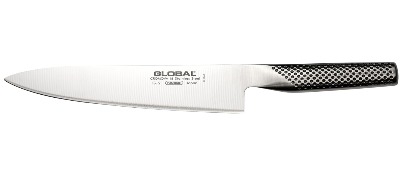
Global has been making waves in the knife world since they introduced their distinctive all-steel design. This 8-inch chef’s knife brings Japanese precision to your cutting board at a price that makes sense.
Product Description
The Global 8-inch chef’s knife features a single piece of CROMOVA 18 stainless steel construction. The blade and handle are forged from the same piece of metal, which creates a seamless design. The handle has those signature dimples that Global is known for, and the blade sports a razor-sharp edge ground to a 15-degree angle.
This knife weighs about 6 ounces, making it lighter than many Western-style chef’s knives. The blade measures 8 inches long with a straight edge and minimal curve. The entire knife stretches about 13 inches from tip to end.
Best Use Cases
This knife excels at precision work. If you’re slicing sashimi-grade fish, the thin blade glides through without tearing the delicate flesh. It handles vegetables like a champ, especially when you need paper-thin slices of garlic or ginger.
The light weight makes it perfect for cooks who do a lot of prep work. Your hand won’t get tired even after dicing five pounds of onions. Home cooks who want to improve their knife skills will appreciate how responsive this blade feels.
It’s not ideal for heavy-duty tasks like breaking down whole chickens or cutting through butternut squash. The thin blade can flex under pressure, and you might feel like you’re working too hard on tough ingredients.
Key Features
The CROMOVA 18 steel combines chromium, molybdenum, and vanadium with stainless steel. This blend holds a sharp edge longer than standard stainless steel while resisting rust and stains.
The one-piece construction means there are no seams where food can get trapped. You can clean this knife in seconds, and bacteria has nowhere to hide. The seamless design also eliminates any weak points where the handle might separate from the blade.
Those dimples on the handle aren’t just for show. They create air pockets that help you maintain a secure grip even when your hands are slippery from raw meat or oil.
The blade gets sharpened to a 15-degree angle on each side. That’s sharper than most Western knives, which typically sit at 20 degrees. The sharper angle cuts through ingredients with less resistance.
Real-Life Usage
Pull this knife out for your daily cooking tasks and it performs beautifully. The lightweight design lets you work quickly through a pile of vegetables. You can rock the blade through herbs to mince them fine, and the sharp edge makes clean cuts that don’t bruise delicate greens.
The balance point sits right where the blade meets the handle. This makes the knife feel nimble and easy to control. You can switch between slicing, dicing, and mincing without adjusting your grip.
Some cooks find the handle takes getting used to. The smooth steel doesn’t offer the same warm feeling as wood, and the cylindrical shape might feel different if you’re used to traditional handles. Give it a week of regular use and most people adapt just fine.
The thin blade means you need to use proper cutting technique. Let the sharp edge do the work instead of applying a lot of downward pressure. Push or pull cuts work better than straight chopping motions.
Pros and Cons
What Works:
- Extremely sharp right out of the box
- Lightweight design reduces hand fatigue
- Easy to clean with no crevices for food buildup
- Stays sharp for months with regular use
- Precise cuts on delicate ingredients
- Attractive modern design
What Doesn’t:
- Handle feels cold and slippery to some users
- Not great for heavy-duty chopping tasks
- Thin blade can chip if you hit hard bones
- Takes time to get used to the grip
- Not dishwasher safe despite being all steel
Performance Discussion
The Global knife delivers outstanding cutting performance for its price. The sharp edge slices through ripe tomatoes without crushing them. You can cut onions so thin you can almost see through them.
The blade glides through proteins cleanly. When trimming fat off a steak or portioning chicken breasts, you get smooth cuts that look professional. The sharp tip works well for detailed work like removing silver skin from tenderloins.
Harder vegetables require more effort than they would with a heavier knife. You’ll need to use a rocking motion and let the sharp edge work rather than trying to power through with weight. This isn’t a bad thing – it just means you need to adjust your technique.
The edge retention is impressive. With normal home use, you might go four to six months before needing to sharpen it. Regular honing keeps the edge aligned and performing well between sharpenings.
Ease of Use
Beginners might find this knife intimidating at first. The sharp edge demands respect and proper technique. But that same sharpness makes cutting easier once you learn to trust the blade.
The light weight feels great for cooks with smaller hands or less grip strength. You don’t need to muscle this knife through ingredients. Let it do the work and you’ll be amazed at how effortless prep becomes.
Maintenance is straightforward. Hand wash it, dry it immediately, and it’ll last for decades. The stainless steel resists rust, so you don’t need to oil it like carbon steel knives.
Value for Money
At around $150, the Global 8-inch chef’s knife sits in the middle of our price range. You’re paying for quality Japanese steel and a unique design that performs exceptionally well.
This knife competes with blades costing twice as much. The only real sacrifices compared to $300+ knives are the steel handle (some prefer wood or composite materials) and the lighter weight (which many cooks actually prefer).
For cooks who value precision and edge retention over heft and durability, this knife delivers tremendous value. You get decades of reliable service if you take care of it properly.
Shun Classic 8″ Chef’s Knife
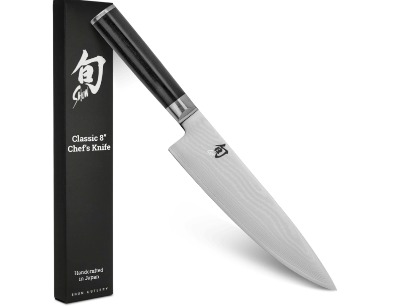
Shun builds knives the traditional Japanese way, using techniques that date back centuries. Their Classic line brings that heritage to modern kitchens with stunning results.
Product Description
The Shun Classic features a core of VG-MAX steel clad in 34 layers of Damascus stainless steel. This creates that beautiful wavy pattern you see on the blade. The handle uses ebony-finished Pakkawood, which resists moisture and provides a comfortable grip.
The blade measures 8 inches with a curved belly that rocks smoothly on your cutting board. The knife weighs about 7 ounces, slightly heavier than the Global but still lighter than most German knives. The edge gets sharpened to 16 degrees per side, making it incredibly sharp.
Best Use Cases
This knife handles everything a home cook throws at it. The curved blade rocks through herbs and aromatics beautifully. The sharp edge slices proteins cleanly, and the pointed tip handles detail work with precision.
Serious home cooks who want a knife that performs at a professional level will love this blade. It’s versatile enough to be your only chef’s knife if you had to pick just one. The beautiful Damascus pattern makes it a joy to use, which might sound silly until you experience it.
The knife works well for both Western and Asian cooking styles. You can rock-chop through a bunch of parsley or use push cuts to slice sushi rolls. The versatility is impressive.
Key Features
VG-MAX steel is Shun’s proprietary blend. It contains more carbon than regular stainless steel, which allows it to hold a sharper edge. The steel also includes chromium and vanadium for corrosion resistance and durability.
Those 34 layers of Damascus steel aren’t just pretty. They create micro-serrations along the edge that help food release from the blade. Potato slices and carrot rounds are less likely to stick to the blade as you cut.
The Pakkawood handle is made from hardwood that’s been impregnated with resin. This makes it waterproof and incredibly durable. It won’t crack, warp, or harbor bacteria like natural wood can. The D-shaped handle fits right-handed users perfectly.
The full tang extends through the entire handle. This creates excellent balance and makes the knife feel solid and well-made. The visible tang lines on the handle add to the aesthetic appeal.
Real-Life Usage
This knife feels fantastic in your hand from the first moment. The contoured handle fits your palm naturally, and the weight distribution makes it easy to control. You can work for hours without your hand cramping up.
The sharp edge makes quick work of prep tasks. Brunoise dicing carrots becomes almost meditative when your knife glides through each cut. The blade is thin enough to make precise cuts but thick enough to handle daily use without babying it.
That Damascus pattern catches the light as you work. It might seem like a superficial feature, but it makes cooking more enjoyable. You’ll find yourself looking forward to prep work instead of dreading it.
The curve of the blade takes some getting used to if you’re coming from a straighter blade. Once you adjust your technique, that curve becomes your best friend for rock-chopping and smooth slicing motions.
Pros and Cons
What Works:
- Exceptionally sharp edge that lasts for months
- Beautiful Damascus pattern on the blade
- Comfortable handle that reduces fatigue
- Versatile for all types of cutting tasks
- Excellent balance and control
- Holds edge better than most knives in this price range
What Doesn’t:
- Requires hand washing and careful storage
- Handle designed for right-handed users only
- More expensive than some competitors
- Can chip if used on frozen foods or bones
- Needs professional sharpening eventually
Performance Discussion
The Shun Classic cuts like a dream. The sharp edge requires minimal pressure, which means cleaner cuts and less cell damage to your ingredients. Your onions won’t make you cry as much when you’re not crushing them with a dull blade.
The knife excels at slicing cooked meats. Carving a roast chicken or slicing a flank steak gives you clean, even pieces that look restaurant-quality. The sharp tip makes it easy to work around bones and cartilage.
Vegetables pose no challenge at all. From delicate tomatoes to dense sweet potatoes, this knife handles them all with ease. The blade doesn’t wedge in larger vegetables, and it doesn’t crush softer ingredients.
The edge retention is outstanding. Expect to go six months or more between sharpenings with regular home use. Honing the blade once a week keeps it performing at its best.
Ease of Use
New knife users will find this blade forgiving and easy to learn with. The sharp edge means you don’t need perfect technique to get good results. As your skills improve, the knife keeps up with you.
The comfortable handle makes long prep sessions less tiring. Your hand naturally finds the right position, and the smooth wood feels pleasant against your skin. The weight is light enough to maneuver easily but heavy enough to feel substantial.
Maintenance requires a bit more attention than some knives. Hand wash it immediately after use and dry it completely. Store it in a knife block or on a magnetic strip to protect the edge. These extra steps become second nature quickly.
Value for Money
The Shun Classic typically costs around $180 to $200. That puts it at the top of our price range, but the quality justifies the cost. You’re getting a knife that performs like blades costing $300 or more.
The craftsmanship is evident in every detail. The Damascus pattern shows the care that went into forging the blade. The fit and finish are flawless, with no rough edges or loose parts.
This knife will last for decades with proper care. Think of it as an investment in better cooking and more enjoyable time in the kitchen. The cost per use over the years makes it an excellent value.
MITSUMOTO SAKARI Japanese Chef’s Knife Set 4 Pcs
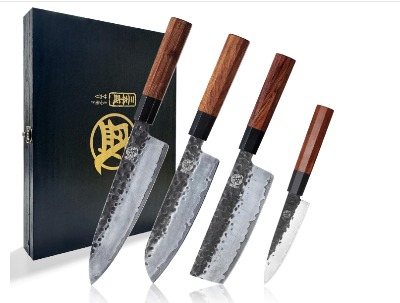
This set takes a different approach by giving you four knives instead of just one. MITSUMOTO SAKARI aims to deliver traditional Japanese craftsmanship at an accessible price point.
Product Description
The set includes an 8-inch chef’s knife, a 7-inch santoku, a 5-inch utility knife, and a 3.5-inch paring knife. Each blade is forged from high-carbon steel and features a hand-hammered finish that creates a dimpled texture across the surface.
The knives come with rosewood handles that are ergonomically shaped. The set arrives in a beautiful sandalwood box that works for both storage and presentation. Each knife weighs between 3 and 8 ounces depending on the size.
The blades are sharpened to 15 degrees per side, creating edges that rival much more expensive Japanese knives. The full tang construction extends through the rosewood handles, providing balance and durability.
Best Use Cases
This set works best for cooks who want a complete knife collection without buying pieces individually. You get everything you need to handle any kitchen task, from peeling apples to breaking down a whole fish.
The variety of sizes means you can match the right knife to each job. Use the 8-inch chef’s knife for big jobs, the santoku for vegetables, the utility knife for sandwiches and small tasks, and the paring knife for detailed work.
Home cooks who appreciate traditional Japanese aesthetics will love these knives. The hand-hammered finish and rosewood handles create a rustic, artisanal look that stands out from mass-produced knives.
Key Features
The high-carbon steel blades get sharper than regular stainless steel. Carbon steel can achieve a keener edge, which translates to easier cutting and cleaner results. The trade-off is that you need to keep these knives dry to prevent rust spots.
That hammered finish isn’t just decorative. The dimples create air pockets between the blade and your food. This reduces suction and helps ingredients fall away from the knife instead of sticking to it. Slicing potatoes or cucumbers becomes noticeably easier.
The rosewood handles feel warm and natural in your hand. Wood absorbs less heat and cold than metal, so these knives feel comfortable even when you’ve been working with cold ingredients or washing them in hot water.
The sandalwood box provides attractive storage that protects your investment. You can keep the knives safely stored when not in use, and the box makes an impressive presentation if you’re giving the set as a gift.
Real-Life Usage
Having four knives at your disposal changes how you work in the kitchen. You can use the chef’s knife for rough chopping, then switch to the paring knife for delicate work without having to clean and switch back and forth with a single blade.
The knives arrive sharp and ready to use. Right out of the box, they’ll slice through paper with ease. In actual cooking, they handle vegetables, fruits, and proteins without any trouble.
The carbon steel does require more care than stainless steel. You need to wash and dry these knives immediately after use. A thin coating of mineral oil helps prevent rust if you live in a humid climate. This extra maintenance isn’t difficult, but it’s something to keep in mind.
The rosewood handles develop a patina over time that many people find attractive. The wood darkens slightly and becomes smoother with use. Some users apply mineral oil to the handles occasionally to keep the wood from drying out.
Pros and Cons
What Works:
- Four knives for the price of one premium blade
- Very sharp edges right out of the box
- Beautiful hand-hammered finish
- Comfortable wooden handles
- Includes storage box
- Good value for a complete set
What Doesn’t:
- Carbon steel requires more maintenance
- Can develop rust spots if not dried properly
- Handles need occasional oiling
- Quality not quite on par with premium single knives
- Sharpening high-carbon steel requires specific stones
Performance Discussion
The 8-inch chef’s knife in this set performs admirably for everyday tasks. The sharp edge makes quick work of vegetables, and the dimpled surface helps prevent sticking. You can rock-chop herbs or use push cuts for slicing with equal success.
The santoku offers a different cutting experience. The wider blade provides more knuckle clearance, and the flatter profile works well for push cutting vegetables. It’s become the go-to knife for many users in this set.
The utility knife fills the gap between the chef’s knife and paring knife perfectly. It handles tasks that are too big for a paring knife but too small to drag out the chef’s knife. Slicing sandwiches, trimming fat, or cutting up apples all work well with this size.
The paring knife excels at detail work. Hulling strawberries, deveining shrimp, or creating garnishes all become easier with this small, precise blade.
Ease of Use
The learning curve for these knives is minimal. They feel comfortable in your hand, and the sharp edges make cutting easier for beginners. The only real challenge is remembering to dry them thoroughly after washing.
The different sizes help you develop better knife skills. You’ll naturally learn which knife works best for each task, and having options encourages you to use the right tool for the job.
Maintaining four knives takes more time than maintaining one. You need to wash, dry, and properly store all of them. You’ll also need to sharpen four blades eventually, though they hold their edges well enough that this won’t be frequent.
Value for Money
This set typically sells for around $120 to $140, making it the most affordable option in our roundup. You’re getting four knives for less than the cost of a single premium blade from Global or Shun.
The quality of each individual knife doesn’t match the top-tier options. But for someone building a knife collection or wanting variety without spending a fortune, this set delivers solid value.
Think about it this way – you’d spend more buying four separate knives of similar quality. The set packaging and the included box add convenience and presentation value.
Serbian Chef Knife Set, Hand Forged with High Carbon Steel
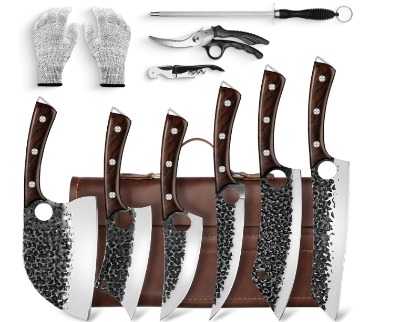
This Serbian-style set takes inspiration from traditional Balkan meat-processing knives. The result is a collection built for serious cutting power.
Product Description
The set includes three knives: an 8-inch chef’s knife, a meat cleaver, and a boning knife. Each blade is hand-forged from high-carbon steel, giving them that traditional blacksmith look with a dark patina finish.
The knives feature full tang construction with ergonomic wooden handles. The set comes with a canvas carrying bag that protects the knives and makes them portable. Each blade is thick and heavy compared to Japanese-style knives.
The chef’s knife weighs about 12 ounces, significantly heavier than the other knives we’ve reviewed. The meat cleaver tips the scales at over a pound. These are substantial tools built for power rather than precision.
Best Use Cases
This set excels at heavy-duty kitchen tasks. Breaking down whole chickens, cutting through joints, trimming briskets, and processing large cuts of meat all play to these knives’ strengths.
Hunters and people who buy whole animals will appreciate the boning knife. It navigates around bones and through connective tissue with ease. The sturdy construction means you won’t worry about damaging the blade while working.
The cleaver handles vegetables that other knives struggle with. Butternut squash, pineapples, and cabbage wedges all succumb to the cleaver’s weight and sharp edge. You can also use it to crush garlic or ginger with the flat of the blade.
Backyard cooks who grill and smoke meat will find this set invaluable. The knives can handle anything from trimming fat off a pork shoulder to slicing brisket into perfect portions.
Key Features
The high-carbon steel used in these blades is similar to what blacksmiths have used for centuries. It gets extremely sharp and holds that edge through heavy use. The material is tough enough to handle bones and frozen foods without chipping.
The hand-forged construction means each knife is unique. You can see the hammer marks and forge marks on the blade, which adds character and shows the craftsmanship involved. These aren’t mass-produced knives stamped out of sheet metal.
The thick blades provide the heft needed for tough cutting tasks. The weight does the work for you – just lift and let gravity help the blade fall through whatever you’re cutting. This reduces the effort needed for difficult jobs.
The ergonomic wooden handles provide a secure grip even when wet or greasy. The handles are thick enough to fill your palm, which helps with control when applying force.
Real-Life Usage
These knives change how you approach meat preparation. Tasks that seemed difficult with a standard chef’s knife become manageable. Breaking down a whole chicken takes minutes instead of feeling like a wrestling match.
The weight takes some adjustment if you’re used to lighter Japanese knives. Your arm might get tired during extended prep sessions. But for focused tasks like portioning meat, the weight is an asset rather than a liability.
The boning knife deserves special mention. The narrow, flexible blade gets into tight spaces around bones. When you’re trying to separate meat from a T-bone or remove ribs from a pork loin, this knife makes you feel like a professional butcher.
The cleaver is incredibly versatile. Yes, it chops through bones, but it also works great for vegetables. The wide blade can scoop up chopped ingredients and transfer them to your pot or pan.
Pros and Cons
What Works:
- Exceptional durability for heavy-duty tasks
- Gets very sharp and holds the edge well
- Hand-forged quality with unique character
- Includes specialized knives for meat processing
- Comes with protective carrying bag
- Affordable for a three-piece forged set
What Doesn’t:
- Heavy weight tires your hand during long sessions
- Requires immediate drying to prevent rust
- Not ideal for delicate precision work
- Handles need occasional treatment with mineral oil
- Rustic appearance won’t appeal to everyone
Performance Discussion
The chef’s knife cuts through meat like butter. Whether you’re slicing raw chicken breast or carving a pot roast, the sharp edge and substantial weight make it easy. The thick blade pushes through dense ingredients without flexing or wandering.
The boning knife’s flexibility is perfect for following the contours of bones. You can feel the knife bend slightly as you work around joints, which helps you waste less meat. The sharp tip navigates into small spaces with precision.
That cleaver is a workhorse. It powers through tough vegetables and makes quick work of portioning ribs or cutting chops. The weight means you don’t need to use much force – just guide the blade and let it fall.
For delicate work, these knives aren’t the best choice. The thick blades don’t slice tomatoes as cleanly as thinner Japanese knives. If you need paper-thin slices of ginger, you’ll want to reach for something else.
Ease of Use
Beginners might find these knives intimidating at first. The weight and aggressive appearance can be off-putting. But once you start using them for appropriate tasks, they’re actually quite user-friendly.
The substantial feel gives you confidence when tackling difficult cutting jobs. You’re not worried about the knife failing or bending. This mental comfort translates to better, more decisive cuts.
Maintenance follows the same rules as other carbon steel knives. Wash immediately, dry thoroughly, and apply a light coat of oil if storing for extended periods. The dark patina that develops over time actually helps protect against rust.
Value for Money
This set usually costs between $100 and $130, making it the most budget-friendly option we’re reviewing. For three hand-forged knives and a carrying bag, that’s impressive value.
You won’t find this combination of features at this price point from major brands. The hand-forged construction alone typically commands premium pricing. These knives prove you don’t need to spend a fortune for quality forged blades.
The specialized nature of this set means it works best as a supplement to other knives rather than your only set. But for anyone who regularly processes meat, the value is undeniable.
Miyabi Kaizen 8-Inch Chef’s Knife
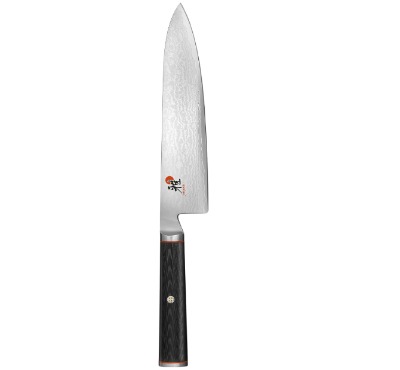
Miyabi represents the meeting of Japanese tradition and German engineering. The Kaizen line showcases this fusion beautifully.
Product Description
The Miyabi Kaizen features a core of VG10 super steel surrounded by 64 layers of Damascus steel. This creates a stunning floral Damascus pattern that catches the eye immediately. The blade measures 8 inches with a curved profile that rocks smoothly.
The handle is made from black linen Micarta, a composite material that’s both durable and comfortable. The knife weighs about 9 ounces, putting it in the middle range between light Japanese knives and heavy German blades.
The blade is ice-hardened using Miyabi’s proprietary CRYODUR process. This treatment aligns the steel’s molecular structure, resulting in exceptional edge retention and durability. The edge is sharpened to 19 degrees per side.
Best Use Cases
This knife works beautifully for cooks who want the best of both worlds. You get Japanese sharpness with German durability. It handles delicate slicing tasks while also standing up to daily heavy use.
Professional cooks and serious home cooks will appreciate the refined engineering. Every detail has been optimized for performance, from the blade geometry to the handle shape.
The knife excels in kitchens where it’ll be used for hours every day. The comfortable handle and excellent balance reduce fatigue during extended cooking sessions. Restaurant line cooks and caterers will find it particularly well-suited to their needs.
Key Features
VG10 steel is one of the premium stainless steels used in knife making. It contains high levels of carbon for hardness, chromium for corrosion resistance, and other elements that enhance performance. The steel can be hardened to 60 HRC, which is quite hard while remaining tough.
Those 64 layers of Damascus steel create more than just good looks. They add strength to the blade and create a micro-serrated edge that helps food release. The layers also protect the harder VG10 core from chips and damage.
The CRYODUR ice-hardening process sets Miyabi knives apart. The blade gets cooled to extreme temperatures, which refines the steel’s structure at a molecular level. This results in a blade that’s both harder and more flexible than traditionally hardened steel.
The Micarta handle is incredibly durable. It won’t crack, warp, or absorb water like wood. It won’t get slippery like plastic. The material feels warm and comfortable in your hand while standing up to decades of use.
Real-Life Usage
This knife feels premium from the moment you pick it up. The balance is perfect – the weight is distributed so evenly that the knife feels almost weightless when you use it properly. Your hand naturally finds the right position on the handle.
The sharp edge glides through ingredients with minimal resistance. Slicing through an onion feels effortless, and dicing carrots becomes a quick task instead of a chore. The blade is thin enough for precision work but robust enough that you don’t worry about damaging it.
That Damascus pattern becomes even more beautiful as you use the knife. The layers catch the light differently depending on the angle, creating a subtle shimmer. It’s the kind of knife you’ll be proud to use in front of guests.
The curved belly works perfectly for rock-chopping. You can keep the tip on the cutting board and rock the blade through herbs, aromatics, or vegetables. The motion becomes smooth and rhythmic, making prep work almost meditative.
Pros and Cons
What Works:
- Stunning Damascus pattern with 64 layers
- Exceptional edge retention from CRYODUR treatment
- Perfect balance for extended use
- Comfortable, durable Micarta handle
- Sharp enough for delicate work, tough enough for daily use
- Stainless steel requires less maintenance than carbon steel
What Doesn’t:
- Premium price at the top of our budget
- Heavier than traditional Japanese knives
- Requires hand washing despite being stainless
- Professional sharpening recommended
- Might be more knife than casual cooks need
Performance Discussion
The Miyabi Kaizen cuts with exceptional precision. The sharp edge and thin blade geometry mean you can slice tomatoes without crushing them and julienne carrots with consistent results. Every cut feels clean and effortless.
The blade maintains its edge remarkably well. Even after months of regular use, it still slices through paper cleanly. The ice-hardened steel resists the dulling that comes from repeated contact with cutting boards and acidic ingredients.
Proteins pose no challenge. Slicing raw chicken breasts, trimming fat from steaks, or carving a roast all work beautifully. The blade is thin enough to make clean cuts without tearing the meat, and sharp enough to cut through connective tissue easily.
Hard vegetables like carrots and sweet potatoes slice smoothly without the blade wedging or sticking. The knife has enough weight to power through dense ingredients while remaining nimble enough for detailed work.
Ease of Use
This knife flatters your skills. Even if your technique isn’t perfect, you’ll get better results than with a lesser knife. The sharp edge compensates for small mistakes in angle or pressure.
The comfortable handle encourages proper grip and technique. Your fingers naturally fall into the pinch grip position, which gives you maximum control. The balance means you’re not fighting the knife’s weight or compensating for poor design.
Maintenance is straightforward despite the complex construction. Hand wash the knife, dry it immediately, and store it properly. The stainless steel resists rust, so you don’t need to oil it between uses.
Value for Money
The Miyabi Kaizen sits at the very top of our price range, usually selling for around $190 to $200. That’s a significant investment for a single knife.
But you’re getting technology and materials that justify the cost. The CRYODUR treatment alone is expensive to perform. The Damascus cladding requires skilled craftsmen to create. The precision grinding and polishing take time and expertise.
This knife will likely be the last chef’s knife you ever need to buy. With proper care, it’ll perform at a high level for decades. When you calculate the cost over the years you’ll use it, the value becomes clear.
Comparing the Contenders: Which Knife Wins?
Now that we’ve examined each knife individually, let’s see how they stack up against each other.
Sharpness and Edge Retention
The Shun Classic and Miyabi Kaizen lead the pack for initial sharpness. Both come with edges that feel scary sharp right out of the box. The Global isn’t far behind, though it uses a different type of steel that achieves sharpness in a different way.
For edge retention, the Miyabi’s CRYODUR treatment gives it a slight edge over the competition. The Shun Classic holds its edge admirably as well. Both Japanese-style knives will stay sharp longer than Western knives in the same price range.
The MITSUMOTO SAKARI set and Serbian set use high-carbon steel that can get extremely sharp. The trade-off is that these blades require more frequent maintenance to prevent rust and corrosion.
Handle Comfort
This category comes down to personal preference. The Shun’s Pakkawood and Miyabi’s Micarta handles feel warm and comfortable. They provide excellent grip even when wet.
The Global’s steel handle divides opinion. Some cooks love the modern feel and easy cleaning. Others find it cold and slippery. If you haven’t tried a steel handle before, test one if possible before committing.
The wooden handles on the MITSUMOTO SAKARI and Serbian sets feel natural and traditional. They require more care than synthetic materials but develop character over time.
Versatility
The Shun Classic takes the crown for all-around versatility. It handles everything from delicate herbs to dense vegetables with equal competence. The curved blade works well for both Western and Asian cutting techniques.
The Miyabi Kaizen runs a close second. It’s slightly heavier, which some cooks prefer for tough ingredients. The balance is so good that it adapts to whatever task you throw at it.
The Global excels at precision work but struggles with heavy-duty tasks. The Serbian set is the opposite – fantastic for meat processing but less ideal for delicate vegetables.
Durability
The Serbian knives win the durability contest. The thick, hand-forged blades can handle abuse that would damage thinner knives. You won’t worry about chipping the edge on a bone or using too much force.
The Miyabi’s CRYODUR treatment makes it remarkably tough for a thin Japanese blade. It combines the best aspects of durability with precision cutting.
The Shun and Global require more careful handling. They’re not fragile, but the thin blades can chip if you hit hard bones or use them on frozen foods.
Value Proposition
The MITSUMOTO SAKARI set offers the most knife for your money. Four blades for around $130 is tough to beat. The quality of each individual knife doesn’t match premium single knives, but the overall value is strong.
The Serbian set also punches above its weight class. Hand-forged knives at this price point are rare. If you need specialized meat-processing tools, this set delivers exceptional value.
For premium single knives, the Shun Classic offers the best balance of performance and price. You get near-perfect execution of the Japanese chef’s knife design for less than $200.
Maintenance Requirements
The Global requires the least maintenance. The stainless steel construction resists rust, and the seamless design cleans easily. Just wash, dry, and store it properly.
The Shun and Miyabi need hand washing and proper storage but don’t require oiling. Their stainless steel construction makes them relatively low-maintenance for high-performance knives.
The carbon steel knives in the MITSUMOTO SAKARI and Serbian sets demand the most care. Wash and dry immediately after every use. Oil the blades if storing for extended periods. The extra maintenance isn’t difficult, but it’s something to remember.
Your Complete Buying Guide
Steel Types Explained
Stainless steel contains chromium, which creates a protective layer that resists rust. It’s easier to maintain but typically doesn’t get quite as sharp as carbon steel. Most stainless steel knives use variations like VG10, CROMOVA 18, or AUS-10.
High-carbon stainless steel combines carbon for hardness with chromium for rust resistance. It gets sharper than regular stainless steel and holds an edge longer. The Shun and Miyabi use this type of steel.
High-carbon steel (without stainless) gets extremely sharp and holds an edge well. But it requires more maintenance because it can rust if not dried properly. The Serbian and MITSUMOTO SAKARI knives use this type.
Handle Materials Matter
Wood looks beautiful and feels natural in your hand. It doesn’t conduct heat or cold, so it’s comfortable in any situation. The downside is that wood can crack if it gets too dry or warp if exposed to too much moisture.
Pakkawood is wood that’s been stabilized with resin. It combines the look and feel of wood with better durability and water resistance. It won’t crack or warp like natural wood.
Micarta is layers of linen or paper bonded with resin. It’s incredibly durable and won’t absorb moisture. The material feels warm and provides excellent grip.
Steel handles are easy to clean and won’t degrade over time. They feel cold initially and can be slippery when wet. Some people love the modern aesthetic; others prefer more traditional materials.
Weight and Balance
Lighter knives (under 7 ounces) reduce hand fatigue during long prep sessions. They respond quickly to your movements and work well for precision tasks. Japanese-style knives typically fall into this category.
Medium-weight knives (7-10 ounces) offer a compromise. They have enough mass to handle tough ingredients but remain nimble enough for detailed work. Many cooks find this weight range most versatile.
Heavy knives (over 10 ounces) use their weight to power through dense ingredients. They’re excellent for chopping and heavy-duty tasks but can tire your hand during extended use. German-style and Serbian knives often weigh more.
Balance is more important than overall weight. A well-balanced knife feels like an extension of your hand. The weight should be distributed so the knife doesn’t feel tip-heavy or handle-heavy.
Edge Angle and Sharpness
Japanese knives typically sharpen to 15-16 degrees per side. This creates an extremely sharp edge that slices through ingredients with minimal resistance. The sharper angle makes cleaner cuts but is more delicate.
Western knives usually sharpen to 20 degrees per side. This creates a more durable edge that stands up to heavy use. The edge isn’t quite as sharp as Japanese knives but is less likely to chip.
Some knives use asymmetrical grinds where one side is sharpened at a different angle than the other. This is common in single-bevel Japanese knives but rare in the chef’s knives we’re reviewing.
What Size Do You Need?
An 8-inch chef’s knife is the sweet spot for most home cooks. It’s large enough to handle big tasks but not so big that it becomes unwieldy. If you can only own one knife, make it an 8-inch chef’s knife.
10-inch knives work better for cooks with large hands or those who frequently need to slice big ingredients. They’re popular in professional kitchens where speed matters.
6-inch knives suit cooks with smaller hands or limited kitchen space. They’re easier to control and store but sacrifice some versatility.
Rock Chop vs Push Cut
The blade shape affects which cutting technique works best. Curved blades with pronounced bellies excel at rock chopping. You keep the tip on the board and rock the blade through ingredients.
Flatter blades work better for push cutting. You lift the entire blade and push forward through ingredients. This technique is common in Asian cooking.
Many knives, including all our reviewed options, work with both techniques. The Shun and Miyabi have curves that favor rock chopping but can still push cut. The Global is flatter but still rocks adequately.
Storage Solutions
Knife blocks protect your blades and keep them organized. Make sure the slots are wide enough that you’re not dragging the sharp edge against wood every time you insert or remove the knife.
Magnetic strips mount on your wall and hold knives securely. They make your knives easy to access and look attractive. Make sure the magnets are strong enough to hold heavier knives safely.
Drawer inserts keep knives protected in a drawer. This works well if you don’t have counter or wall space. The knives should fit in individual slots to prevent them from banging against each other.
Knife guards are simple plastic or wood sheaths that protect individual blades. They’re perfect if you need to transport knives or store them in a drawer without a specialized insert.
Who Should Buy These Knives?
The Global Suits You If…
You value precision over power in your cooking. Your typical meals involve lots of vegetables, fish, or delicate proteins. You have smaller hands or prefer lighter knives.
You appreciate modern, minimalist design. You want something that looks different from traditional knives. You don’t mind a learning curve to get used to the steel handle.
You’re building your first quality knife collection and want to start with one excellent piece. You’re willing to spend around $150 for a knife that will last decades.
The Shun Classic Is Perfect For…
Serious home cooks who want professional-level performance. You cook regularly and want a knife that makes prep work enjoyable. You appreciate craftsmanship and attention to detail.
You want a versatile knife that handles everything well. You’re right-handed (the handle is optimized for right-hand use). You’re willing to invest in a knife that will be a kitchen companion for years.
You value aesthetics as well as function. That Damascus pattern isn’t just pretty – it’s also a sign of quality construction and materials.
The MITSUMOTO SAKARI Set Works Best For…
Budget-conscious cooks who want variety. You’re setting up a new kitchen and need multiple knives. You enjoy traditional Japanese aesthetics and don’t mind the extra maintenance carbon steel requires.
You want to try different knife sizes to see which you prefer. You’re giving a gift to someone who appreciates quality tools. You have the time to properly care for carbon steel.
The Serbian Set Is Right For…
Meat enthusiasts who regularly process large cuts. Hunters who break down game. Backyard grill masters who smoke whole briskets or pork shoulders.
You value durability and power over delicate precision. You want tools that can handle anything you throw at them. You appreciate hand-forged craftsmanship.
You need specialized knives for specific tasks. The boning knife and cleaver in this set fill roles that standard chef’s knives can’t handle well.
The Miyabi Kaizen Belongs In Your Kitchen If…
You want the absolute best knife our budget allows. You cook daily and treat your kitchen tools as long-term investments. You appreciate the fusion of Japanese sharpness with German engineering.
You’re willing to pay premium prices for premium performance. You want a knife that will impress other serious cooks. You prefer stainless steel for easier maintenance but still want exceptional sharpness.
You have the skills to fully utilize a high-performance knife. You’re committed to proper maintenance and care.
Common Mistakes to Avoid
Using the Wrong Cutting Board
Glass, marble, and ceramic cutting boards will destroy your knife’s edge in no time. They’re harder than steel, which means your blade dulls every time it contacts the surface.
Use wood or plastic cutting boards instead. End-grain wood boards are gentlest on edges. Plastic boards work well and can go in the dishwasher. Bamboo boards look nice but are harder than traditional wood.
Replace cutting boards when they develop deep grooves. These grooves harbor bacteria and make it harder to cut safely.
Dishwasher Damage
Even knives labeled as dishwasher-safe shouldn’t go in the dishwasher. The harsh detergents, high heat, and jostling damage the edge and can loosen handles.
Hand washing takes 30 seconds. Wash your knife right after use, dry it immediately, and put it away. This simple routine keeps your knife in top condition.
Improper Storage
Tossing knives loose in a drawer damages the edges and is dangerous when you reach in. The knives bang against each other and other utensils, creating chips and dull spots.
Use proper storage from day one. A knife block, magnetic strip, or drawer insert protects your investment and keeps you safe.
Cutting on Inappropriate Surfaces
Don’t cut directly on countertops, plates, or serving dishes. These hard surfaces dull your knife quickly. Always use a proper cutting board.
The same goes for cutting in pots and pans. The metal-on-metal contact damages both the knife and the cookware. Transfer ingredients to a cutting board first.
Neglecting Maintenance
Waiting until your knife is completely dull makes sharpening harder. The edge becomes so rounded that you need to remove a lot of metal to restore it.
Hone your knife regularly – once a week for daily use. This realigns the edge and keeps it sharp. Sharpen the knife when honing stops helping, typically every few months for home use.
Using the Wrong Technique
Applying too much downward pressure compensates for a dull knife but damages a sharp one. Let the sharp edge do the work. Guide the knife rather than forcing it.
Twisting the blade while it’s in food can chip or bend the edge. Complete each cut with a straight motion. If something doesn’t cut cleanly, reassess your approach rather than muscling through.
Ignoring Rust Spots
Carbon steel knives can develop rust spots if left wet. These spots aren’t just cosmetic – they pit the steel and create weak points.
Dry your knives immediately after washing. If you spot rust starting, scrub it off with a gentle abrasive like baking soda. Apply a light coat of mineral oil to prevent future rust.
Cutting Frozen Foods
Frozen foods are incredibly hard and can chip even quality knife blades. Let frozen items thaw slightly before cutting, or use a serrated knife for frozen foods.
If you regularly need to cut frozen foods, consider a dedicated beater knife that you don’t mind damaging.
Final Verdict: Which Knife Should You Buy?
After examining all five options, here’s my honest take on which knife deserves your money.
For most home cooks, the Shun Classic 8″ Chef’s Knife offers the best combination of performance, versatility, and value. It handles everything a home kitchen demands with grace and precision. The Damascus blade is gorgeous enough to make you smile every time you use it. The edge retention means you’ll spend more time cooking and less time maintaining your knife.
Yes, it sits at the top of our budget. But the quality justifies every dollar. This knife will likely outlast you if properly cared for. The cost per use over decades makes it a bargain compared to replacing cheaper knives every few years.
If precision work is your priority and you want the lightest possible knife, go with the Global 8″ Chef’s Knife. It excels at detailed tasks and makes quick work of vegetables. The unique design isn’t for everyone, but those who love it really love it. At $150, it costs less than the Shun while still delivering exceptional performance.
Budget-conscious cooks who want variety should grab the MITSUMOTO SAKARI set. Four knives for around $130 is remarkable value. You won’t get Shun-level performance from each individual knife, but you’ll have the right tool for every job. The carbon steel requires more care, but the beautiful hand-hammered finish makes the extra effort worthwhile.
The Miyabi Kaizen is the choice for cooks who want the absolute best our budget allows. The CRYODUR ice-hardening treatment delivers edge retention that surpasses every other knife we reviewed. The 64-layer Damascus blade is stunning. If you cook every day and treat your tools as investments, this knife won’t disappoint.
The Serbian set serves a specific audience brilliantly. If you regularly process meat, hunt, or simply prefer heavier knives with serious cutting power, this is your set. The hand-forged construction and specialized knives handle tasks that would damage lighter blades. At around $120, it’s the most affordable way to get quality forged knives.
The Bottom Line
You can’t go wrong with any of these knives. They all deliver quality that far exceeds their price points. Your final choice depends on your cooking style, preferences, and budget.
Think about what you cook most often. Consider whether you value precision or power. Decide if you want one perfect knife or a collection of specialized tools.
A quality chef’s knife transforms your cooking experience. Food prep becomes faster, easier, and more enjoyable. The knife you choose today will be with you for years, probably decades. Take your time, consider your needs, and invest in the blade that speaks to you.
Your perfect knife is waiting. Pick one and start creating better meals today.

Hi, I’m Mary, the founder of KitchenClue.com. I’m deeply passionate about everything that makes a kitchen smarter, easier, and more enjoyable. I share hands-on insights and practical expertise on kitchen gear that truly helps in daily cooking. Along with my dedicated research team, we study products carefully, and our writers create honest, well-tested reviews using trusted, authentic sources—so you can choose kitchen tools with total confidence.