Tetsujin Ginsan vs Blue 2 Knife
If you love cooking, you know that a good knife makes all the difference. There are many great knife options out there. Two names that pop up often in knife circles are Tetsujin Ginsan and Blue 2. Both of these are Japanese knives that have huge followings. But which one should you pick?
This is the question we’re going to answer today. We’ll look at every angle. We’ll compare how they perform, how long they last, how easy they are to keep sharp, and so much more. By the time you finish reading, you’ll know exactly which knife fits your cooking style best.
What is Tetsujin Ginsan Knife?
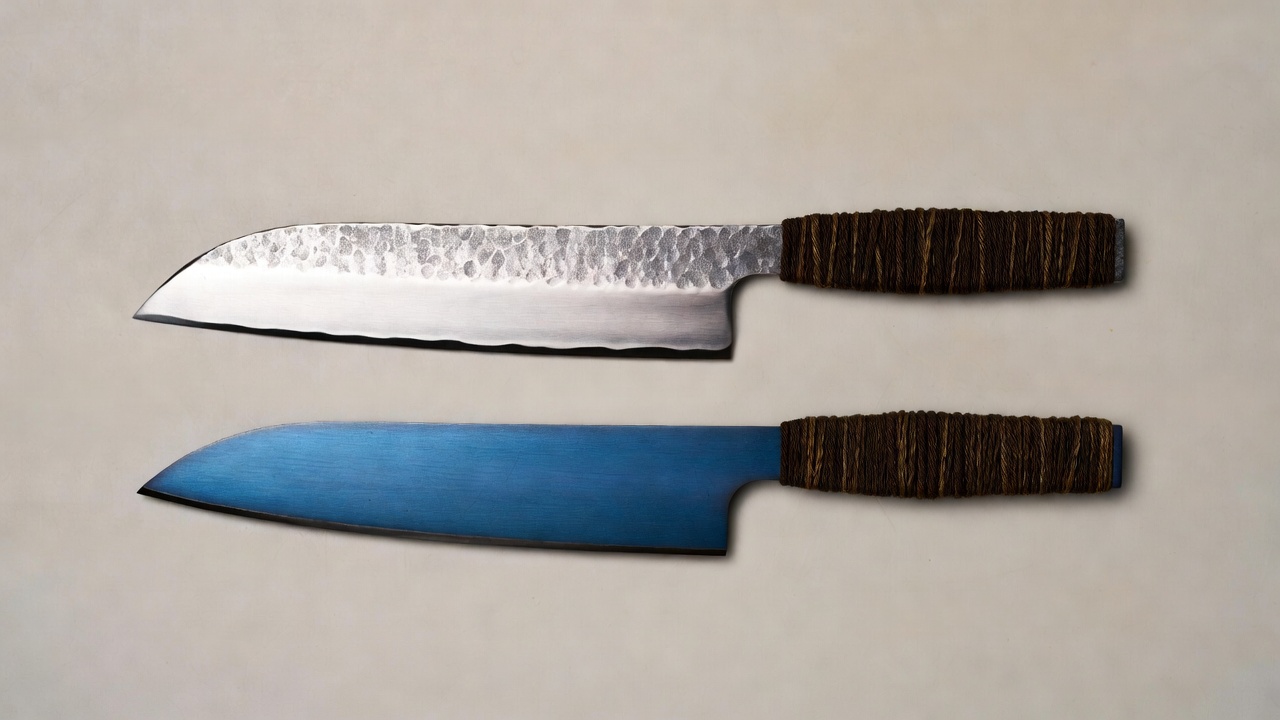
Tetsujin Ginsan is a Japanese kitchen knife that uses a special steel called Ginsan. Ginsan steel has a cool history. It was made to give you the best of both worlds: easy care and great cutting ability.
The name “Ginsan” comes from Japanese. “Gin” means silver. “San” refers to three. This name talks about the three main metals in the steel mix: iron, chromium, and molybdenum. This mix makes the steel work well in the kitchen.
The Steel Behind Ginsan
Ginsan steel is what we call a stainless steel. This means it resists rust and needs less care than carbon steel knives. The steel has a hardness rating of about 60-61 HRC (Hardness Rockwell Scale). This is pretty hard for a kitchen knife.
One big perk of Ginsan steel is that it’s easy to sharpen. You don’t need fancy gear to keep your Tetsujin Ginsan knife sharp. A basic sharpening stone or honing steel works great. This makes it popular with home cooks who don’t want to fuss too much with maintenance.
The steel also keeps its edge fairly well. You won’t need to sharpen it every single day. With normal use, a Tetsujin Ginsan knife can go weeks between sharpenings.
Build Quality and Feel
Tetsujin Ginsan knives are made in Japan. The craftsmanship is solid. The balance feels good in your hand. Most Tetsujin Ginsan knives have a handle that’s comfortable and not too fancy.
The blade shape is what we call a gyuto, which is like a chef’s knife. It’s sharp enough for detailed work but also good for rough cuts. The blade width gives you a lot of ways to use it.
One thing people love about Tetsujin Ginsan is the price. It’s not the cheapest knife. But it’s far from the most expensive. You get real quality without paying luxury prices.
What is Blue 2 Knife?
Blue 2 is a different beast. It’s also a Japanese knife, but it uses carbon steel instead of stainless steel. Blue 2 steel is made in Japan too. It has a long track record in the knife world.
The name “Blue 2” comes from the color of the steel when it’s made. Japanese steels are often called by color names: white, blue, super blue, and so on. Blue 2 sits right in the middle of the toughness scale.
The Steel Behind Blue 2
Blue 2 is a carbon steel. This matters a lot. Carbon steel is different from stainless steel. It can rust if you don’t dry it right after use. But it has big perks too.
Blue 2 steel is harder than Ginsan. Most Blue 2 knives rate at 61-62 HRC. That means they hold an edge longer. You can do more cuts before the blade gets dull.
But here’s the trade-off: Blue 2 is tougher to sharpen. You need a sharper stone and a bit more elbow grease. If you don’t have good sharpening skills, a Blue 2 knife can feel like extra work.
The real appeal of Blue 2 is edge retention. Serious cooks love Blue 2 because they don’t have to sharpen as often. A single sharpening session can last for weeks or even months if you’re careful.
Build Quality and Feel
Blue 2 knives come in many brands. Some are made by small makers. Others come from big factories. The quality varies. But good Blue 2 knives are superb.
These knives have a bit more weight than Ginsan knives. Some people love the heft. Others find it tiring after long cooking sessions. It depends on your personal taste.
The blade on a Blue 2 knife is often thinner than Ginsan. This makes it feel a bit more delicate. It’s great for fine cuts.
Head to Head: Tetsujin Ginsan vs Blue 2
Now let’s put them side by side. We’ll look at the important stuff that affects your cooking life.
Durability and Rust Resistance
This is a big one. Ginsan is stainless steel. Blue 2 is carbon steel.
Ginsan wins this round, hands down. You can wash it, dry it in a rush, and not worry too much. Blue 2 demands more attention. If water sits on a Blue 2 blade for too long, brown spots appear. These are rust marks.
But here’s the thing: Blue 2 rust can be stopped. If you dry the blade right away after use, you won’t get rust. Wipe it while it’s still wet. That’s it.
For someone who cooks a lot and wants to not think about rust, Ginsan is the safer choice. For someone who’s willing to be a bit careful, Blue 2 is fine.
Edge Retention
Blue 2 edges last longer. This is just how the steel works. A Blue 2 knife can cut through 200 carrots before it gets noticeably dull. A Ginsan knife might get soft after 150.
But here’s the real deal: we’re not talking about huge differences. Both knives stay sharp long enough for normal home cooking.
Blue 2 shines if you cook a lot. If you’re running a busy kitchen or prepping food every day, Blue 2’s edge retention saves you time. You sharpen less often.
Ease of Sharpening
Ginsan is the winner here. It’s easier to sharpen. Easier means you’ll actually do it.
With Ginsan, you can get a sharp blade again with a basic stone and just a few minutes of work. Blue 2 takes longer. You need a sharper stone. You need more pressure. You need better technique.
If you hate sharpening, Ginsan is your friend. If you like the process and have decent skills, Blue 2 is fine.
Corrosion Resistance
Ginsan beats Blue 2 by a mile. Stainless steel just resists rust better than carbon steel. This is not a debate.
Blue 2 needs care. You can’t leave it wet. You can’t store it in a damp place. If you live in a humid area, Blue 2 is extra demanding.
Cutting Performance
Here’s where things get interesting. Both knives cut great. But they feel different.
Blue 2 feels sharper. It glides through food with less pressure. For delicate cuts, Blue 2 wins. For slicing thin things like fish or veggies, Blue 2 feels smoother.
Ginsan cuts well too. It’s not quite as effortless as Blue 2. But it’s close. And the difference matters less to home cooks. You can use Ginsan all day without getting hand fatigue.
Price Comparison
Ginsan is usually cheaper. You can get a good Tetsujin Ginsan knife for less than many Blue 2 knives.
But price varies by maker. Some Ginsan knives cost more than some Blue 2 knives. It depends on the brand and the specific model.
On average though, Ginsan is the budget-friendly choice.
Maintenance Requirements
This might be the biggest difference. Let’s be real about it.
Ginsan: You use it. You wash it. You dry it normally. Done. You might sharpen it every few weeks. That’s it.
Blue 2: You use it. You wash it. You dry it right away, by hand. You never let it sit wet. You store it somewhere dry. You sharpen it, which takes longer and is harder. You check it for spots.
Blue 2 is not hard to care for. But it needs more attention. If you’re lazy, this matters.
Who Should Buy Tetsujin Ginsan?
Ginsan is perfect for:
- Home cooks who want a great knife without fuss
- People who hate sharpening
- Anyone in a humid or wet kitchen
- Cooks who wash dishes right after cooking
- Beginners who want reliability
- People who value simplicity
- Anyone on a budget who still wants quality
- Cooks with varying skill levels
Ginsan is the knife that works great and doesn’t demand much from you. It’s forgiving. It’s reliable. It does its job.
Who Should Buy Blue 2?
Blue 2 is perfect for:
- Home cooks who love sharp knives
- People who cook a lot and value edge retention
- Folks with good knife care habits
- Cooks who enjoy the sharpening process
- People who love the feeling of a premium cutting tool
- Anyone who doesn’t mind extra maintenance
- Cooks who live in dry places
- People who value cutting experience over convenience
Blue 2 rewards you for caring about it. If you like that relationship with your tools, Blue 2 is your knife.
Cooking Tests: How They Really Perform
Let’s talk about real kitchen work. Not fancy claims. Real cutting.
Cutting Onions
Both knives cut onions well. Ginsan takes a few more cuts to get through one before it feels like it’s working harder. Blue 2 stays effortless for longer. But we’re talking about minutes, not hours.
For daily onion cutting, both are great. Blue 2 feels slightly nicer.
Slicing Meat
This is where Blue 2 shines. It slices raw meat with less drag. Your cuts are cleaner.
Ginsan does fine. But you feel the difference. Blue 2 is special for this job.
Chopping Herbs
Both knives rock herbs. They’re too small and light to need a super sharp blade anyway. Ginsan and Blue 2 are equally good here.
Breaking Down a Chicken
This is work. You need a tough blade and good control.
Both knives do great. Neither one will chip. Ginsan feels a bit sturdier during this job.
Cutting Tomatoes
This is a real test. Tomatoes are weird. They’re soft but have a tough skin.
Both knives do okay. Neither one is perfect for tomatoes. They’re both better with other foods.
The Care and Maintenance Reality
Let’s get honest about what it takes to keep each knife in shape.
Ginsan Care
Here’s the real routine:
- Use the knife
- Wash it with dish soap and hot water
- Dry it with a towel
- Put it away
That’s the whole thing. You sharpen every few weeks with a basic stone. Takes ten minutes.
No special storage. No special wrapping. No checking for rust spots. It just works.
Blue 2 Care
Here’s the real routine:
- Use the knife
- Wash it with hot water right away
- Dry it completely by hand while still warm
- Put it away in a dry place
- Check it now and then for rust spots
- Sharpen it (which takes longer and is harder)
- If rust forms, clean it off with a stone or cloth
This is more involved. Not a ton more. But it’s definitely more.
Blue 2 doesn’t punish you for forgetting. But it sure notices. If you leave water on the blade for a day, you’ll see spots.
Material Science Explained Simply
Why are these steels so different? Let’s break it down.
Ginsan (Stainless Steel)
Ginsan has chromium. Chromium is magical. It makes a protective layer on the steel that stops rust.
Ginsan also has molybdenum. This makes the steel tougher. You won’t snap the blade.
The trade-off? Stainless steel doesn’t get as sharp as carbon steel. The edge is slightly less refined.
Blue 2 (Carbon Steel)
Blue 2 has a lot of carbon. Carbon makes steel hard and sharp. More carbon equals a harder edge.
But blue 2 doesn’t have enough chromium to stop rust. The steel needs air and attention to stay rust-free.
The trade-off? You get a sharper edge. You lose rust resistance.
Common Questions Answered
Can you use Blue 2 in a dishwasher?
No. Don’t do it. The moisture will cause rust. Hand wash only.
Can you use Ginsan in a dishwasher?
Technically yes. The steel won’t rust. But the handle might get damaged. Hand washing is still better.
Which knife is better for beginners?
Ginsan. No question. It forgives mistakes. It doesn’t rust. It’s easier to sharpen.
Which knife lasts longer?
Both last forever if you treat them right. Neither one breaks easily. Blue 2 might stay sharper longer between sharpenings. But that’s about edge maintenance, not durability.
What’s the learning curve?
Ginsan: You can start cutting with it today. No prep work.
Blue 2: You should know about rust prevention before you buy. You should be comfortable sharpening or willing to learn. Otherwise it’s extra hassle.
Can you fix rust on Blue 2?
Yes. Rust on carbon steel is surface rust. You can scrub it off with a stone or even fine steel wool. The blade is fine underneath.
Do professional chefs use Ginsan?
Some do. Ginsan is less famous in pro kitchens than stainless steel or super hard Japanese steels. But some pros love it.
Do professional chefs use Blue 2?
Yes. Many pros use Blue 2. It’s respected. The edge retention appeals to people who cook all day.
Real World Scenarios
Let’s imagine you in the kitchen.
You’re Making Dinner Every Night
Get a Ginsan knife. You’ll use it for 30 minutes each day. You’ll wash it. You’ll be done. No fuss. No rust worries. No sharpening struggles. Just cooking.
You’re Prepping for a Big Party
Blue 2 might help. You can do more cutting before the blade softens. But Ginsan works fine too. You’ll probably appreciate the extra sharpness of Blue 2 less if you’re stressed.
You’re Learning to Cook
Start with Ginsan. It builds confidence. It doesn’t have personality issues. You can focus on technique, not knife maintenance.
You’re a Knife Enthusiast
Blue 2 speaks to you. You like sharp blades. You enjoy sharpening. You don’t mind extra care. Get the Blue 2.
You Travel a Lot
Ginsan is easier to pack. You don’t worry about humidity in a suitcase. Blue 2 needs more careful storage.
You Have Limited Counter Space
Both knives take up the same space. No advantage.
The Verdict: Which Knife Wins?
There is no absolute winner. But there are better choices for different people.
Get Ginsan if you want:
- A knife that works without drama
- Easy sharpening
- Low maintenance
- A great value
- Peace of mind
- Simplicity
Get Blue 2 if you want:
- The sharpest possible blade
- Great edge retention
- A premium cutting feel
- A knife with character
- To learn more about knife care
- The best performance for delicate work
Budget Considerations
Ginsan usually costs less. That’s a fact. If money is tight, Ginsan wins.
But here’s the thing: both knives are investments. Neither one is throwaway cheap. Both will last you for decades if you treat them right.
The price difference is usually not huge. You might spend $20-50 more for Blue 2. That’s it. In the scale of your whole kitchen, it’s nothing.
So don’t let price alone drive your choice. Think about what you really need.
The Maintenance Time Factor
Ginsan saves you time on maintenance. Over a year, you probably save 3-4 hours of care time with Ginsan versus Blue 2.
Is that worth the slight drop in edge sharpness? Only you can answer.
If you’re busy, maybe yes. If you enjoy knife care, maybe no.
Making Your Final Decision
Here’s what I suggest.
First, ask yourself: “Do I want to think about my knife’s care, or do I want to forget about it?”
If you want to forget about it, get Ginsan.
If you want to think about it, get Blue 2.
Second, ask: “Where will I store this knife?”
If it’s a humid bathroom, get Ginsan. If it’s a dry kitchen, either works.
Third, ask: “How often do I sharpen my knives?”
If never, get Ginsan. It’s easier. If often, get Blue 2. You’ll enjoy the process more.
Fourth, ask: “What foods will I cut most?”
If meat and fish, Blue 2’s sharpness helps. If everything else, Ginsan is fine.
Wrapping Up
Both Tetsujin Ginsan and Blue 2 are real kitchen tools made for real work. They’re not toys. They both deserve respect.
Ginsan is the knife that works. It shows up. It does the job. It doesn’t demand much. It’s honest. It’s reliable. It’s a friend in the kitchen.
Blue 2 is the knife with an attitude. It’s sharp. It’s special. It demands respect. If you give it that respect, it rewards you with cutting performance that feels great.
There’s no wrong choice here. There’s only the choice that fits you.
So think about yourself. Think about your kitchen. Think about what you value. Then make your choice with confidence.
Either way, you’re getting a great knife. You’re getting a tool that will last. You’re getting quality.
That’s the real win.
Final Thoughts
The knife you choose becomes part of your cooking routine. It becomes familiar. You develop muscle memory. You grow to like it.
Both Ginsan and Blue 2 create that connection. Both are worthy of becoming your favorite knife.
So don’t stress too much about the decision. Pick one. Learn it. Use it. Enjoy it.
In a few months, you won’t be thinking about these comparisons anymore. You’ll just be cooking. And that’s exactly how it should be.
Happy cutting.

Hi, I’m Mary, the founder of KitchenClue.com. I’m deeply passionate about everything that makes a kitchen smarter, easier, and more enjoyable. I share hands-on insights and practical expertise on kitchen gear that truly helps in daily cooking. Along with my dedicated research team, we study products carefully, and our writers create honest, well-tested reviews using trusted, authentic sources—so you can choose kitchen tools with total confidence.