Bamboo vs Wood Cutting Boards
Cutting boards are one of those kitchen tools you use almost every day. You might not think much about them when you’re chopping veggies or slicing bread. But the type of cutting board you own makes a real difference. Should you go with a classic wooden cutting board or switch to bamboo? Let’s talk about it.
Why Your Cutting Board Choice Matters
Your cutting board is your kitchen’s workhorse. It sits on your counter, gets hit with knives a thousand times, takes a beating from hot pans, and absorbs all sorts of spills and stains. The right cutting board lasts for years. The wrong one falls apart in months.
Most people never really think about cutting board material. They just grab whatever looks nice. But here’s the truth: the material you choose affects how long it lasts, how it protects your knives, how easy it is to clean, and even how it looks in your kitchen.
Wood and bamboo cutting boards are the most popular choices for home cooks. Both look great. Both feel good to use. But they’re not the same. Let’s dig into what makes them different.
What’s Wood Cutting Board?
A wooden cutting board is made from solid wood. That could be maple, walnut, cherry, or other hardwoods. Woodworkers have used these materials for cutting boards for hundreds of years.
Wood cutting boards come in different styles. Some are thick and heavy. Some are thin and light. Some have fancy designs. Some are simple and plain. But they all share one thing: they’re made from compressed wood fibers that came from trees.
The way wood is processed matters a lot. The best cutting boards use hardwoods that are tight-grained. Tight grains mean the wood is dense and won’t split as easily. Maple is popular because it’s super dense and doesn’t show stains as much.
What’s Bamboo Cutting Board?
Bamboo cutting boards look like wood. They feel like wood. But bamboo isn’t actually wood at all. Bamboo is a grass. It grows much faster than trees.
Bamboo gets processed into a cutting board by taking the bamboo stalks, slicing them into strips, and then gluing them together. The glue used is food-safe, but it’s still adhesive holding the pieces together. This is a key difference from solid wood, which is all one piece.
Because bamboo grows so fast, bamboo cutting boards are cheaper to make. They’re also a more eco-friendly option if you care about the environment. Bamboo regrows in a few years. Trees take decades.
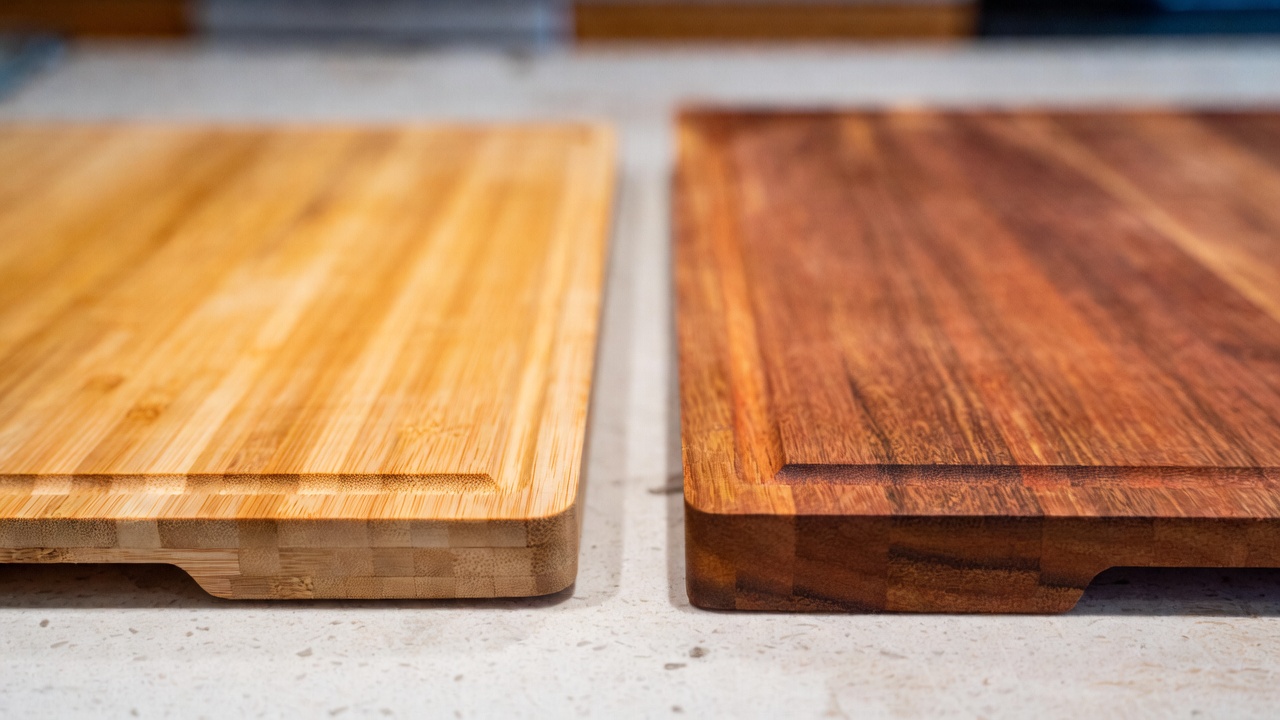
Bamboo boards come in many colors. Some are light. Some are darker. You can find them in stores in tons of different styles, just like wooden cutting boards.
Durability: Which One Lasts Longer?
This is the big question for most people. You want a cutting board that won’t fall apart after a year or two.
Wooden cutting boards hold up really well. A good wooden board can last for decades if you take care of it. We’re talking about cutting boards that get passed down through families. Your grandma might have had one. Your grandma’s mom might have had one too.
The key to wooden board longevity is hardness. Hard woods like maple resist knife cuts better. They don’t absorb water as much. They don’t warp or crack as easily when the seasons change and humidity goes up and down.
Bamboo boards are tougher than you might think. Bamboo is actually harder than many woods. It won’t dent as easily. It won’t show knife marks as quickly. But here’s the catch: bamboo boards are made by gluing strips together. Over time, if you soak them or expose them to tons of water, the glue can weaken. Seams can start to separate.
The real test is what happens over years of use. Most bamboo boards last about five to seven years with normal use. Wooden boards often last two or three times that long.
That said, take care of your bamboo board and it can last longer. Don’t soak it. Don’t put it in the dishwasher. Keep it dry. Then you might get ten years out of it.
If you plan to keep your cutting board for life, wood wins. If you’re okay replacing it every few years, bamboo is fine. And cheaper.
Knife Safety: Which One Is Better for Your Blades?
Your knives matter. A good chef’s knife costs real money. You don’t want to destroy it on your cutting board.
Here’s what happens when you cut: your knife blade hits the board surface. The harder the surface, the more the impact bounces back. That impact dulls your blade.
Wooden cutting boards are softer than bamboo. When your knife hits a wooden board, the board gives a tiny bit. The wood fibers compress. This absorbs some of the impact. Your blade stays sharper longer.
Bamboo is harder and denser than most woods. When your knife hits bamboo, there’s less give. More impact bounces back to your knife. Your blade dulls faster.
This is one area where wood actually wins over bamboo. If you have expensive knives, a wooden board is the better choice. Your knives will stay sharp longer with less honing and sharpening.
That said, the difference isn’t huge. A good bamboo board won’t destroy your knives. You’ll just need to sharpen them a bit more often.
Sanitation and Food Safety
Food safety is serious. You don’t want bacteria growing on your cutting board. You don’t want germs spreading to your food.
Wooden cutting boards have natural antibacterial properties. Wood contains compounds that actually kill bacteria. This sounds wild, but it’s true. Scientists have tested this. Wood boards have fewer germs on them than you’d expect.
Plus, wooden boards are solid. Bacteria can’t hide inside cracks and seams. Well, they can hide in gouges and deep knife marks, but overall, the surface is pretty solid.
Bamboo boards also resist bacteria pretty well. The tight grain structure doesn’t give bacteria many places to hide. The difference between wood and bamboo isn’t huge when it comes to safety.
The real thing that matters is how you clean your board. Whether you use wood or bamboo, wash it right after use. Use hot soapy water. Scrub it. Let it dry. That’s it. Do this and your board will be sanitary no matter what material it’s made from.
Some people worry about bamboo’s glue seams being a problem. If bacteria gets in the seam, could it grow there? It’s possible, but it’s not a real-world issue if you clean your board properly. The seams are usually not that tight, and cleaning gets in there fine.
Staining and Appearance
Cutting boards sit on your counter. You see them every day. You want them to look good.
Wooden boards, especially light-colored ones like maple, can stain. Beets, turmeric, tomatoes, and other colored foods can leave marks. Red wine spills can leave spots. These stains are just on the surface, and they don’t affect food safety. But they look bad.
Over time, a wooden board develops character. It gets marks and stains. Some people love this rustic look. The board tells the story of all the meals you’ve cooked. It feels real and lived-in.
Bamboo boards are more resistant to staining. The color doesn’t change as much. They stay looking newer longer. If you want your cutting board to look pristine, bamboo is the way to go.
But here’s the thing: you can keep a wooden board looking good with regular maintenance. Oil it. Sand it if it gets too marked up. You can actually restore a wooden board to looking like new if you put in the effort.
Smell and Taste
This is something people don’t talk about much. But your cutting board can affect your food.
Wooden boards, especially fresh ones, have a natural wood smell. This doesn’t transfer to your food in any real way. But some people like the smell. It smells natural and clean.
Bamboo boards don’t have much smell. They’re pretty neutral.
Here’s where it gets interesting: wooden boards can absorb flavors. If you chop garlic on a wooden board, that garlic smell lingers. Use the board for onions, and onion smell stays. This is because wood is porous. It soaks things in.
With bamboo, flavors don’t absorb as much. The board stays neutral. If you care about flavors mixing, this is a point for bamboo.
Most people don’t worry about this. They just use their board for everything. The flavors mix anyway. But if you’re picky about keeping flavors separate, keep one board for garlic and onions, and another for fish and seafood.
Maintenance and Care
Different materials need different care.
Wooden boards need regular oiling. Every month or so, rub food-grade mineral oil all over the board. This keeps the wood hydrated. It prevents cracks and warping. It makes the board look good. This takes five minutes, but you have to remember to do it.
Never put a wooden board in the dishwasher. Never soak it. Never leave it wet. Dry it right after washing. This prevents swelling and warping.
Bamboo boards need less maintenance. You can get away without oiling them. You can wash them with hot soapy water. Some bamboo boards can even go in the dishwasher, though hand washing is still better.
That said, oiling a bamboo board is still a good idea. It keeps the surface looking nice and helps it last longer.
The bottom line: wood requires more attention. Bamboo is easier to take care of. If you’re lazy about maintenance, bamboo might frustrate you less.
Temperature and Moisture Sensitivity
Your kitchen changes with the seasons. Summer is humid. Winter is dry. Your cutting board feels these changes.
Wooden boards are sensitive to humidity. When moisture goes up, the wood absorbs water and swells. When moisture goes down, the wood releases water and shrinks. This swelling and shrinking can cause warping, cracking, and twisting.
Bamboo is more stable. It doesn’t move as much with humidity changes. This makes it a better choice if you live somewhere really humid or really dry.
If you live in a normal climate with normal humidity, this won’t be a huge problem either way. But for sensitive climates, bamboo has the advantage.
Never store your cutting board standing up. Always lay it flat. This prevents warping. Never store it near heat sources or in direct sunlight. This protects both wood and bamboo.
Cost Comparison
Let’s talk money. Most people care about price.
Wooden cutting boards cost more than bamboo. A good wooden board from a real hardwood might run you thirty to a hundred dollars depending on size and brand. Fancy handmade wooden boards can cost way more.
Bamboo boards are cheaper. You can get a decent one for ten to thirty dollars. They’re also getting cheaper as more companies produce them.
If you’re on a budget, bamboo wins. You get a decent board for less money.
But remember: if a wooden board lasts three times as long, the cost per year is actually pretty similar. Do the math. If a wooden board lasts twenty years and costs fifty bucks, that’s 2.50 a year. If a bamboo board lasts five years and costs twenty bucks, that’s four dollars a year.
Still, upfront cost matters to most people. If you’re buying your first cutting board, bamboo lets you try it without spending a fortune.
Environmental Impact
A lot of people care about the environment. Let’s talk about this.
Bamboo grows insanely fast. It’s ready to harvest in three to five years. Trees take twenty to fifty years. This means bamboo is the more sustainable choice from a regrowth perspective.
But there’s a catch. Bamboo farming can hurt local ecosystems if it replaces native forests. The glue used in bamboo boards has to be processed, which uses energy and chemicals. Transportation matters too. Where is your board made? Where is it shipped from?
Wooden boards use timber from established forests. If those forests are managed well and replanted, they’re sustainable too. Solid wood doesn’t need glue, which means fewer chemicals.
Here’s the honest truth: both options have environmental impact. Neither is perfect. If the environment matters to you, research the specific brand. Some companies do better than others.
What Does Your Kitchen Look Like?
Your kitchen’s style matters too.
Wooden boards fit in almost any kitchen. They’re classic. They work with modern kitchens, farmhouse kitchens, rustic kitchens, anything. A nice wooden board is timeless.
Bamboo boards also fit in most kitchens. They look contemporary. They work in modern kitchens really well. They fit the eco-conscious aesthetic too.
If your kitchen is all stainless steel and white, a light wooden board pops. If your kitchen is warm and rustic, a dark wood board fits perfectly. If your kitchen is minimal and modern, a sleek bamboo board looks right.
This is less about the board and more about personal style. Go with what makes your kitchen look good to you.
Specific Uses Matter
Not all cutting boards are the same. What you’re cutting matters.
Wooden boards are great for vegetables, fruits, and bread. They’re gentle on knives. They look good.
Bamboo boards are great for raw meat and fish. The harder surface is less porous. It’s easier to sanitize. It won’t harbor bacteria as easily.
Wait, we said wooden boards have natural antibacterial properties. So why use bamboo for meat?
Because even though wood is antimicrobial, bamboo’s non-porous surface is just more practical for raw meat. You can throw it in the dishwasher. You can bleach it. You can get it really clean.
Smart cooks have multiple boards. One for vegetables. One for bread. One for raw meat. One for fish. This prevents flavor transfer and cross-contamination.
If you’re only buying one board, think about what you cut most. If it’s mostly veggies, go wood. If it’s meat and fish, go bamboo.
The Bottom Line
So which should you buy? Wood or bamboo?
Go with wood if you want something that lasts forever, if you love the rustic look, if you want to be gentle on your knives, and if you don’t mind spending a bit more and doing regular maintenance.
Go with bamboo if you want something affordable, if you prefer low maintenance, if you want it to stay looking new longer, if you’re concerned about environmental impact, and if you’re mostly cutting raw meat.
There’s no perfect answer. Your choice depends on your priorities, your kitchen, and your cooking habits.
Most kitchens should have both. A wooden board for daily vegetable prep. A bamboo board for raw proteins. They serve different purposes and both have their place.
Taking Care of Your Choice
Once you buy your cutting board, treat it right.
For wooden boards, oil them monthly. Never soak them. Dry them immediately after washing. Sand them if they get deep marks. They’ll last decades.
For bamboo boards, wash them regularly. You can oil them occasionally too. Keep them dry. Clean the seams sometimes. They’ll last five to ten years.
Never use your cutting board as a hot plate. Never put a hot pan on it. Never cut raw meat and then veggies without washing in between. Don’t use harsh abrasive scrubbers on either type.
Keep your cutting board on a flat surface. Use a damp towel under it if it slides. Protect your counters. Protect your board.
Final Thoughts
Cutting boards seem simple. Wood or bamboo. But there’s actually a lot to think about.
The best cutting board is the one you’ll actually use and take care of. A fancy wooden board you neglect won’t last. A cheap bamboo board that gets regular attention will serve you well.
Start with one board. See how you like it. See what works for your kitchen and your cooking. Then maybe add another one.
Cooking is supposed to be enjoyable. Your cutting board should make prep work easier and faster. Whether you choose wood or bamboo, choose something that feels right to you. Something that makes you happy to use it.
Your cutting board is your partner in the kitchen. Treat it well, and it’ll treat your food well. That’s what matters most.
What’s your experience with cutting boards? Do you have a favorite material? Tell us in the comments. We’d love to hear what works best in your kitchen.

Hi, I’m Mary, the founder of KitchenClue.com. I’m deeply passionate about everything that makes a kitchen smarter, easier, and more enjoyable. I share hands-on insights and practical expertise on kitchen gear that truly helps in daily cooking. Along with my dedicated research team, we study products carefully, and our writers create honest, well-tested reviews using trusted, authentic sources—so you can choose kitchen tools with total confidence.