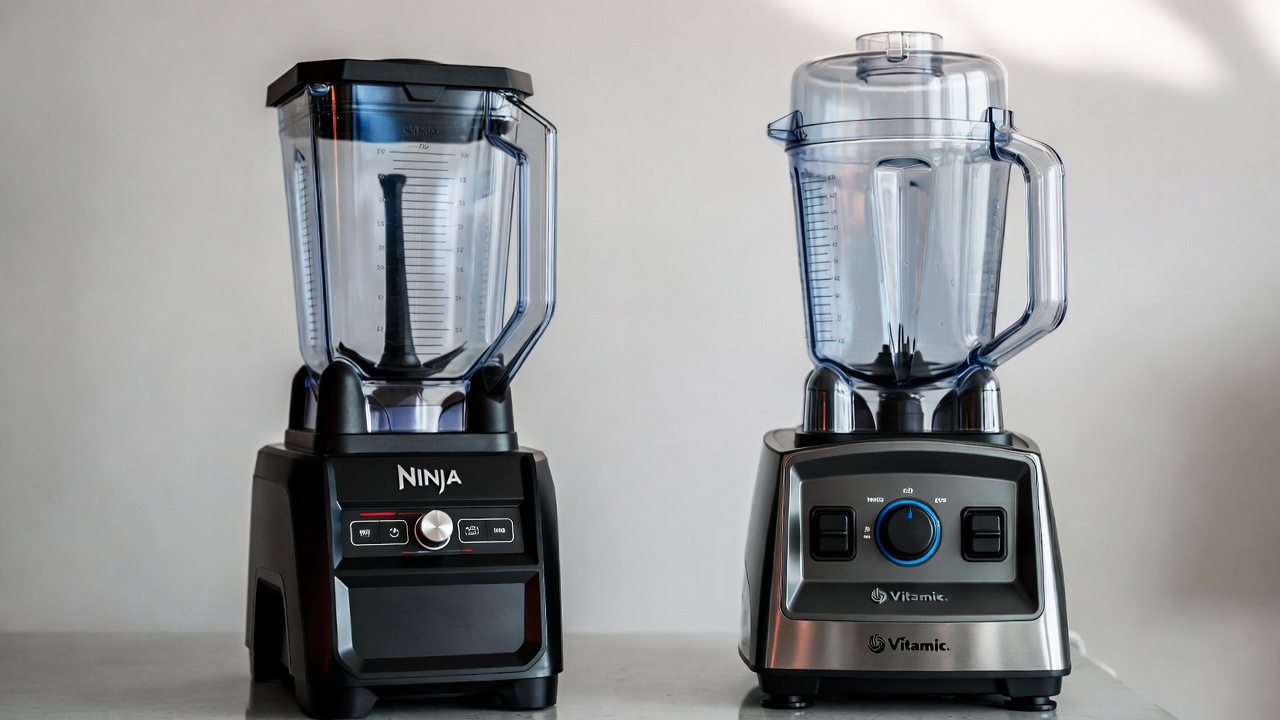
Ninja Blender vs Vitamix
Let’s be honest. Shopping for a new blender can feel overwhelming. There are so many options out there, and two names keep popping up: Ninja and Vitamix. Both are solid choices. Both have loyal fans. But which one should you actually buy?
That’s what we’re diving into today. This guide will break down everything you need to know about Ninja and Vitamix blenders. We’ll look at price, power, what they can do, how they feel to use, and more. By the end, you’ll know exactly which one makes sense for your kitchen.
The Basic Difference: What Sets Them Apart
Before we get into the nitty-gritty, let’s talk about the big picture.
Vitamix has been around for over 90 years. The company built its reputation on making high-powered, durable blenders that last forever. When people think “professional blender,” they often think Vitamix first.
Ninja is newer to the scene. The brand got serious about blenders in the 2010s. They focused on making powerful blenders that cost less money than Vitamix. Ninja offers way more variety too. They make blenders for different tasks and different budgets.
So right away, you have a split: Vitamix is the established name with a premium price tag. Ninja is the newer competitor offering more options at lower prices.
Power and Performance: How They Blend
Let’s talk about the most important stuff. What can these blenders actually do?
Vitamix blenders usually have motors between 1,000 and 2,000 watts. The high-end models pack serious power. They move fast. They blend smoothly. They handle tough jobs like grinding flour, making hot soup from friction alone, and turning ice into powder.
The motor in a Vitamix runs longer than most blenders before it needs replacing. It’s built tough. The blending mechanism is engineered to create smooth, consistent results every time.
Ninja blenders have motors ranging from 700 to 1,100 watts in most models. This is still decent power. You can make smoothies, crush ice, and handle most everyday blending tasks. Ninja has some special sauce too. Their blade design and container shape help them blend effectively even though the wattage might be lower than some Vitamix models.
The real truth? Both can handle what most home cooks need. Vitamix might finish the job slightly faster. But Ninja gets there too, just sometimes with an extra few seconds of blending time.
The difference matters most if you:
- Blend every single day
- Make nut butters regularly
- Want to grind whole grains into flour
- Plan to keep the blender for 15+ years
For smoothies, milkshakes, sauces, and soups? Both do the job great.
Price: What Your Wallet Needs to Know
This is often the deciding factor for many people.
Vitamix blenders start around $300 for basic models. The popular Vitamix 5200 sits at about $400 to $500. High-end models push $700 or more. These are investments. But Vitamix customers often feel the price is worth it because the blenders last so long.
Ninja blenders typically cost between $100 and $400. You can find excellent Ninja models for $150 to $250. Some high-end Ninja blenders reach $400, but most are significantly cheaper than comparable Vitamix models.
That’s a huge difference. You could buy two or three Ninja blenders for the price of one Vitamix.
The question becomes: Does the higher price of Vitamix deliver enough extra value to justify the cost? For some people, yes. For others, a Ninja at half the price makes much more sense.
Build Quality and Durability: How Long Do They Last?
Vitamix earned its reputation by making blenders that don’t break. These machines run for decades in some households. The company stands behind its products with a 7-year warranty on many models. Some customers report using their Vitamix for 20, 30, or even 40 years.
That’s serious durability. The motor is industrial-grade. The container is thick. The blade assembly is built to last.
Ninja blenders are reliable too. They’re newer, so we don’t have as much long-term data. But customers generally report good reliability over 5 to 7 years. The warranty on Ninja blenders is usually 1 year, sometimes extending to 3 years depending on the model.
Here’s what matters: If you only use your blender a few times a week, a Ninja can easily last 10 years. If you blend daily or run tough jobs constantly, Vitamix’s industrial-grade build might hold up better over 15+ years.
Most people? They replace their blender because they want something new, not because it broke. In that case, durability differences matter less.
Features and Options: What Can Each Brand Offer?
This is where you see Ninja’s main strength.
Ninja has specialized models:
- Single-serve blenders for one person
- Blender and food processor combos
- Compact countertop versions
- Outdoor portable options
- Models with crushable ice technology
- Blenders with smoothie bowl capabilities
If you have a specific need, Ninja probably makes a blender for it. They give you choices.
Vitamix offers variety too, but less of it:
- Standard countertop models (the classic)
- Immersion blenders for soups and sauces
- High-powered commercial models
- A few specialty versions
Vitamix focuses on doing a few things incredibly well rather than offering 20 different models.
For features, Ninja wins. If you want options and flexibility, Ninja’s lineup gives you way more to work with.
Container and Design: Daily Use Matters
The blender you pick will sit on your counter or go in your cabinet. You’ll use it regularly. The container and design matter for how pleasant that experience is.
Vitamix containers:
- Usually 64 ounces (about 2 liters)
- Durable Tritan copolyester (BPA-free)
- Standard pitcher shape
- Measurement marks on the side
- A pouring spout that doesn’t spill much
- Heat-resistant up to 200 degrees
The container feels solid. It won’t cloud up over time like cheaper plastic. It’s easy to clean.
Ninja containers:
- Various sizes: 48 oz, 64 oz, 72 oz depending on model
- Usually plastic, often with some rubberized areas
- Blade designs sometimes let you blend single servings
- Many models have wide mouths for easier cleaning
- Dishwasher-safe options on most models
Ninja containers are fine. They’re durable enough. The plastic quality is decent but not quite as premium-feeling as Vitamix.
Both are easy to wash. Both work well. Vitamix edges ahead on feel and build quality, but Ninja catches up in recent models.
Noise Level: Important If You Have Roommates
Let’s face it. Blenders are loud. But some are louder than others.
Vitamix blenders run at about 80 to 90 decibels. That’s loud. You’ll hear it. Neighbors might hear it too.
Ninja blenders also run at similar volumes, typically 80 to 87 decibels. They’re about the same. Both can startle you on a quiet morning.
This isn’t a major differentiator between the two brands. They’re both pretty loud. If noise concerns you, look for models that specifically mention quiet operation, but neither brand is known for silent blenders.
What Each Brand Does Best
Vitamix is your best bet if you:
- Want something that’ll last forever
- Need a blender for daily heavy use
- Are okay spending more upfront
- Want a simpler choice (fewer models to compare)
- Like the premium feel of the machine
- Make hot soup frequently (friction-based blending)
Ninja is your best bet if you:
- Want to save money
- Need a blender for smoothies and occasional ice crushing
- Like having options and variety
- Want specialized features (single serve, combo units)
- Plan to use it several times a week, not daily
- Want something compact and storage-friendly
Common Questions People Ask
Can Ninja make hot soup like Vitamix?
Most Ninja models can’t heat soup through friction alone like high-end Vitamix blenders do. However, they can blend hot ingredients that you’ve already heated elsewhere.
Is Vitamix worth triple the price?
For most home cooks, no. Ninja does the job well. The price difference pays for durability and the Vitamix name. If you blend briefly every few days, Ninja makes sense. If you blend for an hour daily, Vitamix might be worth it.
Do Ninja blenders break a lot?
Not particularly. They’re reliable machines. They just might not last 40 years like some Vitamix units.
Can you use Vitamix blades in a Ninja container?
No. The blade assemblies are different. They’re not interchangeable.
Which brand is quieter?
They’re basically the same. Neither is quiet. Both will wake up your household.
Performance in Real-World Situations
Let’s talk about what actually matters: How do these blenders perform with the jobs you’ll actually give them?
Making smoothies: Both crush it. The difference is barely noticeable. Vitamix finishes in 30 seconds. Ninja takes 40 seconds. Who cares? They both taste the same.
Crushing ice: Both handle it easily. Ninja’s blade design sometimes makes it slightly faster. Vitamix is steady and reliable.
Making nut butter: Vitamix wins here. The higher power handles thick nut blends more effortlessly. Ninja can do it, but it takes longer and you need to scrape down the sides more often.
Chopping vegetables: Ninja might have an edge because of blade design. But honestly, both do fine.
Making flour from grains: Vitamix is better here. The power is just more suitable for this heavy-duty task. Ninja can handle it on a small scale.
Sauces and salsa: Both perfect. No real difference.
Frozen treats: Both great. Completely fine with either.
For 80% of the jobs you’ll actually do, the differences are minor. For specialty tasks and heavy daily use, Vitamix pulls ahead.
What Reviews Say
Looking across customer reviews and expert opinions, here’s the pattern:
Vitamix owners love their blenders. They talk about durability and how long they last. They’re happy with the investment. They rarely complain about performance.
Ninja owners like their blenders too. They’re pleased with the value and performance for the price. They mention occasional issues with long-term durability, but most are satisfied.
The sentiment is clear: Both brands deliver solid machines. Vitamix delivers slightly more premium experience. Ninja delivers better value.
The Environmental Question
Vitamix wins on environmental impact. A blender that lasts 20 years is better for the planet than a blender that lasts 7 years, even if you replace the Ninja.
Manufacturing produces pollution. Shipping produces emissions. Extending product life is the most environmentally friendly move.
That said, if a Ninja works for you and you’re happy with it, that’s fine too. Perfect is the enemy of good.
Warranty and Customer Service
Vitamix typically offers 7-year warranties on home models. The company is known for standing behind its products. If something breaks, they often fix it or replace it.
Ninja usually offers 1-year warranties, occasionally 3 years. Customer service is generally responsive, but the shorter warranty reflects the lower price point.
Longer warranty gives you peace of mind. But it’s not everything. Ninja’s competitive pricing matters too.
Making Your Decision
Here’s the truth: You can’t go wrong with either choice.
Go with Vitamix if:
- Budget isn’t a concern
- You want the best of the best
- You plan to keep the blender for 10+ years
- You’ll use it frequently
- You want to feel like you invested in something premium
- You need maximum power
Go with Ninja if:
- You want to save money
- You have a tight budget
- You need something for occasional use
- You like having variety and options
- You want a shorter-term blender that still works great
- You need a specialized feature that interests you
Final Thoughts
Vitamix is the tried-and-true champion. It’s built like a tank. It’ll probably outlast your kitchen counter. It costs more, but many customers feel it’s worth it.
Ninja is the smart alternative. It’s younger, hungry, and offering real value. You get solid performance at a fraction of the cost. You get features and variety. You get a blender that does what you need it to do.
The best blender is the one you’ll actually use. If saving $200 means you buy the Ninja instead of skipping a blender purchase altogether, buy the Ninja. If you’re planning to blend smoothies every single morning for the next 15 years and money isn’t a concern, grab the Vitamix.
Both are real, reliable options. Both have happy customers. Both can transform your kitchen.
The decision comes down to your budget, your needs, and how much you plan to blend. Think about what you’ll actually use the blender for. That’s your answer right there.
Either way, you’re investing in a tool that makes healthy eating easier. That’s what matters most. Now go make that smoothie.

Hi, I’m Mary, the founder of KitchenClue.com. I’m deeply passionate about everything that makes a kitchen smarter, easier, and more enjoyable. I share hands-on insights and practical expertise on kitchen gear that truly helps in daily cooking. Along with my dedicated research team, we study products carefully, and our writers create honest, well-tested reviews using trusted, authentic sources—so you can choose kitchen tools with total confidence.