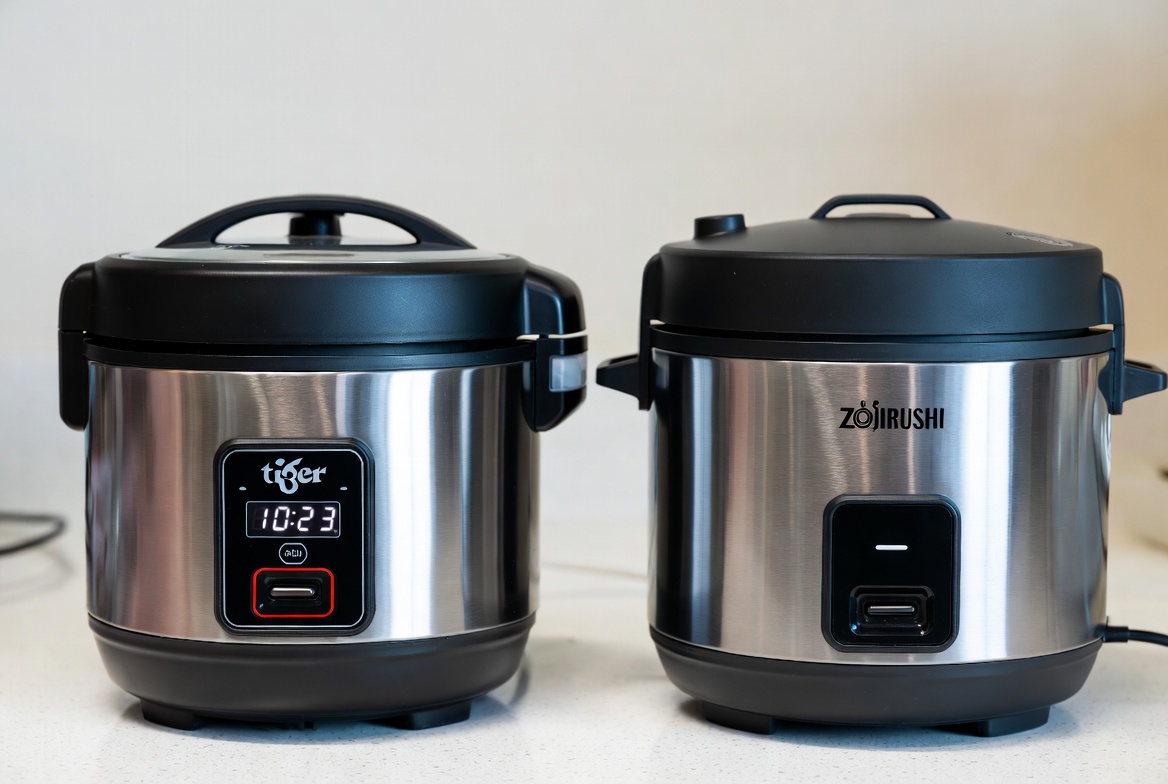
Tiger vs Zojirushi Rice Cooker
Looking for the perfect rice cooker? You’ve probably heard about Tiger and Zojirushi. Both brands are super popular for making fluffy, delicious rice. But which one should you pick? Let’s break down everything you need to know.
Why Rice Cookers Matter
Making rice on the stove can be tricky. You have to watch the heat. You have to time it just right. Too much heat burns the bottom. Too little heat and your rice stays mushy.
A good rice cooker takes all this stress away. You just add rice and water. Press a button. The cooker does the rest. Your rice comes out perfect every time.
This is why so many families trust rice cookers. They’re fast. They’re easy. They keep your rice warm without drying it out. And they free up your stove for other cooking.
Tiger and Zojirushi are two of the most trusted names in rice cooker technology. Both companies have been making quality kitchen appliances for decades. Both have loyal fans who swear by their products.
But they’re not identical. Each brand has its own style. Its own features. Its own prices.
Tiger Rice Cookers: The Basics
Tiger is a Japanese brand that started with small appliances. Their rice cookers are known for being sturdy and reliable.
Tiger makes rice cookers in many sizes. You can find models for 3 cups of rice. You can find models for 10 cups. They offer basic models with just an on/off button. They also offer fancy models packed with features.
Tiger’s Heating Technology
Tiger rice cookers use what they call “advanced heating systems.” Many models have heating elements on the bottom, sides, and top. This means heat surrounds your rice from all angles.
This heating method helps rice cook evenly. No more dry spots on the sides. No more mushy spots in the middle. Just consistent, fluffy rice.
Some Tiger models use what’s called “induction heating.” This is fancier than basic heating elements. Induction heating lets you control the temperature very precisely. This means you can cook different types of rice perfectly.
Tiger Durability and Design
Tiger rice cookers have a solid reputation for lasting a long time. People use the same Tiger cooker for 10 years or more without problems.
The build quality is strong. The exterior is usually stainless steel or heavy plastic. The inner cooking pot is often non-stick or ceramic coated.
Tiger designs their cookers to look clean and modern. Most models fit nicely on a kitchen counter without looking bulky or out of place.
Tiger Price Range
Tiger rice cookers are generally priced in the middle to upper range. A basic Tiger model might cost you $40 to $80. A fancy Tiger model with induction heating can run $200 to $400.
You’re paying for durability and reliability. Most people find Tiger cookers to be worth the cost.
Zojirushi Rice Cookers: The Basics
Zojirushi is also a Japanese brand. Like Tiger, they have a long history of making quality kitchen appliances.
Zojirushi rice cookers are popular in both Asia and North America. Many restaurant chefs use Zojirushi cookers. Many home cooks do too.
Zojirushi’s Heating Technology
Zojirushi also uses advanced heating systems. They offer both basic and induction heating models.
Here’s something cool about Zojirushi: they focus a lot on the cooking bowl. The inner pot is crucial because that’s where rice actually cooks.
Many Zojirushi models have non-stick inner pots. The coating keeps rice from sticking. It also makes cleaning super easy. Just wipe it out. No soaking. No scrubbing.
Some Zojirushi models use what they call “fuzzy logic.” This is a computer chip inside the cooker that learns and adapts. The fuzzy logic senses how much rice you’re cooking. It senses the moisture level. It adjusts heating automatically.
Zojirushi’s Smart Features
Zojirushi puts a lot of tech into their cookers. Many models have digital displays. You can set a timer. You can pick different cooking modes for brown rice, white rice, rice congee, or sushi rice.
Some models even have a “keep warm” function that keeps rice at the perfect temperature for hours. No drying out. No overcooking.
Zojirushi also makes rice cookers with special programs for different rice types. If you eat jasmine rice one day and sushi rice the next, Zojirushi has settings for both.
Zojirushi Build Quality
Zojirushi cookers are built to last. The exterior is usually steel or heavy plastic. The non-stick inner pots hold up well.
These cookers tend to run quietly. They don’t make loud beeping sounds. They heat up smoothly without clanking around.
Zojirushi Price Range
Zojirushi rice cookers start around $50. Basic models run $50 to $100. Mid-range models with more features run $100 to $250. Their top-of-the-line induction models can hit $400 or more.
Like Tiger, you get what you pay for. More features cost more money.
Cooking Performance: Who Wins?
Both brands make excellent rice. Let’s compare how they actually cook.
Rice Texture Quality
Tiger cookers make fluffy, separate grains of rice. Each grain stays distinct. No clumping. No mush. The rice has a nice bite to it.
Zojirushi cookers also make fluffy rice. The fuzzy logic technology means rice turns out consistent. One batch is just like the last batch.
In blind taste tests, it’s hard to tell them apart. Both brands cook rice beautifully. Your choice here comes down to personal preference. Do you like a bit of browning on the rice? Do you prefer it extra fluffy?
Cooking Speed
Tiger cookers heat up fairly quickly. A basic model cooks rice in 30 to 40 minutes. Induction models heat faster and cook rice in 25 to 35 minutes.
Zojirushi cookers are similar. Basic models take 30 to 45 minutes. Induction models take 25 to 35 minutes.
The difference is small. Both brands are fast compared to stove-top cooking.
Handling Different Rice Types
Both brands can cook white rice, brown rice, and other grain types well. But Zojirushi puts more effort into specialized programs.
If you eat lots of different rice varieties, Zojirushi gives you more control. Tiger cookers also do fine. Zojirushi just offers more options.
Energy Use
Tiger and Zojirushi cookers use similar amounts of electricity. Both are pretty efficient. Neither brand is a huge power drain.
The keep-warm function on both brands uses minimal energy. You could leave rice warm all day without worrying about your electric bill skyrocketing.
Features Comparison
Let’s look at what each brand offers feature-wise.
Display and Controls
Tiger basic models often have simple buttons and lights. Fancy Tiger models have digital displays. You can read the time. You can see what mode you’re in.
Zojirushi puts digital displays on almost all their models. Even budget models have a nice display screen. This makes Zojirushi easier to use if you like seeing information clearly.
Cooking Modes
Tiger basic models have one job: cook rice. You push a button. It cooks rice.
Zojirushi basic models often have 2 or 3 cooking modes. White rice. Brown rice. Keep warm.
Tiger fancy models can have 5 or more modes. Zojirushi fancy models often have 10 or more.
If you like variety and flexibility, Zojirushi pulls ahead here.
Timer Function
Tiger cookers let you set a delay timer on most models. You load the rice in the morning. It cooks later that day.
Zojirushi cookers also have delay timers. Many models let you program them to cook at a specific time.
Both work well for busy people who want rice ready when they get home.
Cleaning and Maintenance
Tiger cookers have removable inner pots. These are easy to clean. Most are safe for the dishwasher.
Zojirushi cookers also have removable pots. Many have non-stick coatings that make cleaning a breeze.
Winner here: Zojirushi. Their non-stick pots require less effort. Just rinse and wipe.
Size and Capacity Options
Both brands make cookers in many sizes.
Small Cookers
Need to cook for just one or two people? Both brands have 2-cup and 3-cup models.
Tiger makes compact models that fit in small kitchens. Zojirushi also makes small cookers that don’t take up much space.
Medium Cookers
Cooking for a family? Both brands offer 5-cup and 6-cup models. These are very popular.
Tiger’s mid-size cookers work great. Zojirushi’s mid-size cookers also work great. Both give you room for leftovers.
Large Cookers
Feeding a big family or making rice for meal prep? Both brands make 8-cup, 10-cup, and even larger models.
These bigger cookers cost more. But they save time if you need lots of rice.
Price Comparison
Let’s talk money. Budget matters to most people.
Budget-Friendly Options
Tiger makes models starting around $40. Zojirushi makes models starting around $50.
For a no-frills rice cooker that does its job, Tiger edges out slightly cheaper. But both are affordable.
Mid-Range Options
Tiger mid-range cookers run $80 to $150. Zojirushi mid-range cookers run $90 to $160.
In this range, both brands offer good value. You get solid performance and decent features.
Premium Options
Tiger premium induction models run $200 to $400. Zojirushi premium induction models run $250 to $450.
These fancy models last forever. If you use rice cookers daily, they’re worth the investment.
Best Value
If money is tight, Tiger basic models are great. You save $10 to $20.
If you want more features and don’t mind spending a bit more, Zojirushi offers better technology at mid-range prices.
Noise Level
Do you care how loud your cooker is? Many people do.
Tiger cookers make noise. Especially when heating up. You’ll hear beeping when it’s done cooking.
Zojirushi cookers are quieter. They heat up with less sound. The beeping is also gentler.
If you have a small kitchen or an open floor plan where noise matters, Zojirushi wins this round.
Warranty and Customer Support
Both brands stand behind their products.
Tiger typically offers a 1-year warranty. This covers defects in materials and workmanship.
Zojirushi also offers a 1-year warranty. Some models have extended warranties.
For customer support, both brands have helpful websites. Both have customer service numbers you can call. Both have repair services.
No clear winner here. Both brands take care of their customers.
Common Problems and Reliability
What goes wrong with rice cookers?
Tiger Common Issues
Some Tiger cookers have trouble with the non-stick coating peeling. This usually only happens after many years of use.
Heating elements can fail on old models. But this is rare.
Overall, Tiger cookers have few problems. They’re very reliable.
Zojirushi Common Issues
Some Zojirushi fuzzy logic models glitch. The computer chip might reset. But this is uncommon.
Non-stick coating can wear over time with heavy use. This happens to both brands.
Overall, Zojirushi cookers are very reliable too.
Both brands make dependable products that last years and years.
Who Should Buy Tiger?
Tiger is perfect for you if:
- You want a sturdy cooker that just works
- You don’t need lots of fancy features
- You like simple design and operation
- You want to save a bit of money
- You cook mostly white rice
- You prefer a no-nonsense approach
Tiger cookers do one thing very well: make rice. If that’s all you need, buy Tiger.
Who Should Buy Zojirushi?
Zojirushi is perfect for you if:
- You like smart features and tech
- You eat different types of rice
- You want a cooker that’s super quiet
- You like having lots of cooking modes
- You want easy digital controls
- You appreciate non-stick inner pots
- You want a cooker that learns and adapts
Zojirushi cookers are ideal if you want more than just basic rice cooking.
Real User Experiences
What do actual people say?
Tiger owners often say:
- “My Tiger cooker has lasted 15 years”
- “Simple to use. Does exactly what it should”
- “Great value for the money”
- “Heats up fast”
Zojirushi owners often say:
- “I love how many features it has”
- “The non-stick pot makes cleanup easy”
- “It’s so quiet compared to my old cooker”
- “Rice comes out perfect every time”
- “Worth every penny”
Both get rave reviews from satisfied customers.
The Verdict: Which Is Better?
Here’s the honest truth: both brands make excellent rice cookers.
Tiger is the winner if you want:
- Simplicity
- Lower cost
- Basic reliability
- No complicated features
Zojirushi is the winner if you want:
- Smart technology
- Multiple cooking options
- Quieter operation
- Premium features
- Flexible cooking programs
Neither brand is “better” overall. They’re different. Your needs decide which is better for you.
Making Your Decision
Ask yourself these questions:
How much do you want to spend? If money is tight, Tiger. If you can spend more, Zojirushi offers better tech.
How often do you cook rice? If it’s daily, invest in Zojirushi’s quality. If it’s occasional, Tiger works fine.
How much counter space do you have? Both fit on most counters. Size is more about how much rice you need to cook.
Do you eat different rice types? Brown rice, jasmine, sushi rice? Zojirushi gives you more control.
Do you like technology? If you love having lots of options and settings, pick Zojirushi. If you prefer simple operation, pick Tiger.
How important is quiet operation? Living in a small space or with light sleepers? Zojirushi’s quieter design matters.
Frequently Asked Questions
Can both brands cook other grains? Yes. Both can cook quinoa, barley, and other grains. Check your manual for timing.
Do both have delay timer functions? Yes. Both let you set rice to cook at a specific time.
Which brand is better for brown rice? Both handle brown rice well. Zojirushi has specific brown rice settings.
Can you cook oatmeal in these cookers? Yes, people do it. But both brands recommend using them mainly for rice and similar grains.
Which cooker uses more electricity? They’re about equal. Both are energy-efficient.
Do both have a warm function? Yes. Both can keep rice warm for hours.
What’s the typical lifespan? Both brands should last 10 to 15 years with normal use.
Can you replace the inner pot? Yes, both brands sell replacement pots.
Is the non-stick coating safe? Yes. Both brands use food-safe coatings.
Do these cookers get hot on the outside? Yes, especially during cooking. Be careful touching the sides.
Final Thoughts
Buying a rice cooker is an investment. You’ll use it hundreds of times. You want one that works great and lasts long.
Both Tiger and Zojirushi deliver on that promise. They’re both trusted brands with solid reputations.
Tiger delivers reliability and value. Zojirushi delivers technology and features.
Spend some time thinking about what matters most to you. Look at your budget. Think about your cooking habits. Read reviews from people who use the models you’re considering.
Once you pick one, you’ll be making delicious rice for years to come. Both brands will serve you well.
Additional Comparisons to Consider
Don’t just compare Tiger and Zojirushi. Look at other brands too. Brands like Instant Pot, Hamilton Beach, and Cuckoo also make quality rice cookers.
Read reviews on multiple websites. Watch videos of people using these cookers. Join online cooking communities and ask for recommendations.
The best rice cooker for you depends on your unique situation. No single brand works for everyone.
But if you narrow it down to Tiger and Zojirushi, you can’t go wrong. Both are excellent rice cooker brands that will make fluffy, delicious rice day after day.
Conclusion
Tiger rice cookers and Zojirushi rice cookers are both fantastic choices. Tiger offers affordability and straightforward operation. Zojirushi offers advanced technology and multiple features.
Your choice depends on your budget and what features matter most to you. Either way, you’re getting a reliable appliance that will cook perfect rice for years.
Don’t overthink it. Both brands have proven themselves again and again. Pick the one that fits your needs and your budget. You’ll be happy with your choice.
Now go make some delicious rice.

Hi, I’m Mary, the founder of KitchenClue.com. I’m deeply passionate about everything that makes a kitchen smarter, easier, and more enjoyable. I share hands-on insights and practical expertise on kitchen gear that truly helps in daily cooking. Along with my dedicated research team, we study products carefully, and our writers create honest, well-tested reviews using trusted, authentic sources—so you can choose kitchen tools with total confidence.