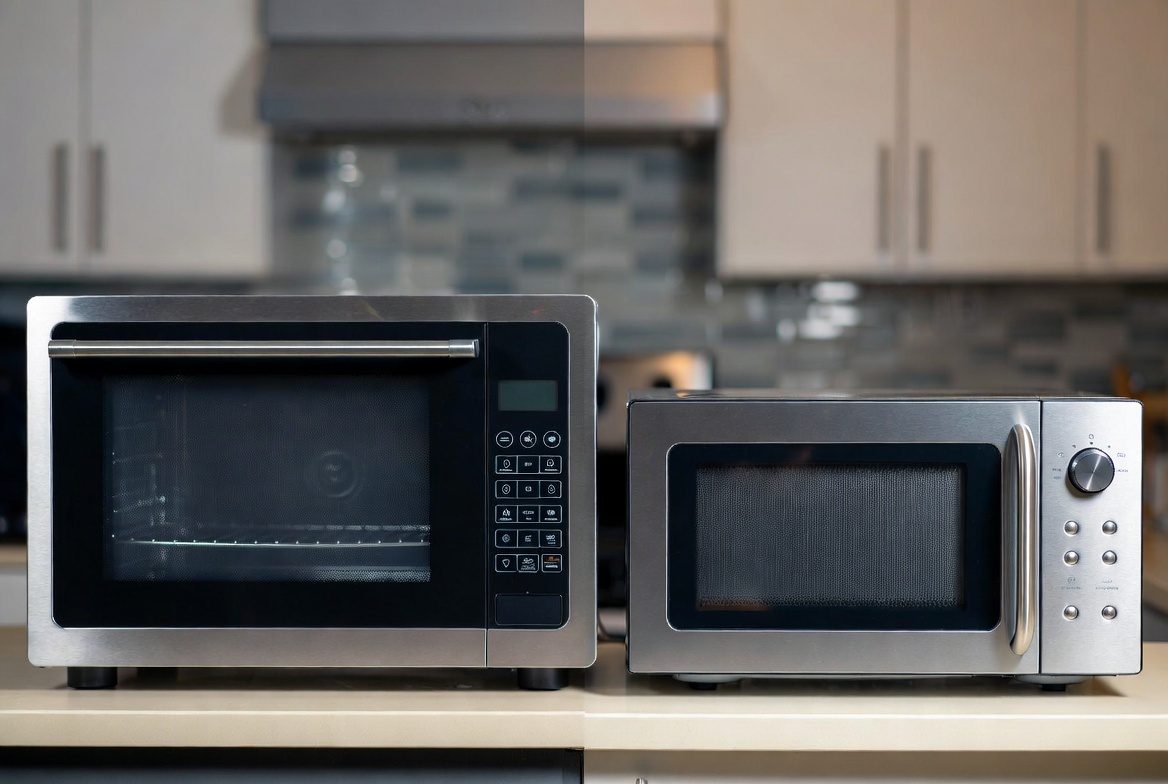
Speed Oven vs Microwave
When you’re standing in the kitchen wondering what to buy, the choice between a speed oven and a microwave can feel confusing. Both promise to cook your food fast. Both take up counter space. Both cost money. So which one actually deserves a spot in your kitchen?
Let me break this down for you in simple terms. I’ll help you figure out which appliance fits your life and cooking style best.
What Exactly Is a Speed Oven?
A speed oven is a modern kitchen appliance that combines three cooking methods into one machine. Think of it like a hybrid that brings together the best parts of different cookers.
Speed ovens use microwaves, convection heat, and radiant heat all at once. This combo lets them cook food really fast compared to regular ovens. They’re much quicker than traditional ovens but often more powerful than basic microwaves.
The appliance heats food from the outside in. The hot air circulates around your food. Microwaves also hit the food from different angles. All this happens at the same time. That’s why food cooks so quickly.
Speed ovens come in different sizes. Some are compact models for small kitchens. Others are bigger units that sit on counters. A few brands even make built-in versions that go into your cabinet.
The controls look like a modern oven’s buttons. You pick your cooking method. You set the temperature. You choose the time. Many models let you program recipes in advance. Some have touch screens that show you what’s happening inside.
What Is a Microwave?
A microwave is the kitchen appliance most of us already know well. It’s been around for decades and sits in millions of homes.
Microwaves use electromagnetic waves to heat food. These waves are called microwaves. They make water molecules in your food spin really fast. This spinning creates heat. That heat warms up your food from the inside out.
Microwaves are simple. You put food inside. You close the door. You set a time. You press start. That’s it. No fuss. No complicated buttons.
Most microwaves cost way less than speed ovens. A decent microwave might cost fifty to two hundred dollars. Speed ovens can run from five hundred to over two thousand dollars.
Microwaves take up less space than many speed ovens. Compact models fit easily on shelves. Some people even mount them above the stove. They’re lightweight and easy to move if you want to rearrange your kitchen.
How Speed Ovens Cook Food
Speed ovens work like this. The machine turns on three heating systems at once. Microwaves start working right away. The convection element heats the air. The radiant element adds direct heat.
This triple approach cooks food much faster than any single method alone. A chicken breast might take forty minutes in a regular oven. A speed oven can do it in about fifteen minutes. A microwave might do it in twelve minutes but won’t brown it well.
Speed ovens brown food really nicely. This is something regular microwaves can’t do. The combination of heat methods creates a crispy outside. The inside stays moist. You get restaurant-quality results at home.
The convection part keeps hot air moving around your food. This means even cooking from all sides. No cold spots. No overcooked edges with frozen centers.
Sensors in many speed ovens watch the food as it cooks. They can detect when moisture is leaving the food. They can sense when the temperature is right. Then they stop cooking automatically. This prevents burnt food.
How Microwaves Cook Food
Microwaves work in a totally different way. The microwave generator sends out electromagnetic waves. These waves travel into the food. They make water molecules move really fast. The friction from this movement creates heat.
This process heats food from the inside out. That’s why a dense item like a potato cooks from within. It’s different from an oven that heats from the outside.
Microwaves work incredibly fast for certain foods. Reheating coffee takes thirty seconds. Warming up a slice of pizza takes two minutes. Cooking instant noodles takes four minutes.
The heat is mostly internal. Food doesn’t brown much in a microwave. A piece of bacon looks pale and limp. A steak turns gray and mushy. This is a real limitation if you care about how your food looks and tastes.
Microwaves also create uneven heating. The waves bounce around inside the box. Some spots get hit more than others. That’s why you need to stir food or rotate it halfway through cooking.
Speed of Cooking: Speed Oven vs Microwave
Speed ovens earn their name for good reason. They cook food fast. A lot of the time they’re faster than microwaves. Sometimes they’re the same speed. Rarely are they slower.
Let’s look at actual cooking times.
Frozen chicken breasts take about twenty to twenty-five minutes in a speed oven. In a regular microwave, you might hit thirty to forty minutes. Some models need even longer.
A whole pizza takes ten to twelve minutes in a speed oven. In a microwave, pizza gets soggy because the bottom doesn’t crisp up.
Roasted vegetables cook in about fifteen to twenty minutes in a speed oven. You get nice caramelization. A microwave steams vegetables instead. They stay pale and mushy.
Baking cookies in a speed oven takes twelve to fifteen minutes. You get golden brown treats with crispy edges. A microwave makes cookies rubbery and weird.
But here’s the thing. For reheating leftovers, a microwave is still faster. Grabbing leftover pasta, tossing it in the microwave, and eating in two minutes beats any other method. Speed ovens need a minute or two just to heat up.
Food Quality: Which Oven Wins?
This is where speed ovens really shine compared to standard microwaves.
Speed ovens create food that looks and tastes like it came from a real oven. The outside gets crispy. The inside stays tender. Meat browns beautifully. Bread gets a nice crust.
Microwaves struggle with quality. Food often comes out looking pale. Textures can be weird. Reheated bread gets tough and rubbery. Meat becomes dry or mushy.
Speed ovens are better at cooking raw food. You can roast a whole chicken in a speed oven and it looks amazing. Try that in a microwave and you get something nobody wants to eat.
For pizza, speed ovens are far superior. The bottom crisps up. The cheese melts properly. The whole thing tastes like pizza. Microwaved pizza tastes sad.
Baked goods turn out so much better in speed ovens. Cookies get crispy. Cakes rise properly. Bread bakes all the way through. Microwaves make baked goods dense and tough.
That said, microwaves are better at one thing. They cook delicate foods evenly. Egg custards cook better in microwaves. Gentle heating prevents overcooking. Fish steams nicely in a microwave. Speed ovens might dry it out.
Size and Counter Space
Microwaves take less space. Most compact microwaves measure about twenty inches wide. They’re maybe fifteen inches tall. Pretty small footprint.
Speed ovens are bigger. A typical speed oven is about thirty inches wide and about fifteen inches tall. That’s significantly more counter real estate.
If you live in a small apartment or have a tiny kitchen, a microwave makes sense space-wise. If you have plenty of counter space or can mount a microwave, either option works.
Some speed ovens fit on shelves better than others. Some models are more square. Others are wider and flatter. Check the exact measurements before buying.
You can always move a microwave around if needed. Microwaves are lightweight. Speed ovens are heavier. You might want a permanent spot for a speed oven.
Cost Comparison
Price matters to most of us. Let’s be honest about it.
Microwaves are affordable. Budget models start around forty dollars. Good quality microwaves run one hundred to two hundred dollars. Premium microwaves might hit three hundred dollars.
Speed ovens cost way more. The cheapest options start around five hundred dollars. Mid-range models run eight hundred to twelve hundred dollars. High-end models can cost two thousand dollars or more.
For a basic kitchen upgrade, a microwave is the budget-friendly pick. For someone serious about cooking, a speed oven might be worth the investment.
Consider how much you’ll use it. A speed oven gets used several times a day in my house. It’s part of my daily routine. That investment gets spread across hundreds of cooking sessions.
A microwave gets used for quick tasks. Reheating. Defrosting. Making popcorn. These quick five-minute jobs don’t justify a huge expense.
Think about resale value too. If you move, speed ovens are easier to sell or leave behind. Microwaves are so common that nobody cares much.
Maintenance and Cleaning
Both appliances need cleaning after use.
Microwaves are super easy to clean. Wipe the interior with a damp cloth. The crumbs fall out. Done. The exterior wipes down in seconds. No fuss.
Speed ovens take a bit more work. Crumbs fall to a tray at the bottom. You pull out this tray and empty it. The interior might need a wipe now and then. Some models have self-cleaning functions. These use high heat to burn off stuck-on food.
Overall, microwaves win on simplicity. Speed ovens are still easy though. Neither one is a pain to maintain.
Check the manual for your specific model. Some speed ovens have special cleaning instructions. Some microwaves might need periodic deep cleaning.
Versatility in Cooking
Speed ovens cook almost anything. You can roast vegetables. Bake bread. Reheat pizza. Cook fish. Make cookies. The possibilities are huge.
Microwaves are more limited. They’re best at reheating. They work for defrosting. They cook certain foods like rice or potatoes okay. They struggle with raw foods. Browning is basically impossible.
If you love cooking and experimenting with recipes, a speed oven opens up options. If you mostly reheat leftovers, a microwave handles it fine.
Energy Efficiency
Energy bills matter. Let’s talk efficiency.
Microwaves use less energy overall. They only heat food, not the whole cooking chamber. A microwave might use six hundred to one thousand watts.
Speed ovens use more power. They run multiple heating systems. A typical speed oven uses fifteen hundred to two thousand watts or even more.
However, speed ovens cook faster. A dish that takes forty minutes in a regular oven takes fifteen minutes in a speed oven. The shorter time means less total energy used even at higher wattage.
Microwaves are still more efficient for quick tasks like reheating. You’re not heating a large chamber just to warm up yesterday’s soup.
Think about your typical usage. If you mostly reheat, a microwave is more efficient. If you cook meals regularly, a speed oven might use less energy overall despite higher wattage.
Noise Level
Microwaves can be loud. The magnetron makes a buzzing noise. Some people find it annoying. The beeping sound when cooking finishes startles some folks.
Speed ovens are generally quieter. The fan for convection makes some noise. Most models are quieter than standard ovens. Much quieter than microwaves in many cases.
If you live in a small space with roommates or family members who sleep nearby, noise matters. A speed oven might be the better choice.
Defrosting Food
Both appliances can defrost food. The method matters though.
Microwaves defrost pretty quickly. A frozen chicken breast thaws in about fifteen minutes. The microwave has a defrost setting that works decently. It pulses power rather than running continuously.
Speed ovens can also defrost. They do it more gently and evenly. The result is better. Meat doesn’t start cooking on the outside while still frozen inside.
For defrosting, speed ovens do a better job. But if you’re in a rush, a microwave works okay.
Reheating Leftovers
This is where microwaves truly excel. Reheating in a microwave is incredibly fast.
Pizza takes two minutes. Coffee takes thirty seconds. Rice takes ninety seconds. You can grab cold food from the fridge and eat it hot in moments.
Speed ovens also reheat food. They do it more evenly. Food heats throughout rather than getting hot spots. But it takes longer. A slice of pizza needs three to five minutes.
For pure convenience in reheating, microwaves win. Speed ovens do it better but slower.
Making Popcorn
This is silly but important to some people. Microwaves make popcorn better. Most microwaves have a popcorn button. Pop a bag in. Push the button. Enjoy.
Speed ovens can pop corn. But it’s not as simple. You need to set up the right settings. Monitor it more carefully. It’s not the automatic convenience of a microwave.
If you eat a lot of popcorn, keep this in mind.
Learning Curve
Microwaves are intuitive. Even a five-year-old can figure out how to use one. Time. Start. Done.
Speed ovens have more buttons and settings. They’re not complicated. But they have a learning curve. The first time you use one, you might need to read the manual.
After a few uses, speed ovens become just as easy to use as microwaves. But that initial setup takes a bit more thought.
Best Uses for a Microwave
Get a microwave if you mainly:
- Reheat leftovers every day
- Make instant meals like ramen
- Pop popcorn frequently
- Defrost items quickly in a pinch
- Have very limited counter space
- Want the simplest possible appliance
- Work on a tight budget
- Live alone or in a tiny kitchen
Best Uses for a Speed Oven
Get a speed oven if you:
- Cook meals from scratch often
- Want crispy, browned food
- Bake regularly
- Roast vegetables and meat
- Want restaurant-quality results at home
- Have counter space available
- Are willing to spend more for better cooking
- Dislike microwave-reheated food texture
- Love trying new recipes
Can You Use Both Together?
Actually, yes. Many kitchens have both a speed oven and a microwave. They serve different purposes.
Use the microwave for quick reheating and simple tasks. Use the speed oven for cooking actual meals. Together they cover every cooking situation.
This setup gives you maximum flexibility. You’re not choosing one or the other. You’re saying yes to both.
Space-Saving Solutions
Can’t choose? Consider this.
Some speed ovens mount above the stove like a microwave. This saves counter space. Others are compact enough to fit on shelves or in cabinets.
Some modern kitchens skip the microwave entirely. They use the speed oven for everything. It works because speed ovens do both jobs. They just cost more upfront.
Others skip the speed oven and stick with a microwave. This is the budget choice. It works for people whose cooking is simple.
The Bottom Line
Speed ovens and microwaves serve different needs.
Microwaves are for speed and simplicity. Grab something from the fridge. Heat it up. Eat. Takes minutes.
Speed ovens are for cooking quality. They produce restaurant-quality results. They cook complete meals. They make food that actually tastes good.
Choose a microwave if you value convenience and budget. Choose a speed oven if you value quality and versatility. Choose both if you have the space and money.
Think about your actual cooking life. How much reheating do you do? How often do you cook from scratch? How much money can you spend? What does your kitchen space allow?
Answer these questions honestly. Your answer will tell you which appliance makes sense for you.
Hybrid Cooking Appliances: The Future
The kitchen equipment market keeps evolving. Manufacturers now make appliances that blend different technologies. Speed ovens are one example. There are others coming.
Some new models combine microwave and convection cooking in simpler packages. Others add air frying to the mix. The trend is toward one appliance doing multiple jobs well.
This is good news for home cooks. You get more options. Technology keeps improving. Prices might come down as more brands enter the market.
Watch this space. The next few years will bring even better hybrid cooking appliances.
Making Your Decision
Let me be direct. For most people starting out, a decent microwave is the right first choice. They’re affordable. They handle daily needs. They’re easy to use.
Once you’re cooking more meals at home, consider adding a speed oven. Or upgrade to one if a microwave feels limiting.
Your needs will change over time. What works perfectly now might feel restrictive in a few months. That’s normal. Cooking habits evolve.
Don’t stress too much about the choice. Either way you win. A microwave handles your quick needs. A speed oven handles your quality needs. Both beat cooking over a campfire.
Final Thoughts
Speed ovens and microwaves aren’t really competitors. They’re partners in a modern kitchen.
A microwave gets your cold leftovers hot in seconds. A speed oven cooks fresh food that tastes incredible. Both have value. Both earn their place.
My advice? If you only get one appliance, make it based on your cooking style. If you mostly reheat things, grab a microwave. If you cook meals regularly, invest in a speed oven.
If you can do both, go for it. Your kitchen will be more powerful. Your meals will be faster and better. Your cooking experience will improve dramatically.
The best kitchen tool is the one you’ll actually use. Choose the appliance that fits your real life. Use it well. Enjoy better meals. That’s what it’s all about.
Now get out there and cook something amazing.

Hi, I’m Mary, the founder of KitchenClue.com. I’m deeply passionate about everything that makes a kitchen smarter, easier, and more enjoyable. I share hands-on insights and practical expertise on kitchen gear that truly helps in daily cooking. Along with my dedicated research team, we study products carefully, and our writers create honest, well-tested reviews using trusted, authentic sources—so you can choose kitchen tools with total confidence.