Can You Use A Dutch Oven On A Gas Stove: Safety Tips 2026
Yes, you can use a Dutch oven on a gas stove safely with care.
I’ve cooked on gas for years, from tiny apartment burners to serious pro-style ranges. If you’re wondering can you use a Dutch oven on a gas stove, the answer is a confident yes—when you know how to manage heat, avoid hot spots, and treat enamel right. In this guide, I’ll break it down with clear steps, real-world tips, and expert-backed safety notes so you can braise, bake, and simmer like a pro at home.

Why a Dutch oven works on a gas stove
A Dutch oven is thick, heavy cast iron. Some are bare. Many are enameled. That mass holds heat, spreads it, and keeps a steady simmer. Gas burners offer instant control. That makes them a strong match.
Most makers advise low to medium heat. This gives even warmth through the base. It also protects the enamel from shock and scorch. So can you use a Dutch oven on a gas stove? You can, and it shines when you control the flame.

Benefits of using a Dutch oven on a gas stove
Gas heat is fast and flexible. That is perfect for the way a Dutch oven cooks.
- Even browning and searing. Cast iron holds heat for a great crust on meat.
- Smooth simmer control. Dial the flame to keep soups gentle and clear.
- One-pot range-to-oven flow. Start on the burner, finish in the oven.
- Energy efficiency. Lower steady heat does more with less time and fuel.
If you ask can you use a Dutch oven on a gas stove for daily meals, the benefit is clear: it makes tough cuts tender, rice fluffy, and sauces rich.

Risks and limitations to watch for
You can avoid issues with a few habits.
- Thermal shock. Don’t add cold liquid to a hot, dry pot. Warm liquids first.
- Enamel damage. Keep flames under the base. Fire licking the sides can discolor or chip enamel over time.
- Scorching. Very high heat can burn sauces and sweet glazes. Use medium heat for most tasks.
- Slipping or scratching. Lift, don’t drag the pot. Heavy iron can scratch grates or slip on smooth trivets.
- Empty preheating. Don’t heat an empty enameled pot on high. Oil first, then preheat on low to medium.
So, can you use a Dutch oven on a gas stove without harm? Yes, if you watch heat and avoid sudden temp swings.

Step-by-step: How to use a Dutch oven on a gas stove
Follow this simple flow to nail your cook.
- Check fit. Match the burner to the pot base so flames stay under the bottom.
- Preheat right. Add oil, then warm the pot on low for 2–3 minutes. Move to medium to sear.
- Sear in batches. Brown meat without crowding. Let the crust form before turning.
- Deglaze. Add wine, broth, or water to lift fond. Scrape with a wooden spatula.
- Build flavor. Add aromatics, veggies, and spices. Stir to coat.
- Simmer low. Cover with the lid slightly ajar, or fully closed for deep braises.
- Finish in the oven if needed. Lift with care. The pot and lid stay very hot.
Can you use a Dutch oven on a gas stove for bread? Yes. Preheat on low, then transfer to the oven for baking to protect the enamel and avoid overheating the sides.
Heat control, burner size, and flame height
Good results start with flame discipline.
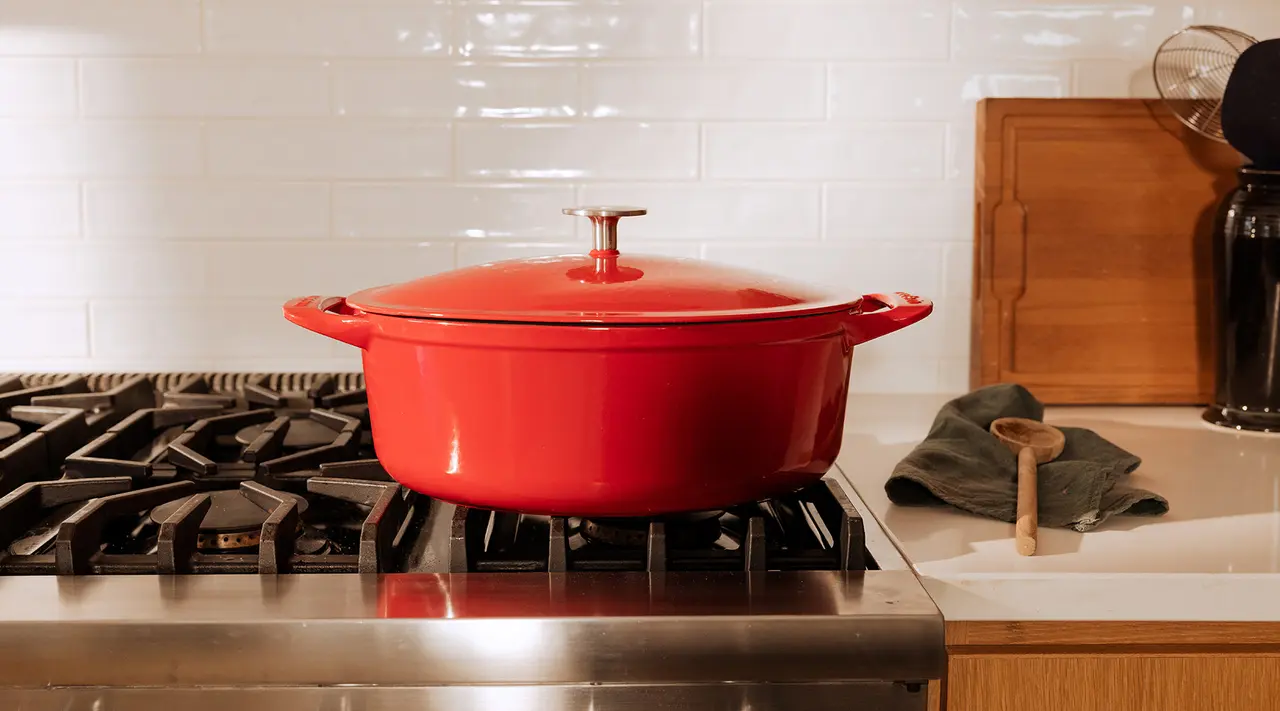
- Burner size. Use a burner that’s the same size as the pot’s base.
- Flame height. Keep the blue tip under the pot. No flame up the sides.
- Heat zones. Gas can create a hot ring. Stir and rotate the pot for even heat.
- Preheat pace. Low, then medium. Slow, steady heat protects the enamel.
- Long simmers. For all-day stews, use a simmer ring or heat diffuser.
PAA-style quick answers:
Do I need a heat diffuser on gas?
Not always. It helps for very low simmers, rice, caramel, and milk to cut hot spots.
Is high heat ever OK?
Short bursts only, like a quick sear. For the rest, stick to medium or lower for control and safety.
Why does food stick in my Dutch oven?
The pan was not hot enough, or you moved food too soon. Preheat with oil, then let proteins release on their own before flipping.
Can you use a Dutch oven on a gas stove for delicate sauces? Yes, but go low and use a diffuser to guard against scorching.

Cleaning, maintenance, and storage
A little care keeps your pot in top shape.
- Cool down. Let the pot cool before washing. Avoid cold water on hot enamel.
- Wash smart. Use warm water, mild soap, and a non-scratch sponge.
- Tackle stuck bits. Soak with warm water and baking soda. Simmer water if needed.
- Dry well. Cast iron can rust at raw edges. Dry and leave the lid ajar.
- Protect the rim. A thin layer of oil on any bare spots helps prevent rust.
Can you use a Dutch oven on a gas stove every day? Yes. Clean it well and avoid shock, and it will last for decades.
My real-world tips and lessons learned
I’ve tested Dutch ovens on everything from tight apartment ranges to big gas stoves. A few things stood out.
- For short ribs, a slow preheat and medium sear gave a better crust than cranking the heat.
- Rice scorched when the flame kissed the sidewalls. A diffuser fixed it fast.
- Tomato sauce tasted brighter when I used a gentle simmer and stirred the base ring.
- If the oil smokes, drop the heat and wait. Enameled iron keeps heat well.
So, can you use a Dutch oven on a gas stove for steady, pro-level results? Yes. Patience and small heat tweaks make a big difference.
Helpful tools and accessories
These small add-ons boost control and protect your pot.
- Heat diffuser or simmer ring. Levels out hot spots for delicate work.
- Silicone or wooden tools. Gentle on enamel.
- Long oven mitts. The handles get hot and stay hot.
- Splatter screen. Keeps your cooktop cleaner when searing.
- Trivet. Protects counters and tables from the hot base.
Can you use a Dutch oven on a gas stove with a wok ring? Not ideal. Use a flat, stable grate or a diffuser for better contact.
Related cooking methods and recipe ideas
A gas stove plus a Dutch oven opens a lot of doors.
- Weeknight chili. Brown beef, add aromatics, simmer low for 30–45 minutes.
- No-knead bread. Preheat the oven, proof dough, and bake covered for steam.
- Chicken and rice. Sear thighs, toast rice, add broth, cover, and simmer very low.
- Beans from dry. Gentle simmer, lid askew, no rolling boil.
- Shallow fry. Use a thermometer and keep the flame low to medium.
When friends ask, can you use a Dutch oven on a gas stove for deep flavor in less time, I point to these simple, steady methods.
Frequently Asked Questions of can you use a dutch oven on a gas stove
Will gas flames damage the enamel?
Not if you keep the flame under the base. Flames up the sides can discolor or weaken the enamel over time.
What heat setting should I use most of the time?
Stay in the low to medium range. Use brief high heat only to preheat or sear.
Can I slide the pot across the grate?
Lift it instead. Sliding can scratch the enamel and chip the edges.
Is it safe to deglaze a hot pot?
Yes, if the liquid is warm or at room temp. Avoid pouring ice-cold liquid into a very hot, dry pot.
Can I leave my Dutch oven simmering all day on gas?
Yes, with a low flame and enough liquid. A diffuser helps keep the simmer gentle and even.
Conclusion
A Dutch oven and a gas stove make a powerful, forgiving team. Match burner size to the pot, keep flames under the base, preheat slowly, and simmer low. With those simple habits, you can sear, braise, bake, and simmer like a pro.
If you’ve ever wondered can you use a Dutch oven on a gas stove, you now have the steps to do it well. Try one of the recipe ideas this week, tweak your heat, and enjoy deeper flavor with less stress. Want more tips and tested recipes? Subscribe or drop a question in the comments.

Hi, I’m Mary, the founder of KitchenClue.com. I’m deeply passionate about everything that makes a kitchen smarter, easier, and more enjoyable. I share hands-on insights and practical expertise on kitchen gear that truly helps in daily cooking. Along with my dedicated research team, we study products carefully, and our writers create honest, well-tested reviews using trusted, authentic sources—so you can choose kitchen tools with total confidence.