Le Creuset Enameled Cookware Set: Best Buying Guide
A Le Creuset enameled cookware set can give a U.S. home cook durable pots and pans for braising, baking, frying, and serving. The best set depends on your stove, oven, storage space, cooking habits, and budget—not simply the number of pieces in the box.
Le Creuset sells several cookware types in the United States. Some sets contain enameled cast iron, while others include stainless steel, nonstick pans, stoneware, or a mix of materials. Before buying, check the exact pieces, interior finish, lid design, oven rating, care rules, and warranty for the U.S. model.
What Is a Le Creuset enameled cookware set?
A Le Creuset enameled cookware set is a group of pots, pans, or baking pieces with a colored glass-like coating on some or all of the cooking surface. The term usually refers to enameled cast iron, but it can also describe cookware made from other materials.
The enamel is fused to the base material at high heat. It creates a smooth surface that does not need seasoning like bare cast iron. It also helps protect the iron from rust and allows the pan to cook acidic foods such as tomatoes, wine, and citrus-based sauces.
A typical set may include:
- A Dutch oven
- A saucepan
- A skillet or fry pan
- A sauté pan
- Lids
- Stoneware baking dishes
- Stainless steel cookware
- Utensils or trivets
The exact contents vary by collection and retailer. A “set” does not always mean a complete kitchen. Some sets are built around one large Dutch oven, while others focus on smaller saucepans and fry pans.
Enameled cast iron versus other Le Creuset cookware
| Cookware type | Main strength | Main limitation | Best use |
|---|---|---|---|
| Enameled cast iron | Holds heat well and works on most cooktops | Heavy and slow to heat | Stews, bread, braises, roasting |
| Stainless steel | Responsive and durable | Food may stick if heat and oil are poorly managed | Sauces, searing, everyday stovetop cooking |
| Nonstick | Easy food release | Coating needs careful use and replacement over time | Eggs, fish, low-fat cooking |
| Stoneware | Useful for baking and serving | Can crack from thermal shock | Casseroles, gratins, baked dishes |
A set with several materials may be more flexible than an all-cast-iron set. However, it can also make care less consistent because each piece may have different heat and cleaning rules.
Is a Le Creuset cookware set worth it?
A Le Creuset cookware set may be worth the cost if you want long-term enameled cast iron, value a cookware piece that can move from stovetop to oven, and do not mind its weight. It is less appealing if you need lightweight pans, want fast temperature changes, or mainly cook quick meals.
Reasons to consider one
Heat retention is a major benefit. Cast iron warms more slowly than aluminum or thin stainless steel, but it holds heat well once hot. That helps with braises, deep frying, roasting, and dishes that need steady heat.
The enamel supports acidic cooking. Bare cast iron can react with acidic ingredients, especially during long cooking. Enameled cast iron is designed for foods such as tomato sauce, chili, wine-based braises, and fruit-based dishes.
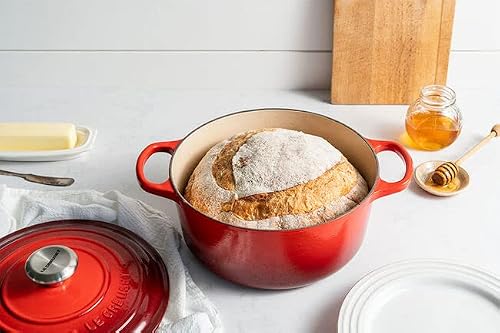
Many pieces are versatile. A Dutch oven can brown meat, simmer soup, bake bread, and go into the oven. Some models can also be used under a broiler, but the model’s instructions should control.
The cookware can be used for serving. Le Creuset cookware is designed with a decorative exterior. A Dutch oven or covered casserole can often go from the kitchen to the table, reducing the need for another serving dish.
Reasons to pause before buying
Cast iron is heavy. A large Dutch oven can become difficult to lift when filled with soup, water, or stew. If lifting is hard for you, choose a smaller size or a lighter material.
It responds slowly to heat changes. Turning down the burner does not cool cast iron at once. This can be a problem for delicate sauces or cooking that requires fast control.
The enamel can chip. The coating is hard, but it is not indestructible. Dropping a pan, striking the rim, or using harsh metal tools can damage it.
A large set may include pieces you rarely use. Buying one Dutch oven, one skillet, or one saucepan may provide better value than buying a large bundle with duplicate sizes.
The price is not proof of better cooking results. A premium brand can offer refined design and finish, but cooking skill, pan size, heat control, and recipe technique still affect the result.
The practical value test
Use this simple test before buying:
- List the three dishes you cook most often.
- Match each dish to a pan shape and size.
- Check whether the proposed set includes those pieces.
- Remove duplicate or rarely used items from the value calculation.
- Compare the set with buying only the needed pieces.
For example, a person who makes soup, braised meat, and sourdough bread may gain more from one suitable Dutch oven than from a six-piece set with several small pans.
What should a Le Creuset set include?
The right set should include pieces that match your cooking routine. For many U.S. kitchens, a Dutch oven, a skillet, and a medium saucepan cover more needs than a large collection of specialized pans.
A practical starter combination
A useful starter group may contain:
- A 5- to 6-quart Dutch oven: Suitable for soups, stews, braises, beans, and many family-size meals.
- A 10- to 11-inch skillet: Useful for searing, roasting, vegetables, and one-pan meals.
- A 2- to 3-quart saucepan: Useful for grains, sauces, oatmeal, and reheating.
- A medium baking dish: Helpful for casseroles, baked pasta, and gratins.
These sizes are general planning guides, not universal rules. A smaller household may prefer a 3½- to 4½-quart Dutch oven. A large household may need a larger vessel, but a bigger pan also weighs more and may not heat evenly on a small burner.
How to choose the main Dutch oven size
| Approximate capacity | Practical fit |
|---|---|
| 3 to 4 quarts | One or two people, small portions |
| 4½ to 5½ quarts | Small families and general home cooking |
| 6 to 7¼ quarts | Larger meals, batch cooking, entertaining |
| More than 7 quarts | Large batches, but greater weight and storage needs |
Capacity alone does not determine performance. Consider the cooking surface, the diameter of the burner, the filled weight, and whether the pot will fit in your oven.
Check the set piece by piece
Before checkout, verify:
- The exact model name
- The capacity of each pot
- The number of lids
- Whether the lids fit more than one piece
- The interior color and finish
- The material of each item
- The oven and broiler limits
- The cooktop compatibility
- The cleaning instructions
- The U.S. warranty terms
- Whether the seller is authorized
Retailer bundles can use similar names while containing different pieces. Read the specification list rather than relying on the product title.
How to use Le Creuset enameled cookware safely
Use low to medium heat for most enameled cast-iron cooking, and let the pan heat gradually. High heat is rarely needed because cast iron retains heat after the burner is reduced.
Follow this basic method
- Place the pan on a suitable burner. The burner should not extend far beyond the base.
- Add a small amount of oil if the recipe calls for it.
- Preheat gradually. Avoid heating an empty enameled pan for a long time.
- Add food once the pan is warm. The correct heat depends on the recipe and food.
- Reduce the heat after browning. The pan will continue to hold heat.
- Use the correct tool. Wood, silicone, or other approved utensils reduce the risk of scratches and chips.
- Let the cookware cool before washing. Sudden temperature changes can stress the enamel.
- Dry the pan fully. Pay attention to the rim, lid edge, and underside.
Le Creuset’s care guidance should take priority over general advice because instructions can differ by product line and revision. The company’s U.S. care pages explain use, cleaning, heat limits, and compatible cooking surfaces.
Cooktop compatibility
Enameled cast iron generally works on gas, electric, glass, ceramic, and induction cooktops when the cookware has a flat, suitable base. On a glass cooktop, lift the pan instead of sliding it. Sliding a heavy pot can scratch the surface or move debris across the glass.
For induction cooking, confirm the specific model. Cast iron is magnetic, but a cookware piece still needs a suitable base and a size that works with the induction zone.
Oven and broiler use
Many Le Creuset pieces are oven-safe, but the maximum temperature can depend on the cookware material, knob, lid, and model. A phenolic or plastic knob may have a different limit from a stainless steel knob.
Do not assume that every part of a set shares the same rating. Check the product manual or the official U.S. product page before using:
- A lid in a hot oven
- A pan under the broiler
- A piece on an open flame
- A stoneware dish at a high temperature
- A cold dish in a preheated oven
How to clean and maintain Le Creuset enameled cookware
Clean enameled cookware with warm water, mild dish soap, and a soft sponge. For stuck food, soak the pan first instead of attacking the enamel with a sharp tool or abrasive pad.
For ordinary food residue
- Allow the cookware to cool.
- Fill it with warm water and mild soap.
- Soak it for several minutes.
- Wipe with a soft sponge or nylon brush.
- Rinse and dry completely.
Do not pour cold water into a very hot pan. Thermal shock can damage enamel and may warp or stress the cookware.
For burned or stuck food
Add warm water and a small amount of mild dish soap. Bring the water to a gentle simmer if the manufacturer’s care instructions allow it, then turn off the heat and let the pan cool. Loosen the residue with a soft tool.
A paste made from baking soda and water may help with some stains, but test gently and follow the manufacturer’s care directions. Avoid treating every dark mark as a defect. Some discoloration is cosmetic and does not affect cooking.
Avoid these common cleaning mistakes
- Do not use steel wool on the enamel.
- Do not strike the rim against a sink or counter.
- Do not use a knife to scrape the cooking surface.
- Do not place hot cookware in cold water.
- Do not leave moisture trapped under a lid.
- Do not use abrasive cleaners unless the care instructions allow them.
- Do not assume dishwasher use is ideal for every piece.
Some products may be listed as dishwasher-safe, but repeated dishwasher cycles can dull exterior enamel, affect metal parts, or reduce the visual finish. Hand washing is often the gentler long-term choice.
How to handle stains
Light stains can sometimes respond to a mild cleaner recommended by the manufacturer. Do not use a strong chemical simply because a stain looks stubborn. If the enamel is chipped, cracked, or lifting, stop using the piece until the manufacturer or an authorized service team confirms that it is suitable for cooking.
Common problems with enameled cookware
Most problems come from heat shock, impact, incorrect sizing, or using more heat than the pan needs.
| Symptom | Likely cause | Safer next step |
|---|---|---|
| Food sticks | Pan was too cool, too hot, or too dry | Preheat gradually and use suitable fat |
| Brown film appears | Cooking residue or oil buildup | Soak, then clean with a soft tool |
| Exterior enamel darkens | Heat, grease, or staining | Use the approved cleaning method |
| Small chip on the rim | Impact or lid contact | Stop striking the rim; inspect the damage |
| Pan seems slow to heat | Cast iron retains heat and warms gradually | Preheat longer at moderate heat |
| Food burns after heat is reduced | Cast iron stays hot | Move the pan to a cool burner if needed |
| Glass cooktop shows marks | Pan was dragged | Lift cookware instead of sliding it |
| Lid or pan cracks | Thermal shock or impact | Stop use and contact the manufacturer |
Is chipped enamel safe?
A small exterior mark is not the same as a chip on the cooking surface. If the interior enamel has chipped, cracks, or flakes, do not assume it is safe because the damaged area is small. Contact Le Creuset or the authorized seller for product-specific guidance.
Do not try to repair the cooking surface with household paint, glue, or epoxy. These materials are not substitutes for a factory food-contact finish.
Le Creuset versus other enameled cookware brands
Le Creuset is one option in a broad enameled cookware market. A fair comparison should use the same material, capacity, lid type, cooking surface, warranty, and country of sale.
Compare these features
- Interior enamel color and finish
- Thickness and weight
- Lid fit and handle design
- Shape of the cooking surface
- Oven and broiler limits
- Induction compatibility
- Ease of lifting
- Availability of replacement parts
- Warranty terms
- Retailer support
- Return policy
- Price at the time of purchase
Do not compare a premium enameled Dutch oven with a lightweight nonstick saucepan as if they serve the same purpose. They solve different cooking problems.
When another material may be better
Choose stainless steel if you want fast heat response, lighter cookware, and a surface that tolerates metal tools better. Choose nonstick if easy release matters most for eggs or delicate foods, while accepting that the coating requires more care and may eventually wear.
Choose bare cast iron if you want a seasoned cooking surface and do not mind maintenance. Choose carbon steel if you want a lighter searing pan that can develop seasoning, but remember that it needs different care from enamel.
The best alternative depends on the job. Enameled cast iron is strongest when steady heat, oven use, and acidic cooking matter more than low weight.
How to buy a Le Creuset cookware set in the United States
Buy from Le Creuset’s U.S. website, an authorized U.S. retailer, or a seller with clear product and warranty information. Marketplace listings deserve extra care because the model, condition, packaging, and warranty may not match the listing title.
Use this buying checklist
- Confirm the set is intended for the U.S. market.
- Read the complete piece list.
- Check capacities in quarts.
- Confirm whether each piece is new, used, or refurbished.
- Review the return policy.
- Confirm the warranty terms.
- Check for visible chips, cracks, or damaged rims.
- Compare the set price with the cost of needed individual pieces.
- Check whether replacement knobs or lids are available.
- Measure your cabinet, sink, oven, and cooktop.
Le Creuset’s official U.S. warranty terms may differ by product category. Keep the receipt and product information. A warranty generally does not cover every form of misuse, normal cosmetic change, accidental damage, or wear.
Set versus individual pieces
A set is a good fit when most of its pieces match your needs. Buy individual cookware when:
- You already own a good Dutch oven.
- You need only one skillet or saucepan.
- The set includes duplicate sizes.
- You have limited storage.
- The pieces are too heavy for comfortable use.
- You want different materials for different tasks.
A lower total price does not create savings if unused pieces remain in the cabinet.
Who should buy a Le Creuset enameled cookware set?
A Le Creuset set suits cooks who make soups, stews, braises, roasts, baked dishes, and family-size meals. It also suits people who value a long-use cookware system and are comfortable lifting heavy pans.
It may not suit someone who:
- Needs very lightweight cookware
- Cooks mostly quick meals
- Has limited oven or cabinet space
- Wants rapid temperature changes
- Prefers a low-cost starter setup
- Has difficulty lifting a full pot
For many buyers, the most sensible first purchase is one Dutch oven rather than a full set. Add a skillet or saucepan only after you know what the first piece cannot do.
Frequently asked questions
Is Le Creuset enameled cookware nonstick?
No. Enameled cast iron has a smooth surface, but it is not the same as a modern nonstick coating. Food can stick if the pan is too hot, too cool, too dry, or left undisturbed during browning.
Does Le Creuset enameled cast iron need seasoning?
No. The enamel does not need seasoning like bare cast iron. You may still use a small amount of oil to improve browning and food release.
Can Le Creuset cookware go in the dishwasher?
Some Le Creuset products may be dishwasher-safe, but the company’s instructions vary by material and product. Hand washing is usually gentler on the finish. Check the specific U.S. care instructions before using a dishwasher.
Can I use metal utensils with enameled cookware?
Metal utensils can scratch, mark, or chip enamel if used forcefully. Wood, silicone, or other approved utensils are safer choices for routine use.
Why is my Le Creuset Dutch oven so heavy?
Cast iron is dense. Its weight helps it hold heat, but the filled pan can be difficult to lift. Consider the empty and filled weight before choosing a large capacity.
Can I use Le Creuset on an induction cooktop?
Many cast-iron models work on induction cooktops, but the exact base and size matter. Confirm compatibility for the individual product and avoid sliding it across a glass surface.
What should I do if the enamel chips?
Stop using the piece if the cooking surface chips, cracks, or flakes. Photograph the damage, keep proof of purchase, and contact Le Creuset or the authorized seller. Do not apply a home repair coating.
Final recommendation
A Le Creuset enameled cookware set is a strong option when you want heat-retaining cookware for oven meals, braises, soups, and baking, and when the weight fits your kitchen and strength. Choose based on the actual pieces and their intended jobs, not the set name alone.
For most U.S. cooks, start with the core piece you will use each week—often a medium Dutch oven—then add cookware that fills a clear gap. Check the official U.S. product page and care instructions for the exact model before purchase and before using high heat, the broiler, a dishwasher, or an induction cooktop.

Hi, I’m Mary, the founder of KitchenClue.com. I’m deeply passionate about everything that makes a kitchen smarter, easier, and more enjoyable. I share hands-on insights and practical expertise on kitchen gear that truly helps in daily cooking. Along with my dedicated research team, we study products carefully, and our writers create honest, well-tested reviews using trusted, authentic sources—so you can choose kitchen tools with total confidence.