5 Best Casserole Baking Dish In 2026
You stand in your kitchen, ready to make that famous lasagna or comforting mac and cheese. But the old baking dish? It’s stained, chipped, or maybe just too small. You need something better.
The right casserole dish changes everything. It bakes food evenly, looks good on your table, and lasts for years. The wrong one? Burned edges, stuck-on food, and cracked ceramic after a few uses.
This guide reviews five popular casserole baking dishes. We’ll break down what makes each one tick, who should buy it, and whether it’s worth your money. No fluff. Just honest insights to help you pick the right one.
What Makes a Great Casserole Dish
Before we dive into reviews, let’s talk basics.
A good casserole dish does three things well. First, it distributes heat evenly so your food cooks the same from edge to center. Second, it’s durable enough to handle daily use without cracking or chipping. Third, it makes serving easy with handles you can grip and looks that don’t embarrass you at the dinner table.
Most quality dishes use ceramic, porcelain, or stoneware. These materials hold heat well and clean up nicely. They go from oven to table without looking out of place.
Size matters too. A 9×13 inch dish is the standard for family meals. It holds most recipes you’ll find online or in cookbooks. Smaller sizes work for sides or couples. Larger ones? Great for feeding a crowd or meal prep.
Now let’s look at specific products that actually deliver on these promises.
Product Reviews
1. DOWAN Casserole Dish – The Classic Choice
Product Overview
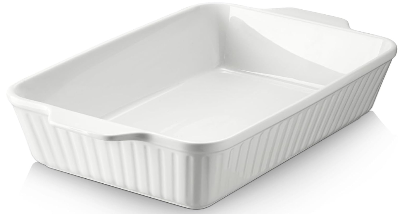
The DOWAN dish brings simplicity and reliability to your kitchen. This 9×13 inch ceramic baking pan holds 4.2 quarts, which fits most standard recipes perfectly. The soft white finish looks clean and modern without trying too hard.
This dish targets home cooks who want something dependable for everyday baking. It’s not fancy, but it does the job right.
Best Use Cases
This pan excels at traditional casseroles, lasagna, and baked pasta dishes. The depth handles recipes with multiple layers without spilling over. It also works great for roasting vegetables or baking brownies when you need that specific size.
Family dinners and potlucks are where this dish shines. The handles make it easy to carry, and the neutral color matches any table setting.
Key Features Explained
The ceramic material distributes heat steadily. This means your lasagna cooks through without burning the corners. The depth measures deeper than some competitors, giving you room for generous portions.
Those handles aren’t just decorative. They’re shaped to give you a solid grip even with oven mitts on. The rim is slightly raised, which helps prevent spills when you’re moving the dish around.
The glaze is smooth and non-porous. Food doesn’t stick as much, and cleanup takes less scrubbing. You can throw it in the dishwasher without worrying about the finish fading.
Real-Life Usage Insight
This dish heats up evenly in most standard ovens. Your food cooks at the same rate from one end to the other. No more burnt edges with a raw middle.
The handles stay cool enough to grab with thick oven mitts after baking. They’re positioned well for balance, so the dish doesn’t tip when you lift it.
For storage, the rectangular shape fits easily in most cabinets or refrigerators. You can cover it with foil or plastic wrap and stack other items on top without issues.
Honest Pros and Cons
Pros:
- Heats food evenly without hot spots
- Deep enough for layered recipes
- Handles are sturdy and well-positioned
- Dishwasher safe with durable glaze
- Fits standard 9×13 recipes perfectly
- Affordable for the quality level
Cons:
- Can chip if dropped or knocked hard
- Heavier than glass alternatives
- No lid included
- White color shows stains over time
- Takes longer to heat up than metal pans
Performance Discussion
Heat retention is solid with this dish. Once it’s hot, it stays hot. This keeps casseroles warm at the table longer than metal pans would.
The ceramic handles thermal shock reasonably well, but sudden temperature changes can cause cracks. Going from freezer to hot oven isn’t recommended. Let frozen food thaw first, or at least bring the dish to room temperature.
After multiple uses, the glaze holds up well. Some light staining might occur with tomato-based sauces, but it doesn’t affect performance. A baking soda paste removes most discoloration.
Ease of Use
Getting food out is straightforward. A spatula slides under portions without major sticking. The smooth interior doesn’t have rough spots where food gets trapped.
Cleaning takes minimal effort for most recipes. Soaking for 10-15 minutes handles baked-on cheese or crusty edges. The dishwasher does the rest.
Moving from oven to countertop to table requires some care because of the weight, but the handles make it manageable for most people.
Value for Money
For the price point, this dish delivers solid performance. It’s not the cheapest option, but you get quality materials that last. The even heating alone saves you from ruined dinners, which pays for itself quickly.
This represents good value for regular home cooks who want reliability without premium pricing. It’s built to handle frequent use, not just occasional baking.
2. MALACASA Casserole Dishes – The Versatile Set
Product Overview
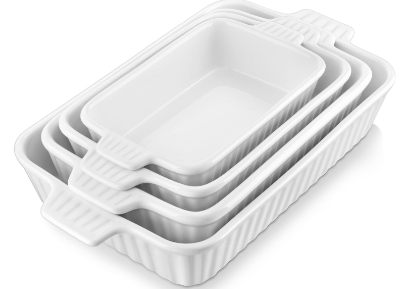
MALACASA offers a set of four porcelain baking dishes in graduated sizes: 9.4, 11.1, 12.2, and 14.7 inches. This gives you options for different recipe sizes and serving needs. The white porcelain has a clean, professional look.
This set appeals to cooks who want flexibility and don’t want to buy dishes one at a time.
Best Use Cases
The multiple sizes handle everything from small side dishes to large family meals. Use the smallest for individual portions or desserts. The largest works for party-sized lasagnas or feeding extended family.
Having different sizes means you can bake multiple items at once without size conflicts. The medium dishes are perfect for everyday dinners for two to four people.
Key Features Explained
Porcelain construction makes these dishes slightly lighter than heavy ceramic while maintaining durability. The material still provides even heat distribution across the cooking surface.
Each dish has handles on both ends. They’re integrated into the design smoothly, giving you grip without adding much width. This helps them fit in ovens with limited space.
The glaze on porcelain is naturally smooth and resistant to staining. These dishes maintain their white appearance better than standard ceramic over time.
Real-Life Usage Insight
Having four sizes means less wasted oven space. You can match the dish to your recipe instead of using a huge pan for a small amount of food. This actually saves energy and reduces cooking time.
The graduated sizes nest inside each other for storage. This is huge if you have limited cabinet space. The whole set takes up barely more room than one large dish.
Porcelain heats up faster than thick ceramic. Your oven doesn’t need to work as hard to get the dish to temperature, which means slightly shorter preheating times.
Honest Pros and Cons
Pros:
- Four sizes cover most cooking needs
- Nest together for compact storage
- Porcelain is lighter than ceramic
- Clean white finish resists staining
- Handles on all dishes for easy carrying
- Good value as a set purchase
Cons:
- Porcelain can be more fragile than stoneware
- No lids included with any size
- Largest dish may not fit smaller ovens
- Handles are smaller than some prefer
- Different sizes mean learning multiple cooking times
Performance Discussion
The set performs consistently across all sizes. Heat distribution stays even whether you’re using the small or large dish. This reliability makes cooking predictable.
Porcelain’s lighter weight makes handling easier, especially when dishes are full. The trade-off is slightly less heat retention compared to thicker materials. Food cools down a bit faster at the table.
Thermal shock resistance is decent but not exceptional. Avoid extreme temperature swings. Let dishes cool before washing with cold water.
Ease of Use
The size variety simplifies meal planning. You always have the right tool for the job. This reduces the temptation to overfill a small dish or waste oven space with a too-large one.
Cleaning is simple across all four pieces. The smooth porcelain releases food easily. The white surface lets you see when it’s truly clean.
Storing the nested set is one of the easiest aspects. Stack them once, and they stay organized.
Value for Money
Buying four dishes together costs less than purchasing them separately. If you actually use multiple sizes, the value is excellent. If you only ever need one size, you’re paying for dishes that sit unused.
The quality justifies the set price for active cooks who prepare varied meals. For occasional bakers, it might be more than necessary.
3. Artena Baking Dish – The Lid Lover’s Pick
Product Overview
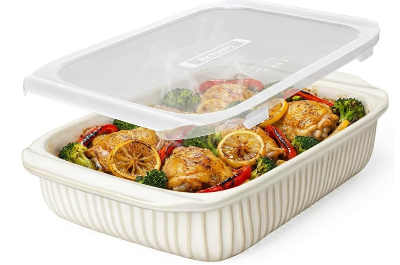
The Artena dish stands out with its 5.1-quart capacity and included lids. This rectangular ceramic bakeware measures larger than standard 9×13 pans. The white finish is simple and classic.
This targets cooks who value storage convenience and keeping food fresh after cooking.
Best Use Cases
The lids make this ideal for make-ahead meals. Prep your casserole, cover it, refrigerate, then bake later. The same lid keeps leftovers fresh without needing extra containers.
Large family gatherings benefit from the generous size. You can make bigger batches without needing multiple dishes. The lid also helps transport food to potlucks without mess.
Key Features Explained
That 5.1-quart capacity is noticeably larger than standard dishes. You can layer more ingredients or increase recipe amounts without overflow. The extra depth accommodates thick casseroles and deep-dish creations.
The lid fits snugly without being difficult to remove. It’s made from the same ceramic material, so it can go in the oven too. This opens up options for covered cooking when you want to trap moisture.
Handles are wide and easy to grip. They extend far enough that you can get a secure hold even with bulky oven mitts. The handle design distributes weight evenly for balanced carrying.
Real-Life Usage Insight
Having a proper lid eliminates the need for plastic wrap or aluminum foil for storage. This is both convenient and more environmentally friendly. The ceramic lid also looks better if you’re serving directly from the dish.
The large size means you might need to adjust recipe quantities. Standard 9×13 recipes can look sparse in this dish. Scaling up by 25-30% usually fills it appropriately.
The lid adds versatility for cooking methods. You can start covered to trap steam, then remove it to brown the top. This works great for dishes like baked rice or braised meats.
Honest Pros and Cons
Pros:
- Lid included for storage and covered cooking
- Large capacity handles bigger batches
- Deep design prevents spillovers
- Handles are comfortable and secure
- Ceramic lid can go in oven
- Good for meal prep and leftovers
Cons:
- Larger than standard recipe sizes
- Heavy when full because of size
- Takes up more storage space
- Lid adds to overall weight
- May not fit in smaller ovens
- Higher price than lidless options
Performance Discussion
The extra depth and capacity affect heating times. Food in the center takes longer to reach temperature than in shallower dishes. Plan for slightly extended cooking times and check doneness carefully.
Heat distribution remains even across the bottom, but the depth means the top and bottom can cook at different rates. Rotating the dish halfway through baking helps balance this.
The ceramic lid traps heat and moisture effectively. This creates a different cooking environment than uncovered baking. Foods stay moister but may brown less on top.
Ease of Use
Covering and uncovering during cooking is simple. The lid has a small handle on top for lifting. It’s less awkward than you might expect.
Storage is straightforward if you have the cabinet space. The lid stays with the dish, so you’re not hunting for covers. This makes grabbing it for meal prep quick and easy.
The size requires some adjustment in how you think about portions. Once you get used to it, the extra capacity becomes an advantage rather than a puzzle.
Value for Money
You’re paying extra for the lid and larger capacity. If these features match your cooking style, the value is solid. The lid alone saves money on disposable covers over time.
For small households or those with limited storage, the premium might not be worth it. The extra size and weight add costs without corresponding benefits.
4. LE TAUCI Deep Casserole Dishes – The Complete Kitchen Set
Product Overview
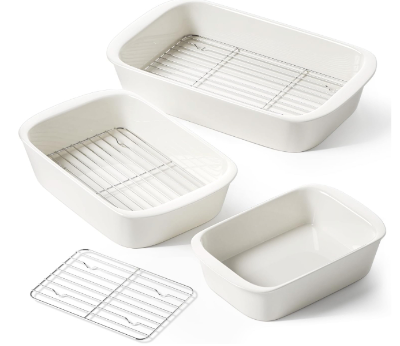
LE TAUCI delivers three dishes in different sizes: 4.6, 3.0, and 1.6 quarts. The set includes roasting racks that fit inside the largest dish. All pieces are white ceramic with practical handles.
This set targets cooks who want a complete baking solution with added functionality from the included racks.
Best Use Cases
The roasting racks make this perfect for cooking meats where you want fat to drip away. Use the largest dish with a rack for roasting chicken or ribs. The smaller dishes handle sides, desserts, or smaller main courses.
The three sizes work well for cooking complete meals at once. Use all three dishes simultaneously for a main course, side, and dessert. This efficiency shines when entertaining.
Key Features Explained
The roasting racks are the standout feature. They lift meat or vegetables above the dish bottom, allowing air circulation and even browning. Fat drips down, creating healthier results and easier cleanup.
Each dish has a generous depth. The largest measures 13.7 by 9.6 inches with serious vertical space. This depth accommodates thick roasts or deep casseroles without crowding.
The ceramic quality is thick and substantial. These dishes feel solid and well-made. The weight contributes to excellent heat retention and durability.
Real-Life Usage Insight
The rack functionality expands what you can cook beyond typical casseroles. Roasted meats come out crispier with the elevated cooking method. Vegetables roast more evenly without sitting in their own moisture.
Three sizes mean you can dedicate dishes to specific tasks. Keep the smallest for desserts or sides. Use the medium for everyday dinners. Reserve the largest for special occasions or batch cooking.
The depth of these dishes makes them versatile for both wet and dry cooking methods. Deep stews, braises, and baked dishes all work well without worrying about boil-overs.
Honest Pros and Cons
Pros:
- Three sizes plus roasting racks included
- Deep dishes prevent spills and splatter
- Racks enable healthier roasting
- Substantial ceramic feels premium
- Can cook complete meals simultaneously
- Good gift set value
Cons:
- Heavy when full due to thick ceramic
- No lids included
- Takes up significant storage space
- Racks only fit largest dish
- Higher price point than single dishes
- May be more than casual cooks need
Performance Discussion
Heat retention is exceptional with these thick dishes. Food stays hot at the table for extended periods. The downside is longer preheating times to get the ceramic up to temperature.
The roasting racks perform well at elevating food and promoting air circulation. Cleanup is easier than roasting directly in the dish. The racks are sturdy enough not to bend or warp.
Even heating across all three sizes maintains consistency. You can trust that cooking times will be predictable once you learn how each size performs in your oven.
Ease of Use
The racks add a learning curve. You need to figure out rack placement and how it affects cooking times. Once mastered, they become a valuable tool.
Moving multiple dishes requires organization. The varying sizes help you prioritize, but you need adequate oven space and counter room for hot dishes.
Cleaning the racks takes extra time compared to flat dishes. The bars create spaces where food can get stuck. A good soak usually loosens stubborn bits.
Value for Money
As a set with racks, this offers substantial value if you use all the components. The roasting capability alone adds functionality worth the premium.
For someone who only needs one casserole dish, this is overkill. You’re paying for pieces and features you may never use. Evaluate your actual cooking habits honestly.
5. Gibson Home Gracious Dining – The Compact Multi-Tasker
Product Overview
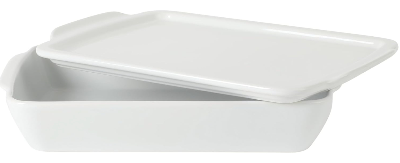
Gibson Home offers a 2.6-quart stoneware dish with a unique multi-purpose lid. The dish measures 12.7 by 9 inches in a rectangular shape. The white stoneware has a traditional, homey appearance.
This appeals to cooks with limited space who want maximum versatility from each kitchen tool.
Best Use Cases
The smaller capacity suits couples, small families, or single portions. It’s perfect for side dishes at larger meals or main courses for two people. The compact size also works great for desserts like cobblers or bread puddings.
The lid’s ability to function as a trivet or serving piece adds utility beyond typical covers. This makes the set more valuable in small kitchens where every item needs multiple uses.
Key Features Explained
Stoneware is denser and more durable than standard ceramic. It resists chipping and cracking better, making it a long-term investment. The material also retains heat exceptionally well.
The lid design is clever. It fits the dish for cooking and storage, but it’s also shaped to sit flat as a trivet or serving piece. This dual function saves cabinet space and money.
The 2.6-quart size is deliberately moderate. It fits in most ovens easily, doesn’t crowd refrigerator shelves, and doesn’t overwhelm your table when serving.
Real-Life Usage Insight
The smaller size means faster heating and cooling times. Your oven doesn’t work as hard, and you can get food on the table quicker. This matters for weeknight dinners when time is tight.
Stoneware’s durability shows up in daily use. The dish handles bumps and knocks without damage. It’s more forgiving than delicate porcelain.
The lid-as-trivet feature is surprisingly practical. Instead of hunting for a trivet, you just flip the lid. For serving, the lid becomes a small platter or dish. These small conveniences add up.
Honest Pros and Cons
Pros:
- Stoneware is very durable
- Lid doubles as trivet and serveware
- Compact size fits anywhere
- Excellent heat retention
- Perfect for small households
- Affordable price point
Cons:
- Small capacity limits recipe sizes
- Not suitable for large gatherings
- Heavier than porcelain alternatives
- Limited to smaller portion cooking
- May need to scale down standard recipes
Performance Discussion
Stoneware’s heat retention keeps food hot longer than thinner materials. This is great for serving but means you need to be careful handling it. The dish stays hot for quite a while after leaving the oven.
Even heating is solid for the size. The compact dimensions mean heat reaches all parts of the food effectively. There’s less risk of uneven cooking than in larger dishes.
The lid seals well enough for storage but isn’t completely airtight. It keeps food fresh for a day or two but shouldn’t be treated like a specialized storage container.
Ease of Use
The moderate size makes handling easy. It’s not so heavy when full that moving it becomes a chore. The handles provide adequate grip for safe transport.
Cleaning is straightforward. The stoneware surface doesn’t hold onto stains as readily as some materials. Standard dishwashing handles most cleanup tasks.
The multi-function lid means fewer items to store and manage. This simplicity appeals to people who don’t want complicated kitchen systems.
Value for Money
The price is reasonable for stoneware quality. You get a durable dish with a versatile lid at a mid-range cost. The long lifespan of stoneware makes this a smart investment.
For small households, this might be the only casserole dish needed. That makes the value excellent. Larger families would need it as a supplement to bigger dishes.
Side-by-Side Comparison
When you line up these five options, some clear patterns emerge.
Size and Capacity Differences
DOWAN and LE TAUCI’s largest dish both hit the standard 9×13 size range. This makes them most compatible with typical recipes. Artena goes bigger at 5.1 quarts, which requires recipe adjustments. MALACASA gives you size options, and Gibson Home keeps things compact at 2.6 quarts.
For standard cooking, DOWAN or the MALACASA set’s mid-sized dishes work best. For flexibility, MALACASA or LE TAUCI’s multiple sizes help. For small-scale cooking, Gibson Home fits perfectly.
Material and Durability
All five use ceramic-family materials, but with variations. Gibson Home’s stoneware is the most chip-resistant. MALACASA’s porcelain is lighter but more delicate. DOWAN, Artena, and LE TAUCI use standard ceramic with good durability.
For longevity, Gibson Home and LE TAUCI’s thicker construction win. For easier handling, MALACASA’s lighter porcelain helps.
Features and Extras
Artena and Gibson Home include lids, adding storage and cooking versatility. LE TAUCI includes roasting racks for expanded functionality. DOWAN and MALACASA focus on the basics without extras.
If extras matter, Artena and LE TAUCI deliver the most. If you want simplicity, DOWAN or individual MALACASA dishes work.
Price and Value
Gibson Home hits the lowest price point for a single quality dish with a lid. DOWAN offers solid value for a reliable solo dish. MALACASA and LE TAUCI cost more as sets but provide multiple pieces. Artena’s premium reflects its large capacity and lid.
Budget-conscious buyers should look at Gibson Home or DOWAN. Those wanting variety should compare MALACASA versus LE TAUCI based on whether roasting racks matter.
Buying Guide – What to Look For
Material Matters
Ceramic and porcelain are the most common materials. They heat evenly and clean easily. Stoneware is denser and more durable but heavier. Glass is another option but scratches easier and has different heat properties.
For most cooks, ceramic offers the best balance. It performs well, lasts long, and doesn’t break the bank.
Size Considerations
Think about what you actually cook. A 9×13 inch dish handles most standard recipes. If you cook for two, go smaller. If you feed six or more regularly, consider larger or multiple sizes.
Measure your oven before buying. A dish that doesn’t fit is useless. Also check refrigerator shelf dimensions if you plan to store leftovers in the dish.
Handle Design
Good handles make a huge difference. They should extend far enough for a secure grip. The shape should accommodate thick oven mitts. Avoid dishes where handles are too small or just decorative bumps.
Test the balance point. When you pick up the dish, it should feel stable, not tippy.
Depth and Shape
Deeper dishes prevent spillovers and allow layered recipes. Shallow dishes work better for items you want to brown or crisp. Standard depth is around 2-3 inches.
Shape affects cooking too. Rectangular dishes fit most recipes and ovens. Square or oval shapes can be harder to match with recipes and oven racks.
Finish and Glaze
A smooth, non-porous glaze prevents sticking and makes cleaning easier. Rough or pitted surfaces trap food and stains. White shows stains but lets you see if it’s truly clean. Colored glazes hide stains but might make it harder to judge food doneness.
Look for glazes marked as food-safe and lead-free. Reputable manufacturers test for this, but it’s worth confirming.
Temperature Ratings
Most ceramic dishes handle 400-500°F safely. Check the specific rating for your chosen dish. If you use high-heat recipes or broiling, verify the dish can handle it.
Also consider thermal shock resistance. Dishes that crack when moving from cold to hot are frustrating and dangerous.
Price Range Expectations
Basic ceramic dishes start around $20-30. Mid-range options with better materials or features run $35-60. Premium dishes or sets can hit $70-100 or more.
Higher price doesn’t always mean better performance. Sometimes you’re paying for brand names or aesthetics. Focus on features that matter for your cooking.
Who Should Buy These Products
DOWAN Casserole Dish
Buy this if you want one reliable dish for standard recipes. It suits families of 3-5 people who cook traditional casseroles and baked dishes regularly. It’s also great for people who value simplicity over fancy features.
Skip it if you need multiple sizes, want a lid included, or cook for large groups often.
MALACASA Set
This set works for active cooks who prepare varied meals and want options. If you entertain regularly or meal prep in different quantities, the size variety helps. It’s also smart for people setting up a kitchen from scratch.
Pass if you only need one size or have very limited storage. The set is wasted on occasional bakers.
Artena Baking Dish
Buy this for make-ahead cooking and large-batch meals. If you meal prep on weekends or cook for big family gatherings, the capacity and lid shine. It’s also good for people who want minimal extra containers cluttering their kitchen.
Skip it if you have a small oven, cook for just one or two people, or don’t have room for a large dish.
LE TAUCI Set
This suits cooks who roast meats regularly and want a complete baking set. If you cook full meals in the oven often or enjoy Sunday roasts, the racks and multiple sizes deliver value. It’s also a solid gift for someone setting up their first kitchen.
Avoid if you rarely roast meat, have limited storage, or want just one simple dish.
Gibson Home Dish
Perfect for small households, empty nesters, or singles who still want quality bakeware. The size suits side dishes or modest main courses. The versatile lid appeals to minimalists who want multi-functional tools.
Not ideal for families, big recipe batches, or people who host large gatherings.
Common Mistakes to Avoid
Buying the Wrong Size
The biggest mistake is grabbing a dish based on looks without checking dimensions. Measure your oven racks and common recipe requirements. A beautiful dish that’s too big for your oven sits unused.
Also consider real-life usage. If you always cook for two, a massive dish wastes energy and space.
Ignoring Material Differences
Not all ceramics are equal. Some are thin and fragile. Others are thick and durable. Check thickness, weight, and material specifications. A suspiciously light dish might crack after a few uses.
Also consider where it’s made and any quality certifications. These indicate attention to manufacturing standards.
Forgetting Temperature Ratings
Assuming all dishes handle any temperature leads to cracked cookware. Always check the maximum safe temperature. If you use recipes that call for high heat or broiling, verify the dish can take it.
Thermal shock is another consideration. Some dishes need gradual temperature changes to avoid cracking.
Overlooking Storage Space
Buying a set of dishes without confirming cabinet space creates clutter. Measure your storage areas. Consider how the dishes stack or nest. Think about where you’ll actually keep them.
Large or oddly shaped dishes often end up shoved in awkward spots, making them less likely to be used.
Focusing Only on Price
The cheapest option often costs more in the long run. Dishes that chip, crack, or stain quickly need replacing. A slightly higher upfront cost for better quality pays off over years of use.
Conversely, the most expensive isn’t always the best. Sometimes you’re paying for branding. Evaluate features versus cost objectively.
Neglecting Handle Quality
Handles seem minor until you’re trying to pull a hot, heavy dish from the oven. Small, poorly designed handles are safety hazards. Test how handles feel before buying if possible. Read reviews about handle strength and comfort.
Handles that crack or break off render the dish nearly useless and dangerous.
Skipping Thermal Shock Tests
Not all ceramic handles sudden temperature changes well. Taking a dish from the refrigerator and putting it straight into a hot oven can cause cracks. Look for information about thermal shock resistance.
If the manufacturer doesn’t specify, assume the dish needs gradual temperature changes to stay safe.
Final Verdict
After reviewing all five products, here’s the bottom line.
Best Overall Value: DOWAN Casserole Dish
For most home cooks, the DOWAN dish hits the sweet spot. It’s the right size for standard recipes, performs reliably, and costs less than premium options. The quality justifies the price, and the simple design works for any kitchen style.
You get dependable performance without paying for features you might not use. It’s the safe choice that won’t disappoint.
Best for Versatility: MALACASA Set
If you want options and don’t mind storing multiple pieces, MALACASA delivers. The four sizes handle everything from individual portions to party-sized batches. The nested storage keeps them organized, and the porcelain quality holds up well.
This set works best for active cooks who prepare diverse meals and want the right tool for each job.
Best for Meal Prep: Artena Baking Dish
The included lid and large capacity make Artena ideal for make-ahead cooking. Prep casseroles in advance, cover them, and refrigerate until ready to bake. The generous size feeds crowds or provides multiple leftover portions.
If meal prep and batch cooking define your style, this dish supports that workflow perfectly.
Best Feature Set: LE TAUCI Set
For cooks who want it all, LE TAUCI includes multiple sizes plus roasting racks. The extra functionality justifies the higher price if you actually use the racks. The depth and quality of the dishes add long-term value.
This set suits serious home cooks who use their ovens regularly and appreciate specialized tools.
Best for Small Spaces: Gibson Home Dish
The compact size and multi-function lid make Gibson Home perfect for limited kitchens. The stoneware durability means it lasts despite being affordable. The lid’s versatility as a trivet and serving piece adds practical value.
Small households or people with minimal storage will appreciate how this dish maximizes utility while minimizing space.
Wrapping Up Your Decision
The right casserole dish depends on your specific needs. Think about what you actually cook, how many people you feed, and what features matter most to you.
DOWAN works for straightforward, reliable performance. MALACASA gives you size options. Artena focuses on large-batch cooking with convenient storage. LE TAUCI adds roasting capability. Gibson Home keeps things compact and multi-functional.
None of these dishes will transform you into a chef overnight. But the right one makes cooking easier, more enjoyable, and more successful. It’s a tool that supports your efforts in the kitchen rather than fighting against them.
Take your time. Consider your cooking habits honestly. Match the dish features to your real needs, not aspirational ones. The perfect casserole dish is the one you’ll actually use, week after week, for years to come.
Your kitchen deserves tools that work as hard as you do. Pick the dish that fits your life, and enjoy better cooking results from day one.

Hi, I’m Mary, the founder of KitchenClue.com. I’m deeply passionate about everything that makes a kitchen smarter, easier, and more enjoyable. I share hands-on insights and practical expertise on kitchen gear that truly helps in daily cooking. Along with my dedicated research team, we study products carefully, and our writers create honest, well-tested reviews using trusted, authentic sources—so you can choose kitchen tools with total confidence.