5 Best Commercial Food Processor In 2026
Running a busy kitchen can feel like fighting an uphill battle. You’ve got orders piling up, prep work taking forever, and your arms getting tired from all that chopping. A solid commercial food processor changes everything. It turns hours of manual work into minutes of effortless processing.
This guide breaks down five powerhouse machines that can handle serious kitchen work. We’re talking about units built for restaurants, catering businesses, bakeries, and serious home cooks who need professional-grade performance. No fluff, no nonsense – just honest insights into what these machines can actually do.
The right food processor saves you time, cuts down on labor costs, and opens up new menu possibilities. The wrong one? That’s just an expensive countertop decoration. Let’s dig into what makes each of these processors tick and help you find the perfect match for your operation.
What Makes a Great Commercial Food Processor
Before we jump into specific models, let’s talk about what actually matters. Power is crucial – you need enough muscle to handle dense ingredients without bogging down. Bowl capacity determines how much you can process in one go. Durability means the machine won’t die after a few months of heavy use.
Build quality separates the pros from the pretenders. Commercial kitchens are rough environments. Your processor needs to handle being run multiple times daily, often for extended periods. It needs parts that won’t crack, motors that won’t burn out, and blades that stay sharp through constant use.
Versatility matters too. The best machines let you slice, dice, shred, puree, knead dough, and more. Multiple attachments mean you can replace several tools with one unit. That saves counter space and streamlines your workflow.
Breville BFP810 Sous Chef 16 Cup Food Processor Review
Product Overview
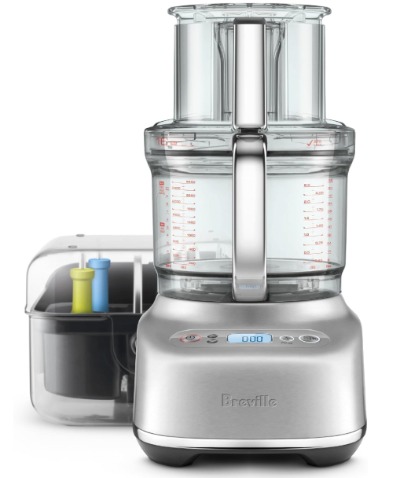
The Breville BFP810 Sous Chef stands tall as a beast of a machine. This 16-cup processor brings serious commercial-grade power wrapped in brushed stainless steel that looks good enough for an open kitchen. The 1200-watt motor doesn’t mess around – it powers through ingredients most home processors would choke on.
This Australian brand built its reputation on quality appliances, and the Sous Chef lives up to that legacy. The 16-cup bowl handles batch cooking and meal prep like a champ. You can process enough ingredients for a week’s worth of restaurant service or a massive catering event.
Best Use Cases
This machine shines in high-volume prep work. Think restaurant kitchens cranking out sauces, salsas, and dressings all day. Bakeries love it for mixing large batches of dough. Catering operations use it to prep vegetables for hundreds of servings.
Small to mid-sized restaurants get excellent value here. It handles daily prep without breaking a sweat but doesn’t take up the massive footprint of industrial units. Home cooks who do serious entertaining or meal prep for large families also find this size just right.
The Sous Chef excels at tasks that require consistent results. Making hummus for your menu? It delivers perfectly smooth texture every time. Need finely minced garlic for your signature sauce? It processes evenly without turning anything to mush.
Key Features That Matter
The 1200-watt induction motor provides consistent power. Unlike cheaper processors that slow down under load, this motor maintains speed when you’re working with tough ingredients. That means faster processing and better results.
The 16-cup capacity bowl comes with measurement markings. You can track ingredient amounts right in the bowl. The wide feed chute accepts whole fruits and vegetables. That cuts down on pre-cutting and saves time.
Five multi-function discs ship with the unit. You get reversible shredding discs, julienne disc, and variable slicing disc. The mini processing bowl and blade handle small jobs without dirtying the big bowl. Two feeding tubes – one standard, one narrow – let you control ingredient placement.
Real-World Performance
Running the Sous Chef through its paces reveals impressive capabilities. The motor never bogs down, even when processing two pounds of raw carrots. Slicing potatoes for gratin comes out perfectly uniform. The dough blade kneads bread dough without the motor straining.
Heat management impresses. Long processing sessions don’t cause the motor to overheat. The safety features work well – the machine won’t run unless everything locks properly. That prevents accidents but can feel finicky when you’re rushing.
Noise levels sit in the moderate range. It’s not whisper-quiet, but it won’t make conversation impossible. The solid construction minimizes vibration, so the unit stays put during operation.
Ease of Use
Setup takes minutes straight from the box. The parts lock together intuitively. The control panel features simple buttons – on, off, and pulse. No confusing digital displays or complicated settings to figure out.
Switching between tasks is straightforward. Pop off one disc, snap on another. The storage case keeps all the blades and discs organized. No more hunting through drawers for the right attachment.
The wide mouth feed chute is a game-changer for efficiency. Whole tomatoes, large potatoes, and blocks of cheese fit through without pre-cutting. The food pusher design prevents ingredients from getting stuck.
Cleaning and Maintenance
All removable parts are dishwasher safe. The bowl, lid, and attachments clean up easily. The smooth interior bowl design means no hidden crevices where food gets trapped.
The base wipes clean with a damp cloth. Food rarely makes it down to the motor housing thanks to good seal design. The blades are sharp, so handle them carefully during cleaning.
Long-term maintenance is minimal. Keep blades sharp and replace worn parts as needed. The motor requires no special care beyond keeping it dry and clean.
Pros and Cons
What Works:
- Powerful motor handles tough ingredients easily
- Large capacity reduces batch processing
- Excellent build quality feels commercial-grade
- Versatile disc selection covers most tasks
- Wide feed chute saves prep time
- Consistent results across different foods
What Could Be Better:
- Heavy unit is hard to move around
- Takes up significant counter space
- Higher price point than budget models
- Some users find the safety locks fussy
- Loud enough to disrupt quiet kitchens
Value for Money
The Breville BFP810 commands a premium price. For that investment, you get a machine that performs like equipment costing twice as much. The build quality suggests this processor will last for years, not months.
When you calculate time savings and labor reduction, the value becomes clear. One person with this processor can do the prep work of two people with knives. That adds up fast in a commercial setting.
The included accessories eliminate the need for separate purchases. Many cheaper processors require buying additional discs and blades separately. Factor in those costs, and the price gap narrows.
Ninja Food Processor Professional XL NF701 Review
Product Overview
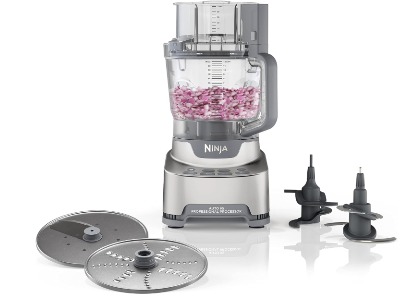
The Ninja NF701 brings serious power at a friendlier price point. This 12-cup processor packs 1200 peak watts into a sleek black design. Ninja made its name with innovative blade design, and this professional model shows why.
The 4-in-1 functionality covers chopping, slicing, shredding, and dough making. The processor bowl sits on a sturdy base that handles vibration well. The overall footprint is compact enough for most commercial kitchens without sacrificing capacity.
Best Use Cases
Small restaurants and cafes find this processor hits the sweet spot. It handles daily prep volumes without overwhelming the workspace. Food trucks love the compact design and powerful performance.
Bakeries use it for dough mixing and ingredient prep. The 12-cup bowl is perfect for medium batch sizes. Home cooks who run side catering businesses get professional results without the commercial price tag.
The NF701 excels at quick prep tasks. Making fresh salsa, chopping vegetables for stir-fry, or shredding cheese for pizza stations – these are where it shines. The quick assembly and disassembly make it ideal for kitchens that need to switch tasks frequently.
Key Features That Matter
The 1200 peak-watt motor delivers impressive power bursts. This matters when you hit tough ingredients – the motor ramps up to handle them. The blade design is Ninja’s signature strength. Multiple stacked blades create better processing patterns than single-blade designs.
Two blades ship with the unit. The chopping blade handles most tasks from coarse chops to fine mince. The dough blade kneads without overworking the gluten. Two discs provide slicing and shredding capabilities.
The feed chute design includes a wide opening and pusher. The bowl features measurement markings and a pour spout. The base includes cord storage to keep your workspace tidy.
Real-World Performance
Daily use reveals a capable workhorse. The motor handles hard vegetables, nuts, and cheese without complaint. Blade placement creates good circulation, preventing unprocessed chunks from hiding at the bottom.
The pulse function gives good control. Short bursts let you get exactly the texture you want. Continuous processing works well for smoother purees and emulsions.
Speed is impressive. Chopping onions that would take ten minutes by hand takes under a minute. Shredding a block of cheese happens in seconds. The time savings add up across a full day of prep.
Ease of Use
Assembly is foolproof. Parts snap together with satisfying clicks. The bowl locks onto the base securely. Blades and discs install easily without tools.
The control panel is dead simple. An on/off switch, pulse button, and power indicator. That’s it. No learning curve, no manual reading required. New kitchen staff can use it immediately.
Blade changes take seconds. Pop out one attachment, drop in another. The feed chute accommodates most whole vegetables. The pusher fits snugly to guide food safely to the blades.
Cleaning and Maintenance
All parts except the base are dishwasher safe. The bowl and attachments clean up quickly by hand if you prefer. The blade design makes cleaning easier than you’d expect – fewer crevices mean less trapped food.
The base wipes down easily. The compact design means fewer seams and joints where food can hide. The blades maintain their edge well through regular use.
Maintenance is minimal. Keep parts clean and dry. Replace blades when they dull. The motor requires no special attention.
Pros and Cons
What Works:
- Strong power for the price point
- Compact footprint fits tight spaces
- Simple controls anyone can use
- Fast processing speeds up prep
- Easy to clean and maintain
- Good value for commercial use
What Could Be Better:
- Smaller capacity than some competitors
- Plastic construction feels less premium
- Bowl can scratch over time
- Louder than high-end models
- Less included accessories
Value for Money
The Ninja NF701 delivers exceptional bang for your buck. The performance rivals machines costing significantly more. For small operations or startup businesses, this processor makes professional results accessible.
The durability is solid for the price. Users report years of regular use without major issues. That kind of longevity justifies the investment even for daily commercial use.
The included attachments handle most common tasks. You might want to buy additional discs eventually, but the basics get you started. The money saved versus premium brands can go toward other kitchen equipment.
Cuisinart DFP-14BCNY 14-Cup Food Processor Review
Product Overview
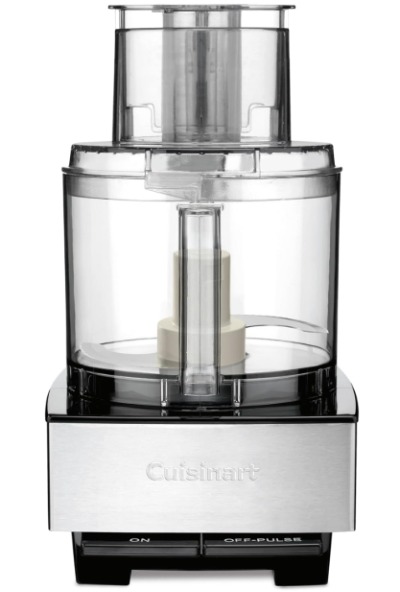
The Cuisinart DFP-14BCNY represents decades of food processor expertise. This 14-cup model brings reliable performance wrapped in classic stainless steel design. The 720-watt motor might seem modest on paper, but Cuisinart optimized it for consistent processing power.
This American kitchen staple has earned its reputation through reliability. The build quality reflects Cuisinart’s commercial kitchen heritage. The design prioritizes function over flash, which means every feature serves a purpose.
Best Use Cases
Medium-sized restaurants appreciate the balanced capacity and power. The 14-cup bowl handles typical daily prep without being oversized. Delis use it for making salads, slaws, and spreads throughout the day.
Institutional kitchens – schools, hospitals, nursing homes – rely on Cuisinart for dependable performance. The straightforward design means less training for kitchen staff. The durability stands up to multiple shifts of use.
Home-based catering businesses get professional results without overwhelming their domestic kitchens. The size fits under most cabinets for storage but offers enough capacity for event prep.
Key Features That Matter
The 720-watt motor uses smart engineering to maximize efficiency. The direct drive system transfers power effectively to the blades. This means the motor doesn’t need huge wattage to deliver strong performance.
The stainless steel chopping blade is built to last. It stays sharp through heavy use and handles everything from delicate herbs to tough vegetables. The dough blade kneads up to three pounds of dough at once.
The slicing and shredding discs reverse for different thickness options. One disc gives you thin and thick slices. Another provides fine and medium shreds. The feed tube is extra-large, accepting whole fruits and vegetables.
Real-World Performance
The Cuisinart performs like a reliable workhorse. It might not be the flashiest option, but it gets the job done day after day. The motor runs cool even during extended processing sessions.
Processing results are consistent. Chopping produces uniform pieces. Slicing delivers even thickness across the batch. The bowl design creates good circulation for thorough processing.
The unit handles temperature variations well. Cold ingredients from the walk-in don’t slow it down. Room temperature items process just as efficiently. This consistency matters in commercial settings where ingredient temperatures vary.
Ease of Use
The learning curve is practically flat. Two buttons control everything – on and pulse. The bowl and lid lock together with a simple twist. Blades and discs drop into place without complicated alignments.
The feed tube design is practical. Whole tomatoes, potatoes, and onions fit through. The pusher includes a small opening for adding ingredients like oil during processing. This matters when making emulsions or dressings.
Switching between tasks is quick. Remove one disc, install another. The parts are lightweight enough for easy handling but sturdy enough to resist damage.
Cleaning and Maintenance
Dishwasher-safe parts make cleanup fast. The bowl interior is smooth stainless steel that rinses clean easily. The blades detach from their stems for thorough cleaning.
The base design minimizes food contact. Spills rarely reach the motor housing. A quick wipe-down after each use keeps it looking new.
Long-term care is simple. Keep blades sharp and replace worn parts. Cuisinart parts are widely available and reasonably priced. The motor requires no maintenance beyond keeping it clean and dry.
Pros and Cons
What Works:
- Proven reliability across years of use
- Efficient motor design maximizes power
- Stainless steel construction is durable
- Simple operation requires minimal training
- Consistent processing results
- Parts are easy to find and replace
What Could Be Better:
- Design feels dated compared to newer models
- Lower wattage than some competitors
- Basic feature set lacks innovation
- Bowl capacity between the 12 and 16-cup options
- Plastic pusher feels cheap
Value for Money
The Cuisinart offers outstanding value for long-term use. The initial cost is reasonable, and the durability means you won’t replace it soon. The reputation for reliability reduces downtime and repair costs.
Replacement parts are affordable and readily available. This matters in commercial settings where you can’t wait weeks for special-order components. The widespread availability also means most kitchen staff already know how to use it.
The performance-to-price ratio is excellent. You get professional-grade processing without paying for bells and whistles you might not need. For operations focused on core functionality, this processor delivers.
Breville BFP610 Sous Chef 9 Cup Food Processor Review
Product Overview
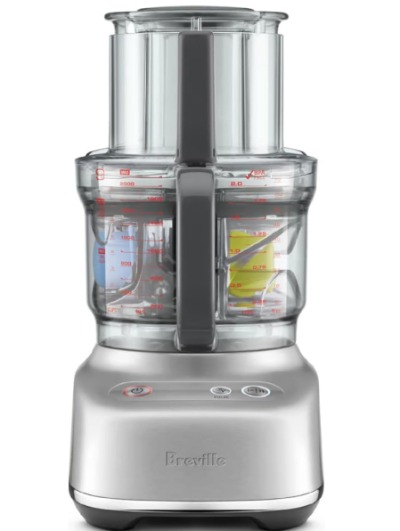
The Breville BFP610 brings the Sous Chef quality to a smaller package. This 9-cup model features the same brushed stainless steel construction as its bigger sibling. The 900-watt motor packs plenty of punch for its size.
This compact powerhouse targets operations with limited counter space or lower volume needs. The build quality matches the larger Sous Chef, just in a more manageable size. The design maintains the premium feel Breville is known for.
Best Use Cases
Small cafes and coffee shops find this size perfect. It handles daily prep for sandwiches, soups, and baked goods without taking up valuable counter real estate. Specialty food producers use it for small-batch products.
Personal chef services and meal prep businesses appreciate the size. It’s large enough for client batches but small enough to transport easily. Test kitchens use it for recipe development before scaling up to larger equipment.
Home kitchens doing serious cooking get commercial-grade performance in a manageable package. The 9-cup capacity suits most family cooking and entertaining needs. It’s also easier to store than the 16-cup model.
Key Features That Matter
The 900-watt induction motor delivers strong, consistent power. The smaller size doesn’t mean weak performance. This motor handles tough ingredients just like its bigger brother.
The included accessories mirror the larger Sous Chef. Variable slicing disc, reversible shredding disc, and micro-serrated S-blade all come standard. The mini processing bowl and blade handle small quantities.
The feed chute design includes both wide and narrow options. The wide chute takes whole vegetables. The narrow chute guides smaller items like carrots or celery for better control.
Real-World Performance
Daily testing shows capable performance across tasks. The motor maintains speed under load. Chopping nuts, shredding cheese, and pureeing soups all happen efficiently.
The 9-cup capacity handles typical batch sizes well. Making a batch of pesto, processing vegetables for soup, or kneading dough for a loaf of bread fit comfortably. The size limitation shows up when doing large-scale prep.
Heat management is excellent. The motor doesn’t overheat during extended sessions. The safety features work reliably without being overly sensitive.
Ease of Use
The compact size makes handling easier. Moving it around the kitchen or pulling it from storage requires less effort. The lighter weight reduces fatigue during setup and breakdown.
The control system is identical to the larger Sous Chef. Simple buttons for on, off, and pulse. The parts lock together securely. The storage case keeps attachments organized.
The smaller bowl is easier to handle when full. Pouring processed ingredients out is less awkward. The reduced size also means faster cleanup.
Cleaning and Maintenance
All removable parts go in the dishwasher. The 9-cup bowl fits easily on standard dishwasher racks. The attachments clean up quickly by hand if needed.
The base has fewer crevices than larger processors. Wiping it down takes seconds. The compact design means less surface area to clean.
Maintenance follows the same simple routine as other Breville models. Keep parts clean and dry. Replace worn components as needed.
Pros and Cons
What Works:
- Compact size fits small kitchens
- Strong motor for the size
- Premium build quality
- Excellent attachment selection
- Easy to move and store
- Reliable Breville performance
What Could Be Better:
- Limited capacity for high-volume prep
- Higher price than similar-sized competitors
- Bowl can fill quickly with large batches
- Same safety lock sensitivity as larger model
- Smaller feed chute than 16-cup version
Value for Money
The BFP610 costs less than the larger Sous Chef but still commands a premium price. The value lies in getting Breville quality in a size that fits more kitchens. The performance matches the price.
For operations that don’t need huge capacity, this processor eliminates paying for unused bowl space. The included accessories add value since you won’t need immediate additional purchases.
The durability suggests years of service. That long-term value offsets the higher initial cost compared to budget models that might need replacement sooner.
KitchenAid KFP1318 13-Cup Food Processor Review
Product Overview
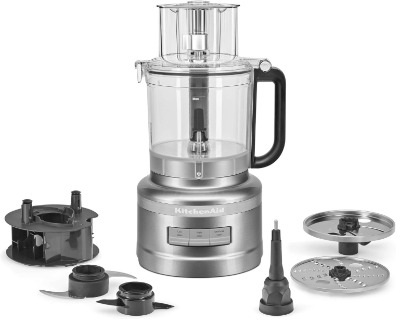
The KitchenAid KFP1318 brings the brand’s iconic design to food processing. This 13-cup model features the quality engineering KitchenAid is famous for. The 370-watt motor might seem underpowered on paper, but the design maximizes efficiency.
KitchenAid built its reputation on mixers, and that expertise shows in this processor. The attention to detail and robust construction reflect commercial kitchen standards. The external adjustable slicing lever is a standout feature.
Best Use Cases
Bakeries already using KitchenAid mixers appreciate the matching aesthetic and quality. The processor handles ingredient prep while the mixer tackles dough and batters. Small restaurants value the reliable performance and brand reputation.
Cooking schools use KitchenAid equipment for its durability and ease of instruction. The brand familiarity helps students focus on technique rather than figuring out equipment. The straightforward design supports effective teaching.
Serious home cooks who want professional results choose KitchenAid for the quality. The 13-cup capacity handles most home cooking and entertaining needs. The brand reliability provides peace of mind.
Key Features That Matter
The external adjustable slicing lever is brilliant. Adjust slice thickness from outside the unit without disassembling anything. This saves time when you need different thicknesses for the same ingredient.
The 370-watt motor uses precision engineering to deliver effective power. KitchenAid focused on torque and blade speed rather than raw wattage. The result is efficient processing without an oversized motor.
The three-in-one feed tube accommodates different ingredient sizes. Whole fruits go through the wide tube. Smaller items use the medium opening. The narrow tube guides thin ingredients like carrots.
Real-World Performance
The KitchenAid performs admirably across everyday tasks. The motor handles standard processing without strain. Chopping vegetables, shredding cheese, and making dough all work smoothly.
The external slicing adjustment is as useful in practice as it sounds in theory. Going from thin cucumber slices to thick potato rounds takes seconds. The consistency of slice thickness is excellent.
The unit runs quieter than many competitors. The solid construction minimizes vibration. The stable base keeps it firmly planted during operation.
Ease of Use
The setup is intuitive. Parts fit together logically. The bowl locks onto the base with a satisfying click. The lid seals securely without requiring excessive force.
The control panel includes on, off, and pulse buttons. The external slice adjustment lever is clearly marked. The design is clean and uncluttered.
The three-in-one feed tube design simplifies ingredient loading. The nested tubes slide out when you need the wider openings. The pusher telescopes to work with all tube sizes.
Cleaning and Maintenance
Dishwasher-safe parts make cleanup easy. The bowl and attachments clean thoroughly without hand scrubbing. The blade design prevents food from getting trapped.
The base wipes clean quickly. The exterior finish resists fingerprints and smudges. The sealed motor housing keeps moisture out.
The parts are built to last. Blades maintain their edge through regular use. Replacement parts are readily available through KitchenAid’s extensive service network.
Pros and Cons
What Works:
- External slice adjustment is brilliant
- Quiet operation compared to competitors
- Solid KitchenAid build quality
- Three-in-one feed tube design
- Efficient motor design
- Brand reliability and service network
What Could Be Better:
- Lower wattage might limit heavy-duty use
- Smaller capacity than some models
- Higher price for the motor power
- Basic blade selection
- Plastic components feel less premium
Value for Money
The KitchenAid commands a premium price based on brand reputation and quality. The investment brings peace of mind through reliable performance and available support. The external slicing feature alone justifies some of the price premium.
The durability suggests this processor will last for years. KitchenAid products are known for longevity. That extended lifespan improves the value proposition over time.
The service network availability matters for commercial users. When something breaks, you can get it fixed or find replacement parts easily. That reduces downtime and supports the investment.
Direct Comparison: How These Processors Stack Up
Looking at these five processors side by side reveals clear patterns. The Breville units dominate on power and capacity. The Ninja wins on value and compact efficiency. The Cuisinart brings proven reliability. The KitchenAid offers unique features and brand strength.
For pure processing power, the Breville BFP810 takes the crown. Its 1200-watt motor and 16-cup capacity handle the biggest jobs. The Ninja NF701 matches the wattage but in a smaller package. The Cuisinart’s 720 watts and KitchenAid’s 370 watts use efficiency to compete.
Capacity considerations split the field. The 16-cup Breville suits high-volume operations. The 14-cup Cuisinart and 13-cup KitchenAid hit the middle ground. The 12-cup Ninja and 9-cup Breville work for smaller batches.
Build quality separates premium from budget options. The Breville units feature mostly metal construction. The KitchenAid and Cuisinart blend metal and durable plastics. The Ninja uses more plastic but maintains good durability for its price.
Price varies significantly. The large Breville costs the most. The KitchenAid and smaller Breville fall in the mid-premium range. The Cuisinart offers mid-range pricing. The Ninja delivers the best value proposition.
Buying Guide: What to Look for in a Commercial Food Processor
Deciding which processor fits your needs starts with honest assessment. How much processing do you actually do daily? A food truck needs different capacity than a hotel kitchen. Match the processor to your real workload, not your aspirational one.
Power matters, but wattage alone doesn’t tell the whole story. Motor design, blade configuration, and bowl shape all affect performance. A well-engineered 700-watt motor can outperform a poorly designed 1000-watt unit.
Bowl capacity directly impacts workflow efficiency. Too small means constant batch processing. Too large wastes counter space and creates awkward handling. Think about your typical batch sizes and choose accordingly.
Blade and disc variety expands what you can do. Basic models include a chopping blade and maybe a slicing disc. Better units add shredding, julienne, and specialized blades. Count the included attachments and price additional ones you might need.
Durability determines total cost of ownership. A cheaper processor that dies in a year costs more than a pricier unit that lasts five years. Look at construction materials, motor quality, and warranty coverage.
Safety features protect staff and prevent accidents. Auto-shutoff when the lid opens, stable bases that don’t walk during operation, and blade guards all matter. Never compromise on safety to save money.
Ease of cleaning affects how often you actually use the processor. Complicated assemblies get avoided. Simple designs with dishwasher-safe parts encourage regular use. Consider your cleanup workflow when choosing.
Who Should Buy Each of These Processors
The Breville BFP810 suits operations that need maximum capacity and power. Large restaurants, catering companies, and institutional kitchens benefit from the 16-cup bowl and robust motor. The investment makes sense for high daily usage.
The Ninja NF701 targets budget-conscious buyers who still need professional performance. Food trucks, startup restaurants, and home-based catering businesses get excellent value. Small cafes and specialty food producers also fit this profile.
The Cuisinart DFP-14BCNY serves operations valuing reliability over innovation. Established restaurants, delis, and institutional kitchens appreciate the proven track record. The straightforward design suits environments with varied skill levels among staff.
The Breville BFP610 fits operations with space constraints but quality requirements. Urban cafes, small test kitchens, and personal chef services benefit from the compact footprint. Home cooks who want professional tools also fall into this category.
The KitchenAid KFP1318 appeals to buyers prioritizing brand reputation and unique features. Bakeries, cooking schools, and upscale restaurants value the quality and aesthetics. The external slicing adjustment attracts operations doing lots of slicing work.
Common Mistakes to Avoid When Buying
The biggest mistake is buying based on capacity alone. A huge bowl doesn’t help if the motor can’t power through tough ingredients. Balance capacity with motor strength and overall build quality.
Ignoring actual usage patterns leads to poor choices. Don’t buy a small processor if you regularly prep for large events. Don’t waste money on huge capacity if you typically process small batches. Be honest about your needs.
Overlooking blade variety creates limitations. Some processors excel at chopping but lack good slicing discs. Others include extensive attachments but mediocre primary blades. Check what comes included and what you’ll need to buy separately.
Neglecting ease of cleaning causes processors to sit unused. That beautiful stainless steel unit gathering dust represents wasted investment. Choose designs you’ll actually clean and reassemble willingly.
Falling for wattage wars misses the point. A 1500-watt motor in a poorly designed processor performs worse than a 700-watt motor in a well-engineered one. Focus on real-world performance, not just specs.
Skipping warranty considerations ignores long-term value. Commercial use is hard on equipment. Good warranty coverage protects your investment. Check terms carefully – some warranties exclude commercial use.
Buying without testing compatibility with your workflow creates frustration. Consider your counter height, storage space, and typical ingredient types. The processor needs to fit your actual kitchen, not some idealized version.
Maintenance Tips to Extend Processor Life
Daily care starts with thorough cleaning. Food residue left on blades and in bowls promotes bacteria growth and degrades materials. Clean all parts after each use, even if you’re tired.
Blade care determines longevity. Sharp blades process efficiently and safely. Dull blades require forcing and risk motor damage. Sharpen or replace blades when performance drops. Handle blades carefully to avoid dulling or damaging edges.
Motor maintenance is minimal but important. Keep the base dry and clean. Wipe spills immediately to prevent moisture entering the motor housing. Never submerge the base in water or put it in the dishwasher.
Storage practices matter. Keep processors in dry locations. Store blades and discs in provided cases or organized drawers. Avoid stacking heavy items on top of processors or bowls.
Regular inspection catches problems early. Check for cracks in bowls and lids. Look for worn gaskets that might leak. Test that safety features work correctly. Address issues immediately rather than letting them worsen.
Parts replacement extends overall life. Don’t limp along with cracked bowls or dull blades. Replace worn components promptly. Using damaged parts risks poor performance and potential injury.
Final Verdict: The Best Commercial Food Processor for Different Needs
After extensive analysis, clear winners emerge for different situations. The best overall processor is the Breville BFP810 Sous Chef. The combination of power, capacity, quality, and versatility handles the widest range of commercial applications. The investment pays off in performance and durability.
For best value, the Ninja NF701 Professional XL wins hands down. It delivers impressive performance at a fraction of premium processor costs. Small operations and startups get professional results without breaking the bank.
The most reliable long-term choice is the Cuisinart DFP-14BCNY. Decades of proven performance in commercial kitchens speak volumes. The straightforward design and available parts support years of dependable service.
The best compact option is the Breville BFP610. It brings Sous Chef quality to space-constrained kitchens. The performance doesn’t suffer despite the smaller size, making it ideal for operations that need power without bulk.
The best for specialized slicing work is the KitchenAid KFP1318. The external slice adjustment feature transforms efficiency for operations that do lots of slicing. The quality construction ensures reliable performance.
Your ideal processor depends on your specific situation. High-volume operations need the BFP810. Budget-conscious buyers should grab the Ninja. Those valuing reliability choose the Cuisinart. Space-limited kitchens pick the smaller Breville. Slicing-focused operations go with the KitchenAid.
No single processor is perfect for everyone. The good news? All five of these machines deliver solid performance. You can’t go wrong with any of them if you match the processor to your actual needs. Take the time to honestly assess your requirements, consider your budget, and choose accordingly.
The right commercial food processor transforms your kitchen efficiency. It turns tedious prep work into quick, consistent results. It frees up staff time for more important tasks. It enables menu items that would be too labor-intensive otherwise. That’s the power of choosing wisely.

Hi, I’m Mary, the founder of KitchenClue.com. I’m deeply passionate about everything that makes a kitchen smarter, easier, and more enjoyable. I share hands-on insights and practical expertise on kitchen gear that truly helps in daily cooking. Along with my dedicated research team, we study products carefully, and our writers create honest, well-tested reviews using trusted, authentic sources—so you can choose kitchen tools with total confidence.