Can You Sharpen Bread Knives: Yes, And How To Do It
Yes, you can sharpen bread knives with the right tools and a gentle touch.
If you’ve ever pushed a dull serrated blade through a crusty loaf, you know the struggle. I’ve sharpened dozens of bread knives for home cooks and cafes, and I’ll show you exactly how to do it without ruining those scallops. We’ll settle the big question can you sharpen bread knives, then walk through safe, simple methods that protect the serrations you paid for and restore that clean, sawing bite.
What Makes a Bread Knife Different
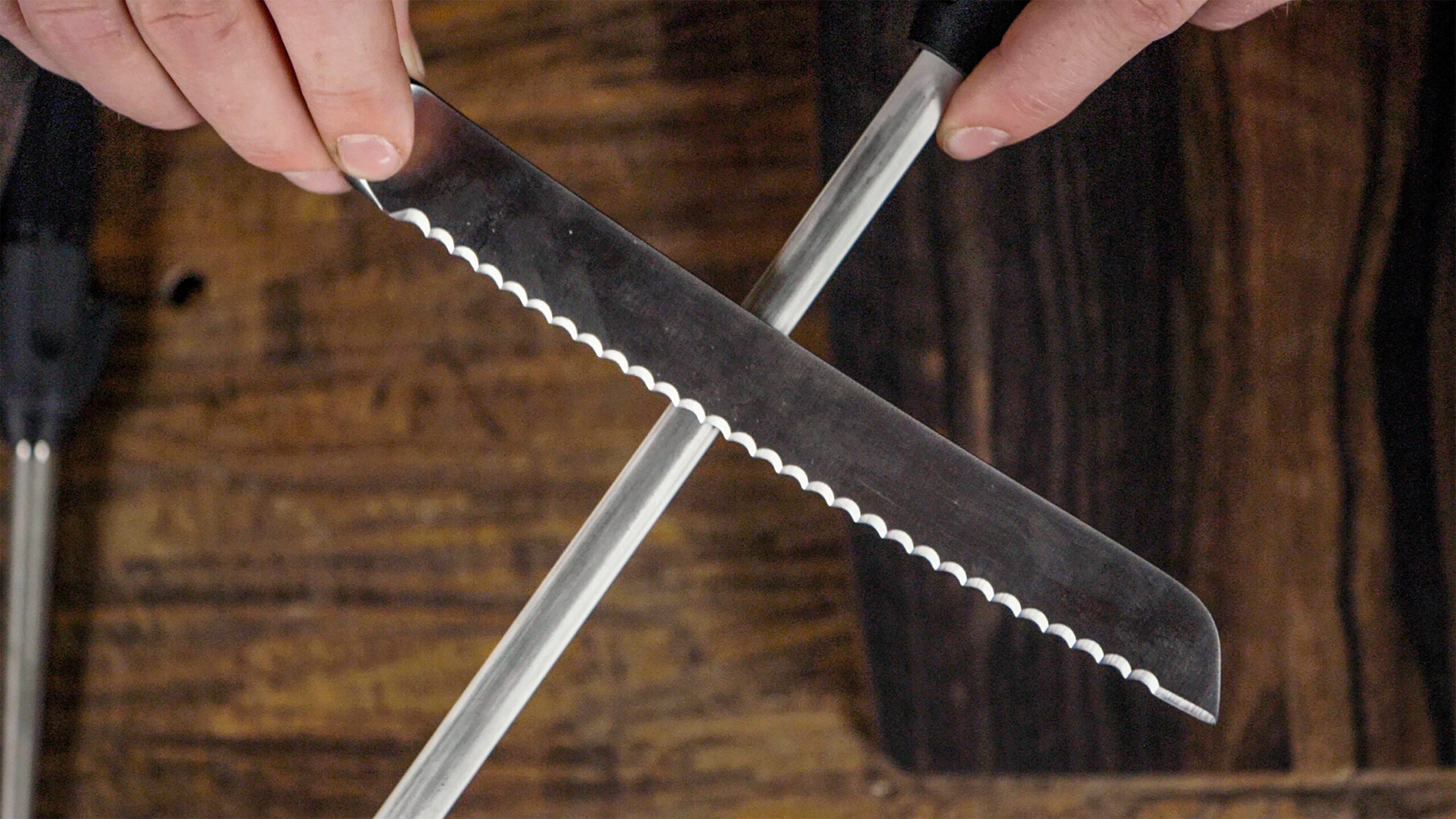
Bread knives use serrations. Those are the pointed teeth and curved gullets along the edge. They grab crust, split fibers, and slide through soft crumb without crushing it. Most serrated edges are ground on one side only. The back side is usually flat or close to flat.
That design cuts well for a long time, but it also changes how you maintain the blade. Flat water stones that work for chef’s knives do not reach into gullets. To sharpen, you need a narrow, rounded tool that matches the serration. You also need a light touch to avoid flattening the teeth.
Why do serrated knives dull? The points wear down from contact with boards. The gullets pack with micro-rolls and tiny chips from grit in crust. Over time, the saw stalls and tears instead of slicing. That is when you ask can you sharpen bread knives and get to work.

Can You Sharpen Bread Knives? What You Need To Know
Yes, you can sharpen bread knives. The best way is with a tapered ceramic rod or a fine diamond rod that fits each gullet. You work from the beveled side. You then remove the tiny burr on the flat side with one very light pass.
Can you sharpen bread knives on an electric sharpener? Most electric units only hone serrations or touch the very tips. They rarely regrind each gullet. Some have a polishing slot for serrated edges, which can help a little, but it does not replace true sharpening.
From my experience in a busy café, a careful rod session every few months kept our house bread knife slicing tomatoes and warm sourdough with ease. When we skipped it, service slowed, crumbs flew, and slices squashed.

Tools and Methods That Work at Home
You do not need a full shop to restore teeth. These simple tools work well:
- Tapered ceramic rod. Gentle, slow cutting. Great control. Ideal for home users.
- Fine diamond-coated tapered rod. Faster cutting for very dull blades. Use light pressure.
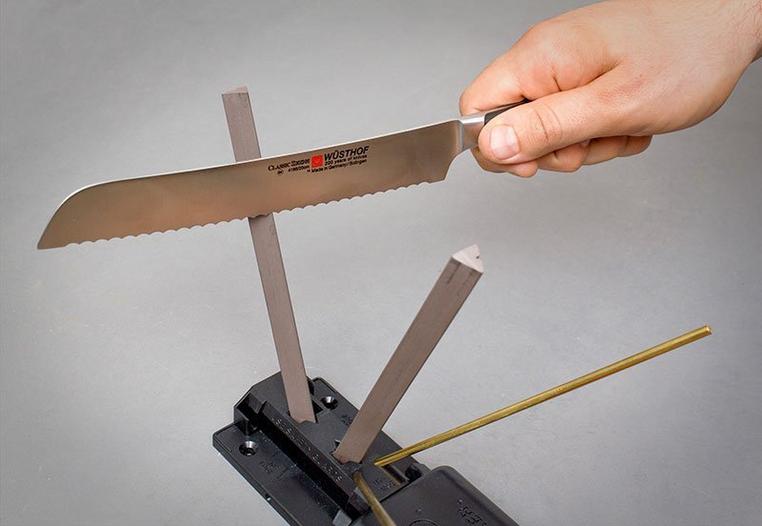
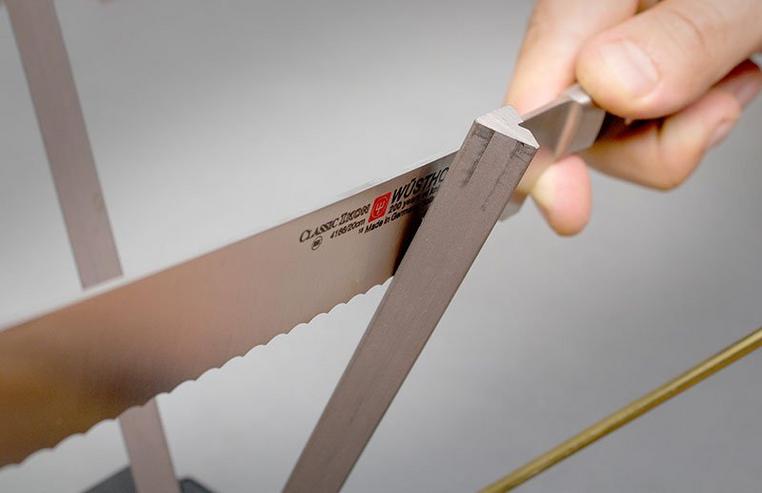
- Triangular ceramic stick. Fits some serration shapes. Useful if gullets are more V-shaped.
- Leather strop or fine polishing compound on cardboard. For a final deburr on the flat side only.
Avoid these for sharpening the serrations:
- Flat bench stones. They skip over gullets and can round the teeth.
- Coarse pull-through sharpeners. Many damage serrations. Some “serrated” slots only burnish, not sharpen.
Can you sharpen bread knives with sandpaper wrapped around a dowel? In a pinch, yes. Use very fine grit, keep a steady angle, and go slow.

Step-by-Step: Sharpen a Serrated Bread Knife With a Ceramic Rod
Follow these steps. Keep your strokes light. Less is more with serrations.
Clean the blade
Wipe off crumbs and dried dough. Any grit will scratch.Secure the knife
Lay the blade with the spine against a towel. Edge facing away from you. Be safe.Match the angle
Most serrated bevels sit near 15–20 degrees on the toothed side. Place the tapered rod into a single gullet and match the angle you see.Stroke each gullet
Draw the rod along the gullet from heel to tip, one smooth pull. Two to five light strokes per gullet is plenty. Start at the heel and work toward the tip.Maintain contact
Keep the rod’s thickness matched to the gullet size. Move higher on the taper for wider scallops and lower for tight ones.Raise and clear the burr
As you sharpen, a tiny burr forms on the flat side. When all gullets are done, flip the knife over. Give the flat side one or two very light, flat passes on a fine rod or on a strop to remove the burr. Do not create a bevel on this side.Test and stop
Try slicing a grape or soft roll. If it bites and glides, you are done. If not, repeat one stroke per dull gullet.
Pro tip from the line: Count your strokes per tooth out loud. It keeps your rhythm even, which keeps your edge even.

When To Sharpen, Send Out, or Replace
Ask yourself three things:
- Is the knife good quality? If yes, sharpening makes sense. If it is a very cheap stamped blade, replacing may be smarter.
- Are teeth missing or crushed? If several serrations are bent flat, a pro with the right files or wheels is the best bet.
- How often do you bake? Daily bakers should tune up every 2–3 months. Occasional users can wait 6–12 months.
Can you sharpen bread knives that are very old or chipped? Yes, but expect more time and metal loss. A professional service can re-cut serrations and reset the line. Many shops charge by the inch or by the tooth. For a $15 knife, replacement can be cheaper than a full regrind.

Care Tips To Keep Your Bread Knife Sharp Longer
A little care goes a long way. These habits slow dulling:
- Use a soft cutting board. Wood or quality plastic is kinder than glass or stone.
- Do not twist and pry. Let the serrations saw. Twisting flattens teeth.
- Hand wash and dry. Dishwasher jets and rattling dull edges and pit steel.
- Store in a sheath or block. Edge guards stop the teeth from banging into other tools.
- Touch up, do not wait. One gentle pass per gullet every few months keeps the bite alive.
Can you sharpen bread knives less often with these tips? Yes. Good boards and gentle use double the time between sessions in real kitchens.
PAA-Style Quick Answers
Do I sharpen the flat side of a serrated bread knife?
No. Work on the toothed side and only remove the burr on the flat side with one or two light, flat passes.
Can I use a whetstone on a bread knife?
Not on the serrations. A flat stone cannot reach gullets. Use a tapered rod for the teeth and a strop for the flat side.
Will an electric sharpener fix my serrations?
Most will only hone the tips a little. They will not re-cut gullets. For a full restore, use a rod or hire a pro.

Common Mistakes To Avoid
- Pressing too hard. Heavy pressure widens gullets and flattens teeth.
- Over-sharpening the tip section only. Work evenly from heel to tip to keep the edge straight.
- Creating a bevel on the flat side. That ruins tracking and makes the knife wander in crust.
- Skipping cleaning. Grit grinds scratches and shortens blade life.
- Using the wrong diameter rod. If it does not match the serration, it scratches points and misses gullets.
Can you sharpen bread knives and still see a ragged cut? Check for a leftover burr or rounded teeth. One gentle strop and lighter strokes usually fix it.
Evidence and Expert Notes
Knife makers advise ceramic or diamond rods for serrations because the tools match the geometry and remove less steel. Tests by kitchen equipment labs show serrated edges keep useful bite longer than plain edges, but do still dull at the tips and gullets. Professional sharpeners often regrind only the worn section to preserve tooth height.
From my bench time, the biggest gains come from three things:
- Matching rod size to each serration.
- Limiting strokes to two or three per gullet.
- Deburring the flat side with the lightest possible touch.
These steps answer can you sharpen bread knives in a practical way you can repeat without fear.
Frequently Asked Questions of can you sharpen bread knives
How often should I sharpen a bread knife?
For home use, every 6–12 months is typical. Heavy bakers or café kitchens benefit from a light touch-up every 2–3 months.
Can you sharpen bread knives with a pull-through sharpener?
Some pull-through tools have a serrated slot that polishes the tips only. It may help a bit, but it will not fully sharpen the gullets.
What grit rod should I use for serrations?
Use fine ceramic or fine diamond around 600–1200 grit. Coarse rods remove too much metal and deform the teeth.
Do all bread knives have the same serrations?
No. Some are scalloped, some are pointed, some are mixed. Match your rod size and shape to the actual gullets.
Can you sharpen bread knives made from very hard steel?
Yes, but it takes longer. A fine diamond rod works better on harder steels than ceramic alone.
Conclusion
You asked can you sharpen bread knives, and the answer is a confident yes. Use a tapered ceramic or diamond rod, match the gullet, keep strokes light, and clear the burr on the flat side. With a few careful minutes, you will restore clean, quiet slices and protect the life of your blade.
Try a quick touch-up on your current bread knife this week. If it needs more help, call a pro for a reset, then keep it sharp with gentle maintenance. Want more practical kitchen tips? Subscribe for step-by-step guides and ask your questions in the comments.

Hi, I’m Mary, the founder of KitchenClue.com. I’m deeply passionate about everything that makes a kitchen smarter, easier, and more enjoyable. I share hands-on insights and practical expertise on kitchen gear that truly helps in daily cooking. Along with my dedicated research team, we study products carefully, and our writers create honest, well-tested reviews using trusted, authentic sources—so you can choose kitchen tools with total confidence.