Hado Junpaku vs B1D Knife
So you’re looking at two amazing Japanese knives and can’t decide which one to get. I totally get it. The Hado Junpaku and the B1D knife are both incredible tools, but they’re quite different from each other.
Let me break down everything you need to know about these two blades. By the end of this post, you’ll know exactly which knife fits your cooking style better.
What Makes These Knives Special
Both of these knives come from serious blade-making traditions. They’re not your average grocery store knives. These are tools that professional chefs and serious home cooks trust in their kitchens.
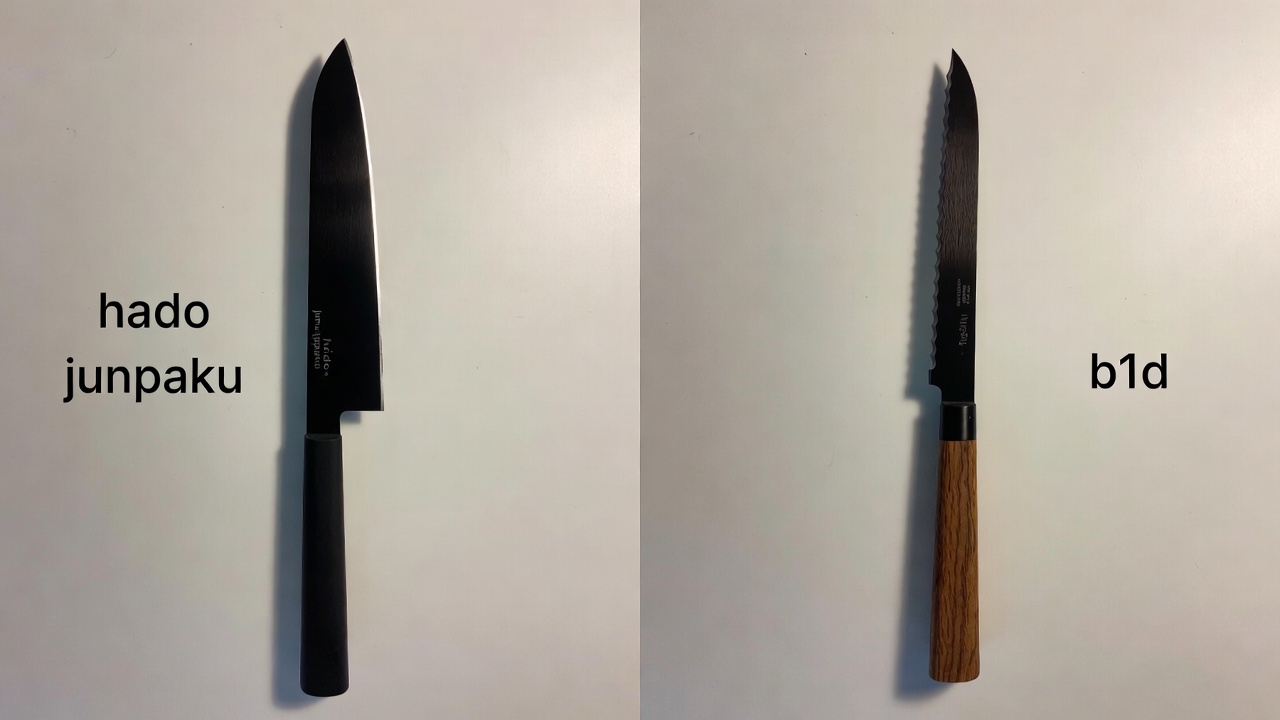
The Hado Junpaku represents traditional Japanese craftsmanship. The name “Junpaku” means pure white in Japanese, and you’ll see why when you look at the blade finish. It’s a stunning piece of cutlery that performs as good as it looks.
The B1D knife takes a more modern approach. It combines old-school forging techniques with contemporary design ideas. You get the best of both worlds with this blade.
The Steel Story
Let’s talk about what these knives are made from. This matters a lot because steel determines how your knife cuts, how long it stays sharp, and how much maintenance it needs.
Hado Junpaku Steel Composition
The Hado Junpaku uses high-carbon Japanese steel. This isn’t the same stuff you find in cheaper knives. High-carbon steel gets incredibly sharp and holds that edge for a long time.
The steel has a high hardness rating. You can sharpen it to a razor-like edge that slices through ingredients with almost no resistance. Tomatoes, onions, fish, meat – everything cuts like butter.
But here’s the trade-off. High-carbon steel needs more care. It can rust if you don’t dry it properly. It can stain if you leave acidic foods on the blade. You need to respect this knife and treat it right.
B1D Steel Details
The B1D uses a different type of steel. It’s still high-quality, but it’s formulated to be a bit more forgiving. You still get excellent edge retention and sharpness.
The steel composition includes elements that make it more resistant to corrosion. This means less worry about rust and staining. You can be a bit more relaxed with maintenance.
The hardness is slightly lower than the Hado Junpaku. Don’t panic – this doesn’t mean it’s soft. It just means the blade has a tiny bit more flexibility. Some people actually prefer this because it makes the knife less brittle.
How They Look and Feel
Now let’s get into the aesthetics and ergonomics. A knife isn’t just a tool. It’s something you hold in your hand every day. It should feel good and look good too.
Hado Junpaku Design
The Hado Junpaku has that classic Japanese look. The blade has a beautiful satin finish that catches the light in subtle ways. Some versions have a Damascus pattern that looks absolutely gorgeous.
The edge geometry is very thin. This is what makes it cut so effortlessly. But you need to be careful with hard ingredients like squash or bone. The thin edge can chip if you’re not careful.
The handle is typically made from traditional materials. You might find magnolia wood, which is classic for Japanese knives. Some models use pakkawood, which looks like wood but is actually more durable.
The balance point sits right where the blade meets the handle. This makes the knife feel nimble and precise. You have total control over every cut.
B1D Appearance and Grip
The B1D has a more modern aesthetic. The blade finish can vary, but it often has a clean, contemporary look. Some versions feature interesting patterns or textures on the spine.
The blade is slightly thicker than the Hado Junpaku. This makes it more versatile for different tasks. You can tackle tougher ingredients without worrying as much about chipping.
The handle design focuses on comfort and grip. Many B1D knives use ergonomic shapes that fit naturally in your hand. The materials are often synthetic or treated wood that can handle moisture better.
The balance feels different too. The B1D often has the balance point slightly forward. This gives you more cutting power. It’s great for chopping through dense vegetables or breaking down proteins.
Cutting Performance
Here’s where the rubber meets the road. How do these knives actually perform when you’re cooking?
Hado Junpaku in Action
When you use a Hado Junpaku, you immediately notice how sharp it is. The blade glides through ingredients with minimal effort. You’re not pushing or sawing. You’re just letting the knife do its job.
For delicate work, this knife shines. Slicing raw fish for sushi or sashimi? Perfect. Making paper-thin vegetable slices? Easy. Brunoise dice that needs to be precise? No problem.
The thin blade also means less drag. When you’re cutting through something tall like a head of lettuce, the knife doesn’t wedge or stick. It just slides right through.
But you need to use proper technique. This isn’t a knife you can muscle through ingredients with. You let the sharpness do the work. Use a smooth slicing motion and the Hado Junpaku rewards you with perfect cuts.
B1D Cutting Ability
The B1D is what I’d call a workhorse knife. It’s still super sharp, but it’s built to handle a wider range of tasks. You can use it for delicate work and heavy-duty prep.
The slightly thicker blade means you can apply more pressure when needed. Breaking down a chicken? The B1D can handle it. Chopping through carrots or sweet potatoes? No sweat.
The edge geometry is designed for versatility. You get enough sharpness for precise cuts but enough durability for everyday abuse. This makes the B1D great for busy kitchens where you need one knife that does everything.
The weight distribution helps with repetitive cutting tasks. When you’re prepping ingredients for hours, the B1D’s balance reduces hand fatigue. Your wrist doesn’t get as tired.
Sharpening and Maintenance
Let’s be real – all good knives need maintenance. But the requirements differ between these two blades.
Keeping Your Hado Junpaku Sharp
The Hado Junpaku needs regular attention. The high-carbon steel is amazing when it’s sharp, but it loses its edge faster than stainless steel. You’ll need to touch it up with a honing rod or whetstone more often.
When you sharpen it, you need to be careful. The hard steel can be brittle, so you want to use proper whetstones and techniques. Don’t just grab any old sharpener.
I recommend getting comfortable with Japanese water stones if you buy a Hado Junpaku. Start with a medium grit stone around 1000 or 2000. Learn the proper angle and motion. It’s not hard, but it takes practice.
After each use, you need to wash the knife by hand immediately. Dry it completely. Never put it in the dishwasher. Store it properly so the edge doesn’t get damaged.
Some people oil their high-carbon blades occasionally. This creates a protective barrier against moisture. It’s not always necessary, but it helps if you live in a humid climate.
B1D Maintenance Routine
The B1D is more forgiving on the maintenance front. The steel composition resists rust better, so you have a bit more leeway. But you should still hand wash and dry it promptly.
Sharpening is easier because the steel isn’t quite as hard. You can use a wider variety of sharpening tools. A good ceramic honing rod works well for touch-ups between proper sharpenings.
The blade doesn’t need sharpening as frequently as the Hado Junpaku. The edge retention is really good. You might go weeks or even months between sharpenings, depending on how much you use it.
When you do sharpen it, the process is straightforward. The steel responds well to whetstones, but you can also use other methods if you prefer. Just maintain a consistent angle.
Price Comparison
Money matters. Let’s talk about what you’ll actually pay for these knives.
Hado Junpaku Cost
The Hado Junpaku sits in the premium price range. You’re paying for exceptional craftsmanship and materials. These knives are hand-forged by skilled artisans.
The price reflects the time and expertise that goes into making each blade. You’re not just buying a knife. You’re buying a piece of functional art.
Is it worth the investment? That depends on your priorities. If you value cutting performance above everything else, and you’re willing to maintain the blade properly, then yes. The Hado Junpaku delivers an experience that cheaper knives simply can’t match.
Think of it as a long-term investment. With proper care, this knife will last for decades. The cost per use goes down over time.
B1D Price Point
The B1D typically costs less than the Hado Junpaku. It’s still not cheap, but you get a lot of value for your money. The performance-to-price ratio is excellent.
You’re paying for quality materials and construction, but the manufacturing process might be slightly more efficient. This brings the cost down without sacrificing performance.
For many people, the B1D hits the sweet spot. It’s affordable enough that you don’t feel stressed about using it daily. But it’s high-quality enough that you feel good every time you pick it up.
Who Should Buy Which Knife
Let’s get specific about who these knives are perfect for.
The Hado Junpaku Is For You If
You love traditional Japanese knives and appreciate the craftsmanship behind them. You want the absolute best cutting performance and don’t mind the extra maintenance that comes with it.
You do a lot of precise knife work. Maybe you make sushi at home. Maybe you love creating beautiful vegetable cuts. The Hado Junpaku excels at this kind of work.
You already have some knife skills and know how to care for high-carbon blades. Or you’re willing to learn. This isn’t a beginner’s first knife, but it’s a fantastic second or third knife for someone who’s serious about cooking.
You have a proper storage solution. The blade needs protection. A magnetic knife strip, a knife block with slots, or a blade guard – you need something to keep that edge safe.
The B1D Suits You Better If
You want a do-everything knife that can handle any task you throw at it. You need versatility more than specialized performance. The B1D adapts to your cooking style instead of demanding that you adapt to it.
You’re busy and want a lower-maintenance option. You’ll still take care of your knife, but you don’t want to stress about every little thing. The B1D is more forgiving.
You’re building your knife collection and want a solid foundation piece. This knife can be your go-to for years while you add more specialized blades later.
You cook a lot and need a blade that can keep up with heavy use. Professional cooks and serious home chefs love the B1D because it’s reliable and tough.
Real Kitchen Scenarios
Let me give you some concrete examples of how these knives perform in actual cooking situations.
Prep Work
When you’re prepping vegetables for a stir-fry, the Hado Junpaku makes everything faster. The sharp blade zips through bell peppers, onions, and carrots with clean cuts. Your vegetables look better and cook more evenly.
The B1D handles the same task with confidence. It might require a tiny bit more effort, but the difference is barely noticeable. You get through your prep work quickly and efficiently.
Protein Processing
Breaking down a whole chicken tests a knife’s versatility. The Hado Junpaku can do it, but you need to be careful around joints and bones. The thin blade isn’t designed for heavy chopping.
The B1D handles this task better. The thicker blade and stronger construction let you work through cartilage and tougher areas without worry. You can be more aggressive with your cuts.
Fine Slicing
Making carpaccio or thinly sliced vegetables for a salad showcases where the Hado Junpaku really shines. The razor-sharp edge creates slices so thin they’re almost translucent. The presentation is restaurant-quality.
The B1D does well here too. You might not get quite the same level of refinement, but your slices will still be impressively thin and even. For most home cooking purposes, it’s more than good enough.
Durability Over Time
How do these knives hold up after months or years of use?
Hado Junpaku Longevity
With proper care, a Hado Junpaku can last a lifetime. The high-carbon steel doesn’t wear down easily. You’ll sharpen away tiny amounts of material over the years, but the blade stays functional for decades.
The main risk is chipping or breaking if you misuse the knife. Drop it on a hard floor? That could be bad. Use it to pry something? That’s asking for trouble. Respect the blade and it respects you back.
The handle might need attention over time. Natural wood handles can dry out or develop cracks. A little mineral oil keeps them in good shape. Some people eventually replace the handle if they want a fresh look.
B1D Long-Term Performance
The B1D is built like a tank. It can take more abuse than the Hado Junpaku. This doesn’t mean you should abuse it, but accidents happen. The B1D is more likely to survive them.
The corrosion resistance means the blade stays looking good even with daily use. You won’t see as much patina or discoloration as you might with the Hado Junpaku.
The synthetic handle materials on many B1D knives are extremely durable. They don’t crack, warp, or absorb moisture. They look the same after five years as they did on day one.
The Verdict
So which knife should you buy? Here’s my honest take.
The Hado Junpaku is for knife enthusiasts who want the ultimate in cutting performance. If you geek out over blade geometry and steel composition, this is your knife. If you take pride in maintaining your tools and enjoy the ritual of sharpening, you’ll love it.
The B1D is for practical cooks who want excellent performance without the fuss. It’s the knife you reach for every day because it just works. It’s reliable, versatile, and low-stress.
Both knives are excellent. You really can’t go wrong with either one. The question is about what matters most to you in your kitchen.
Making Your Decision
Think about how you cook. Are you the type who treats your knives like precious tools and enjoys the maintenance process? Or do you want a knife that you can grab without thinking and just start cooking?
Consider your skill level. If you’re still learning proper knife techniques, the B1D gives you more room for error. As you get better, you might add a Hado Junpaku to your collection.
Look at your budget realistically. Can you afford the Hado Junpaku without stress? Great. If the price makes you nervous, the B1D delivers amazing value and won’t disappoint you.
Final Thoughts
These two knives represent different philosophies in blade design. The Hado Junpaku is about perfection and tradition. The B1D is about practicality and performance.
I’ve used both extensively in my kitchen. Some days I grab the Hado Junpaku because I’m doing detailed work and want to enjoy the experience of using such a refined tool. Other days I reach for the B1D because I have a lot to prep and need a knife that can handle anything.
If I could only have one? That’s tough. For most people, I’d recommend starting with the B1D. It’s the better all-around knife. Once you’ve mastered it and know you’re committed to good knives, then consider adding a Hado Junpaku for those special tasks where it excels.
But here’s the secret – the best knife is the one you’ll actually use and take care of. Both of these blades will serve you incredibly well. You just need to pick the one that matches your cooking style and personality.
Get yourself a good cutting board, learn proper knife skills, and either of these knives will transform your cooking. Your prep work becomes faster, your food looks better, and cooking becomes more enjoyable.
That’s what a great knife does. It doesn’t just cut food. It makes the whole experience of cooking better. And both the Hado Junpaku and the B1D deliver that in their own ways.
Now get out there, pick your knife, and start cooking something amazing.

Hi, I’m Mary, the founder of KitchenClue.com. I’m deeply passionate about everything that makes a kitchen smarter, easier, and more enjoyable. I share hands-on insights and practical expertise on kitchen gear that truly helps in daily cooking. Along with my dedicated research team, we study products carefully, and our writers create honest, well-tested reviews using trusted, authentic sources—so you can choose kitchen tools with total confidence.