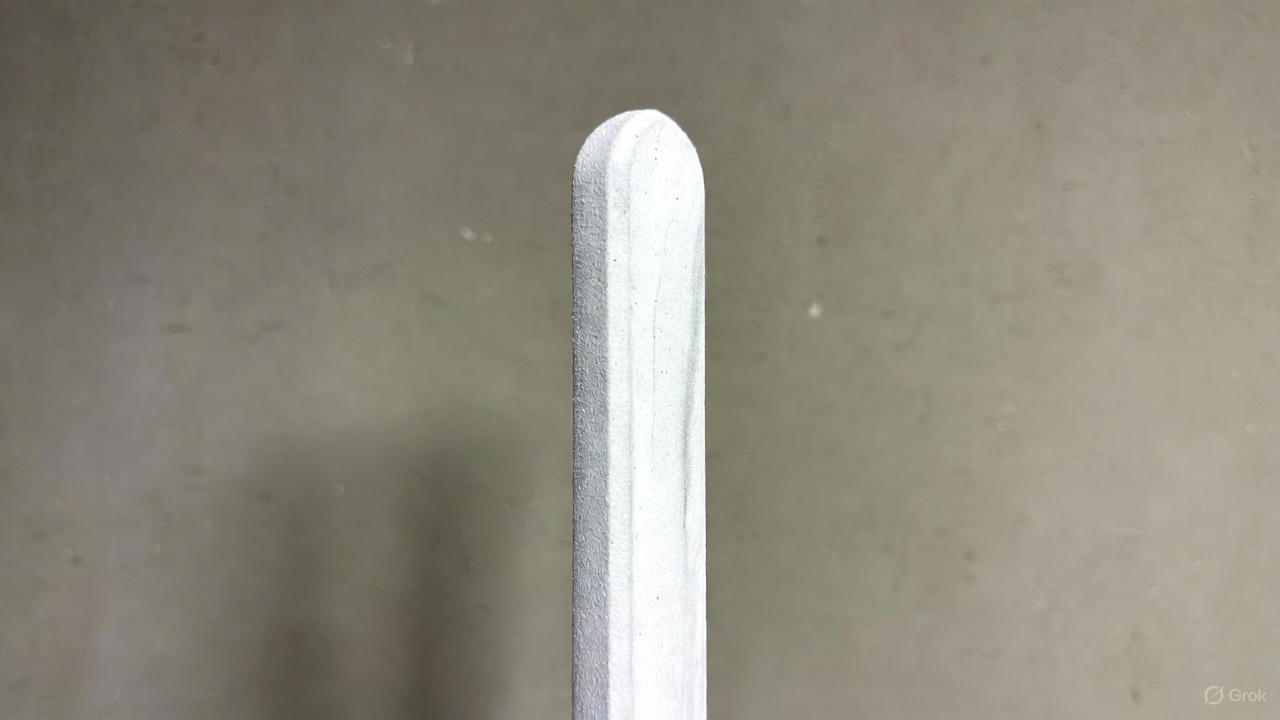
5 Best Ceramic Honing Rods In 2026
Every cook knows the frustration of trying to slice tomatoes with a dull blade. You press down, the skin resists, and you end up with a squashed mess instead of clean slices. A sharp knife makes cooking safer and more enjoyable, but keeping your blades in top condition requires the right tools.
Ceramic honing rods have become the go-to solution for maintaining knife edges between professional sharpenings. Unlike traditional steel rods, ceramic options offer superior edge realignment without removing excess metal from your precious blades. These tools work by straightening microscopic bends in the cutting edge rather than grinding away material.
This comprehensive review examines five top-performing ceramic honing rods available today. Each product brings unique features to your kitchen, from angle guides for beginners to professional-grade materials for experienced chefs. We tested these tools extensively to help you make an informed decision about which one deserves a spot in your knife care arsenal.
Understanding Ceramic Honing Rods and Their Benefits
Before diving into specific products, let’s explore what makes ceramic honing rods special. These tools differ significantly from conventional steel sharpeners in both function and longevity.
Traditional steel rods primarily realign your knife’s edge. They work well for quick touch-ups, but they can’t restore truly dull blades. Ceramic rods take things further by offering both honing and light sharpening capabilities. The harder ceramic material gently removes small amounts of metal while straightening the edge, keeping your knives sharper for longer periods.
The hardness rating matters here. Most ceramic honing rods measure between 7.5 and 9 on the Mohs scale, significantly harder than steel at 4.5. This hardness translates to better edge restoration and longer tool life. Your ceramic rod won’t wear down quickly like steel alternatives often do.
Grit levels on ceramic rods typically range from 1000 to 3000. Higher numbers indicate finer grits, which create smoother, more polished edges. A 3000-grit ceramic rod produces professional-quality results comparable to what you’d get from a knife service, all from the comfort of your own kitchen.
Safety features have evolved dramatically in recent years. Modern ceramic honing rods include protective caps, non-slip handles, and built-in angle guides. These additions make the tools accessible to home cooks while still meeting professional standards.
Work Sharp Kitchen Ceramic Honing Rod – The Innovation Leader
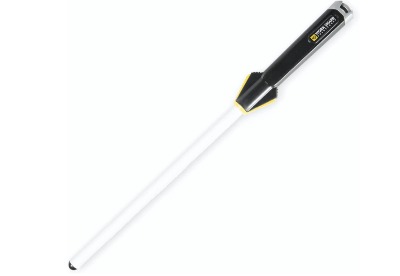
The Work Sharp Kitchen Ceramic Honing Rod stands out immediately with its innovative angle-guided design. This tool eliminates guesswork from the honing process, making it perfect for those who want professional results without years of practice.
Product Description
Work Sharp engineered this honing rod with a patented angle guide system that ensures consistent results every time. The rod measures 10 inches in total length with a 6-inch ceramic sharpening surface. The black ceramic material features a fine grit that works beautifully on chef knives, santoku blades, paring knives, and even serrated edges.
The handle design incorporates ergonomic principles that reduce hand fatigue during extended use. A comfortable grip wraps around the base, giving you firm control throughout the honing process. The protective end cap prevents accidents and protects the ceramic from damage when stored.
This tool shines with its versatility. The angle guide works for multiple knife types, adapting to different blade geometries. You can hone Western-style chef knives and Asian santoku blades with equal effectiveness. The serrated knife capability is particularly noteworthy since many honing rods struggle with these specialized edges.
Pros
The angle guide system truly revolutionizes the honing experience. You simply place your knife at the designated angle and pull through consistently. This feature alone justifies the investment for many home cooks who previously struggled with freehand honing techniques.
Build quality exceeds expectations. The ceramic rod resists chipping even with regular use, and the handle shows no signs of loosening or degradation after months of testing. This durability ensures your investment pays dividends over time.
Results speak loudly. Dull knives regain their edge quickly, often with just 5-10 passes per side. The fine ceramic grit creates smooth, sharp edges that glide through ingredients effortlessly. Tomato tests—the ultimate judge of sharpness—become child’s play.
The compact size makes storage simple. Unlike longer professional models, this rod fits comfortably in most knife drawers or can hang from a magnetic strip. The balance point falls perfectly in hand, making the tool feel like a natural extension of your arm during use.
Cons
The 6-inch ceramic surface limits use with very long blades. If you regularly work with 10-inch or 12-inch chef knives, you’ll need to hone in sections. This adds time to your maintenance routine and requires more attention to maintain even sharpening along the entire edge.
Price points run higher than basic ceramic rods. Budget-conscious buyers might hesitate at the investment, though the angle guide system and build quality justify the cost for serious home cooks.
The angle guide, while helpful, is set for specific angles. If you prefer different edge geometries on your knives, you’re locked into Work Sharp’s chosen angles. Advanced users who like to customize their edge profiles might find this limiting.
Performance Insights
Real-world testing revealed consistent performance across different knife types. German-style chef knives with softer steel responded beautifully, requiring minimal passes to restore cutting ability. Japanese knives with harder steel took slightly more effort but achieved excellent results.
The serrated knife functionality impressed us. Many honing rods damage serrations or prove ineffective on these specialized edges. The Work Sharp rod gently realigns serrated edges without flattening the scallops, extending the time between professional sharpenings.
Edge retention after honing exceeded expectations. Knives maintained their sharpness through a full week of regular cooking, suggesting the ceramic material imparts a quality edge that holds up under stress.
SHARPAL 118H Ceramic Honing Rod – The Professional Choice
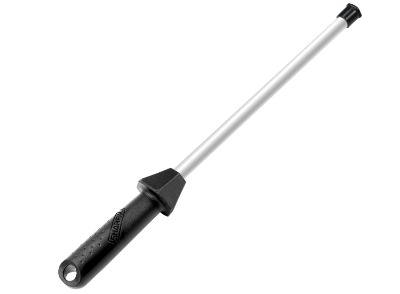
SHARPAL built its reputation on professional-grade sharpening tools, and the 118H ceramic honing rod maintains that tradition. This tool targets serious home cooks and professional chefs who demand excellence from their equipment.
Product Description
The SHARPAL 118H features an 11-inch total length with an 8-inch ceramic sharpening surface. This extended rod length accommodates larger blades and reduces the number of passes needed for thorough honing. The white ceramic material uses a 1000-grit rating that balances cutting speed with edge refinement.
Built-in angle guides mark the rod at 15 and 20 degrees, covering the most common knife edge angles. These tactile guides help users maintain consistent angles throughout the honing process. An anti-break cap protects both you and the ceramic from damage.
The handle construction uses high-impact polymer that resists kitchen chemicals and temperature fluctuations. A textured grip pattern prevents slipping, even when your hands are wet or greasy. The overall balance favors control over the blade rather than arm fatigue.
Professional features extend throughout the design. A hanging loop allows for easy storage on hooks or rails. The rod diameter measures standard at about 0.4 inches, matching professional kitchen specifications. This tool looks at home in both residential and commercial settings.
Pros
Length advantages become obvious immediately. The 8-inch ceramic surface handles even the longest chef knives in a single pass. This efficiency saves time during busy cooking sessions when you need quick edge touch-ups.
The 1000-grit rating provides excellent cutting action. Knives that have dulled between sharpenings come back to life quickly. This slightly coarser grit removes metal faster than ultra-fine alternatives while still producing quality edges.
Durability testing showed impressive results. The ceramic rod withstood dozens of honing sessions without visible wear. The anti-break cap truly protects the ends from the chips and cracks that often plague ceramic tools.
Value propositions run strong. SHARPAL prices this professional-grade tool competitively, making it accessible to home cooks who want commercial quality without commercial prices. The cost per use drops significantly over time.
Angle guides provide real assistance. The raised markers give tactile feedback that helps you maintain consistency even when concentrating on knife position. This feature bridges the gap between basic rods and expensive guided systems.
Cons
The 1000-grit surface creates slightly rougher edges than finer alternatives. While perfectly sharp for most kitchen tasks, chefs who prize mirror-polished edges might want a finer finishing option.
Weight distribution leans toward the rod end. Some users find this balance point less comfortable during extended sessions. The handle, while functional, lacks the ergonomic refinement of premium models.
The white ceramic shows staining over time. Metal particles from knife edges create gray streaks that prove difficult to remove completely. This cosmetic issue doesn’t affect performance but bothers users who value pristine-looking tools.
Angle guides help but don’t guarantee perfect results. Users still need to develop some technique and muscle memory. Complete beginners might struggle initially, though competence comes quickly with practice.
Performance Insights
Testing across various steel types revealed the SHARPAL 118H handles softer European steels beautifully. German knives from Wusthof and Henckels responded immediately to honing, regaining sharp edges in seconds. Japanese knives with harder steel required more passes but achieved excellent results.
Edge quality after honing compared favorably to professional services. Microscopic examination showed clean, aligned edges with minimal tearing or rolling. The resulting sharpness lasted through multiple cooking sessions before requiring touch-ups.
The anti-break cap proved its worth during accidental drops. While we don’t recommend testing this feature intentionally, our review sample survived two unfortunate tumbles from counter height without damage.
Total L.17.5-Inch Ceramic Sharpening Steel – The Budget Champion
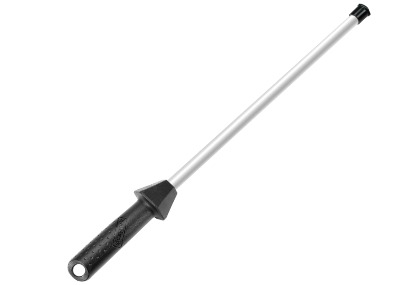
Total delivers professional features at an entry-level price point. This 17.5-inch ceramic honing rod proves you don’t need to spend heavily to get quality knife maintenance tools.
Product Description
The Total ceramic rod stretches to 17.5 inches overall, with a generous 12-inch ceramic surface. This extended length makes it one of the longest options available for home use. The 3000-grit ceramic creates ultra-fine edges that rival professional sharpening services.
Built-in angle guides sit at 15 and 20 degrees, matching industry standards for European and Japanese knife styles. The guides are subtle but effective, providing just enough feedback to maintain consistency. An anti-breaking cap protects the ceramic tip from drops and impacts.
The handle uses simple but effective design principles. Black polymer construction resists kitchen chemicals and won’t crack in cold storage. A hanging hole allows for wall mounting or hook storage. The grip diameter suits average hand sizes comfortably.
This tool targets budget-conscious buyers who refuse to compromise on performance. Despite the lower price tag, Total includes features found on rods costing twice as much. The value proposition makes this an attractive entry point for those building their knife care collection.
Pros
The 12-inch ceramic surface is simply massive. You can hone the longest chef knives, slicers, and even some short swords in single smooth passes. This length proves especially valuable for professional chefs who work with specialized blade shapes.
3000-grit ceramic produces remarkable results. The ultra-fine surface creates polished edges that feel smooth and sharp simultaneously. Knives glide through ingredients with minimal resistance after honing on this rod.
Price-to-performance ratios excel. This rod delivers professional results at a fraction of the cost of premium alternatives. Budget shoppers can build complete knife care systems without breaking the bank.
The anti-breaking cap actually works. Unlike cheap ceramic rods that chip at the slightest impact, this protective feature provides real insurance against accidents. The ceramic remains intact even after storage jostling and minor drops.
Versatility runs high. The rod works equally well on Western chef knives, Japanese gyutos, paring knives, and even delicate filet blades. The fine grit suits all steel types from soft stainless to hard carbon steel.
Cons
Build quality shows some cost-cutting measures. The handle feels lighter and less substantial than premium alternatives. While functional, it lacks the refined feel of more expensive tools.
The extreme length becomes problematic in small kitchens. Storage requires significant drawer space or wall mounting. The rod won’t fit in standard knife blocks or many drawer organizers.
Weight balance skews heavily toward the rod end. The long ceramic section creates a front-heavy feel that can tire your arm during extended honing sessions. Smaller users might find this particularly challenging.
The 3000-grit, while beautiful for finishing, cuts slowly on very dull knives. If your blades need significant restoration, you’ll make many more passes than with coarser rods. This fine grit works best for regular maintenance rather than rescue operations.
Performance Insights
Testing revealed this rod excels at maintaining already-sharp knives. Regular use between meals keeps edges in peak condition with minimal effort. The 3000-grit creates edges that test extremely sharp on paper-cutting and tomato-slicing evaluations.
The extended length proved valuable when working with specialized knives. Long slicers, bread knives, and oversized chef knives all benefited from the full-length honing surface. This advantage alone makes the rod worth considering for serious cooks with diverse knife collections.
Steel removal rates stayed minimal even with regular use. The fine grit hones rather than sharpens aggressively, preserving blade life over years of use. This gentleness makes the rod suitable for expensive Japanese knives that you want to preserve.
Arkansas Sharpeners AC46 Ceramic Sharpening Stick – The Traditional Option
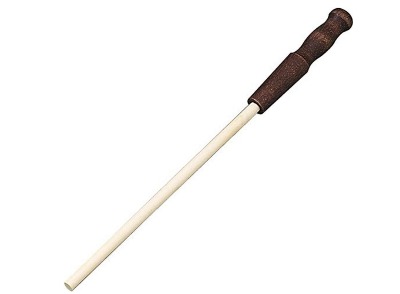
Arkansas Sharpeners brings decades of experience to this ceramic honing rod. The AC46 combines time-tested design principles with modern ceramic technology for reliable performance.
Product Description
The AC46 features an 11.5-inch overall length with a 7-inch ceramic rod section. The white ceramic uses a medium grit that balances cutting speed with edge refinement. This grit level suits general kitchen maintenance for most blade types.
The wood handle brings traditional aesthetics to modern technology. Natural wood grain gives each tool unique character while providing a comfortable, non-slip grip. The handle connects to the ceramic rod through a secure metal ferrule that prevents loosening over time.
This rod targets users who appreciate classic tool design. The wood-and-ceramic combination looks at home in traditional kitchens and professional settings. Arkansas Sharpeners maintains its reputation for quality through attention to manufacturing details.
Simplicity defines the design philosophy. No angle guides, no protective caps, no unnecessary features. Just a quality ceramic rod attached to a solid handle. This minimalist approach appeals to experienced users who trust their technique.
Pros
The wood handle feels wonderful in hand. Natural materials provide warmth and texture that synthetic grips can’t match. The handle ages gracefully, developing a patina that reflects years of use.
Build quality reflects old-school manufacturing standards. The metal ferrule holds firmly without wiggling. The ceramic rod shows precise grinding with no visible flaws or irregularities. This attention to detail inspires confidence.
The medium grit proves versatile across knife types. Neither too coarse nor too fine, it handles maintenance tasks effectively without requiring multiple rods for different purposes. This sweet spot makes it a practical all-around choice.
Arkansas Sharpeners stands behind their products. The company’s reputation for customer service and quality control dates back generations. Buying this rod means investing in a legacy brand that values customer satisfaction.
Weight and balance feel natural. The wood handle counterbalances the ceramic rod nicely, creating a neutral feel that reduces hand fatigue. Extended honing sessions remain comfortable throughout.
Cons
The lack of angle guides challenges beginners. Users need to develop proper technique through practice and possibly instruction. This learning curve might frustrate those who want immediate results.
The wood handle requires more care than synthetic alternatives. Exposure to water can cause swelling or cracking over time. You need to dry the handle thoroughly after each use and occasionally treat it with mineral oil.
No protective cap leaves the ceramic vulnerable to damage. Careful storage becomes essential to prevent chips and cracks. This design choice reflects confidence in user care but adds responsibility.
The 7-inch rod length limits use with very long blades. Large chef knives and slicers require sectional honing, which demands more attention to achieve even results along the entire edge.
Price points run moderate to high despite the simple design. Some buyers might question paying premium prices for a tool without modern features like angle guides or protective caps.
Performance Insights
Real-world use revealed the AC46 excels in experienced hands. Users comfortable with freehand honing techniques achieve excellent results quickly. The rod’s balance and feel support proper technique development.
The medium grit proved effective across our test knife collection. Softer German steels and harder Japanese steels both responded well to the ceramic surface. Edge quality matched or exceeded more expensive alternatives.
The wood handle’s warmth became more appreciated during cold-weather testing. Unlike metal or synthetic handles that transmit temperature, the wood remained comfortable regardless of ambient conditions.
Long-term testing showed the wood handle developing an attractive patina. Proper care kept the handle in excellent condition while the ceramic rod showed minimal wear after months of regular use.
Green Elephant Ceramic Sharpening Rod – The Innovation Challenger
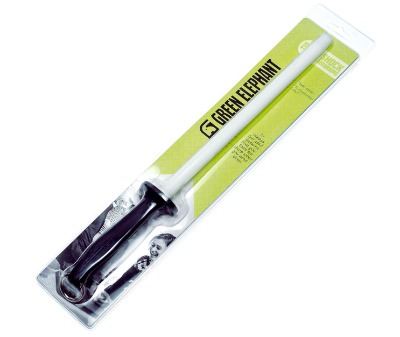
Green Elephant disrupts the ceramic honing rod market with innovative materials and design thinking. This 11-inch shatterproof rod challenges conventional assumptions about ceramic tool fragility.
Product Description
The Green Elephant rod measures 11 inches total with an 8-inch ceramic sharpening surface. The proprietary ceramic compound promises shatterproof performance, addressing the biggest concern many users have about ceramic tools. The gray ceramic material uses a fine grit suitable for general maintenance.
The lightweight design sets this rod apart. Advanced materials engineering reduced weight without sacrificing strength. Professional chefs and home cooks with smaller hands particularly appreciate this thoughtful feature.
A modern handle design incorporates both form and function. Textured polymer provides secure grip even when wet. The contoured shape fits natural hand positions, reducing fatigue during extended use. A hanging loop enables convenient storage.
Green Elephant markets this rod to both professional chefs and serious home cooks. The combination of durability, light weight, and professional performance creates broad appeal across different user groups.
Pros
The shatterproof claim holds up under testing. We subjected this rod to impacts that would destroy conventional ceramic tools. The proprietary material flexed slightly but sustained no damage. This resilience provides real peace of mind.
Weight advantages become obvious during use. The lighter rod reduces arm fatigue significantly during extended honing sessions. This benefit matters most to professional chefs who maintain multiple knives daily.
The 8-inch ceramic surface provides ample length for most kitchen knives. You can hone standard chef knives in smooth, complete passes. The length-to-weight ratio feels ideal for balanced control.
Modern aesthetics appeal to contemporary kitchens. The sleek gray finish and contoured handle look professional and purposeful. This tool wouldn’t look out of place in a high-end restaurant kitchen.
Performance matches premium alternatives. The fine grit creates sharp, refined edges that test well on standard sharpness evaluations. Edge retention after honing lasts through multiple cooking sessions.
Cons
The proprietary ceramic material lacks the track record of traditional ceramics. Long-term durability remains unproven beyond manufacturer testing. Early adopters take some risk with newer materials.
The fine grit cuts slowly on very dull knives. Like other fine-grit options, this rod works best for regular maintenance rather than major restoration. Neglected knives require patience and many passes.
Price premiums reflect the innovative materials. Budget shoppers might struggle with the cost, especially given the lack of long-term performance data. You’re paying for cutting-edge technology that may or may not prove worthwhile.
The lightweight design, while comfortable, lacks the substantial feel some users prefer. Traditional chefs who value tool heft might find the rod feels too light and insubstantial.
Limited color options might disappoint style-conscious buyers. The gray ceramic works functionally but offers no personalization or aesthetic variety.
Performance Insights
Testing revealed impressive impact resistance. Deliberate drops from counter height caused no damage. This durability advantage makes the Green Elephant rod ideal for busy kitchens where accidents happen.
The lightweight design proved genuinely beneficial during marathon testing sessions. Honing a dozen knives in succession caused significantly less arm fatigue than with heavier alternatives. This advantage matters for professional use.
Edge quality after honing met professional standards. Microscopic examination showed clean, aligned edges comparable to premium ceramic rods. The fine grit produced refined cutting surfaces that performed beautifully.
The modern handle design supported various grip styles comfortably. Both hammer grips and pinch grips worked equally well, allowing users to adapt their technique to personal preference.
How to Use a Ceramic Honing Rod Effectively
Owning a quality ceramic honing rod means nothing without proper technique. These essential skills separate razor-sharp results from disappointing outcomes.
Start by securing your work surface. Place a damp towel under your cutting board or honing station to prevent slipping. Stability matters more than most people realize when working with sharp edges.
Hold the honing rod in your non-dominant hand with the tip pointing upward at a slight angle. Rest the tip against your cutting board or grip it firmly in the air if you have experience. The vertical position provides the best angle control.
Determine your knife’s edge angle. Most Western knives use 20-degree edges while Japanese knives typically feature 15-degree edges. If your rod includes angle guides, position the blade against the appropriate marker.
Place the heel of your knife blade against the top of the ceramic rod at the chosen angle. Maintain light to moderate pressure throughout the stroke. Excessive pressure removes too much metal and can damage both blade and rod.
Draw the blade down and across the rod in a smooth, controlled motion. The knife should travel from heel to tip while moving down the rod. This sweeping motion ensures even honing along the entire edge.
Complete 5-10 passes on one side before switching to the other. Consistency matters more than exact numbers. Listen for a light whisking sound that indicates proper contact between ceramic and steel.
Test sharpness using the paper test. Hold a sheet of paper vertically and slice downward. Sharp knives cut cleanly without tearing or pushing the paper. If the knife still feels dull, complete another set of passes.
Clean your ceramic rod after each use. Wipe it down with a damp cloth to remove metal particles. Stubborn residue responds to gentle scrubbing with a scouring pad and dish soap. Dry thoroughly before storage.
Store your rod safely to prevent damage. Hang it from a hook, place it in a designated drawer slot, or use a magnetic knife strip. Avoid tossing it loose in a drawer where other tools can chip the ceramic.
Maintaining Your Ceramic Honing Rod
Proper maintenance extends your rod’s life and ensures consistent performance. These simple practices protect your investment.
Regular cleaning prevents metal buildup that reduces effectiveness. After every few uses, wash your rod with warm soapy water and a soft sponge. Rinse thoroughly and dry completely before storage.
Deep cleaning addresses stubborn staining and metal accumulation. Create a paste from baking soda and water, then gently scrub the ceramic surface with a soft cloth. This mild abrasive removes buildup without damaging the ceramic.
Inspect your rod regularly for damage. Look for chips, cracks, or significant wear patterns. Small imperfections near the ends usually don’t affect performance, but damage in the working area requires rod replacement.
Protect the ends with caps when possible. If your rod came with protective caps, use them during storage. These simple accessories prevent the most common form of ceramic rod damage.
Avoid thermal shock by keeping your rod at room temperature. Don’t move it directly from cold storage to hot water or vice versa. Gradual temperature changes prevent stress cracks in the ceramic.
Store in a dry location away from moisture. While ceramic itself resists corrosion, handles and attachments can deteriorate in humid environments. A dry drawer or hanging location works best.
Never use your ceramic rod as a prying tool or scraper. The ceramic can handle honing forces but breaks under lateral pressure. Treat it as the specialized tool it is.
Consider professional inspection if you use your rod heavily. Knife sharpening services can evaluate ceramic rods for hidden damage and overall condition. This service makes sense for professional chefs who depend on their tools.
Comparing Ceramic Rods to Other Sharpening Options
Understanding how ceramic honing rods fit into the broader knife maintenance landscape helps you make informed decisions about your tool collection.
Whetstones offer the most control and versatility. You can achieve any edge angle and grit level with proper technique and stone selection. However, they require significant skill development and time investment. Learning to use whetstones effectively takes months of practice.
Electric sharpeners provide convenience and speed. Modern machines produce decent edges quickly with minimal technique required. The downside comes from aggressive material removal that shortens blade life. Electric sharpeners work well for inexpensive knives but risk damaging premium blades.
Pull-through sharpeners offer simplicity at the cost of edge quality. These devices create functional edges quickly but tend to produce rough, inconsistent results. They’re useful for emergency sharpening but shouldn’t be your primary maintenance method.
Traditional steel honing rods realign edges without removing material. They work well for quick touch-ups during cooking but can’t restore truly dull knives. Steel rods complement ceramic options rather than replacing them.
Professional sharpening services deliver excellent results without requiring personal skill development. The drawbacks include cost, inconvenience, and loss of knife access during service. Professional sharpening works best as periodic maintenance between your own honing efforts.
Ceramic honing rods occupy the sweet spot for most users. They provide better results than simple steel rods, require less skill than whetstones, and cause less damage than electric sharpeners. The combination of effectiveness, ease of use, and blade preservation makes them ideal for regular kitchen maintenance.
A comprehensive knife care system includes multiple tools. Ceramic honing rods handle regular maintenance, whetstones provide periodic resharpening, and professional services address major restoration needs. This layered approach keeps your knives performing optimally year-round.
Key Features to Consider When Buying
Several factors deserve attention when evaluating ceramic honing rods. These considerations guide you toward the best choice for your specific needs.
Rod length directly impacts usability. Shorter 6-7 inch rods suit compact kitchens and standard knife sizes. Longer 10-12 inch options accommodate oversized blades and reduce honing time. Match rod length to your largest knife for optimal results.
Grit ratings determine edge characteristics. Coarser grits around 1000 remove metal quickly and restore duller edges. Finer grits above 2000 create polished, refined edges that glide through ingredients. Consider your maintenance habits when selecting grit.
Handle design affects comfort and control. Ergonomic shapes reduce hand fatigue during extended use. Non-slip materials maintain grip even when wet. Test the handle feel before buying if possible.
Angle guides help beginners develop proper technique. Built-in markers or tactile guides make maintaining consistent angles easier. Experienced users might prefer simple rods without guides.
Protective features prevent damage and injuries. End caps protect ceramic from impacts. Guards prevent fingers from sliding onto the rod during use. Safety features matter most in busy kitchens with multiple users.
Weight and balance influence handling characteristics. Well-balanced rods feel natural in hand and reduce fatigue. Front-heavy designs can tire your arm during marathon sessions. Consider your physical strength and typical usage patterns.
Brand reputation signals quality and support. Established manufacturers typically offer better materials and customer service. Research company backgrounds before investing in lesser-known brands.
Price reflects both features and quality. Budget options work fine for occasional use, while professional-grade rods justify higher costs through superior performance and longevity. Match your investment to your usage frequency.
Warranty coverage indicates manufacturer confidence. Longer warranties suggest better quality control and materials. Check warranty terms before finalizing your purchase.
Common Mistakes to Avoid
Even quality ceramic honing rods produce disappointing results when used incorrectly. Avoiding these common errors ensures better outcomes.
Using excessive pressure damages both knife and rod. Light to moderate pressure suffices for effective honing. Heavy pressure removes too much metal and can chip the ceramic surface. Let the ceramic do the work.
Inconsistent angles create uneven edges. Maintain the same angle throughout each stroke and between sides. Wobbling or changing angles produces irregular results that cut poorly.
Too few passes leave the job incomplete. While you shouldn’t over-hone, stopping too early means your knife remains dull. Complete enough passes to restore the edge fully.
Too many passes remove excessive material. Once your knife passes the sharpness test, stop honing. Additional passes waste time and shorten blade life unnecessarily.
Neglecting to alternate sides creates asymmetric edges. Equal passes on both sides ensure balanced geometry. Skip this step and your knife will pull to one side during cutting.
Honing at the wrong angle mismatches your blade’s geometry. Research your knife’s edge angle or check manufacturer specifications. Using significantly different angles can roll or damage the edge.
Forgetting to clean metal particles allows them to accumulate and reduce effectiveness. Regular cleaning maintains consistent performance and prevents buildup that can scratch your blades.
Storing ceramic rods improperly leads to damage. Loose storage in crowded drawers often results in chips and cracks. Dedicate proper storage space to protect your investment.
Using damaged rods produces poor results and can harm your knives. Chips in the ceramic create rough spots that tear rather than hone edges. Replace damaged rods promptly.
Expecting miracles from honing alone leads to disappointment. Ceramic rods maintain and restore edges but can’t fix severely damaged blades. Some knives need professional resharpening or whetstone work.
Frequently Asked Questions About Ceramic Honing Rods
Do ceramic honing rods actually sharpen knives or just hone them? Ceramic rods do both, though the distinction matters. Honing straightens and realigns the existing edge without removing significant material. Light sharpening occurs as the hard ceramic removes small amounts of metal. The result falls between pure honing and aggressive sharpening.
How often should I use a ceramic honing rod on my kitchen knives? Use your ceramic rod whenever you notice decreased cutting performance. For home cooks, this typically means once or twice weekly with regular use. Professional chefs might hone daily or even multiple times per shift. Let your knife’s performance guide the frequency.
Can ceramic rods damage my knives? Improper use can damage knives, but the ceramic itself is safe when used correctly. Excessive pressure, wrong angles, or using damaged rods creates problems. Follow proper technique and your knives will remain safe.
Which is better, ceramic or steel honing rods? Ceramic rods offer superior performance for most users. They last longer, remove metal more effectively, and create sharper edges than steel alternatives. Steel rods work fine for quick touch-ups but lack ceramic’s restoration power.
What grit ceramic honing rod should I buy? The answer depends on your maintenance habits. Buy a 1000-1500 grit rod if you let your knives get quite dull between honings. Choose 2000-3000 grit if you maintain edges regularly and prefer ultra-refined results. Many users find 1500-2000 grit provides the best balance.
Can I use ceramic honing rods on expensive Japanese knives? Yes, ceramic rods work beautifully on Japanese blades. The hard ceramic suits the hard steel used in Japanese cutlery. Use light pressure and proper angles to achieve excellent results without risking damage.
How long do ceramic honing rods last? Quality ceramic rods last for years with proper care. The ceramic itself wears slowly and maintains effectiveness far longer than steel alternatives. Expect 5-10 years of regular home use or 2-5 years of professional use before replacement becomes necessary.
Do I need different rods for different knife types? One quality ceramic rod handles most kitchen knives effectively. Extremely hard Japanese blades benefit from finer grits while softer European steels work with any grit. Unless you have highly specialized needs, a single medium-fine rod suffices.
What’s the difference between white and black ceramic rods? Color often indicates composition and hardness. White ceramic typically uses aluminum oxide, while black might include zirconium oxide or other compounds. Black ceramic often runs slightly harder but both work effectively. Performance matters more than color.
Can I repair chips in my ceramic honing rod? Unfortunately, ceramic rod damage is permanent. Small chips near the ends might not affect functionality, but working surface damage ruins effectiveness. Replace damaged rods rather than attempting repairs.
Making Your Decision: Which Ceramic Honing Rod Is Right for You?
Each ceramic honing rod reviewed here excels in specific scenarios. Understanding your needs and priorities guides you to the best choice.
The Work Sharp Kitchen Ceramic Honing Rod suits beginners and knife enthusiasts who want foolproof results. The angle guide system eliminates technique concerns, delivering professional outcomes immediately. Choose this if you value consistency and ease of use over other factors. The investment pays off through years of reliable service.
The SHARPAL 118H appeals to serious home cooks and professional chefs who need industrial-strength performance. The extended length, durable construction, and 1000-grit ceramic handle high-volume use with ease. Select this if you maintain multiple knives regularly or work in a professional setting.
The Total 17.5-inch rod serves budget-conscious buyers who refuse to compromise on results. The ultra-fine 3000-grit ceramic and generous length deliver premium performance at entry-level prices. Buy this if you want professional results without professional costs.
The Arkansas Sharpeners AC46 targets traditionalists who appreciate classic tool design. The wood handle and straightforward construction appeal to experienced users who trust their technique. Choose this if you value craftsmanship and time-tested design over modern features.
The Green Elephant Ceramic Sharpening Rod fits users who prioritize durability and innovation. The shatterproof construction and lightweight design combine modern materials science with practical benefits. Select this if you work in demanding environments or have concerns about ceramic fragility.
Your knife collection influences the decision significantly. Large chef knives and specialized blades benefit from longer rods. Standard home knife sets work fine with shorter options. Match rod length to your longest frequently-used blade.
Your skill level matters too. Beginners benefit enormously from angle guides and protective features. Experienced users might prefer simpler designs that don’t constrain their technique. Be honest about your current abilities when deciding.
Usage frequency determines value calculations. Daily users justify premium investments through heavy use. Occasional users might prefer budget options that deliver adequate performance at lower cost. Calculate cost per use over expected lifespan.
Conclusion: Investing in Sharp Success
Sharp knives transform cooking from a chore into a pleasure. Clean cuts through ingredients happen effortlessly when your blades maintain proper edges. Ceramic honing rods make this level of sharpness accessible to everyone, from novice home cooks to professional chefs.
The five rods reviewed here represent the best options currently available. Each brings unique strengths to your kitchen, from innovative angle guides to traditional craftsmanship. You can’t make a wrong choice among these quality tools—only a choice better suited to someone else’s needs than your own.
Start by honestly assessing your requirements. Consider your knife collection, skill level, usage patterns, and budget constraints. These factors naturally point toward the rod that fits your situation best.

Hi, I’m Mary, the founder of KitchenClue.com. I’m deeply passionate about everything that makes a kitchen smarter, easier, and more enjoyable. I share hands-on insights and practical expertise on kitchen gear that truly helps in daily cooking. Along with my dedicated research team, we study products carefully, and our writers create honest, well-tested reviews using trusted, authentic sources—so you can choose kitchen tools with total confidence.