Canola Oil vs Vegetable Oil for Frying
When you stand in front of your pantry looking for something to cook with, you might see bottles of canola oil and vegetable oil sitting right next to each other. You probably wonder: what’s the difference? Does it really matter which one I use? Can I swap them around? These are great questions. Many home cooks feel confused about cooking oils, and that’s totally normal.
The truth is, both oils work well for frying. But they’re not exactly the same. They have different smoke points, flavors, and health profiles. Knowing the difference helps you make better choices in your kitchen. This guide breaks it all down in simple language so you can decide which oil works best for your cooking.
What Is Canola Oil?
Canola oil comes from the seeds of the canola plant. The canola plant is actually a type of rapeseed that was developed in Canada. In fact, “canola” stands for “Canadian oil, low acid.” This is pretty cool because it shows the oil’s origin story.
The oil gets extracted from the seeds through pressing and processing. Most canola oil you buy at the store is refined, which means it has been cleaned and processed to remove impurities. The refinement process also removes most of the flavor and smell, leaving you with a neutral-tasting oil.
Canola oil has a few things going for it. It has a high smoke point, which is great for frying. A smoke point is the temperature at which an oil starts to break down and smoke. We’ll talk more about that later. Canola oil is also relatively affordable and widely available in grocery stores everywhere.
What Is Vegetable Oil?
Vegetable oil is trickier to define because it’s actually a blend. The term “vegetable oil” can refer to oil made from many different sources. Most vegetable oils sold in American grocery stores come from soybean, corn, canola, sunflower, or safflower seeds. Sometimes it’s a mix of a few of these.
The bottle label might say “vegetable oil” without telling you exactly which plants it came from. Manufacturers blend different oils together to create a product that works well for cooking and costs less. It’s kind of like how “Italian seasoning” is a blend of different herbs rather than one specific thing.
Most vegetable oils are also refined. This means they have a light color and neutral taste. The refinement process helps make them suitable for cooking at high temperatures, which is perfect for frying.
Smoke Point: The Most Important Factor
The smoke point is probably the most important thing to understand about cooking oils. This is the temperature at which an oil starts to break down, smoke, and smell bad. When an oil smokes, it’s telling you something is going wrong. The oil is breaking apart chemically, and you don’t want to eat food cooked in burned-up oil.
For frying, you need an oil with a high smoke point. You don’t want to use oils with low smoke points like extra virgin olive oil for frying because they’ll smoke and break down at high heat.
Canola oil has a smoke point of around 400 degrees Fahrenheit (about 200 degrees Celsius). This is pretty good for frying.
Vegetable oil usually has a smoke point between 400 to 450 degrees Fahrenheit, depending on what it’s blended from. Most store-bought vegetable oil blends are in the 410 to 450 range.
This means vegetable oil typically has a slightly higher smoke point than canola oil. Does this matter in your home kitchen? Not really. Both work fine for most home frying. You’d rarely heat oil that hot at home anyway. For deep frying, you usually use oil around 350 degrees Fahrenheit, which is well below both oils’ smoke points.
How They Perform When Frying
When you fry food at home, you’re probably cooking at temperatures between 325 and 375 degrees Fahrenheit. Both canola oil and vegetable oil handle these temperatures with ease. You won’t notice a difference in how they fry your food.
Both oils create golden, crispy results. Both can handle multiple uses before they need to be replaced. If you strain the oil after frying, you can reuse it several times. Most home cooks get two or three uses out of a batch of oil before it starts looking too dark or dirty.
One thing to note: vegetable oil sometimes has a very slight flavor, but usually so mild that you won’t notice it. Canola oil tastes almost completely neutral. If you’re sensitive to flavors, this might matter to you. For most people, it doesn’t change the final taste of their fried food.
Fat Composition and Health Considerations
This is where things get a bit more interesting. Canola oil and vegetable oil have different makeup when it comes to fats.
Canola oil is relatively low in saturated fat. It has about 7 percent saturated fat, while the rest is made up of unsaturated fats. Many nutritionists view this as a positive thing because too much saturated fat in your diet may not be great for heart health.
Vegetable oil composition depends on what it’s blended from. Oil made from soybeans has different fat profiles than oil from sunflower seeds. Most vegetable oil blends end up somewhere in the middle. They usually have more saturated fat than canola oil but still contain unsaturated fats too.
Here’s something important to know: frying food adds calories no matter which oil you use. The oil is absorbed into the food. This is just how frying works. Using canola oil instead of vegetable oil won’t make fried food healthy. It just might be a slightly better choice if you’re trying to limit saturated fats.
If you’re concerned about health, the best approach is to fry less often. When you do fry, either oil works fine. Don’t stress too much about choosing between them based on health alone.
Flavor Profile
When you’re cooking, flavor matters. Let’s talk about how these oils taste.
Canola oil has almost no flavor. It’s neutral and clean-tasting. This makes it great when you want the taste of your actual food to shine through. You’re not competing with the oil’s flavor.
Vegetable oil is also pretty neutral, but some blends have a slightly stronger taste. This is especially true if the blend contains a lot of soybean oil. You might notice a very faint vegetable taste, but it’s usually subtle. Most people won’t pick up on it at all.
For frying, the choice comes down to personal preference. If you want absolutely nothing that could interfere with your food’s taste, go with canola. If you don’t mind a barely noticeable vegetable flavor, vegetable oil works fine.
Cost Comparison
Your wallet matters when you’re deciding between two cooking oils.
Canola oil is usually a bit cheaper than vegetable oil, especially when you buy store brands. You might pay $3 to $6 for a large bottle of canola oil. Vegetable oil sometimes costs a little more, but not always. Prices vary by brand and location.
If you fry regularly and cost is a concern, canola oil might be the way to go. You’ll save a few dollars over time. But the difference isn’t huge, so this shouldn’t be your main deciding factor.
Availability
Both oils are super easy to find. Walk into any grocery store in America and you’ll see both sitting on the shelf. You can also order them online if you prefer. There’s really no winner here since both are widely available.
This is good news because it means you can always find one or the other, even if your preferred choice is out of stock.
What’s In Your Bottle? Processing and Refinement
Most canola oil and vegetable oil you buy are refined oils. The refinement process involves heating, pressing, and sometimes using chemicals to extract and clean the oil. This sounds scary, but it’s actually a normal part of food production.
Refined oils are different from oils labeled “unrefined” or “cold-pressed.” Those terms mean the oil went through minimal processing. But for frying, you want refined oils because they have higher smoke points. Unrefined oils smoke too easily.
So when you buy a bottle of canola oil or vegetable oil for frying, you’re getting a refined product. This is exactly what you want. Don’t feel bad about buying refined oils. They’re made to handle the heat of cooking.
Stability and Storage
Both canola oil and vegetable oil are stable when stored properly. They last a long time in your pantry. A sealed bottle of either oil can last for a year or more in a cool, dark place.
Keep your oil away from direct sunlight and heat. A kitchen cabinet away from the stove is ideal. You don’t need to refrigerate either oil unless you want to extend its life even longer.
If your oil starts to smell off or looks cloudy, it’s time to replace it. Smell is your best guide. Fresh oil smells neutral and clean. Old oil smells stale or strange.
Environmental Concerns
Some people worry about the environmental impact of cooking oils. This is a fair concern.
Canola oil production can be tied to deforestation in some areas. Some canola is grown on land that used to be forests. Vegetable oil, especially soybean oil, has similar concerns. Both oils require farmland to grow.
If environmental impact is important to you, look for oils labeled as sustainably sourced. Some brands offer canola oil or vegetable oil from farms using better practices. These might cost more, but they align with values of conservation.
You could also use less oil overall by frying less often or using air fryers instead. This reduces the demand for cooking oil and is better for the planet. Every bit helps.
GMO Concerns
A lot of canola and soybean crops are genetically modified. This is a topic that stirs up feelings for many people. Here’s what you should know:
Most canola sold in the U.S. comes from genetically modified plants. The same goes for soybean-based vegetable oils. If you want to avoid GMO products, look for oils labeled “non-GMO” or “organic.” These exist but usually cost more.
Scientists have found no evidence that eating genetically modified oils harms your health. But if it matters to you personally, you have options.
Which Oil Should You Buy?
So after all this information, which one should you actually use for frying?
Choose canola oil if:
- You like neutral flavor and want nothing to interfere with your food’s taste
- You’re trying to minimize saturated fat intake
- You prefer the slightly lower price
- You want a reliable, consistent product
Choose vegetable oil if:
- You like the slight vegetable taste in some foods
- You want the tiniest bit of extra stability at high heat
- You found it on sale
- You already have a brand you like
Here’s the honest truth: for home frying, it barely matters which one you pick. They’ll both make your food taste good. They’ll both work at the temperatures you use. They’re both affordable and available.
The best oil is the one you have on hand. Don’t overthink it. If you have canola oil, use canola oil. If you have vegetable oil, use vegetable oil. You won’t make a mistake either way.
Can You Mix Them Together?
Yes, you absolutely can mix canola oil and vegetable oil. Some home cooks do this without any issues. Mixing them together creates a blend with properties somewhere between the two. You won’t hurt anything by mixing them.
Some professional kitchens even create their own oil blends. You could blend your two oils together if you wanted to experiment. But there’s no special reason to do this. You’re better off just using one or the other.
Substituting One for the Other in Recipes
Recipes sometimes call specifically for one oil or the other. Can you substitute?
If a recipe asks for canola oil and you have vegetable oil, go ahead and use it. They work almost identically in recipes. Same thing if you have canola and the recipe asks for vegetable oil.
The only time you might want to stick with what’s called for is if flavor is really important to the dish. But even then, it’s a small difference. Most recipes won’t be ruined by using a different neutral oil.
Other Frying Oils Worth Knowing About
While we’re on the subject of frying oils, you should know about a few others.
Peanut oil is popular for frying because it has a high smoke point around 450 degrees Fahrenheit. It has a light peanut flavor that some people love. It’s perfect for Asian cooking. It costs more than canola or vegetable oil but works great for deep frying.
Sunflower oil is another good option. It has a high smoke point and neutral taste. It’s often used in Europe more than America. You can find it in many grocery stores but not always.
Corn oil is similar to vegetable oil in how it performs. It has a smoke point around 450 degrees Fahrenheit. Some vegetable oil blends contain corn oil, so they’re basically the same in terms of cooking performance.
Avocado oil is trendy right now. It has a very high smoke point around 500 degrees Fahrenheit, which is excellent. But it costs a lot more than other options. It’s great if you want something premium, but not necessary for everyday cooking.
Avoid olive oil for frying, even refined olive oil. It has a lower smoke point and is better for salads or finishing dishes. Same goes for coconut oil if you’re frying savory foods, since it will give things a coconut taste.
Reusing Frying Oil
One question many home cooks have is how many times they can reuse cooking oil.
With proper storage, you can reuse canola oil or vegetable oil about two to three times. After straining the oil to remove food particles, let it cool completely. Then pour it into a clean container and store it until next time.
Each time you use oil, it breaks down a little bit. It also collects tiny food particles and water from the food. Eventually, it stops performing well and smells off. That’s when you toss it and use fresh oil.
The oil disposal part matters. Don’t pour used oil down the drain. It clogs pipes. Instead, let it cool, pour it into an old container, and throw it away. Or check if your community has an oil recycling program. Some places accept used cooking oil for recycling.
Final Thoughts
Canola oil and vegetable oil are both excellent choices for frying. They have similar smoke points, neutral flavors, and affordable prices. For most home cooking, you can’t go wrong with either one.
The differences between them are small. Canola oil is slightly lower in saturated fat and has a perfectly neutral taste. Vegetable oil has a marginally higher smoke point and sometimes a very light flavor. These differences rarely matter in everyday cooking.
Don’t stress about which one to buy. Use whichever is cheaper or whatever you prefer. Your fried food will taste delicious either way. The most important thing is to fry at the right temperature and use oil that’s fresh and clean. Those two factors matter way more than which specific neutral oil you choose.
Stock your pantry with either oil and start cooking. You’re ready to fry chicken, make homemade doughnuts, fry potatoes, or cook whatever fried food you’re craving. Both oils will get the job done perfectly.
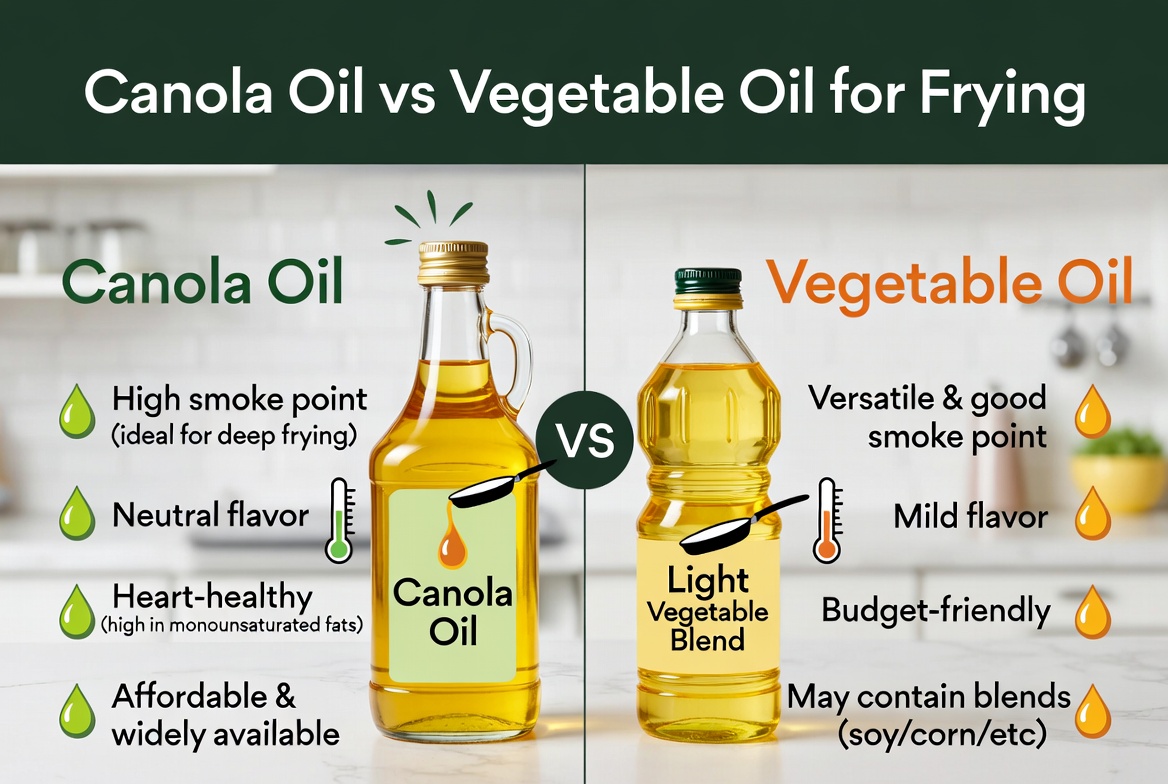
Quick Reference Guide
Canola Oil:
- Smoke point: 400°F (200°C)
- Flavor: Neutral
- Saturated fat: Low (about 7%)
- Cost: Budget-friendly
- Best for: General frying when flavor purity matters
Vegetable Oil:
- Smoke point: 410–450°F (210–230°C)
- Flavor: Neutral to very slightly vegetable
- Saturated fat: Medium (varies by blend)
- Cost: Budget-friendly
- Best for: General frying when you need extra stability
Bottom line: Use whichever you have. They work virtually the same for home frying.
Common Questions About Frying Oils
Can I use expired oil? No. Oil can go rancid, especially if stored in warm places. Always check the smell. If it smells stale or strange, don’t use it.
Should I heat oil before adding food? Yes, always. Preheat your oil to the right temperature before adding food. This helps create crispy results.
How do I know if oil is hot enough? Use a cooking thermometer for accuracy. Or drop a small piece of bread in the oil. If it sizzles and browns quickly, the oil is ready.
Can I cook in used oil? Yes, two or three times. Strain it first to remove food bits.
What temperature should I fry at? Most fried foods cook best at 350°F (175°C). Some things go higher, some lower. Your recipe will tell you.
Why does my fried food come out greasy? Oil was too cool, or you fried too long. Use a thermometer and don’t overcrowd the pan.
Is one oil healthier than the other? Canola oil has slightly less saturated fat. But the difference is small. Frying is fried, regardless of the oil choice.
Ready to start frying? Pick up a bottle of whichever oil you prefer and get cooking. You’ve got this!

Hi, I’m Mary, the founder of KitchenClue.com. I’m deeply passionate about everything that makes a kitchen smarter, easier, and more enjoyable. I share hands-on insights and practical expertise on kitchen gear that truly helps in daily cooking. Along with my dedicated research team, we study products carefully, and our writers create honest, well-tested reviews using trusted, authentic sources—so you can choose kitchen tools with total confidence.