Plastic Cutting Board vs Wood Cutting Board
Your kitchen cutting board is one of your most important tools. You use it every day. You chop vegetables on it. You slice meat on it. You prepare all your food on it. So picking the right one really matters.
But here’s the thing. When you walk into a kitchen store, you see SO many options. There are plastic boards everywhere. There are wood boards too. They look different. They feel different. And people have strong opinions about both.
So which one is actually better?
The answer is more complicated than you might think. It’s not just about picking one and being done. Both have real strengths. Both have real weaknesses. Let me break down everything you need to know.
The Basics: What Makes Them Different
First, let’s talk about what you’re actually buying.
Plastic cutting boards are made from materials like polypropylene or polyethylene. They’re manufactured in factories. They’re usually colorful. They’re very smooth and hard. They don’t absorb water much at all.
Wood cutting boards are made from actual trees. The wood gets sanded down. Then it’s treated with oils or sealers. Wood is a natural material. It feels warm in your hands. It has texture. Water can soak into it.
That’s the basic difference. One is synthetic. One comes from nature. But these simple differences lead to huge practical changes in how you use them.
Durability: How Long Do They Last?
Let’s talk about durability first. After all, you want your cutting board to last a long time.
Plastic boards are tough against breaks. If you drop a plastic board on your kitchen floor, it usually survives just fine. It won’t shatter. It won’t crack. That’s a real advantage if you’re clumsy in the kitchen like me.
But here’s the catch. Plastic boards get damaged in different ways. They get scratched up really easily. After a few months of cutting with knives, your plastic board looks old and beat up. Those tiny scratches and grooves add up fast.
Even worse, plastic dulls your knives. The hard surface of plastic is rough on your blade. You’ll need to sharpen your knives way more often if you mainly use plastic.
And here’s something people don’t always think about. Plastic boards can stain. Beets. Turmeric. Tomatoes. These foods can leave marks on plastic that don’t come out. Your beautiful board starts to look grimy even after washing.
Wood boards, on the other hand, improve over time. That might sound weird, but it’s true. A good wood cutting board gets better as you use it. The surface becomes smoother and more polished. It develops character. That’s actually pretty cool.
Wood is also naturally softer than plastic. This means your knives don’t get damaged. Your blades stay sharp longer. This is huge if you care about your knives. And you should. Good knives are expensive.
Wood also hides stains better. Because of the color and grain patterns, discoloration isn’t as obvious. A wooden board still looks good after years of use.
But wooden boards can break. If you drop them on hard floors, they might split or crack. They’re not indestructible. You need to handle them with some care.
Hygiene and Safety: Are They Clean?
This is where things get really interesting. People have lots of opinions about which board is cleaner.
For years, people thought plastic was better. They thought plastic doesn’t absorb bacteria. They thought wood was full of germs. In fact, many restaurants use plastic for this reason.
But here’s what science actually says. Studies have shown that both plastic and wood cut boards can hold bacteria. The difference is what happens next.
When plastic boards get scratched up (and they do, constantly), bacteria hide in those grooves. The scratches trap germs deep inside. Then it becomes really hard to wash them out. Even dishwashers can’t always reach inside those tiny scratches.
Wood boards are actually different. Wood has natural properties that help kill bacteria. Wood slowly releases compounds that fight off germs. Even bacteria that get into the wood don’t survive as long as they do on plastic. The bacteria actually die off over time.
Researchers have found that wood cutting boards stay cleaner than you’d expect, even though they absorb water. It’s nature’s way.
The practical takeaway? Both need to be washed properly. You should wash your board right after using it. Use hot soapy water. Scrub hard. For either type of board, this is the most important thing you can do.
You can sanitize both types if you want to be extra safe. Run them through the dishwasher. Or wash them by hand and then spray them with a diluted bleach solution. Either way works.
But if we’re being honest, a wood board that’s washed regularly is probably just as clean as a plastic one. Maybe even cleaner in some ways.
Maintenance: How Much Work Is It?
Okay, so let’s talk about keeping your cutting board in good shape.
Plastic is super easy. You wash it. You’re done. You can throw it in the dishwasher if you want. It doesn’t need anything special. It won’t dry out. It won’t need oil. It just sits there being plastic.
This is actually a real advantage for busy people. If you’re running around and don’t want to think about board maintenance, plastic is simpler.
Wood needs more attention. A wooden board needs care to stay in good shape. You should wash it by hand, not in the dishwasher. Hot water and dishwasher soap can damage wood over time.
You should also oil your wooden board regularly. A food-safe mineral oil or beeswax keeps the wood from drying out and cracking. You do this maybe once a month, depending on how much you use it. It takes like five minutes.
You also need to be careful with wood boards. Don’t leave them wet for long periods. Don’t put them away damp. Store them upright if you can, not flat, so air can circulate.
This sounds like a lot. But honestly, if you like wood, these steps aren’t a big deal. It’s just part of the routine.
Here’s the real question. Do you mind taking five minutes a month to oil your board? If yes, get wood. If no, get plastic.
Knife Performance: Sharp Stays Sharp
Let’s talk about your knives for a second, because this matters a lot.
Plastic is hard. Like, really hard. When your knife hits plastic, it’s hitting something that doesn’t give way at all. Your blade bounces. The impact can dull your edge. After using plastic boards for a while, your knives feel like they need sharpening constantly.
Some people deal with this by using plastic boards only for soft foods and wood for everything else. But that seems like a lot of boards.
Wood gives a little bit. When your blade hits wood, the wood flexes slightly. The impact is absorbed. Your knife blade doesn’t get smashed as hard. The edge stays sharp longer.
This is actually backed up by science. Studies have shown that knives stay sharper on wood than on plastic. If you cook a lot and you care about your knives, this is a big advantage.
Think about expensive chef’s knives. They usually come with a wood block for a reason. The people making them know what they’re doing.
The Cutting Experience: What Does It Feel Like?
Okay, this is less scientific, but it’s still important.
Using a plastic board feels efficient. It’s smooth. It’s light. The blade glides across it. There’s a certain rhythm to it. Some people really like the feeling of a smooth plastic board under their hands.
Using a wood board feels different. The blade sinks into the wood just a tiny bit. It has weight and substance. It feels more permanent. There’s a sound to it that’s different. Some people find this much more satisfying. It feels like “real” cooking.
Honestly, this is personal preference. You might love one or hate the other. The only way to know is to try both.
Cost: What’s Your Budget?
Money matters. Let’s be real about this.
Plastic boards are usually cheaper. You can get a decent plastic cutting board for ten to twenty dollars. Maybe less. They’re affordable. If your budget is tight, plastic is the way to go.
Good wooden boards cost more. A quality wooden cutting board might run you forty to eighty dollars. For a really nice one, you might spend more. The investment is bigger upfront.
But here’s something to think about. If a plastic board gets too scratched up after a year, you throw it away and buy a new one. You might spend fifty dollars over five years buying multiple plastic boards.
A good wooden board can last for decades. You might spend sixty dollars once and use that board for twenty years. The math changes when you look at it that way.
Aesthetics: What Does It Look Like?
Your cutting board sits on your counter. It’s part of your kitchen. How it looks actually matters.
Plastic boards are bright and colorful. Some people love this. They come in every color you can imagine. They can match your kitchen. They look modern and clean.
Wooden boards are warm and natural. They have grain patterns. They develop a patina over time. They look like they belong in a kitchen. Many people find them more beautiful. They look classic instead of trendy.
Again, this is totally subjective. Your kitchen, your choice.
Smell and Flavor: Does It Matter?
Here’s something people don’t always think about.
Plastic boards are neutral. They don’t affect the smell or taste of your food. There’s no smell from a plastic board. There’s no flavor transfer. For most people, this is fine.
Wood boards have a subtle smell. When you cut on a fresh wooden board, there’s a nice wood scent. Some people love this. Some people don’t care. Your food won’t taste like wood, but you might notice the smell. This is actually pretty pleasant to most people.
A note though: if a wooden board smells bad, that usually means it needs oiling or it’s damaged. A good wooden board smells nice.
Space and Storage: Where Do You Keep It?
Where do you live? How much kitchen space do you have?
Plastic boards are flat and stackable. If you have multiple ones, you can stack them on top of each other. They don’t take up much space. Good if your kitchen is small.
Wooden boards are thicker and heavier. They take up more space. Stacking them can damage the top one. They’re better stored upright. If your kitchen space is limited, this might be annoying.
Special Situations: When to Use Which
Here’s where it gets practical. Maybe you don’t need to choose just one. Many home cooks use both.
Use plastic for:
- Raw meat and fish (keeps separate from everything else)
- Foods with strong colors that might stain
- When you’re in a rush and don’t want to think about it
- If your dishwasher is your friend
- When budget is tight
Use wood for:
- Daily cutting of vegetables and fruits
- When you want to keep your knives sharp
- Most of your cooking
- When you care about how your kitchen looks
- If you don’t mind a little extra care
Many professional kitchens use both. They use plastic for raw proteins for food safety reasons. They use wood for everything else. This is actually a smart approach.
Making Your Final Decision
So what should you actually buy?
Here’s my honest take. If you cook regularly and you care about your knives, get a good wooden board. Yes, it costs more upfront. Yes, you need to oil it. But you’ll have a better cooking experience. Your knives will stay sharper. Your board will last for years. You’ll actually enjoy using it.
If you’re just starting to cook, or you live alone and don’t cook much, plastic is fine. It’s cheaper. It’s lower maintenance. You won’t regret it.
If you have the space and budget, get both. A big wooden board for daily use and a plastic one for raw meat and fish. This is actually the ideal setup.
The truth is this: the best cutting board is the one you’ll actually use. If you hate plastic, don’t get plastic. If you think wood is too much work, don’t get wood. You need to pick something you’ll enjoy.
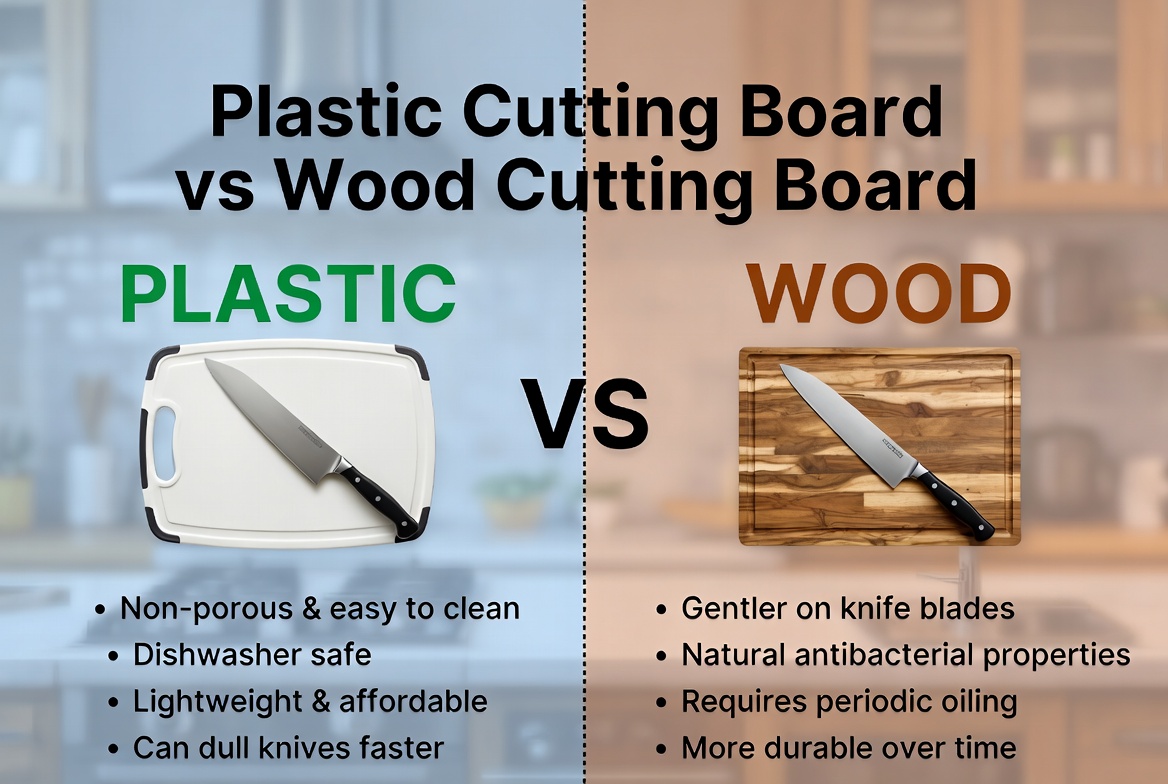
Quick Comparison Chart
Plastic Cutting Board:
- Price: Cheap
- Durability: Scratches easily
- Knife impact: Dulls blades
- Maintenance: Very easy
- Hygiene: Good when clean, bacteria hide in scratches
- Lifespan: 1-3 years with heavy use
- Looks: Modern and colorful
Wooden Cutting Board:
- Price: More expensive
- Durability: Can break if dropped, improves with use
- Knife impact: Keeps blades sharp
- Maintenance: Needs regular oiling
- Hygiene: Natural antibacterial properties, very clean when maintained
- Lifespan: 10-20+ years
- Looks: Classic and warm
The Bottom Line
There’s no perfect answer. Plastic and wood are just different. They have different strengths. They have different weaknesses.
If you use knives a lot, go with wood. Your blades will thank you.
If convenience matters most, go with plastic. You’ll save time and effort.
If you can afford both, get both. Use them for different purposes.
Just pick one and start cooking. The differences matter, but they’re not huge. Any cutting board is better than cutting on your counter.
What really matters is that you have a board that makes you want to cook. Something you enjoy using. Something that fits your life and your kitchen.
So think about what matters most to you. Think about how much you cook. Think about your budget. Then make your choice.
And honestly? You can’t really go wrong. Both plastic and wood cutting boards do the job. They just do it in different ways.
Now stop reading and go chop some vegetables. Your dinner isn’t going to make itself.
Frequently Asked Questions
Can you put a wooden cutting board in the dishwasher?
No, don’t do this. The hot water and harsh detergents can damage wood. Wash by hand with lukewarm water instead.
How often should you oil a wooden cutting board?
About once a month if you use it regularly. More often if you notice the wood looking dry. Use food-safe mineral oil or beeswax.
Is plastic safer for raw meat?
Many people prefer plastic for raw meat because it’s easier to sanitize. But a properly maintained wooden board is just as safe. The choice is yours.
Can you cut raw meat on a wooden board?
Yes, you can. Just wash it thoroughly with hot soapy water right after. Don’t let it sit dirty. If you’re nervous about it, use plastic for raw meat and wood for everything else.
Do wooden boards stain?
They can, but the stains are usually not visible because of the wood grain and color. Plastic boards show stains more obviously.
What’s the best size cutting board?
Get one that’s at least 12 inches by 18 inches. Bigger is better if you have the space. You want room to work without things sliding off.
Should you use both sides of your cutting board?
You can, but one side will wear faster than the other. Rotate it sometimes to even out the wear.
Can you repair a damaged cutting board?
Plastic: not really. Once it’s scratched badly, you’re better off replacing it. Wood: yes. You can sand it down and re-oil it to make it look like new again.
What’s the safest cutting board material?
Both are safe when properly cleaned. Wood might have a slight edge due to natural antibacterial properties, but the difference is small. Cleanliness matters more than material.
Should you use the same board for vegetables and meat?
Some people use different boards to be extra safe. But if you wash thoroughly between uses, one board is fine. Do what makes you comfortable.
Final Thoughts
The plastic versus wood debate isn’t really about which one is objectively better. It’s about which one fits your life better.
Think about your kitchen style. Think about how much you cook. Think about what feels right in your hands.
Both cutting boards will do the job. Both will serve you well. The only real difference is the journey you take with them.
So make your choice. And then make some delicious food. That’s what your cutting board is really for anyway.

Hi, I’m Mary, the founder of KitchenClue.com. I’m deeply passionate about everything that makes a kitchen smarter, easier, and more enjoyable. I share hands-on insights and practical expertise on kitchen gear that truly helps in daily cooking. Along with my dedicated research team, we study products carefully, and our writers create honest, well-tested reviews using trusted, authentic sources—so you can choose kitchen tools with total confidence.