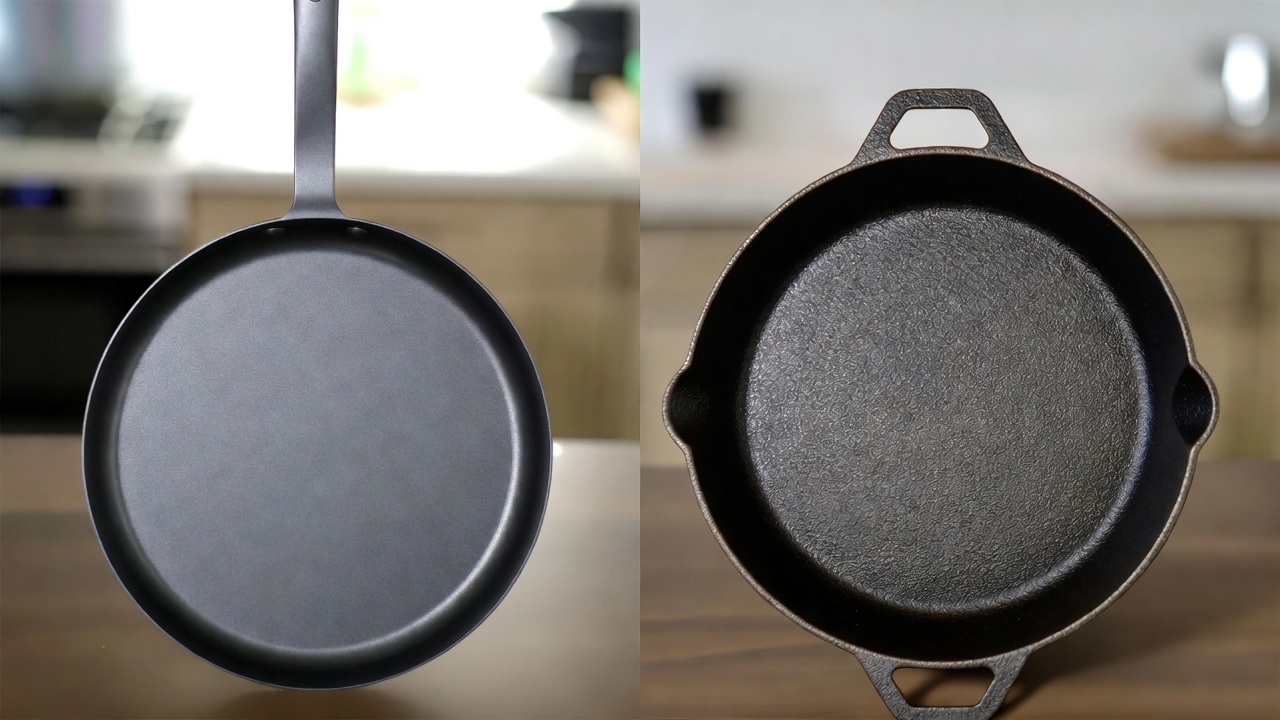
Carbon Steel Pan vs Cast Iron
If you’re just getting into cooking, you’ve probably heard people talk about cast iron skillets and carbon steel pans. They sound fancy and serious, right? The truth is, both are amazing. Both can last for decades. Both get better with use. But they’re not the same thing, and each one has different perks.
Let me break down what makes them different so you can figure out which one fits your kitchen best.
What Is Cast Iron, Really?
Cast iron is ancient. People have been using cast iron for cooking for hundreds of years. It’s simple stuff, actually.
Cast iron is made by melting iron and pouring it into molds. This makes the metal thick and heavy. The surface is naturally bumpy and rough, which is perfect for holding onto oil and developing flavor over time.
When you use a cast iron pan again and again, it builds up layers of seasoning. This happens when fat cooks on the surface and bonds to the metal. After many uses, your cast iron becomes almost non-stick. This is the magic that cooks love.
Cast iron comes in different types. You’ve got smooth cast iron, which has a finely finished surface. Then you’ve got vintage cast iron from old brands that people hunt down at thrift stores. Most modern cast iron is rough and textured, but still works beautifully.
What Is Carbon Steel?
Carbon steel is the middle ground between stainless steel and cast iron. It’s lighter than cast iron but still gets a great seasoning over time.
Carbon steel is made with iron and a small amount of carbon mixed in. This combo makes it stronger and more flexible than pure cast iron. The result is a pan that’s easier to handle but still builds that same non-stick seasoning layer you get with cast iron.
Carbon steel pans have a smoother finish than most cast iron. The cooking surface feels almost like stainless steel when it’s brand new. But as you use it, it develops that darker patina and seasoning that makes cooking easier.
The best part? Carbon steel is lighter. You can flip things easily. You can toss food in the pan without getting tired. This matters more than you’d think, especially if you cook a lot.
Weight: A Big Difference
Let’s talk about how heavy these pans actually are.
A cast iron skillet that’s 10 inches across weighs about 4 pounds. A 12-inch cast iron skillet weighs around 5 pounds. That’s not crazy heavy, but it adds up when you’re cooking for an hour.
A carbon steel pan of the same size weighs about 2 to 3 pounds. That’s roughly half the weight of cast iron.
If you have wrist problems or arthritis, this matters. If you like to keep your wrist relaxed while cooking, this matters. Carbon steel wins here because you’re not fighting against gravity every time you move the pan.
Some people love the weight of cast iron. They say it feels solid and professional. They like moving a heavy pan around their stove. That’s totally fair. Weight preference is personal.
But for most home cooks? Lighter is easier. You’ll cook more often if you’re not tired from lifting a heavy pan.
Heat: How They Warm Up
Both pans hold heat incredibly well. That’s one reason they’re so good for cooking.
But they heat up differently.
Cast iron takes time to heat up. You need to let it sit on the stove for several minutes before it’s ready. The metal needs time to absorb and spread that heat around evenly. If you don’t wait long enough, you’ll get hot spots on the pan. Your food might cook unevenly.
The payoff is that once a cast iron pan is hot, it stays hot. It holds onto heat like nobody’s business. If you sear a steak, the meat doesn’t cool down the pan much. Your crust comes out perfect and brown.
Carbon steel heats up faster than cast iron. You don’t need to wait as long. This is because it’s lighter and thinner. Heat transfers through it more quickly.
But here’s the thing: carbon steel doesn’t hold onto heat quite as long. If you put a cold steak in a carbon steel pan, the temperature drops a bit more than it would in cast iron. You might need to wait a few extra seconds for it to come back to temperature.
In real cooking? Most people don’t notice the difference. Both pans work great for searing, frying, and baking. The heat retention of both is way better than regular stainless steel or aluminum pans.
The Non-Stick Coating
Neither of these pans has a fancy coating like a Teflon non-stick pan. Instead, they build their own non-stick surface through something called seasoning.
Seasoning is just layers of oil that have bonded to the metal surface. It creates a smooth, dark coating over time. A well-seasoned pan is almost as non-stick as a modern non-stick skillet.
The big difference is how long this takes.
Cast iron takes longer to develop good seasoning. You need to use it regularly and treat it right. After a year or two of normal cooking, it gets really good. But if you only cook with it once a month, it might take five years to get an amazing surface.
Carbon steel seasons faster. The smoother surface to begin with helps a lot. You might get great seasoning in just three months if you cook with it regularly. The surface just seems to take oil better.
Both pans need some maintenance. You can’t throw them in the dishwasher. You need to wash them by hand and keep them dry. But it’s not hard. Most people wash them with hot water and a paper towel, then put them on the stove for a minute to dry completely.
The myth that you can never wash a cast iron pan? That’s false. You can use a tiny bit of soap if you need to. Just don’t soak it. Wash it quick, dry it quick, and you’re good.
Cooking Performance: What Actually Matters
Both pans can do the same things. You can sear, fry, bake, roast, and braise with either one.
Let’s talk about what’s different.
Searing meat: Both pans are fantastic. They get hot, they hold that heat, and they make a beautiful brown crust on your meat. I’d give a slight edge to cast iron because of the heat retention, but honestly, carbon steel does an amazing job too.
Frying: Cast iron is great for frying because the sides are high and the heat stays steady. Carbon steel works well too, but the edges might be a touch cooler. For deep frying or frying a lot of food, cast iron has a tiny advantage.
Baking: Both work equally well. You can bake cornbread, make pizza, or roast vegetables in either pan. They both transfer heat evenly to your food.
Cooking acidic foods: Here’s where they’re different. Acidic foods like tomato sauce or lemon juice can strip away seasoning on cast iron. You can still cook acidic food in cast iron, but you need to limit it. Don’t make tomato sauce and leave it sitting for hours in a cast iron pan.
Carbon steel handles acid better than cast iron. The seasoning holds up a bit better. But you still shouldn’t abuse it. Cook your acidic dish and then eat it. Don’t store acid in either pan.
Scrambled eggs: Both pans are great, but again, carbon steel has a tiny edge because it seasons faster and you’re less likely to be worried about damaging the seasoning.
Maintenance: Taking Care of Your Pan
Cast iron needs attention. Not crazy attention, but real attention.
After you cook, you wash the pan while it’s still warm with hot water and a soft cloth or paper towel. You dry it completely, either with a cloth or by putting it on the stove for a minute. Some people add a tiny bit of oil to the hot pan to keep the seasoning going.
If food sticks badly, you can scrub it with a stiff brush or even use salt and oil as a scrub. You can re-season cast iron in the oven if it needs it. Many people season their cast iron by baking it with oil in the oven.
Carbon steel gets the same treatment. Wash it warm, dry it fast, and you’re done. It needs about the same amount of care as cast iron.
The real difference? Carbon steel is a bit more forgiving. If you forget to dry it right away, it won’t rust as fast as cast iron. If you accidentally leave it wet overnight, cast iron is more likely to get spots of rust.
Cast iron is prone to rust if you don’t treat it right. Carbon steel is also prone to rust, but it’s less dramatic about it. Both need to stay dry and oiled.
Cost: What You’ll Spend
Let’s talk money because it matters for your budget.
Cast iron skillets are cheap. You can get a decent one for ten to twenty dollars. A nice modern cast iron skillet from a good brand costs thirty to fifty dollars. That’s very affordable.
Vintage cast iron can be more expensive if you’re hunting for a specific brand or size. But for new cast iron? It’s budget-friendly.
Carbon steel pans cost more. A good carbon steel pan runs forty to eighty dollars depending on the brand and size. Some fancy ones go higher.
The difference isn’t huge, but cast iron is the budget winner.
Over time, both last so long that the cost difference doesn’t matter much. A pan you buy today might last your whole life if you treat it right. That’s a good investment no matter what.
Storage: Keeping Your Pan Safe
This might seem small, but where you keep your pan matters.
Cast iron is heavy, so it takes up space in a cabinet. If you stack pans, you need to be careful. The weight of one cast iron pan on top of another can scratch the seasoning. Many people keep cast iron on the stove or hanging on a rack.
Carbon steel is lighter, so it’s easier to store. You can stack multiple pans without worrying as much about crushing the one on the bottom. It also doesn’t take up as much space in a cabinet.
If you live in a small kitchen, carbon steel’s lighter weight is a real advantage. You can hang it easier. You can store it easier. You can move it around without thinking twice.
Seasoning Process: Building That Magic Layer
Both pans develop seasoning through normal cooking. But you can also season them on purpose.
The basic method is the same for both:
- Clean your pan
- Dry it completely
- Apply a very thin layer of oil (use something like vegetable oil, canola oil, or grapeseed oil)
- Wipe off almost all the oil so it looks almost dry
- Heat it in the oven at high temperature for an hour or so
- Let it cool
- Repeat three to five times
This builds up a bunch of layers that make the pan non-stick.
For cast iron, this process takes a while, but it’s worth it. The heavy pan holds heat evenly during oven seasoning.
For carbon steel, it’s the same process. The lighter weight means it heats up faster in the oven, which is fine. You’ll get great results either way.
Many people don’t bake-season their pans anymore. They just cook with them. Regular cooking builds seasoning too. It just takes longer. But if you’re patient, both pans will get dark and non-stick naturally over time.
Which Pan Should You Actually Buy?
Here’s the honest answer: it depends on what you want.
Get cast iron if:
- You want something cheap
- You love the weight and feel of a heavy pan
- You’re planning to sear meat a lot
- You want something that lasts forever and becomes a family heirloom
- You enjoy the ritual of caring for your cookware
- You cook on a consistent schedule and don’t mind the maintenance
Get carbon steel if:
- You want something lighter but still serious
- You cook a lot of different things
- You have wrist issues or get tired easily
- You want seasoning to develop faster
- You don’t want to worry as much about rust or damage
- You like the faster heat-up time
- You like cooking acidic foods sometimes
The truth is, many serious home cooks own both. They use cast iron for certain tasks and carbon steel for others. They’re not competitors. They’re different tools.
The Learning Curve
Let’s be real: there’s a learning curve with both pans, but it’s not steep.
Cast iron teaches you to respect heat. You learn to preheat longer. You learn to work with patience. You learn that good food takes time.
Carbon steel teaches you the same things but a bit faster. The quicker heat-up means you waste less time. You get to cook sooner.
If you’ve never used a non-stick pan that builds its own coating before, both will feel different at first. Your food might stick more than you expect. That’s normal. It means the seasoning isn’t built up yet. Keep cooking. After thirty or forty uses, your pan will be much less sticky. After a hundred uses, it’ll be nearly as non-stick as any modern pan.
The learning curve is really just patience. You have to cook with it enough to build seasoning. You have to trust the process.
Real-World Cooking: What Happens in Your Kitchen
In real cooking, both of these pans just work.
You can make breakfast in either one. Bacon cooks great. Eggs slide around nicely after a few weeks of use. Pancakes come out golden.
You can make dinner in either one. Steak gets a perfect crust. Vegetables roast beautifully. Pasta dishes cook evenly.
You can bake in either one. Cornbread rises high. Pizza gets crispy. Baked apples cook perfectly.
The pans don’t fight you. They don’t have a fancy coating that might chip. They don’t require special utensils. You use regular metal spoons and spatulas. You cook hot. You don’t worry.
That’s the magic of both cast iron and carbon steel. They’re forgiving because they’re simple. They do their job without drama.
Common Myths Debunked
People say a lot of weird things about these pans. Let’s clear some up.
Myth: You can never wash cast iron with soap. Truth: You can use soap. It won’t destroy your pan. Just don’t soak it for hours. A quick wash with soap and water is fine.
Myth: Cast iron is non-stick right away. Truth: New cast iron sticks to food. It takes time to season. This is normal and not a sign of a bad pan.
Myth: Carbon steel is just thin cast iron. Truth: Carbon steel is different. It’s made differently, heats differently, and has different properties. They’re cousins, not the same thing.
Myth: You should season your pan after every use with oil. Truth: You don’t need to oil your pan after every single use. Cook with it normally. The oil in your food does seasoning work. Oiling is more important after you wash it to keep it protected.
Myth: Both pans are perfect for cooking everything. Truth: They’re really good at most things, but cast iron especially doesn’t love acidic food for long periods. Neither pan is perfect. They’re just really, really good.
The Verdict
If you had to pick one right now, which should it be?
For beginners, I’d lean toward carbon steel. It’s lighter, it seasons faster, and you won’t get frustrated as quickly. You’ll make good food in it right away. After a few months, you’ll have a beautifully seasoned pan that works like a dream.
But if you want to spend less money and you don’t mind waiting a bit longer for the seasoning to develop, cast iron is hard to beat. It’s affordable. It’s durable. It teaches you good cooking habits. It makes you slow down and think about what you’re doing.
The best option? Buy whichever one calls to you. Buy the one that fits your budget and your kitchen. Then use it a lot. Cook with it daily if you can. Make mistakes in it. Learn from it. Let it get dark and seasoned over time.
After a while, you might find yourself wanting both. Many home cooks end up with a collection of pans because they each have their place.
Getting Started
If you decide to go with cast iron:
- Buy a basic skillet in 10 or 12 inches
- Wash it by hand after cooking
- Use oil or fat every time you cook
- Be patient with the seasoning
If you decide to go with carbon steel:
- Buy a quality brand to ensure good construction
- Start with a 10 or 12-inch size
- Cook with it often
- Wash and dry it quickly
- Watch it develop a beautiful dark patina
Either way, you’re making a great choice. Both of these pans will serve you well for years and years. Both will make your food taste better. Both will teach you something about cooking.
The real question isn’t which one is better. The real question is: which one will you enjoy using most?
That’s the answer you need to find for yourself.
Final Thoughts
Cast iron and carbon steel are both amazing tools for anyone who wants to cook well. They’re not expensive. They last forever. They get better with age and use.
The differences between them are real, but they’re small. Both pans can sear a steak. Both can bake cornbread. Both can fry an egg. Both will make your cooking better.
So stop overthinking it. Pick one. Start cooking. Let your pan teach you as you go. In a few months, you’ll have a seasoned friend in your kitchen that you’ll use for the next thirty years.
That’s the real magic of cast iron and carbon steel. They’re not just cookware. They’re investments in good food and good cooking. They’re investments in yourself.
Now go cook something.

Hi, I’m Mary, the founder of KitchenClue.com. I’m deeply passionate about everything that makes a kitchen smarter, easier, and more enjoyable. I share hands-on insights and practical expertise on kitchen gear that truly helps in daily cooking. Along with my dedicated research team, we study products carefully, and our writers create honest, well-tested reviews using trusted, authentic sources—so you can choose kitchen tools with total confidence.