Boning Knife vs Fillet Knife
If you’ve ever stood in a kitchen looking at all those sharp knives hanging on the wall, you know the feeling. There’s so many options. It’s easy to get confused about what each one does. Two knives that often trip people up are the boning knife and the fillet knife. They look pretty similar. They’re both thin and bendy. But they’re not the same thing.
This guide breaks down the difference between these two knives in simple terms. By the end, you’ll know exactly which one you need in your kitchen.
What Is a Boning Knife?
A boning knife is a small, sharp blade that helps you remove bones from meat. It’s the knife you reach for when you’re working with chicken, pork, beef, or lamb. The blade is narrow and pointed. This shape lets you get into tight spaces around bones.
The boning knife has a few key features:
The Blade Shape
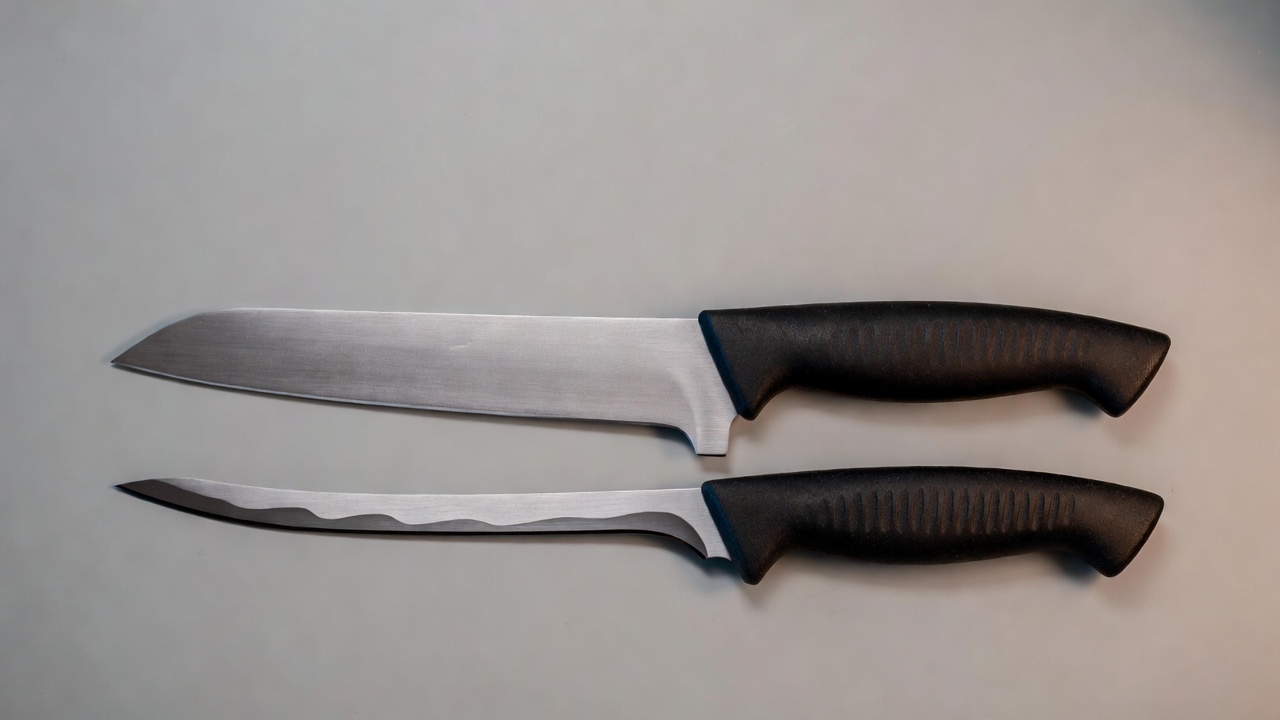
The blade on a boning knife is short. It usually runs about 5 to 7 inches long. The edge is quite narrow. It comes to a sharp point at the tip. This design helps you make precise cuts. You can slip the blade alongside a bone without damaging the meat around it.
How Stiff It Is
Here’s a big difference between boning knives and other knives: they’re pretty stiff. The blade doesn’t bend much. This stiffness gives you control. You can apply pressure without the knife flexing. That control matters when you’re cutting close to bones.
The Handle
A good boning knife has a comfortable handle. Your hand needs a steady grip when you’re doing detail work. Most boning knives have handles that fit snugly in your palm. Some come with a finger guard to keep your hands safe.
What You Use It For
Boning knives do so many jobs in the kitchen:
- Removing bones from raw chicken breasts
- Deboning a whole chicken or turkey
- Taking meat off a ham or roast
- Separating meat from bones in ribs
- Trimming fat from meat
- Detaching bones from fish
The pointy tip makes it perfect for these tasks. You can work around the bone without wasting meat.
What Is a Fillet Knife?
A fillet knife is a blade made for fish. Well, it can work on poultry too, but fish is where it shines. The fillet knife is designed to work with delicate meat. It glides through skin and flesh with ease.
The Blade Shape
The fillet knife blade is thin and narrow just like a boning knife. But here’s the thing: it’s longer. You’ll find fillet knives that run from 5 to 9 inches long. Many people prefer the longer sizes. The blade is also more flexible. It bends easily as you work.
How Flexible It Is
This is the key trait that sets fillet knives apart. The blade flexes and bends. This flexibility helps you follow the shape of a fish. As you cut along the backbone, the knife bends with the contours. You waste less meat this way. The flexibility also helps when you’re trying to separate skin from flesh.
The Handle
Fillet knife handles are slim and light. You want a knife that feels almost weightless in your hand. This helps with the delicate work. Your hand won’t get tired as quickly.
What You Use It For
Fillet knives handle all the fish work:
- Removing flesh from fish backbones
- Separating skin from fish meat
- Deboning round fish like salmon or trout
- Cleaning whole fish
- Creating clean fillets for cooking
- Cutting through delicate poultry skin
The flexibility of the fillet knife blade makes all these tasks easier. The knife responds to your hand movement.
Side-by-Side Comparison
Let’s look at how these two knives stack up against each other:
Blade Length
Boning knives usually have shorter blades. Five to seven inches is common. Fillet knives often go longer. Many people prefer six to nine inches. The longer blade on a fillet knife helps you work more efficiently on large fish.
Blade Flexibility
This is huge. Boning knives are stiff. They give you control and precision. Fillet knives are bendy. They adjust to the shape of what you’re cutting. For detailed boning work, stiffness is good. For fish work, flexibility is better.
Blade Thickness
Both knives have thin blades. But boning knives tend to be just a bit thicker. This extra thickness adds stiffness. Fillet knives are thinner overall. This thinness helps them flex.
The Tip
Boning knife tips are very sharp and pointed. You use this point to pierce and probe. Fillet knife tips are sharp but less dramatic. The tip is more about gliding through flesh than poking holes.
How They Feel In Your Hand
Boning knives feel sturdy and controlled. You feel like you have power. Fillet knives feel light and responsive. You feel connected to the blade.
Price Range
Good boning knives run about $30 to $80. High-end models cost more. Fillet knives fall into a similar range. You can find decent ones at $30 to $100. Price doesn’t always mean better. A mid-range knife from a good brand works great.
Can You Use One Knife for Both Jobs?
This is a common question. Can you use your fillet knife for boning work? Can you use a boning knife on fish?
Using a Fillet Knife for Boning
It’s possible. The thin blade works. The problem is the flexibility. When you’re trying to work around a chicken bone, the flex of the blade gets in your way. You lose control. You might slip and cut into the meat more than you want. It’s doable if you go slow. But it’s not ideal.
Using a Boning Knife for Fish
This works better than the reverse. The stiff blade can handle fish work. The sharp point helps. The issue is the inflexibility. When you’re following the curve of a fish backbone, a stiff blade doesn’t cooperate. You’ll make rougher cuts. You’ll waste more meat. But in a pinch, it works.
The Best Approach
If you cook at home, having both knives makes sense. They’re not expensive. They do different jobs well. Think of them like screwdrivers. You could use a Phillips head screwdriver in a slot screw, but it’s not the right tool.
Choosing the Right Knife for Your Cooking Style
What knife should live in your kitchen?
Get a Boning Knife If…
You cook with bone-in poultry a lot. You like buying whole chickens or turkey breasts on the bone. You make stocks from bones. You roast lamb or beef cuts with bones. You like trimming fat off meat. You enjoy detailed butchering work. A boning knife will make you faster and better at these tasks.
Get a Fillet Knife If…
You cook with fresh fish regularly. You buy whole fish and fillet them yourself. You like working with delicate proteins. You appreciate the precision that a flexible blade brings. You want a knife that glides through skin easily. A fillet knife is your go-to.
Get Both If…
You cook a variety of proteins. You want the right tool for each job. You don’t mind spending a bit more. You cook fish and poultry equally. You like having options.
If You Can Only Buy One
Go with a boning knife. Here’s why: a boning knife can handle more jobs around your kitchen. It works on chicken, beef, pork, lamb, and okay-ish on fish. A fillet knife does fish great but struggles more with other meats. A boning knife is more versatile.
Boning Knife Uses in the Kitchen
Let’s dive deeper into what a boning knife actually does:
Deboning Chicken Breasts
Chicken breasts come bone-in sometimes. A boning knife makes this easy. You’ll feel where the bone is. Your knife slides along it. In seconds, you’ve separated the meat from the bone. The sharp point helps you find the edges.
Breaking Down a Whole Chicken
Some people buy whole chickens. They’re cheaper. They taste better. A boning knife helps you take it apart. You use the knife to separate drumsticks from the body. You cut around the thighs. You remove the breast meat. The precise blade gives you control over every cut.
Trimming Meat
Cooks trim fat and sinew from meat all the time. A boning knife is perfect. The thin blade slips between meat and fat. You waste less product. The meat looks cleaner.
Working With Roasts
When you roast meat with bones, a boning knife helps you carve it afterward. You can separate meat from bone cleanly. Presentation looks better. You get more usable meat.
Prepping Ribs
Whether you’re working with beef ribs or pork ribs, a boning knife helps. You can remove the membrane from the back. You can trim excess fat. You can cut between bones.
Fillet Knife Uses in the Kitchen
Now let’s look at what a fillet knife does best:
Filleting Round Fish
Round fish like salmon, trout, and mackerel are common. A fillet knife glides through the flesh. The flexible blade follows the backbone. You end up with clean, beautiful fillets. Minimal waste.
Filleting Flat Fish
Flat fish like flounder and sole are trickier. But a fillet knife handles them great. The flexibility helps you work the blade against the weird bone structure of flat fish.
Removing Skin
Fish skin can stick to flesh. A fillet knife separates them without tearing. The thin blade slips between skin and meat.
Butterflying Fish
Sometimes you want a whole fish opened up flat. A fillet knife does this cleanly. You work down the backbone. The blade bends as needed.
Cleaning Small Fish
When you clean whole fish for cooking, a fillet knife helps. You can remove scales smoothly. You can gut the fish without puncturing organs.
How to Pick a Quality Boning Knife
Not all boning knives are equal. Here’s how to find a good one:
Check the Steel Quality
Good boning knives use stainless steel or carbon steel. Stainless steel is easier to maintain. It resists rust. Carbon steel holds an edge longer. But it needs more care. Both work great.
Feel the Blade Balance
Hold the knife. The weight should feel centered. Your hand shouldn’t get tired quickly. The blade and handle should feel like one unit.
Test the Edge
A quality knife comes sharp from the factory. You should be able to slice through paper easily. If the edge feels dull, keep looking.
Look at the Handle Material
Good handles use wood, plastic, or metal. Cheap plastic handles feel flimsy. Wood feels nice. Metal is durable. Pick what feels comfortable.
Check if the Blade Is Properly Attached
Look where the blade meets the handle. There should be no gaps. The connection should feel solid.
Read Reviews
See what other home cooks say. Look for knives that people keep using year after year. Those are keepers.
How to Pick a Quality Fillet Knife
Finding a good fillet knife follows similar rules:
Feel the Flexibility
A good fillet knife blade bends smoothly. It shouldn’t feel stiff. But it shouldn’t flop around either. There’s a sweet spot.
Test the Sharpness
Try cutting through paper or tomato skin. A sharp fillet knife makes this easy.
Check the Blade Length
Longer isn’t always better. If you mostly cook smaller fish, a 5-inch blade works. For bigger fish, go with 7 or 8 inches.
Feel the Grip
Your hand should feel secure. The handle should be slim enough to control. You’ll be doing precise work.
Look at the Blade Taper
The blade should taper smoothly to a point. Rough tapering means lower quality.
Caring for Your Knives
Both knives need care to last:
Keep Them Sharp
A sharp knife is safer and easier to use. Use a honing steel once a week. Sharpen your knives with a whetstone or professional sharpening service every few months.
Clean by Hand
Don’t put these knives in the dishwasher. Hand wash with soap and water. Dry them right away. This prevents rust and damage.
Store Them Right
Use a knife block, magnetic strip, or blade guards. Don’t throw them loose in a drawer. The blade will get damaged. Your fingers will be at risk.
Check for Damage
Look at the edge regularly. If the blade chips or breaks, get it fixed. A bent blade won’t work right.
Oil the Handle
If your knife has a wooden handle, oil it once a month. This keeps the wood healthy.
Common Mistakes People Make
Let’s talk about what people do wrong:
Buying Without Handling
You can’t know if a knife feels right without holding it. Always test a knife before buying.
Ignoring Flexibility Differences
People often don’t realize how much the flex matters. They’re surprised when a boning knife doesn’t work like they expected on fish.
Using the Wrong Cutting Board
Wooden and plastic boards are fine. Glass and marble will destroy your edge. Use soft surfaces.
Not Maintaining the Edge
People expect their knives to stay sharp forever without work. Knives need regular honing and sharpening.
Buying Too Expensive
You don’t need a $200 knife to cook well at home. Mid-range knives from good brands work great. Spend your money on quality, not brand names.
Storing Improperly
A beautiful knife gets ruined in a junk drawer. Good storage keeps your knife safe and ready.
What Brands Make Good Knives?
You don’t need to spend a fortune. These brands make solid knives:
Victorinox
This Swiss brand makes affordable, durable knives. They’re used in professional kitchens. Home cooks love them too.
Wüsthof
A German brand with a long history. Their knives hold an edge well. They cost more but last forever.
MAC
This Japanese brand makes sharp, light knives. They feel responsive in your hand.
Mercer
A professional brand that’s affordable. Chefs use Mercer knives. Home cooks do too.
Rada Cutlery
An American brand with good prices. Their knives are straightforward and reliable.
Henckels
Another German option. Quality at reasonable prices.
Don’t stress too much about the brand. Look at the blade quality, feel, and balance. That matters more than the name.
Final Thoughts: Make Your Decision
So here’s the deal. A boning knife and a fillet knife are different tools. They’re designed for different jobs. They have different flexibility, blade thickness, and tip shapes.
If you buy one, get a boning knife. It does more jobs around your kitchen. If you cook fish a lot, add a fillet knife to your collection.
Both knives are affordable. They’re not fancy luxury items. They’re everyday tools that work better than trying to do everything with a chef’s knife.
The right knife makes cooking easier. It makes you faster. Your cuts look better. Your food tastes better because you’re not damaging the meat.
Spend a little time handling knives at a kitchen store. Find one that feels right. The best knife is the one that fits your hand and matches how you cook.
Happy cooking. Your kitchen will be better for it.
Quick Reference Guide
Boning Knife Quick Facts:
- Short, narrow, pointed blade (5-7 inches)
- Stiff for control and precision
- Great for chicken, beef, pork, lamb
- Works around bones easily
- Price: $30-$80
- Best for: Home cooks who cook with bone-in meats
Fillet Knife Quick Facts:
- Thin, flexible blade (5-9 inches)
- Bends smoothly with fish contours
- Perfect for fish preparation
- Great for removing skin
- Price: $30-$100
- Best for: Home cooks who cook with fresh fish
Can’t decide? Get the boning knife. It’s more versatile for general cooking.
Remember: The best knife is the one you actually use. Handle different options. Find what feels right in your hand. Take care of your knives with regular cleaning and sharpening. Happy cooking!

Hi, I’m Mary, the founder of KitchenClue.com. I’m deeply passionate about everything that makes a kitchen smarter, easier, and more enjoyable. I share hands-on insights and practical expertise on kitchen gear that truly helps in daily cooking. Along with my dedicated research team, we study products carefully, and our writers create honest, well-tested reviews using trusted, authentic sources—so you can choose kitchen tools with total confidence.