Can You Whisk With A Fork: Simple Tricks For Fluffy Results
Yes, you can whisk with a fork for many tasks if you use proper technique.
If you have ever wondered can you whisk with a fork, you are in the right place. I have cooked in small apartments, pop-up kitchens, and busy test spaces. A fork was often my only tool. In this guide, we will dig into when a fork shines, when it lags, and how to make it work for eggs, sauces, batters, whipped cream, and even meringue. You will get clear steps, science-backed tips, and real results so you can trust your hands and your fork.

What whisking does and why a fork can do it
Whisking blends, aerates, and emulsifies. You use it to beat eggs, whip cream, and join oil with water in a smooth sauce. It works by moving fast and pulling air into a mix.
A fork can do the same thing. The tines cut through liquid, push air in, and create shear. The shape is not as airy as a balloon whisk, but it still works. The key is speed, angle, and a bowl that lets you move fast.
Here is what whisking can do, even with a fork:
- Blend. Mix eggs, sugar, or cocoa with no clumps.
- Aerate. Trap air and make food light and fluffy.
- Emulsify. Join oil and water into one smooth sauce.
Many cooks ask, can you whisk with a fork for all tasks? Yes for most day-to-day needs. Not always for big foam jobs or huge batches.

Can you whisk with a fork? Yes—what to expect
Can you whisk with a fork and match a whisk? Often yes for small jobs. Eggs for breakfast. A quick vinaigrette. A thin batter. For heavy foam jobs, it will take longer and may make a bit less volume.
What to expect in simple terms:
- Time. A fork is a little slower than a balloon whisk.
- Volume. You may get slightly less lift in cream and meringue.
- Effort. Your wrist will do more work, so keep batches small.
In my tests at home and in classes, two eggs froth in 30 to 45 seconds. A small vinaigrette comes together in under a minute. Whipped cream for two takes 2 to 4 minutes if the bowl and cream are cold. Meringue with one egg white can work, but plan for 6 to 10 minutes and steady speed.

How to whisk with a fork like a pro
Good technique makes a big difference. Can you whisk with a fork and get smooth, airy results? Yes—use these steps.
- Pick a sturdy dinner fork with firm, wide tines.
- Use a medium metal or glass bowl. Avoid slippery plastic.
- Tilt the bowl so the mix pools on one side.
- Hold the fork like a pencil, near the head, for control.
- Whip in quick, short strokes. Use a figure-eight or tight circles.
- Keep the fork at a slight angle to cut and lift air.
- Use short rest breaks for long whips to save your wrist.
Pro tip from many long brunch shifts: aim the fork tips at the surface, not the bottom. That surface action traps air faster.

Tools and setup that boost your results
Small gear tweaks help more than you think. When you ask, can you whisk with a fork and get pro results, setup is half the win.
Choose the right pieces:
- Fork. Heavy stainless steel with sharp, even tines.
- Bowl. Wide, sloped sides to let you move fast.
- Size. Small batches whip faster and lighter.
- Grip. Choke up on the fork. Keep the wrist loose.
- Surface. A damp towel under the bowl keeps it steady.
Keep cream and egg whites cold. Keep bowls free of grease for foams. A metal bowl chilled in the fridge helps a lot.

What to whisk with a fork: real-world tests and timings
Readers ask all the time, can you whisk with a fork for these dishes? Here is what works in real kitchens, with rough times for small batches.
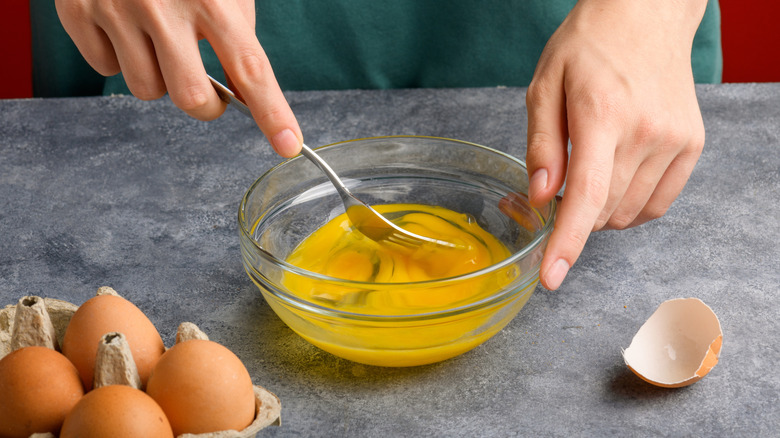
Eggs for scramble or omelets
Two to four eggs whip fast with a fork. Aim for even color and tiny bubbles. Add a splash of milk or water if you like softer curds.
Results:
- Time: 30 to 45 seconds for two eggs.
- Texture: Light, even, and tender.
Vinaigrette and simple sauces
Whisk mustard, vinegar, and salt first. Then drizzle in oil while you beat.
Results:
- Time: 30 to 60 seconds for 1 to 2 servings.
- Texture: Smooth and stable for short-term use.
Pancake or crepe batter
Stir wet into dry with a fork. Stop when you see only a few small lumps.
Results:
- Time: 45 to 90 seconds for a cup of batter.
- Tip: Do not overmix or your pancakes get tough.
Whipped cream
Use cold cream in a cold bowl. Beat in sugar near the end.
Results:
- Time: 2 to 4 minutes for 1/2 cup cream.
- Texture: Soft to medium peaks. Slightly less lofty than with a whisk.
Meringue (small batch)
Use one room-temp egg white. Add a pinch of acid. Add sugar slowly once it foams.
Results:
- Time: 6 to 10 minutes.
- Texture: Shiny peaks, but may be a bit softer. Great for small cookies or topping a mug cake.
If you are still thinking, can you whisk with a fork for bigger batches, keep them small. Work in sets. Or switch to a whisk or mixer for big volume needs.
Science-backed boosters that make a fork faster
A little food science goes a long way. Can you whisk with a fork and speed it up? Yes, with these boosters.
For egg whites:
- Acid helps. A pinch of lemon juice or cream of tartar makes the foam more stable.
- No fat allowed. Any oil or yolk slows or kills the foam.
- Sugar stabilizes. Add it once you have soft peaks.
For whipped cream:
- Cold is king. Chill the cream, bowl, and fork if you can.
- Add sugar near the end. Early sugar can slow whipping.
For vinaigrettes:
- Emulsifiers help. A dab of mustard or honey binds oil and water.
- Thin streams. Drizzle oil as you whisk to build a stable sauce.
For batters:
- Gentle mixing. Stop early to avoid tough gluten in wheat flours.
These tips come from well-known culinary tests and standard pastry science. They are simple, safe, and effective at home.

Common mistakes and easy fixes
People ask, can you whisk with a fork and avoid lumps or flat foam? Yes. Watch for these traps and quick fixes.
Mistakes to avoid:
- Bowl too big or too flat. You lose speed and aeration.
- Batch too large. You tire out and lose volume.
- Warm cream or greasy bowl. Foam will not hold.
- Slow strokes. You need fast, short moves at the surface.
- Overmixing batters. This makes baked goods dense or chewy.
Fixes that work:
- Tilt the bowl and shorten your stroke.
- Split big batches in two.
- Chill tools for cream. Degrease bowls with a vinegar wipe.
- Aim the fork at the surface for faster aeration.
- Stop mixing as soon as lumps are small and even.
Ergonomics, speed, and cleanup
Can you whisk with a fork without tiring out? Yes, if you work smart.
Ease your effort:
- Use a relaxed grip and small, fast motions.
- Keep your elbow close to your body.
- Take 5-second breaks on long whips.
Speed tricks:
- Tilt the bowl and whisk at the surface for more air.
- Keep batches small and tools cold when whipping cream.
Cleanup:
- A fork cleans fast. Rinse right away to avoid dried-on bits.
- Avoid sharp scraping on nonstick pans. Use a silicone bowl when needed.

Frequently Asked Questions of can you whisk with a fork
Can you whisk with a fork for scrambled eggs?
Yes. A fork blends eggs fast and adds light air bubbles. Tilt the bowl and beat for 30 to 45 seconds.
Can you whisk with a fork to make whipped cream?
You can, for small amounts. Keep everything cold and whip in quick bursts until soft or medium peaks form.
Can you whisk with a fork for meringue?
Yes, but stick to one egg white at a time. Add acid, then sugar slowly, and expect more time and effort.
Can you whisk with a fork instead of a whisk for baking?
For batters and glazes, yes. For big foam tasks or stiff peaks, a whisk or mixer is better.
Can you whisk with a fork to emulsify salad dressing?
Yes. Whisk the acid and seasoning first, then drizzle in oil while beating fast for a stable emulsion.
Conclusion
A fork can be a mighty tool. For day-to-day cooking, it blends, aerates, and emulsifies well. Eggs, dressings, thin batters, and even small whipped cream or meringue batches are all within reach.
If you ever wonder can you whisk with a fork when your whisk is missing, the answer is yes. Use smart technique, keep batches small, and lean on cold bowls and steady speed. Try one of the steps today, then share your results or questions. Want more kitchen hacks and honest tests? Subscribe or leave a comment so we can learn and cook together.

Hi, I’m Mary, the founder of KitchenClue.com. I’m deeply passionate about everything that makes a kitchen smarter, easier, and more enjoyable. I share hands-on insights and practical expertise on kitchen gear that truly helps in daily cooking. Along with my dedicated research team, we study products carefully, and our writers create honest, well-tested reviews using trusted, authentic sources—so you can choose kitchen tools with total confidence.