How To Use Fullstar Chopper: Easy Guide
Use the Fullstar chopper by adding food to the bowl, locking the lid, and pulling the handle in short, steady strokes.
Learning how to use Fullstar chopper tools is simple once you understand the bowl, blade, lid, and cutting inserts. This guide explains setup, cutting methods, safety, cleaning, common mistakes, and practical ways to get even results from your Fullstar vegetable chopper.

What Is a Fullstar Chopper?
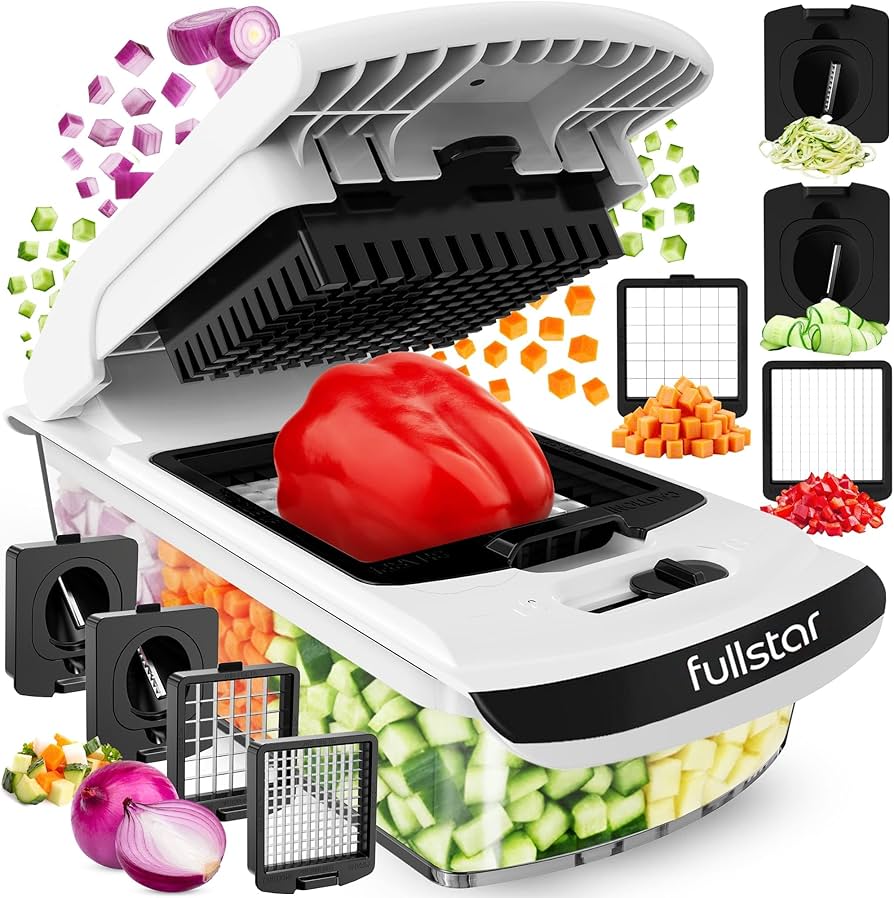
A Fullstar chopper is a compact kitchen tool designed to cut vegetables, fruit, herbs, cheese, and other soft foods. Many models include a bowl, a lid, stainless steel blades, a pull cord, and interchangeable cutting inserts.
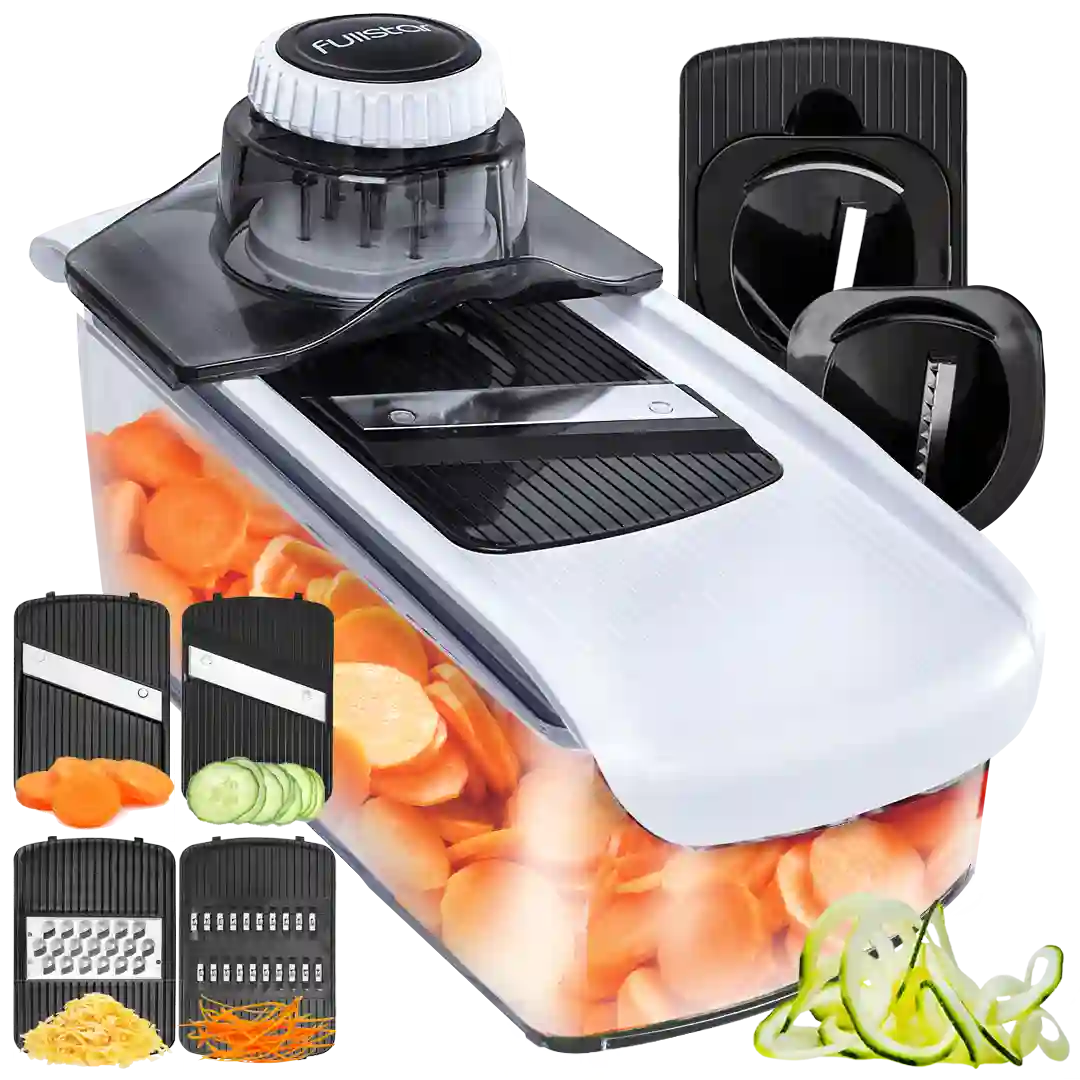
Some Fullstar sets also include:
• Dicing grids for cubes
• Slicing blades
• Julienne inserts
• Spiralizer attachments
• A strainer basket
• A handheld peeler
• A container with a lid
The exact parts depend on the model. Before using your Fullstar chopper, check the included manual and identify each attachment. Parts may look similar, but the wrong insert can lead to poor cuts or damage.
The main idea is easy: the blade does the cutting, the bowl catches the food, and the lid keeps the parts in place. Think of it as a small food processor that gives you more control over the cutting size.

How to Use Fullstar Chopper for Basic Chopping
The basic chopping method works well for onions, garlic, carrots, celery, peppers, cucumbers, mushrooms, and herbs. Use small food pieces and avoid forcing the blade.
Step 1: Place the bowl on a stable surface
Set the bowl on a flat countertop. A damp towel under the bowl can add grip if the surface is smooth.
Make sure the bowl is dry and clean. Moisture or food scraps under the base may make the chopper move while you work.
Step 2: Choose the correct blade
Use the standard chopping blade for small pieces. Insert the blade carefully into the center post or holder inside the bowl.
Hold the blade by its plastic safety grip when possible. Do not touch the sharp edges with bare fingers.
Step 3: Prepare the food
Cut large ingredients into smaller pieces before adding them. Most pieces should be about 1 inch or smaller.
For example:
• Cut an onion into quarters
• Cut a large carrot into thin rounds
• Remove stems from herbs
• Remove pits, seeds, and hard cores
• Cut firm cheese into small cubes
Pre-cutting reduces pressure on the blade and helps the food chop more evenly.
Step 4: Add food without overfilling
Place the food into the bowl around the blade. Do not fill the bowl above its maximum line.
Overfilling is one of the most common reasons a Fullstar chopper gives uneven results. The blade needs room to move through the food.
Step 5: Lock the lid
Place the lid firmly on the bowl. Align the locking tabs or grooves, then turn or press the lid until it is secure.
Never pull the cord or press the top while the lid is loose. A locked lid keeps the food inside and helps the blade work correctly.
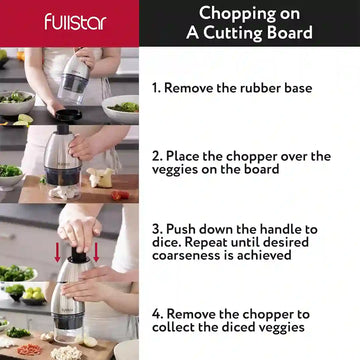
Step 6: Pull the cord in short strokes
Hold the bowl with one hand. Use the other hand to pull the handle slowly and smoothly.
Start with three to five pulls. Check the texture, then continue if needed. Short strokes give you more control than pulling the cord as fast as possible.
This is the most important part of how to use Fullstar chopper. You are not trying to win a race. Steady pulls create better cuts and reduce the chance of turning vegetables into mush.
Step 7: Check the texture
Stop when the food reaches the size you want. Remove the lid only after the blade has stopped moving.
Use a spatula or spoon to transfer the food. Do not reach into the bowl while the blade is still attached.
How to Use Fullstar Chopper for Dicing
Many Fullstar models include a dicing grid. This insert pushes food through a set of sharp, evenly spaced openings.
Dicing works best with vegetables that are firm but not rock hard. Potatoes, onions, cucumbers, zucchini, peppers, and boiled eggs are common choices.
Follow these steps:
- Insert the dicing grid into the bowl or base as shown in the manual.
- Place the matching cutting plate above the grid.
- Cut the food so it fits across the cutting surface.
- Put the lid on the unit and lock it.
- Press down with firm, even pressure.
- Lift the lid and remove the diced food.
Do not force a very hard vegetable through the grid. If the food will not cut with normal pressure, stop and make smaller pieces.
For onions, cut the onion into halves or quarters first. Place the flat side against the grid when the design allows it. This helps the onion stay stable and produces cleaner cubes.
For boiled eggs, let them cool first. Warm eggs are soft and may smear instead of forming neat pieces.
When learning how to use Fullstar chopper for dicing, remember that the grid controls the cube size. The chopping blade is not needed for this step unless your manual says otherwise.
How to Use Fullstar Chopper for Slicing and Julienne Cuts
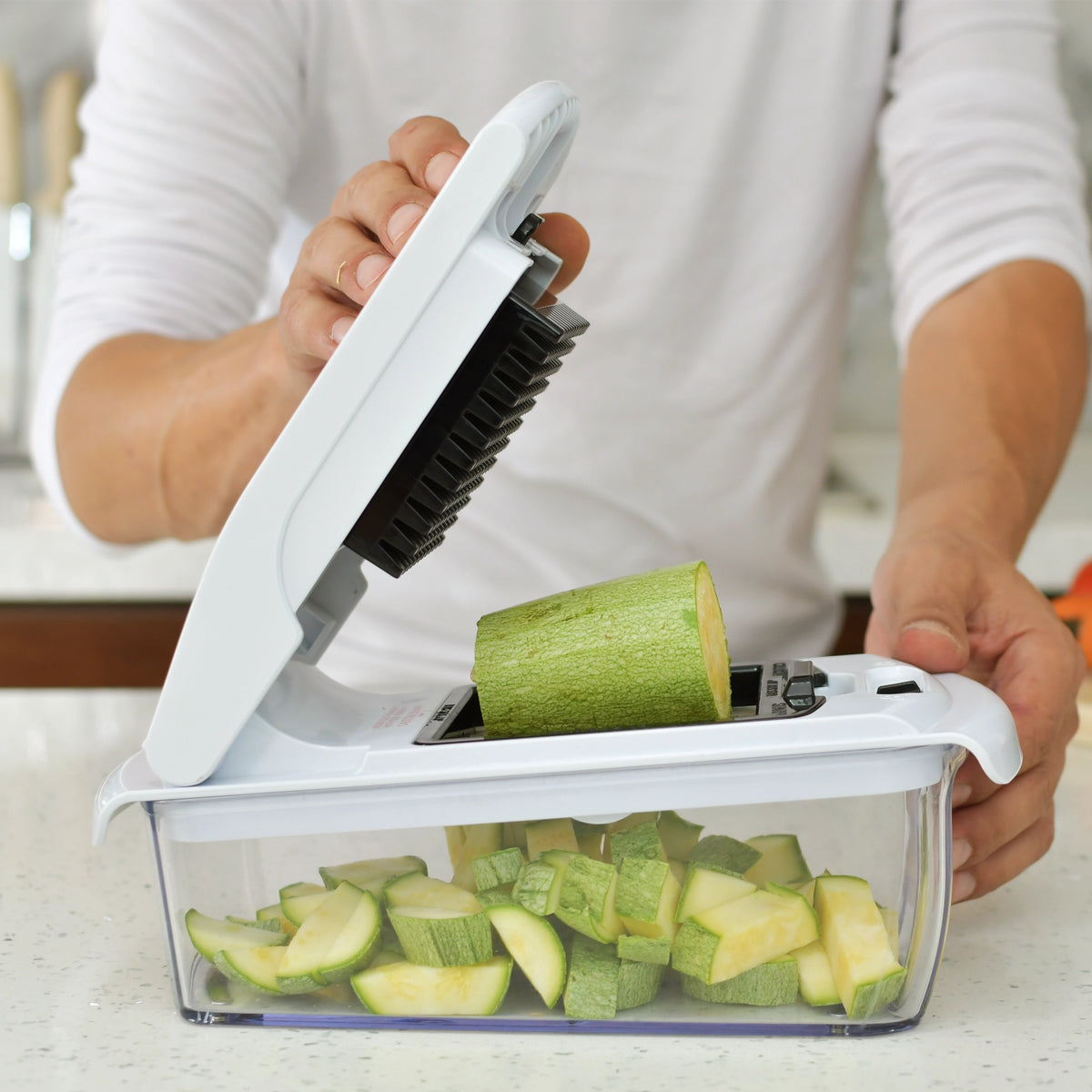
Some Fullstar chopper kits include slicing and julienne attachments. A slicing insert makes flat pieces, while a julienne insert makes thin strips.
Use these attachments with foods such as:
• Cucumbers
• Carrots
• Zucchini
• Potatoes
• Apples
• Bell peppers
• Firm cheese
Place the food on the cutting surface and use the lid or food holder to press it down. Keep your fingers away from the cutting area at all times.
For long vegetables, cut them to fit the attachment. A carrot that is too long may bend or shift while you press it. Shorter pieces are easier to control.
A julienne blade needs firm, steady pressure. Do not twist the food as you push it through. Twisting can create uneven strips and place extra stress on the insert.
If the food sticks, stop and inspect the attachment. A small piece of peel, seed, or vegetable may be blocking the cutting holes.
How to Use Fullstar Chopper as a Spiralizer
Some Fullstar models include a spiralizer for making vegetable noodles. Zucchini, cucumber, yellow squash, and firm carrots work well.
To use the spiralizer:
- Wash and dry the vegetable.
- Trim both ends so they are flat.
- Attach the spiralizer insert.
- Place the vegetable between the holder and the cutting surface.
- Turn or press the handle according to the model design.
- Apply slow, even pressure.
- Stop when the vegetable becomes too small to hold safely.
A straight vegetable creates better spirals than one that is curved. Choose produce with a similar width from end to end.
Do not use your fingers to push the last small piece through the blade. Set it aside and use it in soup, salad, or a cooked dish.
This attachment does not create perfect pasta-shaped noodles every time. Natural vegetables vary in size, moisture, and firmness. That variation is normal.

Best Foods for a Fullstar Chopper
A Fullstar chopper performs best with fresh foods that are firm or moderately soft. The right food preparation makes a major difference.
Good choices include:
• Onions and shallots
• Garlic and ginger
• Carrots and celery
• Bell peppers
• Cucumbers
• Zucchini
• Mushrooms
• Herbs
• Strawberries
• Apples
• Boiled eggs
• Boneless cooked meat in small pieces
Very soft foods can still work, but they may become mashed if you pull the cord too many times. Avocado, ripe tomatoes, and very soft fruit need gentle use.
Avoid placing these items in the chopper unless the manual specifically permits them:
• Ice
• Frozen fruit
• Bones
• Hard nuts
• Coffee beans
• Large pieces of meat
• Very hard roots
• Hot food or boiling liquids
A chopper is not a replacement for a high-powered blender or food processor. It has a smaller capacity and a manual cutting system.
How to Get Evenly Chopped Ingredients
Even pieces begin before the food enters the bowl. Use a sharp kitchen knife to make pieces similar in size.
Here are useful tips:
• Do not mix very large and very small pieces.
• Add firm foods first if the bowl design allows it.
• Use fewer pulls for a rough chop.
• Use more pulls for a fine chop.
• Shake the bowl gently between pulls if food gathers at the sides.
• Stop often to check the texture.
• Do not fill the bowl beyond the marked line.
When I test a manual chopper, I pay close attention to the first few pulls. If the food stays in large chunks, I stop and redistribute it instead of pulling harder. This small habit gives a more even result and puts less strain on the cord.
For salsa, use separate batches for onions, peppers, and tomatoes. Tomatoes release liquid quickly, so chopping them last helps prevent a watery mixture.
For onions, use fewer pulls if you want larger pieces. Too many pulls release more juice and can create a strong smell and soft texture.

Fullstar Chopper Safety Tips
The blades in a Fullstar chopper are sharp. Treat them like a kitchen knife, even when they are inside the bowl.
Follow these safety rules:
• Read the model-specific instructions before the first use.
• Keep the chopper on a stable surface.
• Lock the lid before operating it.
• Keep fingers away from blades and cutting grids.
• Use the provided food holder when available.
• Do not pull the cord if the blade is stuck.
• Stop using the unit if the bowl, lid, or blade is cracked.
• Keep children away from the blade inserts.
• Unplug nearby appliances before cleaning around the work area.
• Remove the blade before scraping food from the bowl.
If the cord does not retract, do not yank it. Open the lid only after the blade stops, then check for oversized or trapped food.
Never place your hand inside the bowl to find a blockage. Use tongs or a utensil after removing the blade.
The safest approach to how to use Fullstar chopper is simple: control the food, control the blade, and never rush the process.

How to Clean a Fullstar Chopper
Clean the chopper soon after use. Dried onion, garlic, cheese, and herbs can stick to the blade and lid.
Use this cleaning process:
- Remove the lid from the bowl.
- Lift out the blade or cutting insert by its safe grip.
- Rinse away loose food.
- Wash removable parts with warm water and mild dish soap.
- Use a soft brush around the blade openings.
- Rinse all soap away.
- Dry the parts fully before storage.
- Wipe the pull handle and non-removable parts with a damp cloth.
Check the manual before placing parts in a dishwasher. Some removable pieces may be dishwasher safe, but high heat can affect plastic parts or printed markings over time.
Never submerge a pull-cord lid unless the manufacturer clearly says it is safe. Water inside the lid can affect the cord mechanism.
Do not dry sharp blades with your bare hand. Place them on a clean towel and let them air-dry, or handle them only by the plastic grip.
Common Fullstar Chopper Problems and Solutions
The food is uneven
The bowl may be overfilled, or the pieces may be different sizes. Remove some food, cut large pieces smaller, and use short pulls.
The blade does not move
A large piece may be blocking the blade. Stop, remove the lid after movement has fully stopped, and clear the food with a utensil.
The cord will not retract
Do not pull it harder. Keep the handle straight, reduce the amount of food, and check the cord mechanism for damage.
Vegetables turn into mush
You may be using too many pulls or working with very soft food. Stop earlier and check the texture after every few strokes.
The lid will not lock
Food may be sitting on the rim, or the insert may not be positioned correctly. Remove the lid, clean the rim, and reinstall the parts carefully.
The cutting grid is clogged
Soft food, peel, or seeds may be stuck in the openings. Remove the insert and clean it with a brush rather than pushing with your fingers.
These problems are usually linked to overfilling, poor food preparation, or using the wrong attachment. Learning how to use Fullstar chopper correctly prevents most of them.
Practical Tips for Better Results
A few habits make the chopper faster and safer.
• Chill soft foods before chopping them. Cooler food often holds its shape better.
• Dry washed vegetables before use. Excess water can make the food slide.
• Use a damp towel under the bowl if it moves.
• Chop one food type at a time for better control.
• Clean the blade soon after cutting sticky foods.
• Store blades in a protected place.
• Keep the manual near the attachments.
• Label similar inserts if your kit has many parts.
One mistake I often see is adding a whole onion or large potato and expecting the tool to do all the work. Cutting the ingredient into smaller pieces first takes only a few seconds and protects the chopper from unnecessary strain.
Another useful lesson is to stop before the food reaches the final texture you want. Ingredients continue to break down slightly when you stir them or mix them into a recipe.
Is a Fullstar Chopper Worth Using?
A Fullstar chopper can save time during meal preparation, especially when you need small amounts of chopped food. It also reduces the knife work needed for salsa, salads, soups, sauces, omelets, and meal prep.
Its main benefits include:
• Fast manual chopping
• Compact storage
• No electricity for pull-cord models
• Several cutting styles in some kits
• Easy portion control
• A bowl that catches the food
It also has limits. The bowl is small, manual pulling requires effort, and the cuts may not match the exact consistency of a professional food processor.
The best use depends on your cooking habits. It is useful for daily prep, but it may not be ideal for large family meals or hard ingredients.
Knowing how to use Fullstar chopper helps you get the most from its design without expecting it to perform tasks meant for a blender or heavy-duty processor.
Frequently Asked Questions About How to Use Fullstar Chopper
How many times should I pull the Fullstar chopper cord?
Start with three to five pulls, then check the food. Add more pulls until you reach the texture you want, since the correct number depends on the ingredient and the size of the pieces.
Can I put raw meat in a Fullstar chopper?
Some models may handle small pieces of boneless meat, but you should follow the instructions for your exact model. Keep raw meat cold, use small pieces, and wash and sanitize all removable parts after use.
Can I chop ice in a Fullstar chopper?
Do not chop ice unless the manufacturer specifically states that your model supports it. Ice can damage manual blades, the bowl, or the pull mechanism.
Is the Fullstar chopper dishwasher safe?
Some removable parts may be dishwasher safe, but this varies by model. Check the manual and keep pull-cord lids out of the dishwasher unless they are clearly labeled as dishwasher safe.
Why does my Fullstar chopper make uneven pieces?
Uneven pieces usually result from overfilling, different food sizes, or stopping too soon. Cut ingredients into similar pieces, use a smaller batch, and redistribute food between pulls.
Can I use hot food in a Fullstar chopper?
Wait for food to cool before using it unless your model instructions permit warm ingredients. Hot food can create steam, increase pressure, and damage plastic parts or cause burns when the lid is opened.
How do I sharpen a Fullstar chopper blade?
Do not try to sharpen the blade at home. If it becomes dull, check whether the manufacturer sells a replacement blade or contact the support team for the correct part.
Conclusion
Using a Fullstar chopper is easy when you choose the right insert, cut food into small pieces, avoid overfilling, and pull the cord with steady control. Always handle the blades carefully, check the texture often, and clean each removable part soon after use.
Start with a simple ingredient such as onion, cucumber, or carrot. Once you understand how to use Fullstar chopper for basic cuts, try dicing, slicing, julienne strips, or vegetable spirals. Explore your model’s manual for additional attachments, and share your favorite preparation tips in the comments.

Hi, I’m Mary, the founder of KitchenClue.com. I’m deeply passionate about everything that makes a kitchen smarter, easier, and more enjoyable. I share hands-on insights and practical expertise on kitchen gear that truly helps in daily cooking. Along with my dedicated research team, we study products carefully, and our writers create honest, well-tested reviews using trusted, authentic sources—so you can choose kitchen tools with total confidence.