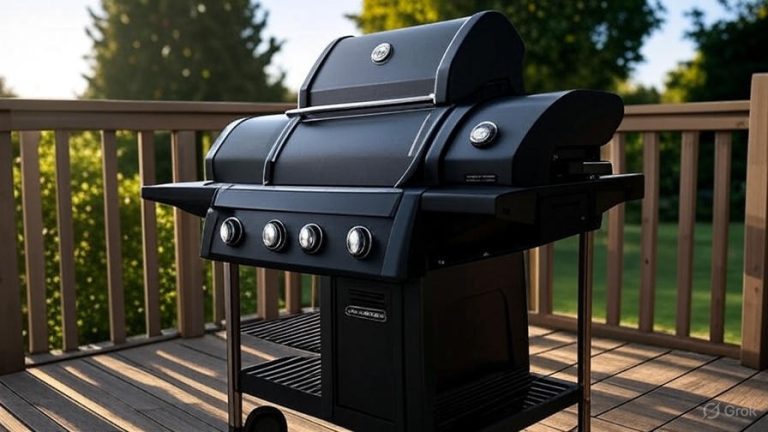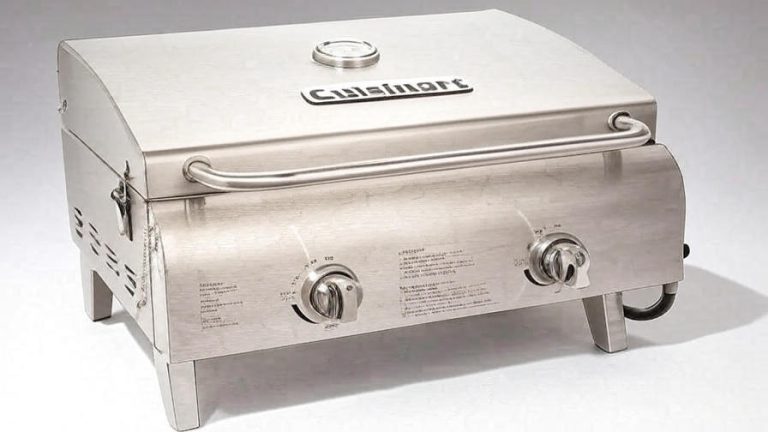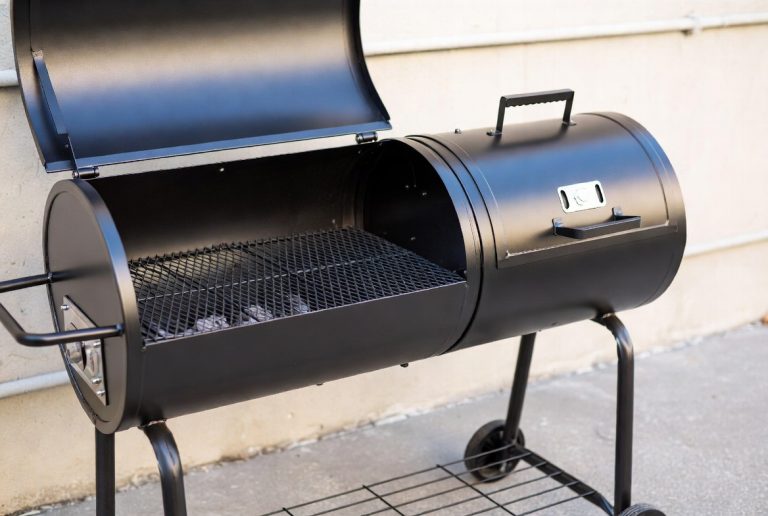

5 Best 4 Burner Gas Grill In 2026
So you want to upgrade your outdoor cooking game. A good 4 burner gas grill can transform your patio into a real cooking space. You can feed a crowd, dial in the heat exactly how you want it, and actually enjoy grilling instead of fighting with the equipment.
The trouble is finding the right one. Too many options exist out there, and plenty of them are just okay. Some cost way too much for what you get. Others break after a single summer. That’s why I put together this guide covering five solid 4 burner gas grill options that actually work well and deliver value.
What Makes a Good 4 Burner Gas Grill?
Before jumping into the specific models, let’s talk about what separates a great grill from a mediocre one.
BTU Output Matters
BTU stands for British Thermal Units. This measures how much heat your grill produces. For a 4 burner grill, you generally want between 40,000 and 50,000 BTU total output. This gives you enough power to cook for a large group without having to wait forever for things to heat up.
More BTU doesn’t always mean better. A 50,000 BTU grill heats faster than a 40,000 BTU one, but both can cook steaks perfectly. The difference matters most when you’re cooking for 15 people and need fast turnaround.
Grate Material Changes Everything
The grates are where your food actually sits. Cast iron grates hold heat better and develop that nice char we all love. Stainless steel grates are easier to clean but don’t hold heat quite as well. Most quality grills use porcelain-enameled cast iron, which gives you the best of both worlds: excellent heat retention and easier cleanup.
Side Burners and Extra Features
A side burner lets you heat sauce, boil water, or cook side dishes without taking over your main cooking space. This might seem like a luxury, but once you have one, you realize it’s actually pretty useful. Side tables for prep work also matter more than you’d think until you’re juggling plates and tongs without anywhere to put stuff down.
Build Quality and Materials
Stainless steel bodies last longer in outdoor conditions. They resist rust and weather better. Painted steel works fine too, but it needs more maintenance. Check the gauge of the metal. Thicker steel means a sturdier grill that won’t flex when you close the lid.
4-Burner Propane Gas BBQ Grill with Side Burner, 46,500 BTU Output

Overview
This is a straightforward 4 burner grill built around getting the job done without unnecessary complexity. The 46,500 BTU output puts it right in the sweet spot for feeding groups without overshooting on power. The stainless steel construction means you get a grill that looks good and holds up to weather.
What It’s Best For
This model works great if you grill regularly for 8-12 people. The side burner makes sense if you like cooking complete meals on the grill rather than just burgers and chicken. It’s also solid for someone who wants stainless steel durability without paying premium prices for a well-known brand name.
The included side tables give you space to prep food and hold plates, which matters more than it sounds when you’re actually cooking.
Key Features Explained
Enameled Cast Iron Grates
These grates heat evenly and develop that seasoning over time that makes food taste better. The enamel coating keeps them from rusting while still letting them heat like cast iron should. You can scrape them clean after cooking without worrying about damage.
Side Burner Functionality
The side burner runs independently from the main grilling area. You can crank it up to boil water for corn while your main burners handle steaks. This kind of multitasking saves time when you’re hosting.
46,500 BTU Power
This output level heats the main cooking area quickly and maintains consistent temperature. You can sear at high heat and also dial it back for slower cooking without the grill cooling down too much.
Side Tables
These fold-down surfaces give you prep space and plate room. In real grilling situations, you’ll use these constantly. They’re convenient for keeping marinades, sauces, and cooked food organized.
Real-Life Usage Insight
When you fire this grill up, you’ll notice it reaches temperature in about 10-15 minutes. The burners light consistently, which saves frustration. The heat distributes pretty evenly across the cooking surface, so you don’t get cold spots where food cooks slower.
The side burner takes a few minutes longer to reach full heat, but it’s reliable once it does. During a cookout for a group of 10, you can easily manage cooking different proteins at different temperatures. Some parts of the grate run hotter, some cooler, giving you flexibility with placement.
The grates themselves stay clean easier than basic steel ones. After grilling, a quick scrub takes care of stuck-on food. The enamel coating prevents rust between uses, so you don’t have to season them constantly like bare cast iron.
Honest Pros and Cons
Pros:
- Solid heat output for the price point
- Side burner adds real cooking flexibility
- Enameled grates balance performance with maintenance
- Stainless steel body resists rust
- Side tables are genuinely useful
- Good temperature distribution
Cons:
- No special high-heat sear zone like pricier models
- Temperature gauge can be inconsistent
- Side burner is smaller than main burners
- Takes practice to master heat zones
Performance Discussion
This grill performs reliably in normal conditions. Rain won’t damage it, and UV sun exposure doesn’t fade the steel as quickly as painted models. In terms of actual cooking, you can achieve good sear on steaks, cook chicken through without burning the outside, and handle burgers for a group without issues.
The main limitation is that you need to understand how to work with the heat zones. The edges run cooler than the center, which is actually helpful for cooking different things at once. Some food might cook slightly faster on one side, but this isn’t a flaw—it’s just how you work with it.
Ease of Use
Setup takes an hour or two the first time. Once assembled, the controls are straightforward. Each burner has its own knob, and the side burner works independently. Lighting is reliable. Cleaning is simple: brush the grates while they’re warm, wipe down the interior, and you’re done.
The hardest part for beginners is learning to use the heat zones effectively. This comes naturally after a few cookouts though.
Value for Money
At this price point, you’re getting a functional 4 burner grill with a side burner and stainless steel construction. You’re not paying for premium brand recognition, but you are getting reliable performance. The 46,500 BTU output and included features make it solid value for someone who grills 2-4 times monthly.
Weber Spirit E-425 Liquid Propane Gas Grill

Overview
Weber makes grills that people buy and use for years. The Spirit E-425 is their mid-tier 4 burner model. The name includes “E-425” which refers to the model line. This grill brings serious engineering and attention to detail that you notice when you use it.
What It’s Best For
The Spirit E-425 suits someone who wants a reliable workhorse that will last. It’s perfect for regular grillers who appreciate quality construction. If you entertain frequently or cook outdoors multiple times weekly, this performs above entry-level models.
It’s also ideal if you like grilling convenience features. Weber builds this model with user experience in mind, not just basic functionality.
Key Features Explained
Porcelain-Enameled Cast Iron Grates
Like the first model, these grates use porcelain enamel over cast iron. Weber’s version tends to be slightly thicker than budget models, meaning they retain heat even better and last longer before wearing through.
Boost Burners with Sear Zone
Two of the four burners can produce extra-high heat. This dedicated high-heat area lets you get a perfect crust on steaks. You can sear at 500+ degrees then move the meat to a cooler zone to finish cooking. This is a real difference from basic grills where all burners produce the same heat output.
Build Quality
Weber uses heavier gauge stainless steel than many competitors. The lid and firebox feel substantial when you open and close them. The hinges work smoothly. These small touches add up to a grill that feels premium.
FlavorBar System
Weber includes these pieces that sit above the burners. They distribute heat evenly and catch drippings so they vaporize instead of flaming up. This reduces flare-ups and prevents that burnt taste from direct flame hitting grease.
Real-Life Usage Insight
Fire up a Spirit E-425 and you’ll notice it reaches cooking temperature quickly. The burners light reliably the first time, every time. The boost burners actually feel noticeably hotter—you’ll see the sear happening instantly when meat hits that zone.
During extended grilling sessions with 12+ people, this grill handles everything smoothly. You can work the boost burners for searing while cooking other items at medium heat. The FlavorBar system really does reduce flare-ups, which saves stress when you’re hosting.
The heat distribution is excellent. Temperature remains consistent from the front to the back. You don’t have to constantly move food around to cook it evenly. The heavier grates also mean better heat retention, so the grill doesn’t cool down as much when you add cold food.
Honest Pros and Cons
Pros:
- Excellent build quality that lasts years
- Boost burners deliver genuine high-heat advantage
- FlavorBar system reduces flare-ups
- Consistent temperature distribution
- Reliable ignition system
- Sturdy feel and smooth operation
Cons:
- Higher price than basic models
- No side burner included
- Requires more space due to size
- Side tables are smaller than some competitors
Performance Discussion
The Spirit E-425 performs at a higher level than budget 4 burner grills. The boost burners genuinely change how you can cook. You get restaurant-quality sear on steaks that’s hard to achieve on basic grills. The FlavorBar system works well enough that you notice fewer flare-ups and burnt flavors.
Build quality means fewer issues over time. You won’t deal with rusting fasteners or loose parts after a summer of use. The grill simply works better for longer.
Ease of Use
Setup is straightforward if you follow the instructions. The control layout makes sense. Each burner has one obvious knob. Once assembled, operating it requires no learning curve. Everything works intuitively.
The boost burner feature is easily learned. Just turn the two designated burners to high and you’re done.
Value for Money
The Spirit E-425 costs more than basic models, but it delivers better performance and durability. If you grill frequently or plan to use it for 5+ years, the better build quality pays for itself through fewer repairs and replacements. For casual grillers who use a grill once monthly, the extra cost might not make sense.
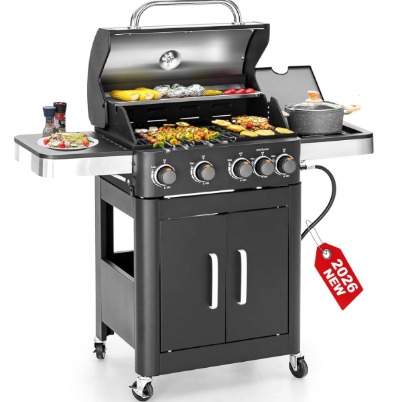
2 in 1 Propane Gas BBQ Grill with Side Burner & Porcelain-Enameled Cast Iron Grate
Overview
This model offers something different: a grill and flat-top combo. The design lets you use standard grill grates or swap them for a flat cooking surface. This dual functionality appeals to people who want flexibility for different cooking styles.
What It’s Best For
Choose this grill if you cook beyond typical burgers and steaks. If you like grilling vegetables, fajitas, or pancakes for breakfast cookouts, the flat-top side solves real problems. It’s also great for anyone in a smaller space who wants multiple cooking methods from one unit.
The combo design works well for camping trips where you want both grill and griddle functions without hauling two separate pieces.
Key Features Explained
Interchangeable Grate System
The main cooking surface lets you switch between standard grill grates and a flat griddle plate. This versatility means you can char vegetables properly instead of losing them through the grates. You can also cook smaller items like shrimp or diced vegetables that would otherwise fall through.
46,700 BTU Output
This is actually more BTU than the first model I reviewed. That extra power comes in handy for the flat-top side, which uses fuel to heat the cooking surface directly. The main grill portion heats quickly and maintains good temperature.
Side Burner
Like the first model, this includes a side burner for supplementary cooking. The functionality is identical—great for sauces, sides, and keeping water boiling.
Flat Top Cooking Surface
The griddle portion has its own controls and heats independently. This lets you cook a full breakfast while someone grills burgers on the grate side.
Real-Life Usage Insight
The 2-in-1 design requires choosing between grill and flat-top before you start cooking. You can’t easily swap back and forth mid-cookout. So planning matters here. Know whether you want grill marks or griddle functionality before firing up.
The flat-top surface works exceptionally well for vegetables. You get actual browning and flavor development that’s hard to achieve on standard grates. Mushrooms, peppers, and zucchini cook beautifully.
The extra BTU helps both sides reach temperature quickly. The flat-top takes longer to heat than the grate side, but 46,700 BTU means you’re not waiting excessively.
The main limitation is that you sacrifice cooking space for dual functionality. The flat-top and grate sections share the total surface, so your total grilling area is smaller than a comparable all-grate grill. This matters less for two people, more for feeding 15.
Honest Pros and Cons
Pros:
- Dual cooking methods from one grill
- Flat-top handles vegetables perfectly
- 46,700 BTU provides solid power
- Side burner adds utility
- Great for varied menus
- Compact for dual functionality
Cons:
- Requires choosing between grill and flat-top mode
- Total cooking surface is smaller
- More complex to learn than basic grills
- Flat-top takes time to reach temperature
Performance Discussion
The 2-in-1 design performs well at what it’s designed for: flexibility. The grate side cooks like any good 4 burner grill. The flat-top side excels at items a standard grill can’t handle well. If you regularly cook both types of food, this solves a real problem.
Performance does require understanding how to use each side. The flat-top heats more slowly than the grate side, so plan accordingly. Once hot, it maintains temperature well and cooks food evenly across the surface.
Ease of Use
Setup is more involved than basic grills because you have to understand the swap mechanism. The instructions matter here. Once you’ve done it once, swapping is fine.
Operating the grill requires managing two different cooking areas if you use both during one session. This adds mild complexity. The side burner operates independently, so that’s straightforward.
Value for Money
If you cook a variety of foods and value that flexibility, this model delivers. You get a grill and griddle in one package at a price lower than buying them separately. For people with standard burger-and-steak needs, the extra cost and complexity don’t make sense.
Captiva Designs 4-Burner Propane Gas BBQ Grill with Side Burner

Overview
Captiva Designs makes reliable mid-range grills that focus on practical value. This 4 burner model includes a side burner and solid stainless steel construction at a reasonable price point.
What It’s Best For
This grill fits perfectly for regular family grilling. It’s great for someone who wants side burner convenience without paying Weber prices. If you grill 2-4 times monthly and need to feed up to 12 people, this model handles it well.
It’s also good for people prioritizing value. Captiva doesn’t waste money on features you don’t need. What you get is a straightforward, functional grill.
Key Features Explained
42,000 BTU Output
This is the lowest total output of the models I’m reviewing. It still provides enough power for normal grilling, but you notice it takes a bit longer to heat up. For steaks, this is fine. For crowd cooking on a deadline, you might prefer higher BTU.
Porcelain-Enameled Cast Iron Grates
Same benefits as the higher-end models: good heat retention, seasoning potential, and rust resistance. Quality matches what you’d get on pricier grills.
Stainless Steel Body
The construction uses stainless steel that’s adequate for weather resistance. It’s not the heaviest gauge, but it’s decent for the price. It won’t rust immediately if you grill in humid conditions.
Side Burner
Identical functionality to the other models. Cook sides, heat water, manage sauces separately from the main grilling area.
Enameled Drip Tray
The drip tray catches grease and is enamel-coated to resist rust. This is a practical feature that extends the grill’s life by preventing rust buildup inside.
Real-Life Usage Insight
Light this grill up and it performs like any solid mid-range burner. It reaches 400-450 degrees in about 12-15 minutes. Once hot, it maintains temperature well for most cooking tasks.
The 42,000 BTU limitation appears mainly when you’re cooking for a huge crowd and need everything done fast. For normal entertaining, it’s fine. Steaks cook perfectly. Chicken comes out great. Burgers are no problem.
The side burner operates exactly like the other models. It’s useful and works when you need it.
The stainless steel body holds up okay to weather, but you’ll notice rust forming on fasteners over several years in humid climates. This is more of an appearance issue than a functionality one. Functionally, the grill works fine.
Honest Pros and Cons
Pros:
- Lowest price point of the group
- Side burner included
- Adequate BTU for most grilling needs
- Stainless steel construction
- Good grate quality
- Straightforward to use
Cons:
- Lower BTU than competitors
- Slower to heat
- Some fasteners rust over time
- Heavier gauge steel would improve durability
Performance Discussion
The Captiva performs its job reliably. Nothing exceptional, nothing broken. It’s a solid workhorse for regular family grilling. The main trade-off is accepting slightly longer heat-up times and less temperature control nuance compared to higher-output models.
For most home grilling scenarios, this is perfectly adequate. You’re not trying to run a restaurant or host weekly cookouts for 20. For that use case, this delivers.
Ease of Use
Very simple. Four burner knobs, one side burner knob, one igniter. It all makes sense. Cleaning and maintenance are straightforward.
Value for Money
This model offers the best price-to-function ratio if you’re not willing to stretch budget. You’re saving several hundred dollars compared to Weber while still getting side burner convenience. That savings matters to a lot of people.
4 Burner Gas Grills Outdoor Cooking Propane Grill BBQ

Overview
This is a highly portable option. It’s built to be moved around easily while still functioning as a legitimate 4 burner grill. The fold-out side table and portable design make it distinct from more permanent installation models.
What It’s Best For
Get this grill if you value portability. It’s great for someone without a dedicated patio space or someone who wants the option to move the grill around. It’s also ideal for camping, temporary home situations, or people renting who want their grill mobile.
The lower price also appeals to budget-conscious buyers. This is the cheapest option in the group while still delivering 4 burners.
Key Features Explained
40,000 BTU Output
This is the minimum BTU in the lineup. It’s enough to grill, but you’ll notice slower heat-up than higher-output models. For burgers and chicken, no problem. For searing a whole steer, you’ll be waiting.
Cast Iron Grate with Pan
The grates are regular cast iron without enamel coating. This means they need seasoning and maintenance to prevent rust. The included pan is useful for cooking items that would fall through grates. This combo gives flexibility.
Folding Side Table
The table folds down to make moving the grill easier. When set up, it provides some prep space, though it’s smaller than fixed models.
Portability Focus
The lightweight design and smaller footprint let you move this grill. It’s not heavy enough to feel permanently planted like bigger models.
Real-Life Usage Insight
This grill starts cooking in about 15-20 minutes. The wait is longer because of the lower BTU. Once running, the 40,000 BTU maintains adequate temperature for normal cooking.
The cast iron grates need seasoning like your kitchen cast iron. Over time, they develop a non-stick surface. New grates are bare and sticky at first. The included pan solves the problem immediately if you don’t want to wait for seasoning.
The portability means you might move it between locations, which requires disconnecting the propane tank. This is simple but adds a step compared to a stationary setup.
Heat distribution is acceptable but not exceptional. You’ll have hotter spots and cooler spots more noticeably than higher-end models. Adjusting food placement works fine.
Honest Pros and Cons
Pros:
- Most affordable option
- Portable and movable
- 4 full burners despite low price
- Included pan adds versatility
- Compact footprint
- Functional for basic grilling
Cons:
- Lowest BTU output
- Cast iron grates require maintenance
- Slower to heat up
- Uneven temperature zones
- Smaller overall cooking area
- Pan can be awkward to work with
Performance Discussion
This grill performs adequately for the price. It will cook food successfully. It won’t match performance of higher-output models, but it delivers results for the budget.
The main limitation is the lower BTU and bare cast iron grates. These aren’t deal-breakers, just trade-offs you accept for the price. If you’re okay with a slower, more basic grilling experience, this works.
Ease of Use
Simple controls and straightforward assembly. The cast iron grates need care—you should season them before first use. The included instructions should cover this.
Once running, operation is basic. Each burner gets its own knob. Propane connections are standard and simple.
Value for Money
This delivers maximum value if your primary need is having any 4 burner grill available cheaply. You’re not getting premium features or build quality, but you are getting a functional grill for minimal investment.
Complete Buying Guide for 4 Burner Gas Grills
Determining Your Needs
Start by asking how often you’ll actually use a grill. If it’s once weekly, you want something reliable and feature-rich. If it’s occasional summer gatherings, a basic model works fine.
Next, think about how many people you typically cook for. Two burners per person is a decent rule of thumb. For 8 people, 4 burners is perfect. For 4 people, you could go smaller. For 15 people, you’d want larger.
Consider what you cook. Standard burgers and steaks? Any grill works. Vegetables, seafood, and varied items? You might prefer the 2-in-1 model or one with more heat control.
Location and Space
Where will the grill live? A dedicated patio spot works with any model. A small balcony? The portable model makes sense. Somewhere you move it seasonally? Portability matters.
Check dimensions carefully. Models vary more in depth and width than you’d expect. One might have a footprint that fits your space, another might not.
Frequency of Use
Casual grilling (monthly or less) doesn’t justify premium options. A budget model handles this perfectly.
Regular grilling (twice monthly) benefits from better features and build quality. Mid-range models make sense.
Frequent grilling (weekly or more) justifies premium build quality and features. You’ll use them enough to appreciate quality.
Material Preference
Stainless steel bodies look better longer and resist weather. If appearance matters, prioritize this.
Heat retention means better searing and faster cooking. Enameled cast iron grates deliver this better than bare steel.
Feature Priorities
Must have side burner? Only Products 1, 3, and 4 include one.
Want cooking flexibility? The 2-in-1 model offers it.
Need reliability above all? Weber’s track record speaks for itself.
Value hunting? Budget models do the job for less.
Who Should Buy Each Model?
Product 1: Standard 4-Burner with Side Burner
Buy this if you want solid middle ground. Good features, decent price, side burner utility. You’re not overpaying for brand name, and you’re not cutting corners on capability.
Best for regular family grilling and entertaining.
Product 2: Weber Spirit E-425
Buy this if you grill frequently and plan to use it for many years. The better build quality and boost burner feature justify the premium price. You’ll notice and appreciate the difference every time you grill.
Best for serious home grillers who entertain regularly.
Product 3: 2-in-1 Grill Griddle Combo
Buy this if you cook varied foods and want grill marks and flat-top cooking from one unit. You value flexibility over maximum cooking surface area.
Best for people who cook beyond typical grilled meats.
Product 4: Captiva Designs
Buy this if budget is your main constraint but you still want a side burner and decent quality. You grill regularly enough to want convenience features but don’t grill often enough to justify premium pricing.
Best for budget-conscious regular grillers.
Product 5: Portable 4-Burner
Buy this if portability and price are your priorities. You accept longer heat-up times and need basic functionality. You might move the grill frequently.
Best for budget buyers and those needing mobility.
Common Mistakes to Avoid
Ignoring Assembly Time
Factor in 1-3 hours for assembly. Don’t plan a cookout the day you receive a new grill. Have someone help you assemble it properly.
Buying Based on Highest BTU Alone
More BTU heats faster but doesn’t automatically mean better cooking. 40,000-50,000 BTU all cook food well. Don’t pay extra for power you won’t use.
Neglecting the Grate Question
Look at what kind of grates come with the grill. Porcelain-enameled cast iron is best. Regular steel requires more maintenance. Bare cast iron needs seasoning.
Forgetting About Propane Tank Storage
You need somewhere to keep a propane tank. Think about this before buying. Some grills have side cabinets for tank storage. Others don’t.
Underestimating Maintenance
Gas grills need cleaning after use and seasonal maintenance. If you won’t keep up with this, a gas grill might frustrate you. Plan to brush grates while warm and occasionally clean the interior.
Buying Too Large or Too Small
Big grills take up space you might not have. Small grills force you to cook in batches. Measure your space and plan how many people you typically cook for.
Ignoring Weather Conditions
If you live somewhere very humid or salty (coastal), pay extra attention to stainless steel quality. Budget models rust faster in these conditions.
Neglecting Wind Considerations
Wind affects temperature control more than you’d think. If your cooking spot is windy, account for this. You’ll need to work harder to maintain consistent heat.
Performance Comparison in Real Scenarios
Scenario 1: Dinner for 4 People
Any of these grills handles this easily. The 40,000 BTU model takes slightly longer to heat but performs fine. The premium Weber doesn’t really show its value here. Product 4 (Captiva) offers the best value for this use case.
Scenario 2: Weekend Cookout for 12 People
Now you’re using most of the cooking space. The higher BTU models shine because they heat faster and maintain temperature with cold food added. Products 1 and 3 (46,500 and 46,700 BTU) excel here. The side burner lets you manage sides easily.
Scenario 3: Quick Weeknight Dinner
You want quick heat and fast cooking. The 46,000+ BTU models reach temperature in 10 minutes. The 40,000-42,000 BTU models take 15-20 minutes. If you grill weeknights, higher BTU saves time.
Scenario 4: Searing Steaks
Product 2 (Weber with boost burners) is genuinely superior here. The dedicated high-heat zone delivers restaurant-quality sear. Other models can sear steaks fine, but the Weber makes it easier and more reliable.
Scenario 5: Cooking Vegetables
Product 3 (the 2-in-1) excels here. The flat-top lets you cook vegetables without losing them through grates. You get actual browning and flavor development.
Installation and Setup Considerations
Assembly Effort
Budget 2-3 hours for the first setup. The instructions matter—follow them carefully. Getting things assembled correctly affects performance.
Propane Connection
All models use standard propane fittings. You’ll connect the grill to a tank using a hose. This is straightforward but follow instructions carefully. Improper connections cause gas leaks.
Location Setup
Place the grill on level ground. Unlevel surfaces cause heat distribution problems. If your patio slopes, use shims to level it.
Ventilation
Don’t place grills in enclosed spaces. They produce carbon monoxide. A covered patio is fine. A garage or shed is dangerous.
Clearance
Most grills need 10 feet clear space from combustible materials. Check your local fire codes. This prevents accidents.
Maintenance Schedule for Long-Term Use
After Every Use
Brush the grates while warm. This prevents food buildup. Wipe down the interior with a damp cloth if needed.
Monthly During Grilling Season
Empty the drip tray. Inspect burners for any blockages. Check hose connections for leaks (using soapy water—bubbles indicate leaks).
Seasonally
Do a thorough cleaning. Remove the grates and clean them properly. Inspect the body for rust. Apply touch-up paint if needed on painted areas.
Yearly
Replace the burner protectors if they’re damaged. Check all fasteners and tighten if loose. Inspect the hose for cracks or damage. Replace if needed.
Every 2-3 Years
Consider rebuilding the burner tubes if they’re corroded. Have the propane system professionally inspected if you notice any issues.
Final Verdict
A good 4 burner gas grill transforms outdoor cooking from a hassle into enjoyment. These five models represent different approaches to solving the grilling problem.
Best Overall Value: Product 1 (Standard 4-Burner) gives you solid features at a reasonable price. The side burner and stainless steel construction deliver real utility without overpaying for brand recognition.
Best for Serious Grillers: Product 2 (Weber Spirit E-425) costs more but delivers better build quality and cooking performance. If you grill weekly, the investment pays off through durability and better cooking results.
Best for Flexible Cooking: Product 3 (2-in-1 Combo) solves a real problem if you cook varied foods. The flat-top griddle option is genuinely useful, not just a gimmick.
Best Budget Pick: Product 4 (Captiva Designs) balances price and features effectively. You get a side burner and decent quality without stretching your budget.
Best for Portability: Product 5 (Portable 4-Burner) suits people who need to move their grill around or want the cheapest 4 burner option available.
For most people, I’d recommend starting with Product 1 or Product 4. Both deliver solid performance at reasonable prices. If you grill frequently enough to justify premium quality, Product 2 earns its cost through reliability and performance.
The key is matching the grill to your actual needs, not buying features you won’t use. A simpler grill you’ll use regularly beats a fancy one that sits unused. Think about your space, how often you grill, and what you cook. Then pick the model that fits those needs.
A quality 4 burner gas grill will serve you well for years. You’ll feed happy people, make great food, and enjoy the process. That’s what matters.

Hi, I’m Mary, the founder of KitchenClue.com. I’m deeply passionate about everything that makes a kitchen smarter, easier, and more enjoyable. I share hands-on insights and practical expertise on kitchen gear that truly helps in daily cooking. Along with my dedicated research team, we study products carefully, and our writers create honest, well-tested reviews using trusted, authentic sources—so you can choose kitchen tools with total confidence.