
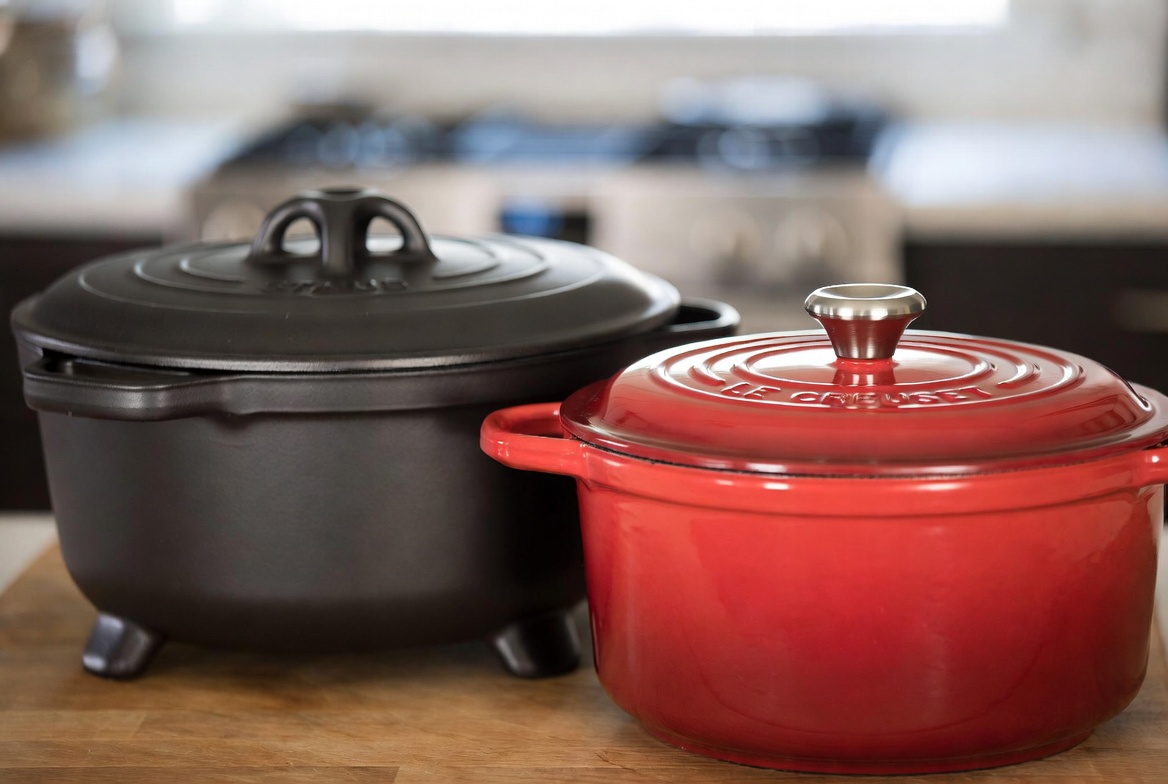
Staub vs Le Creuset Dutch Oven
When it comes to cooking with cast iron, Dutch ovens are the champions. They heat evenly, retain heat like a dream, and make your kitchen smell amazing. But if you’re looking to invest in one of these heavy-duty pots, you’ve probably heard about two brands: Staub and Le Creuset. Both make excellent Dutch ovens. Both cost a lot of money. Both have fans who swear by them.
So which one wins?
The truth is simpler than you might think. Both are fantastic. But they’re different in real ways that matter to how you cook. Let me walk you through everything you need to know to pick the right one for your kitchen.
What Exactly Is a Dutch Oven?
Before we compare these two brands, let’s get clear on what we’re actually talking about. A Dutch oven is a heavy pot with a tight-fitting lid. Usually it’s made of cast iron and coated with enamel so you don’t have to maintain the seasoning like a regular cast iron skillet. You use it for braising, stewing, baking bread, roasting chicken, and basically any cooking that benefits from slow, even heat.
Dutch ovens shine because they heat uniformly. The thick walls and bottom distribute heat across the whole pot. The lid traps steam, which keeps food moist. And the enamel coating means you can cook anything without worrying about cast iron care.
The big names in Dutch ovens are Staub and Le Creuset. Both are French brands. Both make pots that last for generations. Both are expensive. And honestly, both will change your cooking life for the better.
Le Creuset: The Classic Choice
Le Creuset is the name that comes up first when people talk about Dutch ovens. The brand has been making cast iron cookware since the late 1800s. They’re famous. They’re stylish. And they’re in just about every kitchen magazine you can find.
The Look
If you’ve seen a Dutch oven in a pretty home magazine, it was probably Le Creuset. They make their pots in bright, bold colors. Flame orange is their signature look. You’ll also find them in deep red, sea blue, and tons of other shades. These pots look good sitting on your stovetop or on the shelf. People actually want to see them.
The inside of a Le Creuset pot is cream-colored or white enamel. It’s pretty. It catches the light. And it makes it easy to see what you’re cooking.
Performance in the Kitchen
Le Creuset pots heat well and cook evenly. The thick cast iron walls do their job perfectly. Food doesn’t burn on the bottom unless you really try to make that happen. The lids fit snugly, which keeps moisture locked in during slow-cooking.
One thing to note: Le Creuset’s enamel coating is smooth and glossy. This looks beautiful right out of the box. It also gets lighter over time as you cook. Many people think this aged look has charm. Others wish it stayed pristine forever. That’s really a matter of personal taste.
The Weight
Le Creuset pots are heavy. A 5.5-quart pot weighs around 7 pounds. That’s not super heavy for a piece of cookware, but it’s definitely something you’ll notice when you’re moving it on and off the stove. If you have arthritis or wrist issues, this might matter to you.
Cost
Le Creuset is the pricier option. A standard 5.5-quart Dutch oven costs $300 to $350 new. Sometimes you can catch a sale or find last season’s colors cheaper. But the full retail price is steep.
Staub: The Serious Cook’s Choice
Staub also comes from France. They’re the newer of the two brands, arriving on the scene in the 1970s. But they’ve built a huge reputation among chefs and serious home cooks. If you’ve watched cooking shows or read chef blogs, you’ve probably seen Staub.
The Look
Staub goes for function over flash. Most of their pots come in black or dark matte colors. The black looks sleek and professional. It fits into just about any kitchen style without screaming for attention. Some people feel a matte black pot looks more serious. Others think it looks boring. Again, that depends on your taste.
The inside of a Staub pot is black enamel. Dark. Moody. It’s harder to see what you’re cooking inside, but many chefs love this. They don’t care what their food looks like while it’s cooking. They care about the result.
Performance in the Kitchen
Here’s where Staub earns serious love from people who cook a lot. The black interior enamel is slightly rougher than Le Creuset’s smooth glaze. This rough texture means liquid doesn’t pool and settle in the same way. Heat distributes even more evenly. Food browns better. The pots just seem to perform better in real cooking situations.
Staub also comes with a special lid feature. The lid has small spikes on the inside. These spikes drip condensation back down into the food instead of letting it collect on the lid and drip back down as large drops. This keeps your braised meat more tender and your sauce more consistent. It’s a small thing. It’s also genius.
The Weight
Staub pots are slightly lighter than Le Creuset pots, though not by a massive amount. A 5.5-quart pot weighs around 6.5 pounds. If you’re moving your pot around a lot, this small difference might matter to you.
Cost
Staub pots are usually less expensive than Le Creuset. You’ll find a 5.5-quart pot in the $250 to $300 range. That’s still a lot of money. But it’s a real difference compared to Le Creuset’s price point.
Direct Comparison: Let’s Talk Specifics
Now let’s break this down feature by feature so you can make a real decision.
Cooking Performance
Both pots cook food beautifully. Really, truly, you can’t go wrong with either one. But Staub edges ahead for serious cooks because of that textured interior and the spike-equipped lid. The rough enamel browns meat better. The spikes keep your braises more tender. If you do a lot of braising, stewing, and slow cooking, Staub wins.
Le Creuset performs just fine for all these tasks too. If you mostly make everyday home cooking, you won’t notice any real difference in results.
Heat Distribution
Cast iron is cast iron. Both brands use quality cast iron. Both have thick walls and solid construction. Heat distribution is essentially equal. Your stovetop and stove temperature matter way more than the brand when it comes to heating.
Oven Safety
Both pots are safe in the oven up to very high temperatures. Le Creuset is good up to 500°F. Staub is also good up to 500°F (some models go to 600°F). The lids, however, have lower temperature limits. Check the manual, but they’re usually safe up to 400°F. This doesn’t matter for most home cooking.
Color and Style
This is where your personal taste takes over. Do you want your pot to be a showstopper on the shelf? Le Creuset’s bright colors make that happen. Do you want something that looks professional and doesn’t try too hard? Staub’s matte black is your friend.
Durability and Longevity
Both brands make pots that last decades. Seriously. People inherit these pots from their grandmothers. They keep cooking in them. Cast iron is built to last, and both Staub and Le Creuset understand this. You’re not going to wear out either pot in your lifetime.
The enamel coating on both will chip eventually if you drop them hard enough or bang them around. Both brands sell replacement lids if that becomes a problem. This is rare though. Most people never need a replacement lid.
Handle Design
Le Creuset and Staub both have solid handles. Staub’s handles have a slightly different curve and feel a bit more ergonomic to many users. Le Creuset’s handles are classically styled and just as functional. This is really about what feels best in your hand.
Lid Fit
Both brands make lids that fit snugly. Le Creuset’s lids are smooth on the inside. Staub’s have those interior spikes. The fit is excellent on both. This isn’t a deciding factor.
Cleaning and Maintenance
Here’s a tie. Both pots are easy to clean. Enamel cookware doesn’t need seasoning. Just wash it like a regular pot. You can even put both in the dishwasher if you want, though hand washing makes them last longer and keeps the finish looking nice.
If you cook with wine or tomatoes a lot, the enamel might stain over time. This doesn’t affect cooking. It’s just cosmetic. Both brands’ enamel stains equally.
Size Matters: What Size Should You Get?
Both Staub and Le Creuset come in different sizes. The most popular is the 5.5-quart pot. It’s big enough for a whole chicken, a pot roast, or enough stew to feed 6-8 people. It’s also not so big that you can’t handle it.
Smaller sizes (2.75 or 3.5 quarts) work great if you cook for one or two people or just want a second pot.
Larger sizes (7 quarts and up) are awesome if you entertain a lot or make big batches for freezing.
Size choice is about your cooking needs, not the brand. Pick whichever size makes sense for how you actually cook.
What About Other Brands?
You might be wondering about other Dutch oven brands. There are plenty out there. Tramontina makes solid pots at lower prices. Smithey and Finex make beautiful enameled cast iron. But Staub and Le Creuset are the two names that come up for quality, durability, and cooking performance. If you want a pot that lasts and performs, these are the top choices.
The Real Question: Which One Is Actually Better?
I’m going to be honest. There is no absolute winner. It depends on what you care about.
Choose Le Creuset if:
- You want a pot that looks gorgeous and makes you happy every time you see it
- You prefer a smooth, polished look
- You like bright, happy colors in your kitchen
- You don’t mind paying a bit more for the style factor
- You cook occasionally but don’t need professional features
Choose Staub if:
- You cook a lot and care about performance above all else
- You love the black professional look
- You do frequent braising, stewing, and slow cooking
- That lid with the spikes appeals to you
- You want to save a couple hundred dollars
- You prefer kitchen tools that don’t demand attention
Real-Life Scenarios
Let me paint some pictures to help you decide.
You’re a home cook who makes pasta sauce, roasts chickens, and braises meat once a month. Both pots work great for this. Get Le Creuset if you want the color. Get Staub if you want to save money and prefer the look. You genuinely won’t notice a performance difference.
You’re getting into serious cooking. You braise meat weekly. You make stock. You love trying new recipes. Staub is your answer. That textured interior and the spike lid are real advantages when you cook like this every week. You’ll appreciate them.
You want a pot mainly for bread baking. Both are excellent. Le Creuset might edge ahead here because you’ll love looking at it while bread bakes in the oven. Plus, bread baking doesn’t benefit from the textured interior like braising does.
You’re buying this as a gift for someone fancy. Le Creuset, no question. The presentation, the colors, the prestige of the name. It feels like a luxury gift. Staub feels like a chef’s tool, not a gift.
The Resale Factor
Both pots hold their value well. If you ever decide to sell, you’ll get a decent percentage of what you paid back. Le Creuset might hold value slightly better because more people recognize the name. But both are solid investments that won’t depreciate fast.
Budget Hacks
If price is the main thing stopping you, here’s a secret: both brands go on sale sometimes. Sign up for emails from kitchen stores. Watch for holiday sales. You can sometimes catch a Le Creuset pot on sale for Staub prices.
Also, check if you have an outlet store near you. Both brands operate outlet stores. You can find slightly imperfect pots or last season’s colors at big discounts. These pots work just as well as perfect ones. The tiny flaw might be so small you’ll never notice it.
Should You Get Both?
This is actually not crazy. Many serious cooks own at least two Dutch ovens. They use Staub for everyday cooking and Le Creuset for special dinners or just for the joy of it. Having two pots means you can make multiple braises at once, or you have a backup when one is in the dishwasher.
If this is your first pot though, pick one and enjoy it. You don’t need two. One excellent pot serves most home cooks perfectly well.
The Bottom Line
Here’s what you need to know: both Staub and Le Creuset make world-class Dutch ovens. Neither is a waste of money. Neither is the “wrong” choice. They’re different in subtle ways, not dramatically different.
Le Creuset is the more beautiful, more famous, more expensive option. It’s perfect if you want your cookware to be part of your kitchen’s style and personality.
Staub is the performance-focused, slightly cheaper option that serious cooks love. It’s perfect if you care more about how your food turns out than how the pot looks sitting on the shelf.
You cannot mess this up. Pick one. Start cooking. Enjoy the food. You’re going to love whichever pot you choose.
Final Thoughts
Dutch ovens are one of the best investments you can make in your kitchen. They outlast you. They improve your cooking. They make your food better. Whether you go with the iconic orange of Le Creuset or the sleek black of Staub, you’re choosing quality and history.
And honestly? The best Dutch oven is the one you’ll actually use. So pick the pot you’re excited to cook with. Pick the one that makes you want to braise something delicious. Pick the one that feels right to you.
Then get cooking. Life’s too short for boring pot roast, and your new Dutch oven is going to change that.
FAQ
Can I use these pots on an induction cooktop? Both Le Creuset and Staub make induction-compatible pots. Check the specific model since not all their pots work with induction.
How long do these pots actually last? Decades. Seriously. With normal use, you’re looking at a lifetime of cooking.
Will the enamel crack if I thermal shock it? It can. Don’t take a hot pot off the stove and immediately put it in cold water. Let it cool first. Both brands’ enamel can crack if you shock it too hard.
Can I use metal utensils in these pots? You can, but why would you? Use wooden or silicone spoons. Metal can scratch the enamel over time.
Are these pots good for stove-to-oven cooking? Perfect for it. That’s their whole point. You sear meat on the stovetop, then pop the covered pot in the oven. It’s amazing.
Do I really need to spend this much on a Dutch oven? No. Cheaper options exist. But if you’re going to use this pot for years and years, the investment pays off. It’s like paying more for good shoes. You use them constantly, so spending more makes sense.

Hi, I’m Mary, the founder of KitchenClue.com. I’m deeply passionate about everything that makes a kitchen smarter, easier, and more enjoyable. I share hands-on insights and practical expertise on kitchen gear that truly helps in daily cooking. Along with my dedicated research team, we study products carefully, and our writers create honest, well-tested reviews using trusted, authentic sources—so you can choose kitchen tools with total confidence.

2 Comments