Can You Put A Calphalon Pan In The Oven: Oven-Safe Tips
Yes—most Calphalon pans are oven-safe to 400–500°F, but always check your model.
If you’ve wondered, can you put a Calphalon pan in the oven, you’re not alone. I work with these pans daily, and I know what survives a sear-to-oven roast and what warps at high heat. In this friendly, expert guide, we’ll explain exactly when and how you can put a Calphalon pan in the oven without damage. We’ll cover materials, temperature limits, broiler rules, lids, handles, safety tips, and real-world lessons so you can cook with confidence.

Understanding Calphalon materials and oven safety ratings
When you ask can you put a Calphalon pan in the oven, the true answer depends on the pan’s construction. Different lines use different metals, coatings, and handles. Each one has its own oven-safe range.
Here is what you can expect from common Calphalon builds, based on manufacturer guidance and typical specs:
- Hard-anodized aluminum nonstick. Often oven-safe to 400–450°F. Not broiler-safe. Check the bottom stamp and care guide.
- Stainless steel (uncoated). Commonly oven-safe to 500°F. Many are broiler-safe. Confirm your exact line to be sure.
- Ceramic nonstick. Usually oven-safe to around 400–450°F. Not broiler-safe. Avoid sudden temperature shock.
- Tempered glass lids. Often oven-safe to 400–450°F. Never broiler-safe unless stated. Handles may lower the limit.
- Handle materials. Stainless steel handles tend to handle higher heat. Silicone-wrapped or soft-grip handles may limit you to about 400°F.
Per Calphalon’s care instructions, most nonstick lines are not broiler-safe. Stainless steel without nonstick is more likely to be broiler-safe. Always check the booklet or the stamp on the base.

How to check if your Calphalon pan is oven safe
To decide can you put a Calphalon pan in the oven safely, start with the facts. You can find the temperature rating in a few quick places.
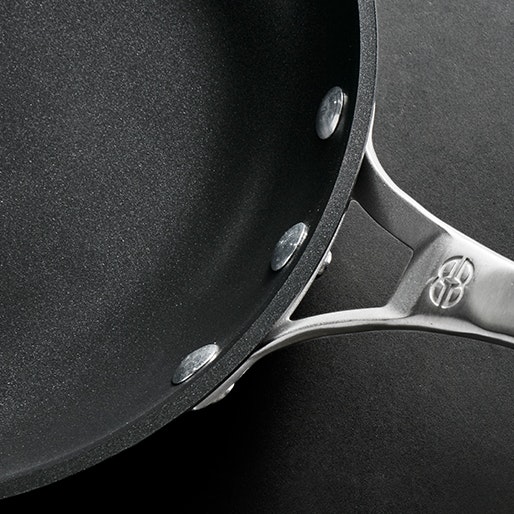
- Look at the bottom of the pan. Many pans list “Oven Safe” and a max temperature.
- Check the care guide. Box inserts or PDFs from the brand list exact limits by line.
- Visit the product page. Search your line name and model for current guidance.
- Inspect the handle and lid. Silicone, plastic, or mixed materials often mean lower limits.
- When unsure, assume the lower number. Keep nonstick pans below 450°F unless your guide says 500°F.
Remember, lids can have a lower rating than the pan. Follow the lowest number for the whole setup.
Is Calphalon nonstick oven safe?
Most Calphalon nonstick pans are oven-safe to 400–500°F, depending on the line. They are not broiler-safe unless the brand states otherwise.
Are Calphalon glass lids oven safe?
Tempered glass lids are often safe up to 400–450°F. They are not safe under a broiler.
Where do I find my pan’s line name?
Check the underside, the handle base, or the original box. If you still cannot find it, search your purchase history or compare photos on the brand’s site.

Step-by-step: Using a Calphalon pan in the oven
Before you decide can you put a Calphalon pan in the oven tonight, follow this simple process. It protects your pan and your meal.
- Preheat the oven. Heat to your recipe temp. Do not heat the empty pan in a very hot oven for long.
- Check your limits. Confirm the max temperature for the pan and lid. Use the lowest limit.
- Start on the stovetop if needed. Sear meat or start a sauce over medium to medium-high heat.
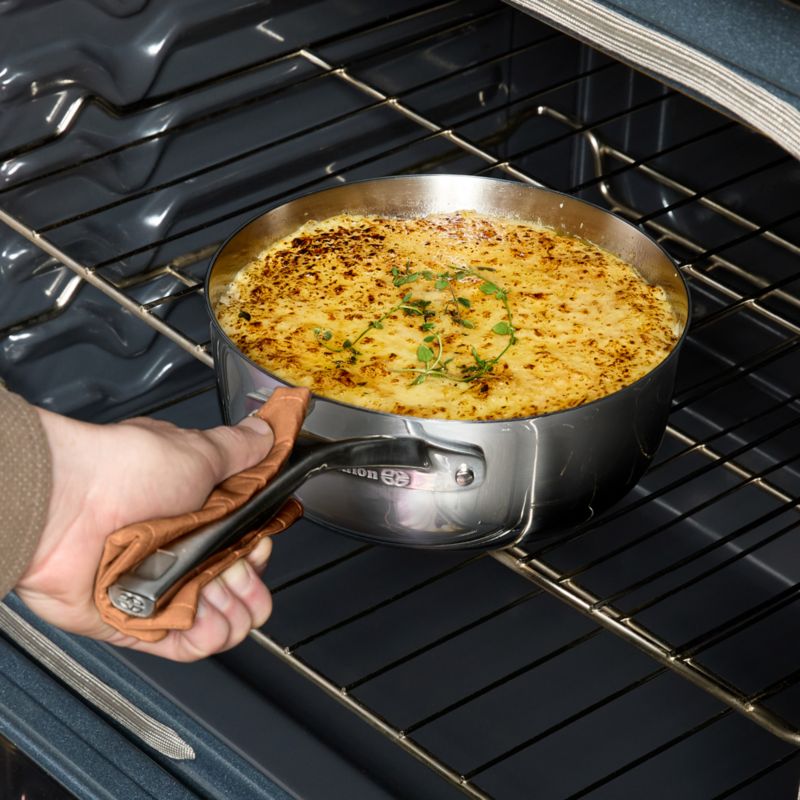
- Move to the oven. Place the pan on a middle rack for even heat. Use dry oven mitts.
- Avoid the broiler with nonstick. Keep the pan out of direct flame unless your guide says broiler-safe.
- Watch your oil choice. Use high-smoke-point oils. Skip aerosol sprays; they can leave sticky residue.
- Rest and cool. After cooking, set the hot pan on a dry, heat-safe surface. Let it cool before washing.
Tip: If the recipe needs 500°F and your nonstick max is 450°F, lower the temperature and add a few minutes. Or switch to a stainless or cast-iron pan.
Common mistakes to avoid
Even when you know can you put a Calphalon pan in the oven, small errors can wreck a good pan. Here are the pitfalls I see most often.
- Exceeding the temp limit. This can damage nonstick and loosen handles.
- Using the broiler with nonstick. Direct flame can ruin coating fast.
- Thermal shock. Do not rinse a hot pan under cold water. Warping is likely.
- Wet mitts and damp trivets. Moisture turns to steam and can burn you or crack glass lids.
- Aerosol sprays. They build a gummy layer that is hard to remove and affects performance.
If you slip up, stop, cool the pan, and reassess. Do not try to scrub hot coating or force a lid.
Real-world tips and lessons from my kitchen
Here is what I have learned from years of testing, tasting, and fixing mistakes.
- My Premier hard-anodized nonstick holds up well at 425–450°F for roast chicken. I skip the broiler and finish with a quick skillet baste.
- I warped an older nonstick by running cool water over it from the oven. Now I let it cool on a dry towel for 15 minutes first.
- Stainless steel Calphalon is my pick for steak. I sear on the stove, then finish at 500°F. It browns better and handles higher heat.
- For frittatas, a 10-inch nonstick works great at 375°F. I oil, not spray, and release is perfect.
If you ask me, can you put a Calphalon pan in the oven for weeknight meals, I’ll say yes, and with the right line and care, it makes cooking easier and cleanup faster.

Care, cleaning, and maintenance after oven use
Care changes a bit after high heat. Gentle steps add years to your cookware.
- Cool first. Set the pan on a dry, stable surface for at least 10–15 minutes.
- Wash by hand. Use warm water, mild soap, and a soft sponge. Avoid steel wool on nonstick.
- Skip the dishwasher for nonstick. It can dull the coating over time. Stainless is more tolerant.
- Avoid stacking damage. Use pan protectors or towels between pans.
- Refresh performance. For stainless, a brief soak or a paste of baking soda can lift stuck bits. For nonstick, never use harsh abrasives.
These small habits keep the surface smooth and the heat response steady.
When you should not put a Calphalon pan in the oven
You can often answer yes to can you put a Calphalon pan in the oven, but there are clear times to avoid it.
- Unclear or missing rating. If you cannot confirm the limit, do not risk it.
- Plastic or wood parts. Any non-oven-safe trim can melt or off-gas.
- Damaged nonstick. Chips, deep scratches, or peeling mean retire or replace.
- Loose handles or wobbly rivets. Heat can make it worse or unsafe to lift.
- Broiler plans with nonstick. Choose stainless or cast iron instead.
Need a workaround? Start in your Calphalon nonstick, then transfer to a preheated stainless skillet or a small sheet pan for the oven finish. You get the best of both worlds.
Frequently Asked Questions of can you put a calphalon pan in the oven
Can you put a Calphalon pan in the oven with the lid on?
Yes, if the lid is tempered glass and rated for the same temperature. Follow the lowest limit between the pan and the lid.
Can you put a Calphalon pan in the oven at 500°F?
Some stainless and certain Signature nonstick lines allow up to 500°F. Always check your exact line; many nonstick pans top out at 450°F.
Can you put a Calphalon pan in the oven under the broiler?
Nonstick lines are usually not broiler-safe. Many stainless pans are broiler-safe, but verify your model and avoid using glass lids under the broiler.
Will oven heat ruin Calphalon nonstick?
Not if you stay within the rated temperature and avoid the broiler. Damage happens when you exceed limits or shock the pan with cold water.
Can you put a Calphalon pan with silicone handles in the oven?
Often yes, but silicone can lower the max temperature, commonly to about 400°F. Check your manual to confirm the exact number.
How do I know my Calphalon’s temperature limit?
Look for markings on the base, the included care guide, or the product page. When in doubt, stay at or below 400°F.
Is it safe to preheat an empty Calphalon pan in the oven?
Short preheats are fine, but avoid leaving an empty pan in a very hot oven. Add a little oil or food soon after preheating to protect the surface.
Conclusion
You now have a clear, practical answer to can you put a Calphalon pan in the oven, plus the steps to do it right. Match the pan to the job, honor the temperature limit, skip the broiler for nonstick, and avoid thermal shock. With those habits, your pans will cook better and last longer.
Ready to level up tonight’s dinner? Pick a pan, check the rating, and try a simple sear-then-roast. If this guide helped, share it with a friend, subscribe for more smart kitchen tips, or drop your own oven-tested tricks in the comments.

Hi, I’m Mary, the founder of KitchenClue.com. I’m deeply passionate about everything that makes a kitchen smarter, easier, and more enjoyable. I share hands-on insights and practical expertise on kitchen gear that truly helps in daily cooking. Along with my dedicated research team, we study products carefully, and our writers create honest, well-tested reviews using trusted, authentic sources—so you can choose kitchen tools with total confidence.