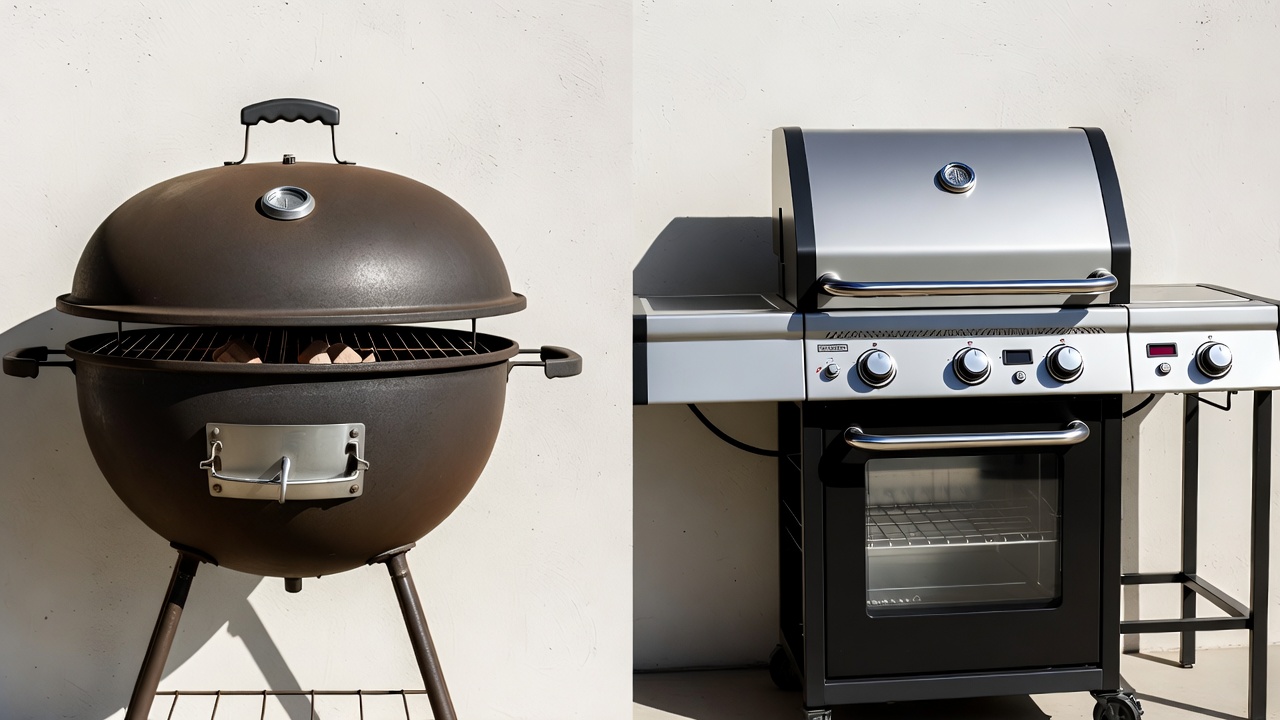
Charcoal vs Gas Grill
If you’re standing in your backyard thinking about getting a grill, you’ve probably wondered which type to buy. The choice between charcoal and gas grills is one of the biggest decisions you’ll make as a grilling beginner. Both have fans who swear by them. Both have real benefits. Both have real drawbacks too.
Let’s break this down in simple terms so you can figure out what works best for you.
The Basic Difference
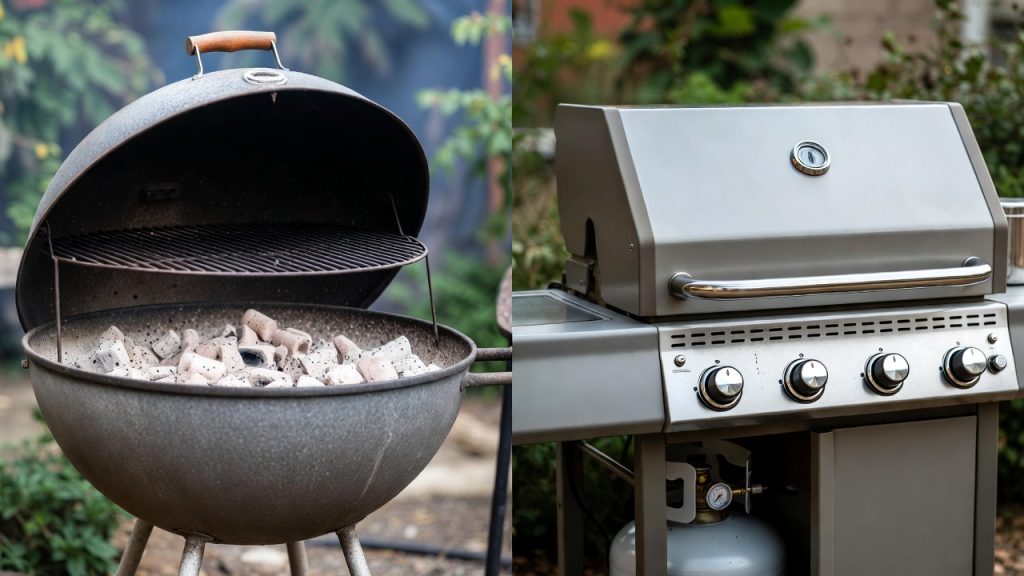
Here’s the simple version: gas grills use propane or natural gas to heat your food, while charcoal grills use burning charcoal briquettes or lump charcoal. That’s the core difference.
Gas grills are like the stovetop in your kitchen. You turn a knob, and heat comes out. It’s instant and easy to control.
Charcoal grills work more like a campfire. You light the charcoal, wait for it to heat up, and then cook your food over the flames and hot coals. It takes more time to get started.
Cost: What Will You Actually Spend?
Let’s talk money because that matters to most people.
Gas Grill Costs
A decent gas grill runs you anywhere from $300 to $1,500 for a home model. The fancy ones cost even more. You also need to think about propane refills or natural gas hookup costs. A propane tank refill costs between $15 and $30, depending on where you live.
Gas grills have some maintenance costs. You might need to replace ignition components, clean regulators, or fix hoses over time. These repairs aren’t usually expensive, but they add up.
Charcoal Grill Costs
Charcoal grills are cheaper upfront. A good quality charcoal grill runs $100 to $500. Some people use simple barrel-style grills for under $100.
The ongoing costs are the charcoal itself. A bag of charcoal briquettes costs $5 to $15 and lasts through several grilling sessions. Lump charcoal costs a bit more, around $20 to $30 per bag.
There’s almost no maintenance with charcoal grills. They’re simple machines with few moving parts. This means fewer repairs over the years.
The Money Winner
Charcoal grills win on overall cost, especially if you grill regularly. You save money upfront and keep saving on fuel over time.
Speed and Convenience
Speed matters when you’re hungry and want dinner ready.
Gas Grills for Quick Cooking
Gas grills heat up fast. Turn on the grill, wait 10 to 15 minutes, and you’re ready to cook. Some high-end models heat up in just 5 minutes.
You control the temperature like a dial on an oven. Too hot? Turn it down. Too cold? Turn it up. This makes gas grills perfect for beginners because temperature control is straightforward.
You don’t need to wait for anything to cool down. When you’re done cooking, turn off the gas and you’re finished. Cleanup happens while the grill is still warm.
Charcoal Grills Take More Time
Charcoal grills need setup time. You light the charcoal, and then wait 15 to 20 minutes for it to reach cooking temperature. Some people wait even longer if they want a really hot grill.
Temperature control takes practice. You adjust vents to control airflow, which changes heat. It feels less precise than gas.
When you’re done, the charcoal stays hot for a while. You either wait for it to cool or smother it out. This means you can’t hop off the grill right away.
The Speed Winner
Gas wins this round. It’s faster to start and stop.
Flavor Profile: The Thing Grilling Nerds Talk About Most
Here’s where things get interesting.
The Charcoal Flavor Question
Lots of people say charcoal grills give food a better taste. Charcoal burns hot and fast, creating those beautiful grill marks and a smoky flavor. When charcoal burns, it creates real smoke that penetrates the meat. This smoke ring you see in barbecue? That comes from charcoal cooking.
But here’s the truth: the flavor difference comes from the temperature and how you cook, not from charcoal itself. You can get amazing flavor from a gas grill if you know what you’re doing. You can also get mediocre food from a charcoal grill if you mess up.
Many serious barbecue folks prefer charcoal because they like the challenge and the tradition. They enjoy the ritual of lighting charcoal and tending the fire. The cooking process feels more connected to the food.
Gas Grill Flavor Reality
Gas grills don’t make food taste bad. They make food taste like grilled food. You won’t get that heavy smoke flavor, but your burgers, chicken, and vegetables will taste great.
You can add wood chips to a gas grill to create smoke flavor. Many gas grills have a special box where you can put wood chips. The chips smoke as they heat up, adding flavor to your food.
The Flavor Winner
Charcoal wins for traditional smoke flavor, but gas grills are no flavor failure. If you love that smoky barbecue taste, charcoal is your friend. If you want good grilled food without fuss, gas works fine.
Temperature Control and Cooking Power
Heat control separates good grilling from bad grilling.
Charcoal Heat Control
Charcoal grills let you control heat by opening and closing vents. More air equals hotter fire. Less air equals cooler fire. This works well, but it takes practice to master.
The challenge is that charcoal burns down over time. Your grill gets hotter at the start and cools down as the charcoal turns to ash. If you’re cooking for an hour, you need to adjust vents throughout the cooking.
Charcoal grills also let you zone your heat. You put charcoal on one side and cook indirect heat on the other side. This is great for roasting whole chickens or briskets.
Gas Temperature Control
Gas grills give you instant heat control. Turn a knob and the temperature changes right away. This makes gas grills perfect for beginners who don’t want to think too hard about heat management.
Most gas grills have multiple burners. You can turn one burner off and use another. This creates hot zones and cool zones on your grill surface.
Temperature control is more predictable with gas. You know that medium heat means the same thing every time. Charcoal varies based on the wind, how tightly you packed it, and the moisture level.
Heat Control Winner
Gas wins for ease of use and consistency. Charcoal wins for flexibility if you’re willing to learn.
Maintenance: The Boring But Important Stuff
Every grill needs care.
Gas Grill Maintenance
Gas grills need regular cleaning. Food drippings and grease build up on the grates. You should clean them after each use while the grill is warm.
You need to check propane tanks or natural gas lines. Make sure there are no leaks. Check hoses for cracks or damage. These things last a long time but need inspection.
Gas grills have moving parts. Ignitors, regulators, and burners can break. You might need to replace them eventually.
You should cover your gas grill when it’s not in use. This protects it from rain and sun damage.
Charcoal Grill Maintenance
Charcoal grills are low maintenance. Wipe out the ashes after several uses. That’s really it.
There are almost no moving parts to break. The grates might rust if you don’t dry them, but that’s not a huge deal.
You should cover your charcoal grill too, but it’s more forgiving if you don’t.
Maintenance Winner
Charcoal grills win because they need less care. This saves you time and money.
Portability and Space
Where you want to grill matters.
Charcoal Grill Portability
Most charcoal grills are small and light. You can carry a basic charcoal grill by yourself. Some cost less than $100 and weigh under 20 pounds.
This makes charcoal grills perfect for tailgating, camping, or beach trips. You can throw one in your car and go.
Gas Grill Portability
Gas grills are usually heavier and bulkier. A decent gas grill weighs 100 to 300 pounds. You need a dolly to move it.
Propane tanks add extra bulk and weight. You can’t just pick up a gas grill and take it somewhere.
Some companies make portable gas grills, but they’re smaller and less powerful than full-size models.
Portability Winner
Charcoal wins if you want to grill in different places. Gas wins if you want a powerful grill that stays in one spot.
Cooking Capacity and Performance
How much food can you cook?
Charcoal Grill Cooking
Most charcoal grills have less cooking space than gas grills of similar price. You might have 300 to 500 square inches of grill space on a mid-range charcoal grill.
Charcoal grills get very hot, which is great for searing meat and creating crust. They’re perfect for steaks, burgers, and hot-and-fast cooking.
They can also do low-and-slow cooking if you have a quality grill with good temperature control. Kamado-style grills (egg-shaped charcoal grills) are especially good for this.
Gas Grill Cooking
Gas grills usually offer more cooking space. You might get 500 to 700 square inches on a mid-range model.
Gas grills distribute heat more evenly across the surface. This is great for cooking lots of food at the same time. Your chicken breasts cook evenly without hot spots.
Gas grills excel at medium-temperature cooking. They’re not quite as good at very high heat as charcoal grills, but most people don’t need ultra-high heat.
Performance Winner
Gas grills win for quantity and evenness. Charcoal grills win for high-heat performance.
Weather and Seasonal Grilling
Do you grill year-round?
Charcoal in Different Weather
Charcoal grills struggle in cold, wet weather. Rain makes charcoal smoke badly. Wind disrupts the heat. Cold air makes it harder to reach high temperatures.
Wind can affect charcoal grills more than gas grills because the fire is more exposed.
But some people love grilling in winter. The cold keeps you alert, and hot food tastes amazing in cold weather.
Gas in Different Weather
Gas grills work fine in cold weather. They heat up just as fast in winter as in summer.
Wind doesn’t affect gas grills as much because the burner is protected inside the grill body.
Rain is fine. You’re just using gas, so moisture isn’t a big problem.
Gas is better if you live somewhere with lots of rain or wind. It’s more reliable in bad weather.
Weather Winner
Gas wins for cold, wet, or windy climates. Charcoal is fine in most situations but trickier in extreme weather.
Safety Considerations
Keeping yourself and your family safe matters.
Charcoal Safety
Charcoal burns very hot. The exterior of a charcoal grill gets extremely hot. You need to keep kids and pets away during cooking and for a while after.
Charcoal produces carbon monoxide. You should never use a charcoal grill indoors. Always grill outside in well-ventilated areas.
Charcoal ash can blow around if you’re not careful. Ash in food tastes terrible.
Gas Safety
Gas grills are generally safe if used correctly. The main risk is propane leaks. You should check connections regularly and smell for gas leaks.
Gas burns clean and produces less carbon monoxide than charcoal. But you still shouldn’t use gas grills indoors.
The exterior doesn’t get quite as hot as charcoal grills, though it’s still too hot to touch while cooking.
Safety Winner
Both are safe if used properly. Gas is slightly safer because there’s less risk of flare-ups and you don’t have hot coals.
Environmental Impact
Does it matter where the heat comes from?
Charcoal Environmental Impact
Charcoal comes from wood that’s been burned in a low-oxygen environment. Some charcoal bags say they’re made from sustainably harvested wood.
The burning process for charcoal itself uses resources and energy. But once you buy it, charcoal is biodegradable ash.
Lump charcoal is less processed than briquettes, so some people see it as more environmentally friendly. But both work fine.
Gas Environmental Impact
Propane is a fossil fuel. Burning it produces carbon dioxide, which contributes to climate change. This is a real environmental impact.
But propane burns cleaner than charcoal. It produces less particulate matter in the air.
Natural gas is even cleaner than propane but requires a permanent hookup to your home’s gas line.
Environmental Winner
Neither is perfect. Charcoal has less fuel-related environmental impact but comes from wood burning. Gas is cleaner burning but comes from fossil fuels. Pick based on what matters more to you.
Real-World Scenarios: Which Should You Buy?
Let’s look at specific situations.
Buy Charcoal If:
- You love the taste of smoky food
- You want the lowest cost over time
- You grill in nice weather mostly
- You don’t mind tending the fire
- You have a small budget upfront
- You want something portable
- You like the ritual and tradition of grilling
- You want maximum heat for searing steaks
- You don’t mind learning the temperature control process
Buy Gas If:
- You want quick, easy grilling
- You value convenience over everything
- You grill in cold or wet climates
- You want consistent temperature control
- You grill frequently and don’t want hassle
- You have limited yard space but need cooking capacity
- You want to cook lots of food at one time
- You don’t love the smoky flavor
- You prefer low-maintenance equipment
Buy Both If:
- You have space and budget
- You love grilling and want options
- You want smoky food and convenience
- You like having backup cooking equipment
The Hybrid Approach
Some people solve this problem by buying a small charcoal grill for the flavor and a gas grill for convenience. You use gas for weeknight grilling and charcoal for weekend barbecues when you have time to enjoy the process.
This works great if you have the space and money. You get the best of both worlds.
Accessories and Add-ons
Both types of grills benefit from accessories.
Charcoal Grill Add-ons
Thermometers help you monitor temperature. A grill cover protects it from weather. Chimney starters make lighting charcoal easier. Grill baskets help you cook smaller items.
Gas Grill Add-ons
Thermometers are useful here too. Grill covers protect against weather. Wood chip boxes add smoke flavor. Side burners let you cook sauces and side dishes.
Both types benefit from good grill tools, covers, and thermometers.
Making Your Decision
Here’s the honest truth: you can’t go wrong with either choice. Both will cook great food. Both have loyal fans for good reasons.
Ask yourself these questions:
- How often will you grill? (frequent = gas, occasional = charcoal)
- What matters most to you? (speed = gas, flavor = charcoal)
- What’s your budget? (tight = charcoal, flexible = gas)
- What’s your climate like? (cold/wet = gas, nice = charcoal)
- Do you have space? (limited = charcoal, plenty = gas)
- Do you like tending fire? (yes = charcoal, no = gas)
Your honest answers to these questions will point you in the right direction.
Starting Out Without Buying Anything
If you’re not sure yet, borrow a grill from a friend. Try both types before spending your money. Use a charcoal grill one weekend and a gas grill the next. Notice what you like and don’t like.
You’ll learn a lot about your own preferences this way. You might discover you love the charcoal experience, or you might realize you value the gas grill convenience.
Common Beginner Mistakes to Avoid
Don’t start with the cheapest option. A grill that costs $50 will disappoint you. Spend at least $150 to $200 on your first grill.
Don’t buy based on what your neighbor has. Buy based on what works for you.
Don’t assume the bigger grill is always better. A smaller grill you’ll actually use beats a huge grill that intimidates you.
Don’t neglect the cover. Rain and sun damage grills fast. A good cover costs $30 to $50 and saves you hundreds.
Don’t skip reading the manual. Your grill has specific care instructions. Follow them.
The Bottom Line
Charcoal grills are cheaper, more flavorful, and lower maintenance. They’re great for people who enjoy the grilling process and don’t mind waiting for the grill to heat up.
Gas grills are convenient, fast, and easy to control. They’re great for people who want to spend time eating with friends instead of tending the grill.
There’s no universal winner. The best grill is the one that fits your life, your budget, and your grilling style.
Start with either one. You’ll figure out what you love. Many people eventually own both. And that’s perfectly fine.
Now stop overthinking it and pick one. Whichever you choose, you’ll make amazing food. That’s what really matters.
Happy grilling!

Hi, I’m Mary, the founder of KitchenClue.com. I’m deeply passionate about everything that makes a kitchen smarter, easier, and more enjoyable. I share hands-on insights and practical expertise on kitchen gear that truly helps in daily cooking. Along with my dedicated research team, we study products carefully, and our writers create honest, well-tested reviews using trusted, authentic sources—so you can choose kitchen tools with total confidence.