Induction Cooktop vs Electric Cooktop
When it comes time to upgrade your kitchen, one of the biggest decisions you’ll face is choosing between an induction cooktop and an electric cooktop. Both options have grown incredibly popular in recent times. Many people stand in appliance stores and feel completely confused about which direction to go.
The truth is, both are excellent alternatives to gas cooking. Each one has its own set of benefits and drawbacks. Your choice depends on what matters most to you, your budget, and what kind of cooking you do at home.
Let’s break down everything you need to know about these two cooking methods so you can feel confident making your decision.
What Is an Electric Cooktop?
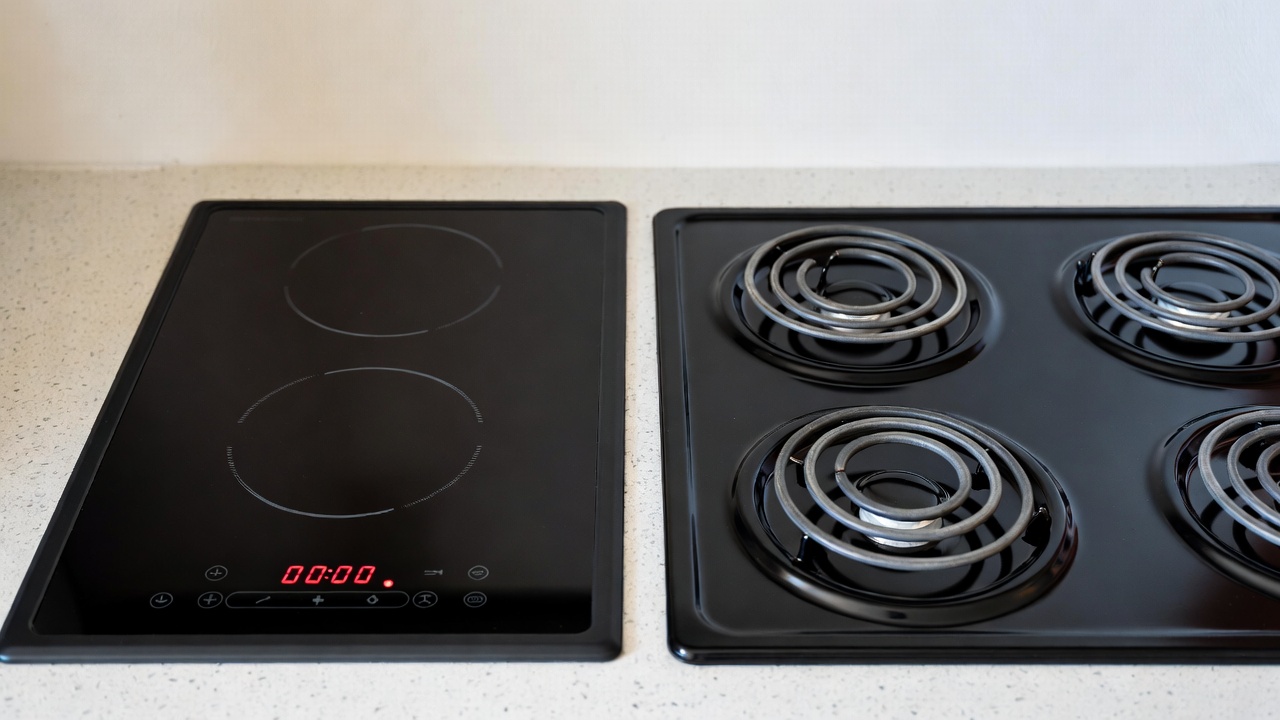
An electric cooktop is straightforward. It uses electricity to heat coils or smooth glass-topped surfaces. The heat from these elements transfers directly to your pots and pans.
Traditional electric cooktops have exposed coils. You see metal loops that glow red when turned on. They heat up quickly and cool down slowly. If you touch them while they’re on, you’ll burn yourself, so they demand respect in the kitchen.
Modern electric cooktops often feature flat glass tops. These look sleek and clean. They’re much easier to wipe down than coil models. The heating elements sit underneath the glass surface.
Here’s how it works: Electric cooktops contain resistance coils that get hot when electricity flows through them. This heat travels up through the cookware to cook your food. Simple, reliable, and well-established technology that’s been around for decades.
What Is an Induction Cooktop?
Induction cooktops use completely different technology. They don’t rely on traditional heating elements at all.
Instead, induction cooktops use magnetic fields to heat your cookware directly. When you turn on an induction burner, an electromagnet beneath the glass surface creates a magnetic field. This field interacts with the metal in your pots and pans, causing them to heat up rapidly.
Think of it like this: The cooktop doesn’t get hot. Your cookware gets hot. The surface stays relatively cool because the magnetic energy goes straight into your pot or pan, not into the cooktop itself.
This is fundamentally different from how electric cooktops operate. The cooktop surface might get warm from the hot pan sitting on it, but it’s not generating heat the way electric elements do.
Key Differences You Need to Know
Heat Transfer Method
Electric cooktops heat coils or flat surfaces. That heat then travels up through your cookware. Some heat gets lost to the air and surroundings. This is called conduction heating.
Induction cooktops heat only the cookware through magnetic fields. Almost no heat gets wasted on the cooktop surface itself. The energy transfer is much more direct and efficient.
Speed of Cooking
Induction cooktops heat up incredibly fast. You can boil water in just a couple of minutes. Many people report that induction cooking is noticeably quicker than electric.
Electric cooktops take longer to reach high temperatures. Coil-style cooktops especially need time to heat up and cool down. Glass-top electric models are faster than coil types but still slower than induction.
If you’re someone who values speed in the kitchen, induction has a clear advantage here.
Cookware Compatibility
This is one of the biggest drawbacks of induction cooking. Your pots and pans must be magnetic to work on an induction cooktop.
Most stainless steel cookware works fine. Cast iron works beautifully. Copper-bottomed pans often don’t work. Aluminum pans won’t work unless they have a magnetic bottom layer.
Here’s an easy test: Take a magnet and hold it to the bottom of your cookware. If it sticks, your pan will work on an induction cooktop. If it doesn’t stick, you’ll need to replace it.
Electric cooktops don’t care about magnetic properties. Any cookware works. Your old copper pans? No problem. That beautiful aluminum cookware set? It’ll work great. This flexibility matters to many home cooks who have accumulated different types of pans over the years.
Safety Features
Induction cooktops win big in the safety department. The cooktop surface doesn’t get hot, only your cookware does. This means you could theoretically place your hand on the surface and not get burned (though you wouldn’t want to do this if a hot pan is there).
The magnetic energy only activates when magnetic cookware is present. You can’t accidentally burn yourself on an empty burner.
Electric cooktops get hot and stay hot for a long time after you turn them off. Touching the surface can cause serious burns. This is especially concerning if you have kids or pets in your home. The coils glow red, making it obvious they’re dangerous, but the cooktop surface itself isn’t always clearly marked as hazardous.
Energy Efficiency
Induction cooktops are more energy-efficient. Since the heat goes directly into the cookware with minimal waste, you use less electricity overall. This translates to lower utility bills over time.
Electric cooktops lose some energy to the surrounding air. More electricity is needed to achieve the same cooking results as induction.
If energy costs matter to your household budget, induction is the more economical choice in the long run.
Temperature Control
Induction cooktops respond instantly to temperature changes. You adjust the dial and the heat changes immediately. This makes induction great for cooking tasks that need precise heat control, like melting chocolate or making delicate sauces.
Electric cooktops respond more slowly. When you lower the temperature, the element stays hot for a while. You need to anticipate temperature changes and adjust earlier than you would with induction.
Serious cooks often prefer induction for this reason. The instant response feels more natural and gives better results in fine cooking.
Noise Level
Here’s something that surprises many people: induction cooktops can be noisy. You might hear humming, buzzing, or clicking sounds coming from the cooktop. Different models vary in how loud they get. Some barely make a sound. Others can be quite noisy.
Electric cooktops are silent. Coils don’t make noise. Glass-top electric models are quiet too.
If you hate kitchen noise, this is worth considering. Many induction users get used to the sound and stop noticing it. Others find it annoying.
Cost Considerations
Installation Costs
Electric cooktops are cheaper to install. Most kitchens already have the electrical infrastructure to handle electric cooktops. Installation is straightforward.
Induction cooktops also use electricity, but some electricians charge more for installation. The difference usually isn’t huge, but it’s worth getting a quote.
If your kitchen has gas lines but no electric lines, converting to electric or induction requires new electrical work, which gets expensive.
Purchase Price
Electric cooktops are generally cheaper to buy upfront. You can find quality glass-top electric models at reasonable prices.
Induction cooktops cost more initially. Premium models can be quite expensive. Budget-friendly induction options exist, but you’ll still pay more than you would for an equivalent electric cooktop.
Long-Term Costs
Induction cooktops save money on energy bills. Over several years, the energy savings can partially offset the higher purchase price.
Electric cooktops cost more to operate long-term due to lower efficiency. However, the lower upfront cost might appeal to people on tight budgets.
Do the math based on your local electricity rates and how much you cook. The savings might be significant or minimal depending on your situation.
Maintenance and Repairs
Electric cooktops are easier to repair. Replacement parts are widely available and affordable. Most appliance repair people know how to fix them.
Induction cooktops are more complex. Repairs can cost more. Finding someone who services induction models might be harder in some areas.
Cooking Performance Comparison
Boiling Water
Induction wins decisively here. You can boil a pot of water in about five to seven minutes. Electric cooktops take twice as long or more.
For tasks like cooking pasta or making stock, induction saves you time every single time you cook.
Simmering and Low Heat
Both cooktops handle low heat reasonably well, but induction gives you better control. You can maintain a steady simmer without the heat creeping up as the cooktop cools down.
Electric cooktops sometimes struggle with very low temperatures. The residual heat can make maintaining a gentle simmer trickier.
High-Heat Cooking
Induction handles high heat cooking excellently. Stir-frying works great on induction because the heat responds instantly when you move the pan.
Electric cooktops can do high-heat cooking, but the slower response time makes it less ideal for quick cooking techniques that need fast temperature adjustments.
Baking and Oven Cooking
This doesn’t directly involve the cooktop, but if you have a combined cooktop and oven unit, both work equally well for oven cooking. The cooktop type doesn’t affect oven performance.
Maintenance and Cleaning
Cleaning Electric Cooktops
Coil-style electric cooktops are annoying to clean. Crumbs and spills fall between the coils. You have to be careful not to get water in the heating elements.
Glass-top electric cooktops are much easier. You wipe them down with a damp cloth. For stubborn spills, use a glass cooktop cleaner. Spills don’t get trapped anywhere because the surface is smooth.
Cleaning Induction Cooktops
Induction cooktops have smooth glass surfaces like glass-top electric models. Cleaning is just as easy: wipe with a damp cloth or use a glass cleaner.
Since the surface doesn’t get as hot as electric cooktops, spills are less likely to burn on and stick permanently. This actually makes induction cooktops easier to keep clean over time.
Durability and Lifespan
Both electric and induction cooktops are built to last many years. Quality matters more than the type.
Electric cooktops from good brands last fifteen to twenty years. Induction cooktops also last that long if well-maintained.
The glass surfaces on both types can crack if dropped on or hit hard. Once cracked, you usually need to replace the entire cooktop. This is expensive either way.
Special Situations and Considerations
Camping and Outdoor Cooking
Neither induction nor electric cooktops work outdoors without a power source. For camping, you need gas stoves or portable camping cookers. This doesn’t apply to most home kitchen situations, but it’s worth noting.
Power Outages
Both cooktops need electricity. If your area experiences frequent power outages, neither option will work during an outage. Gas stoves remain functional, which is one advantage they have.
Rental Properties
Electric cooktops are more common in rental properties. Tenants are more accustomed to them. If you’re furnishing a rental, electric might make more sense.
Induction cooktops are becoming more common in rentals too, but they’re still less universal.
Kitchen Remodels
If you’re doing a full kitchen remodel, you have the most flexibility. You can choose based purely on what suits your cooking style and budget.
If you’re just upgrading the cooktop and keeping other elements, you need to ensure your kitchen layout and electrical system can accommodate your choice.
Accessibility Considerations
Induction cooktops offer some accessibility benefits. Since the surface doesn’t get dangerously hot, people with mobility issues or vision impairments face lower burn risk.
Electric cooktops with clear visual indicators and controls work well too. The glowing red coils provide visual feedback that the cooktop is on.
Neither option is perfect for everyone. Your specific needs matter more than general statements.
Making Your Final Decision
So which one should you choose?
Choose Electric Cooktops If:
- You own varied cookware and don’t want to replace it
- Your budget is tight and you need lower upfront costs
- You don’t cook frequently or don’t need fast heating
- You prefer silent kitchen appliances
- You want a reliable, simple technology you know will work
- Your kitchen already has electrical infrastructure in place
- You like the traditional cooking experience
Choose Induction Cooktops If:
- You want faster cooking times and better energy efficiency
- Your household includes kids or pets and safety is a top priority
- You cook frequently and appreciate responsive heat control
- You’re willing to invest in quality cookware
- You value the superior cooking performance that induction offers
- You can afford the higher upfront cost
- You like newer technology and modern kitchen appliances
- You want to reduce your energy consumption and lower utility bills
The Hybrid Approach
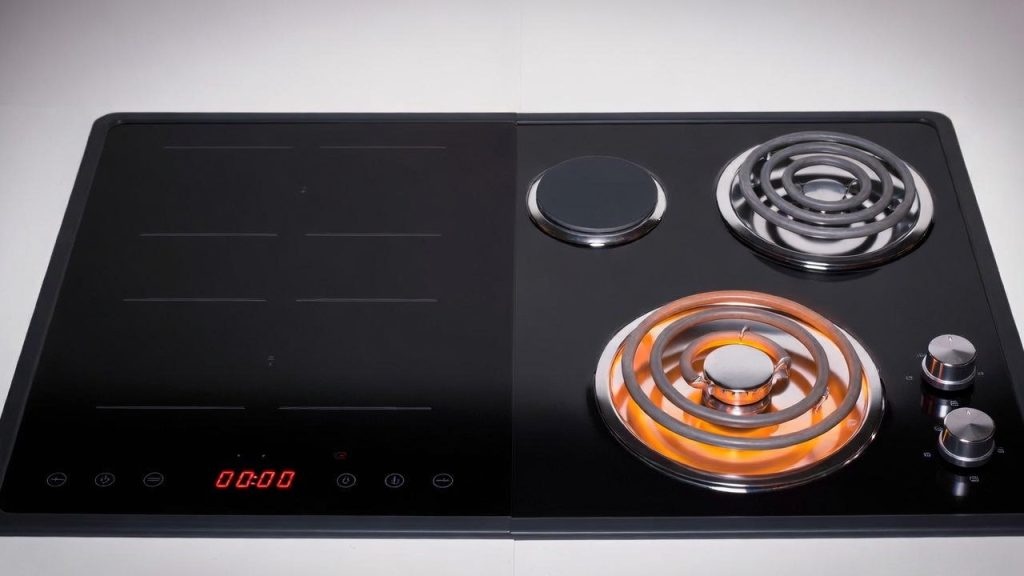
Some people solve this dilemma by installing a cooktop with both induction and electric elements. This gives you the best of both worlds. You get induction burners for fast, precise cooking and electric burners for flexibility with different cookware.
Hybrid cooktops cost more than either option alone, but they eliminate the need to choose. If budget allows, this is a smart middle-ground solution.
Real-World User Experiences
People who switch from electric to induction often report that they wouldn’t go back. The speed, control, and safety features become second nature quickly. Within a few weeks, they can’t imagine cooking on electric again.
People who stick with electric cooktops rarely regret their choice either. They appreciate the reliability and simplicity. Many don’t notice the speed difference in their everyday cooking.
This tells us that both options work well. Your satisfaction depends largely on what you expect and what fits your cooking needs.
Final Thoughts
Choosing between an induction cooktop and an electric cooktop doesn’t have to be stressful. Both are reliable, efficient options compared to older cooking technologies.
Electric cooktops offer simplicity, affordability, and compatibility with any cookware. They’re dependable workhorses that have served home cooks for decades.
Induction cooktops deliver speed, precision, and superior energy efficiency. They’re ideal for serious cooks who want the latest technology and are willing to invest in quality cookware.
Your kitchen, your budget, and your cooking habits should guide your decision. There’s no universally “right” answer. There’s only the right answer for you.
Take time to think through what matters most in your kitchen. Consider how often you cook, what you cook, and how much you want to spend. Talk to people who have both types. Look at cooktops in person if you can.
The good news is that either choice will serve you well. You can’t really go wrong. Both induction and electric cooktops represent excellent ways to cook delicious meals at home.
So stop worrying and start cooking. Your new cooktop is going to work great.
Quick Comparison Table
Here’s a quick reference to help you compare at a glance:
| Feature | Electric Cooktop | Induction Cooktop |
|---|---|---|
| Heat Speed | Moderate | Very Fast |
| Energy Efficiency | Good | Excellent |
| Cookware Flexibility | Excellent | Limited (magnetic only) |
| Safety | Moderate | Excellent |
| Upfront Cost | Lower | Higher |
| Operating Cost | Higher | Lower |
| Noise Level | Silent | Can be noisy |
| Temperature Control | Good | Excellent |
| Ease of Cleaning | Good (glass models) | Excellent |
| Learning Curve | None | Minimal |
| Durability | Very Good | Very Good |
Frequently Asked Questions
Can you use any pots and pans on an induction cooktop?
No. You need cookware with a magnetic bottom. Cast iron and most stainless steel work. Aluminum, copper, and glass don’t work unless they have a magnetic base layer.
Is induction cooking safe for children?
Yes. Induction cooktops are safer for children because the surface doesn’t get dangerously hot. Only the cookware heats up. However, the hot pan itself is still dangerous, so supervision is still necessary.
Will my electric bill go down with an induction cooktop?
Possibly. Induction cooktops are more efficient, so they use less electricity. Your savings depend on your local electricity rates and how much you cook. You might save ten to twenty percent on cooking-related electricity costs.
How much does it cost to install an induction cooktop?
Installation costs vary by location and your kitchen setup. Expect to pay anywhere from one hundred to five hundred dollars for installation. Get quotes from local electricians for accurate pricing.
Which cooktop is better for an apartment?
Both work in apartments. Electric cooktops are more common in rental properties, but induction is becoming more popular. Check your lease to see if there are restrictions on which type you can use.
Can you repair an induction cooktop yourself?
Most repairs require a professional. Induction cooktops contain complex electronics. Trying to repair them yourself risks damaging the unit or getting hurt. Call a professional for service.
How long do induction cooktops last?
Quality induction cooktops last fifteen to twenty years with proper care. Avoid dropping heavy objects on them and wipe up spills quickly. They’re built to be durable.
Is induction cooking actually faster?
Yes. Induction cooktops heat water and cookware much faster than electric cooktops. You’ll definitely notice the difference in boiling times and overall cooking speed.
What should I do if my pans don’t work on induction?
You have a few options. Buy new cookware that’s induction-compatible. Many affordable induction-ready options exist. You can also buy cookware adapters that make non-magnetic pans work on induction, though this defeats some of the efficiency benefits.
Do I need to replace my cookware if I get an induction cooktop?
Only if your current cookware isn’t magnetic. Test your pans with a magnet first. Many people find that at least some of their existing cookware works fine on induction.
Conclusion
The choice between an induction cooktop and an electric cooktop comes down to your personal priorities. Both technologies work well. Both will help you cook delicious meals.
Think about speed, safety, cost, and cookware compatibility. Consider your cooking style and habits. Reflect on what matters most to you in your kitchen.
Then make your choice with confidence. You’re going to be happy either way. Enjoy your new cooktop and the meals you’ll create on it.
Happy cooking!

Hi, I’m Mary, the founder of KitchenClue.com. I’m deeply passionate about everything that makes a kitchen smarter, easier, and more enjoyable. I share hands-on insights and practical expertise on kitchen gear that truly helps in daily cooking. Along with my dedicated research team, we study products carefully, and our writers create honest, well-tested reviews using trusted, authentic sources—so you can choose kitchen tools with total confidence.