Ja Henckels vs Zwilling Knife
Are you trying to pick the right kitchen knife? The choice between Ja Henckels and Zwilling can feel tricky. Both brands make quality blades. Both have loyal fans. But they’re not the same.
This guide breaks down the real differences. You’ll learn what makes each knife special. You’ll see which one fits your kitchen best. Let’s dig in.
Why Your Kitchen Knife Matters
Your knife is the most important tool in your kitchen. You use it every single day. A good blade makes cooking faster. It makes food prep easier. It keeps you safer too.
Bad knives are frustrating. They slip. They dull fast. They make you work harder. Good knives change everything. They glide through vegetables. They stay sharp longer. Cooking becomes more fun.
That’s why picking the right one is worth your time.
Who Makes These Knives?
Both Ja Henckels and Zwilling come from Germany. This matters. Germany has a long history of making excellent cutlery. German knife makers are known for quality control. They care about details.
The Zwilling Story
Zwilling is the famous one. The name means “twin” in German. The brand dates back centuries. Zwilling J.A. Henckels is the full company name. They own multiple knife brands under one roof.
Zwilling is their premium line. These are top-of-the-line kitchen knives. They cost more money. But you get German engineering and reputation.
The Ja Henckels Story
Ja Henckels is also made by the same parent company. But it’s positioned differently. Ja Henckels sits in the middle. It’s not the cheapest option. It’s not the most expensive either.
Think of Ja Henckels as the bridge. It connects budget-friendly options to luxury knives. You get decent quality without paying luxury prices.
Build Quality: What’s Under the Steel
Both brands use stainless steel. This is important. Stainless steel doesn’t rust easily. It’s easier to care for than carbon steel.
Zwilling Knife Construction
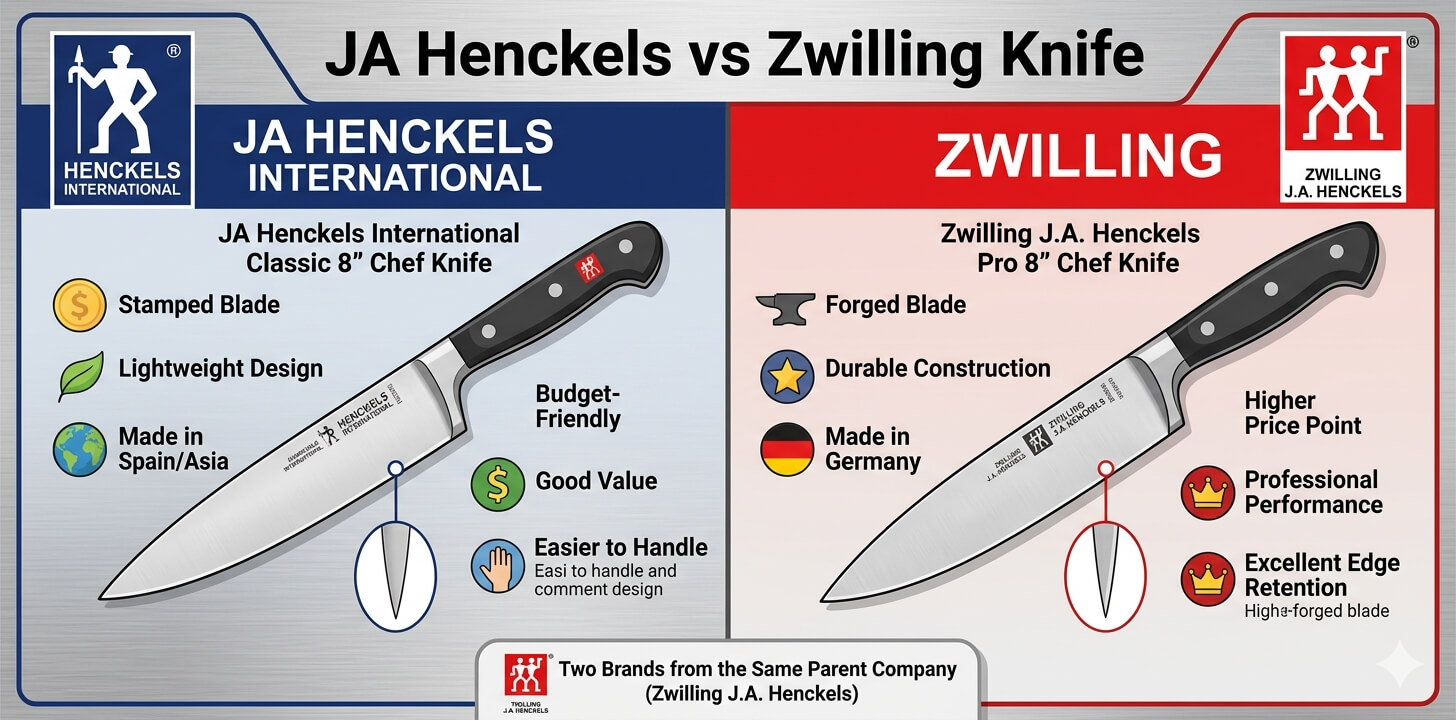
Zwilling uses high-quality stainless steel. Their steel has a high carbon content. This means it holds an edge longer. The blade is forged. Forging makes steel stronger and more flexible.
Each Zwilling knife is built by hand. This takes time. This costs money. But it shows in the final product.
The blades feel smooth. The balance is perfect. The handles are solid. Everything feels expensive because it is.
Ja Henckels Knife Construction
Ja Henckels also uses quality stainless steel. But the process is different. Many Ja Henckels knives are stamped. Stamping is faster than forging. It uses less energy.
Stamped blades are lighter. They’re easier to control. They cost less to make. But they don’t hold an edge quite as long.
This doesn’t mean Ja Henckels is bad. It just means it’s different. The steel is still good. The knives still work well.
The Sharp Edge: How Long Does It Last?
A sharp blade matters. A dull blade is dangerous. Dull blades slip. Sharp blades grip food.
How Long Zwilling Stays Sharp
Zwilling knives hold their edge for a long time. Some users report their Zwilling knives stay sharp for months. This is because of the forging process and steel quality.
Forged blades have a tighter structure. This tighter structure keeps the edge sharp longer.
When you do need to sharpen, Zwilling knives respond well. The steel takes an edge quickly. Professional chefs often choose Zwilling for this reason.
How Long Ja Henckels Stays Sharp
Ja Henckels knives stay sharp for a decent amount of time. Not quite as long as Zwilling. But still pretty good.
Stamped blades dull a bit faster. You might need to sharpen every month or two. This isn’t a huge deal. Most home cooks sharpen on that schedule anyway.
The good news? Ja Henckels blades sharpen easily. You won’t need special equipment. A basic sharpener works fine.
Weight and Balance: How They Feel in Your Hand
Weight matters. A heavy knife isn’t always better. Neither is a light one. You need the right balance.
Zwilling Weight and Feel
Zwilling knives are heavier. The forged blade adds weight. This weight can feel good. It gives you power with each cut.
Some chefs love this. They say the weight does the work. You don’t have to press as hard.
Others find it tiring. Your hand gets tired after long cooking sessions. It depends on your preference and how much you cook.
The balance point is usually near the handle. This puts the weight where you control it.
Ja Henckels Weight and Feel
Ja Henckels knives are lighter. The stamped blade is thinner. This makes them easier to control.
Your hand doesn’t get as tired. You can chop vegetables for an hour without fatigue. This is great for home cooks who aren’t professional chefs.
Lighter knives feel more delicate. But don’t let that fool you. They still cut very well.
Handle Design: Comfort and Control
Your handle is where you grip. It needs to be comfortable. It needs to be safe.
Zwilling Handles
Zwilling uses various handle materials. Many of their knives have synthetic handles. These handles are tough. They last a long time.
The design is ergonomic. That means it fits your hand well. The grip is secure. Your hand doesn’t slip.
Zwilling handles often have weight to match the blade. The balance feels even. Professional kitchens love this consistency.
Some Zwilling knives have more decorative handles. They look beautiful on your counter. They’re also practical and durable.
Ja Henckels Handles
Ja Henckels also pays attention to handles. Their handles are comfortable too. They use quality materials.
The handles are usually a bit lighter. They balance the lighter blade nicely.
Many home cooks prefer Ja Henckels handles. They feel less intimidating. They’re easier to control for daily kitchen work.
The grip is reliable. Your hand won’t slip when wet. That’s a safety feature you need.
Price: What You’re Really Paying For
Money is real. Let’s talk about cost.
Zwilling Pricing
Zwilling knives cost more. A basic chef’s knife can run $100 to $200 or more. Some specialty knives cost much more.
What are you paying for? German engineering. Handcrafted quality. A famous brand name. Better edge retention. Precision manufacturing.
This is an investment. If you cook a lot, it’s worth it. These knives last for years. You might use the same Zwilling knife for 10 or 20 years.
When you divide the cost over years, it’s reasonable. You get quality that doesn’t disappoint.
Ja Henckels Pricing
Ja Henckels knives cost less. A good chef’s knife might run $30 to $70. This is a real difference.
You’re saving money. But you’re not saving on quality. Ja Henckels is still made in Germany. The craftsmanship is still good.
You’re paying for good value. Not premium status. Not luxury branding. Just solid, working knives.
For home cooks, this is smart. You get quality knives without breaking the bank.
Different Knife Types: What Each Brand Offers
Both brands make different kinds of knives. Let’s look at the main types.
Chef’s Knife
The chef’s knife is the workhorse. You use it for most tasks.
Zwilling Chef’s Knives are forged and precise. They feel like luxury items. The blade is thick and strong.
Ja Henckels Chef’s Knives are stamped and responsive. They’re easier to use every day. The blade is thinner but still capable.
Both will chop, dice, and slice. Both will last. Zwilling lasts longer between sharpenings. Ja Henckels requires sharper technique but is more forgiving to control.
Paring Knife
A paring knife is small. You use it for detail work.
Zwilling Paring Knives are tiny works of art. The balance is perfect. The edge is razor sharp.
Ja Henckels Paring Knives are practical and easy to handle. They’re less expensive. They work just as well for basic tasks.
Bread Knife
Bread needs a serrated blade. A smooth blade tears the bread.
Zwilling Bread Knives have perfect serration. The teeth are even. They saw through bread without crushing it.
Ja Henckels Bread Knives also have good serration. They work well for cutting bread and tomatoes. The serrated edge lasts long.
Utility Knife
A utility knife sits between chef’s and paring. It’s handy for medium tasks.
Both brands make solid utility knives. Zwilling’s is more refined. Ja Henckels’s is more practical for daily use.
Maintenance: Keeping Your Knife in Shape
A good knife needs care. This applies to both brands.
General Care Tips
Never put your knife in the dishwasher. The heat and chemicals damage the edge. Hand wash only.
Wash right after use. Food residue can stain stainless steel. Warm soapy water works fine.
Dry immediately. Don’t let water sit on the blade. Corrosion can start even with stainless steel.
Store properly. A knife block or magnetic strip is best. Drawers can damage the edge.
Use a cutting board. Wood or plastic only. Never metal or glass. Those destroy your edge fast.
Sharpening
Your blade will dull eventually. This is normal.
You can use a honing steel. This realigns the edge. You do this before each use.
You can use a sharpener. This removes metal to create a new edge. You do this monthly or quarterly.
Zwilling knives hold an edge longer. You might sharpen quarterly.
Ja Henckels knives might need sharpening monthly. This is fine. It’s part of ownership.
Both respond well to sharpening. You don’t need fancy equipment. A basic sharpener does the job.
Real User Experiences: What People Say
Let’s look at what actual knife users say.
Zwilling Users Speak
Professionals love Zwilling. Chefs say the knives feel amazing. They say the edge lasts forever. They say it’s worth the price.
Home cooks are divided. Some say Zwilling changed their cooking. Others say it’s overkill for home use. They ask why they spent so much on a knife.
One thing is clear. People who buy Zwilling stay loyal. They buy more Zwilling knives.
Ja Henckels Users Speak
Home cooks love Ja Henckels. People say it’s the smart buy. They say you get quality without waste.
People appreciate the lower price. They say the knives cut great. They say maintenance is easy.
Some mention the edge dulls faster. But they don’t mind. The sharpening process is simple. It’s part of the routine.
Budget-conscious cooks often rave about Ja Henckels. They say it’s a hidden gem.
Durability: How Long Will It Last?
You want your knife to last. Both brands deliver.
Zwilling Longevity
Zwilling knives can last decades. Some people use the same knife for 20 or 30 years. The forged construction helps. The steel quality helps. The craftsmanship matters.
If you drop a Zwilling knife, it usually survives. The blade doesn’t chip easily. The handle doesn’t crack.
This longevity justifies the cost. You’re not replacing your knife every few years.
Ja Henckels Longevity
Ja Henckels knives last many years too. You can easily get 5 to 10 years of use. Some last longer.
The stamped construction is still solid. The steel is good. Normal care keeps them working.
Eventually, stamped blades might get tiny chips at the edge. This is normal. Resharpening fixes it. The knife continues working fine.
So Ja Henckels lasts long. Not quite as long as Zwilling. But still impressive for the price.
Special Features: Bells and Whistles
Some knives have extra features.
Zwilling Special Features
Some Zwilling knives have bolsters. A bolster is a thick part where the blade meets the handle. It protects your finger. It adds weight and balance.
Some have Damascus patterns. These are decorative wavy lines in the steel. They’re made by layering different steels. They look incredible. They’re also a sign of quality.
Some have special blade coatings. These prevent sticking. They make cutting easier.
These features add cost. They’re not essential. But they’re nice to have.
Ja Henckels Special Features
Ja Henckels keeps it simple. Most knives are straightforward. No fancy Damascus patterns. No decorative bolsters.
But some models have interesting details. Some have textured handles for better grip. Some have unique blade shapes.
Ja Henckels focuses on function over flash. That’s the philosophy.
Who Should Buy Zwilling?
Buy Zwilling if:
You cook every day. You’re serious about cooking. You want a knife that feels like luxury.
You have the budget. You see it as an investment. You want it to last 20 years.
You’re a professional chef. You need precision and reliability.
You want a beautiful knife. You want something to admire.
You want to minimize sharpening. You want an edge that lasts.
Who Should Buy Ja Henckels?
Buy Ja Henckels if:
You’re a home cook. You cook regularly but not professionally.
You want good quality on a budget. You don’t need luxury.
You’re learning to cook. You don’t want to be nervous about using an expensive knife.
You’re building your knife collection. You want multiple knives without spending a fortune.
You prefer lighter knives. You like being able to control with finesse.
You don’t mind sharpening. You see it as regular maintenance.
Head-to-Head Comparison Table
| Feature | Zwilling | Ja Henckels |
|---|---|---|
| Price | High | Medium |
| Construction | Forged | Stamped |
| Weight | Heavy | Light |
| Edge Retention | Excellent | Good |
| Durability | 20+ years | 5-10 years |
| Handle Comfort | Excellent | Very Good |
| Ease of Use | Good | Excellent |
| Maintenance | Lower | Moderate |
| Sharpening Frequency | Quarterly | Monthly |
| Best For | Professionals | Home Cooks |
| Steel Quality | Premium | Good |
Common Questions About These Knives
Can You Sharpen Zwilling Knives at Home?
Yes. They sharpen easily. You don’t need professional equipment. A basic sharpener works fine. You just don’t need to sharpen as often.
Do Ja Henckels Knives Rust?
No. They use stainless steel. Rust is not a real concern. Just wash and dry them. Don’t leave them wet. That’s all.
Are Both Knives Dishwasher Safe?
The packaging might say yes. But don’t do it. Dishwashers damage knife edges. Always hand wash. It takes two minutes.
Which Brand Is Better Overall?
Neither is better. They’re better for different people. Zwilling is better for professionals and serious cooks. Ja Henkcels is better for home cooks on a budget.
How Often Should You Sharpen Your Knife?
It depends on use. If you cook every day, monthly is reasonable. If you cook a few times a week, every two months works.
Your knife will tell you. If it starts to slip on tomatoes, sharpen it.
Can You Use These Knives for Everything?
Almost. Use them for food prep. Use them on wood or plastic boards.
Don’t use them on glass or metal. Don’t use them to pry things open. Don’t use them as a can opener.
Treat them like the quality tools they are.
Making Your Final Decision
Here’s the truth. Both knives are good. You can’t go wrong with either.
Think about your situation. How often do you cook? What’s your budget? How much do you care about maintenance?
If you cook daily and have money, Zwilling wins. The edge lasts longer. The feel is premium. You’ll love it for years.
If you cook a few times a week and watch your budget, Ja Henckels wins. You get quality at a fair price. You won’t regret it.
If you’re just starting, Ja Henckels is smarter. Build your skills first. Get expensive knives later.
If you’re a professional, Zwilling is standard. Your knife is part of your livelihood. Get the best.
Tips for Using Your New Knife
Once you pick one, use it right.
Cut downward. Don’t cut toward your body. Use a rocking motion with chef’s knives. Let the blade do the work.
Use a cutting board. Wood is best. Plastic works too. Never use glass or marble.
Keep it sharp. A sharp knife is safer than a dull one. Dull knives slip.
Wash by hand. Immediately after use. Dry right away.
Store safely. A knife block protects the edge. It protects you too.
Use the right knife for the task. Use a chef’s knife for general work. Use a paring knife for detail work. Use a bread knife for bread.
Conclusion: Your Knife Journey Starts Here
Choosing between Ja Henkcels and Zwilling doesn’t have to stress you out. Both brands deliver quality. Both will serve you well.
Zwilling is the premium choice. It’s worth the investment if you cook seriously. The edge stays sharp. The knife lasts forever. It feels amazing in your hand.
Ja Henkcels is the smart choice. It’s worth the savings if you’re a home cook. The knives work great. They’re easy to use. They’re affordable.
Visit a store if you can. Hold both knives. Feel the weight. Feel the balance. Let your hand guide you.
Then buy with confidence. Whichever you choose, you’re getting a German-made knife with a heritage of quality.
Your kitchen will thank you. Your cooking will improve. Your food prep will be easier.
Both of these knife brands are reliable. Both represent great value in their price categories. Both come from a company that cares about quality.
So pick one. Start cooking. Enjoy your knife. It will serve you well for years to come.
Happy cutting.

Hi, I’m Mary, the founder of KitchenClue.com. I’m deeply passionate about everything that makes a kitchen smarter, easier, and more enjoyable. I share hands-on insights and practical expertise on kitchen gear that truly helps in daily cooking. Along with my dedicated research team, we study products carefully, and our writers create honest, well-tested reviews using trusted, authentic sources—so you can choose kitchen tools with total confidence.