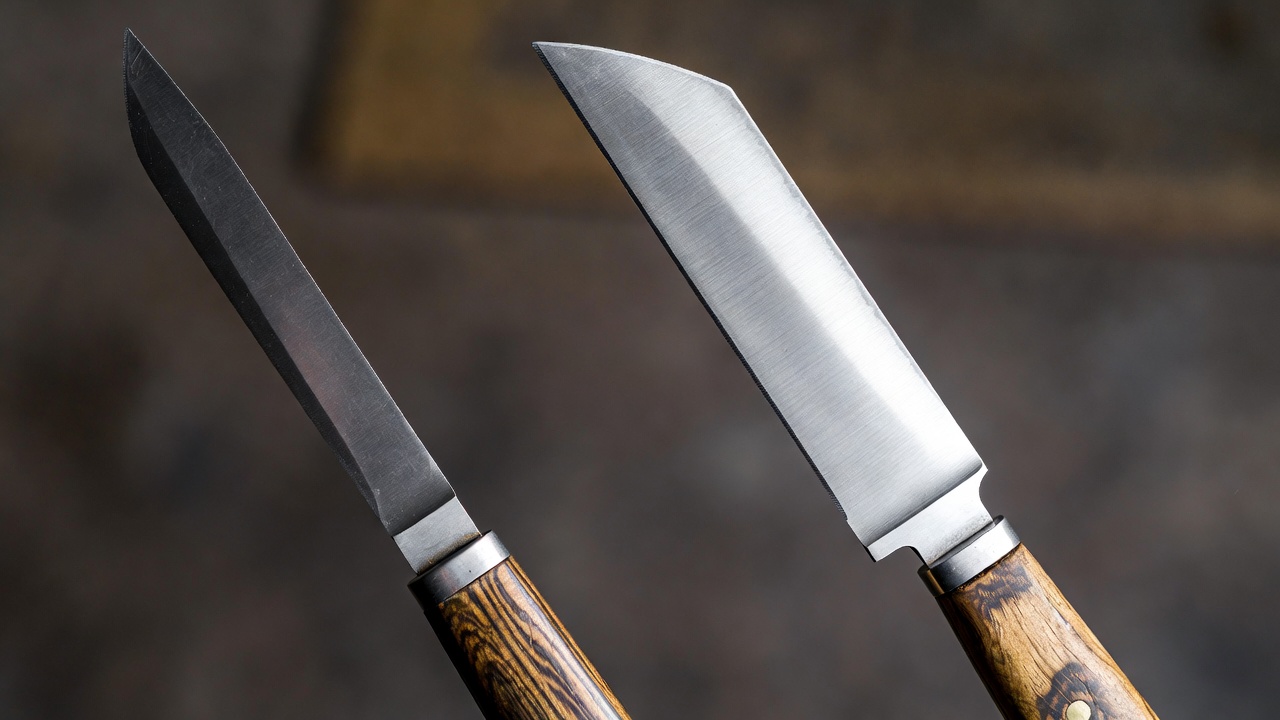
Single Bevel vs Double Bevel Knife
If you’ve ever spent time in a kitchen, you know that having good knives makes a real difference. But here’s the thing – not all knives are made the same way. There’s this whole world of knife styles out there, and one of the biggest differences comes down to the bevel. Sound confusing? Don’t worry. We’re going to break it down in a way that actually makes sense.
What Does Bevel Even Mean?
Let’s start with the basics. A bevel is the angled edge of your knife blade. Think about it like this – if you look at your blade from the side, you’ll see that it’s not flat. Instead, it slopes down to create that sharp cutting edge at the bottom.
The bevel is super important because it affects how your knife cuts, how sharp it gets, and how long it stays sharp. It’s the angle that makes the magic happen.
The Single Bevel Knife Explained
A single bevel knife has one flat side and one angled side. Imagine you cut the blade at an angle on just one side, and the other side stays totally flat.
How Single Bevel Knives Work
When you look at a single bevel blade straight on, one side is completely flat, like a mirror. The other side has all the angle. This means the sharp edge is formed where that angled side meets the flat side.
Single bevel knives are sharpened on only one side. This is actually pretty cool because you’re only working with one side to maintain and sharpen. The flat side never needs sharpening.
What Are Single Bevel Knives Good For?
Single bevel knives are kings of precision. They’re amazing for:
Slicing and Precision Work If you need to make clean, straight cuts, a single bevel knife is your friend. The flat side against your ingredient means you get less deviation. The blade doesn’t rock or wander as much. You get sharp, clean slices every single time.
Pushing Through Tough Stuff When you’re cutting through something hard, like a frozen fish or dense vegetables, single bevel knives shine. The power transfer from your hand to the blade is really efficient.
Japanese Kitchen Work Single bevel knives are the traditional choice in Japanese cooking. They’re used for sushi preparation, vegetable cutting, and fish work. Professional sushi chefs rely on single bevel knives for their precision.
Detail Work If you need fine detail and control, single bevel is the way to go. Decorative cuts, thin slices, and intricate prep work all benefit from this design.
The Challenges of Single Bevel Knives
Here’s where things get real. Single bevel knives aren’t perfect for everyone.
They Have a Learning Curve Single bevel knives need to be used in a certain way. You can’t just hack at your ingredients with it. You need proper technique. The flat side needs to stay in contact with your food. This takes practice and patience.
They Feel Awkward at First If you’re right-handed, a single bevel knife is made for right-handed use. Same with left-handed knives. They’re designed specifically for one side. Using them the “wrong way” feels weird and doesn’t work well.
Right vs Left-Handed Matters Most single bevel knives are made for right-handed people. If you’re left-handed, you need to find a left-handed version, and they can be harder to find. Some folks have to special order them.
They Require More Maintenance Since all the sharpness is on one side, that side takes all the work. It dulls faster in some ways. You need to touch it up regularly to keep it sharp.
Precision is Nice But Slow When you’re doing bulk prep work, single bevel knives can slow you down. They demand that proper technique we talked about.
The Double Bevel Knife Explained
A double bevel knife has angles on both sides of the blade. Both sides slope down to meet at the center, creating that sharp edge.
How Double Bevel Knives Work
If you look at a double bevel blade from the side, you’ll see a V-shape. Both sides are angled equally (in most Western knives) toward that center line where the sharp edge lives.
This means the sharp edge is the meeting point of two angled surfaces, not an angled surface and a flat surface like with single bevel knives.
Double bevel knives need sharpening on both sides. It takes more work to maintain them, but many people find it more balanced.
What Are Double Bevel Knives Good For?
Double bevel knives are the workhorses of most Western kitchens. They’re fantastic for:
Everyday Kitchen Work These knives handle basically everything. Cutting vegetables, slicing meat, chopping herbs – they do it all. Double bevel knives are your reliable daily tool.
Casual Home Cooking If you’re not a trained chef, double bevel knives feel more natural. You can use them however feels comfortable. No special technique required.
Rocking and Slicing You can rock the blade on your cutting board without any problems. Double bevel knives work great whether you’re pushing, rocking, or whatever your natural motion is.
Cutting Both Directions Because both sides are angled, you can cut with the blade moving left or right. This flexibility is huge for home cooks.
Durability and Reliability Double bevel knives are tough. They handle rough treatment better. If you accidentally hit your cutting board hard or apply pressure at weird angles, they can take it.
Easier to Sharpen Since both sides are the same, you can sharpen them at home with basic tools. You don’t need special equipment or crazy skills.
The Challenges of Double Bevel Knives
Nothing’s perfect, and double bevel knives have their downsides too.
Less Precise Than Single Bevel Because of the V-shape, there’s more room for the blade to move side-to-side. You won’t get the same laser-clean cuts as with a single bevel knife.
They Get Dull Faster The double angle means more surface area taking the abuse of cutting. Some folks find they need to sharpen them more often.
Takes More Work to Sharpen You have to sharpen both sides equally. If you mess up the angle on one side, you’re creating an imbalance. This is more work than maintaining a single bevel knife.
They’re Less Efficient for Certain Jobs If you’re doing professional prep work that demands perfect precision, a double bevel knife might frustrate you. There’s always some wiggle room.
Side-by-Side Comparison
Let’s put these two types right next to each other so you can really see the differences.
Blade Shape
- Single bevel: Flat on one side, angled on the other
- Double bevel: Angled on both sides in a V-shape
Sharpness Level
- Single bevel: Gets sharper overall because all the effort goes to one side
- Double bevel: Stays reasonably sharp but not quite as sharp as single bevel
Cutting Style
- Single bevel: Slicing and pushing motions work best
- Double bevel: Works with any cutting motion – rocking, slicing, pushing, whatever
Technique Required
- Single bevel: High – needs proper form to work well
- Double bevel: Low – just use it however feels natural
Maintenance
- Single bevel: Lower maintenance on sharpening effort but must be done carefully
- Double bevel: More work but more forgiving and easier for beginners
Precision Cutting
- Single bevel: Excellent for detail work and clean cuts
- Double bevel: Good enough for most everyday tasks
Price
- Single bevel: Usually more expensive
- Double bevel: Generally cheaper and easier to find
Who Should Use It
- Single bevel: Experienced cooks, sushi chefs, precision-focused people
- Double bevel: Home cooks, casual users, anyone learning
When to Pick a Single Bevel Knife
If you fit into any of these categories, a single bevel knife might be perfect for you.
You Cook Fish Sushi, sashimi, fish butchering – these tasks really benefit from single bevel knives. The precision is incredible for seafood work.
You Want Maximum Sharpness If you’re willing to learn proper technique, single bevel knives will reward you with an edge that beats double bevel every time.
You Have Good Technique You’ve been cooking for years. You understand knife handling. You’re ready for something that demands a bit more skill.
You Do Detail Work Decorative cuts, vegetable carving, intricate prep – single bevel knives are born for this stuff.
You Love Japanese Cuisine Traditional Japanese knives are single bevel. If you’re doing Japanese cooking, using Japanese knives just makes sense.
You’re Right or Left-Handed Consistently You know which hand is your dominant hand and you’re okay with a knife made specifically for that side.
When to Pick a Double Bevel Knife
Double bevel knives make sense for you if:
You’re Still Learning If you’re building your cooking skills, double bevel knives won’t punish you for less-than-perfect technique. They’re forgiving.
You Want Versatility One knife that does everything? That’s a double bevel knife. It handles every task in your kitchen.
You Cook a Mix of Styles Western cooking, Asian cooking, whatever you’re making – double bevel knives work everywhere.
You Don’t Want to Overthink It You just want a good knife that works. You don’t want to obsess over technique or maintenance. Double bevel is your answer.
You Work Fast and Casual If you’re hacking through ingredients quickly during busy meal prep, double bevel knives are perfect. They take the abuse.
You’re Left-Handed Finding left-handed single bevel knives is way harder. Double bevel knives come in left-handed versions much more easily.
You Want Low Maintenance Sharpen both sides the same way. No special technique. No complexity. Just knife maintenance that works.
The Truth About Sharpness
Let’s talk about something that matters to every cook – how sharp the knife gets.
Single bevel knives can get sharper. That’s just facts. By concentrating all your sharpening effort on one side, you can achieve a thinner, sharper edge. It’s physics. Less material needs to come to a point.
But here’s the catch – that incredible sharpness is fragile. It’s amazing for slicing but breaks more easily if you abuse it.
Double bevel knives won’t get quite as sharp. The V-shape means there’s a small thickness at the cutting edge. But that edge is more durable. You can use it harder without it breaking.
For most home cooks, the sharpness difference between a well-maintained double bevel and a single bevel isn’t something you think about. Both will be sharp enough to do their jobs well.
The Truth About Maintenance
Both knife types need care, but the care looks different.
Single Bevel Knife Care You’re sharpening one side. You need to keep your angle consistent. You need to avoid hitting the flat side against your cutting board (though it’s hard to mess up). Most single bevel knife owners use whetstones for sharpening. It’s the most control-friendly method.
Double Bevel Knife Care You’re sharpening both sides. You need to maintain equal angles on both sides. You need to keep both sides sharp at the same level. You can use whetstones, honing steel, or pull-through sharpeners. There’s more flexibility in method.
The reality: Single bevel knives are easier to maintain once you learn how. Double bevel knives are easier to maintain if you’re a beginner.
Cost Considerations
Money matters. Let’s be honest about pricing.
Single bevel knives cost more. A quality single bevel knife runs higher than a comparable double bevel knife. You’re paying for precision engineering and often for Japanese craftsmanship.
Double bevel knives cost less. Quality double bevel knives exist at every price point. You can find excellent double bevel knives at budget-friendly prices.
If you’re on a limited budget, double bevel knives give you better value. You get a reliable tool that works well without spending a ton.
If you’re investing in a knife as a serious tool, single bevel makes sense. You’re paying for capability.
How to Know if You’re Ready for Single Bevel
Thinking about making the jump to a single bevel knife? Ask yourself these questions.
Do you know how to sharpen a knife? You should be comfortable with a whetstone. Single bevel knives deserve proper sharpening.
Do you have good cutting technique? You rock knives, you slice with control, you understand angles and pressure. You’re not just hacking at stuff.
Are you patient? Single bevel knives demand that you slow down and focus. If you’re always rushing, you’ll get frustrated.
Do you do detailed work? If your cooking involves precision cuts or delicate prep, single bevel rewards that focus.
Are you willing to learn? There’s a learning curve. You need to adapt how you hold and use the knife. Are you ready for that?
If you answered yes to most of these, single bevel knives might be calling your name.
Special Knife Types Worth Knowing About
Before we wrap up, let’s talk about some specific knives that blend these ideas or take them in different directions.
Santoku Knives These Japanese knives are technically single bevel but often come in double bevel versions. They’re short and fat, great for vegetable work. They’re friendly to Western cooks but give you some of that single bevel sharpness.
Nakiri Knives These are rectangular vegetable knives. They’re usually double bevel. They’re fantastic for vegetable work and pretty forgiving for learners.
Western Chef’s Knives These are your standard double bevel knives. 8 inches, curved blade, works for everything. The workhorse of Western kitchens.
Deba Knives These single bevel knives are made for fish work. They’re heavy and powerful. If you do a lot of fish butchering, these are incredible.
Kiritsuke Knives These have a unique shape – flat on top, angled on bottom. They’re usually single bevel. They’re beautiful and functional but require some skill.
Making Your Decision
So which one should you actually get?
If you’re a home cook who wants a reliable daily knife that handles everything, get a double bevel knife. Spend decent money on it – something in the $50-150 range from a good brand. You’ll love it.
If you cook regularly, have developed good technique, and want to explore something more specialized, consider a single bevel knife. But pick one that matches how you actually cook. Fish work? Get a deba. Vegetable focus? Get a nakiri or traditional Japanese vegetable knife.
If you’re completely new to cooking, start with a double bevel knife. Learn how to cut properly. Build your skills. Then, if you want to go deeper, explore single bevel options.
The Real Talk
Here’s the honest truth: Most home cooks will never feel a big difference between a really good double bevel knife and a single bevel knife. The difference matters most to professionals and people who cook almost every day.
What matters way more is that you pick a knife you like using and that you keep it sharp. A dull knife is dangerous and frustrating. A sharp knife is a joy.
The bevel you choose matters less than your commitment to keeping that edge maintained.
Final Thoughts on Single vs Double Bevel
Single bevel and double bevel knives are tools built for different people and different cooking styles.
Single bevel knives are for people who want precision, who are willing to learn proper technique, who appreciate craftsmanship, and who cook with focus.
Double bevel knives are for people who want reliability, who cook a variety of tasks, who value flexibility, and who just want a knife that works.
Neither one is better. They’re just different. Your cooking style, your skill level, and your goals determine which one belongs in your kitchen.
The best knife for you is the one you’ll actually use every day. So think about how you cook. Think about what matters to you. Then pick the one that fits your life.
If you’re still unsure, start with a double bevel knife. You can always explore single bevel knives later. But whatever you choose, keep it sharp, use proper technique, and enjoy the craft of cooking with a tool that deserves respect.
Your kitchen will thank you.
Quick Reference Chart
| Feature | Single Bevel | Double Bevel |
|---|---|---|
| Edge Sharpness | Maximum | Very Good |
| Learning Curve | Steep | Gentle |
| Versatility | Specialized | Versatile |
| Sharpening Difficulty | Moderate | Easy |
| Price Point | Higher | Lower |
| Best For | Precision Work | Daily Cooking |
| Technique Required | High | Low |
| Right/Left-Handed Options | Limited | Abundant |
| Durability of Edge | Delicate | Tough |
| Cutting Motions | Push/Slice | Any Motion |
| Maintenance Time | Lower | Higher |
| Professional Use | Very Common | Common |
Key Takeaways
- Single bevel knives have one flat side and one angled side, making them incredibly sharp and precise
- Double bevel knives have two angled sides, making them versatile and forgiving
- Choose single bevel if you have good technique and want maximum sharpness
- Choose double bevel if you want a reliable, easy-to-use knife for everyday cooking
- The best knife is one you’ll actually use and maintain properly
- Your cutting style and cooking goals matter more than the type of bevel
- Both can serve you well when matched to your skill level and needs
The knife you use should match how you cook, not the other way around. Pick the tool that fits your kitchen and your goals. Then commit to keeping it sharp.

Hi, I’m Mary, the founder of KitchenClue.com. I’m deeply passionate about everything that makes a kitchen smarter, easier, and more enjoyable. I share hands-on insights and practical expertise on kitchen gear that truly helps in daily cooking. Along with my dedicated research team, we study products carefully, and our writers create honest, well-tested reviews using trusted, authentic sources—so you can choose kitchen tools with total confidence.