Instant Pot vs Pressure Cooker
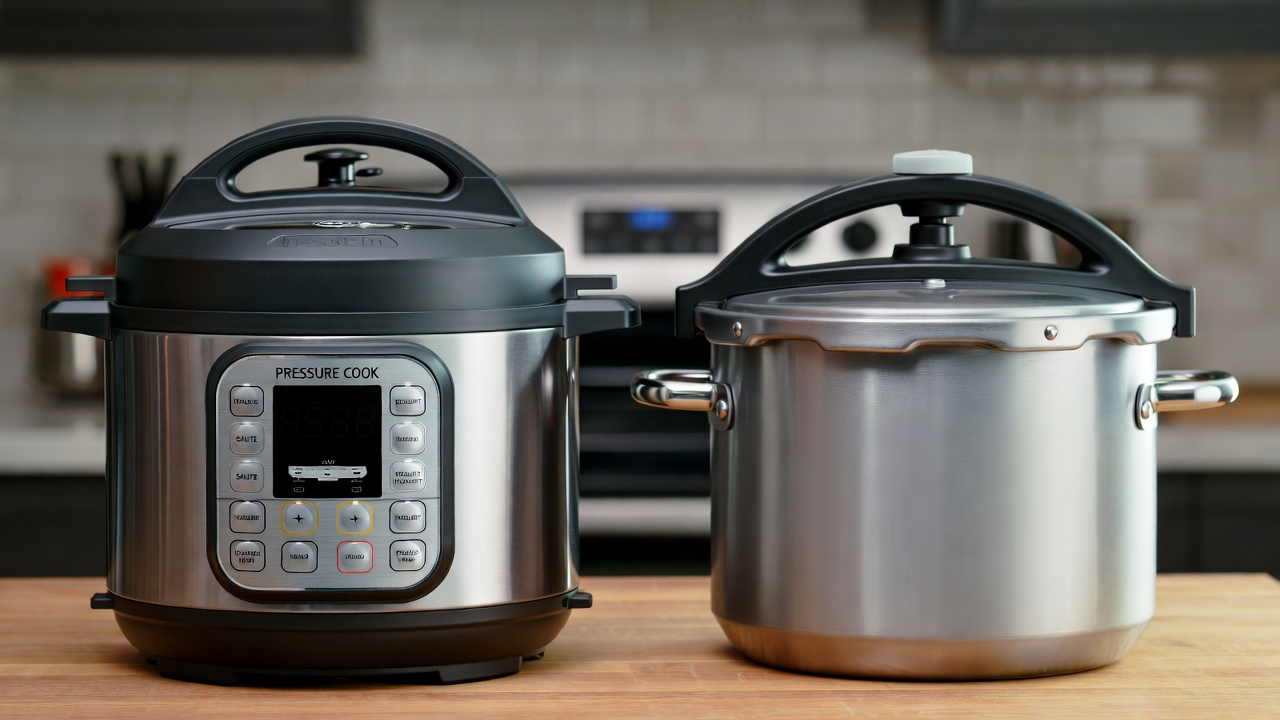
You’re standing in the kitchen appliance aisle, staring at two different pots that look kind of similar but are supposedly totally different. One has fancy buttons and a digital screen. The other looks more basic. You’re confused. You’re not alone.
People ask this question all the time. “Is an Instant Pot just a fancy pressure cooker? Can’t I just get the regular one and save money?” The short answer is: not quite. Both cook food fast under pressure, but they work in different ways. Let’s dig into this so you can figure out what actually belongs in your kitchen.
What Is a Pressure Cooker Anyway?
A traditional pressure cooker is a cooking pot with a very tight lid. When you heat liquid inside, steam builds up. The steam creates pressure. This pressure raises the boiling point of water, so your food gets much hotter than it would in a normal pot. Hotter means faster cooking.
Think about it this way. Water normally boils at 212°F. Inside a pressure cooker, water can reach about 250°F. That’s a huge difference. That extra heat cooks tough cuts of meat in minutes instead of hours. Dried beans become soft in less time. Rice doesn’t take forever.
People have used pressure cookers for generations. Your grandmother probably had one. The basic design hasn’t changed that much. You fill it with liquid and food, lock the lid down, apply heat, and wait for the magic to happen.
What Makes an Instant Pot Different?
An Instant Pot is a brand name. It’s a specific type of electric pressure cooker. Instead of sitting on the stove, it plugs into the wall. A heating element inside does the work. You don’t need to watch it or adjust the heat.
The Instant Pot can do way more than just pressure cooking. It slow cooks. It makes yogurt. It steams. It sautés. It can even bake. Some models have air frying capabilities now. It’s basically a multi-cooker that happens to have pressure cooking as one of its features.
The fancy buttons and screens let you program everything. You set it and walk away. There’s no babysitting. No burnt food at the bottom. No guessing when it’s done. The machine figures it all out for you.
Key Differences You Need to Know
Speed and Convenience
Both pressure cookers and Instant Pots cook fast. But the Instant Pot wins the convenience game by a landslide.
With a traditional pressure cooker, you have to stay alert. You build up the pressure on the stove. You watch for the hissing to know it’s working. When the timer goes off, you carefully release the pressure. If you’re not paying attention, you could overshoot the cooking time. Overcooked food tastes bad.
The Instant Pot doesn’t have this problem. You press some buttons. It heats up to pressure automatically. It maintains that pressure automatically. When the timer ends, you decide when to release the pressure. No stress. No babysitting. Just set it and do something else.
Cost
Traditional pressure cookers are cheap. You can get a solid stainless steel one for thirty to fifty bucks. Some cost even less.
Instant Pots cost more. A basic model runs around eighty to one hundred dollars. Fancy models with extra features cost more. If your budget is tight, a regular pressure cooker makes sense.
What You Can Cook
A regular pressure cooker does one job well: pressure cooking. It cooks food fast. That’s it.
The Instant Pot does multiple cooking methods. Need to brown meat first? Use the sauté function. Want to slow cook something overnight? Switch to slow cooker mode. The same machine handles everything. This saves counter space. It saves money. It saves your sanity when you don’t have to juggle multiple appliances.
Control and Safety
Traditional pressure cookers have a learning curve. Releasing pressure too fast causes splatters. Not releasing it properly can trap you with hot food inside. Overflowing happens if you’re not careful about liquid amounts. These pots demand your attention and respect.
Instant Pots have safety features built in. The lid won’t unlock until it’s safe. It won’t let pressure build if the seal is wrong. It cuts power automatically if something goes wrong. These machines are basically idiot-proof. That’s not insulting—it’s just honest. Everyone makes mistakes. The Instant Pot prevents the dangerous ones.
Counter Space
This matters if you have a small kitchen. A traditional pressure cooker gets stored away. You pull it out, use it, clean it, and tuck it back in the cabinet.
An Instant Pot usually stays on the counter. It’s big. It’s heavy. If you have limited space, that’s a real problem. Then again, if you’re using it almost every day, keeping it out makes sense.
Types of Pressure Cookers Explained
Stovetop Pressure Cookers
These sit on your stove. You control the heat. You listen for the pressure indicator. You watch the food. These are the traditional ones. They’re cheap. They cook very fast once pressurized. They work great if you’re home and paying attention.
The downsides are real though. You have to be present. You have to know the right heat level. You can’t wander off and make a salad. The food can get mushy if you forget about it.
Electric Pressure Cookers (Non-Instant Pot)
These are like Instant Pots but made by other brands. They plug in. They have digital controls. They do multiple cooking methods.
Some are actually really good. Some are mediocre. The Instant Pot brand became famous because theirs work reliably. Other brands copy the concept but sometimes the quality isn’t the same. You get what you pay for usually.
Air Fryer Pressure Cookers
These are the newest thing. They combine pressure cooking and air frying. You can pressure cook a chicken, then air fry it to get crispy skin. It sounds cool. It works, but it’s more expensive. You only benefit if you actually use both functions.
What Should You Actually Buy?
This depends on how you cook and what your life looks like.
Get a Traditional Pressure Cooker If:
You want something cheap and simple. You don’t need fancy features. You’re home when you cook. You enjoy hands-on cooking. You have limited counter space. You want something that lasts forever (they’re pretty indestructible). You’re just trying pressure cooking to see if you like it.
Traditional pressure cookers are solid. They do what they’re supposed to do. Don’t sleep on them just because they’re not trendy.
Get an Instant Pot If:
You want convenience above all else. You forget things on the stove (be honest). You like having multiple cooking methods in one device. You’re willing to spend more to avoid babysitting your food. You love cooking but hate hovering over a hot stove. You want safety features built in. You have counter space to spare. You want a machine that works the same way every single time.
The Instant Pot really does live up to the hype for most people. It makes pressure cooking accessible to folks who would never use a stovetop model.
Cost Breakdown: Real Numbers
Let’s talk money since it matters.
A basic stovetop pressure cooker: thirty to sixty dollars. Sometimes cheaper on sale.
A solid Instant Pot: eighty-five to one hundred twenty dollars depending on features.
Over time, the math changes. If you use the Instant Pot four times a week, that’s over two hundred uses per year. Spread that cost across two hundred uses and you’re paying about fifty cents per use. That’s basically free compared to eating out.
With a traditional pressure cooker, the cost per use is even lower. But you have to use it for that math to work. If it sits in your cabinet unused, it’s a waste of money no matter how cheap it was.
Common Cooking Tasks and Which Works Better
Cooking Beans
Both work great. Dried beans that normally take two hours cook in thirty minutes under pressure.
The Instant Pot wins because you can soak them the night before using the warm setting. You can cook them the next day. One machine, two steps, no moving things around.
Making Stock or Broth
Both make amazing stock in under an hour. The deep flavor usually requires eight to twelve hours of simmering normally.
The traditional pressure cooker makes it slightly faster. The Instant Pot is more convenient. Both beat the pants off regular cooking methods.
Cooking Tough Meat
Pot roasts, brisket, short ribs—all the good stuff that needs hours of braising gets done in forty-five minutes under pressure.
Both work equally well here. The Instant Pot is nicer because you can brown the meat first without switching to another pan.
Rice and Grains
This is where the Instant Pot shines. It cooks rice perfectly every single time. No burnt rice stuck to the bottom (like sometimes happens on the stove). No overflow. Just perfect, fluffy rice.
Traditional pressure cookers can do this but inconsistently. Different batches might cook differently.
Frozen Foods
Need to cook something straight from the freezer? Both can do it. The Instant Pot handles it with less fuss. Just add a bit of extra liquid and press start.
Desserts and Baking
Want to bake a cake in the pressure cooker? Instant Pot can do this. Traditional pressure cookers technically can too but it’s weirder.
Yogurt making? Instant Pot has a dedicated function. You could probably make yogurt in a traditional cooker but why would you want to?
Safety Comparison
People worry about pressure cookers exploding. That fear comes from stories about old cookers that weren’t engineered as well.
Modern pressure cookers, both traditional and Instant Pot style, have multiple safety valves. The lid won’t open under pressure. The pressure won’t build if the seal is wrong. The steam vents automatically if pressure gets too high.
Instant Pots have extra electronics that monitor everything. They’re basically safer. But modern traditional cookers are plenty safe too if you follow the instructions.
The biggest risk? Burning your hand on steam when releasing pressure. Both types have this risk. Just be careful and use the natural release method when possible (let the pressure drop on its own instead of forcing it out).
Maintenance and Durability
A traditional pressure cooker is basically immortal if you care for it. They come back together the same way. Parts are simple. Gaskets wear out eventually but replacing them costs a few dollars.
Instant Pots are more complicated. More things can break. If the heating element fails, you’re replacing the whole unit usually. Some people report theirs lasting five to ten years. Some last much longer. It depends on luck and usage.
From a durability standpoint, traditional pressure cookers win. Your grandma’s pressure cooker works fine fifty years later. An Instant Pot might not last that long.
Size and Capacity Matters
Pressure cookers come in various sizes. Most run between four and seven quarts.
Instant Pots come in similar sizes. Some models are huge. Some are small.
Think about your household size. What are you cooking? Are you batch cooking? Do you have a big family?
Bigger isn’t always better. A small Instant Pot heats faster. A big one can feed more people. Match the size to your actual needs.
Real User Experience Stories
Sarah uses her Instant Pot four times a week. She comes home from work tired. She throws in chicken, rice, and broth. Thirty minutes later, dinner is done. She wouldn’t go back to traditional cooking.
Mike has a stovetop pressure cooker his mom gave him. He makes stock once a month. It works perfectly. It cost him nothing. He’s not going to change what isn’t broken.
Jennifer bought both. She uses the Instant Pot for weeknight dinners. She uses the traditional cooker when she’s making big batches of beans. She likes having options.
Robert got an Instant Pot for the slow cooker function. The pressure cooking was just a bonus. He uses it more than any other kitchen appliance.
These are real scenarios. Different people get different things from different tools.
The Verdict: Instant Pot or Pressure Cooker?
Here’s the honest truth: both work. Both cook food fast. Both save time compared to regular cooking methods.
The Instant Pot wins if you:
- Want to not think about cooking
- Like having multiple functions
- Don’t want to hover over the stove
- Have counter space
- Like newer technology
The traditional pressure cooker wins if you:
- Want to spend less money
- Like simplicity
- Already own one
- Have limited space
- Enjoy being hands-on
Neither is objectively better. They serve different purposes for different people.
If you’re starting from zero, the Instant Pot is probably the right call for most people. The convenience and multiple functions justify the extra cost for most busy people. If you’re on a tight budget or you love cooking, a traditional pressure cooker is perfectly fine.
Tips for Getting Great Results
No matter which one you choose, follow these guidelines:
Always use enough liquid. Pressure cookers need steam to work. No liquid means no steam. No steam means no cooking. Most recipes call for at least one cup.
Don’t overfill the pot. Leave space for steam to circulate. A good rule is filling it about halfway to two-thirds full.
Test your seals regularly. A bad seal means pressure won’t build. Your food will cook slowly. This defeats the purpose.
Read the manual. Really read it. Different models have quirks. Learning them prevents mistakes.
Start with simple recipes. Master cooking chicken and rice. Then branch out to more complex meals.
Use natural pressure release for tender foods. Let the pressure drop on its own. This takes longer but the food stays better.
Use quick pressure release for vegetables. Release the pressure fast and stop the cooking immediately. Otherwise, vegetables get mushy.
Accessories That Make Life Better
Steamer baskets fit inside pressure cookers. They let you cook multiple things at once. Game changer.
Sealing rings should be replaced every couple of years. They wear out. A worn ring means steam escapes and pressure doesn’t build.
Timer apps on your phone work with traditional pressure cookers. Set a timer so you don’t forget.
Glass lids are great for slow cooking in an Instant Pot. You can see what’s happening inside.
Trivets keep food off the bottom. They prevent scorching. Most Instant Pots come with them.
Common Mistakes People Make
Using too much liquid makes everything soupy. Start with less than the recipe suggests. You can always add more.
Cooking frozen food without adjusting the time means undercooked food. Add five to ten minutes to the pressure cooking time.
Releasing pressure too fast can cause splattering. Wrap a towel around the vent. Step back.
Not cleaning the sealing ring means food particles build up. Clean it after every use. Wash it separately. Dry it completely.
Putting the lid on when you don’t need pressure cooking wastes time. Only seal it when you’re pressure cooking.
Opening the lid before it’s depressurized is dangerous. Wait until the pin drops. The lid won’t open if there’s still pressure anyway.
Money-Saving Tips When Using Pressure Cookers
Buy cheap cuts of meat. They become tender under pressure. This saves serious money.
Cook dried beans instead of canned. Dried beans cost way less per serving.
Batch cook on weekends. Make big portions of everything. Freeze half. You save time and money all week.
Use less oil than regular recipes call for. Pressure cookers seal in moisture. You don’t need as much fat.
Buy seasonal produce. Cook it under pressure. It lasts longer than fresh cooked food sitting in your fridge.
The Bottom Line
An Instant Pot is an electric pressure cooker with extra features and convenience built in. A traditional pressure cooker does one job—cook under pressure—and does it well.
Both save time. Both save money compared to eating out. Both are worthwhile investments.
The choice comes down to lifestyle. Do you want set-it-and-forget-it cooking? Go Instant Pot. Do you want something simple, cheap, and durable? Traditional pressure cooker is your friend.
Neither option is wrong. Lots of people love their Instant Pots. Lots of people love their traditional cookers. Some people love both.
Start with whichever fits your budget and life. Learn it well. Use it constantly. That’s the best machine—the one that actually gets used.
You’ll be amazed at what you can cook in thirty minutes. Fast, delicious, healthy food becomes normal. Your weeknight dinners transform. Your food budget shrinks. Your stress about cooking drops.
That’s the real magic here. Not the machine itself. It’s how a pressure cooker—whether electric or traditional—changes how you cook and eat.
Now go make something delicious. Your pressure cooker (whichever kind you pick) is ready for whatever you throw at it.

Hi, I’m Mary, the founder of KitchenClue.com. I’m deeply passionate about everything that makes a kitchen smarter, easier, and more enjoyable. I share hands-on insights and practical expertise on kitchen gear that truly helps in daily cooking. Along with my dedicated research team, we study products carefully, and our writers create honest, well-tested reviews using trusted, authentic sources—so you can choose kitchen tools with total confidence.