Sauté Pan vs Fry Pan
When you walk into any kitchen, you’ll see lots of pots and pans hanging around. Some are big. Some are small. Some have tall sides. Some have short sides. It’s easy to get confused about which pan to use for what.
Two pans that people often mix up are sauté pans and fry pans. They look similar. They’re both flat-bottomed. They both have handles. So why are there two different names? Well, they actually have some big differences that matter when you’re cooking.
This guide will help you see the real differences between these two pans. By the end, you’ll know exactly which one to grab for each cooking task. Let’s start by looking at what makes each pan special.
What Is a Sauté Pan?
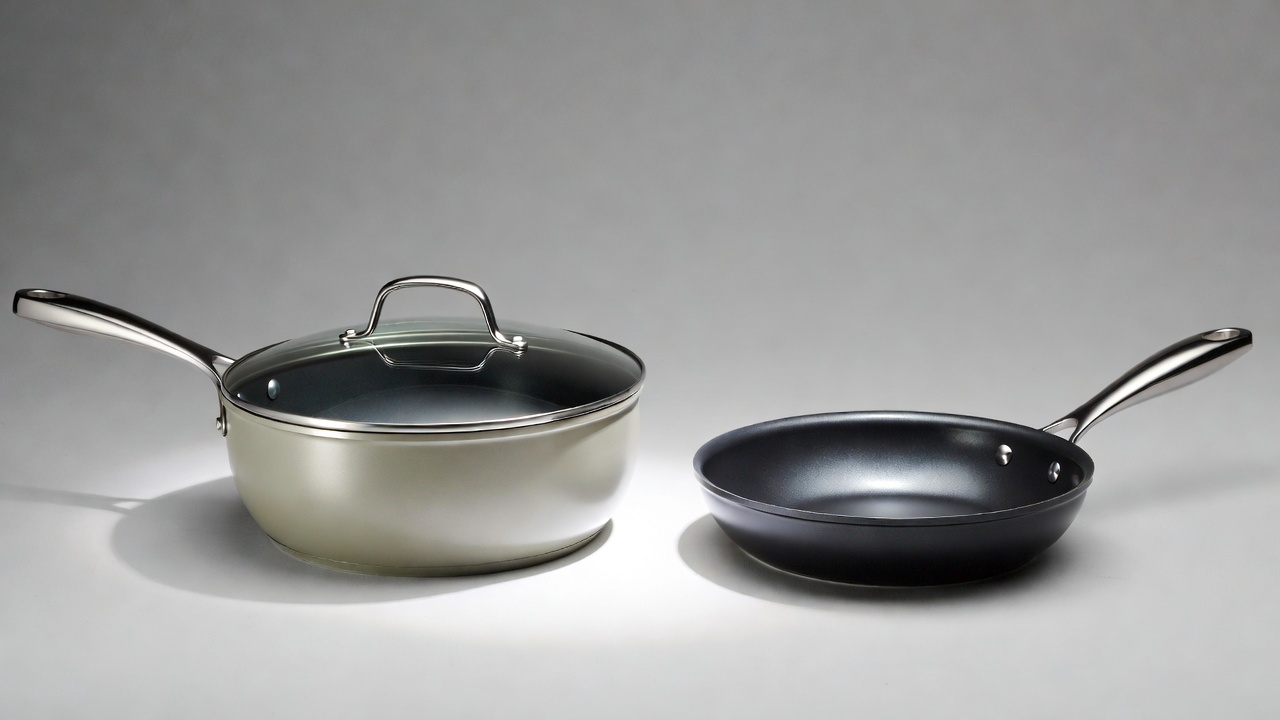
A sauté pan is a cooking vessel with some key traits. First, it has sides that go straight up from the bottom. These sides are usually pretty tall. Most sauté pans have sides that are about 2 to 3 inches high.
The word “sauté” comes from French. It means to jump or bounce. This is because sautéing involves tossing food around in a pan with hot oil or butter. The tall straight sides of a sauté pan help keep the food from flying out.
Sauté pans are wide and shallow. This gives you lots of room to move food around. You can flip vegetables. You can stir meat. You can toss everything together. The flat bottom sits flush on your stove burner. This means heat spreads out evenly across the whole pan.
The sides on a sauté pan are pretty tall. This matters because the height keeps oil and hot liquid inside the pan. If you’re making a sauce or cooking something wet, the tall sides prevent splashing. They also let you add more liquid without worrying about it spilling over the edge.
Most sauté pans have a cover that comes with them. This lid lets you trap steam inside. You can braise food or simmer things with the cover on. This makes sauté pans very flexible for different cooking methods.
What Is a Fry Pan?
A fry pan, also called a skillet, has a different design. The sides on a fry pan slope outward. They don’t go straight up like a sauté pan. Instead, they angle out and up from the bottom.
These sloped sides make it easier to slide food onto a plate. You can flip an egg with less effort. You can nudge a piece of chicken to the edge and slip it onto your plate quickly. The sloped shape works like a ramp.
Fry pans usually have shorter sides than sauté pans. Most have sides that are about 1 to 2 inches high. Because the sides are shorter and sloped, there’s less of a wall to contain liquid. You can use a fry pan for things that don’t make much sauce.
The flat bottom of a fry pan also sits directly on your burner. Heat spreads across the bottom just like with a sauté pan. But the sloped sides mean there’s less vertical space inside. This makes it trickier to use a fry pan for tasks that need a cover or involve lots of liquid.
Fry pans come in many sizes. You can find them as small as 6 inches across or as large as 14 inches. They’re built for jobs like frying eggs, pancakes, and burgers. They’re also great for cooking fish, chops, and other single items.
The Main Differences
Now let’s look at the biggest differences between these two pans. Knowing these differences will help you pick the right one.
Side Height and Shape
The most obvious difference is the shape of the sides. Sauté pans have tall, straight sides. Fry pans have shorter, sloped sides.
Why does this matter? Tall straight sides give you more room inside the pan. They keep splashes contained. Sloped sides make it easy to tip food out onto a plate. Straight sides are better for braising or simmering with a lid. Sloped sides are better for quick cooking and serving.
Capacity
Because sauté pans have taller sides, they hold more food and liquid. You can stack more vegetables in a sauté pan. You can add more sauce without it spilling. A fry pan with the same width will hold less because the sides are lower.
If you’re cooking for a crowd or need to hold a lot of sauce, a sauté pan wins. If you’re cooking for one or two people and don’t need much liquid, a fry pan works fine.
Lid Options
Sauté pans usually come with a matching lid. You can buy lids separately for fry pans, but they don’t always fit perfectly. The straight sides of a sauté pan make it easy to sit a lid on top. The sloped sides of a fry pan can make lid placement trickier.
If you plan to braise, steam, or simmer foods, a sauté pan with a good lid is your best choice.
Cooking Methods
Sauté pans work well for lots of cooking methods. You can sauté. You can braise. You can simmer. You can even boil pasta if you need to. You can use a lid to trap steam and cook food faster. You can cook big batches. You can make sauces and gravies inside the pan.
Fry pans are best for quick, dry cooking. They work great for frying eggs. They work great for searing meat. They work great for pancakes and grilled cheese. They work great for cooking things where you don’t add much liquid. They’re not as good for braising or simmering because there’s not enough space for liquid to stay contained.
Tossing and Flipping
Both pans let you toss food, but in different ways. With a sauté pan, you use a spatula or spoon to stir and turn food over. The straight sides give you room to work. With a fry pan, you can use the slope to flip food. You can tilt the pan and let food slide toward the edge, then flip it. This works great for eggs, pancakes, and thin cutlets.
Which Pan Holds Heat Better?
Both pans hold heat pretty well. But the thickness of the pan matters more than the type. A thick sauté pan holds heat great. A thin fry pan loses heat fast. The material also matters. Stainless steel, cast iron, and copper all hold heat differently.
Thick pans with lots of metal spread heat evenly. This prevents hot spots. Hot spots are places where some areas cook faster than others. If you’re buying either pan, pick one that feels heavy. Heavy usually means thicker metal and better heat distribution.
Sauté pans tend to be slightly thicker than fry pans. This is because they often handle more intense cooking tasks. But you can find thin sauté pans and thick fry pans. The thickness of the individual pan matters more than the pan type.
Size Matters
Both pans come in different sizes. Fry pans often range from 6 to 14 inches across. Sauté pans often range from 8 to 12 inches across.
For a home kitchen, an 8 or 10-inch pan is perfect. This size gives you plenty of room to cook for 2 to 4 people. An 8-inch pan works for small portions. A 10-inch pan handles normal meals. A 12-inch pan can feed a family.
Think about how many people you usually cook for. Then pick a size that fits your needs. If you cook alone, smaller is better. If you have a family, go bigger.
Best Uses for a Sauté Pan
Use a sauté pan when you want to:
Cook lots of vegetables. The tall sides and big surface area let you chop and toss tons of veggies. You can sauté mushrooms, zucchini, peppers, and onions all at once.
Make braises. A braise means cooking meat in liquid slowly in the oven. The tall sides keep all the liquid inside. You can put the pan right in the oven with a lid on top.
Cook pasta sauce. You need room for liquid. You need to let it simmer for a long time. The tall sides of a sauté pan keep it contained.
Make soups and stews. The tall straight sides prevent spilling when you add broth or sauce.
Cook chicken in sauce. You can add cream, wine, or tomato sauce. The tall sides hold it all.
Braise tough cuts of meat. Put meat in a little liquid and cover it. Let it cook slowly until it gets tender. The tall sides and lid make this easy.
Fry dumplings or pan-fry tofu. You need to flip these, and the straight sides give you room.
Best Uses for a Fry Pan
Use a fry pan when you want to:
Fry eggs. The sloped sides make it super easy to slide eggs onto a plate.
Cook pancakes. Fry pans are perfect for breakfast food.
Sear meat. You want a hot pan to get a nice crust on the outside. The short sides make flipping easy.
Cook fish fillets. Thin fillets cook fast on high heat. You don’t need much liquid.
Make grilled cheese. The sides are short so you can see your sandwich and flip it easily.
Cook burgers. You can make them in batches. The slope makes them easy to remove.
Fry bacon or sausages. The short sides let grease drain easily.
Make crepes. The slope helps you flip thin crepes without tearing them.
Stir-fry quickly. You can toss veggies and meat fast. The sloped sides help you move food around with a spatula or wok turner.
How Much Does Heat Matter?
Heat matters a lot in cooking. Both pans can get hot. Both pans can cool down. But they handle heat a bit differently.
Sauté pans are often made of thick metal. Thick metal holds heat longer. If you turn off the burner, a thick sauté pan stays hot for a while. This is good if you’re cooking something that needs constant heat. It’s bad if you’re cooking something delicate like fish. The pan might keep cooking the fish even after you turn off the heat.
Fry pans are often thinner. Thin metal heats up fast and cools down fast. This gives you more control. You turn off the heat and the pan cools right away. This works great for eggs and delicate fish. It means you have more control over the cooking.
But again, this depends on the specific pan. A thick fry pan acts like a thin sauté pan in terms of heat. A thin sauté pan acts like a thick fry pan. The thickness of the metal matters more than the pan type.
Non-Stick vs Stainless Steel
Both pans come in non-stick and stainless steel versions. Each has pros and cons.
Non-stick pans are easier to clean. Food doesn’t stick to the bottom. You use less oil. Eggs slide around easily. These pans are great for beginners. The downside is that non-stick coating can wear out. After a few years, it stops working as well. You also can’t use metal utensils on non-stick pans. Metal scratches the coating.
Stainless steel pans are tough. They last forever. You can use any utensil. Metal spatulas don’t hurt them. You can scrub hard. They also handle high heat better. Non-stick pans can’t get as hot. The coating breaks down at very high temperatures.
The downside of stainless steel is that food sticks more easily. Eggs stick. Fish sticks. You need more oil or butter. You also need to let the pan preheat really well. With enough oil and proper preheating, stainless steel works great.
For a sauté pan, stainless steel is often the better choice. You’ll do lots of braising and simmering, which don’t need non-stick. For a fry pan, either works. Non-stick is easier for eggs. Stainless steel is more durable.
What About Cast Iron?
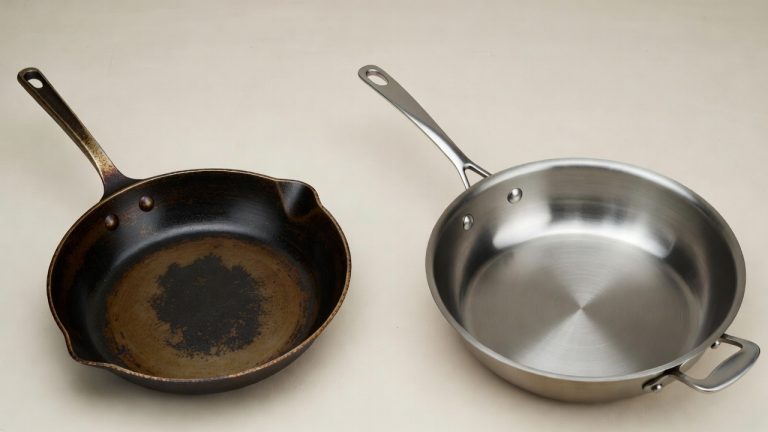
Cast iron is a special type of pan. Both sauté-style pans and fry-style pans come in cast iron. Cast iron is incredibly durable. It can last for 100 years. It gets better with age as it seasons.
Cast iron holds heat like nothing else. Once it’s hot, it stays hot. This is great for searing meat and frying food. The downside is that cast iron is heavy. It takes a while to preheat. You can’t wash it with soap. You have to season it with oil.
If you like cast iron, buy one in the style you prefer. A cast iron skillet (fry pan shape) works great for everyday cooking. A cast iron Dutch oven (big and round like a sauté pan) works great for braising and stews.
So Which One Should You Buy?
If you can only buy one pan, get a sauté pan. A 10 or 12-inch sauté pan can do almost everything a fry pan can do. You can make eggs in it. You can fry fish. You can sear meat. You can do all the things a fry pan does. The only thing it’s not as good at is flipping things with one hand because the sides are too high.
But if you can buy two pans, get both. A 10-inch sauté pan and an 8 or 10-inch fry pan make a great pair. You’ll have the right tool for almost every job.
If you cook a lot of eggs or pancakes, get the fry pan. If you make lots of sauce-based dishes, get the sauté pan. If you’re not sure, get the sauté pan first.
Price and Budget
Sauté pans and fry pans cost about the same. You can find cheap ones for $20. You can find expensive ones for $200. A decent mid-range sauté pan or fry pan costs between $40 and $100.
Don’t feel like you need to spend a lot of money. A $50 sauté pan from a good brand works almost as well as a $150 one. It might not last quite as long, but it’ll do the job fine.
How to Care for Your Pan
Both pans need proper care to last.
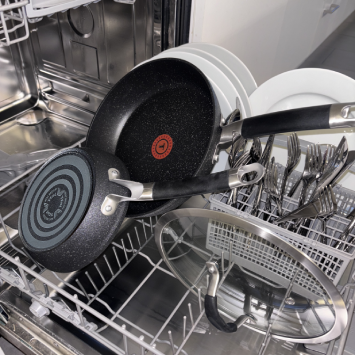
For stainless steel pans, hand wash them in hot soapy water. You can use the dishwasher, but hand washing is better. Dry them right away. Store them somewhere they won’t get scratched.
For non-stick pans, use soapy water and a soft sponge. Never scrub hard. Never use steel wool. Store them in a way that protects the coating.
For cast iron, wipe it clean with a paper towel or cloth. Don’t use soap. If food is stuck, scrub with a paste of salt and a little oil. Dry it completely. Rub a tiny bit of oil on it to prevent rust.
All pans last longer if you store them carefully. Don’t stack them in a way that damages the surface. Hang them on a rack if possible.
Tips for Using Your Pan
Here are some tips to get the best results.
Let your pan preheat. Don’t throw cold food into a cold pan. Heat the pan for a minute or two first. Then add oil or butter. Let that heat up. Then add your food. This prevents sticking.
Don’t move food too early. If you’re searing meat, let it sit in the pan for a minute or two. A crust will form. Then you can flip it. If you flip too early, it’ll stick.
Don’t crowd the pan. If you pack too much food in, it steams instead of sears. Leave some space between pieces.
Adjust the heat as you go. You might start on high to sear. Then turn down to medium or low to finish cooking. This prevents burning while still getting everything cooked through.
Let meat rest after cooking. This keeps the juices inside. If you cut it right away, the juices run out.
Common Mistakes to Avoid
People make mistakes with both pans. Here are the big ones.
Don’t use too much heat. Beginners often crank the heat to the maximum. This burns the outside while leaving the inside raw. Medium or medium-high heat works for most things.
Don’t skip the oil or butter. Some people think cooking spray is enough. It’s not. You need enough fat to coat the bottom of the pan. This prevents sticking and helps with browning.
Don’t cook frozen food without thawing. Frozen food releases water. This water steams the pan instead of letting food brown. Thaw everything first.
Don’t forget to season your food. The best pan in the world won’t make good food if you don’t add salt, pepper, and spices. Taste as you go and adjust the seasoning.
Don’t try to flip things you can’t flip. Some foods break when you flip them. Delicate fish, some vegetables, and some sauces-based dishes are better stirred with a spoon than flipped with a spatula.
Sauté Pan Brands Worth Knowing
Some brands make really good sauté pans. All-Clad makes expensive but excellent stainless steel pans. Calphalon makes good non-stick pans that won’t break the bank. Lodge makes affordable cast iron. Tramontina makes good stainless steel that’s cheaper than All-Clad. T-fal makes durable non-stick pans.
You don’t need an expensive brand to cook well. A $60 pan from any of these brands works great. Stick with brands you’ve heard of. Avoid super cheap pans from unknown brands.
Fry Pan Brands Worth Knowing
T-fal makes reliable non-stick fry pans. Calphalon makes good ones too. All-Clad makes expensive stainless steel versions. Tramontina offers good stainless steel at lower prices. Lodge makes the best cast iron fry pans.
Again, you don’t need to spend a fortune. A mid-range fry pan from a known brand works just fine.
The Bottom Line
Sauté pans and fry pans are different tools for different jobs. Sauté pans have tall straight sides. They’re great for braising, simmering, and cooking with sauce. They usually come with a lid. They hold more food and liquid.
Fry pans have sloped sides. They’re great for quick cooking. They’re easy for flipping and serving. They heat up and cool down faster. They’re perfect for eggs, pancakes, and single servings.
If you had to pick one, pick a sauté pan. It can do most things. If you can pick two, pick both. They work great as a team.
Think about what you cook most often. If you make lots of sauce-based dishes, get the sauté pan first. If you make lots of eggs and quick meals, get the fry pan first.
Both pans are important tools in a real kitchen. Once you have both, you’ll use them all the time. You’ll reach for the right one automatically. You’ll wonder how you ever cooked without them.
Final Tips
Buy the best pan you can afford. A mid-range pan is much better than a super cheap one. It’ll last years longer. A $60 pan is a good sweet spot.
Get both if possible. They work together. You’ll use them in different ways.
Learn how to use them right. Let them preheat. Don’t move food too early. Use enough oil. Adjust the heat as you cook.
Take care of them. Hand wash when you can. Dry them right away. Store them safely.
Start cooking. You’ll learn through doing. The more you use these pans, the better you’ll get. You’ll develop a feel for how they work. You’ll learn what heat level works best. You’ll learn timing.
Wrapping Up
A sauté pan and a fry pan are two essential kitchen tools. They look similar. They’re both flat-bottomed with handles. But their differences matter. The straight sides of a sauté pan are perfect for braising and simmering. The sloped sides of a fry pan are perfect for flipping and serving.
You now know what each pan does best. You know how they’re different. You know which one to pick for each job. Whether you’re building your first kitchen or adding to what you already have, you know exactly what these pans can do.
Start with a sauté pan if you can only get one. Add a fry pan when you’re ready. Together, they’ll handle almost every cooking task that comes your way. Happy cooking!

Hi, I’m Mary, the founder of KitchenClue.com. I’m deeply passionate about everything that makes a kitchen smarter, easier, and more enjoyable. I share hands-on insights and practical expertise on kitchen gear that truly helps in daily cooking. Along with my dedicated research team, we study products carefully, and our writers create honest, well-tested reviews using trusted, authentic sources—so you can choose kitchen tools with total confidence.