Braiser vs Dutch Oven
If you spend any time looking at cookware, you’ll bump into both braisers and dutch ovens. These two pots look kind of similar. They’re both heavy. They’re both expensive. They’re both used for slow cooking. So what’s the real difference? And more importantly, which one do you actually need in your kitchen?
The truth is simpler than you might think. While these two pots share some qualities, they’re actually built for different jobs. Let me walk you through everything you need to know so you can make the right choice for your kitchen.
What Is a Dutch Oven?
A dutch oven is basically a large, heavy pot with a lid. The pot itself is round and deep. The lid fits tightly on top. Most dutch ovens are made from cast iron or enameled cast iron. They’re designed to handle high heat on the stovetop and in the oven at the same time.
The magic of a dutch oven comes from its heat retention. Cast iron heats up slowly, but once it’s hot, it stays hot. This makes it perfect for browning meat on the stovetop and then moving the whole thing into the oven to finish cooking. The lid traps steam inside, which keeps your food moist.
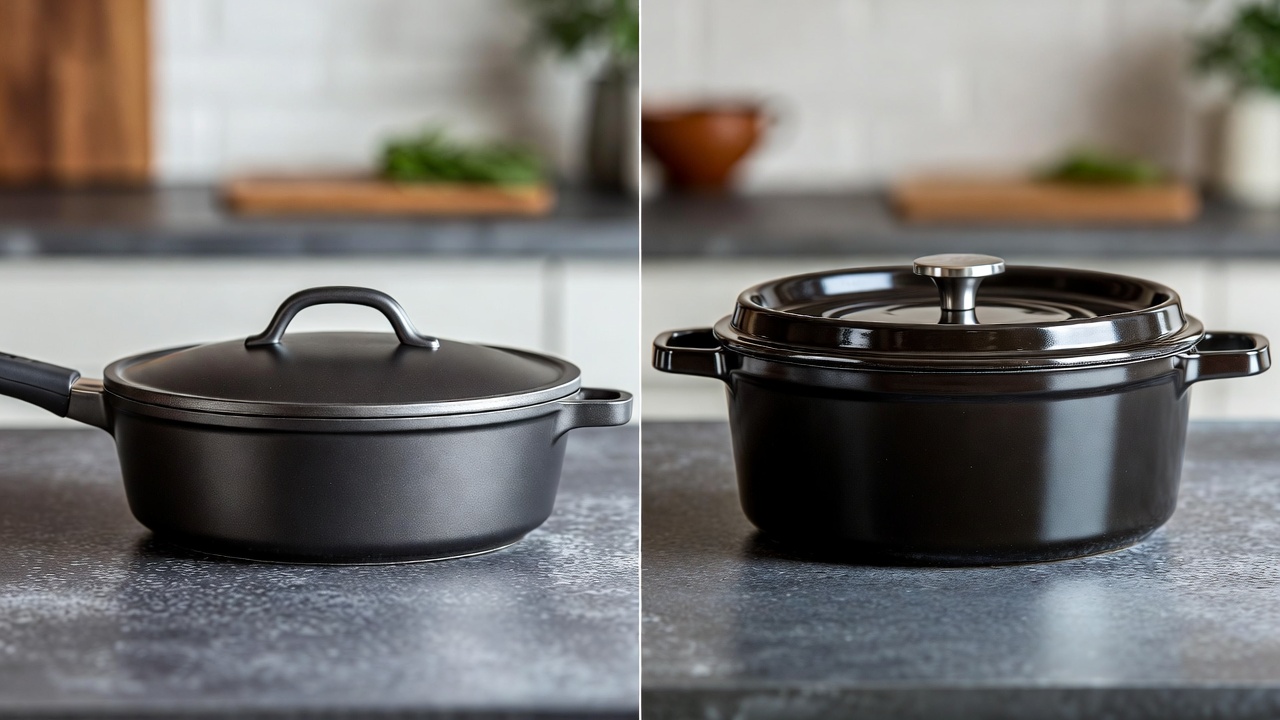
Dutch ovens typically come in round shapes. The most common sizes are 5 to 7 quarts. They’re tall compared to their width. This shape works great for soups, stews, and whole chickens. The height gives you plenty of room without taking up too much counter space.
One thing that makes dutch ovens so popular is their versatility. You can use them for braising. You can use them for baking bread. You can use them for making soup. You can even use them for frying. They’re the workhorse of the kitchen.
What Is a Braiser?
A braiser is a specialized cooking vessel designed specifically for one thing: braising. Braising is a cooking method where you brown meat or vegetables on the stovetop, then add liquid and cover it to cook slowly in the oven. The braiser is built from the ground up to do this job really well.
The shape of a braiser is flat and wide. It’s much wider than it is tall. Think of it like a big, shallow pan with a lid. Most braisers hold about 3 to 4 quarts. They’re usually made from enameled cast iron, just like many dutch ovens.
The wide, shallow design of a braiser has a real purpose. It gives you a bigger cooking surface. This means more of your meat or vegetables touches the bottom of the pan when you’re browning them. More contact means better browning and better flavor. The wide top also makes it easier to fit large cuts of meat inside.
Because a braiser is designed just for braising, it’s really good at that one job. But that’s also its limitation. You can’t use it for much else.
The Key Differences
Let’s get down to brass tacks. Here are the main ways these two pots are different.
Shape
The dutch oven is round and tall. The braiser is flat and wide. This changes how they work in the kitchen. The dutch oven shape is better if you’re making soup or stew. The braiser shape is better if you’re cooking large pieces of meat that need room to sit flat.
Size and Capacity
Dutch ovens typically hold more. A standard dutch oven is 5 to 7 quarts. A braiser usually holds 3 to 4 quarts. If you’re cooking for a big group, the dutch oven gives you more volume. If you’re cooking for a smaller family, the braiser might be just right.
Heat Distribution
Both are made from heavy materials that distribute heat well. But the wide, flat bottom of a braiser spreads heat across a larger surface. This is great for browning meat. The dutch oven’s rounded bottom concentrates heat a bit more. It’s still excellent for browning, but it works a little differently.
Lid Design
Dutch oven lids are round like the pot. They fit snugly on top and trap steam inside. Braiser lids are also designed to fit snugly, but they’re shaped differently because the pot is wider and flatter. Some braiser lids even have a ridge that helps condense steam and drip it back onto the food.
Versatility
This is huge. A dutch oven can do so many things. You can make bread. You can fry. You can bake. You can stew. You can braise. You can roast. A braiser is really only for braising. It’s not great for other cooking methods.
Price
Both are pricey. But braisers are often cheaper because they’re more specialized. A good dutch oven might cost $200 to $400. A good braiser might run $150 to $300. If money is tight, a braiser saves you some cash.
When to Use a Dutch Oven
Use your dutch oven when you want flexibility. This pot shines in so many situations.
Braising in a Dutch Oven
Yes, you can absolutely braise in a dutch oven. The tall sides mean your liquid will be a bit deeper, but that’s fine. You’ll still get tender, delicious meat. The main difference is that your braising liquid will cover more of your meat compared to a braiser. That’s not bad. It’s just different.
Making Soup and Stew
The tall sides of a dutch oven make it perfect for soup. You can fill it with lots of broth and vegetables. The round shape lets everything cook evenly. The lid keeps everything moist.
Baking Bread
This is one of the most popular uses for a dutch oven. The tight-fitting lid traps steam while your bread bakes. This steam makes the crust crispy and golden. Without the dutch oven, your bread crust won’t be as good.
Roasting
You can put a whole chicken in a dutch oven and roast it in the oven. The pot is deep enough to hold it upright. The heat surrounds it on all sides. The lid keeps it moist while it cooks.
Frying
The tall sides of a dutch oven keep hot oil from splattering all over your stove. You can make fried chicken, donuts, or whatever else you want to fry.
When to Use a Braiser
A braiser is best when braising is your goal. If that’s what you’re doing, a braiser is often the better choice.
Large Cuts of Meat
The wide, flat bottom of a braiser is perfect for a big piece of meat like a pot roast or a brisket. The meat can sit flat on the bottom without having to be crammed into a round pot. Your browning will be better. Your results will be more consistent.
Cooking Fish or Seafood
Some people use braisers for cooking large fish fillets or seafood. The wide, shallow shape means the food cooks more evenly. It’s less likely to overcook on the bottom while the top is still raw.
Cooking for Smaller Groups
If you’re cooking for two to four people, the smaller capacity of a braiser might be perfect. It takes up less space in your oven. It uses less heat energy. It cooks faster.
Making Shallow Braises
Some braised dishes work better in a shallow pan. Think about braising a bunch of vegetables in a light sauce. A braiser gives you more surface area for your food. It looks nicer when you serve it straight from the pot to the table.
Material Matters
Both dutch ovens and braisers usually come in enameled cast iron. This is important to understand because it changes how you use and care for them.
Enameled Cast Iron
This is cast iron with a ceramic coating on the outside. The coating is smooth and colorful. It won’t rust. It doesn’t need seasoning like bare cast iron does. You can wash it with soap and water. The downside is that the enamel can chip if you bang it around. It can also crack if you subject it to extreme temperature changes.
Bare Cast Iron
Some dutch ovens and braisers come in bare cast iron without the enamel. This is tougher and more durable. But it needs seasoning. You have to take care of it or it will rust. Some people love bare cast iron. Others think it’s too much work.
Other Materials
You can also find dutch ovens and braisers made from stainless steel or ceramic. These are less common but they work fine. Stainless steel doesn’t hold heat as well as cast iron. Ceramic is more delicate and can break.
Cost Comparison
Money is a real factor when you’re buying cookware. Let’s talk about what you’ll actually spend.
A quality enameled cast iron dutch oven from a known brand will cost you $250 to $400. Some fancy brands charge even more. Budget options exist but they’re often lower quality.
A quality enameled cast iron braiser will run $180 to $350. Braisers are usually cheaper because they’re more specialized. Less demand means lower prices.
If you buy bare cast iron instead of enameled, you’ll save money. A bare cast iron dutch oven might cost $60 to $150. A bare cast iron braiser might cost $50 to $120. But remember, bare cast iron requires maintenance.
Stainless steel options are usually cheaper than cast iron. You might find a stainless steel braiser or pot for $80 to $200. But they don’t perform as well.
Think about cost per use. If you’re going to use this pot all the time, spending more money makes sense. If you’re only braising once a month, maybe a braiser is the right choice instead of a more versatile dutch oven.
Cooking Performance
Let’s talk about how these pots actually cook your food. This is where the rubber meets the road.
Browning
Both pots brown meat well. The braiser’s wider surface gives you more room and makes browning easier. You can fit more pieces of meat without crowding the pan. But a dutch oven will still brown meat great. It just might take an extra batch if you’re cooking a lot.
Moisture Retention
Both pots trap steam and keep food moist. The lids on both seal tight. The tight seal means your braised meat stays tender and juicy. Both do this job equally well.
Even Cooking
Heavy cast iron distributes heat evenly. Both the dutch oven and braiser do this great. Your meat will cook at the same speed throughout. No hot spots. No cold spots. Just even, gentle heat.
Oven Performance
Both pots are oven-safe up to high temperatures. A dutch oven can usually handle 500 degrees. A braiser can handle the same. This means you can crank up the heat if you need to.
Stove to Oven Transition
This is where both pots shine. You brown on the stovetop, then move to the oven without changing pots. No washing extra dishes. No moving your food to a different pan. It’s all one smooth process.
Cleaning and Maintenance
After you cook, you have to clean. Let’s talk about how much work that is.
Enameled Cast Iron
The easiest to clean. You can use soap and hot water. You can put it in the dishwasher if you want, though hand washing is better. The smooth enamel doesn’t trap food like bare cast iron does. Just wipe it down and you’re done.
Bare Cast Iron
More work. You can’t use soap and water on bare cast iron. You’ll remove the seasoning. Instead, you wash it with hot water and a stiff brush. Then you dry it completely. Then you wipe a thin layer of oil on it. It’s not hard, but it’s extra steps.
Storage
A dutch oven takes up a lot of space. If your kitchen is small, this might be an issue. A braiser is flatter and wider, so it might fit in your cabinet better. But both are large and heavy. Make sure you have room before you buy.
Should You Buy One or Both?
This is the real question. Do you need both, or just one?
Buy Just a Dutch Oven If:
- You want one pot that does everything
- You love baking bread
- You make soup a lot
- You want maximum versatility
- You’re willing to spend a bit more money
- You like having extra capacity
Buy Just a Braiser If:
- You only braise and nothing else
- You cook for small groups
- You have limited storage space
- You want to save money
- You like cooking large, flat cuts of meat
- You prefer the shallower cooking surface
Buy Both If:
- You braise often and want the best results
- You have the money and the storage space
- You bake bread regularly
- You make soup all the time
- You want the ideal tool for every job
Honestly, for most home cooks, a dutch oven is the better first choice. It does so many things. Once you really get into braising, you might add a braiser to your collection. But a dutch oven alone is totally fine.
Popular Brands
If you’re ready to buy, here are some trusted brands that make both pots well.
Le Creuset makes the most famous dutch ovens and braisers. They’re expensive but they last forever. The colors are beautiful. The enamel coating is thick and durable.
Staub makes excellent pots too. They’re a bit cheaper than Le Creuset. Their lids are designed to drip condensation back onto the food. This is great for braising.
Lodge makes budget-friendly cast iron. Their dutch ovens are bare cast iron but very affordable. Good if you don’t mind the maintenance.
Calphalon makes non-stick braisers and pots. They’re inexpensive and easy to clean. They don’t perform quite as well as cast iron, but they’re good for beginners.
Tramontina makes solid cast iron cookware at reasonable prices. Not as fancy as Le Creuset but totally functional.
Common Mistakes to Avoid
Before you buy, know what not to do.
Don’t buy a braiser if you want versatility. You’ll regret it. It’s really only good for one thing. If you think you’ll use it for other cooking, get a dutch oven instead.
Don’t buy a dutch oven if space is your only concern. Yes, it’s big. But you’ll use it constantly. The size is worth it.
Don’t buy cheap cast iron and expect it to last. The enamel on cheap pots chips easily. You’ll replace it in a few years. Spending more upfront saves money long-term.
Don’t put cold water in a hot pot. This can crack the enamel. Always let your pot cool down before washing, or use warm water.
Don’t use metal utensils. They scratch the enamel. Use wooden spoons or silicone spatulas instead.
Don’t stack them with other pots. The heavy cookware can damage the enamel on the lid. Store them separately.
Getting Started with Braising and Pot Roasting
If you’re new to braising, here’s how to do it right, whether you’re using a dutch oven or a braiser.
First, pat your meat dry with paper towels. Wet meat doesn’t brown well. Season it with salt and pepper.
Heat oil in your pot over medium-high heat. Once it’s hot, add the meat. Don’t move it around. Let it sit for a few minutes. This builds a crust. Flip it and do the same on the other side. Brown all sides.
Take the meat out and set it aside. Add your aromatics like onions, garlic, and carrots to the same pot. Let them cook for a few minutes until they’re soft and smelly in a good way.
Add tomato paste if you’re using it. Let it cook for a minute. Pour in your liquid. This might be broth, wine, or a combination. Add your herbs.
Put the meat back in the pot. The liquid should come up halfway or more. Put the lid on. Either transfer to the oven or keep it on the stovetop at a low simmer.
Cook for several hours. The time depends on the size of your meat and the temperature. A pot roast might take 3 to 4 hours at 325 degrees. Just cook until the meat is fork-tender.
Take it out of the oven. Let it rest for 10 minutes. Serve it with the braising liquid spooned over the top.
The Final Answer
So which one should you buy? The honest truth is that for most people, a dutch oven is the right choice. It does too many things to pass up. You’ll use it for braising, yes, but also for soup, for bread, for roasting, for frying. It’s the most useful pot in your kitchen.
But if you’re really passionate about braising and you have the money and the space, a braiser is a fantastic addition. The wide, shallow bottom is designed for this job. Your results will be even better than with a dutch oven.
The good news is that you can’t really go wrong either way. Both are well-made, beautiful pots that will last decades. Pick the one that fits your cooking style and your space. You’ll be happy with your choice.
Start with a dutch oven. Use it. Love it. Cook with it constantly. Then, if you find yourself wanting a pot dedicated specifically to braising, add a braiser to your collection. That’s how most home cooks build their cookware collection. One pot at a time, based on what they actually cook.
Now get out there and start cooking. Your next braised meal is waiting.

Hi, I’m Mary, the founder of KitchenClue.com. I’m deeply passionate about everything that makes a kitchen smarter, easier, and more enjoyable. I share hands-on insights and practical expertise on kitchen gear that truly helps in daily cooking. Along with my dedicated research team, we study products carefully, and our writers create honest, well-tested reviews using trusted, authentic sources—so you can choose kitchen tools with total confidence.